
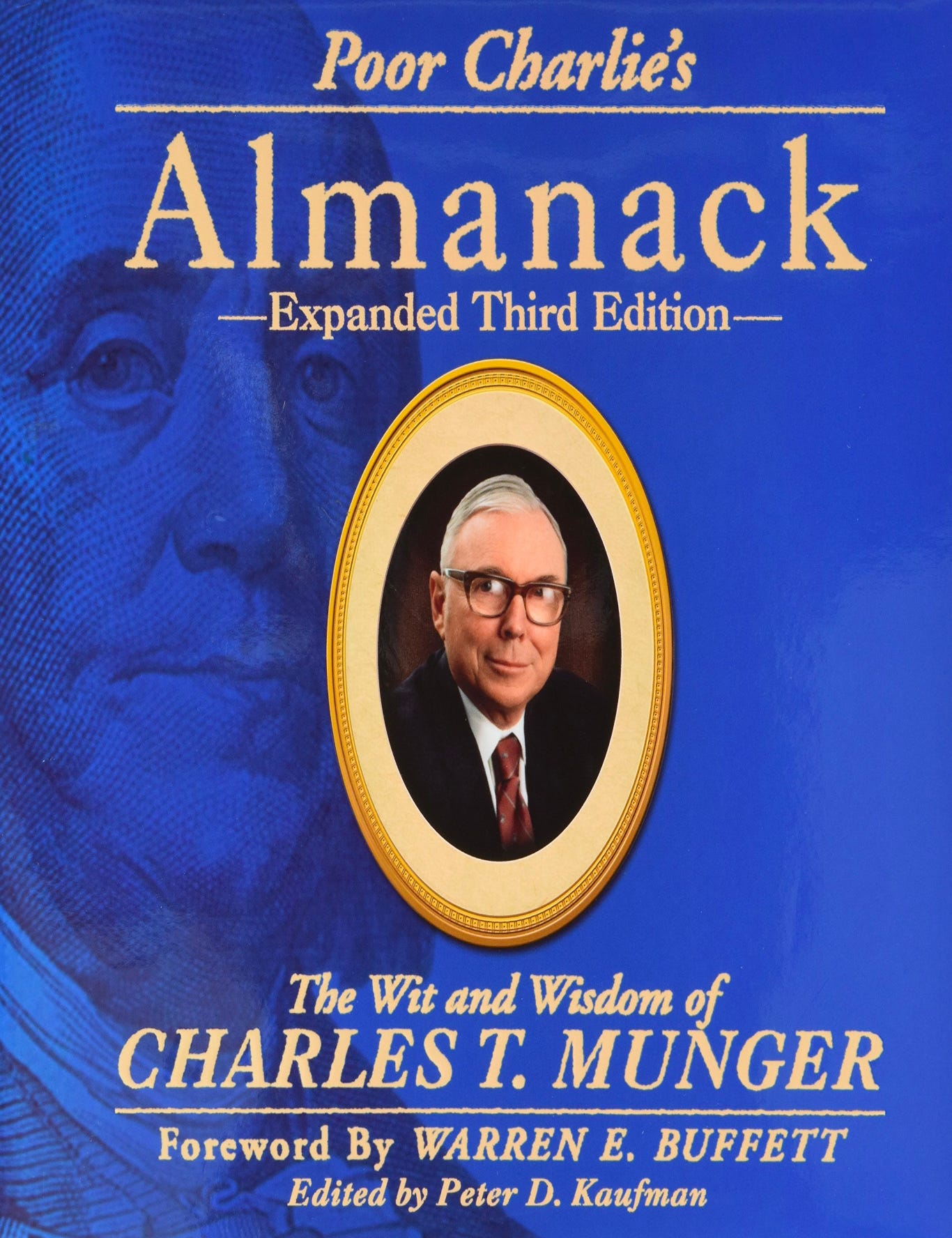
One of the most fascinating aspects of Poor Charlie’s Almanack is that it does not present Charlie Munger solely through his speeches or investment philosophy. In the section “Remembering: The Children on Charlie,” the reader discovers the man behind the legendary investor through the eyes of those who knew him best—his children. Their stories reveal that the principles that made Munger one of the greatest investors of all time were the very same principles he practiced every day at home. Integrity, responsibility, discipline, independent thinking, and continuous learning were not theories he preached to shareholders; they were values he lived consistently.
The section opens with a story from Charles T. Munger Jr., who recalls a family ski trip during his teenage years. While driving home, Charlie unexpectedly stopped to fill the gas tank of a borrowed Jeep, even though it was still half full. Curious, his son asked why they were stopping when they had plenty of fuel. Charlie replied with a lesson his son would never forget: “When you borrow a man’s car, you always return it with a full tank of gas.” Years later, after borrowing a friend’s car at Stanford University, Charles Jr. remembered the lesson and returned the vehicle with a full tank. The owner noticed the gesture, their friendship deepened, and that same friend eventually became one of the groomsmen at his wedding. Only later did Charles discover that the Jeep they had borrowed belonged to Rick Guerin, one of Charlie’s closest friends, who probably would never have cared whether the tank was full or not. That, however, was irrelevant. Charlie believed fairness should never depend on whether someone notices. Integrity meant doing the right thing because it is right, not because it is expected.
This small anecdote illustrates a recurring theme throughout the section: Charlie Munger believed that character compounds just as investments do. Tiny acts of honesty and generosity, repeated over decades, create extraordinary relationships and reputations. In investing, reputation is one of the most valuable assets anyone can own. Munger understood that trust is built one small action at a time.
His daughter Wendy Munger describes another dimension of Charlie’s personality: the family dinner table was his classroom. Rather than lecturing abstractly about ethics, he taught through stories. He often told what she calls “Morality Tales,” where someone faced an ethical dilemma and chose the honorable path. Even more memorable were his “Downward Spiral Tales,” elaborate stories in which someone made a seemingly small dishonest decision that eventually led to catastrophic personal and professional consequences. Charlie had a remarkable talent for describing how bad decisions compound over time until they destroy careers, families, and lives. His children often found themselves laughing at the exaggerated scenarios while simultaneously absorbing lessons they would remember forever.
One story particularly impressed Wendy. Charlie described a chief financial officer who accidentally caused his company to lose hundreds of thousands of dollars. Instead of hiding the mistake, the executive immediately informed the company president. The president responded that while the mistake itself was serious, it could be forgiven because mistakes are inevitable. What would not have been forgiven was an attempt to conceal it. The executive kept his job because he chose honesty over self-protection. Through this story, Charlie taught his children that integrity is tested precisely when admitting the truth is uncomfortable. Investors can draw a direct lesson from this philosophy. Successful investing depends not on never making mistakes but on recognizing them quickly, admitting them honestly, and correcting them before they become disasters.
William “Hal” Borthwick, Charlie’s stepson, remembers growing up in Minnesota, where Charlie taught responsibility through experience rather than speeches. One day Hal forgot to buy Charlie’s daily newspaper while making an errand during a violent storm. Charlie’s response was immediate: go back and get it, despite the terrible weather. The lesson was simple—do the job right the first time. On another occasion, Hal lost the only set of car keys while sailing with friends. Charlie instructed him to keep diving into the cold lake until the keys were found. After hours of searching, Hal finally recovered them. These experiences taught responsibility in a way no lecture ever could. Once someone experiences the cost of carelessness firsthand, the lesson is rarely forgotten.
Hal also recalls that these summers represented much of the time he spent with Charlie because his stepfather worked relentlessly. Charlie left home before dawn, returned around dinner, and then spent hours reading Standard & Poor’s reports or discussing investments with Warren Buffett over the telephone. Even after long workdays, intellectual effort continued. Learning was never something Charlie finished; it was simply his way of living.
David Borthwick remembers his father’s relentless pursuit of improvement through deliberate practice. At the family lake house, Charlie installed a tennis ball machine. Rather than practicing spectacular winners, he spent countless hours perfecting the simple volleys near the net—the easy shots that most players neglected. Charlie recognized that mastering overlooked fundamentals creates lasting competitive advantages. His son notes that, just as golfers win tournaments through an excellent short game, Charlie focused on the unglamorous skills that produced consistent results. This philosophy mirrors his investment approach: instead of searching for brilliant shortcuts, he mastered basic principles and executed them better than almost everyone else.
David also paints a vivid picture of Charlie’s extraordinary concentration. Whether studying stock listings, architectural drawings, or biographies of economists like John Maynard Keynes, Charlie became completely absorbed in his work. Family conversations, noisy children, and even television seemed to disappear from his awareness. His ability to block distractions was legendary within the family. Looking back, David believes this capacity for sustained focus explains as much of Charlie’s success as his intelligence. Great investing requires long periods of uninterrupted thinking, and Charlie cultivated exactly that skill.
Molly Munger offers perhaps the clearest glimpse into Charlie’s influence on independent thinking. While attending college during the politically turbulent 1960s, many students became swept up in protests and ideological movements. Molly, however, carried copies of The Wall Street Journal and Fortune magazine to economics classes. Charlie had taught his children to question fashionable opinions, avoid groupthink, and evaluate ideas based on evidence rather than popularity. At home, he frequently told humorous stories about people who blindly followed crowds or reacted emotionally to events. His consistent message was that both conformity and reflexive rebellion are dangerous. Sound judgment requires independent thought.
Molly also remembers Charlie creating physical experiences that reinforced these lessons. During summers in Minnesota, he had a large wooden aquaplane built for the children to ride behind a boat. He deliberately made sharp turns, forcing them to constantly shift their balance or fall into the water. The exercise became a metaphor for life: remaining balanced requires continuous adjustment rather than rigid commitment to one direction. For investors, the lesson is equally valuable. Markets change, economies evolve, and new information emerges. Success depends on maintaining intellectual balance without becoming captive to extreme opinions.
Perhaps the most striking insight from this collection of family memories is how little separation existed between Charlie Munger the investor and Charlie Munger the father. His investment philosophy was simply an extension of his character. Patience, honesty, discipline, responsibility, fairness, rationality, and lifelong learning were not tools reserved for financial markets—they governed every aspect of his daily life.
For investors, these stories offer an important reminder. Financial success rarely comes from superior stock-picking alone. It grows from habits that compound over decades: telling the truth, accepting responsibility, honoring commitments, thinking independently, practicing continuously, and protecting one’s reputation above all else. Charlie Munger understood that investing is ultimately a reflection of character. Build the right character, and sound investment decisions become far more likely.
The greatest lesson from “Remembering: The Children on Charlie” is therefore not about finance but about the kind of person capable of becoming an extraordinary investor. Behind Charlie Munger’s remarkable investment record stood a man who practiced every day the same values he recommended to others. His children’s memories reveal that his greatest legacy may not simply be Berkshire Hathaway or his investment returns, but the timeless principles of integrity, responsibility, curiosity, and rational thinking that continue to inspire investors around the world.
Did you enjoy it? Then click below and share it with your friends!
Comments
Nothing yet. Say the first thing.
Sign in to join the conversation.