
Ukraine’s systematic campaign against Russian hydrocarbon infrastructure has continued through every phase of the Hormuz crisis. The first-order logic holds: deprive Russia of windfall profits and repay its systematic destruction of Ukraine’s own energy grid.
The calculation looks like it breaks down when you account for who else is paying. With the EU already weighing emergency subsidies against a looming energy shock, every Ukrainian strike makes sustained support fiscally and politically harder for the governments writing the checks. Kyiv knows this, yet the strikes continue.
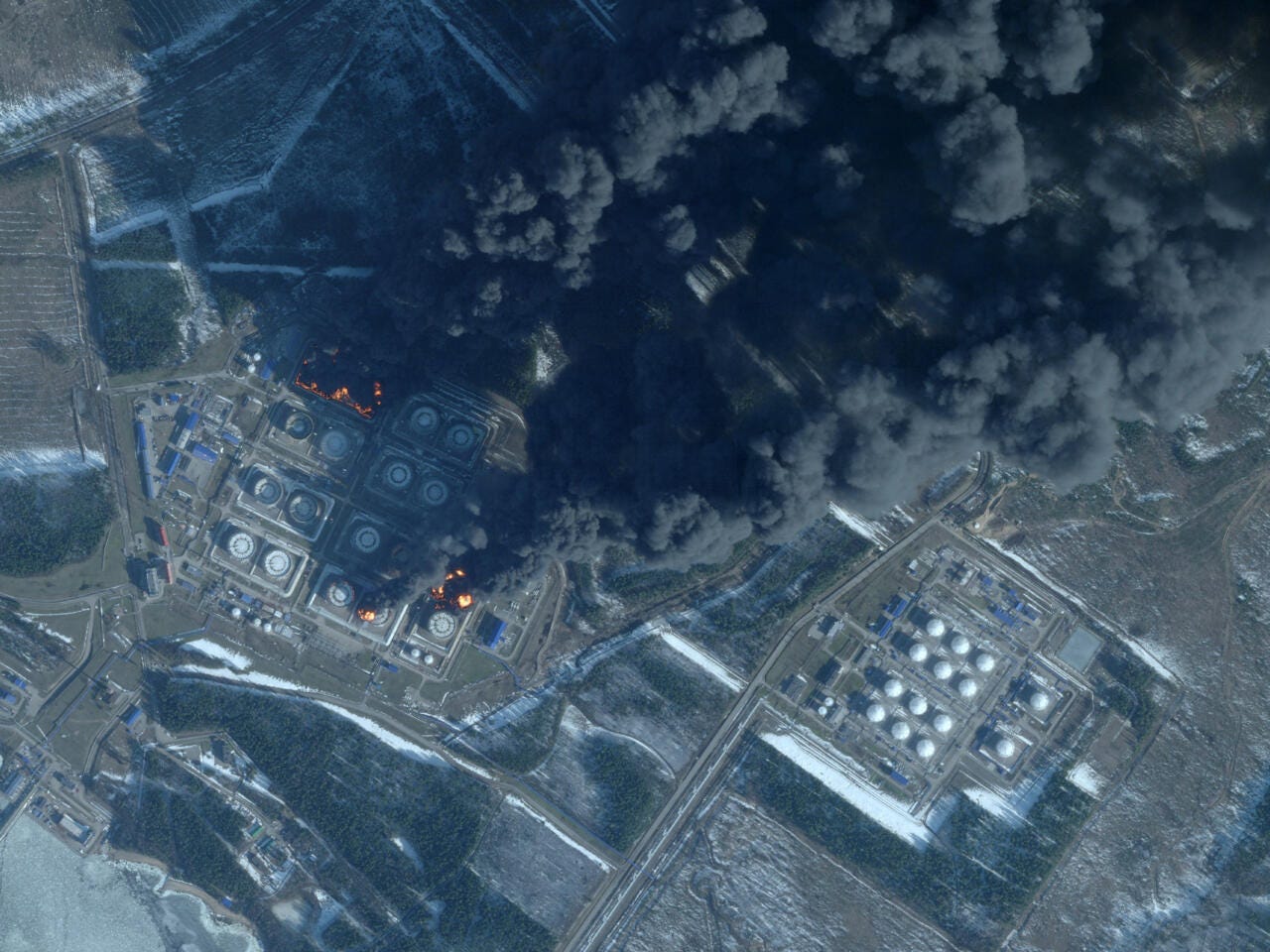
One recent chapter in this story brings us to the Baltic. In early April, Ukrainian drones struck Primorsk, Russia’s largest oil-loading port in the Baltic Sea. Russia claims the Baltics and Finland opened their airspace to Ukrainian drones, which Ukraine denies. During earlier raids, drones crashed in Lithuania, Latvia, and Estonia. Ukraine apologized and all three Baltic governments attributed the incidents to electronic interference, not deliberate overflight.
Russia’s Security Council Secretary Sergei Shoigu used these incidents to invoke the right to self-defense under Article 51 of the UN Charter, declaring NATO member states direct participants in an attack on Russian territory. His claim rests on the assumption that the flight distance could not be crossed without Baltic airspace. While this can be contested, Shoigu added a second accusation: that Europe is becoming part of Kyiv’s “strategic rear,” a reference to a list published by Russia’s Defense Ministry (MoD).
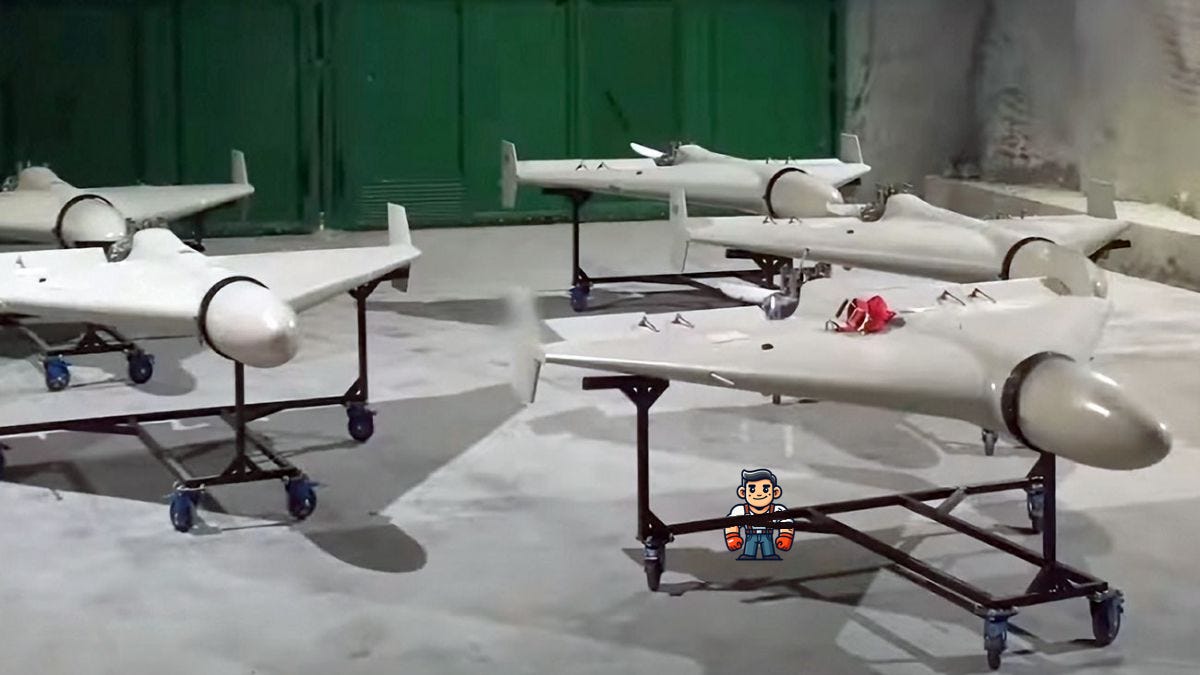
The document names companies the MoD claims are producing attack drones for Ukraine on European soil. On X, former Russian President Dmitry Medvedev called it “a list of potential targets” for the Russian military and added: “When strikes become a reality depends on what comes next. Sleep well, European partners.”
Ukraine’s energy strikes have paid off doubly. Russia loses revenue, Europe gets drawn deeper into the conflict. Ukraine’s logic is brutal: make yourself impossible to abandon. The question is whether Russia’s threat is real or performative. The answer lies in the rungs Russia has left to climb on the escalation ladder. Time to take a closer look at Russia’s accusations and its options from here.

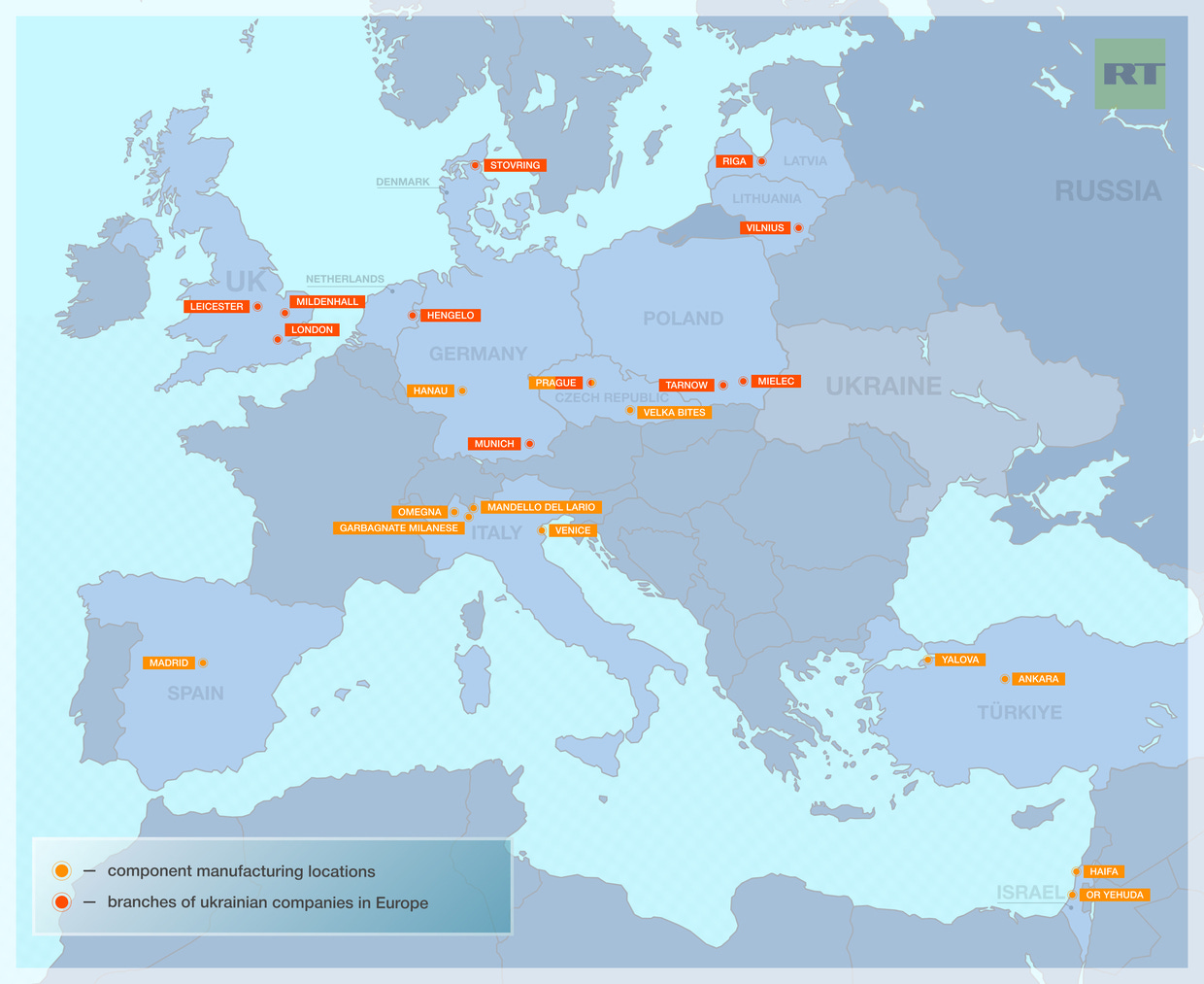
The MoD’s list includes 11 branches of alleged Ukrainian companies producing drones and components, with locations in the United Kingdom, Denmark, Germany, Latvia. A second list, “Foreign Enterprises Producing Components,” named 10 companies with addresses in Madrid, Venice, and Haifa. According to the MoD, European citizens should know the locations of these enterprises as “true causes of threats to their security.”
Such proclamations can easily be dismissed as propaganda. But the underlying premise—that Europe is actively involved in Ukrainian drone production—is harder to ignore. Euronews, substantially funded by the European Commission and therefore beyond suspicion of Kremlin sympathies, reported in mid-April on expanding collaboration:
About 120,000 drones pledged by the UK, alongside additional funding for PURL and the Czech ammunition initiative, were announced at a meeting of the Ukraine Defence Contact Group in Berlin on Wednesday.
[German defence minister] Pistorius reiterated Berlin’s latest military commitments announced on Tuesday during German-Ukrainian government consultations, where the two sides signed a €4 billion defence package, including hundreds of Patriot missiles and joint drone production, as well as an agreement to share digital battlefield data.
German Chancellor Merz and Ukrainian President Zelensky had met in Berlin the day before to sign a “strategic partnership declaration” explicitly covering offensive capabilities:
The package also includes […] €300 million in investment to develop Ukraine’s long-range strike capabilities.
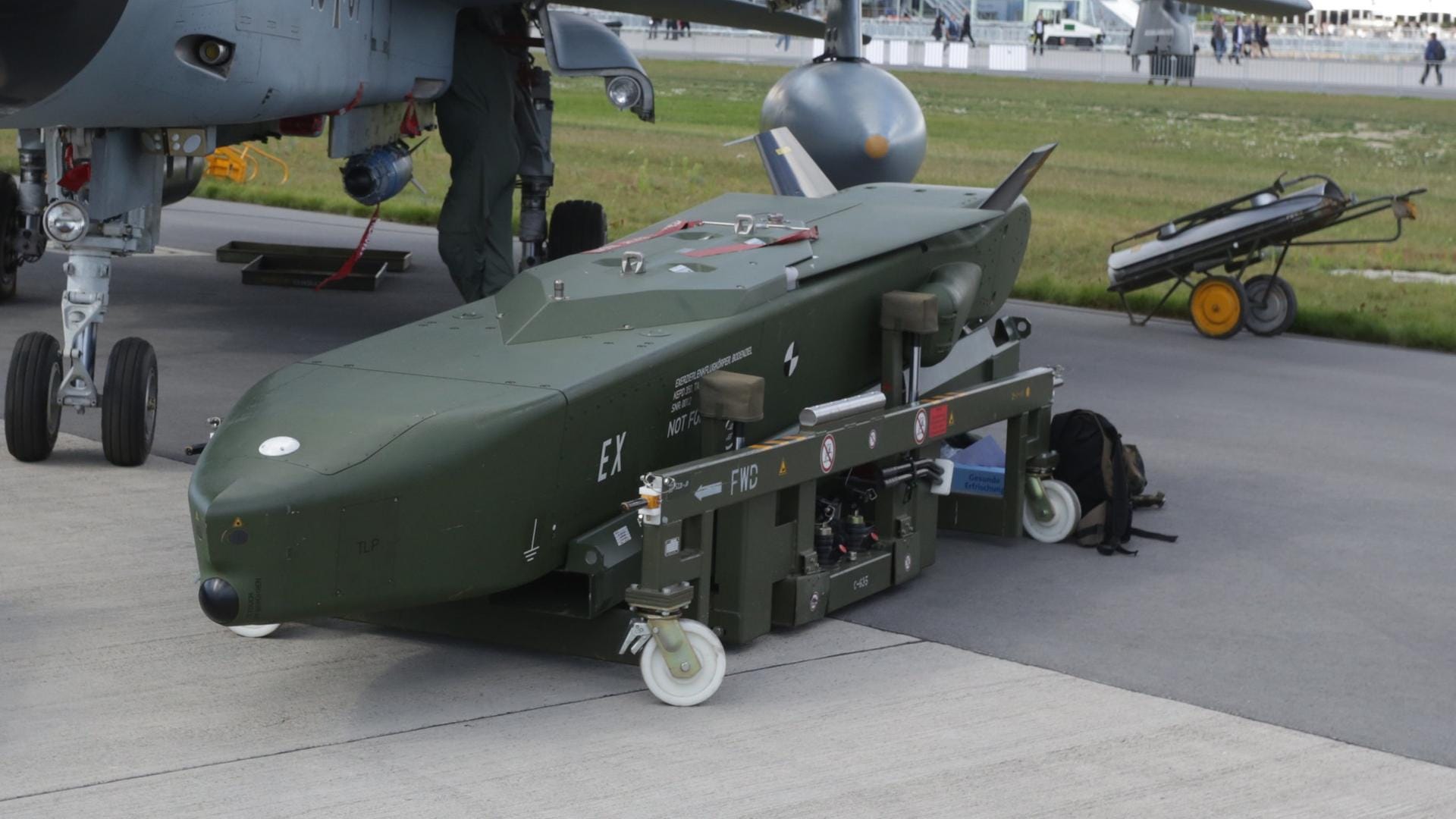
With the commitment to long-range strike development Germany is crossing a line it spent years refusing to cross. Berlin withheld the Taurus missile—500km (310 miles) range, capable of striking deep into Russian territory—because it feared that made it a co-belligerent. A €300 million long-range strike program is not materially different from delivering the Taurus.
Russia applies a similar logic when evaluating participation but stops short of the word “co-belligerent,” despite having already upgraded the conflict from special operation to war in its own communication. Last year, Kremlin spokesman Dmitry Peskov has explicitly stated that the conflict “became a war” the moment the collective West joined Ukraine’s side. However, when it comes to specific strikes, Russia shows deliberate restraint. When Ukraine struck Bryansk in March:
The Kremlin on Wednesday accused British specialists of involvement in a deadly Ukrainian strike on the Russian city of Bryansk that used British Storm Shadow missiles and said it would take Britain’s role “into account.”
The immediate next step is not an attack on European soil. It is supply chain disruption, ensuring that the weapons being manufactured in Europe never reach the front. Russia is already climbing:
Attacks by Russian drones on transport are forcing Ukraine to change safety rules even for passengers. Ukrainian Railways (Ukrzaliznytsia) has already introduced evacuation procedures directly during train movement.
Russia is systematically attacking Ukrainian logistics – from ports and airfields to railways and road routes. Maritime logistics is under constant pressure: the ports of Odesa, Chornomorsk, and Izmail are regularly hit by missiles and drones, directly affecting exports.
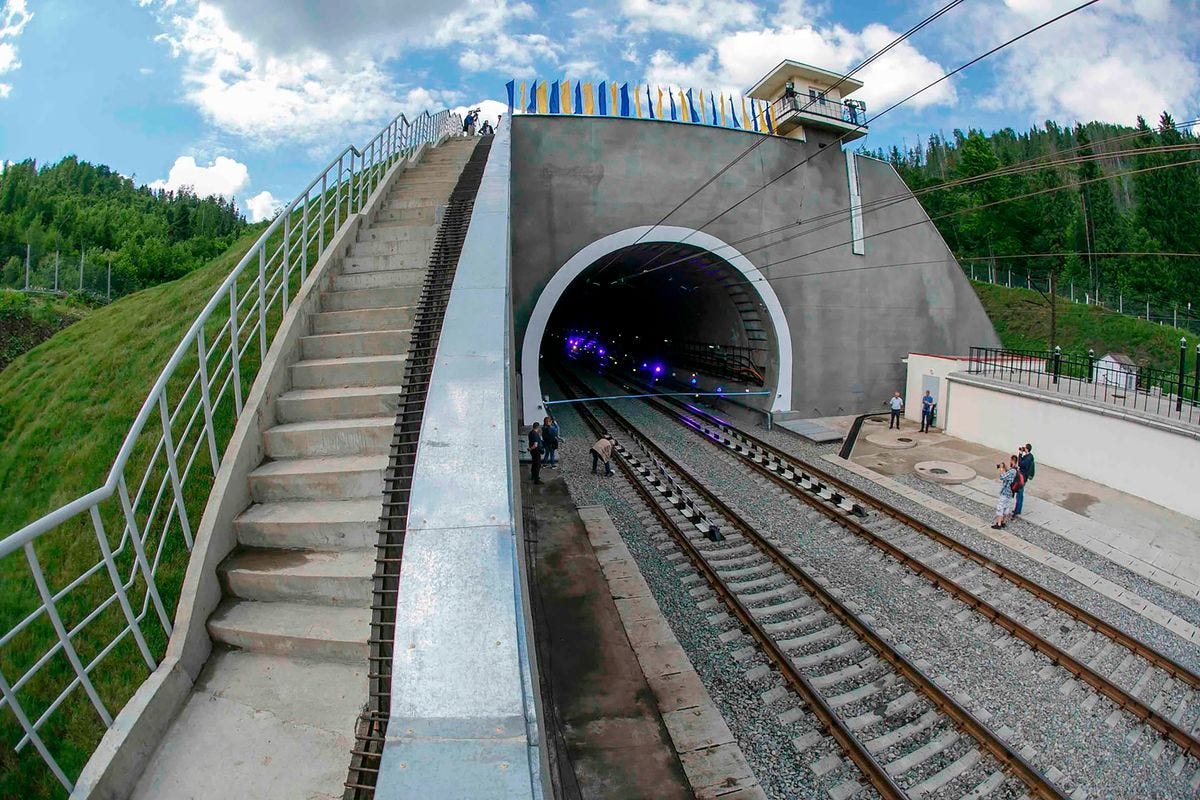
The next kinetic rung would be to intensify attacks on chokepoints such as the Beskydy Tunnel in the Carpathian Mountains, Ukraine’s most vital rail link to the West. This corridor has so far been spared since a 2022 strike. An Oreshnik strike could put it out of service for months. As the weapons packages grow larger, the pressure to climb higher increases.
In line with Ukraine’s attacks on hydrocarbon infrastructure, Russia is also turning the energy dial. The Druzhba pipeline carries Kazakh oil westward through Russian territory before it reaches Germany, meaning Moscow controls the tap. This week, the Kazakh Energy Minister announced that tap would close from May 1. Russian officials did not make the connection to the Berlin weapons package explicit. Deputy Prime Minister Alexander Novak explained:
The volume of Kazakh oil supplies earlier directed to Germany will indeed go to other logistic destinations, the free ones, from May 1. This is related to technical capabilities to date.
The pipeline supplies the PCK refinery in Schwedt, which provides fuel for nine out of ten cars in Berlin, the surrounding Brandenburg region, and the city’s airport. A complete halt would reduce its refining volumes by approximately 17%. Officially Germany does not see the security of supply at risk, but such statements are usually issued right before the opposite turns out to be true.
Tellingly, Russia resumed oil flows to Hungary and Slovakia this week through the same pipeline. None of the companies on the MoD list are located in either country. European leaders may not be connecting the dots, or may be choosing not to say so publicly. Either way, Russia is climbing the escalation ladder one rung at a time. The ladder has rungs left.
Forward this to anyone who thinks Russia is bluffing!
📨 People in boardrooms, energy desks, and hedge funds keep forwarding this. Stop getting it late — subscribe now!
Already subscribed? Thanks for helping make BSJ quietly viral.
No posts
Comments
Nothing yet. Say the first thing.
Sign in to join the conversation.