
More than half a century ago, one of the most consequential movements in the history of energy policy was seeded. In 1969, Robert O. Anderson, chief executive of Atlantic Richfield, one of the largest oil companies in the United States at the time, wrote a cheque for $200,000 to a prominent environmentalist, David Brower.
Brower used the money to fund the anti-nuclear group Friends of the Earth. The thinking was that oil would be worth a lot less if more of the world’s energy needs were provided by atomic fission. By surreptitiously funding the movement, the oil sector could establish proxies to do their fighting for them. Within a decade the organization became the leading international voice against nuclear energy.
The arrangement didn’t stop at that one-time payment. In 2019, an internal American Petroleum Institute presentation was obtained, detailing a campaign called No Nuclear Bailouts. This was a coordinated effort to organize ostensibly grassroots opposition to state legislation in Pennsylvania and Ohio that would have kept nuclear plants operating. The influence didn’t stay limited to the U.S. either. Friends of the Earth comprises over 70 national member groups, and its German branch BUND was instrumental in the country’s nuclear exit.
Energy’s non-negotiable demand and its power to shape an economy’s future make any grassroots movement in that space a target for capture. Which brings us to April 18, 2026, and the streets of Berlin, Hamburg, Cologne, and Munich. On that day, a claimed 80,000 people took to the streets. The demonstrations were organized by a coalition of environmental groups under the slogan: “Defend Renewable Energy.” The crosshairs were on Katherina Reiche, Germany’s Federal Minister for Economic Affairs and Energy.
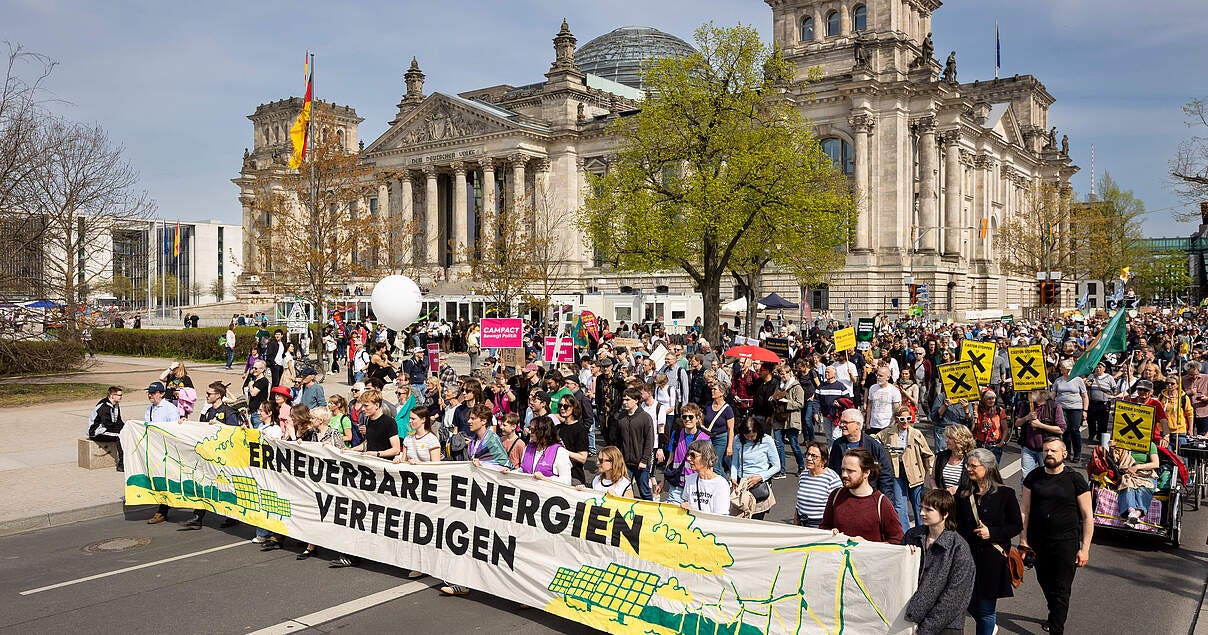
Since early 2026, her ministry has proposed a set of policy changes that would slow down the renewables buildout. Within weeks the machinery of opposition was fully assembled, with her being described as a “lobby minister.” The sun famously “sends no bill” and the promise is that an electrified economy would free the country from fossil fuel dependency. Before taking the ministry, Reiche had spent five years as chief executive of Westenergie, E.ON’s largest German subsidiary. According to one reading, a woman who worked in the energy industry can only be in the ministry as a fossil fuel proxy.
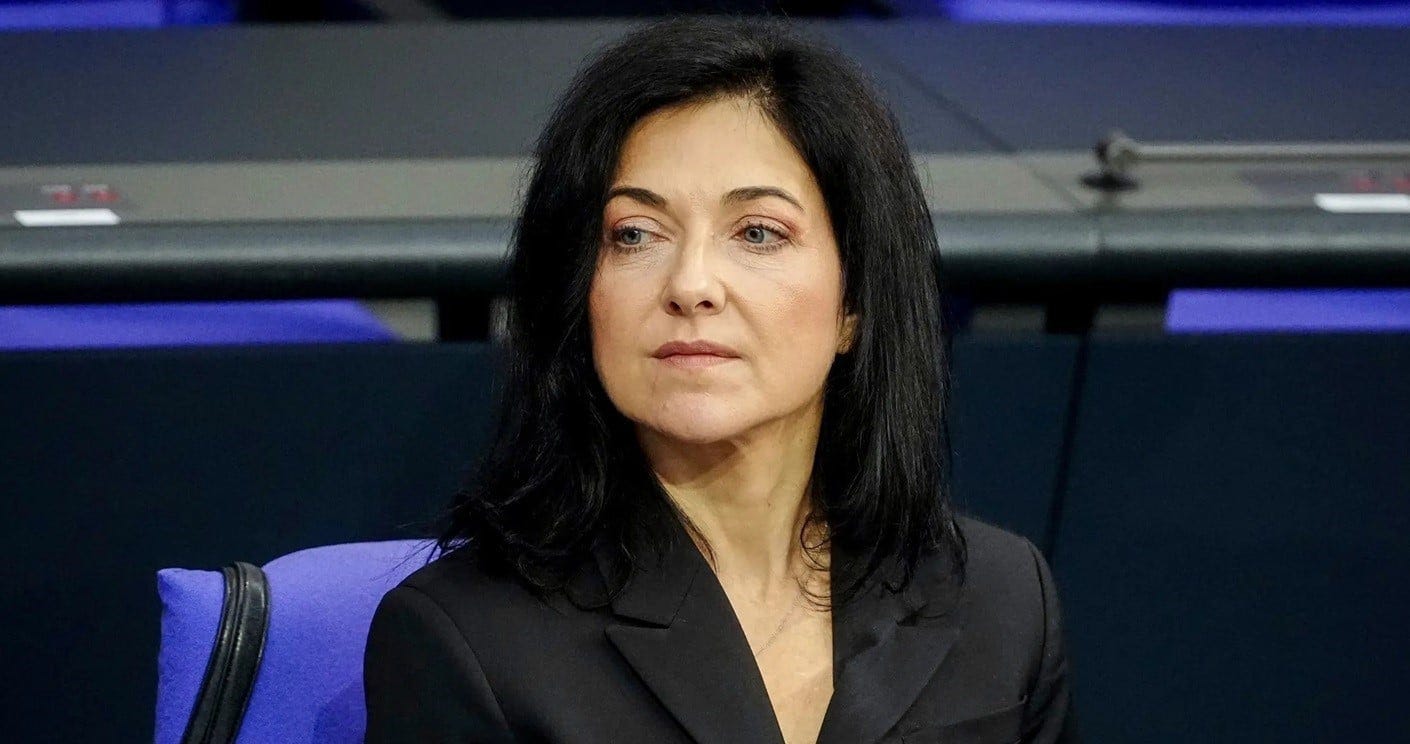
A different perspective is that running the energy infrastructure of Europe’s largest industrial economy requires someone who actually understands how energy systems function. Yet the unfavorable reading is dominating. Calls for her resignation were coming not only from the Greens and the social-democratic coalition partner but from within her own conservative party.
The backlash against her proposals suggests that the country remains committed to running a (still-)industrialized economy on wind and solar. Or it might be an indication that the wave is cresting. Time to take a closer look at the current state of Germany’s energy transition.

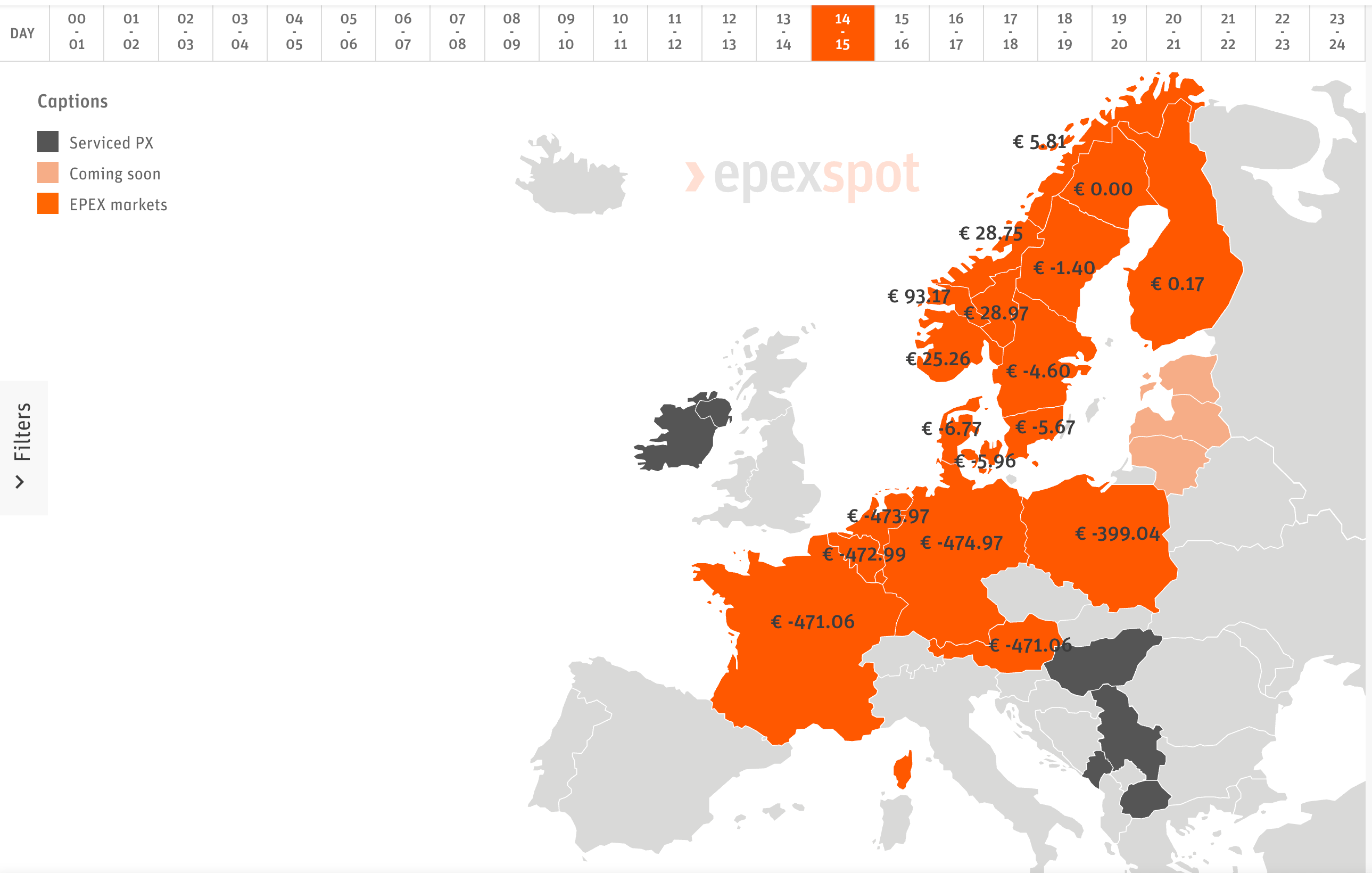
The system Reiche wants to fix has a serious problem: It produces electricity nobody wants. On Sunday April 27, nine days after the demonstrations, Germany’s intraday electricity price fell to a record low of €−480/MWh. Across the border, Hungary hit the absolute regulatory floor of €−500/MWh in the day-ahead auctions. The market cannot express a number deeper in negative territory.
However, the intraday market has an even deeper floor. On May 1, a bank holiday, German intraday prices plunged to an all-time record of €−855/MWh.
This was the latest data point in a trend that has been running in one direction for years without interruption. In 2022, Germany logged 69 hours of negative day-ahead electricity prices. In 2025 it logged 575. One in every fifteen hours, the equivalent of twenty-four full days when the market was signalling that electricity had less than zero value. Forecasters project 700 to 900 negative-price hours in 2026.
Normally you’d assume that negative prices would stop producers from flooding the market. But the system was designed to generate this outcome. The majority of Germany’s installed renewable capacity was built under rules that required six, then four, then three consecutive hours of negative prices before remuneration was suspended, meaning isolated negative-price hours triggered no response whatsoever. Some legacy fixed-tariff plants face no suspension mechanism at all.
Grid operators can curtail output when the grid is physically overwhelmed. But they must compensate operators for the lost generation, which means curtailment is an expense, not a market correction. For most operators most of the time, the guaranteed tariff continues regardless of what the market price is doing. The financial incentive to keep generating during negative prices is identical to the incentive during positive prices.
On top of that, renewable operators hold legal dispatch priority: grid operators are obliged to absorb renewable output before curtailing conventional generation, whatever the market price. And for solar installations in particular, the marginal cost of generating is zero whether the price is positive or negative. Solar power is a torrent from a firehose straight into your face when all you want is a glass of water, and a trickle when you’re thirsty.
Reiche proposes a package of measures to mitigate the issue. The most consequential is the “redispatch limitation”. Any grid area where more than 3% of electricity couldn’t be fed into the network in the previous year can be designated capacity-limited for up to a decade. New solar and wind operators connecting in such a zone must waive their right to curtailment compensation for the entire duration of the designation.
The renewable industry’s response was unsurprising: lobby group BEE called it poison for investment, the solar lobby called it a de facto connection ban. What neither acknowledged is that grids are deliberately not built to absorb every last kilowatt-hour of output. Reiche’s proposal simply aligns investment incentives with physical reality. The fact that it makes new renewable projects unfinanceable is the inevitable result of alleviating a wealth-transfer mechanism that benefits a few at the expense of many. German taxpayers funnelled €18.5 billion in transfers to renewable operators in 2025 alone.
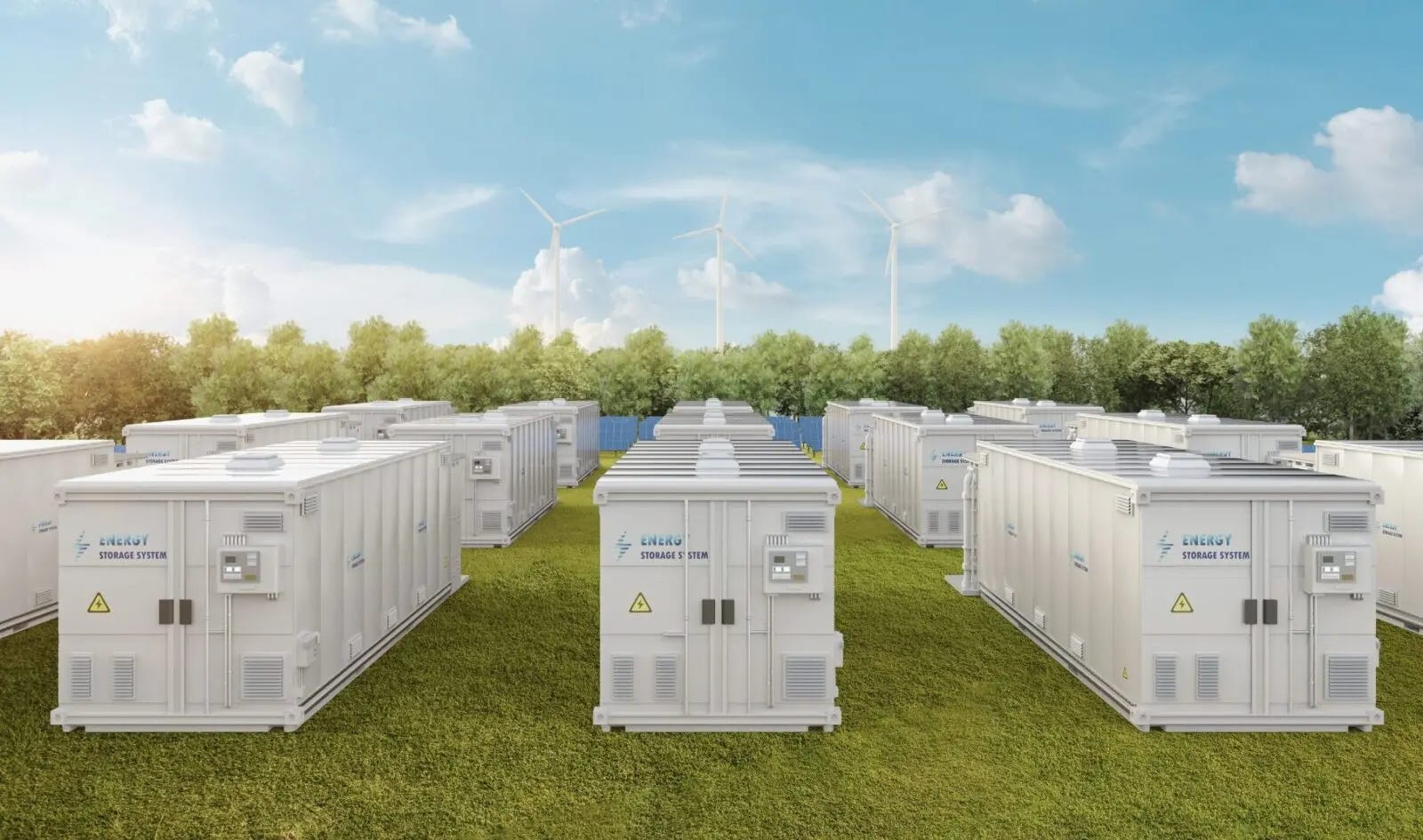
The standard rebuttal to everything above is batteries. Store the surplus from sunny Sundays, discharge it during cold doldrums, problem solved. Bridging Germany’s interseasonal storage gap requires approximately 36 TWh of storage capacity. According to green think-tank Ember, the current all-in project cost for utility-scale battery storage—including equipment, engineering, and grid connection—is $125 per kilowatt-hour.
That’s $4.5 trillion to fill the gap—for a country with an annual budget of about $590 billion. The renewable lobby’s standard response is that cell prices are falling. They are, but cells are only 20–35% of total system cost. The transformers, inverters, grid connections, civil works, and land that make up the rest have not followed the cell price curve and will not. Even if cells were given away for free, the bill remains in the trillions.
The ferocity with which the renewable lobby has moved to block Reiche’s modest rationalization measures is not the behaviour of a sector confident in its long-term trajectory.
The most expensive feed-in contracts—locked in during the early solar boom years of 2006 to 2009—expire on their twenty-year terms between now and 2029. The broader cohort of legacy contracts, covering the bulk of Germany’s installed capacity, runs off through 2033. As each vintage expires, the operators will face a choice: continue generating into a market where average wholesale prices are a fraction of what they were guaranteed, or decommission. New auction projects receive a market premium to bridge the gap. But that only works as long as the fiscal space exists to bridge that gap.
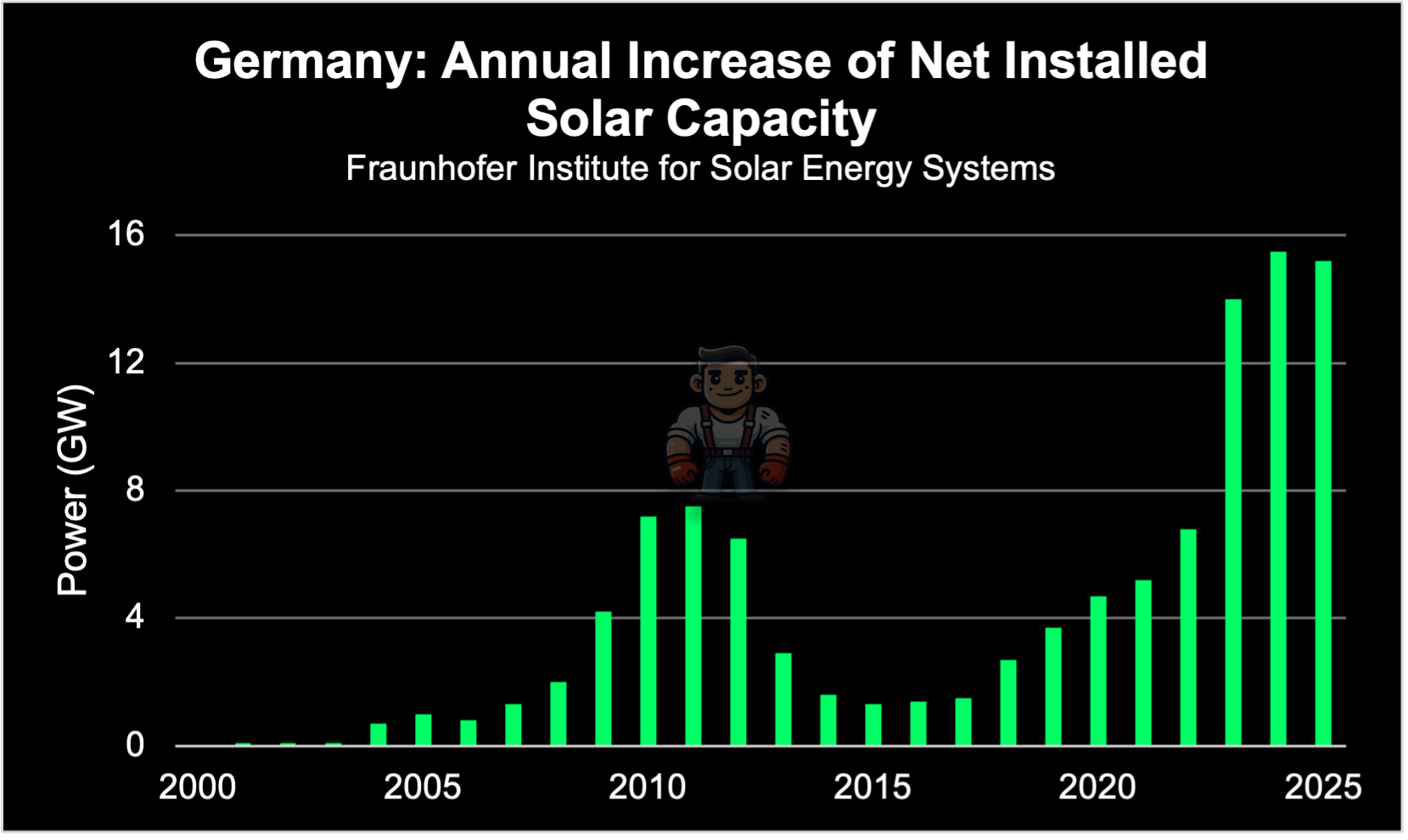
By BSJ’s read, peak renewables is already here. Take Germany’s solar capture rate, meaning the average price solar generators receive relative to the market price. It has fallen from 98% to 54% between 2022 and 2025. The more capacity the system adds, the lower the average captured price for every operator in the market. Germany’s solar additions fell in absolute terms in 2025: from 15.5 GW to 15.2 GW, the first year-on-year decline in over a decade. Peaks tend to look like this from the inside.
Reiche will likely lose the political battle. But no government can indefinitely subsidize a cage fight against physics. Building a $4.5 trillion battery workaround is not possible in a country whose tax base shrinks with every factory closure. With so many fighting so hard to preserve a system this broken, the financial flows must run deep. Journalists will have a field day untangling the money behind 80,000 people marching in defense of something that makes everyone poorer. Everyone, that is, except Chinese module producers and solar panel operators.
Share this article with anyone who thinks the gravy train will never stop!
📨 People in boardrooms, energy desks, and hedge funds keep forwarding this. Stop getting it late — subscribe now!
Already subscribed? Thanks for helping make BSJ quietly viral.
No posts
Comments
Nothing yet. Say the first thing.
Sign in to join the conversation.