
The European Commission’s detachment from the problems of its citizenry is its core competence. Nitrogen fertilizer prices are now 70% above 2024 levels, guaranteeing rising food inflation, yet as she presented the Fertiliser Action Plan, Ursula von der Leyen insisted on “climate leadership:”
With this Action Plan, we are investing in a stronger European fertiliser industry, supporting European farmers and accelerating innovation in sustainable, home-grown solutions. The ongoing fossil fuel crisis shows that climate leadership and economic resilience are interlinked. This is why Europe is building a future based on sustainability, affordability and industrial strength.
Applying a flat 1% markup to carbon border tax default values for fertilizers (compared to as much as 30% on other goods) while keeping tariffs on Russian and Belarusian fertilizer imports in place is one of the measures that demonstrate short-term activism under the illusion of problem-solving. On the physical side, the Commission once again demonstrates remarkable ignorance.
Start with one of the plan’s core elements: manure. Farmers will be allowed to apply it beyond ordinary caps. For millennia, farmers used manure to grow crops, and there is good reason why this practice was largely replaced by industrialised methods. As Vaclav Smil describes in his book How The World Really Works, there is no path to feeding the world by going back to organic nitrogen, the most important input in modern farming. Synthetic fertilizers like urea are at least an order of magnitude more nitrogen-dense than recyclable wastes.
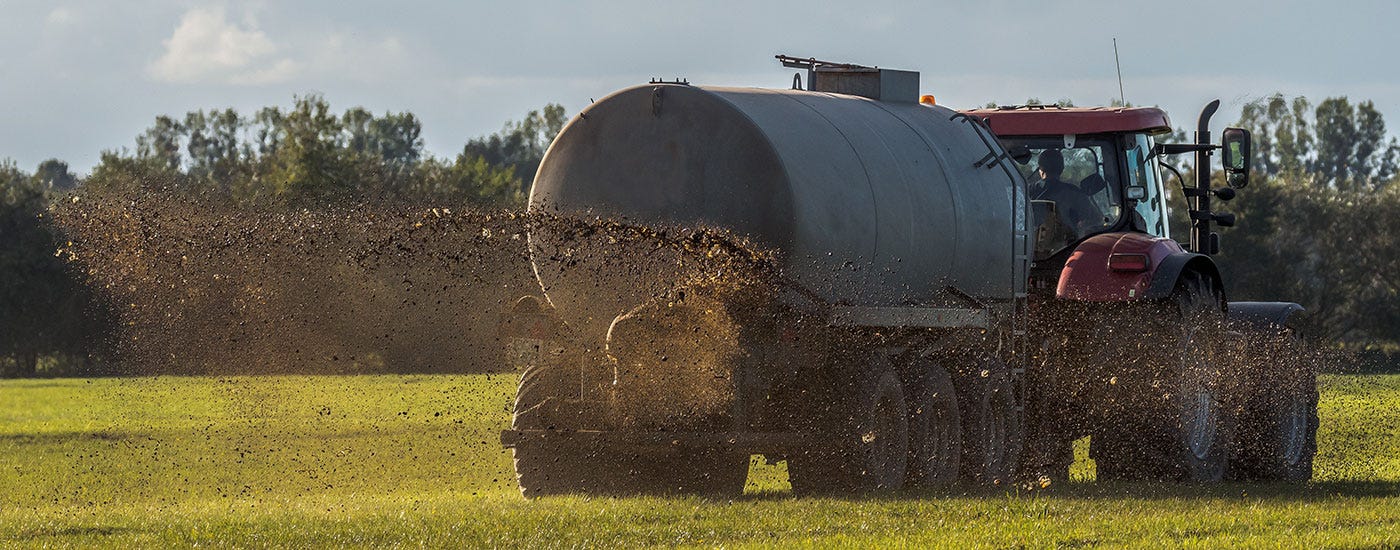
Smil estimates that to supply the same amount of nitrogen to growing crops, a farmer would have to apply anywhere between 10 and 40 times as much manure by mass, and in reality even more, as significant shares of nitrogenous compounds are lost through volatilization. And regardless of the effort that might be put into recycling, the total mass of recyclable materials is too small to provide the nitrogen required by today’s harvests.
Another idea the Commission keeps pursuing, and that has proven just as futile so far: green fertilizers. A lot of capital has been committed to such projects with limited success. A few weeks ago, however, the Financial Times reported on one company it claims “challenges industry’s reliance on natural gas.” The CEO has read the room: not a “green story,” he says, but “actually a food security story.”
Notably, the company has already secured a long-term offtake contract with Yara—one of the world’s largest fertilizer producers—for 100% of its output, so this is not a struggling startup pitching slides to Brussels. Time to take a closer look at whether this project’s approach could make any meaningful dent in the fossil fuel dependency the Commission is so desperate to eliminate.

The project is a $665 million fertilizer plant in Villeta, Paraguay, developed by UK-listed Atome, using non-fossil energy. As chemists and regular BSJ readers will know, most nitrogen fertilizer begins with ammonia, and ammonia begins with natural gas. Conventionally, the gas is used to produce hydrogen, which is then combined with atmospheric nitrogen to synthesize ammonia. In so-called “green ammonia” production, electrolyzers use electricity to split water into hydrogen and oxygen before the hydrogen is reacted with nitrogen from the air to produce ammonia.
The constraint is the electricity source. Electrolyzers degrade under variable loads like intermittent wind and solar. Reservoir-based hydropower is dispatchable, stable, and weather-independent, making it by far the most suitable renewable source that can economically feed green ammonia production.
This is why Atome picked Paraguay. The country is home to the 14GW Itaipu dam which stands as the world’s second largest hydroelectric dam, providing Paraguay with over 90% of its energy needs. Atome has secured power at an impressively low price of $30/MWh under a long-term agreement.
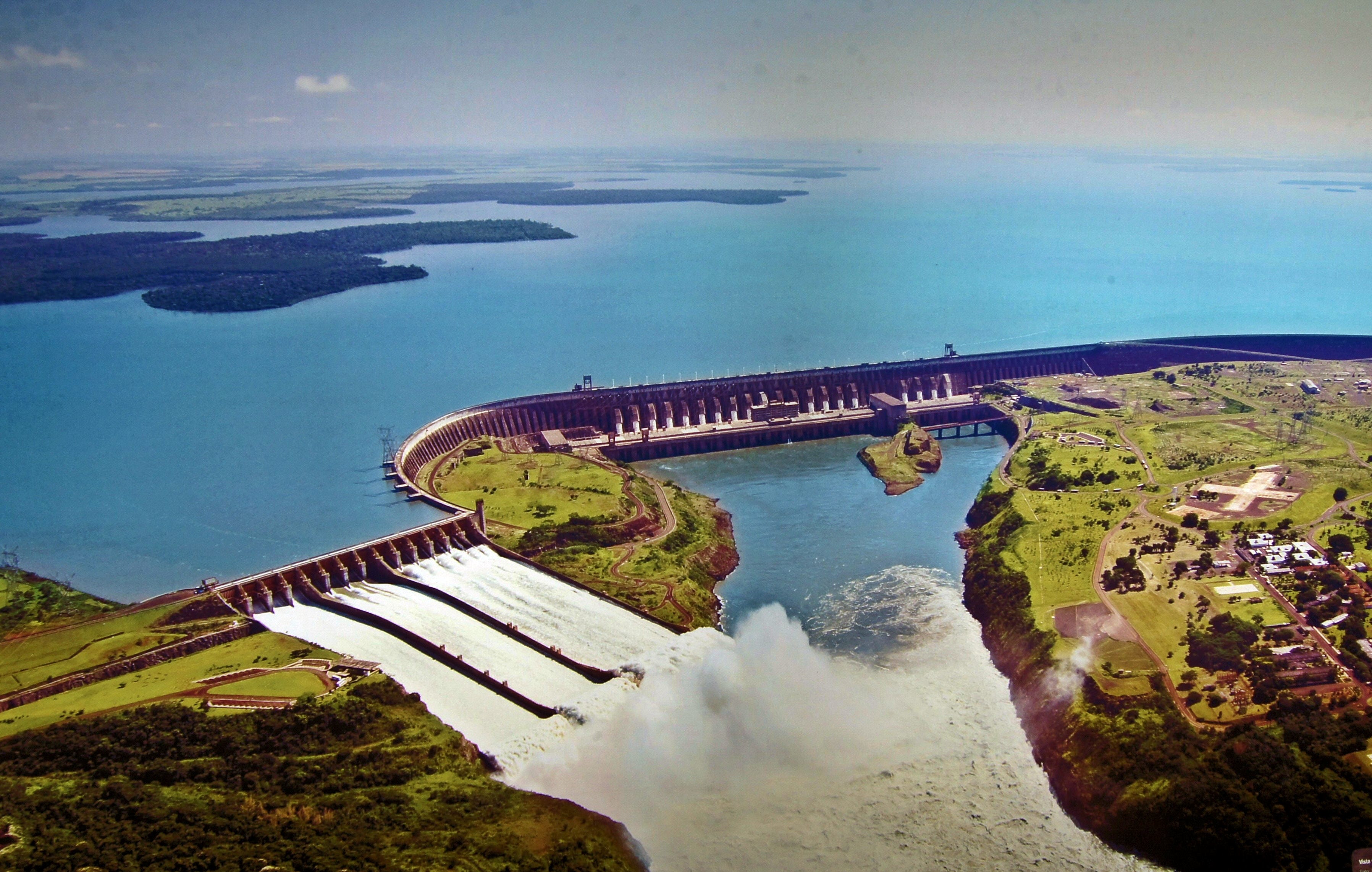
The amount of fertilizer the plant will generate is modest on a global scale. Atome expects to produce 260,000 tonnes of Calcium Ammonium Nitrate per year, all of it purchased by Yara under a 10-year offtake contract. Yara’s own Fertilizer Industry Handbook puts total annual nitrogen fertilizer production at 109 million tonnes. Atome’s Villeta plant delivers less than 1% of that. Yet the project’s backers argue it could serve as a template for similar developments. Can it?
The world generated 4,453 TWh of hydroelectricity in 2024, according to the Statistical Review of World Energy. That figure includes run-of-river plants, which are often weather-dependent and unsuitable for the steady loads electrolyzers require. A reasonable estimate on the higher end of typical ranges sets reservoir-based hydro at 70% of that total, or about 3,117 TWh. Assume generously that 10–15% is uncommitted enough from existing grid obligations to be candidates for green ammonia production. Call it 390 TWh.
At current electrolyzer efficiency, every addressable hydro watt on earth covers roughly 32% of global nitrogen fertilizer production. (The math: 390 TWh produces ~7.8 Mt of hydrogen at 50 kWh/kg, which Haber-Bosch converts to 35 Mt of nitrogen equivalent, against current global production of 109 Mt.). That is the maximalist case: every suitable reservoir, no competing grid demand, no permitting delays. Covering one third of global nitrogen production would be an impressive feat. But it would also require hardware that doesn’t exist.
Global installed electrolyzer capacity reached 2 GW in 2024, according to the IEA. Atome’s Villeta plant requires 145 MW, roughly 7% of that entire global base, for a single project. Replacing just the nitrogen fertilizer that moves through the Strait of Hormuz—around 30% of global exports, roughly 7 million tonnes of nitrogen equivalent annually —requires approximately 100 plants the size of Atome’s Villeta facility. (The math: Hormuz exports 9 Mt of urea at 46% nitrogen content and 3.5 Mt of ammonia at 82% nitrogen content, totalling ~7 Mt of nitrogen equivalent. Atome’s plant produces 260,000 tonnes of Calcium Ammonium Nitrate at 27% nitrogen content, or ~70,200 tonnes of nitrogen per year. 7,000,000 ÷ 70,200 = ~100 plants.)
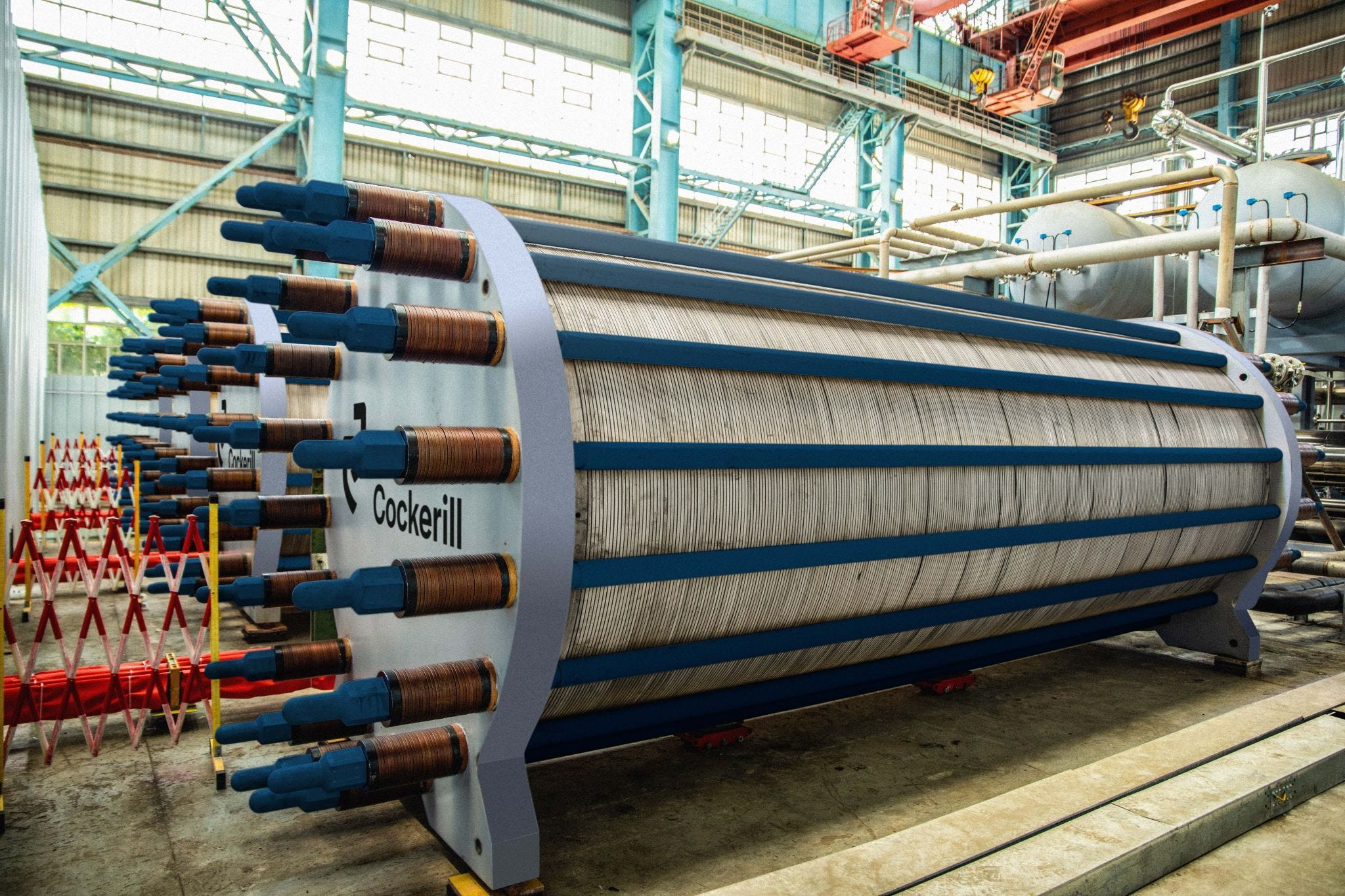
One hundred of those plants would require 14.5 GW of electrolyzer capacity or seven times current global installed capacity. A major reason the buildout cannot easily be accelerated is iridium: this metal, a byproduct of platinum mining, is an essential electrolyzer catalyst. Its annual global production is measured in single-digit tonnes, and there’s no readily scalable substitute available today. Competing for essentially all available electrolyzer capacity would run into financing constraints too. But the deeper problem is geography.
Atome works because it produces for a regional market and doesn’t need to ship far. The project’s viability in Paraguay—surplus hydro at $30/MWh, short supply chain, Yara as a creditworthy offtake partner—depends on that proximity. That is hardly a “challenge to the industry’s reliance on natural gas,” as the Financial Times titles. It is a demonstration of why that reliance will not end.
Yet there can be little doubt that companies across the world will pitch for EU subsidies in the name of “green food security.” And Brussels bureaucrats dazzled by the prospect of fossil-fuel-free fertilizer supply, who believe scaling impossibilities can be smothered under a torrent of taxpayer cash, will be receptive. Extra-territorial projects not excluded and each one a rounding error on the supply gap. What can close that gap?
European gas-based ammonia producers are the accidental beneficiaries of the current supply crunch. Unlike 2022, when gas-benchmark TTF spiked as Russian gas was cut off and European plants shuttered, the Hormuz closure is symmetric. Every major import-dependent region loses supply simultaneously, and no obvious cheap-production alternative exists to absorb the shortfall.
At current TTF prices just below €50/MWh, European ammonia producers spend about €500 per tonne on gas, which constitutes 70–80% of total operating expenses. With ammonia currently trading at a record $885 (€761) per tonne CFR Northwest Europe, the spread is wide. Ironically, Brussels spent years legislating the economic obsolescence of gas-based nitrogen, but the Hormuz shock priced it back in.
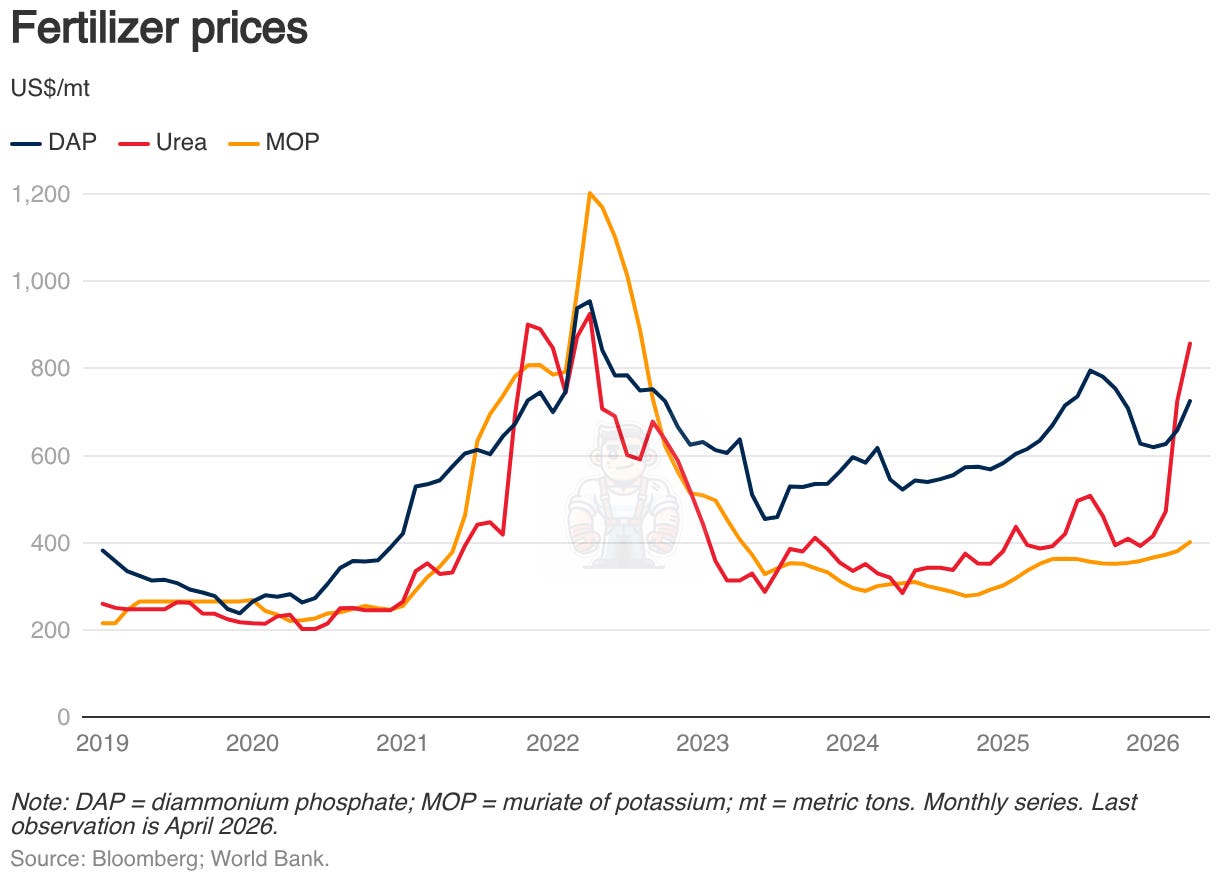
The crisis has not yet reached the field, but the autumn 2026 and spring 2027 planting seasons are a different matter. By then, none of the Commission’s measures will have produced a single additional tonne of nitrogen. The only mechanism that currently increases supply is high prices. The ceiling is there, though.
The Hormuz shock that pushes ammonia prices to record levels is also tightening LNG supply. If TTF follows, the gas cost that makes European production viable today kills profitability tomorrow. The producers Brussels cannot afford to lose are running on a spread that the next leg of the same crisis could close. These producers are actually the “home-grown solutions” the Commission calls for.
Climate leadership and economic resilience are interlinked, says von der Leyen. She is correct: the more aggressively you pursue one, the more you undermine the other.
Share this with anyone still waiting for green ammonia to save us!
📨 People in boardrooms, energy desks, and hedge funds keep forwarding this. Stop getting it late — subscribe now!
No posts
Comments
Nothing yet. Say the first thing.
Sign in to join the conversation.