
“Paradigm shift” has become one of the emptiest phrases in modern commentary. Its usage as marketing talk for banalities such as new phone features obscures the insight the term provides.
Thomas Kuhn, an American physicist, coined it in his 1962 book “The Structure of Scientific Revolutions” to describe how physics changes. A working framework doesn't fall to a single piece of contrary evidence. It absorbs that evidence as noise or an anomaly that gets explained away. Only when enough anomalies accumulate that the framework can no longer hold does it get replaced. That replacement is a step change rather than a piece-by-piece revision.
Political scientists and geopolitical analysts picked up the idea decades later since policy systems work the same way. An assumption gets treated as settled until the evidence against it becomes too heavy to explain away.

An X thread by the German Ministry for Economic Affairs from this week exemplifies that mechanism. In that thread, previous federal governments get accused of having made a fundamental error: they pushed the expansion of renewables forward without treating networks, storage, consumption, and secured power plant capacity as a system. The Ministry says the answer isn't fewer renewables, but making all the pieces work together efficiently.
Renewable subsidies dwarf the fossil fuel savings across Europe while power costs keep rising. That's a data point that suggests the energy transition has failed. But rather than treating it as a warning sign to cut back on wind and solar or—god forbid—return to nuclear, it's being absorbed as a call to spend even more on grid expansion, storage, and rationing.
On the same day the German Ministry tweeted, the South China Morning Post (SCMP) reported on a seemingly massive waste of energy within China. Those two events seem unrelated until you consider that they explain away problems with renewables from different directions. What's striking about the SCMP piece is that it almost insinuates that entrenched coal interests inside China are making this “scandal” possible.
Chinese media operates under tight constraints, and Western outlets are obviously no strangers to propaganda either. But that doesn’t make it any less remarkable that an Alibaba-owned outlet would be this candid with an international audience about a policy error of this scale. Time to take a closer look at the accusations, and how they help Europe’s anomaly absorption.

SCMP's article on China “wasting large amounts of power” drew on a publication by two green NGOs from the West. Neither organization is a neutral energy-system auditor. GEM was founded in 2007 as CoalSwarm, with a stated mission "to assist the anti-coal movement," and is funded by Bloomberg Philanthropies, the Ford Foundation, and ClimateWorks Foundation. CREA was founded in Helsinki in 2019 explicitly to supply research for climate campaigners. The SCMP writes:
Though solar is poised to overtake coal as China’s largest source of installed power, an estimated 360 terawatt-hours of wind and solar electricity was curtailed in the first half – up 49 per cent year on year – according to a report released on Thursday by the Finland-based Centre for Research on Energy and Clean Air (CREA) and the US-based Global Energy Monitor (GEM).
The curtailed energy exceeded the 258 terawatt-hours of power demand growth during the period, the two non-profit organisations said, meaning all new electricity needs could have been met – and coal power generation reduced – if the clean energy had been absorbed into the grid.
Coal-fired power generation rebounded by 3.4 per cent year on year in the first half of 2026, reversing the 2025 decline.
“On a national energy basis, available clean electricity was therefore sufficient to push down coal power generation,” the report said. “However, the figures show that the rebound in coal power generation reflected limits in grid integration, dispatch and power trading rather than a national shortage of clean electricity.”
The article goes on to complain that coal capacity keeps growing because of legacy approvals and policy protections, even as policymakers call for tighter control of coal.
Letting solar power go to “waste” is a matter of market design: who gets priority in the grid. Thinking of that design choice as a conspiracy or a government handout to coal plants is one way of seeing it. Another way is to regard it as a pragmatic engineering compromise: one that ensures resource adequacy while prioritizing cost recovery for coal investment over solar.
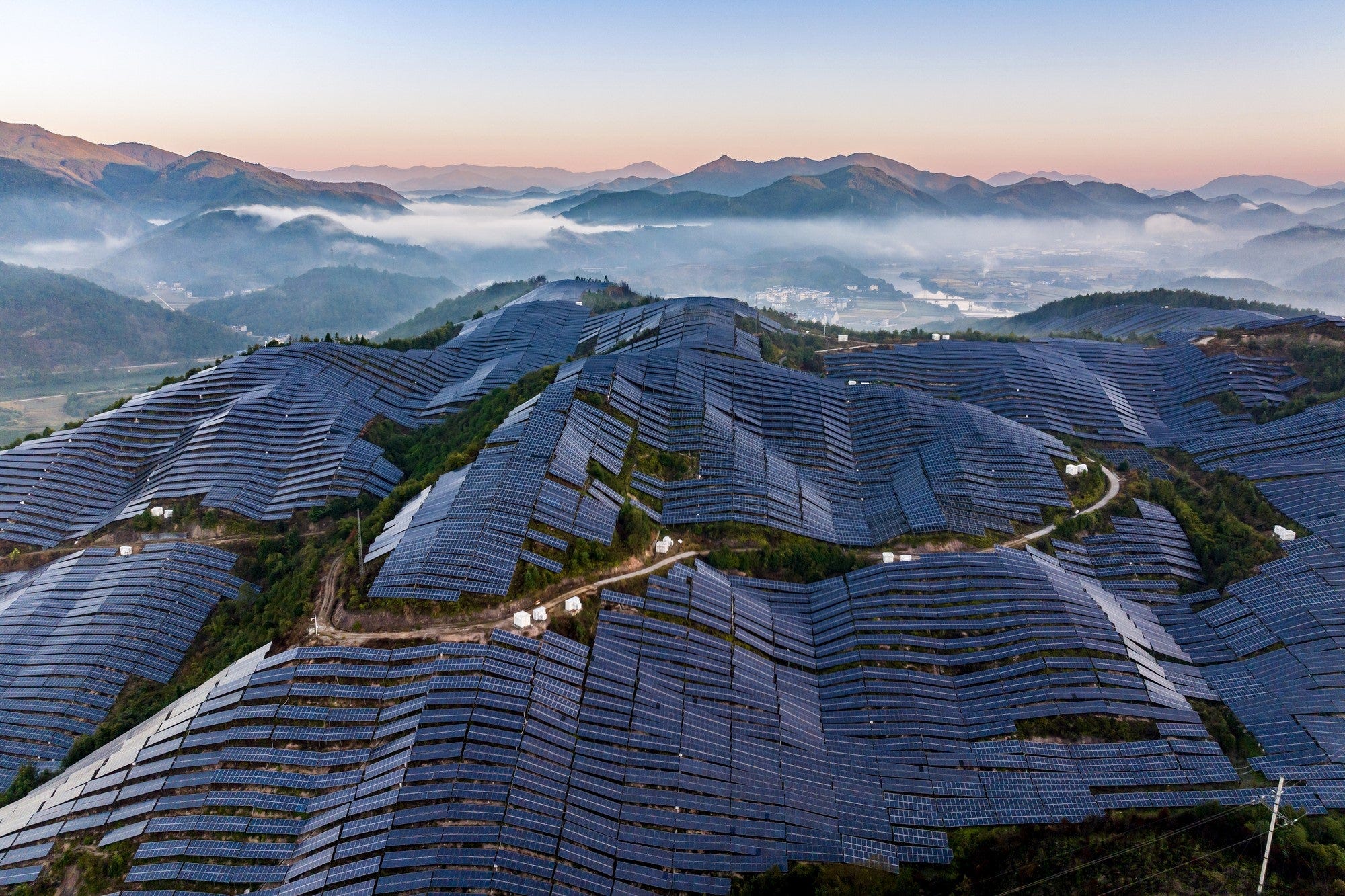
Every grid with renewables needs to strike this balance somehow. Thermal plants are needed to keep the lights on when the sun doesn’t shine, and transmission capacity is finite. The bigger the solar build-out alongside growing demand, the bigger the thermal capacity required. Once you commit to building the plant for capacity and signing on for the long term, you might as well also commit to offtaking some energy. Germany tried a different approach and had to watch it fail.
In 2015, the government rejected a capacity market, calling it “expensive and inefficient,” and chose to let wholesale prices allocate investment instead. Utilities warned at the time that those prices wouldn’t cover the cost of keeping flexible plants around.
Berlin is now forced to course correct: the government wants to subsidize 11 GW of new gas capacity with tenders through 2027. China’s coal fleet earns its keep by actually running. The capacity comes with guaranteed dispatch and sells electricity, unlike Germany’s new gas plants. Here, solar and wind keep dispatch priority and the new capacity collects a payment for sitting idle.
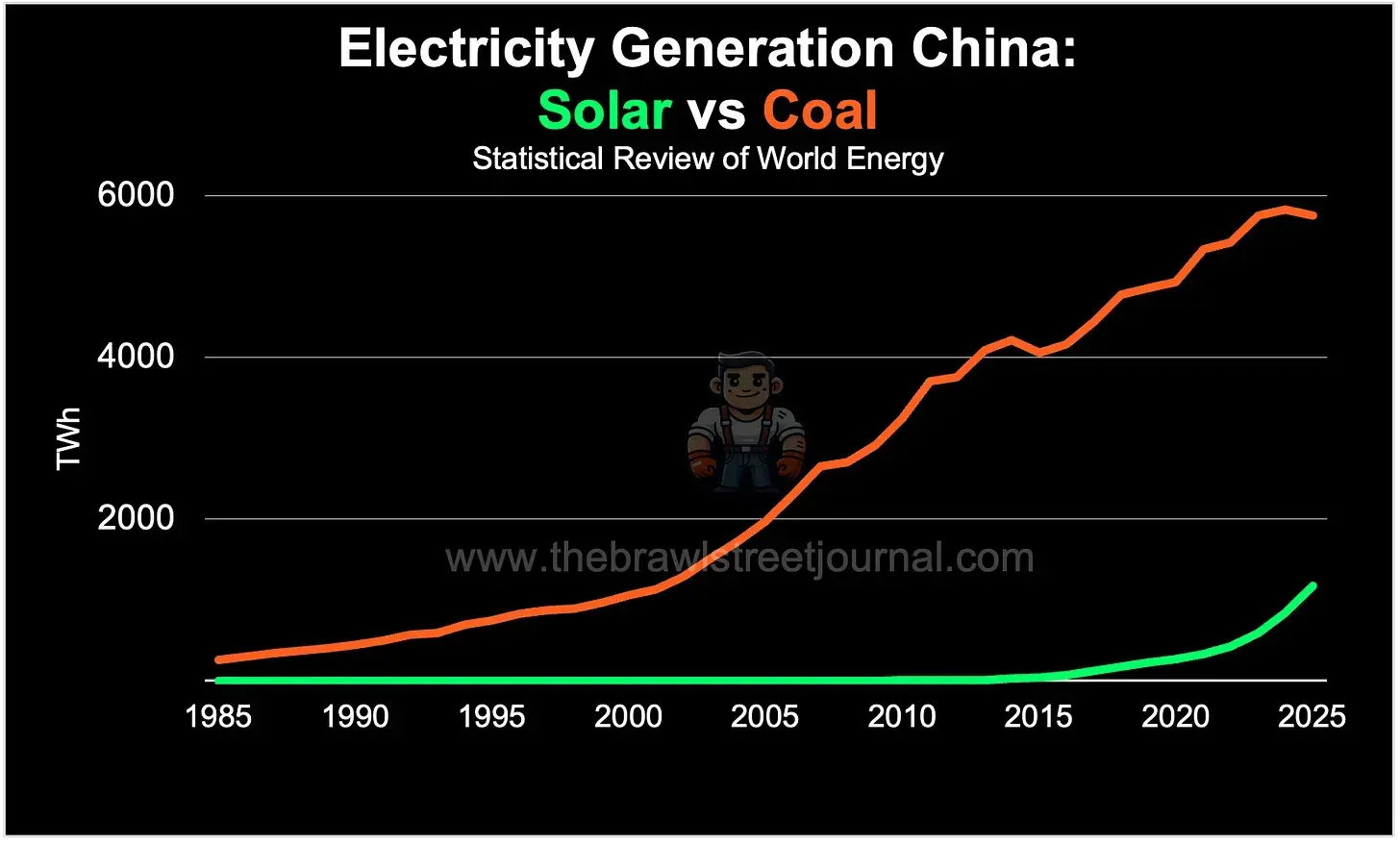
The question of what exactly gets “wasted” is therefore one of perspective. Adopting the NGOs’ perspective makes sense for SCMP, given the international audience it’s aimed at. The story being told: China has so much clean power that some of it goes unused—a narrative about abundance that merely requires better coordination to achieve energy utopia.
China has an obvious commercial stake in that story traveling. It manufactures almost all of the world’s solar panels and its dominance in the supply chain is unparalleled. The narrative of renewables working and the only real obstacle being coordination is vital to that product.
The alternative story—China needs coal as permanent backup—is one about a limit on how far the transition can go. Evidence that the “green tech” giant can’t exist without fossil fuels is harder to explain away than evidence about bureaucratic friction and a coal cabal filling its pockets.
For all it costs to keep believing, the abundance story still works in Europe. Given the bloc’s absorption capacity, a real Kuhnian paradigm shift in how it approaches its energy policy is still nowhere on the horizon. It will likely take evidence too glaring to discard—such as repeated blackouts, mass unemployment—before the old assumptions can no longer accommodate it.
Share this with anyone who misuses buzzwords!
📨 People in boardrooms, energy desks, and hedge funds keep forwarding this. Stop getting it late — subscribe now!
No posts
Comments
Nothing yet. Say the first thing.
Sign in to join the conversation.