
Dear Cherished Reader:
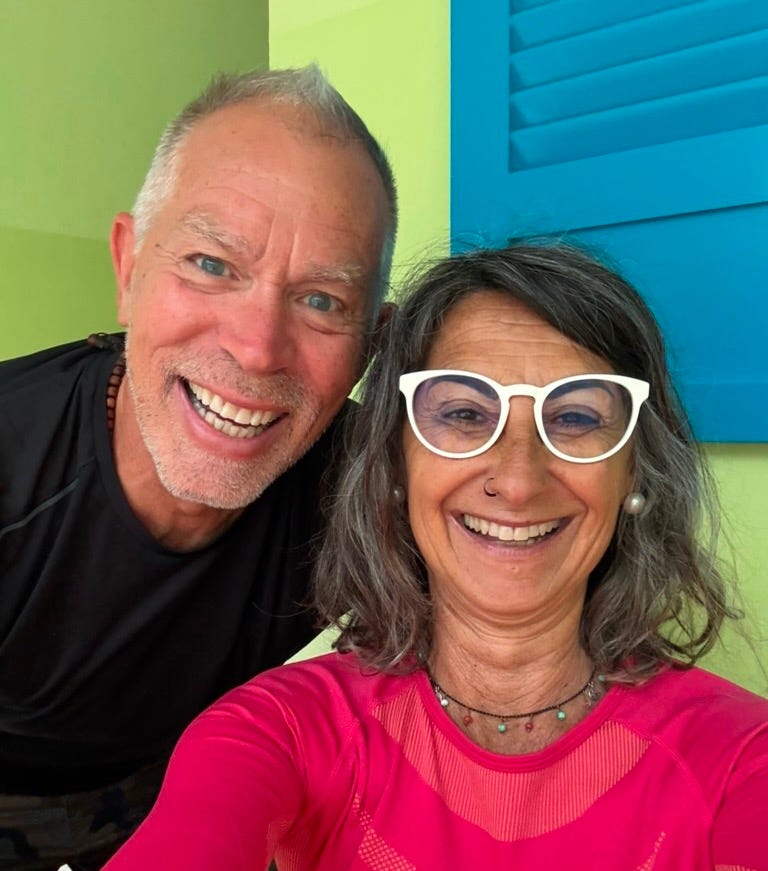
Thank you for following along as Fabi and I adventure through the second half of life. This letter will be my last about the archipelago of Cabo Verde, where we spent 15 days on six islands.
I also promised to answer the question that’s on everyone’s mind. No, not “will the peace agreement between the U.S. and Iran last.” No one knows the answer to that one!
Rather, what the hell happened to your fifth book, Mr. Huddleston? You know, the one you never talk about?!?
But before we get to that… Are you hungry?
I hope so, because I’m about to share what yummy foods we enjoyed while in Cabo Verde (CV).
So let’s get right to it, for it’s what I see cooking…
As Fabi will attest to, I travel on my stomach. A place’s cuisine is as interesting to me as anything else. One of the first questions I ask when planning a trip is:
What do they eat there?
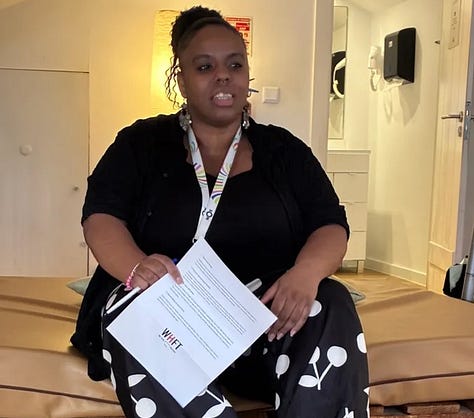
Fortunately for me, while visiting Lisbon, Portugal, earlier this year, we bumped into a lovely young woman who was born and raised in Cabo Verde, and she gave me the skinny on all the yummy foods I should try while in CV, starting with their national dish Cachupa.
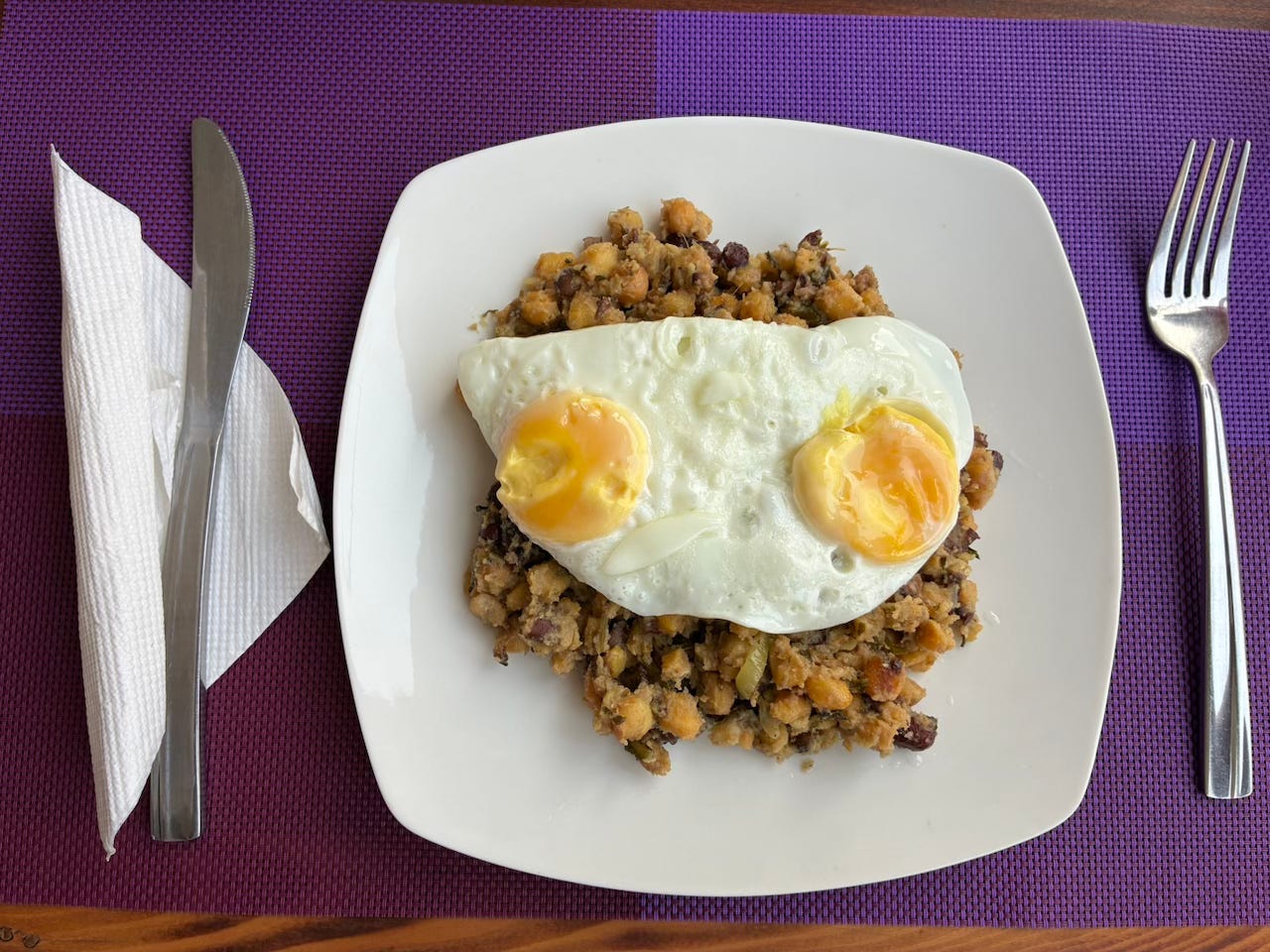
The national dish of Cabo Verde is Cachupa, a rich, slow-cooked stew considered the soul of Cape Verdean cuisine.
Cachupa is made with hominy corn (dried maize), beans, and vegetables, typically including sweet potato, cassava, and squash. It comes in two main versions:
Cachupa Pobre (“poor cachupa”) — the simpler, vegetarian version with just corn, beans, and vegetables.
Cachupa Rica (“rich cachupa”) — a more elaborate version that adds meat such as sausage (chouriço), bacon, chicken, or fish.
The kind I ate most often, and came to love, is called Cachupa Refogada. It is basically leftover Cachupa Rica, famously repurposed the next morning as a beloved breakfast dish. The stew is fried in a pan until slightly crispy and topped with a fried egg. Yummy!
Since CV is an archipelago of ten islands, it was easy to get fresh fish, and we ate a lot of it.

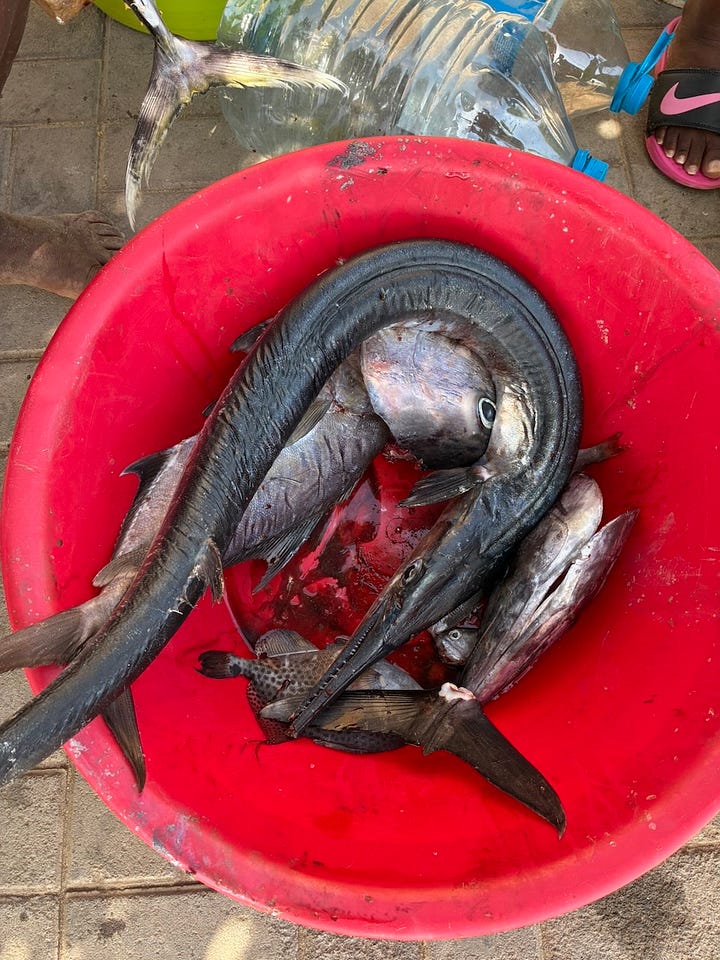
Fish is expensive in most parts of the world, but in CV, we enjoyed a fish lunch including rice, veggies, and a cold beer for under ten bucks. Not bad!
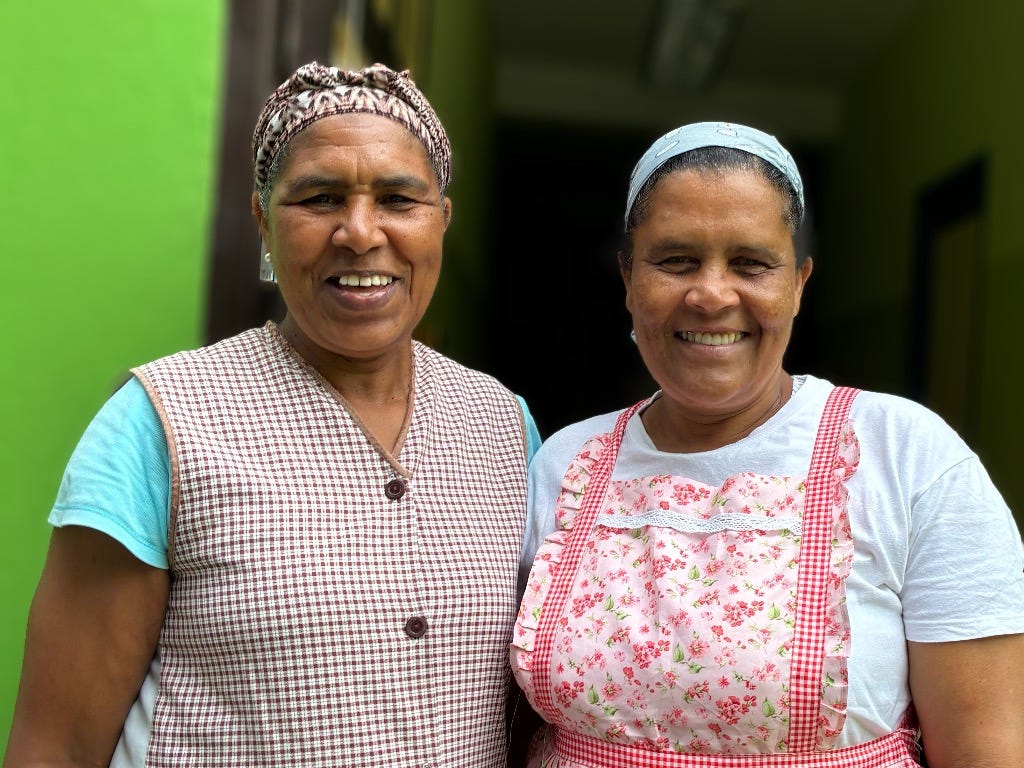
Our other go-to was chicken, and the two fine ladies you see below grilled it up perfetto and served it with a smile.
Fish and chicken were a welcome relief from the vegan food that we’d been eating for the prior few days: the only thing they served at the B&B where we were sequestered deep in the forest.
Vegetables I like. Vegan tastes like crap. I survived by washing the glop down with copious quantities of local grok — a fiery distilled liquor made from sugar cane. The islanders were making it right down the street, so we paid their distillery a visit.
Watch Grok Being Made in 60 secs
We also stopped by the restaurant you see featured in this 60-second video, where a gaggle of teenage girls sat at a table not far from ours, eating fries. We noticed them whispering and giggling as they looked in our direction.
Folks are often intrigued by Fabi’s many tattoos, so we are accustomed to being persons of interest. But in this case, they were entranced by my eyes! As it turns out, the girls had never seen a person with blue eyes before. To them, I was some kind of freak of nature!
We all had a good laugh over that, and I allowed them to get a good, close look at my azure orbs. The whole hilarious event reminded me of another time I was the only white person in an African-American dance club and was mobbed by women who had never touched hair like mine… back when I still had hair. For a brief, shining moment, I was a movie star!
Note: You take it where, when, and however you can get it.
Ah, failure. There’s nothing quite like it to teach you a lesson. I’ve had more failures in life than I can count, and the story of the enigmatic fifth book is one of them.
“Fifth” is a bit of a misnomer because it was actually the second book I wrote, after “Map of Dreams,” the novel I share with you every Wednesday.
It was circa 2015-2016. I was almost 60 and “in-between jobs” — the polite term for “out of a job.”
Although I was a certified Professional Project Manager (PMP) with gobs of experience — I had what one might call an attitude problem. Specifically, I would rather have mowed lawns than spend the rest of my days saying “yes sir/m’am” to some asshole half my age while laboring on a project I could not give a rip about.
Cranky old man? You betcha!
Plus, I had a string of business failures behind me, which I could only explain with a sock puppet and a good sense of humor. No one wants to hire a loser, even if he is good at puppeteering. Career-wise, I was dead in the water.
I concluded the only way for an old crank like me to make money was to start my own business. I had tried and failed at that many times before, but being an indefatigable optimist and a glutton for punishment, in 2015, at the age of 59, I decided to try again.
My idea? Produce audio tours people could listen to on their smartphones. “It’ll be like having a tour guide in your pocket,” I cried to anyone who would listen. “Always available, in any language, and cheap.”
The lost book was part of my marketing strategy.

I put more time and energy into that business than I care to mention,1 but ultimately, it was another failure.
There are many reasons the business never got off the ground, but one I did not foresee was the rise of Artificial Intelligence (AI) as a game-changer in mobile tourism.
I should have. I was, after all, a disciple of the “Only the Paranoid Survive” school of thinking. That’s the title of a 1996 business book by former Intel CEO Andy Grove that I read and believed in. Its message is basically to expect the unexpected.
But I doubt that few back then anticipated what we are witnessing today: meteoric advances in AI that are simply breathtaking. I continue to be awestruck, and as they say in the movies: “You ain’t seen nuthin’ yet!”
I’m sure you’re dying to know what my other four books are… aren’t you?
Sure, you are!
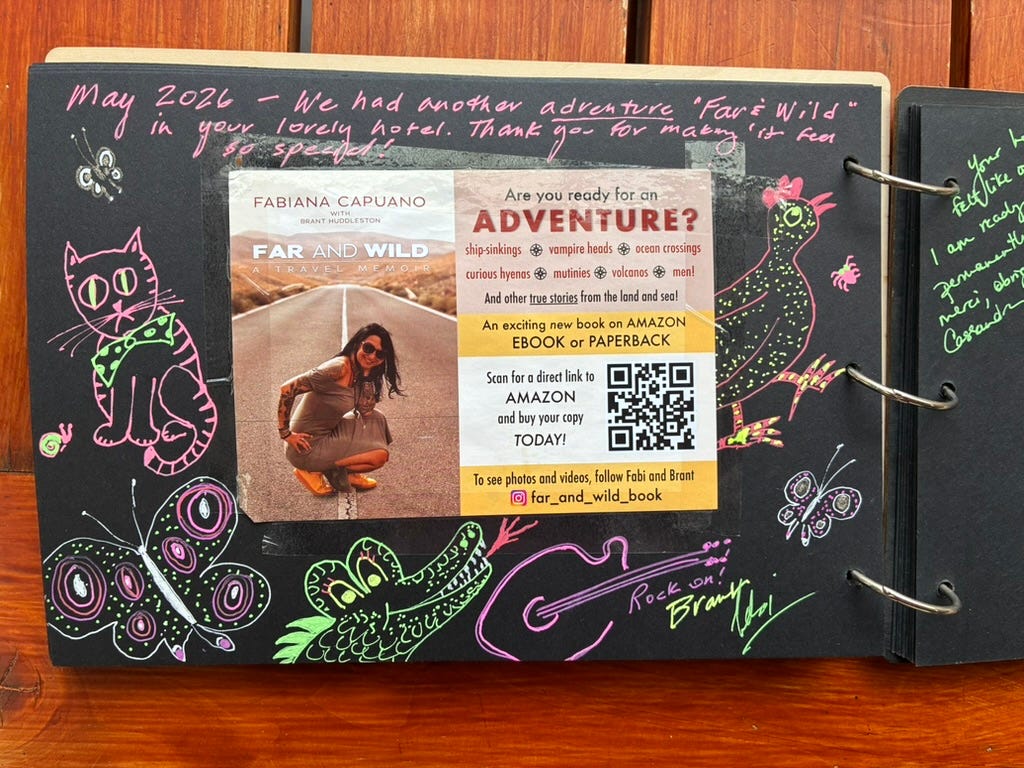
Far and Wild: A Travel Memoir” with Fabiana Capuano
Nowadays, I use AI when I travel — on my smartphone in a way not too different from how I imagined it more than a decade ago. I’ll see something interesting, snap a photo, upload it to ChatGPT, and ask it to ID.
That’s how I discovered the music of Horace Silver, which I explained in my last newsletter. Fabi and I are constantly exploring, and AI helps us satisfy our curiosity. That leads me to the next in my new “Stories from Alien Intelligence” series.
We were in Cidade Velha (Portuguese for “old city”), Cabo Verde’s first European settlement, founded in 1462. The port was a critical stopover for sailing ships carrying enslaved Africans west to the Americas and for gold and silver heading to Europe.
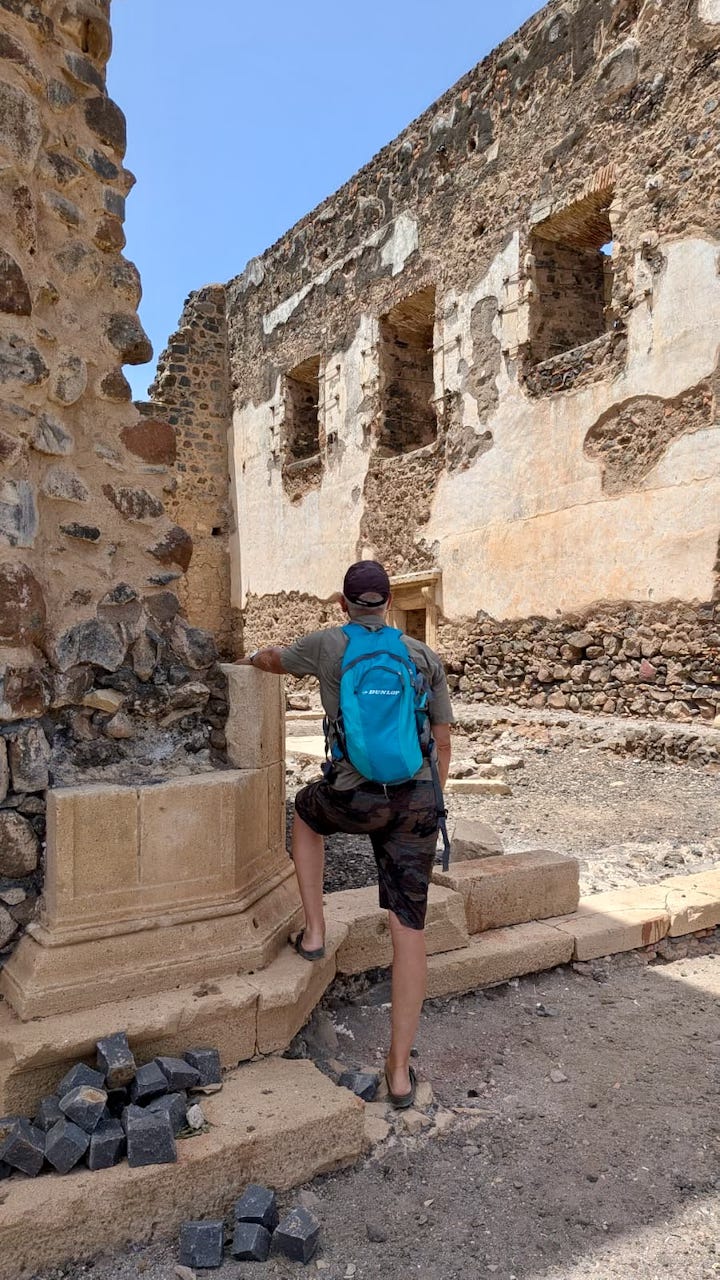
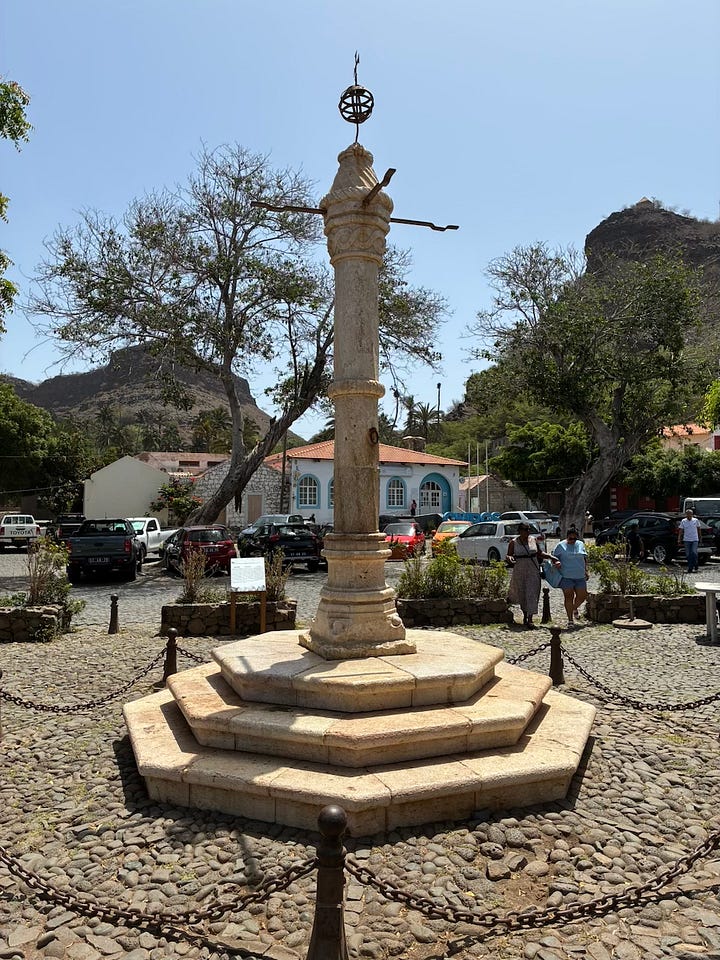
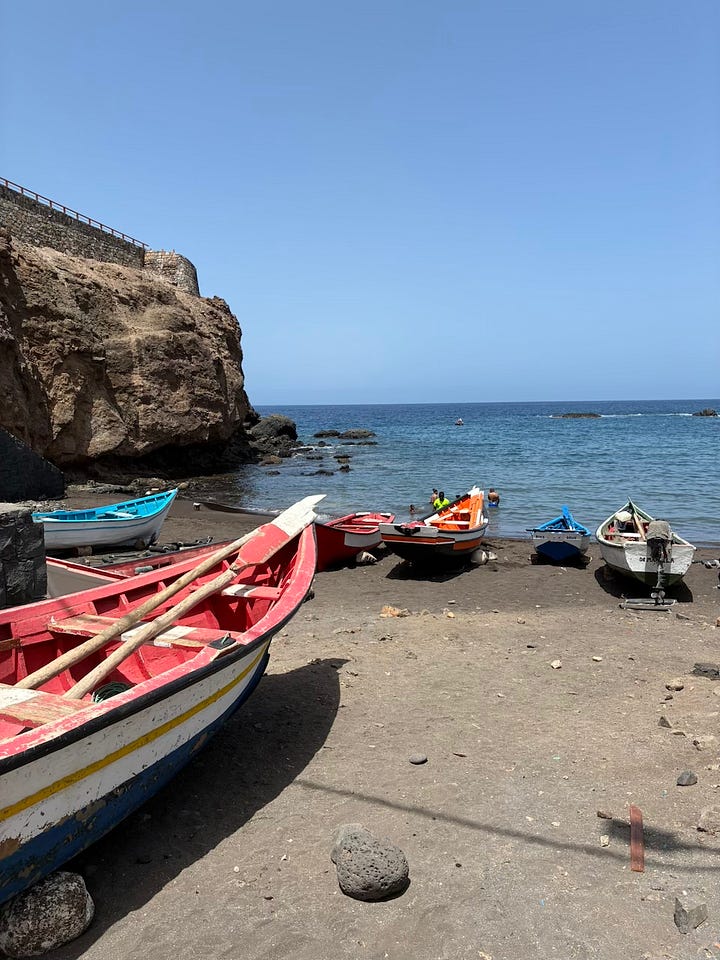
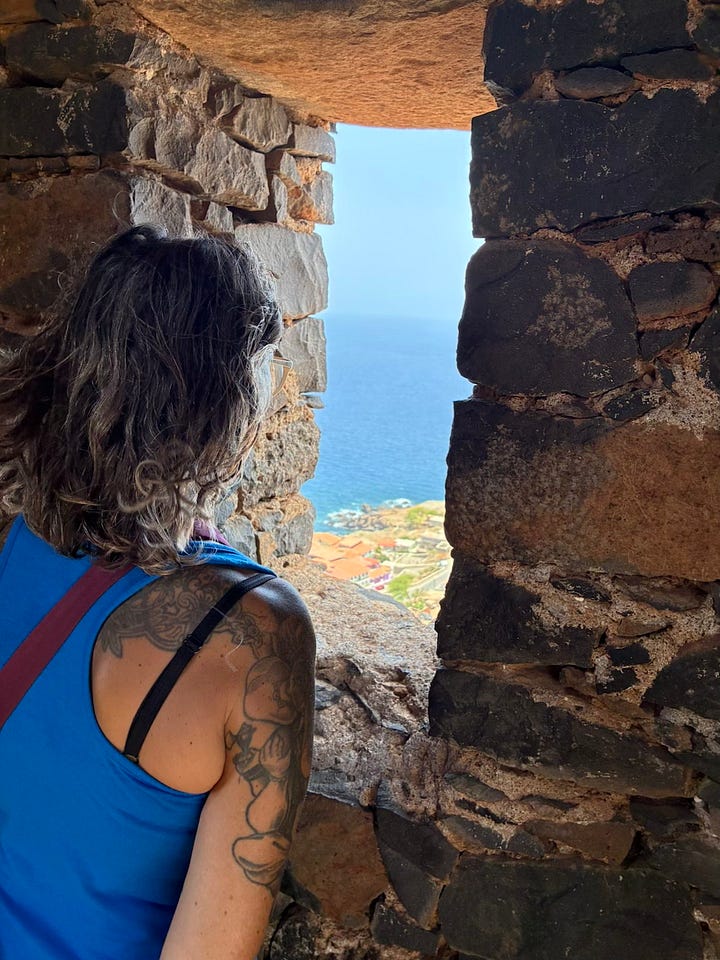
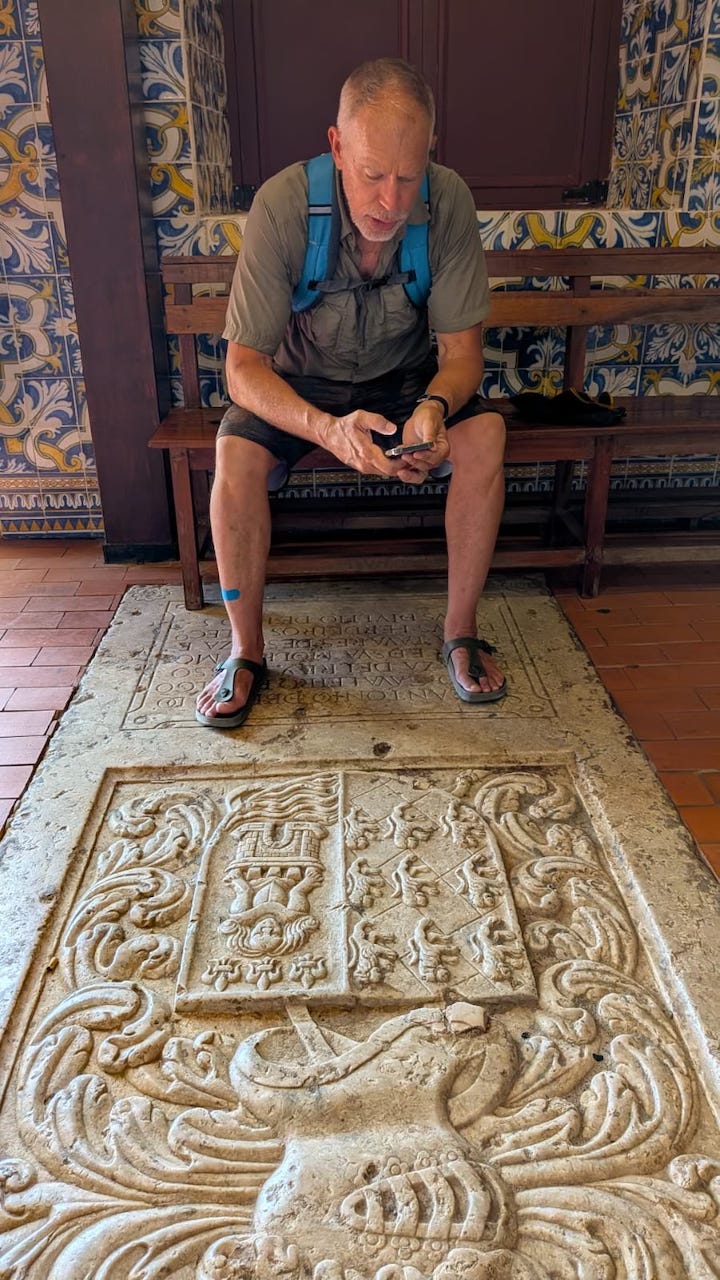
Our curiosity was piqued while visiting the old city’s oldest church, where we found a strange, intricate carving embedded in the floor. Naturally, I asked ChatGPT about it, and I’ll tell that story next, or, rather, it will.
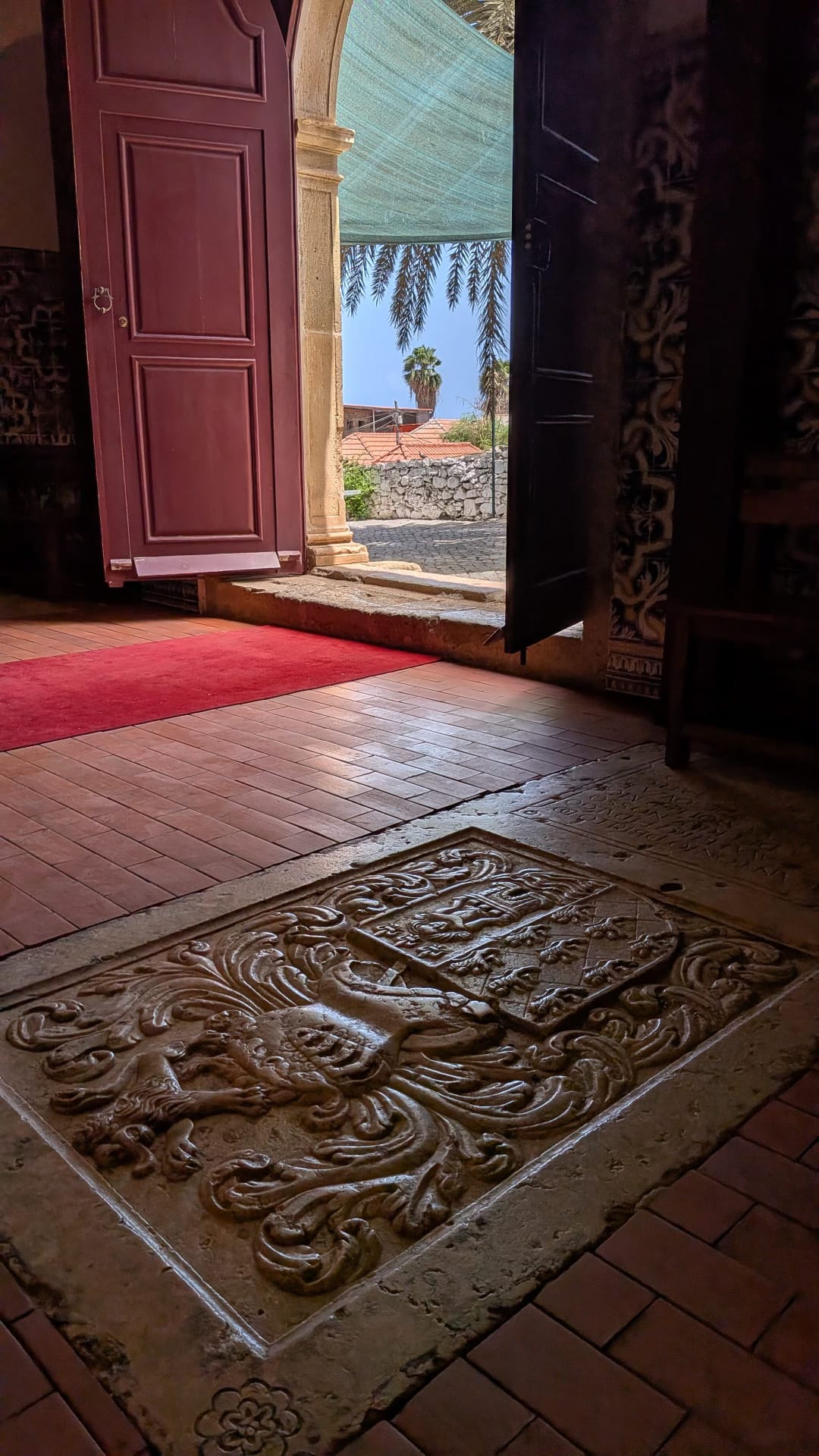
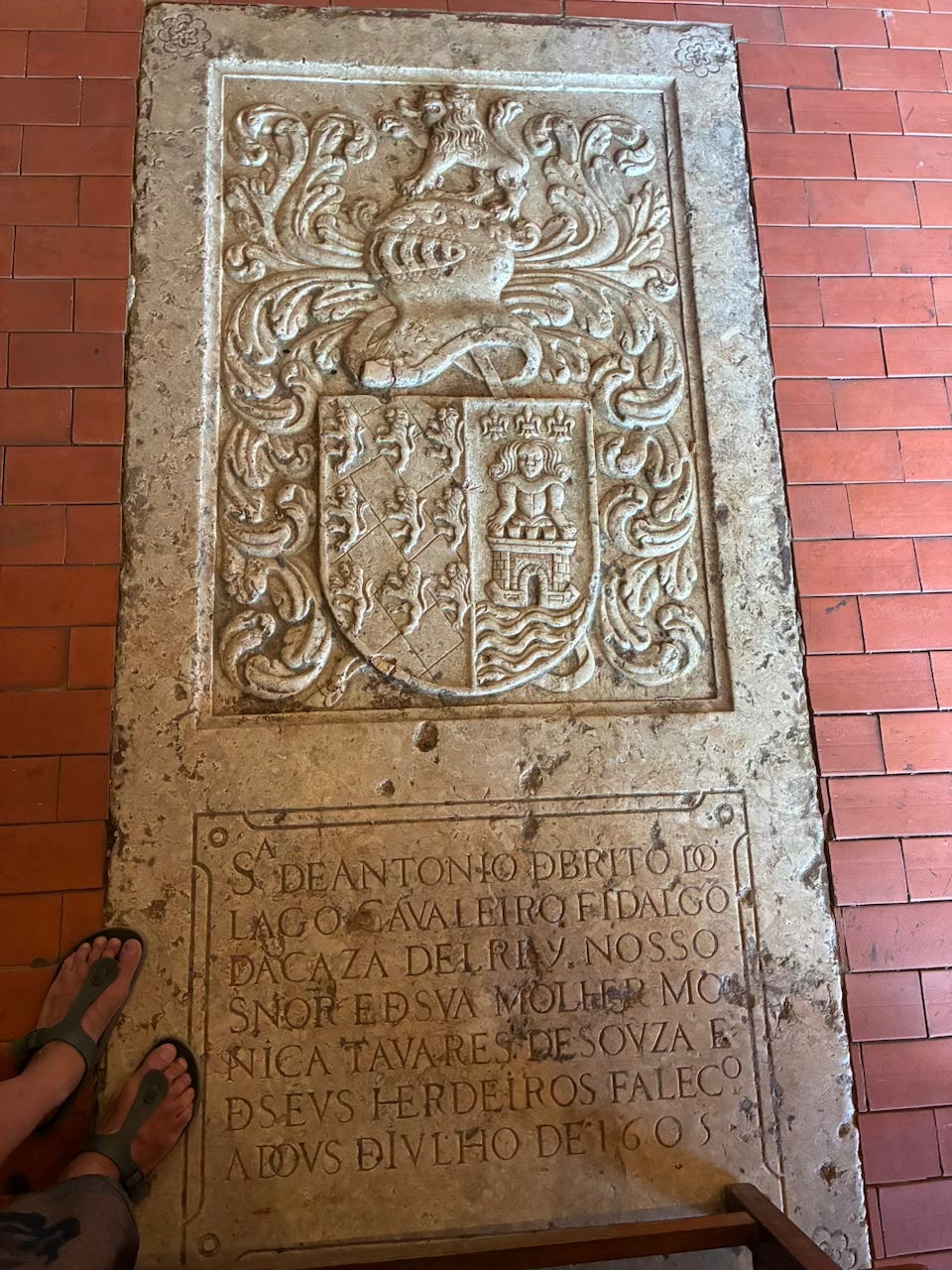
This carving is found in the Nossa Senhora do Rosário church in Cidade Velha on the island of Santiago in Cabo Verde. What is its significance?
This appears to be a grave slab (campa) commemorating a prominent early settler of Cabo Verde, and it is historically significant because it dates from the period when Cidade Velha (then Ribeira Grande) was one of the most important Portuguese colonial cities in the Atlantic world.
The inscription is worn, but much of it can still be read. It identifies the deceased as
“Aqui jaz António de Brito do Lago, cavaleiro fidalgo da Casa del-Rei…”
(“Here lies António de Brito do Lago, knight nobleman of the Royal Household…”)
It further mentions his wife:
“…e sua mulher Mónica Tavares de Sousa…”
and records his death in 1605. Scholars of early Cape Verdean genealogy identify him as António de Brito do Lago, a nobleman (“cavaleiro-fidalgo”) connected with the Portuguese Crown who lived in Ribeira Grande and died on 2 July 1605. He was buried in the Church of Nossa Senhora do Rosário.
The Coat of Arms
The carving above the inscription is the family’s heraldic shield:
A crowned helmet topped by a lion, symbolizing nobility and martial status.
The shield is quartered, combining arms associated with different family lines.
One side appears to show repeated lions, a common heraldic motif in Portuguese noble families.
The other side includes a tower above waves, often representing a lineage connected with coastal fortifications, maritime service, or a specific family inheritance.
In the 16th and 17th centuries, only individuals of substantial status would normally receive such an elaborate carved tomb.
Why It Matters
The church itself, Church of Nossa Senhora do Rosário, is among the oldest surviving colonial churches in the tropics. The tomb therefore belongs to the earliest generation of the Cape Verde elite, at a time when Ribeira Grande was a major hub in the Atlantic trade network linking Portugal, West Africa, Brazil, and the Caribbean.
An Interesting Detail
The slab is set into the floor because burial inside churches was a privilege reserved for clergy, nobles, wealthy patrons, and other prominent figures. In the early modern Portuguese world, walking over such tombstones was normal. Humans have always had a fascinating habit of placing their most expensive memorials where future generations would step on them while looking for a seat.
So the significance of this carving is that it is not merely decorative. It is the 1605 tombstone of António de Brito do Lago, a Portuguese nobleman and member of the royal household, buried in one of the oldest churches in the Atlantic colonial world, making it a direct physical link to the earliest history of Cabo Verde.
Wow. Isn’t that cool? It made the experience of seeing that burial slab so much more meaningful.
It’s time to leave Cabo Verde and move on. Fabi and I leave for Albania in just a few hours, and I still haven’t packed my purple socks.
For those jonesin’ for more Cabo Verde, I’ve posted more 60-second videos on my Go!Mobile YouTube channel. Just tap the big orange button below:
See More Short Videos About CV
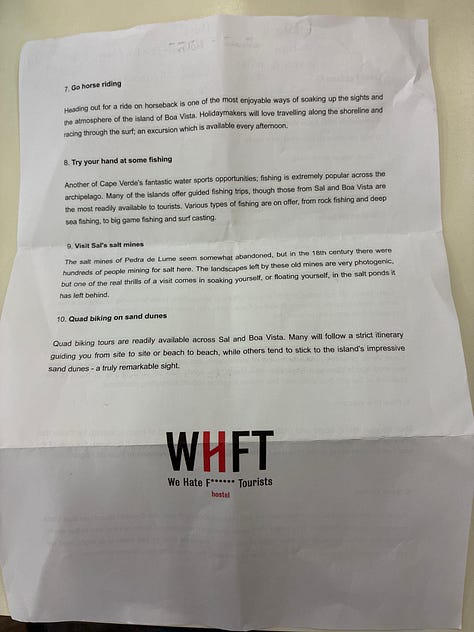
Want to visit the archipelago one day? Here’s a picture of the CV woman who gave us travel tips in Lisbon, along with a copy of her tips. I hope you find them useful.

That’s it for now. I’ll see you next time… on the road!
Here is one of many videos I made pitching the idea, in this case for the tours I created for points of interest in Washington, D.C.
No posts
Comments
Nothing yet. Say the first thing.
Sign in to join the conversation.