
By the time I see this pattern, it usually looks the same.
A patient with an addiction comes in exhausted, sleeping poorly, running on caffeine through the day and reaching for something to take the edge off at night.
A glass or three of wine. An edible. A sleeping pill.
They often do not think of themselves as having a problem. They think this is just how life feels now.
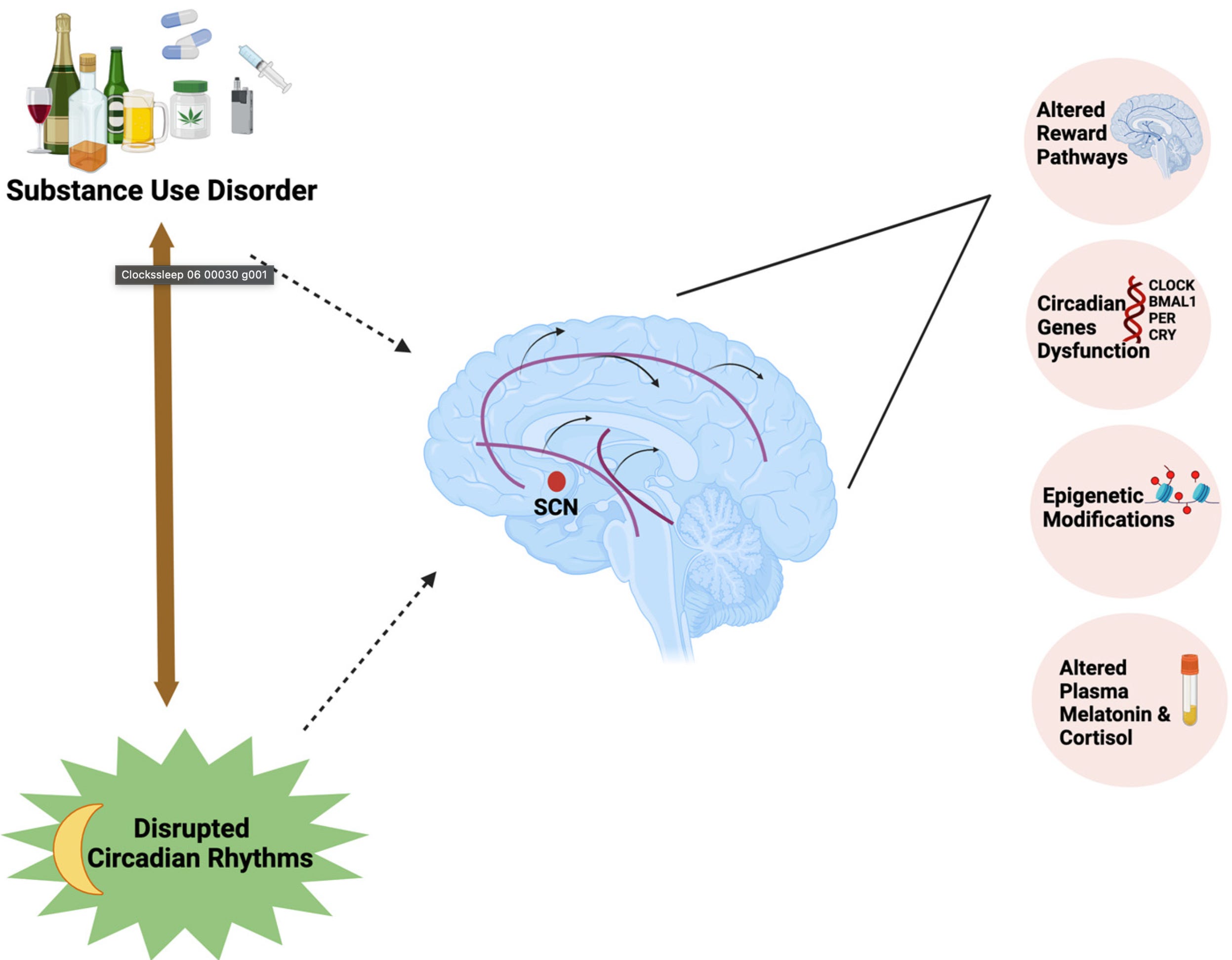
What struck me was how often addiction arrived with a body clock already in ruins: no morning anchor, no evening wind-down, and relief chased whenever the craving landed, most often late at night.
At first I assumed the substance was scrambling the clock. But the more I read, the more I started to wonder about the other direction. What if the broken clock was not just a side effect? What if circadian dysfunction was part of what made the addiction so hard to resist in the first place?
I recognized a small version of this in myself. During my internal medicine residency I worked 80 to 100 hour weeks, flipping between day and night shifts until my body had no idea what time it was. I noticed that even when I got a full eight hours of sleep, the more my schedule drifted, the more easily I slid into the easy stuff: scrolling for an hour, eating junk food, chasing whatever made the next hour feel better. Nothing dramatic. But the pull of those little habits got louder exactly when my sleep and routine was most wrecked. The worse the rhythm, the harder it was to stop.
That question, which direction the arrow actually points, is what sent me into the research.
Dopamine is one of the main chemicals behind motivation, reinforcement, and craving. And the body’s clock genes appear to help tune it.
In mice, the core clock proteins control an enzyme that breaks dopamine down. Disrupt the clock gene Per2 and dopamine signaling in the brain’s reward regions shifts (Hampp et al., 2008). In humans, variations in the same PER2 gene have been linked to how much people drink.
The alcohol story is where it gets interesting.
In one landmark study, Per2-mutant mice drank more alcohol, and the reason was not taste, calories, or slower metabolism (Spanagel et al., 2005). The mutation lowered EAAT1, a transporter that normally helps the brain mop up excess glutamate, a key signaling chemical. Less cleanup left more glutamate pooling in reward-related regions, and that hyper-glutamate state seemed to make alcohol more reinforcing. The mice worked harder to get it. A craving medication used in human alcohol treatment, acamprosate, brought both the glutamate and the heavy drinking back down.
It seems that the system that keeps time and the system that drives reward are not separate machines. They share parts.
A 2025 review pooled clinical studies and found that evening types had roughly 55% higher odds of being diagnosed with a substance use disorder than morning types, along with earlier onset and poorer treatment outcomes (Steardo et al., 2025).
In a separate lab study of 144 drinkers, people with later sleep timing got a bigger stimulating buzz from alcohol, the kind of response that tends to predict future problems (Hasler et al., 2019).
Eveningness travels with short sleep, late light, low mood, and more waking hours during the window when self-control is weakest. The problem is unlikely the chronotype in and of itself. The mismatch between the clock and society’s schedule is likely the main contributor.
This is where the vicious cycle worsens. Alcohol is the obvious example. It can help you fall asleep faster, and may even make you feel like you slept better, but underneath that illusion, it fragments and worsens sleep. Opioids seem to be worse. In a 2025 study using wrist trackers, adults with opioid use disorder had markedly more irregular sleep-wake rhythms than healthy controls, and that irregularity was tied to a longer history of heroin use and to getting less daylight (Zhang et al., 2025). Autopsy studies of people who died with opioid use disorder show disrupted circadian signaling in the exact reward regions that drive addiction (Puig et al., 2023). We also have good evidence that light at night (e.g., from scrolling, games, shows) can disrupt the clock and make it harder to fall asleep.
And so the cycle continues. A wrecked clock makes the drug more tempting. Then the drug wrecks the clock further.
If you wanted to design a brain set up to get hooked, you would build a teenager.
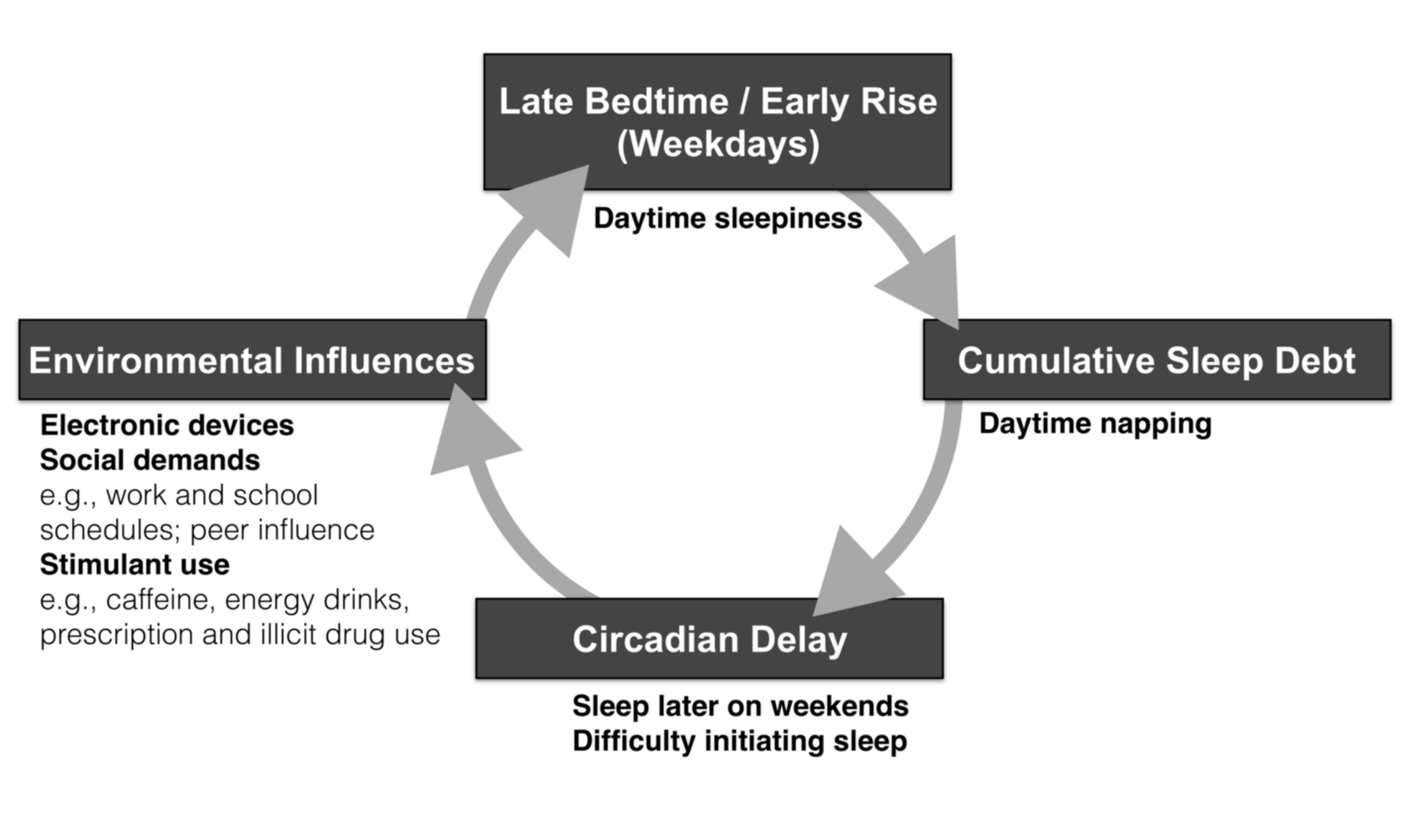
During adolescence, the body clock naturally shifts later and sleep pressure builds more slowly, making it easier for teens to stay up late just as early school start times force them out of bed too soon. That mismatch amplifies reward sensitivity and impulsivity at the same time, creating a peak opportunity for substance use to take hold (Logan et al., 2017). Sleep problems are already the norm here: across 18 studies and more than 120,000 teens, sleep disturbance showed up in about a third of adolescents who used substances (Phiri et al., 2023). The energy drinks they use to cope likely only dig the hole deeper.
In a 2025 pilot study, 41 people in alcohol use disorder treatment were randomized to usual care or a plan that fixed consistent meal, wake, and sleep times (Springer et al., 2025). Over six weeks, about 12% of the structured group relapsed versus roughly 60% of controls: 3 drinking days between them, against 52.
In a 2026 trial, 104 young adults with internet gaming disorder got 14 days of bright light, placebo light, or cognitive training (Li et al., 2026). Bright light beat placebo and matched the training, cutting addiction severity, cravings, and withdrawal, with brain scans showing strengthened reward pathway wiring.
Both of these trials are small, but they both suggest the same thing: protecting the clock, with regular timing or light, can help with addictive behavior (but this is a lever, not a cure).
If you want practical how-to guides behind stabilizing and shifting your clock, I have written it up in detail here:
A few late nights will not give anyone an addiction, and addiction is far too complex to pin on the clock alone.
But the evidence is convincing. Clock genes influence reward systems. Night owls carry more risk. Addicted brains show disrupted rhythms. And steadying those rhythms seems to lower relapse and craving.
The move is not heroic willpower at midnight. It is to stabilize the day before trying to win the night.
Thanks for reading. If you found this helpful, a like or restack helps others discover it.
This newsletter is for educational purposes only. It is not personal medical advice. Opinions are my own. Always consult your own health-care provider for medical guidance.
No posts
Comments
Nothing yet. Say the first thing.
Sign in to join the conversation.