
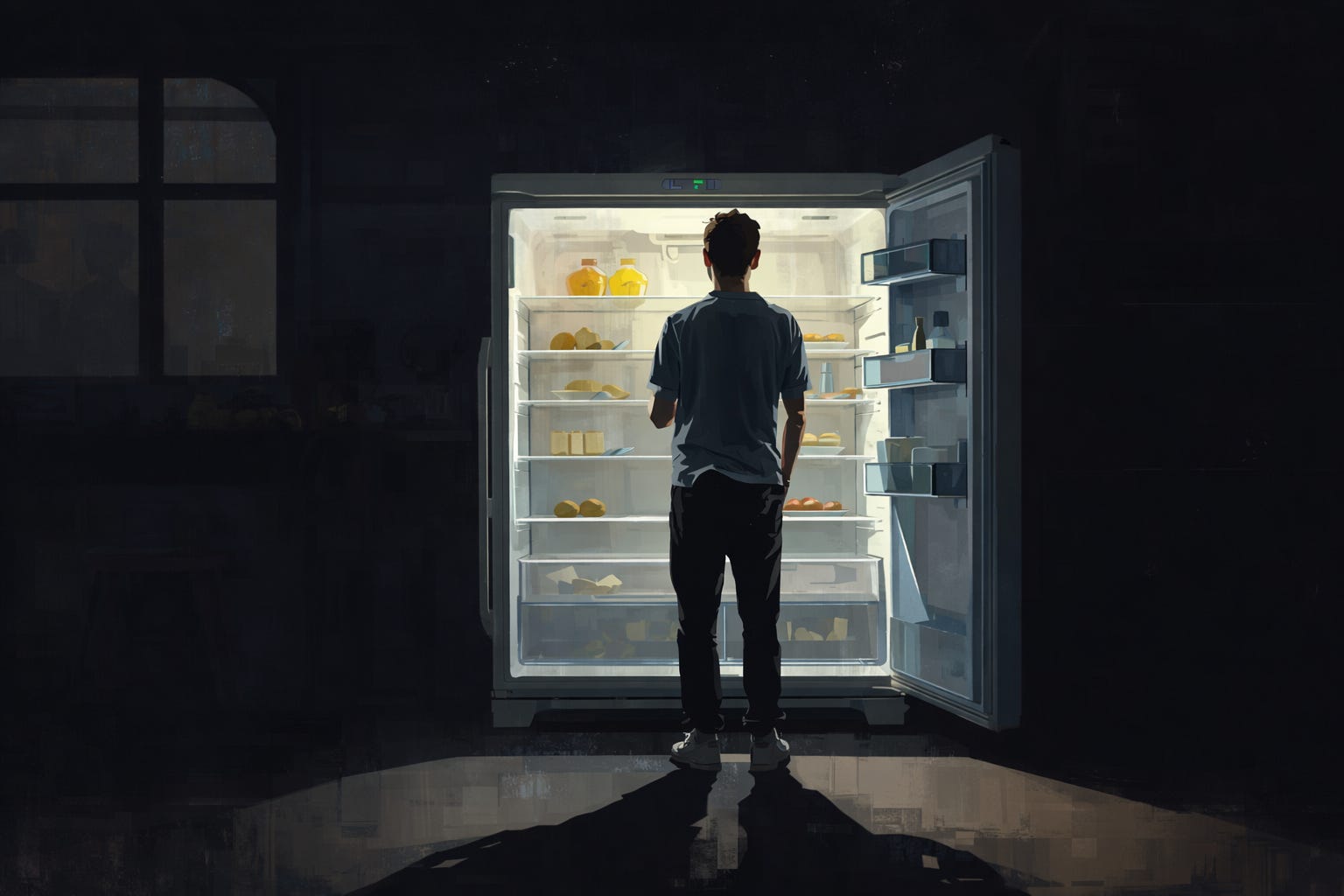
There is almost nothing in life that feels better than getting home at 10 PM, starving, and tearing into whatever is in the fridge.
…For about five minutes.
Then I would lie in bed, stomach churning, wondering why I could not fall asleep. I would wake up groggy, bloated, with a sour taste in my mouth, and promise myself I would eat earlier tomorrow. I never did.
That was my routine for most of university. Long days on campus, late shifts at work, and the biggest meal of my day landing somewhere between 9 and 11 PM. It felt normal because everyone around me was doing the same thing.
Then in my second year of medical school, I decided to look into the science. I quickly discovered that eating late is one of the quietest, most underrated things people are doing that undermines long-term health. Glucose tolerance drops. Reflux spikes. Sleep fragments. Blood pressure fails to dip overnight. And the damage compounds over years.
In this article, I am going to cover 8 effects that I hope convince you to stop eating late at night, ending with a brand-new RCT that directly tested the “stop eating 3 hours before bed” rule. At the end, I answer the practical questions I get asked most, including what to eat if you actually cannot avoid a late meal.
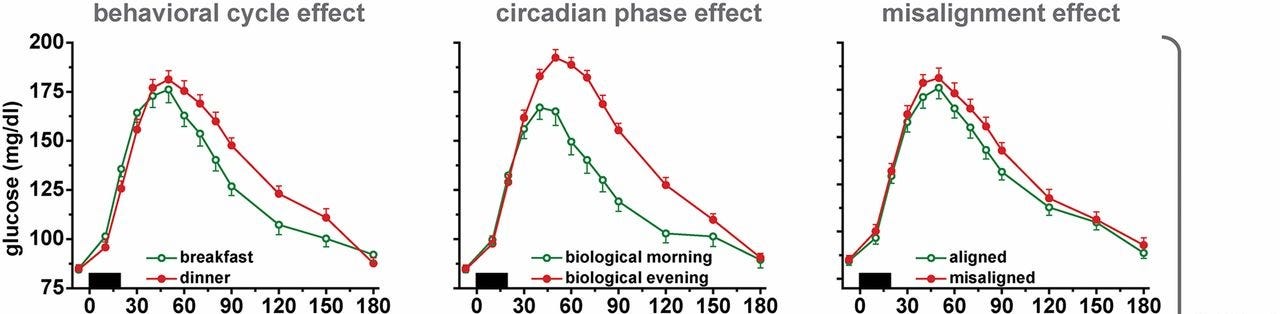
Your pancreas runs on a clock. It is primed to release insulin quickly and efficiently in the morning, and that ability fades as the day goes on. Eat a big dinner at 9 PM and the same carbs that your body handled easily at breakfast now sit in your bloodstream for longer, spiking your glucose higher and for longer.
In a controlled study, 14 healthy adults ate identical meals at 8 AM and 8 PM. Their glucose spike was 17% higher at night, driven by a 27% weaker early insulin response. In a separate forced-desynchrony experiment, 3 out of 8 participants hit prediabetic-range glucose levels on normal meals when their eating window was misaligned with their circadian clock (Morris et al., 2015; Scheer et al., 2009).
Your body spends energy just to process food, and it does that work more efficiently in the morning. Core body temperature, thyroid activity, and sympathetic tone are all higher during the day and fall at night, so the same meal costs you fewer calories to digest when you eat it late.
In one crossover study, the calorie-burning effect of a meal was 2.5 times higher after breakfast than after dinner, even when the meals were identical. Another separate study found the effect was 44 to 50% lower in the biological evening, driven by the body’s internal clock rather than behavior (Richter et al., 2020; Morris et al., 2015).
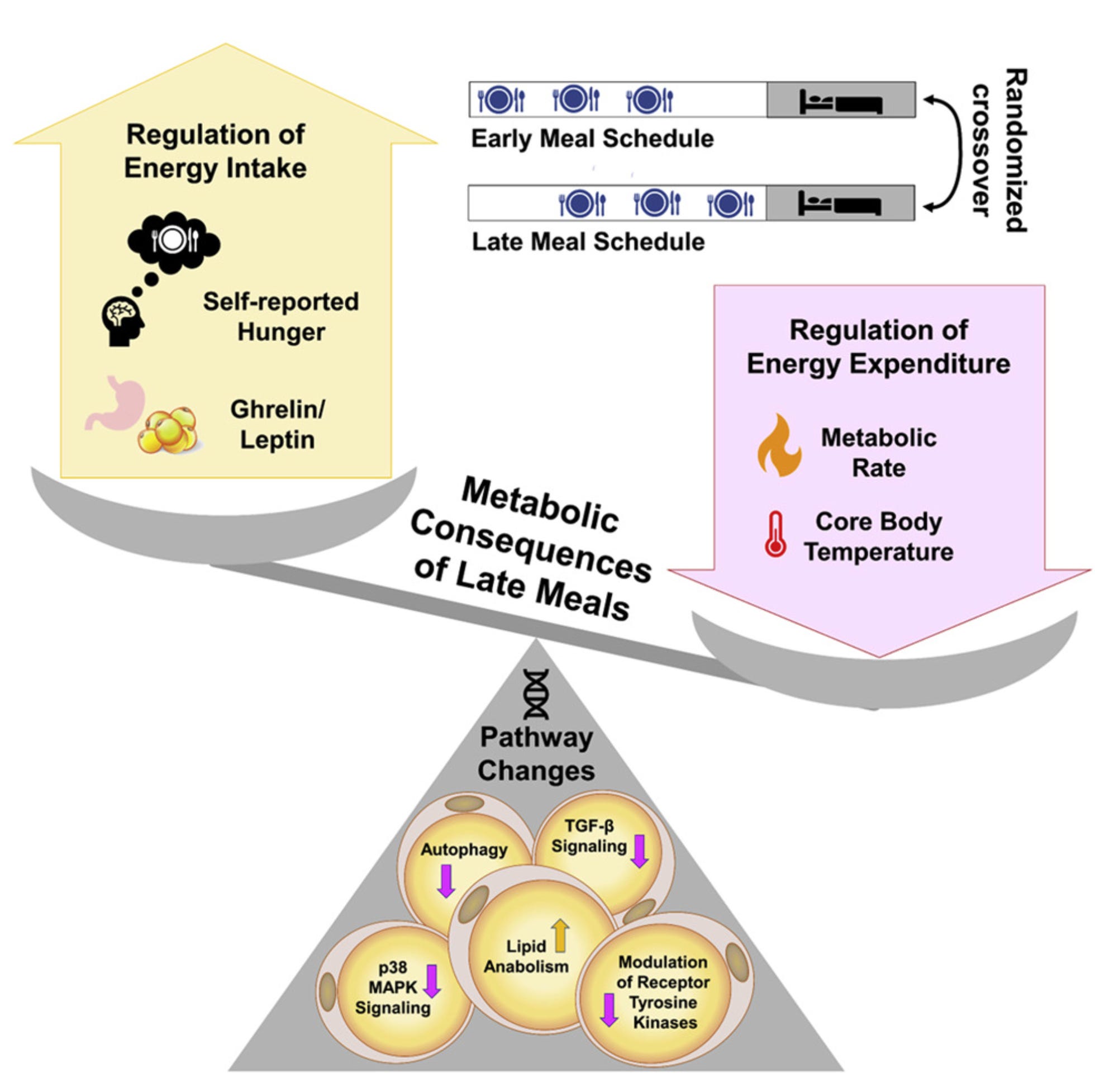
Eating late pushes your hunger hormones in the wrong direction. You make less of the hormone that says “I am full” and more of the one that says “I am hungry,” and the effect carries into the next morning. Your fat cells also shift into storage mode.
In one controlled study, 16 adults ate identical meals on two schedules shifted 4 hours apart.
On the late schedule they felt hungrier, burned fewer calories the next day, and their fat tissue switched on genes for storing fat and shut down genes for burning it (Vujović et al., 2022).
One late eating window can tilt the next day’s physiology against you.
Your blood pressure is supposed to drop by about 10 to 20% overnight. That dip is protective. It gives your heart and blood vessels a break. Eating late appears to blunt that dip, keeping your system in “daytime mode” when it should be resting, and over years that may add up to real vascular damage.
In a study that followed 103,389 French adults for 7 years, eating the last meal after 9 PM was linked to a 28% higher risk of stroke-type events compared to eating before 8 PM. Each extra hour of overnight fasting lowered that risk by about 8%.
In a separate Japanese study of 2,930 adults, eating within 2 hours of bed was linked to a 23% higher risk of developing high blood pressure over 4.5 years (Palomar-Cros et al., 2023; Funakoshi et al., 2021).
When you eat a big meal and lie flat, gravity is no longer on your side. Stomach acid sits against the valve at the top of your stomach, and the longer it sits, the more likely it leaks into your esophagus and back up into your mouth. That is why reflux is so often a “lying down” problem.
In a study of 441 people, eating dinner less than 3 hours before bed was linked to roughly 7 times higher odds of having GERD. An objective study that measured acid levels in the esophagus during sleep confirmed more reflux after a late dinner (Fujiwara et al., 2005; Piesman et al., 2007). If you wake at 3 AM with a sour taste, burning in your chest, congestion, or dry cough, your 9 PM pasta is a plausible suspect.
Your body has circadian control over cell division, DNA repair, and melatonin release, all of which influence cancer risk. Eating late appears to disrupt those rhythms the way shift work does, and shift work is a known risk factor for cancer.
In a Spanish study of 1,205 breast and 621 prostate cancer cases, leaving at least 2 hours between dinner and sleep was linked to a 20% lower combined risk compared to eating within 2 hours of bed (Kogevinas et al., 2018). Protection was strongest in self-described “morning people.” This is observational data from one population, but the cohort excluded shift workers and the signal fits the circadian-disruption story.
Digestion is an active process. Your gut is working, your core temperature is rising, and your body is dealing with a glucose and insulin spike, all at exactly the time it should be winding down. On top of that, reflux and middle-of-the-night bathroom trips can wake you up.
A survey of 793 students found that eating within 3 hours of bed was linked to about 60% higher odds of waking during the night (Chung et al., 2020). However, a small sleep-lab study in healthy young adults without reflux found no effect on the deep structure of sleep itself (Duan et al., 2021), so the effect might not be universal.
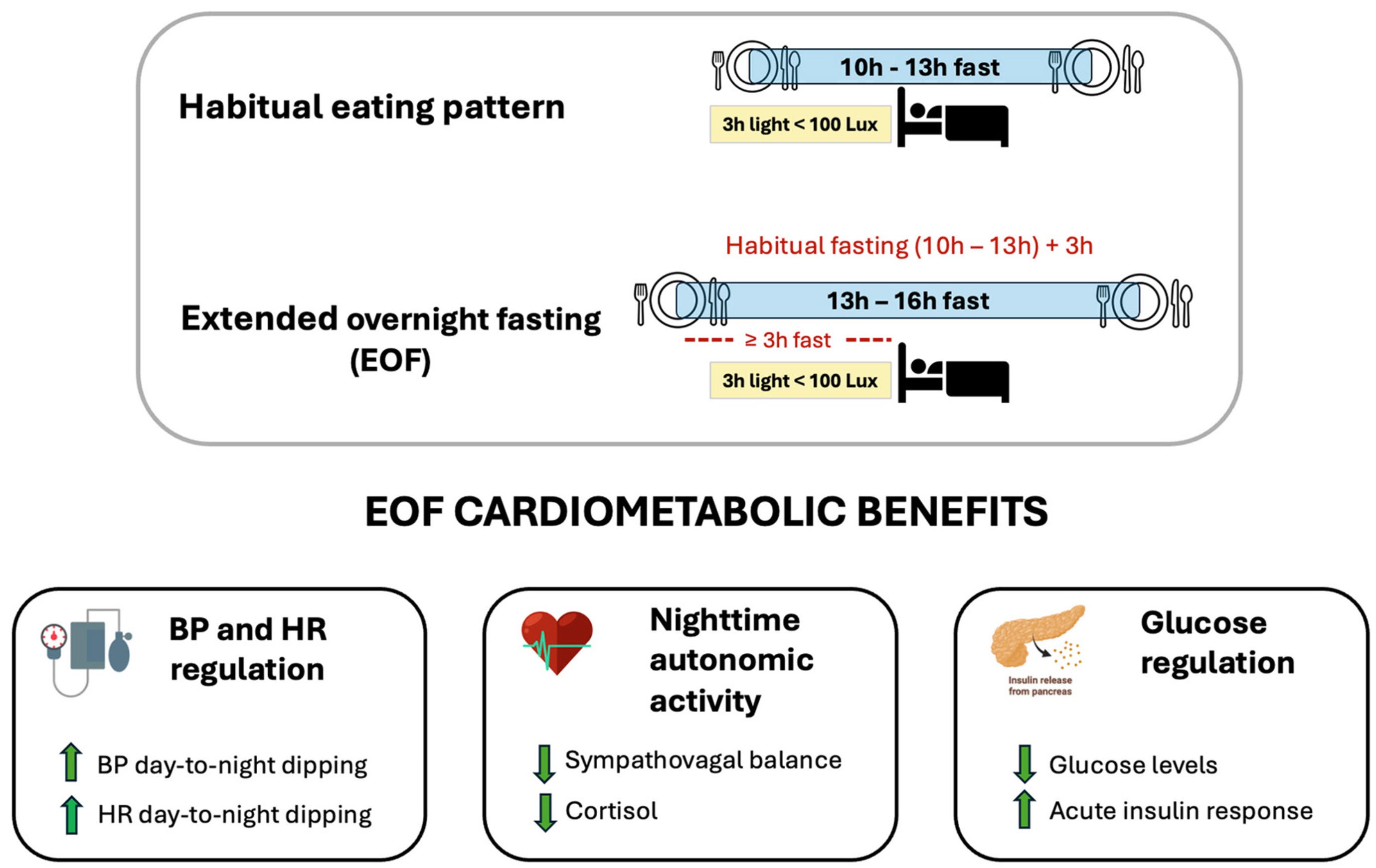
In a brand new 2026 study, 39 overweight adults aged 36 to 75 were randomized to either extend their overnight fast by 3 hours (last meal at least 3 hours before bed) or keep eating the way they usually did, for 7.5 weeks. Calories, macros, sleep timing, and evening light exposure were matched between groups (Grimaldi et al., 2026).
The results were fascinating. One of the two co-primary outcomes was positive: nighttime diastolic blood pressure dipping improved significantly. The other, a measure of insulin sensitivity called the Matsuda Index, did not.
On secondary measures, the late-fasting group did better across the board: significantly greater overnight dipping of heart rate, a 12% drop in nighttime cortisol, and better glucose handling on a morning test.
This is the end of the free preview. If you keep reading, I answer the practical questions I get asked most: when I actually stop eating, what to do when you’re hungry at 10 PM, rules for late dinners you can’t avoid, a reflux-specific protocol, and whether a pre-sleep protein shake ruins everything or is actually fine.
Comments
Nothing yet. Say the first thing.
Sign in to join the conversation.