
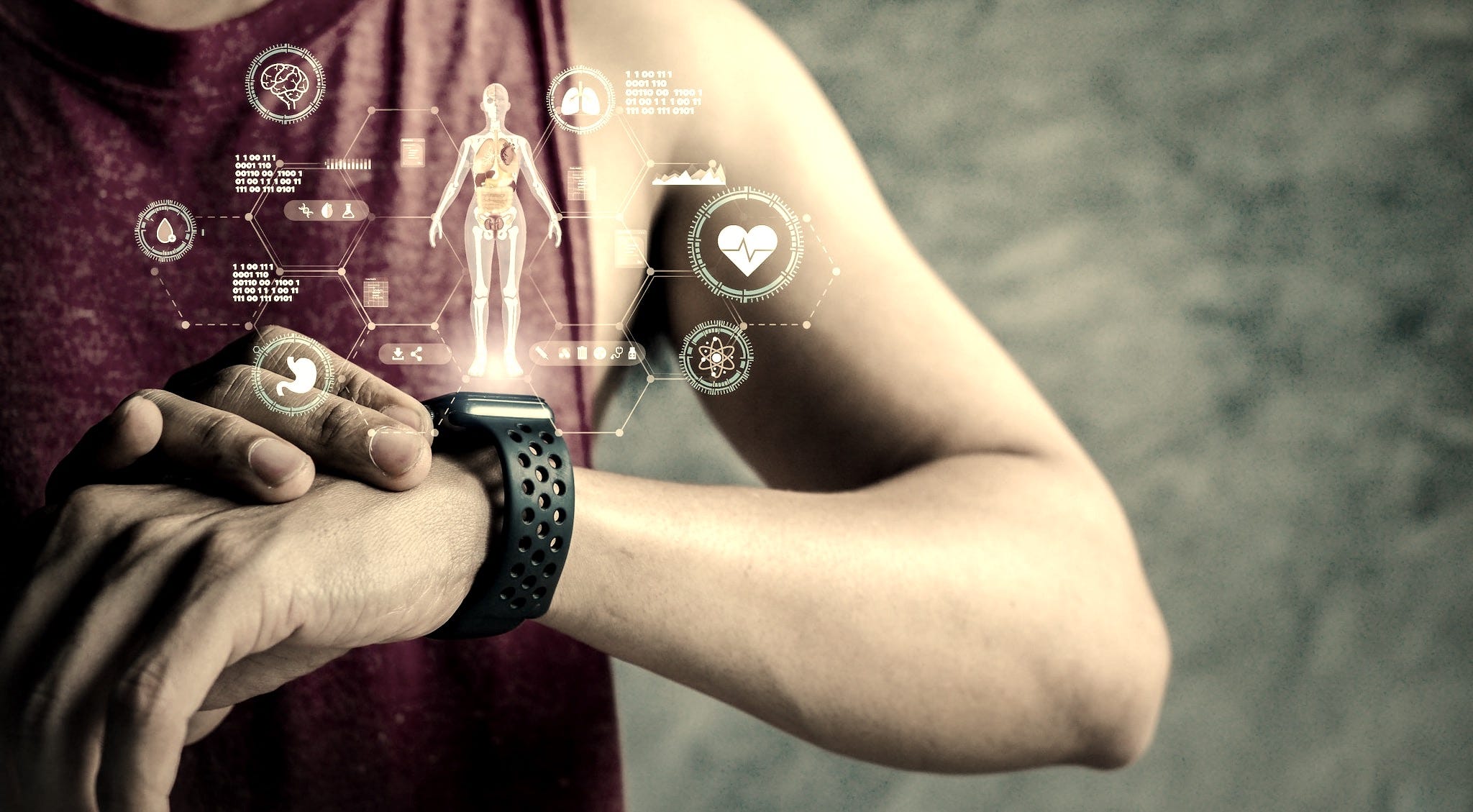
For most of human history, the autonomic nervous system was private.
It adjusted heart rate, vascular tone, respiration, and pupil size silently, beneath awareness. It regulated arousal, allocated energy, prepared the organism for threat or focus. It did not announce its activity. It did not produce language.
Now, consumer electronics are beginning to measure it continuously.
Across wrist-worn devices, earbuds, headsets, in-car cameras, and neural wristbands, companies are assembling systems capable of capturing heart rate variability, pupillary dynamics, facial microvascular flow, voice micro-variability, and peripheral electrical signals — in real time, at scale.
This is often described as “emotion AI.”
That framing obscures the deeper shift.
What is emerging is not emotion detection, but the operationalization of the autonomic nervous system as a platform layer.
Precision matters here.
Heart rate variability reflects vagal modulation of the sinoatrial node. It is a robust index of parasympathetic tone and regulatory flexibility. The Framingham Study demonstrated that reduced HRV is associated with increased risk of cardiac events, hypertension and mortality - decades ago.
Pupil dilation is associated with locus coeruleus–noradrenergic activity. It increases with arousal, attention, cognitive load, and uncertainty. The pupil dilates during fear but also and during mental arithmetic.
Facial blood flow (and thus facial temperature) shifts reflect autonomic vasodilation and vasoconstriction.
Voice prosody changes with sympathetic activation and motor tension.
These signals are not speculative. They are physiologically grounded and measurable with increasing precision.
If autonomic telemetry becomes reliable, it could reshape how we monitor stress biology, treatment response, and behavioral endpoints in future trials.
They encode an internal, regulatory state - not necessarily semantic meaning.
They capture intensity, not narrative.
The tension in the current wave of autonomic AI is not about whether these signals exist.
It is about what can be inferred from them.
In 2019, a major review of over 1,000 studies concluded that the mapping between facial expression and internal emotional state is far weaker and more context-dependent than commonly assumed. People scowl when angry less than a third of the time. They scowl in many non-angry contexts as well.
Autonomic activation is similarly non-specific. Sympathetic arousal occurs during fear, excitement, competition, sexual attraction, cognitive effort, and novelty detection. Parasympathetic withdrawal accompanies anger, intense concentration, and public speaking.
Arousal is not valence. Cognitive load is not deception. Parasympathetic tone is not happiness.
Most commercial systems collapse three layers into one claim:
Measurement → Pattern recognition → Psychological labeling
Each layer introduces uncertainty.
Adding modalities — heart rate plus pupils plus voice — may refine prediction. It may also compound ambiguity. Biological non-specificity does not disappear simply because more sensors are added.
The autonomic nervous system regulates survival and energy allocation. It does not encode discrete emotional categories for external decoding.
Despite the scientific caveats, the infrastructure is advancing rapidly.
Apple now integrates heart rate variability through Apple Watch, high-resolution eye tracking through Apple Vision Pro, and facial micro-movement analysis via recent acquisitions.
Meta has pursued wrist-based EMG and headset-based gaze tracking.
Automotive firms such as Smart Eye AB have embedded driver monitoring systems in over a million vehicles.
These companies are not merely experimenting with emotion recognition. They are constructing continuous physiological telemetry ecosystems.
The commercial logic is straightforward. Continuous autonomic data can power stress monitoring, fatigue detection, performance optimization, mental health tracking, and attention analytics. Hardware integration creates defensibility. Data accumulation compounds advantage.
In other words, the autonomic nervous system is becoming digitized.
The most defensible applications are those aligned with regulatory state rather than psychological interpretation.
Driver drowsiness detection is biologically coherent. Fatigue monitoring in aviation or medicine is defensible. Sleep staging and recovery metrics already rely on autonomic proxies. Continuous tracking of sympathetic spikes in PTSD or panic disorder aligns with underlying physiology.
In these domains, the system quantifies autonomic intensity or instability.
It does not attempt to name the feeling.
That distinction may determine which products survive regulatory scrutiny and scientific challenge.
Recent regulatory developments have focused primarily on emotion recognition in employment, education, and surveillance contexts. The concern is not heart rate monitoring per se. It is the inference of hostility, deception, or suitability from physiological signals.
Measuring physiology is tolerated.
Labeling psychology is contentious.
This is a crucial strategic fault line.
Companies that treat autonomic telemetry as a health and safety biomarker layer may find regulatory room to operate. Those that promise emotional omniscience risk running into both biological limits and legal barriers.
What is unfolding is a large-scale experiment: can continuous autonomic telemetry be translated into stable, generalizable insight about human internal states?
The data will accumulate. Models will improve. Multimodal fusion will become more sophisticated.
But the nervous system evolved to regulate survival, not to broadcast interpretable emotional declarations. It encodes readiness, threat detection, and energy allocation. It is exquisitely sensitive — and fundamentally context-dependent.
The signals are real.
The measurement is improving.
The meaning remains conditional.
If autonomic AI matures into a tool for monitoring stress, fatigue, and regulatory instability, it may become a legitimate biomarker layer of digital health.
If it overreaches: promising certainty about anger, truthfulness, or moral intent; biology may impose its own constraints.
The autonomic nervous system has always been powerful.
Whether it becomes interpretable at scale is another question.
Readers - Have you experienced any of these technologies tracking the autonomic nervous system? Do you have any privacy concerns? Comments welcome.
Thanks for reading. If you found this entry interesting, please, consider subscribing and sharing so that others can receive more like these in their inbox!
Views expressed here are my own and not necessarily those of my employer. All data mentioned and discussed here are publicly available.
I’ve spent nearly 20 years as a neurologist and clinical trialist and distilled that experience into a plain‑language book that explains how trials work, what to expect, and how to weigh risks and benefits, with patients and caregivers foremost in mind, and useful also for students, researchers, and clinicians.
A Patient’s Guide to Clinical Trials: Navigating the Promise and Pitfalls of Experimental Treatments, published by Bloomsbury, is now available for pre-order.

Comments
Nothing yet. Say the first thing.
Sign in to join the conversation.