
In glioblastoma, treatment decisions are often described as if they happen in a clean sequence.
The scan shows progression. The oncologist explains the options. The family weighs the evidence. A decision is made.
That is not what the decision looks like from inside the family.
In Ember’s conversations, Avastin often appears at a moment when the picture is already hard to read. The MRI may be worse, but no one is certain whether it represents true progression, treatment effect, or swelling. The patient may be sleeping more, struggling to walk, losing words, having seizures, or needing more dexamethasone. A clinical trial may still be somewhere in the background. Hospice may have been mentioned for the first time.
Then someone says Avastin.
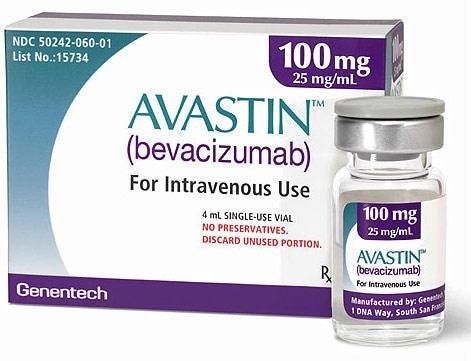
Across our latest dataset, we found 137 conversations in which patients or caregivers mentioned Avastin or bevacizumab. In 79 of those conversations, they were actively trying to decide whether it was the right treatment to start, continue, restart, combine with something else, or decline.
What stood out was how rarely people were asking a single medical question.
They were not simply asking, “Does Avastin work?”
They were asking what working would mean now.
Would it shrink the tumor, or only make the MRI look better? Could it reduce swelling enough for the person to walk again? Might it help them lower steroids? Would it buy time to reach a clinical trial? Would it make them feel better, or just create another infusion schedule and another round of side effects?
And sometimes, quietly: are we choosing this because it may help, or because we are not ready to stop?
The Scan Is Only Part of the Decision
Avastin creates a particularly difficult kind of uncertainty because it can reduce contrast enhancement and edema quickly. The MRI may improve. Symptoms may improve too.
But those two things do not always move together.
Families in our conversations often knew enough to be suspicious of a cleaner-looking scan. They asked about “pseudoresponse.” They wondered whether a reduction in enhancement represented real tumor control or simply a change in how the tumor appeared after treatment. They asked whether perfusion imaging mattered. Whether FLAIR changes mattered. Whether they should trust the scan when the person sitting beside them seemed weaker, sleepier, or more confused.
This creates a strange moment.
The medical record may say response. The family may be watching decline.
That contradiction is not a small communication problem. It sits at the center of the decision.
When a treatment can improve the image without clearly changing the course of the disease, everyone needs to agree in advance on what evidence will count.
Not after the second or third infusion. Before the first.
Families Are Often Looking for Function, Not a Cure
One of the clearest findings in these conversations is that families are often using a different endpoint than the one they hear discussed in the clinic.
They are looking for function.
Can he get out of bed?
Can she make it to the bathroom without two people helping?
Will the headaches ease?
Could the steroid dose come down?
Might he stay awake long enough to talk with the kids?
Could she swallow more safely?
These can sound like modest goals when written in a treatment plan. They do not feel modest when a family has watched those abilities disappear over a matter of days.
For some people, a temporary improvement in speech, alertness, mobility, or appetite may be enough to make Avastin worthwhile, even if it does not significantly extend survival. That is a legitimate treatment goal.
But families need to hear it named plainly.
They need to know whether the oncologist is recommending Avastin to control tumor growth, reduce edema, relieve symptoms, create a bridge to another treatment, or test whether the decline is being driven by swelling.
Those are different reasons to use the same drug.
They also require different ways of judging whether it is helping.
“Is It the Tumor, or Is It the Treatment?”
Another pattern appeared repeatedly.
A person starts Avastin, sometimes with irinotecan or another treatment. The scan stabilizes or improves. At the same time, the person becomes exhausted, confused, weak, unable to eat, or far less independent.
The family is left trying to solve a problem that may not have a clean answer.
Is the tumor progressing despite the scan?
Is the combination treatment too toxic?
Is Avastin helping the edema but not the underlying disease?
Would the person improve if one drug were stopped?
Are they nearing the end of life, or simply worn down by treatment?
Families often come to Ember after spending days watching these changes. They are not looking for a textbook side-effect list. They are trying to make sense of what they are seeing in the kitchen, the bedroom, the car ride home from infusion.
One caregiver may notice that the patient is more awake during a treatment break. Another may see walking improve after the steroid dose changes. These observations are clinically useful, but they are not always captured in a way that helps guide the next decision.
The family knows something has changed.
They need help determining what that change means.
The Fear of Closing Another Door
For some families, the question is not only whether Avastin is the right treatment. It is whether starting Avastin will remove another option later.
Clinical-trial eligibility came up repeatedly in the decision conversations we reviewed.
Families worried that Avastin might disqualify the patient from a trial. They wondered whether they should pursue a trial first, use Avastin as a bridge, or begin treatment immediately because symptoms were worsening too quickly to wait.
This is where the idea of “choice” can become misleading.
A family may technically have several options. In practice, neurologic decline, steroid dependence, travel requirements, eligibility criteria, insurance delays, and the pace of the disease may reduce those options by the day.
The Avastin decision is therefore often a sequencing decision.
Not only: should we do this?
Also: if we do this now, what might still be possible afterward?
That conversation needs to happen early. Waiting until after treatment begins may leave the family feeling that they agreed to close a door they did not know was open.
When Avastin and Hospice Appear in the Same Conversation
Some of the hardest conversations involved Avastin and hospice at the same time.
The family had been told there were few meaningful treatment options left. Someone suggested Avastin might reduce swelling or create a short period of improvement. Someone else suggested it was time to focus entirely on comfort.
The family wanted to know whether one more infusion could bring the person back.
Not cure them. Bring them back enough to speak, eat, recognize people, or sit outside.
This is where probabilities and median outcomes feel painfully inadequate.
The real question becomes: what burden are we willing to accept for the possibility of what kind of improvement?
A trip to the infusion center may feel manageable when someone is walking and talking. It feels very different when transferring them into the car requires two people, every appointment takes the rest of the day, and the patient no longer understands why they are there.
Continuing treatment is not always hope.
Stopping treatment is not always surrender.
Families know this in theory. Living it is different.
Define “Working” Before Treatment Starts
The most important opportunity we see is simple.
Before Avastin begins, the clinical team and family should agree on what they are trying to accomplish.
The plan might sound like this:
We are using Avastin primarily to reduce edema and improve alertness and mobility. We will track steroid dose, walking, speech, wakefulness, headaches, appetite, and the amount of help needed with daily activities. We expect some clinical signal within a defined period. If function continues to decline, toxicity becomes significant, or the treatment prevents access to a more appropriate option, we will reconsider.
That conversation changes the experience of treatment.
It gives the family something more useful than “let’s see what the next scan shows.”
It also recognizes that benefit in glioblastoma cannot always be measured by imaging alone. A smaller area of enhancement may matter. So may getting through breakfast without vomiting. Staying awake during a visit. Taking fewer steroids. Being able to stand.
And sometimes the answer becomes clear in the other direction. The MRI improves, but the person does not. The treatment becomes harder to receive. The hoped-for function does not return.
That is information too.
What People Are Really Asking
People deciding about Avastin are rarely asking for a verdict on one drug.
They are asking how to make a decision when the evidence is mixed, time is short, and the outcomes that matter most may never appear in a trial endpoint.
They want to know what is still possible.
They want to know what they might lose by waiting.
They want to know whether a better scan could still mean a worse life.
Most of all, they want help deciding what would count as enough benefit now.
That question cannot be answered by the MRI alone.
Comments
Nothing yet. Say the first thing.
Sign in to join the conversation.