
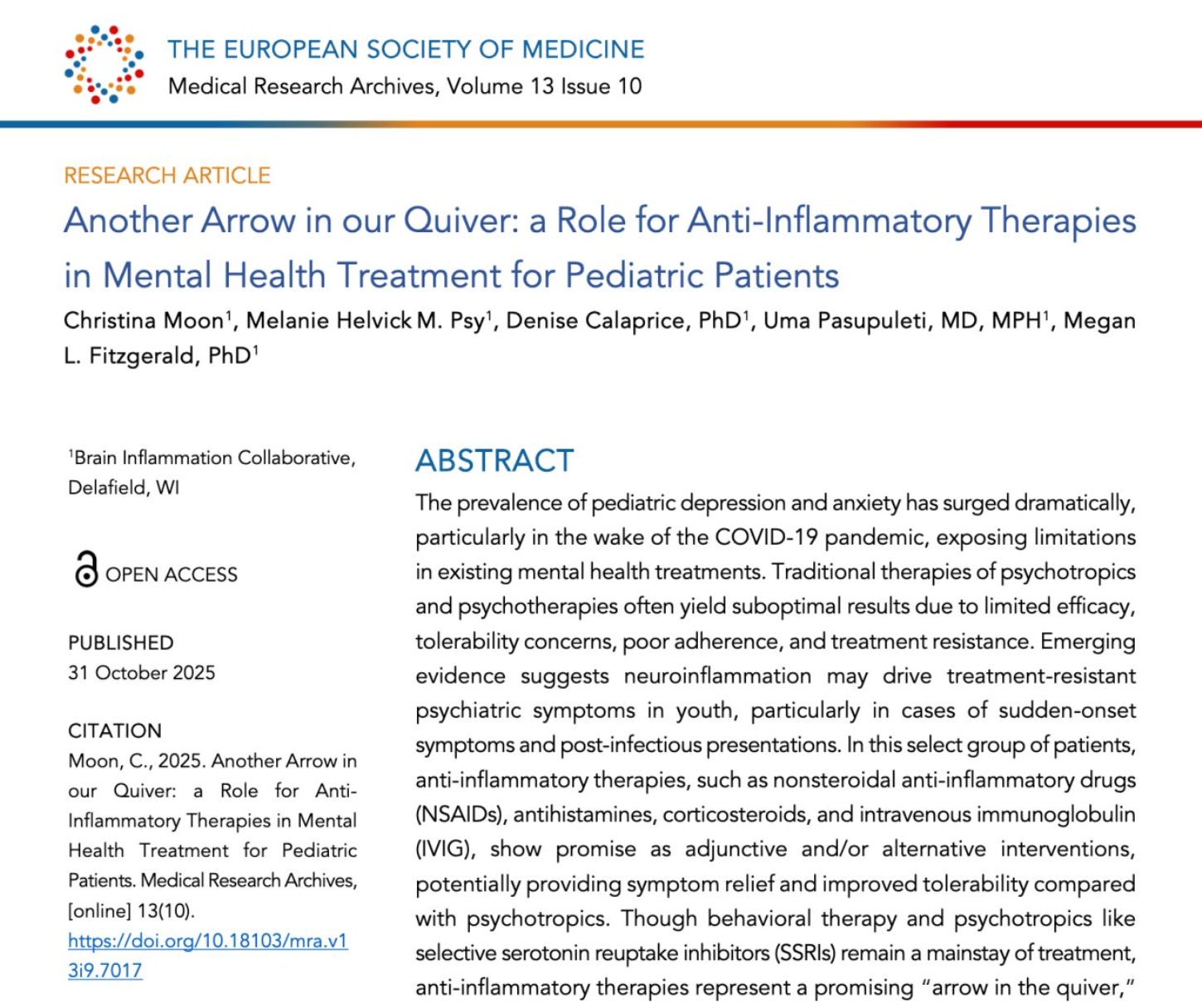
The prevalence of depression and anxiety in children and adolescents has nearly doubled since the COVID-19 pandemic. Global rates are astounding: The skyrocketing number of pediatric psychiatric cases suggests traditional treatment approaches are inadequate, such as: These approaches offer: Youth are especially vulnerable to side effects such as: \ A Role For Inflammation? Please share this so we can amplify this message. Read our publication On a related note, our health tracking platform, unhide, is available for children and adolescents! Visit
- 25.2% for depression
- 20.5% for anxiety
- psychotherapies
- psychotropic medications
- poor adherence
- tolerability issues
- treatment resistance
- low efficacy (response rates below 50-70%)
- suicidal ideation
- severe withdrawal symptoms
Emerging evidence suggests that neuroinflammation, driven by elevated proinflammatory cytokines (e.g., IL-6, TNF-α), is a key factor in treatment-resistant cases. We argue that this is especially true in cases of sudden-onset, post-infectious triggers (e.g., PANS, Long COVID) or immune dysregulation. Further research is needed to develop protocols and guide clinical adoption.
No posts
Comments
Nothing yet. Say the first thing.
Sign in to join the conversation.