
Hello, brain health ambassadors. If you’ve been reading along on BHK this summer, you know we’ve been talking about some rather controversial foods. Last time, we looked into a new meat study that made a lot of sensational headlines. Claims that eating more meat could reduce Alzheimer’s risk in some people circulated like crazy on social media and online. Is steak the new brain-healthy food? Not exactly. The truth, we found, fell somewhere between what we previously thought about eating meat and those hyperbolic headlines.
Today we are shining our brain health lens on another controversial food: eggs. Few foods have experienced a bigger public relations roller coaster than eggs! They’ve gone from being considered a food to avoid to one that may actually be good for you. But do they deserve the status of brain food? A new study out of Rush University looked at how eggs may influence the chance of developing Alzheimer’s. Should we all be eating more eggs? As always, the devil is in the details.
The Brain Health Kitchen Newsletter is proudly sponsored by Pique Life. I am excited to share their newly-launched electrolyte product that’s low in sodium and provides key brain health nutrients.

X-E Fountain Electrolytes
Most electrolyte packets are loaded with sodium. X·E Fountain Energizing Electrolyte takes a different approach, providing a balanced blend of sodium and potassium plus brain-supportive nutrients including magnesium and B vitamins. The crisp cucumber, celery, and lime flavor is incredibly refreshing, making it an easy afternoon ritual all summer long. I’ve been reaching for it on travel days, long workdays, and hot summer afternoons when I want to stay hydrated and focused.
For the launch, Pique is offering 15% off when you subscribe to X·E Fountain, plus you can try it completely risk-free with their 90-day money-back guarantee.
Learn more about the role of magnesium and B vitamins in brain health in these posts:
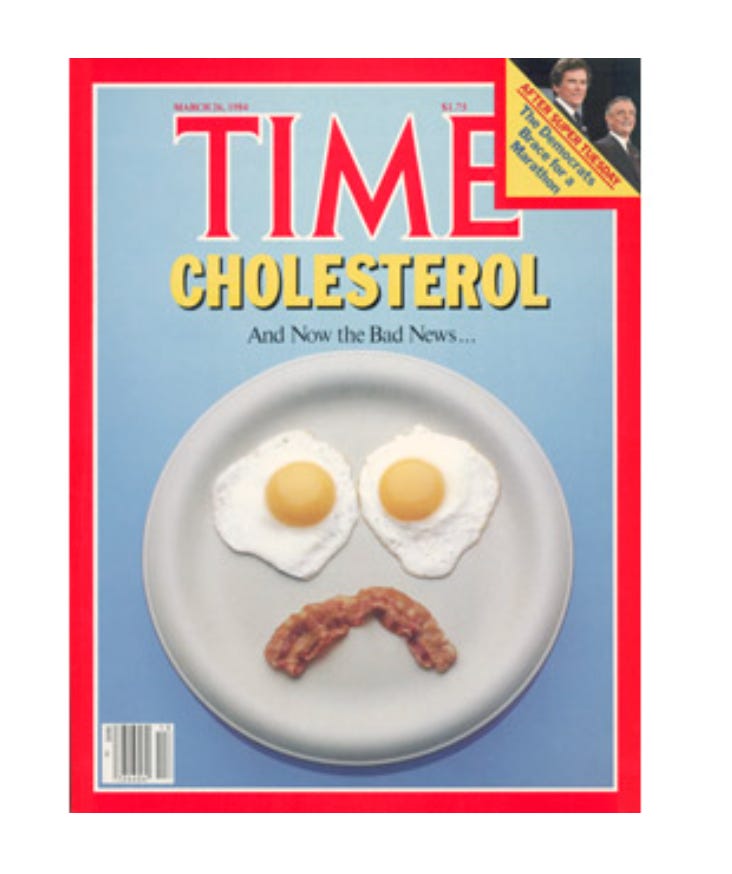
If you grew up in the sixties and seventies, you may remember that eggs were served for breakfast almost every day. Then, starting in the 1970’s, the fear of dietary cholesterol gave them the nickname “heart attack on a plate.” Americans switched to Egg Beaters, cereal, and yolk-free omelets. Once we entered the fat-free era in the 1980’s, eggs had fallen dramatically out of favor as a staple food.
Amazingly, what happened next was driven by solid science. Researchers determined that the cholesterol in food did not raise cholesterol levels in the blood in most people. The actual culprit was saturated fat. Cutting back on saturated and trans fats in the diet was found to lower harmful blood fats (especially LDL cholesterol and triglycerides) in most.
That was only part of the story. Not everyone could eat eggs freely without having a negative impact on cholesterol. Fifteen percent of people were found to be “hyperresponders.” These are the people who are sensitive to dietary cholesterol in foods, not just eggs but also shrimp, meat, cheese, butter, and other dairy products.
Even though eggs had been somewhat exonerated as an artery clogging food, the scientific data was still mixed. Some studies showed health benefits from eating eggs, others still pointed to an increased risk of cardiovascular disease.

Once the relationship between eggs and cardiovascular disease risk was more clear, researchers started looking at eggs through the brain health lens. By 2010, we already knew that what’s good for the heart is also good for the brain. If eggs didn’t raise cholesterol (in most people), could they be considered part of a brain-healthy diet?
When the MIND diet study was published in 2015, eggs were conspicuously absent from the list of ten brain-healthy foods and five foods to avoid. That study, as you may recall, showed that following these guidelines could possibly reduce the chance of developing Alzheimer’s by 53%. Those who followed the MIND diet most closely enjoyed brains that performed 7.5 years younger, and were more likely to age dementia-free.
Back in 2016 when I asked the lead MIND researcher Dr. Martha Claire Morris why eggs weren’t included, she told me she couldn’t touch eggs with a ten-foot pole. The data was just too inconsistent.
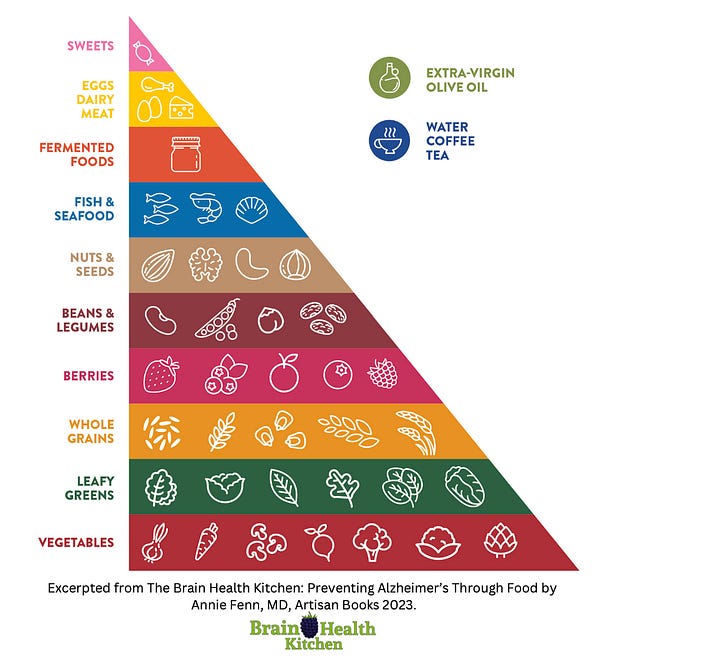
The last ten years has brought a handful of solid studies that put egg-eating in a more brain-healthy light. In fact, by the time I was writing my book around 2020 to 2023, I was swayed to the pro-egg side by several key positive findings published in medical journals. Based on this data, I opted to put eggs back on the brain health pyramid as a food to enjoy in moderation, with caveats for those who may be hyperresponders.

This 2021 study of more than 100,000 postmenopausal women looked at the health outcomes of varying sources of protein in the diet. While consuming plant protein was mostly associated with lower mortality from cancer, dementia, and heart disease, eating eggs was an outlier. Egg consumption was linked to a reduced risk of dying from dementia.
This 2021 study followed the egg-eating habits and outcomes of about 2500 dementia-free men for more than 20 years. Egg intake was not associated with an increased risk of Alzheimer’s or other types of dementia. Instead, those who ate eggs several times a week tended to perform better on neuropsychological tests, especially those that require sharp frontal lobe and executive functioning.
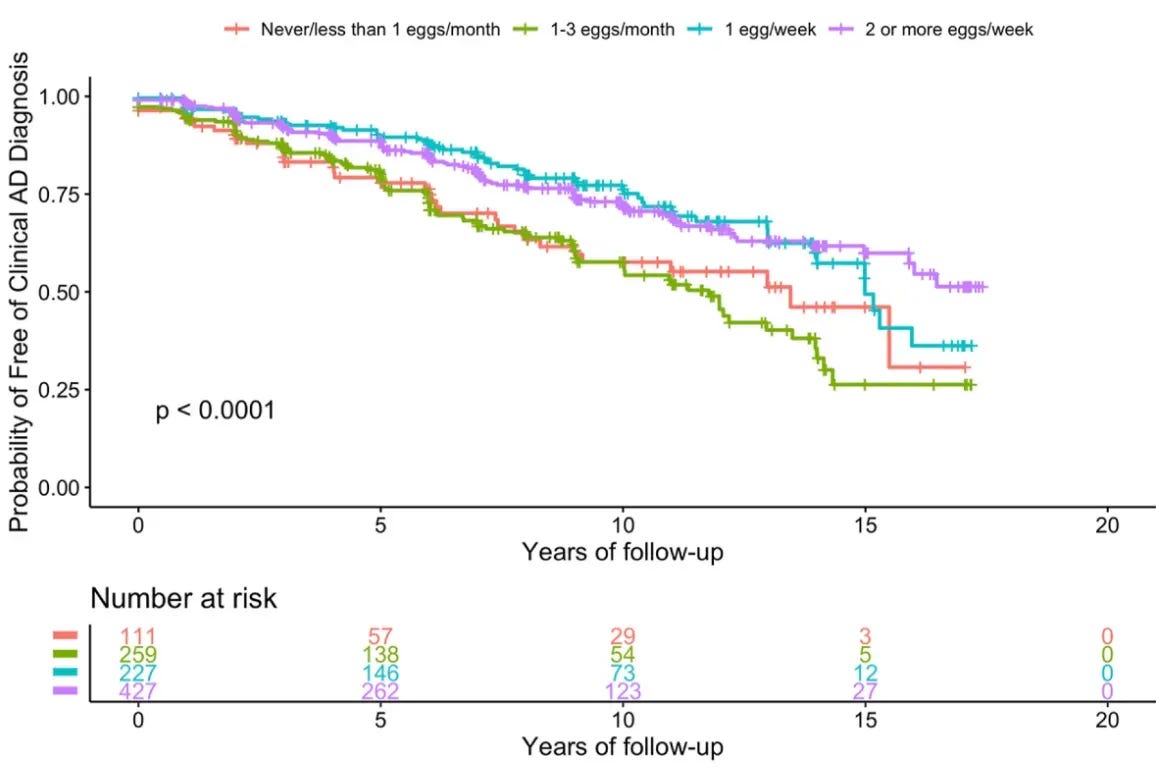
Fast forward to 2024, and Dr. Morris’ colleagues at Rush University published an impressive Alzheimer’s/egg study of nearly 40,00 adults with more than 15 years of follow-up. They compared the cognitive health outcomes of people who have eaten eggs never, occasionally, weekly, or almost daily. They looked two outcomes: having Alzheimer’s pathology in the brain (a marker for perhaps an early stage of the disease) and developing Alzheimer’s clinically.
Here’s what they found:
Higher egg intake associated with a lower risk of developing Alzheimer’s clinically. The sweet spot appeared to be several eggs each week, with the greatest benefit seen among people eating five or more eggs weekly.
When they looked at the probability of being free of Alzheimer’s pathology in the brain, the link was even stronger. The more eggs consumed (up to about 5 eggs a week), the less likely one had evidence of amyloid plaques and tau tangles (the typical signs of Alzheimer’s).
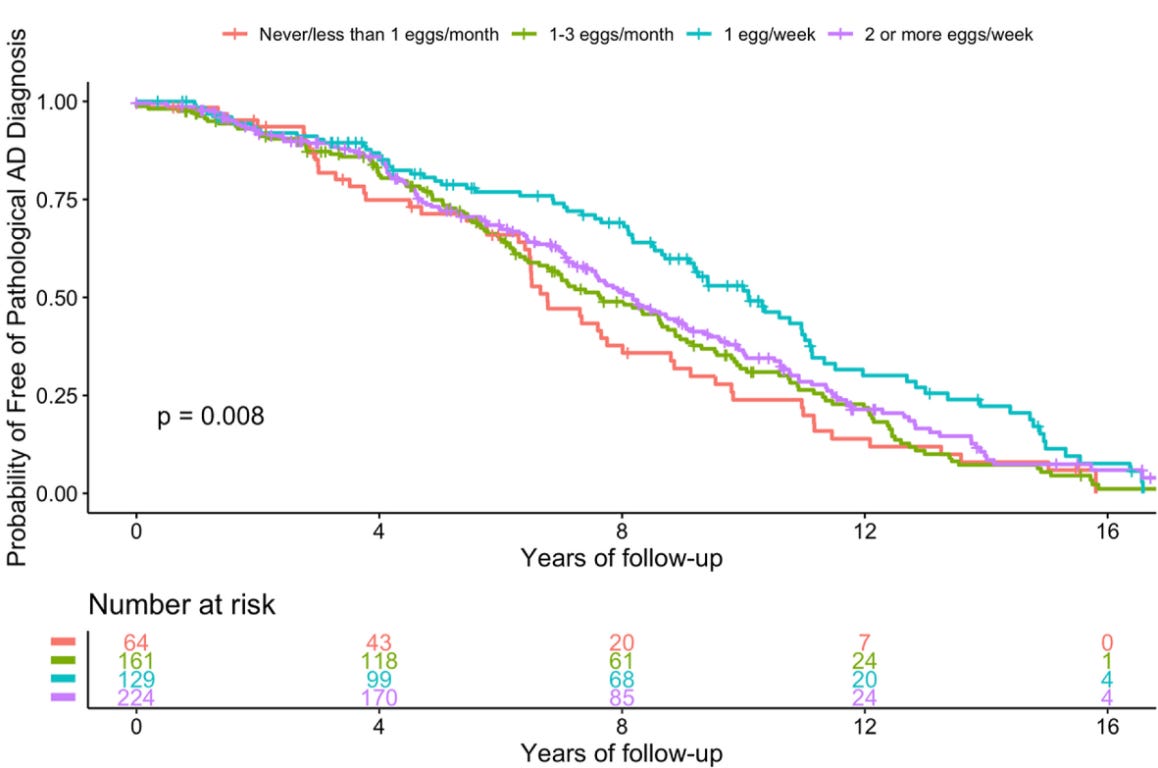
Since this study is observational, it can’t prove that eating eggs reduces Alzheimer’s disease. The strength of the study, however, is how it brings to light a strong association between eating eggs and better brain health metrics. The authors point out that the unique nutrient composition of eggs may very well be protecting the brain. In fact, they estimated that approximately 39% of the observed association could be statistically explained by dietary choline.
This is the study that put eggs back in the headlines this year. It’s currently the largest prospective study specifically examining egg intake and Alzheimer’s disease. Researchers followed almost 40,000 adults for 15 years. When they compared occasional egg eaters with people who never ate eggs, they found an inverse relationship between the number of eggs eaten each week and the risk of developing Alzheimer’s. Risk declined as intake increased, up to about five eggs per week. Headlines from major news outlets trumpeted some version of: “Research Shows Eating Eggs 5 Times a Week Could Cut Alzheimer’s Risk by 27%.”
It’s important to note that the population studied—the Seventh-day Adventists—is a famously healthy cohort. The Adventist community in Loma Linda, California, is the only officially designated Blue Zone in the U.S. Members of this religious group are mostly vegetarian, have low rates of smoking and alcohol use, and live about 10 years longer than the average American.
It’s intriguing that egg consumption in this group was associated with lower rates of Alzheimer’s—up to 27% lower compared with never eating eggs. But what most people didn’t glean from the study is this: when eggs were swapped out for other food groups, namely nuts and beans, the reduction in risk was essentially the same, serving for serving. In other words, the apparent benefit wasn’t unique to eggs. Most nutrition experts and epidemiologists remain highly skeptical of these results, as am I.

The strongest evidence for eating eggs for your brain comes from the Rush study; participants who consumed eggs regularly were not only less likely to develop Alzheimer’s, their brains also had less Alzheimer’s pathology at autopsy.
But if there’s one lesson I’ve learned from decades of nutrition research, it’s this: there’s never been one food proven to single-handedly prevent Alzheimer’s. The science consistently supports focusing on dietary pattern over individual foods. Eggs may contribute choline, lutein, high-quality protein, and other nutrients that support brain health, but they work best alongside vegetables, beans, olive oil, nuts, seafood, whole grains, and regular physical activity.
Eating eggs—with caveats for those who may be hyperresponders—can be part of a brain-healthy diet for most people. How you cook eggs matters, too. Crank up the heat and they can become less than brain-healthy. I’ll get into that next time with some guidelines on how to shop for, prepare, and enjoy eggs.
As always, I would love to hear your thoughts. Do you include eggs in your brain-healthy diet? Have you found that eating eggs makes it more difficult to keep harmful cholesterol down to target levels? Do you have questions about buying and eating eggs?
I’ve been hearing from many of you that you are loving our Summer Highlights podcast episodes! You can catch up on the first two here:
We’ll be back with another Summer Highlight next week. These short recaps feature snippets from some of our favorite podcast conversations from Season 1. They are just the right length for a 15 to 30 minute walk. New episodes drop on Tuesday throughout the summer. See you then!
Love,
Annie

Sardinia’s Secrets For a Long and Healthy Life: October 12 to 18, 2026. SOLD OUT WITH A WAITLIST. We’ll be hiking, e-biking, and eating our way through this stunning island known for its long-living people. Join the waitlist by calling 877‑298-9677 (M–F, 9am–5pm ET) or email the travel team to learn more and reserve your spot.
The Brain Health Retreat in Costa Rica: February 5-10, 2027. Registration is now open! I’ll be joined by Stacy Fisher of Fisher Fitness for a one-of-a-kind program focused on cultivating the habits of a brain-healthy life while relaxing at the stunning Imiloa Institute just south of Costa Rica’s Blue Zone. Find all the details here.
Founding Member Trip to Greece: April 18-24, 2027. Registration is now open for our very first Founding Member Brain Health Retreat. We’ll be exploring the beautiful Greek island of Crete, e-biking through rolling hills and hiking along the coast, all while immersing in their ancient farm-to-table traditions. Upgrade to Founding Member/Cooking Club and join us in Crete!
Brain Health Week at Rancho La Puerta: June 5-12, 2027. Read more about my recent brain-health-focused week here. I’ll be announcing the faculty and other details for 2027 soon!
Comments
Nothing yet. Say the first thing.
Sign in to join the conversation.