
Reprinted from the Washington Examiner
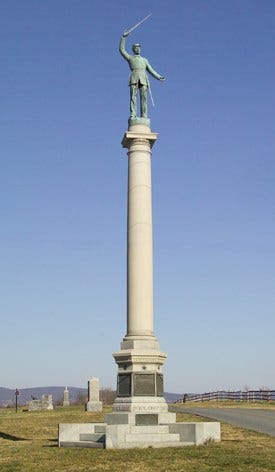
Monument to New Jersey’s sons who fought, and died, at Antietam—the battle that paved the way for emancipation.
.
In June 2025, the New Jersey Reparations Council released its 244-page report, “For Such a Time as This,” calling on the state to provide “repair” for a claimed $643,000 per-family racial wealth gap and endorsing sweeping reparations-related policies. Since then, several New Jersey reparations advocacy groups have again invoked Juneteenth to renew calls for lawmakers in Trenton to take up the Council’s recommendations.
.
I will leave ethicists to debate the fairness of coercing one generation that committed no sin to compensate people against whom no sin was committed. Instead, I pose a simpler question: Who are the payors and payees?
.
Reparations require neat racial bookkeeping at a time when America has become anything but neat. Since Loving v. Virginia in 1967, interracial and interethnic relationships have become commonplace. Roughly one-quarter of coupled Americans now have a partner of a different race or ethnicity, while millions of children have mixed-race parentage. As racial lines blur with each decade, advocates rarely explain who qualifies, who pays, and who collects. Does a half-white Patrick Mahomes pay… himself?
.
The Council’s report declares that “all Black people in New Jersey are eligible for reparations,” while expressly declining to limit eligibility to descendants of enslaved people. Yet it never offers a workable definition of “Black” in a state where race and ethnicity overlap. Is eligibility based on ancestry percentage, self-identification, mixed-race status, ethnicity, appearance, family history, or length of residence? The report does not say.
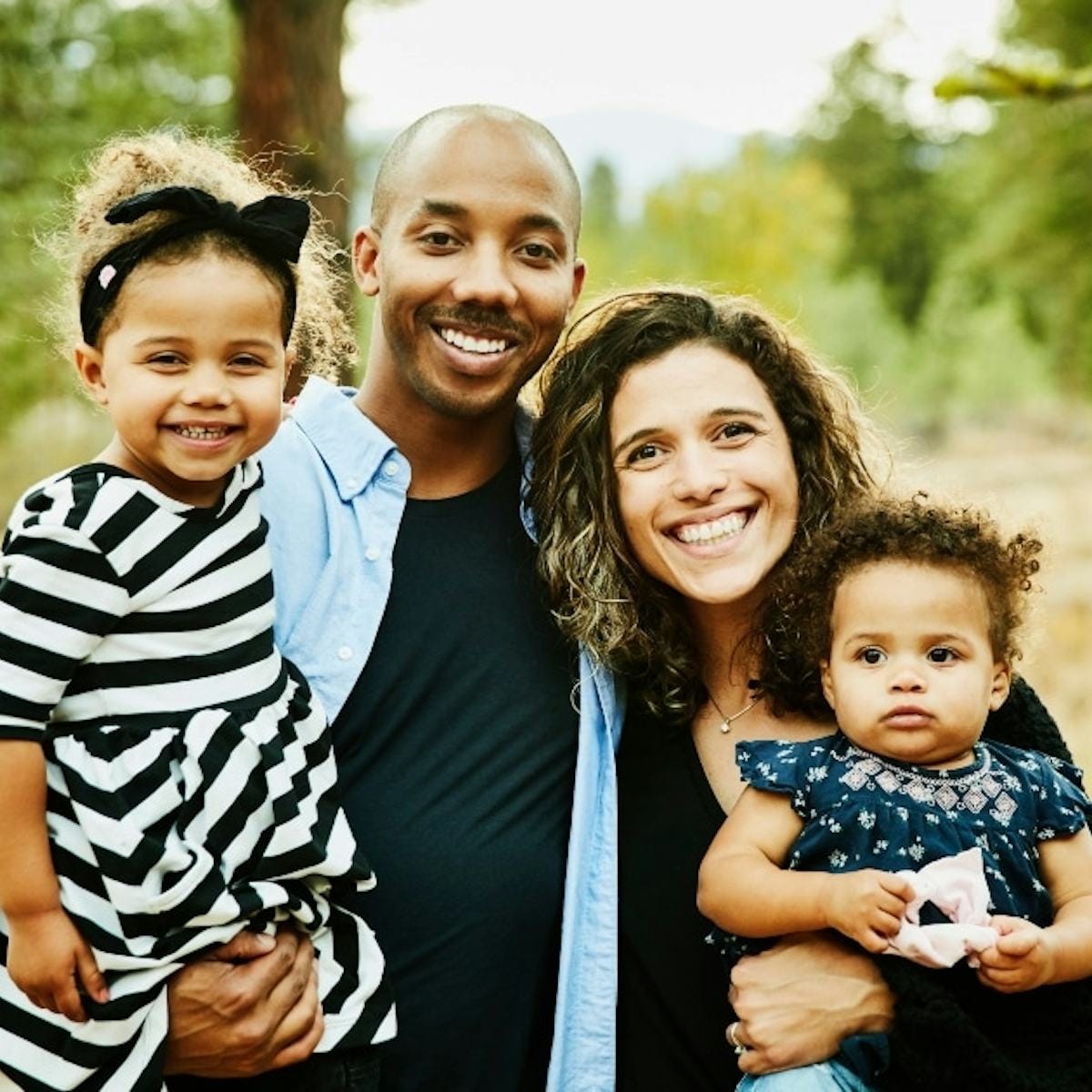
One-out-of-four American couples today are mixed race…and some five million US children have one black parent. Do they collect or pay?
.
And who pays? The report simply demands that “New Jersey” pay hundreds of billions of dollars in reparations — $178,000 to each black person or $642,800 to each black family — without clearly explaining how such payments would be funded or where Hispanics, Indians, Asians, Middle Easterners, recent African immigrants, and other nonwhite residents fit into this racial accounting.
.
That lack of clarity exposes the deeper problem: Morality aside, the sheer complexity, subjectivity, and administrative arbitrariness of reparations make them untenable on their face.
.
Targeting New Jerseyans is especially strange. During the Civil War, New Jersey sent more than 88,000 citizens to fight for the Union, not the Confederacy. More than 6,000 died, many of them boys and young men. Adjusted for today’s population, that would be the equivalent of nearly 90,000 New Jerseyans dying — more than the state’s entire number of male high-school seniors. One would think a state that sacrificed the flower of its youth in the war that ended slavery had made a rather substantial atonement.
.
Nor are today’s New Jerseyans even remotely the same population. Millions descend from families who arrived decades after Appomattox, often penniless and facing discrimination themselves. Indeed, one in four New Jersey residents today was not even born in the United States. It is hard to see how they bear moral or financial liability for a long-abolished institution.
.
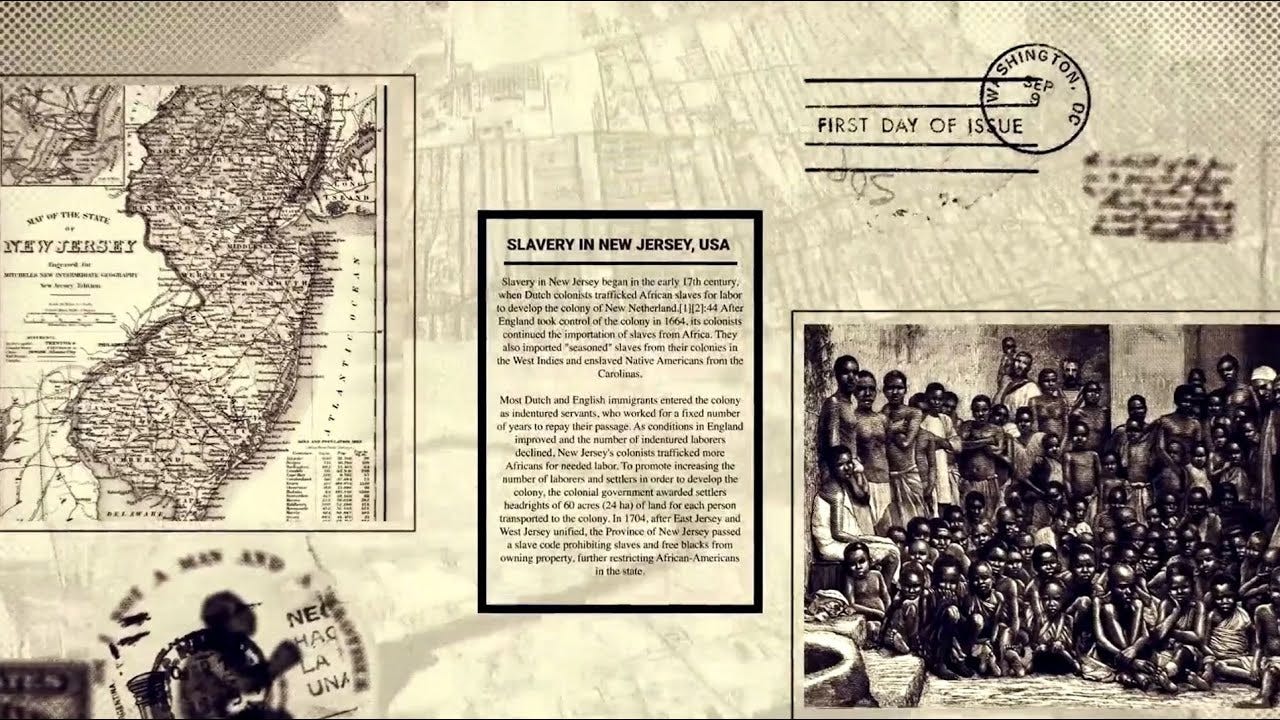
Reparations advocates often emphasize that New Jersey once held “more than two-thirds of all enslaved black people in the North.” But two-thirds of what? Notice the move: percentages instead of raw numbers. “Two-thirds of all Northern slaves” sounds far more damning than 2,254 — the actual number still held in bondage in New Jersey in 1830, the decade advocates cite as evidence of New Jersey’s sin, according to the census.
.
I say “still” because that figure had fallen from roughly 12,422 in 1800, an 82% decline. Slavery remained technically legal, yes, but it was rapidly withering. By 1840, the number was down to 674. By Juneteenth 1865, the Garden State could count exactly 18 remaining elderly slaves.
.
That puts New Jersey’s wartime sacrifice in perspective. For each of New Jersey’s remaining enslaved black people freed at war’s end, some 350 white New Jerseyans had died in the struggle that ended bondage.
.
Was New Jersey guilty of participating in slavery? Absolutely. Did slavery create disadvantages that lingered for generations? No doubt. No one should deny either truth. But past guilt is not a contemporary blank check, and history is not an accounting ledger that can be balanced two centuries later by sorting today’s residents into crude racial categories.
.
If the Reparations Council wants to impose vast costs on New Jerseyans, it should at least answer the simplest questions first: Who qualifies? Who pays? How is liability assigned? What happens to mixed-race families? What about immigrants, recent arrivals, and descendants of Union soldiers?
.
Until those questions are answered, New Jersey reparations remain less a serious policy proposal than a moral slogan in search of a workable system.
______
Brad is a commodities fund manager, author, and columnist whose articles have appeared on the pages of The Wall Street Journal, NY Post, NY Daily News, The Daily Wire, National Review, The Hill, The Federalist, Zerohedge, and other outlets. He is the author of three books. His latest book, A War For Half The World: Why the Real Battle for the Future was Fought in the Pacific, will be released in February 2027.
Comments
Nothing yet. Say the first thing.
Sign in to join the conversation.