
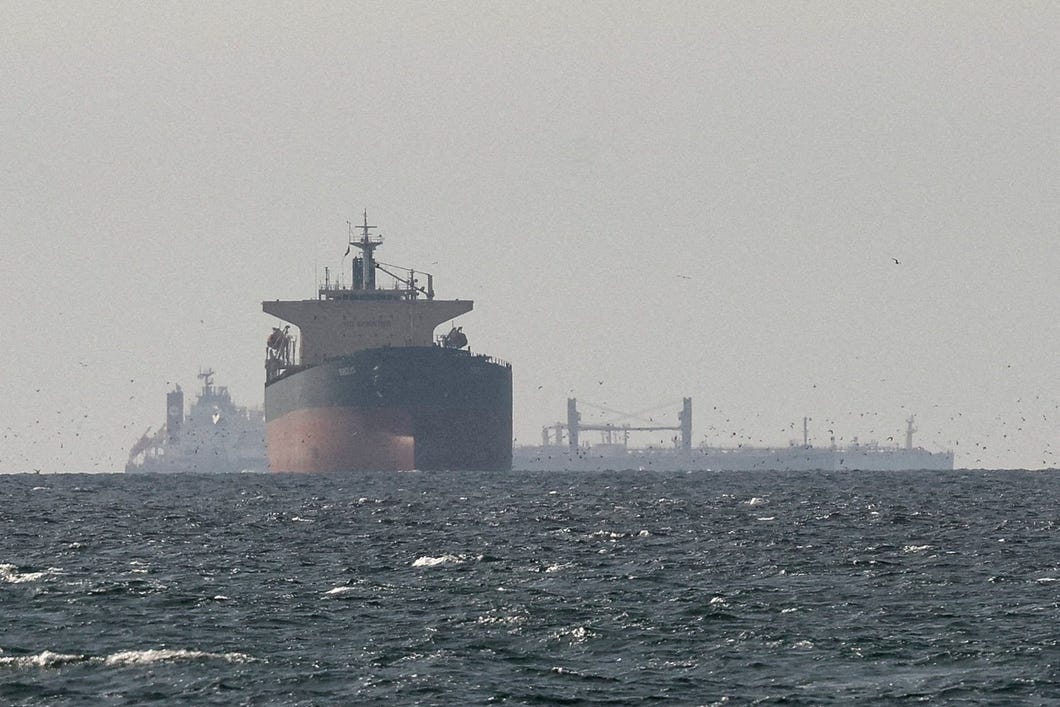
Throughout the discussion of Iran and the military aspects of the US sealing off the Persian Gulf, a rather bright silver lining is starting to emerge…and it is being reflected in crude oil prices. While the initial blockade announcement briefly threw the front month May 2026 WTI Crude futures contract above $105/bbl, it also demonstrates what many who follow the energy markets have long known: the US is better positioned than ever to become the primary supplier of energy in the world.
.
Consider: with the Persian Gulf cut off, we are seeing a record number of tankers pulling a one-eighty and steering a new course—not toward the Gulf, but toward the US Gulf Coast. Shipping data from maritime intelligence company Windward shows 171 crude tankers bound for the US Gulf to load cargoes, compared with about 110 in a typical month—a 55% increase in traffic to our offloading installations along the Texas and Louisiana coast. As such, US crude exports are expected to reach 5 to 5.3 million barrels per day, up from 3.9 million last month—a 33% increase.
.
So what does this mean if it continues? The US is positioned to move from one of many exporters to the critical supplier. Concerns about the dangers inherent in any military operation notwithstanding, I will say President Trump has absorbed an important lesson of history: 20th- and 21st-century warfare has been intertwined with the drive for energy, from Pearl Harbor to Stalingrad to Suez and Desert Storm. One country has it, another needs it—and the tanks roll. In other words, energy = power. And Trump is shifting that power—through leveraging our two trump cards (no pun intended), military might and energy dominance—away from the Mideast and to the US, where it should be given our reserves.
.
Indeed, we can close off the Strait of Hormuz, through which 20% of global crude flows, indefinitely if we so choose. Why? Because we have the capacity to be energy self-sufficient. We already are a net exporter, and what we do import comes mostly from Canada and Mexico (with Saudi Arabia a distant third), far removed from the mullahs and sheiks. In fact, only about 2% of US oil consumption depends on product moving through the Strait.For the United States, the long-term implications of a sustained disruption are more nuanced than the immediate shock suggests. If global crude flows are structurally redirected away from the Persian Gulf and toward the US Gulf Coast—anchored by the vast Permian Basin—the result could be a net strategic and economic gain for America.
.
As we are seeing, a sustained disruption of the Strait would initially shock energy markets. But over time it would catalyze a long-overdue reordering—from a Middle East supply-centric system to a more diversified one anchored by the US. As I write this, May crude is already down $13/bbl from Monday’s high, trading in the low nineties. June delivery, which matters more, is in the high eighties—still up 20% from before the Iran war began, but a sign the market is adjusting and finding new loading points for its VLCCs.
.
The long-term benefits are clear. It elevates Texas as a global energy hub. It expands US influence—and thus leverage—over energy flows. And it transfers long-held strategic advantages from a volatile region of dictators, religious fanatics, princes, and thieves to our shores. For decades, those of us in the energy business have wondered why we send our young men and women halfway across the world to protect the oil interests of emirates and kingdoms—so they can supply energy not to us so much as our supposed “allies” (whose stance on Iran suggests they are anything but). As Europe becomes more Islamified, don’t expect that to improve. We have the power and the product to correct this ludicrous dynamic. So why haven’t we? It appears we now have an administration finally asking the same question—and acting to correct this imbalance.
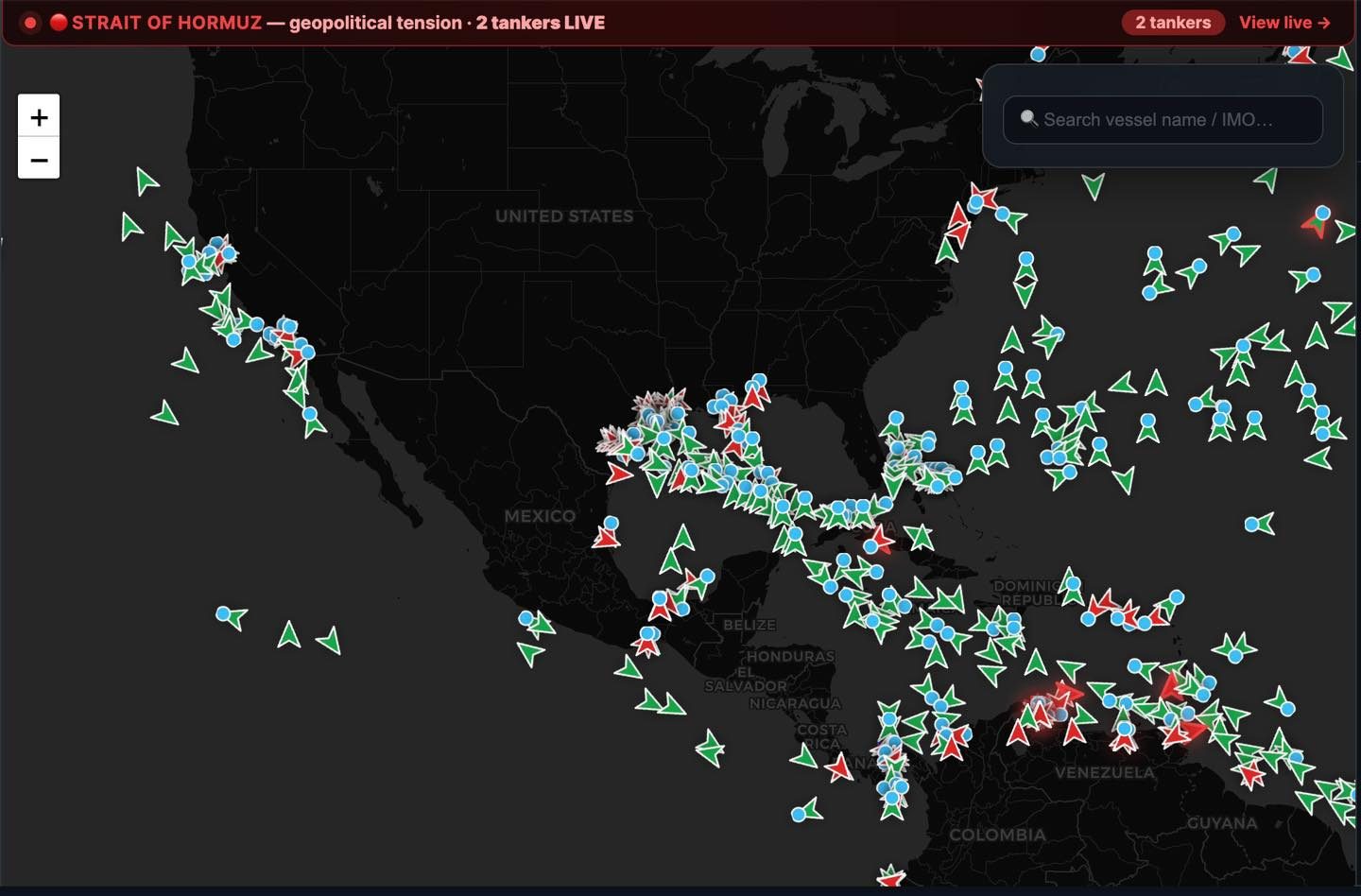
Tankers flooding into the US Gulf Coast
.
In the long run, this is good for the American consumer (short-term price spikes aside). Now it is a race against the clock. If markets calm and supply/demand reaches equilibrium before the midterms, this could be a boon to the GOP. If prices linger, however, voters will understandably focus on their wallets in the here and now rather than future benefits—however real those may be. Let us hope, for the nation’s sake, it is the former.
.
I wrote in my trading memoir Life in the Pits that the reason we care about people dying in Iraq or Kuwait and not Congo or Rwanda is because there is oil there—without which the world grinds to a halt. Wouldn’t it be nice to no longer be so entangled in that region while becoming the world’s premier fill-up station? Taking the Arabs’ and mullahs’ hands off the spigot and putting ours on it instead is worth considering.
______
Brad is a commodities fund manager, author, and columnist whose articles have appeared on the pages of The Wall Street Journal, NY Post, NY Daily News, Daily Wire, National Review, The Hill, The Federalist, Zerohedge, and other outlets. He is the author of three books. His next book, A War For Half The World: How the Real Battle for the Future was Fought in the Pacific [Knox/Simon & Schuster], will be released in spring 2027.
Comments
Nothing yet. Say the first thing.
Sign in to join the conversation.