
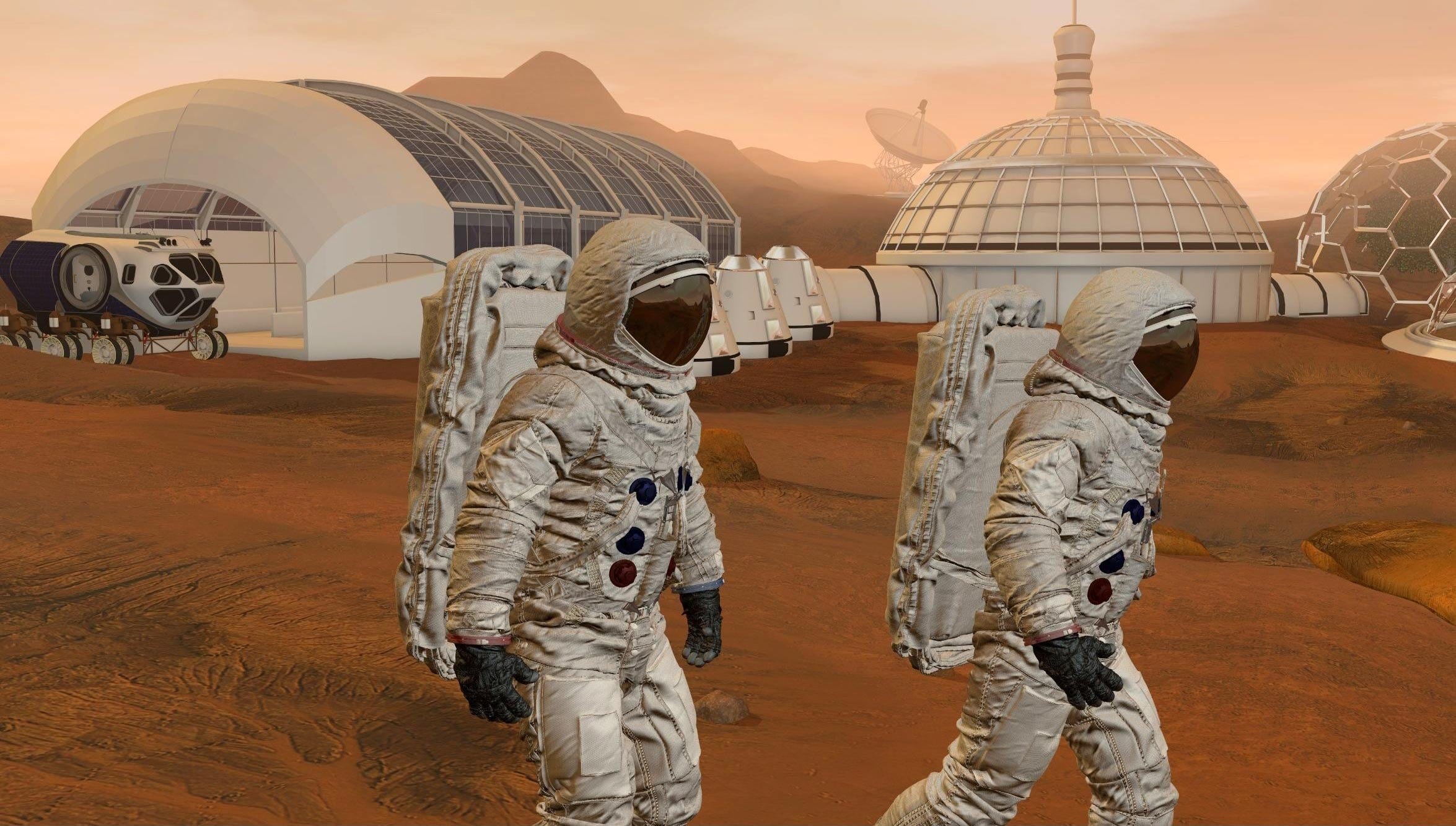
The weather is warmer now. The sun is shining, the birds singing, foxes running about chasing chipmunks, while cardinals chirp at me to “get the hell off my lawn!” Mass hysteria! So I got to thinking how important—indeed essential—it is for humans to be in nature, not just for the body but the soul. (Well, a suburb but go with me here). It’s how we evolved...with constant exposure to natural, living, changing environments.
.
When people live entirely indoors or in-built environments, cortisol (stress hormone) remains elevated. The nervous system spends more time in fight-or-flight. Recovery from stress is slower. Even brief exposure to green space measurably lowers stress markers.
.
Now try to imagine what it means to both travel to and then live on a space colony as some have proposed we build on Mars. To put the distance in perspective, if the 250,000 miles between Earth and the moon were reduced to an inch, for scale Mars would be twelve feet away. So just to get there will take you at least nine months (when our orbits align the closest at four light minutes, which is once every 2.5 years or so). Imagine staying in your house with nowhere to move but from one limited indoor space to another for an entire nine months. And I mean not even being able to step outside for a breath of fresh air. Nothing but an empty, hostile radioactive vacuum out your window with stars that never move, while Earth recedes until it is just one of those white dots in the blackness that surrounds you 24/7.
.
Once on Mars, you must stay confined within your tiny artificial habitats. You can never go outside without a bulky space suit--if you did, given the low pressure environment and lack of real atmosphere (1/160th as dense as ours) your body fluids would quickly boil and you’d pass out from lack of O2 while you freeze to death...not fun.
.
Not to mention Mars has no dynamic weather (other than blinding dust storms that last for months, making solar panels, already at reduced function due to Mars only getting 57% of the sunlight we do here, useless.). No change in scenery. No clouds. No trees. No animals. No lakes, no rivers, no rain, no snow...like looking out your window at the same desert painting every day. A drab and ugly one at that, unless butterscotch is your favorite color because it’s everywhere, and never changes. How long before the novelty of the far less pleasing scenery of an alien planet wears off and you begin to loathe the constant view?
.
Hell, living on Mars would be like perpetual house arrest in a barren, lifeless desert.
.
Consider the “Mars-500” experiment in Russia. For 520 days, the participants lived inside a fully sealed habitat that simulated long-term confinement--no fresh air from outside, delayed communications (up to ~20 minutes one-way making real-time communication impossible), monotony, sensory deprivation, artificial day/night cycles, limited food variety.
.
Scientists found that performance, spontaneity, and social richness declined, especially in the mission’s middle phase — sometimes called the “psychological winter”. One participant withdrew into relative isolation. And this was with the knowledge that, if you had to, you could just walk outside and go home. That outside is an environment suited for human habitation, not one that will kill you in under a minute. But what if you know you can’t leave? Not for many years? What a psychological mind-f**k. It’s not a “habitat”, it’s a prison.
.
No thanks. Even if we could overcome the other immense physical barriers to colonizing a planet 146x farther than the Moon when it’s closest to us. I know that there are thousands of volunteers lining up for the first mission to Mars. All I can say is be careful what you wish for. You may become fully psychotic before your great adventure is over...if you even last that long.
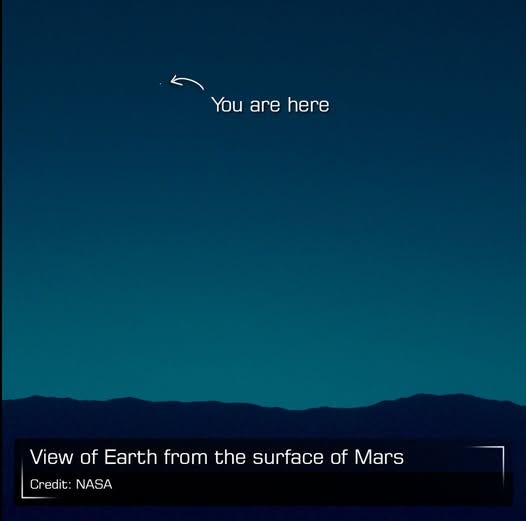
But even if we find people psychologically robust enough to endure a mental/emotional challenge no human has ever even come close to confronting, the physical limitations make such a interplanetary (let alone interstellar) trip physically problematic, to say the least. Lethal, to say not just the worst, but most likely.
.
We live under the protection of Earth’s magnetic field. This matters, because that flaming star that can give us second-degree burns within an hour from 93 million miles away is a massive fusion reactor blasting out solar storms of charged, ionizing particles in all directions. Combine that with the radiation streaming through space from distant supernovas and other celestial events and a ship outside our magnetosphere would be bombarded with deadly radiation. It is one thing for lunar astronauts to pass through this heavily radiated part of space for a few days…it is quite another for nine months.
.
And, once you arrive, Mars has no magnetic core. So there’s no protection from the ionized particles bombarding the body at near-light speed. You be therefore be condemned to live under feet of lead—built buy who exactly, robots? Perhaps, but that is technology still in the future. And by then AI will make robotics so human in functionality and purpose that there will be no need for us there at all. (And robots don’t need to eat, sleep, excrete waste or get paid, etc.)
.
Also,deep-space interplanetary travel in microgravity can have a terribly debilitating effect on the human body. Even with rigorous exercise, the body loses muscle mass at an alarming rate, some 5% per month. Bones no longer bearing the full weight of 1 g will weaken, and body fluids will shift in lower gravity, as astronauts returning from the ISS with impaired vision and can attest. The human body has evolved to thrive in 1 g. Mars is thirty-eight percent of that. No one knows the long-term impact spending at least two-and-a-half years on Mars along with nine-month journeys each way will have on the body’s ability to even return to Earth without collapsing in on itself when exposed to suddenly higher gravity. Indeed, children born on Mars – if giving birth there is even possible – may never be able to visit their home planet as Martian children will develop in a lower G environment. They would be too weak to ever come to Earth. Prisoners on a planetary outpost.
.
The Martian soil is not like ours. It is extremely fine, abrasive, electrostatic, and likely capable of infiltrating seals, joints, filters, lungs, and machinery. In short, it will get into and stick to everything, bringing its contaminants with it into the habitat. Contaminants like enough perchlorates to make untreated agriculture hazardous. The sci-fi book/film The Martian greatly simplifies this problem; a real Mars mission would probably need some method of soil processing or controlled growing media before crops could be safely cultivated. But who will go there first to set up the processing system? Like saying you have to jump into a prairie fire in order to dig the well whose water will put out the fire.
.
You get the point. Why would we ever travel to so inhospitable an environment, let alone attempt to build a settlement there? For what use? There will be no such thing as interstellar commerce as even if you created a vessel that moves at the same speed as the fastest man-made object, the Parker Solar Probe (which only achieves its 430,000 mph when falling into the gravity of the sun) it would take you 6,600 years to travel the 4.24 light years to get to the nearest star Proxima Centauri. By way of scale, the Voyager probes launched in 1977 and traveling at ~35,000 miles per hour have yet to reach one light day from Earth. So what is the point of a Martian habitat when AI and machines are much more durable and cost-efficient, as the Curiosity rovers show?
.
Okay, but what if we destroy the Earth in a nuclear holocaust? Very possible…in fact, it is quite likely. But even if we laid waste to our planet in nuclear fire, what remains would still be a far more hospitable environment than Mars on a good day. The air would still be breathable, the temperatures, though probably colder from nuclear winter, would still not be, as Bernie Taupin tells us, “cold as hell” as is Mars. In fact, it makes much more sense to spend our resources colonizing the relatively warmer and far more human-friendly Antarctica than Mars. Just something to think about.
.
Science Fiction is one of my favorite genres. But it is just that. Fiction. Sometimes we become so inundated in it that we tend to blur fantasy with reality. We see Mars as just another step, as we might a trading outpost on an island in the ocean. But it is so much farther a trip—indeed space distances are incomprehensible to us—and to stay there so lethal that it will certainly not happen within our lifetimes, and maybe not ever. Not without terraforming which is no more a real thing at this time than is the Genesis Project in Star Trek II: The Wrath of Kahn.
.
No. It is best we spend our resources minding this spaceship we all must share before going to Mars simply because “it’s there”…as “there” is a profoundly distant and hostile place indeed. And it ain’t the kind of place to raise the kids.
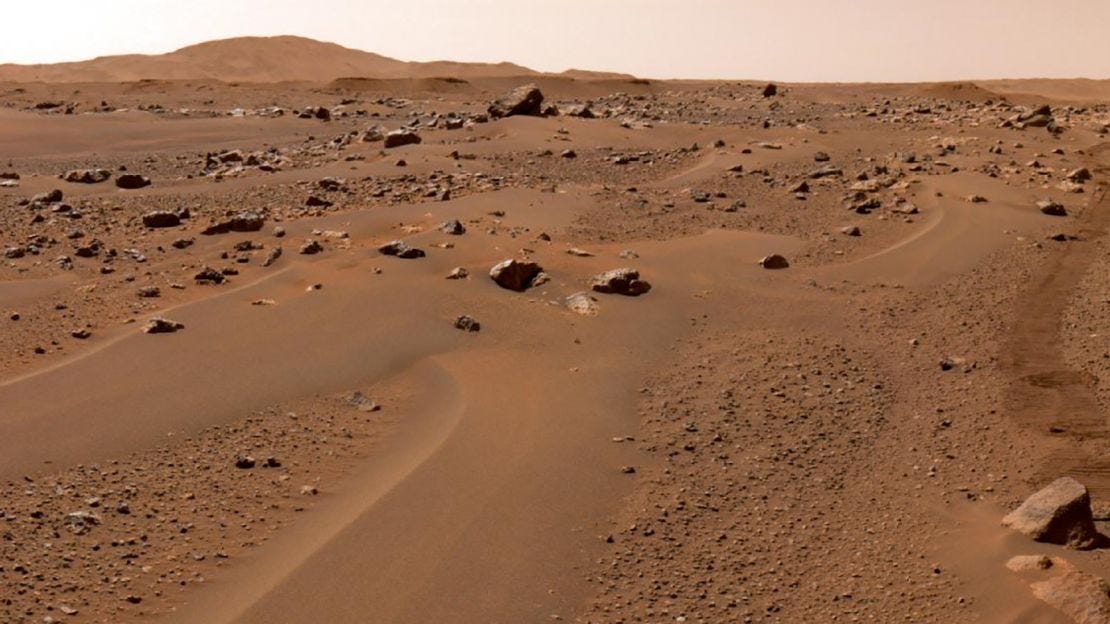
Your view every day, unchanging, for years and year. No thanks.
_______________
Brad is a commodities fund manager and author of three books and hundreds of articles featured on a variety of publications including the Wall Street Journal, New York Post, New York Daily News, National Review, Daily Wire, The Federalist, The Hill, Zerohedge and others. His fourth book about the Pacific War called A War For Half The World [Knox/2027] will be released next spring.
No posts
Comments
Nothing yet. Say the first thing.
Sign in to join the conversation.