
One of the reasons many women hesitate to lead or host is because they don’t want power.
They associate power with domination, ego, hierarchy, or harm. They want something flatter, gentler, more mutual. So they can describe circles as leaderless. They downplay their role. They insist everyone is equal here. A circle is a non-hierarchal shape, after all. It is embodying the matriarchy, right?
The intention is understandable. The problem is that power doesn’t disappear just because we’re uncomfortable with it.
Any time someone convenes a group, chooses the structure, sets the tone, or holds the invitation, power is present. Not because the host is doing something wrong, but because influence, trust, and attention are real forces in human groups.
When we pretend power isn’t there, it doesn’t go away. It just becomes harder to work with.
I once sat in a circle on a retreat where the host repeatedly reminded us that there was no leader, that everyone was equal here. But as the gathering went on, it became clear that decisions still needed to be made. When someone spoke too long, the group looked around, waiting. When tension surfaced between two participants, it hovered, unresolved. No one knew who was meant to step in. The host felt it too. You could feel her holding the room while insisting she wasn’t. By the end, we left with a vague sense of discomfort we couldn’t (or wouldn’t dare) name.
Unacknowledged power often shows up as confusion. Participants aren’t sure what’s allowed, what’s expected, or where responsibility lives. Hosts feel pressure they can’t quite name. Boundaries blur. Resentments form quietly. Repair becomes harder because no one knows who is supposed to initiate it.
What often passes for humility in women’s spaces is actually a commitment to being liked, not a commitment to being clear.
Ironically, many of the harms people fear from leadership emerge not from too much power, but from power that hasn’t been named or tended.
Power literacy isn’t about becoming authoritative or controlling, it’s about understanding how influence moves through a space. It’s about recognizing that people may project meaning onto you simply because you convened the circle. It’s about knowing when to step forward and when to step back; and being honest about which role you’re playing.
In healthy circles, power is held consciously. The host doesn’t pretend to be “just one of the group,” but she also don’t inflate her role. she understands that stewardship is not the same as superiority and responsibility is not the same as ego.
This kind of leadership is quieter than what we’re used to seeing. It doesn’t rely on charisma or performance, it relies on clarity.
Clarity about consent.
Clarity about scope.
Clarity about what the circle is (and what it is not).
Many women already sense this. They feel the weight of hosting even when they try to make themselves small. They feel the pull to do it well, but lack language for what “well” actually means. So they either avoid leadership altogether or take it on with unnecessary self-doubt.
Power literacy offers another path.
It says: you don’t need to disappear to be ethical. You need to be awake. You need to be willing to look at how your presence shapes the space, and to take responsibility for that shaping without over-identifying with it.
This is not something most of us were taught. Especially not in women’s spaces, where power has often been framed as something to reject rather than something to steward.
In Circle Craft, we treat power as a neutral force that becomes harmful only when it’s unconscious. We learn to name it, work with it, and release it when the container closes. Not to eliminate leadership, but to practice it with integrity.
If the idea of power in circles makes you uncomfortable, that’s not a sign you shouldn’t host. It’s often a sign you care deeply about not causing harm.
And care, when paired with skill, is what makes gathering sustainable.
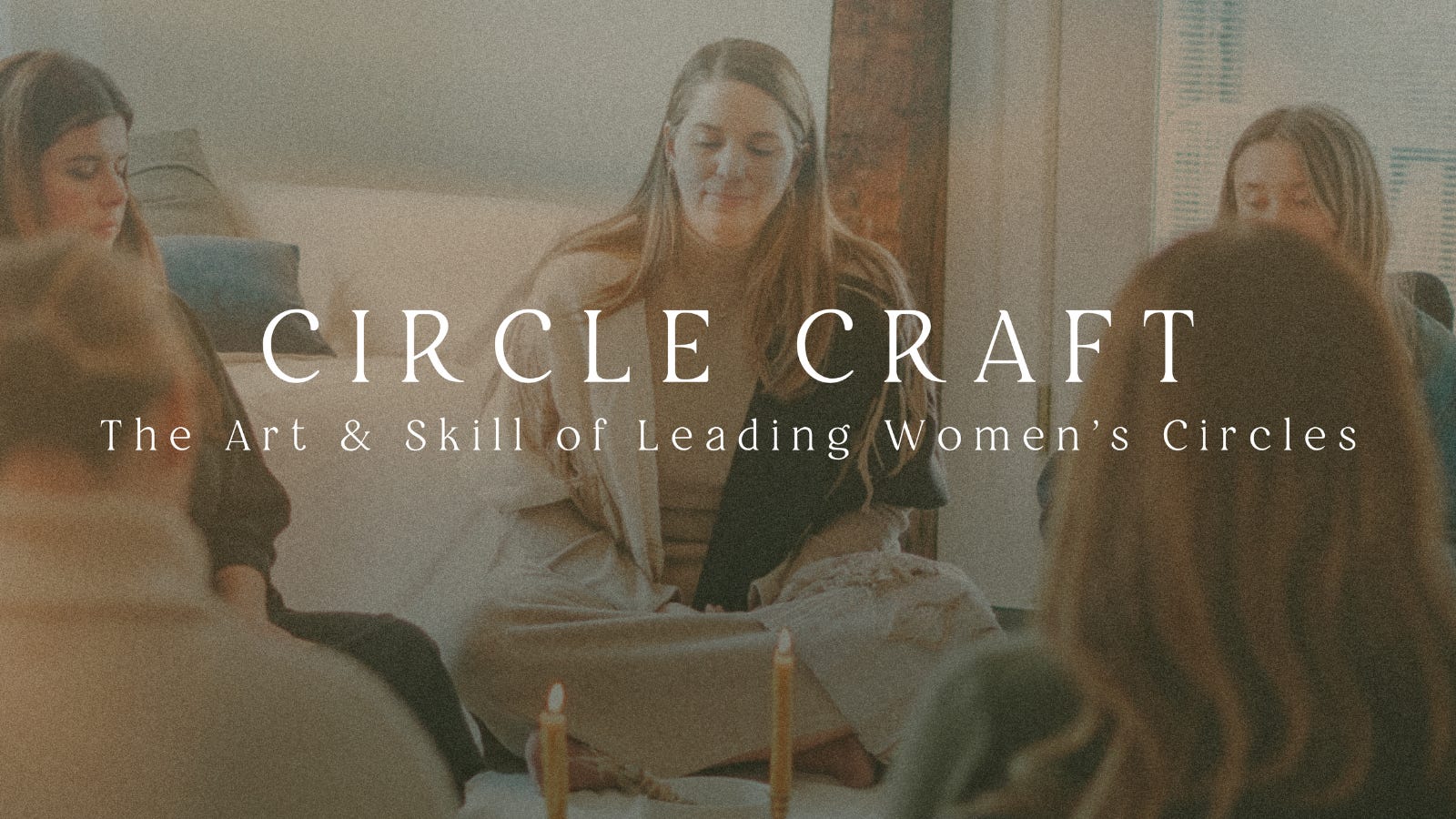
Circle Craft is where I teach the skills behind holding power in women’s spaces with care.
It’s a practice-based training for women who feel called to gather others and want to understand how influence, responsibility, and consent actually work—without hierarchy, performance, or bypassing.
No posts
Comments
Nothing yet. Say the first thing.
Sign in to join the conversation.