
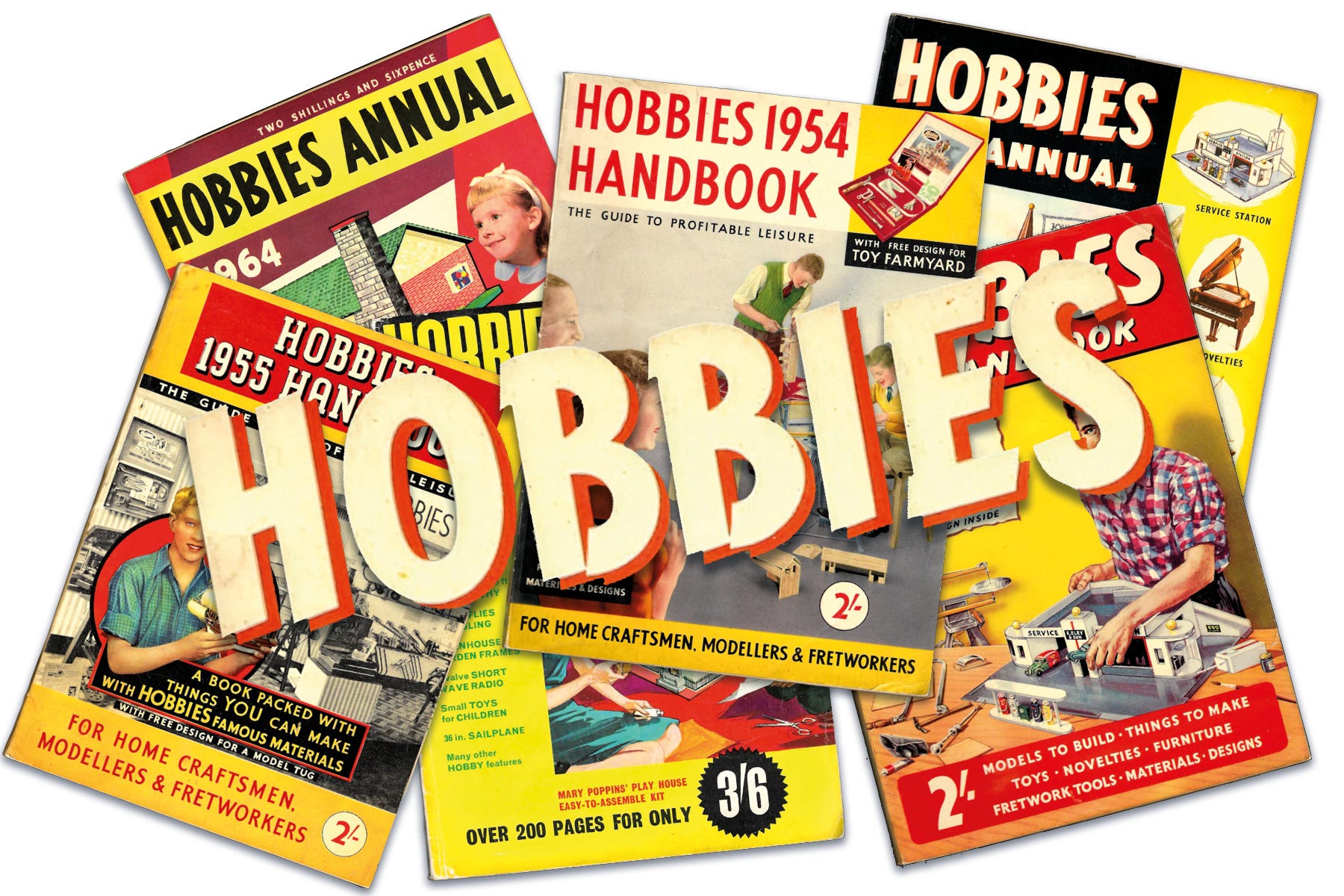
Although it is not usual to say that we play a hobby, I believe there are reasons a-plenty to talk about hobbies when we think about play. Not least of which is that a key (OED) definition of play is that it is “to engage in an activity for enjoyment and recreation rather than for a serious or practical purpose”. And the definition of a hobby is remarkably similar: “A favourite occupation or topic, pursued merely for the amusement or interest that it affords.”
Implicit in both of these definitions is that both activities are voluntary; a principle which Mark Twain used to explain why Tom Sawyer’s friends were willing to pay him to let them paint his Aunt Polly’s fence: “Work consists of whatever a body is obliged to do, and Play consists of whatever a body is not obliged to do.”
Hence, I think it fair to suggest that we are playing in all but name when we engage in a hobby, even when that hobby is hard work or taken very seriously − as play can also be.
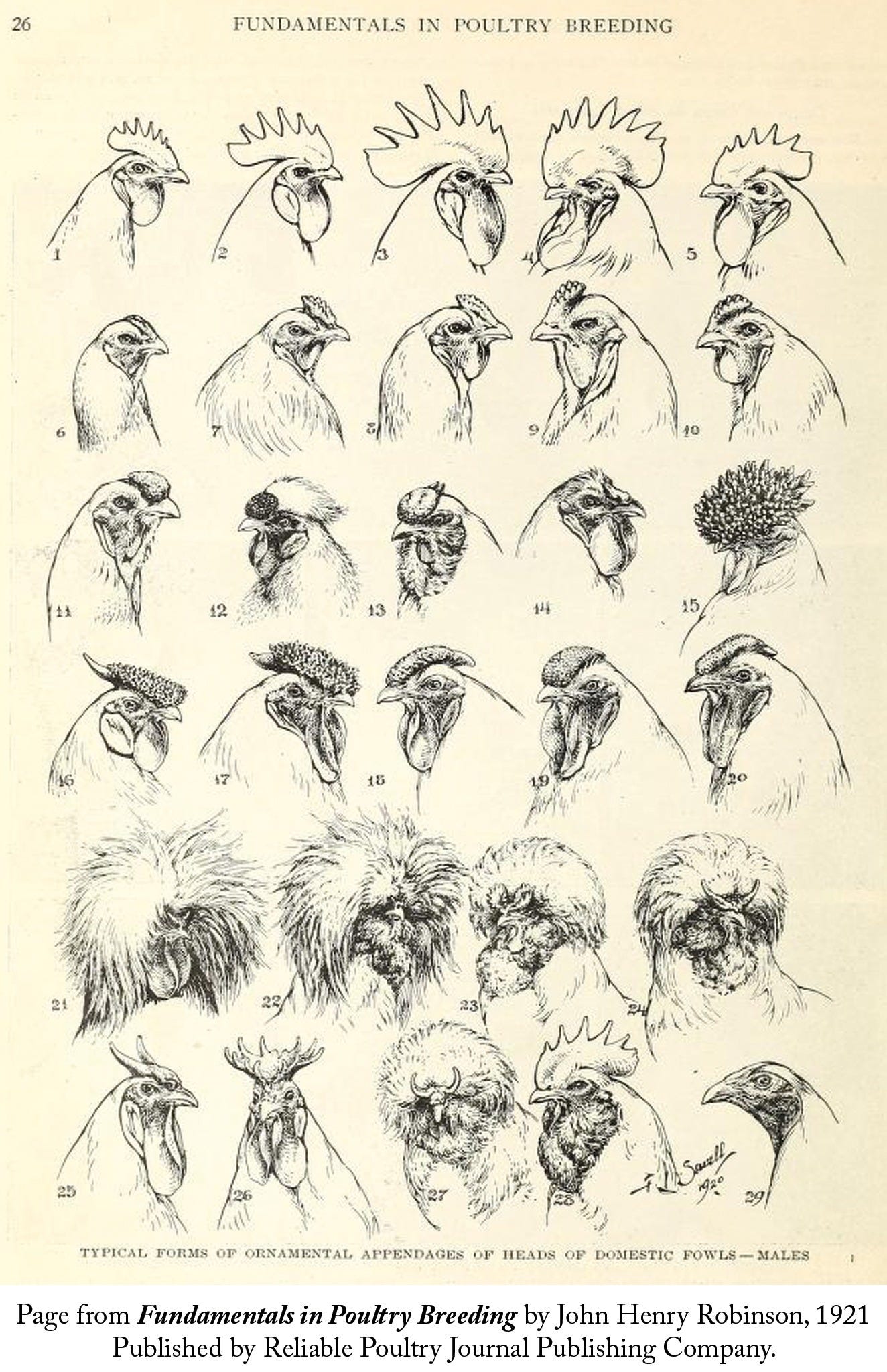
Whether it’s quilting, or breeding chickens, or collecting stamps, everyone either has a hobby or is advised that they need to get one. Yet, calling a pastime ‘a hobby’ has never been enough to reassure employers, teachers or parents that an employee, pupil or child is always using their spare time productively and not in idleness or mischief.
It would seem that how we choose to play is not always our own business.
Scroll through the websites of employment agencies proffering advice on how best to write a CV and you will find that many suggest listing hobbies in a job application as a way to stand out from other candidates. They argue that showcasing your passions and pastimes can help create a more well-rounded and memorable impression.
Well, yes, maybe, but do take care that the memorable impression you’re creating is a positive one. In theory, we might all agree with that old proverb, “All work and no play… etc.”, but in reality, there is nothing so numbingly dull as someone (let’s call him Jack) waxing lyrical about a passion that you don’t share.
Social historian Ross McKibbin (Work and Hobbies in Britain, 1880-1950) suggests that there is, or was, a certain ‘Englishness’ about the notion of hobbies. He points out that, while in every European language there are words or phrases that directly translate as ‘pastime’ (as in passing time agreeably), and even for ‘killing time’, only English has the word ‘hobby’ − albeit now borrowed by most other languages to describe, well, to describe a hobby. Which is what, exactly?
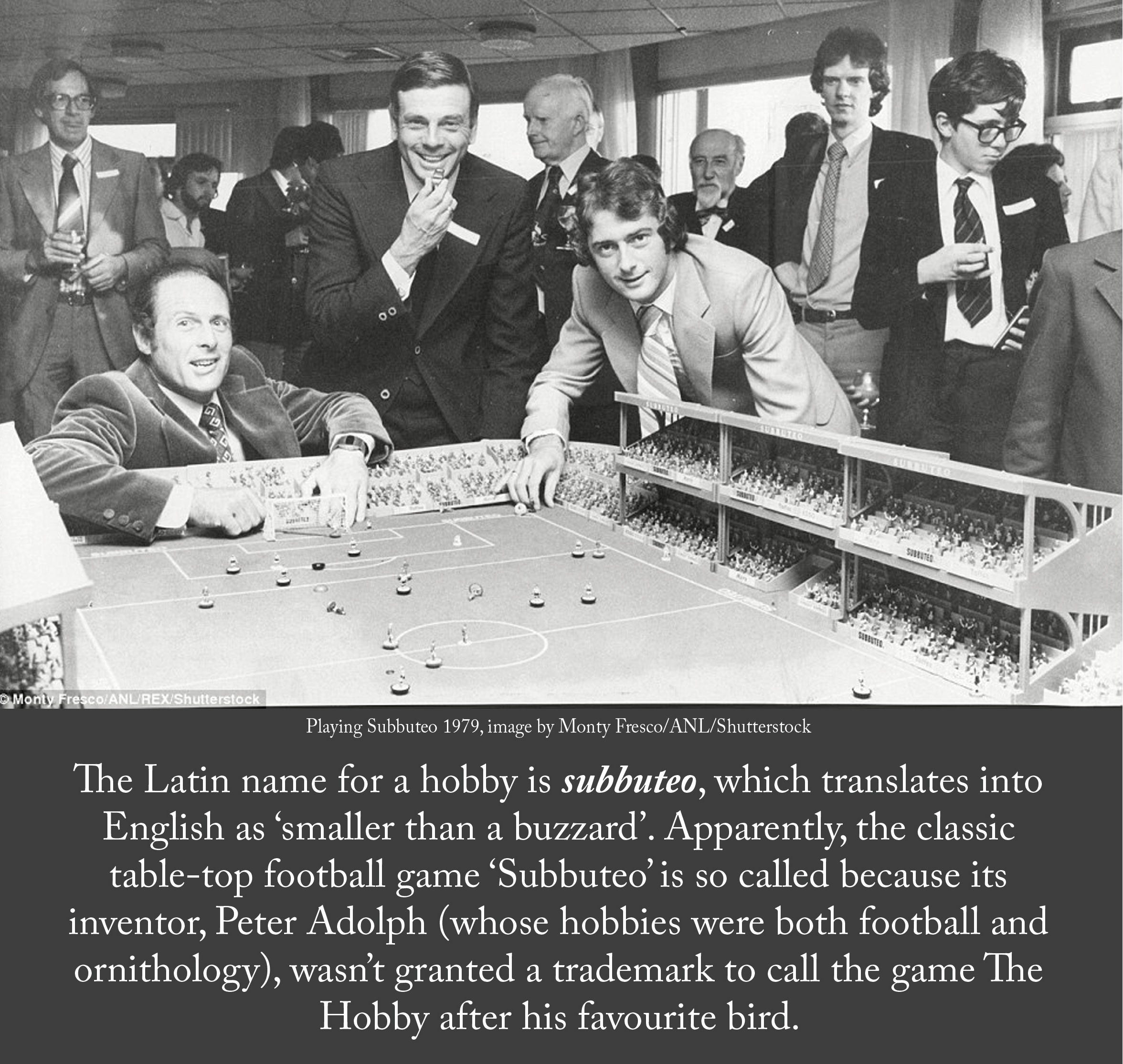
The English word ‘hobby’, as it is used today, appears to have evolved from ‘hobby-horse’, and not from the word ‘hobby’ as it was used in the early 1500s. At that time, ‘hobby’ denoted either a specific breed of small horse, or a specific bird of prey which was favoured by falconers to hunt down larks and other small birds for sport (just for a lark?).
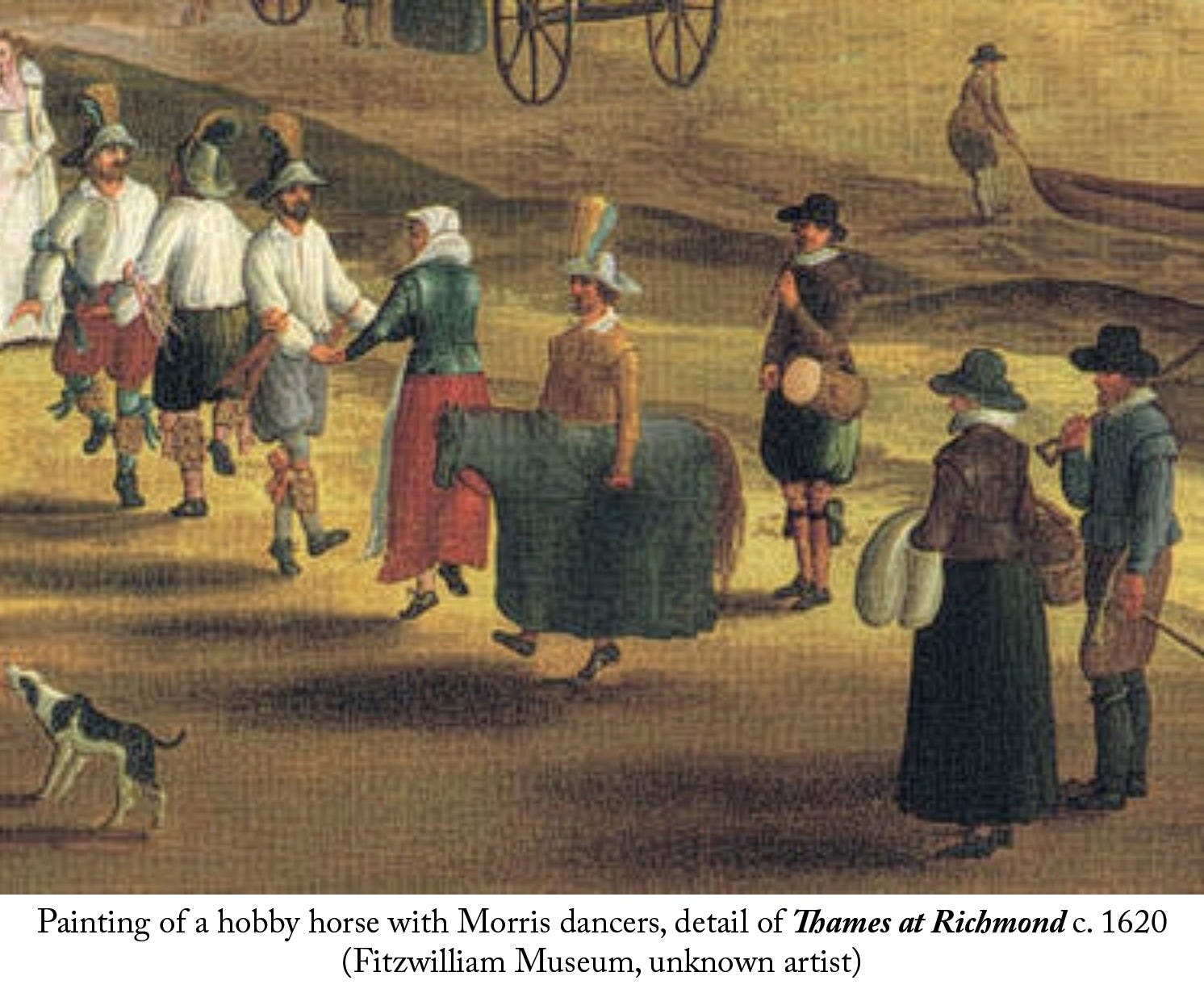
For most of the sixteenth century, hobby-horse referred specifically to a horse-like figure that was a morris-dancing character, which became popular in burlesques and pantomimes too. This hobby-horse figure was “made of wickerwork or other light material furnished with a deep housing, and fastened about the waist of one of the performers, who executed various antics in imitation of the movements of a skittish or spirited horse”. (OED)
By the early seventeenth century, several simultaneously valid definitions of hobby-horse were in common use. For example, to call a man a hobby-horse was to imply that he was a frivolous, foolish fellow or buffoon, whereas to accuse a woman of being a hobby-horse was to suggest that she was either lustful and promiscuous or a prostitute.
At the same time, hobby-horse was the name given to a wooden horse fixed on a merry-go-round, and to a stick with a horse’s head that children bestrode as a toy horse (as they still do today). Finally, and here we are getting closer to the now current meaning of the word ‘hobby’, hobby-horse could have referred to a favourite pastime or avocation to which a person was devoted, albeit at times (in another person’s opinion) out of proportion to its real importance.
The OED gives 1816 as the first year for which there is literary evidence of the word ‘hobby’ being used in its current sense: “I quarrel with no man’s hobby” says Mr Oldbuck in The Antiquary (Walter Scott). However, the cultural and economic historian Steven M. Gelber (author of Hobbies: The Leisure and the Culture of Work in America) begs to differ. He suggests that the word ‘hobby’, as old Mister Oldbuck is using it, would have meant any preoccupation, whether or not it was a leisure-time activity.
Gelber believes that the earliest modern use of the word, at least in print, is to be found in the January 1871 edition of The Stamp Collector’s Guide. This rather short-lived periodical noted that “all great men have their hobbies: that is, some favourite pastime out of the ordinary routine of daily occupation”. Gelber argues that the writer’s need to include this explanatory clause indicates that the word ‘hobby’ needed to be clearly defined, or rather redefined, as a recreational pursuit; as play, not work.
This may indeed have been the first time that the word ‘hobby’ had been used to define a pastime, although it is important to point out that we are talking about collecting postage stamps here, not Stamp Duty revenue stamps and hand-stamped charge-marks, which had probably been collected as a pastime ever since 1694 when this type of tax was first introduced.
Collecting postage stamps, however, could not have existed in any shape or form before 1840, which is when England issued the first ever adhesive government postage stamp, the Penny Black. Other nations quickly adopted the idea (the US in 1847) and philately, the collecting and study of postage stamps, stamped envelopes, postmarks, postcards and other materials relating to postal delivery, took off soon after.
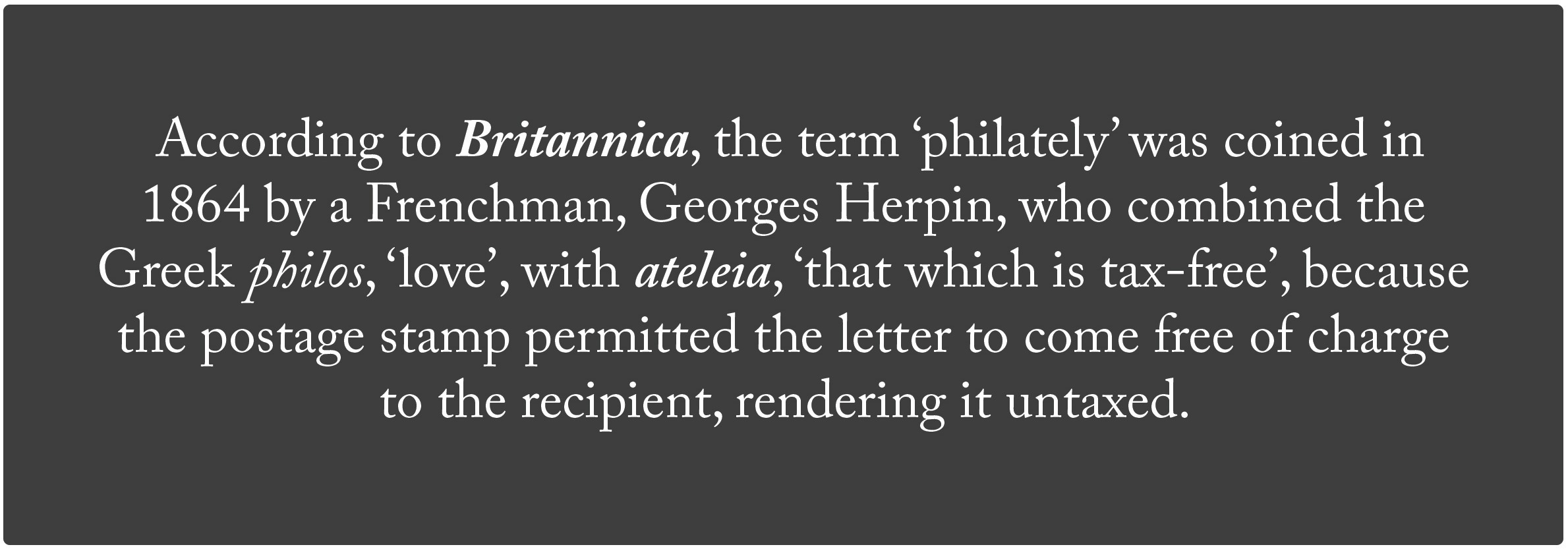
By the Second World War, postage stamp collecting had become the quintessential hobby, widely promoted as a wholesome pastime for both young people (mostly boys) and adults (mostly men).
Yet it reached its position as ‘the king of hobbies and the hobby of kings’ (George V collected, as did Franklin Roosevelt) in large part because it was widely understood that stamp collecting mimicked the real world of commerce. By replicating trading and business activities in their spare time, stamp collectors blurred the line between work and play and thus made play more generally acceptable to an industrialised and capitalist society.
For some if not for others.
While there were those who felt strongly that no “fully equipped human” could be without a hobby and that “non-vocational interests rescue workers from the inanition of labour” (Hobbies magazine 1896), others were a great deal more sceptical. For example, in the early 1900s, when trying to explain why the productivity of British workers had begun to lag behind their German counterparts, Arthur Shadwell, a physician and author specialising in public health, temperance and wider problems of economics, disparagingly described Britain as “a nation at play”. He even asked, “Are the mental energies necessary for effective work being diverted to, and absorbed by, substitute work: by sport and by hobbies?”
Some fifty years on, and two world wars later, the sociologist Ferdynand Zweig was still bothered by the idea of a working man having a hobby. “For a man who takes a passionate interest in a hobby such as dog-racing or making models, his job becomes of secondary interest. Sometimes that hobby can be so absorbing that it takes his mind off his work and lowers his efficiency.”
As there was little concrete evidence for hobbies impacting efficiency at work, negatively or positively, McKibben suggests that this jaundiced view was a reflection of a management class worried about losing control over their workers.
Now as then, many people view paid work as just a means to live and provide the wherewithal to find creative satisfaction elsewhere. Even those whose job is their primary interest are likely to seek hobbies and pastimes that either offer or demand something different from what they do for a living.
And if they don’t, then they should, for their employer’s sake if not for their own. At least, according to Maura Thomas, an authority on attention management, who in an article in Forbes about work−life balance wrote:
“While it may seem counterintuitive, there is ample research showing that your work will benefit, not suffer, from a reasonable work week of 38-45 hours.”
In truth, I find the current work−life balance rhetoric rather disconcerting with its subtext that we need to justify play by defining how it might benefit work; that we need to play more efficiently in order to work more productively.
So, I’m with Aldo Leopold (1887-1948), considered to be the father of wildlife ecology and modern conservation, who wrote “… that no hobby should either seek or need rational justification. To wish to do it is reason enough. To find reasons why it is useful or beneficial converts it at once from an avocation into an industry – lowers it at once to the ignominious category of an ‘exercise’ undertaken for health, power, or profit.”
I’m willing to accept that ‘no fully equipped human’ should be without a hobby − providing that the hobby is pursued merely for the enjoyment or the interest it affords. Personally, I can think of few better places to live than in a nation full of hobbyists at play.

No posts
Comments
Nothing yet. Say the first thing.
Sign in to join the conversation.