

Question (Entertainment): The cast of the hit 1983 movie The Big Chill included Glenn Close, John Hurt, Jeff Goldblum and Kevin Kline. Which boardgame did they become addicted to playing?*
For close on twenty years, Christian Drummond criss-crossed Britain, staying in grim budget hotels, wandering city and town centres looking to rustle up a little action, to use the skills he’d honed to win cash. By his own estimate Drummond was raking in £60 grand a year, and since it came from gambling it was all tax free. It was like something from The Hustler or The Cincinnati Kid, except that Drummond wasn’t a poker or a pool player; he didn’t hang out in casinos or snooker halls. His habitat was the corner of public houses, and the game he played was general knowledge. Drummond was one of Britain’s most successful professional quiz machine players. When he said he was coining it, he meant that literally: each jackpot came in £1 coins. Sometimes he’d work twelve-hour days, going from pub to pub in cities like Sunderland, Liverpool or Swansea, picking up £60 an hour from his favoured machine The Colour of Money, until the bag in which he carried his winnings was so heavy he had to lift it with two hands.
Drummond had begun his quiz career as an English Literature student, skippering the Sussex team in University Challenge. His educational background was not unusual amongst the UK’s professional quiz-machine players. In 2011, married Oxford graduates David and Lesley-Anne Brewis went on a tour of British pubs and hauled in around £10,000 in a few months. David Brewis had been a member of Oriel College’s University Challenge team.
The opportunity to cash in on a head full of facts had arrived in British pubs in 1985 when Coinmaster of Cardiff introduced the Quizmaster, the country’s first coin-operated quiz-machine. The player paid 20p in an attempt to win a £10 jackpot (a fair sum in the days when a shop assistant was lucky to take home £100 a week). Within a few years, dozens of different machines – nicknamed “quizzies” – had appeared. The jackpots rose. By the late 1990s, most machines would spew out £40 to a winning player. Not many of those battling the quizzies did win, of course. The machines were hugely profitable. As a result, by 2000 it was estimated that there were over 35,000 of them in UK public houses and social clubs. In 2003, a new and more sophisticated machine, the Paragon Pro23, sold 8,000 units in a single year.
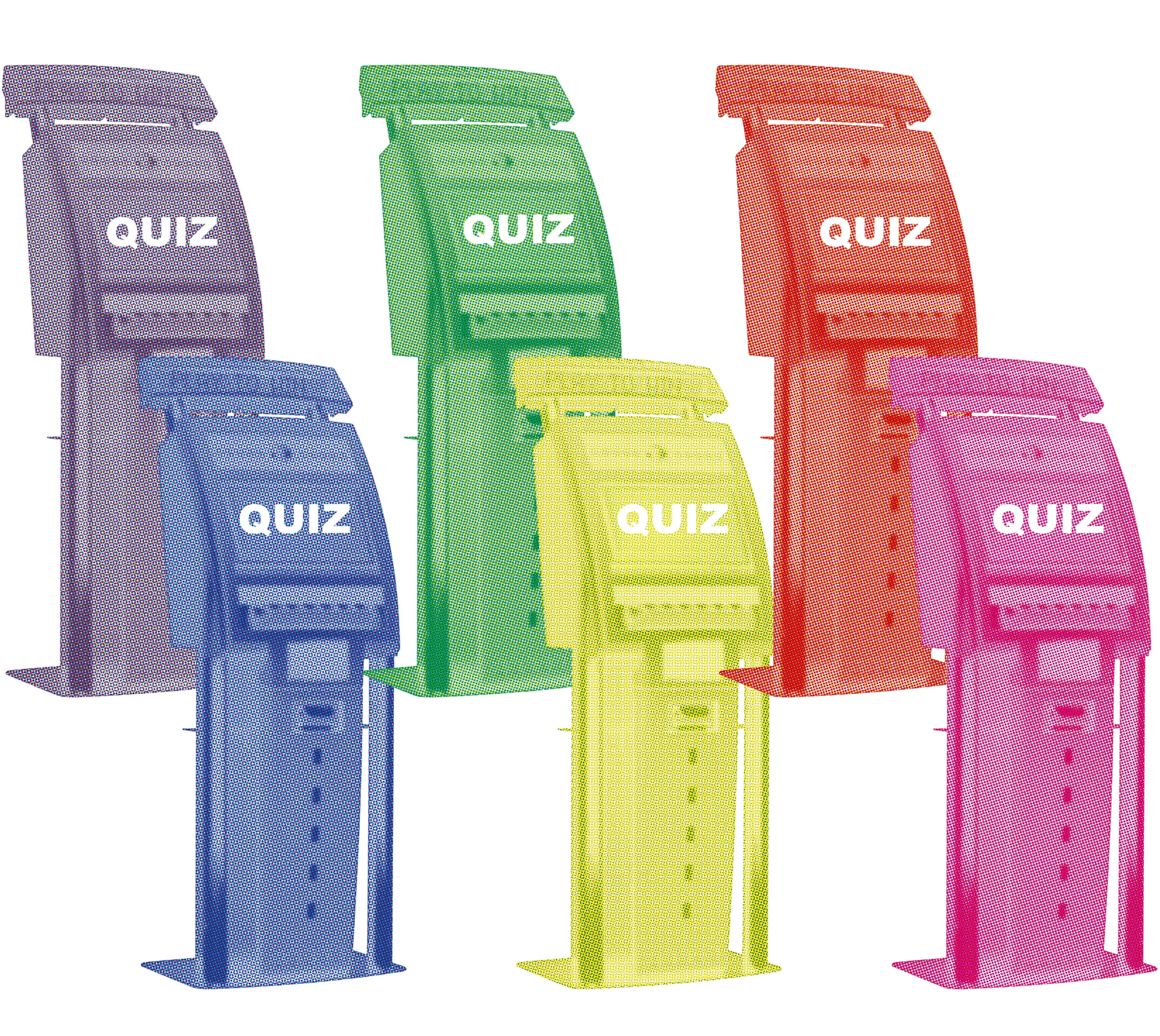
Most quizzies carried a bank of 30,000 questions. Strewn amongst them, as a safeguard against people like Drummond and the Brewises, were spoiler questions, the sort of thing that would stump even somebody with a brain bursting with answers. Drummond recalled one in particular: “Who was the lighting director on hit US TV show Friends?”
Sometimes publicans took the matter into their own hands when it came to dealing with the pros. Paul Johnson, a former civil servant from Hampshire who claimed to have been clearing £10,000 a year since starting playing the machines in 1985, was ejected from the Litten Tree in Bournemouth in 2005 after the landlord became suspicious of his speed and success. Other publicans complained that players used mobile phones to text friends and shared information about the patterns of questions the machines threw out. “It’s cheating in my book, but sadly not unlawful,” one licensee told trade paper The Morning Advertiser in 2006.
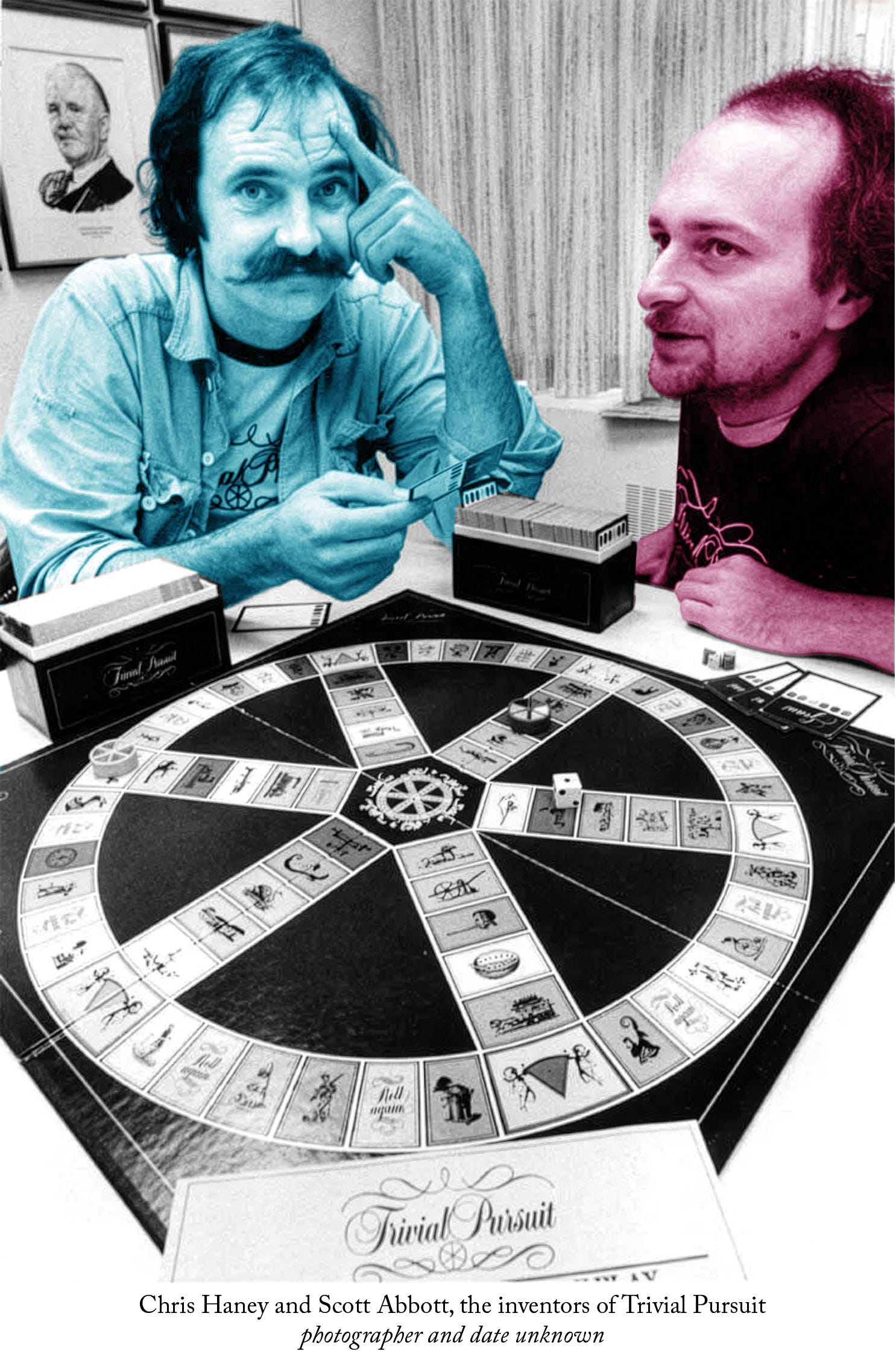
The creation of British quiz-machine culture owed something to events from the early 1980s not very far from the Litten Tree, in the public library of the Dorset seaside town of Weymouth. It was here, during a holiday visiting English relatives, that Canadian brothers Chris and John Haney had hung out. They were researching questions for a boardgame they had designed.
Chris, a newspaper photo editor from Montreal, had come up with the idea for the game when he and one his best friends, Scott Abbott, a press sports editor, had found themselves in Niagara on Lake Ontario shortly before Christmas 1979 with a set of Scrabble that had several letters missing. Frustrated, the pair decided to come up with their own game based on the sort of general knowledge crosswords that had been a popular feature of newspapers for several decades. Later they’d bring in John – a former ice hockey player – and another pal, lawyer Ed Werner, to help develop their idea.
In 1981, the quartet spent a considerable chunk of everything they had getting 1,100 copies of their game made. Filled with enthusiasm, they took their product to the New York Toy Fair in 1981, expecting to come back rich. They didn’t. In fact, by now they were teetering on the brink of financial oblivion. But there was something about the game that caught the eye of toy distributors Selchow & Richter, who then signed a deal to distribute Haney and Abbott’s game in the US.
The distributors returned to the New York Toy Fair in 1983, and this time the game got an altogether more excited reception. The following year, the game sold 20 million copies in the USA alone, generating $600 million in sales. The name of the game was − and you don’t need to be a Drummond, Brewis or Johnson to work this answer out – Trivial Pursuit. By the mid-1980s, the game was a ubiquitous feature of shelves across the world. In the UK, it even had a nickname: “Triv”.
Even those who played the game avidly – and that accounted for a huge chunk of the population of the Western world – struggled to explain the exact nature of Triv’s appeal. The game was simple. Players moved their pie-shaped pieces around the board with dice rolls. The spot they landed on dictated which of the six categories of question they would have to answer. If they got the question correct, they gained a slice of coloured plastic (nicknamed a cheese) to slot into their pie. The first player to collect all six colours won. And that was it. There was barely any interaction between players and long spells spent waiting for your turn. Yet still, by 2014 Triv was estimated to have sold 100 million copies worldwide in 24 countries and 17 different languages. It had spawned arcade, video, computer and online versions. They even made an edition in the Soviet Union, where it also became a popular TV gameshow. In 2008, the four friends who had developed the games sold the full rights to Hasbro for $80 million – the sort of sum you’d struggle to get from pub quiz machines even if you had a brain the size of the Hadron Collider.
Trivial Pursuit changed the way people thought about general knowledge. It spawned the pub quiz machine and it breathed fresh life into the pub quiz, a phenomenon that had begun in 1946, when a quiz night was held at a CIU Club in York (the first ever pub quiz question was “Who originated the police system?” Answer: Sir Robert Peel). The first league for pub quiz teams was formed in Bootle on Merseyside thirteen years later, the organisers inspired by the TV quiz show Double Your Money. By the time Trivial Pursuit arrived in Britain, the Merseyside pub quiz league had 300 teams. Today, it’s estimated that 44% of all British pubs host quiz nights, and there are over 200 leagues spread across the country.
Nowadays, blurting out the answers to general knowledge questions is such a part of human existence that it’s hard to believe there was once a time when nobody did it, or you were not bothered whether the people at the next table knew the inventor of the ballpoint pen (John J Loud), the year the first multi-storey carpark opened (1901), or the last nation to win an Olympic gold medal for rugby union (USA). To most of us, the idea that nobody had ever heard of a quiz – as in a test of what you know − until a little over 150 years ago seems improbable. Yet it is true. There is no mention of such tests in the Ancient World or in Medieval or Renaissance Europe. The first time the word “quiz” appears in print in English is 1792.
There is a popular story that the word was invented in 1791 by Richard Daly, a Dublin theatre manager. According to legend, Daly took a bet that he couldn’t make up a word and have everyone using it within 48 hours. He came up with “quiz” and spread it through the Irish city by painting it on walls. After two days, everyone was asking what “quiz” meant. Daly had won his wager. This is a good story, but if it’s your final answer then I’m afraid you are not getting a coloured slice of plastic (pink for “Entertainment”) or a clanking £1 bonanza.
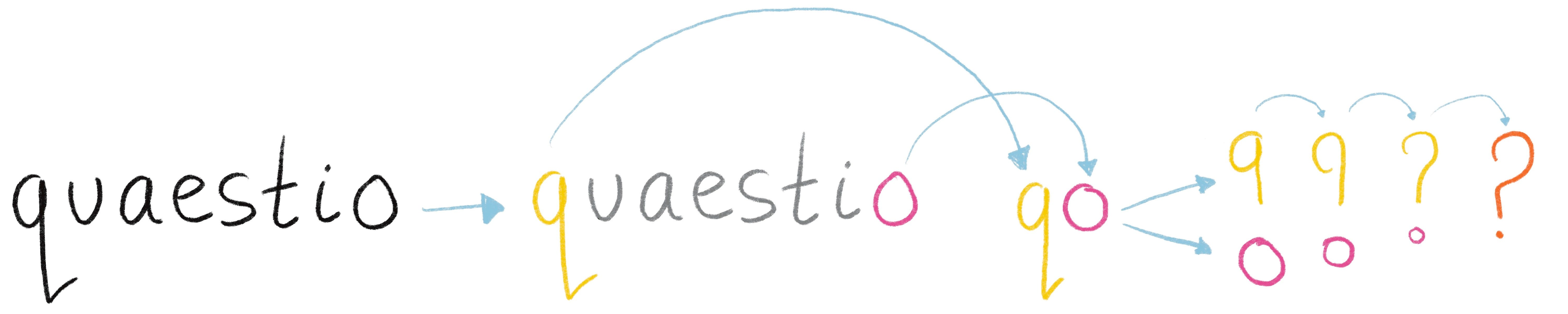
By the time the urban myth surrounding Daly surfaced, the word “quiz” seems already to have been in use for several decades. It described an “odd-looking person”. While many of the sort of geeks and nerds who excel in quizzes are indeed a little peculiar in appearance, this is not how its name as a test of knowledge originated. Most likely “quiz” comes from the Latin word quis meaning “who”, from which we get “inquisitive” and “inquisition”.
The first use of “quiz” in its modern sense seems to be in a book by the American writer Albert Plympton Southwick. Quizzism and its Key: Quirks and Quibbles from Queer Quarters was published in Boston, Massachusetts in 1884 and proved so popular that by 1886 it was already in its 6th edition. Southwick’s book contained 600 fairly random questions and their answers. Included amongst them: “Where is Cape Hancock?” (The extreme south-western point of Washington Territory), “When did actresses first appear on the stage?” (1656: Mrs Colman in a performance of The Siege of Rhodes) and “What country has never been conquered?” (Scotland). One query that Quizzism doesn’t address is whether Albert Plympton Southwick (1855−1929) was any relation of Alfred Porter Southwick (1829−1898), the Buffalo dentist who invented the electric chair. The answer is that he was, distantly at least: both men were descendants of a Quaker family who arrived in the USA in the 1820s. Now, how’s that for trivia?
While Southwick may have coined the term “quiz”, he wasn’t the first writer to make a living from posing questions and answering them. The journalists on London’s Athenian Gazette had begun doing that in the 1690s: inviting the public to write in with questions and then finding the experts to respond. A weekly magazine, Notes & Queries, devoted entirely to the same task, was first published in Britain in 1849; it is still published, albeit nowadays only every three months.
At the start of the twentieth century, the US military began using general knowledge tests as a means of assessing the mental fitness of potential recruits. By 1927, the idea of playing a fun trivia quiz seems to have entered the mainstream, and that year saw the publication in the USA of Ask Me Another by Amherst College graduates Justin Spafford and Lucien Esty, and in the UK of S.P.B. Mais’s book Do You Know? Mais, we should note in the spirit of our subject, was an Oxford-based journalist and broadcaster and the original presenter of BBC Radio’s long-running series Letter from America.
In America in particular, radio has done its bit in promoting quizzes with shows such as Vox Pop (first broadcast in 1932), in which random members of the public were stopped on the street and asked a general knowledge question with the chance of winning $1. The show proved so popular that it spawned an entire industry of trivia-based gameshows. It also inspired one of the ancestors of Trivial Pursuit, Milton Bradley’s 1938 Vox Pop (“The What D’Ye Know Game”) based on the show, in which players drew question cards from a cloth bag. Correct answers were worth 100 points, or 200 for those questions judged more difficult. The manufacturer promised “A rare good time for everybody” as they battled through teasers such as: “If you had a fustanella given you, would you ride in it, wear it, or eat it? Answer: You would wear it, it’s a short skirt traditionally worn by Greek men.”
While Vox Pop might have been the father of all trivia game shows, the Milton Bradley version was by no means the first boardgame to pose questions to the players. That distinction arguably goes to the 1822 game Travellers’ Tour through the United States. In this game, players move around a map of the US with the positions of cities marked on it, but not their names. Progression was done using a teetotum spinner (for family-oriented Americans, dice had worrying associations with gambling). When a player landed on a city they must name it and its population or forfeit a turn. The first player to cover 10,000 miles and reach New Orleans was the winner. The game was so successful it was followed by Travellers’ Tour through Europe.
Moving around a board and answering general knowledge questions was clearly a format that worked, but nobody seemed to recognise that fully until Haney and Abbott came along. After them, the deluge. The database of website BoardGameGeek shows the profound influence of Trivial Pursuit on the market. Prior to the game’s appearance, only a few hundred general knowledge-based boardgames had been produced. Most of them – like Milton Bradley’s Vox Pop – were spin-offs from Radio and TV shows such as Quiz Kids and The $64,000 Question. After 1984, there was an explosion of games testing players’ fund of knowledge, not only on general subjects but on a bewildering variety of specialist topics, ranging from beer to football, wildlife to antiques, seventies music to sex. At the start of 2024, the BoardGameGeek database listed over 7,500 trivia games.
Sadly, by the time the inventors of Trivial Pursuit had signed over the rights to Hasbro and ridden off into the sunset, the pub quiz machines they had unwittingly helped create were in terminal decline, killed off by the rise of the smartphone and the search engine. The days of the professional quizzy-hustler were over. Who needs to memorise thousands of facts when you have Google?
*Answer (Entertainment): Oh come on now, have a guess?
Illustrations by Frederica Scott Vollrath
No posts
Comments
Nothing yet. Say the first thing.
Sign in to join the conversation.