
(I first published a version of this piece a year ago as a substack newbie. I’m sharing it again now, partly because it fits so perfectly into this monthly series, and now that I’ve found my feet on substack, I hope it might find its readers this time. I have updated the photos! One year on, it stands out as one of my favourite pieces, or at least the one I think might be the most interesting: it’s about sense of place but also about language, and how interdependent those two things are. I hope you’ll think so too.)
The UK’s northernmost fish and chip shop is in the small village of Brae, towards the top of Shetland’s mainland and about halfway up the group of islands that makes up Shetland. The fish is delicious, and you can sit outside on a scenic terrace surrounded by hills and sky, trying to eat while you bat away seagulls. On the outer wall, there’s a poster which tells you how many miles you are away from various places, in Europe and further afield.
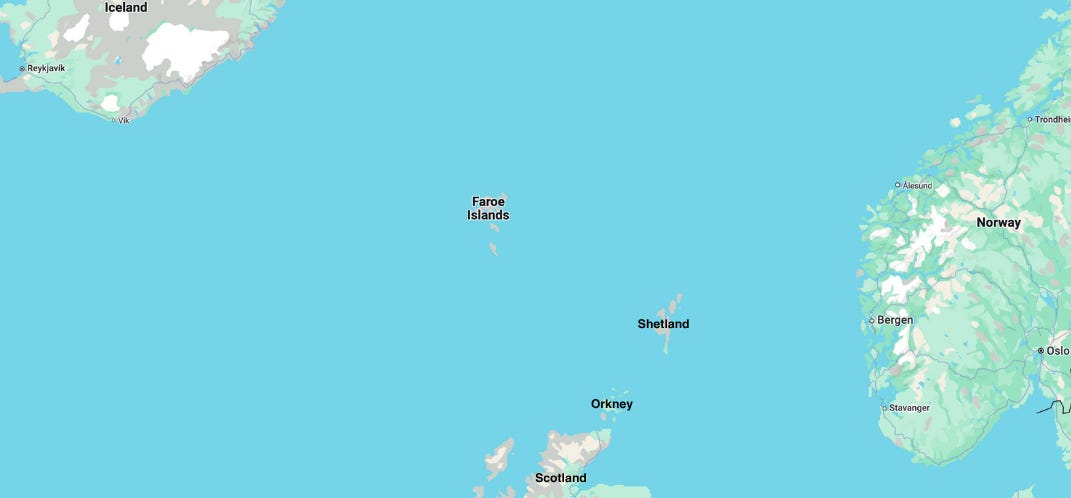
My first thought was that we were really far from, well, anywhere. I knew that already, on some level: I’d spent the night before on a ferry crossing the North Sea from Aberdeen, and the days before that travelling from London, almost the entire length of Great Britain. But with a closer look at that map, the particularities started to sink in. Closer to Bergen than to Edinburgh. Closer to Stockholm than to London. Sixty degrees north - the same line of latitude as Oslo, as St Petersburg, as Alaska.
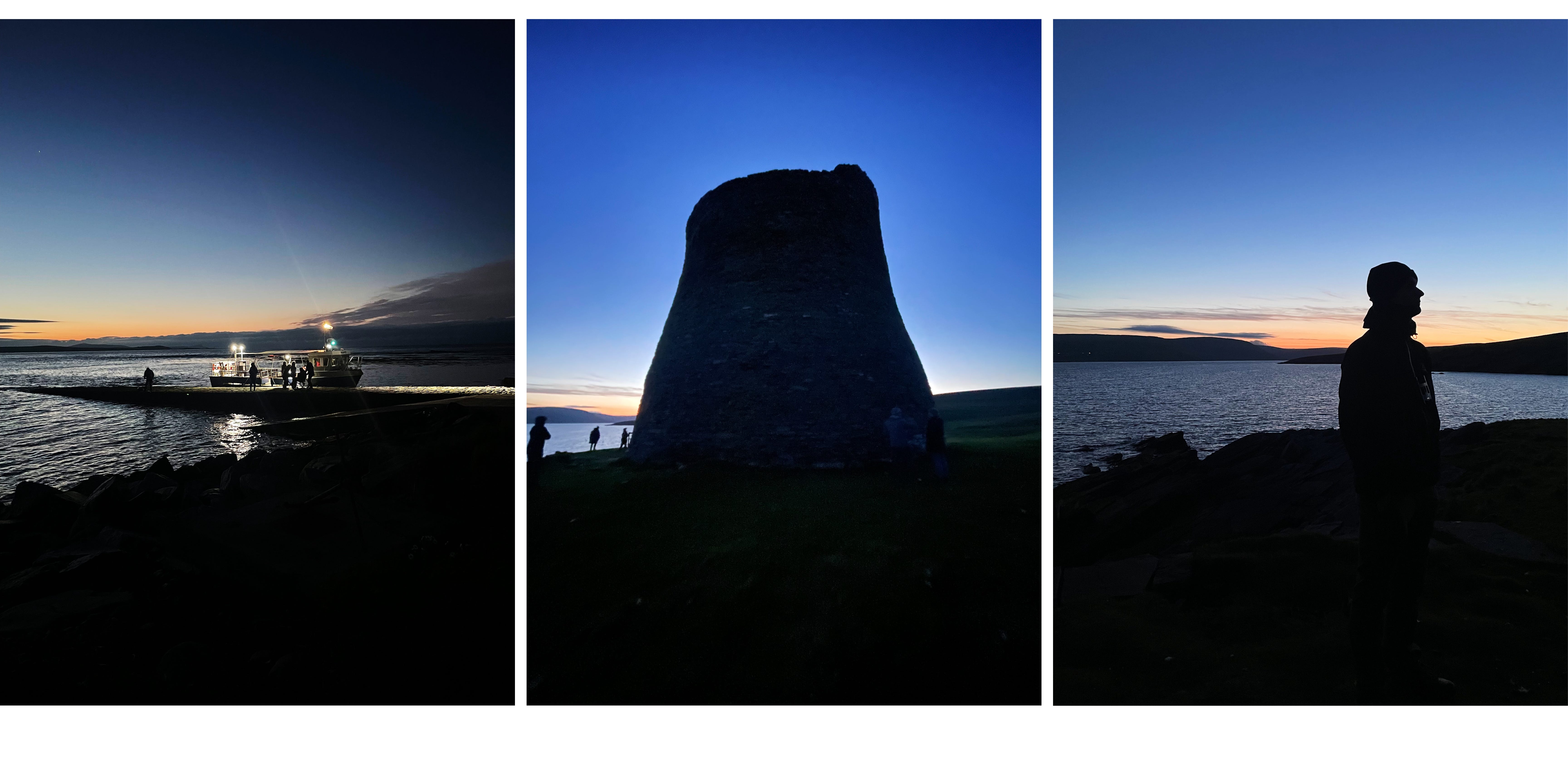
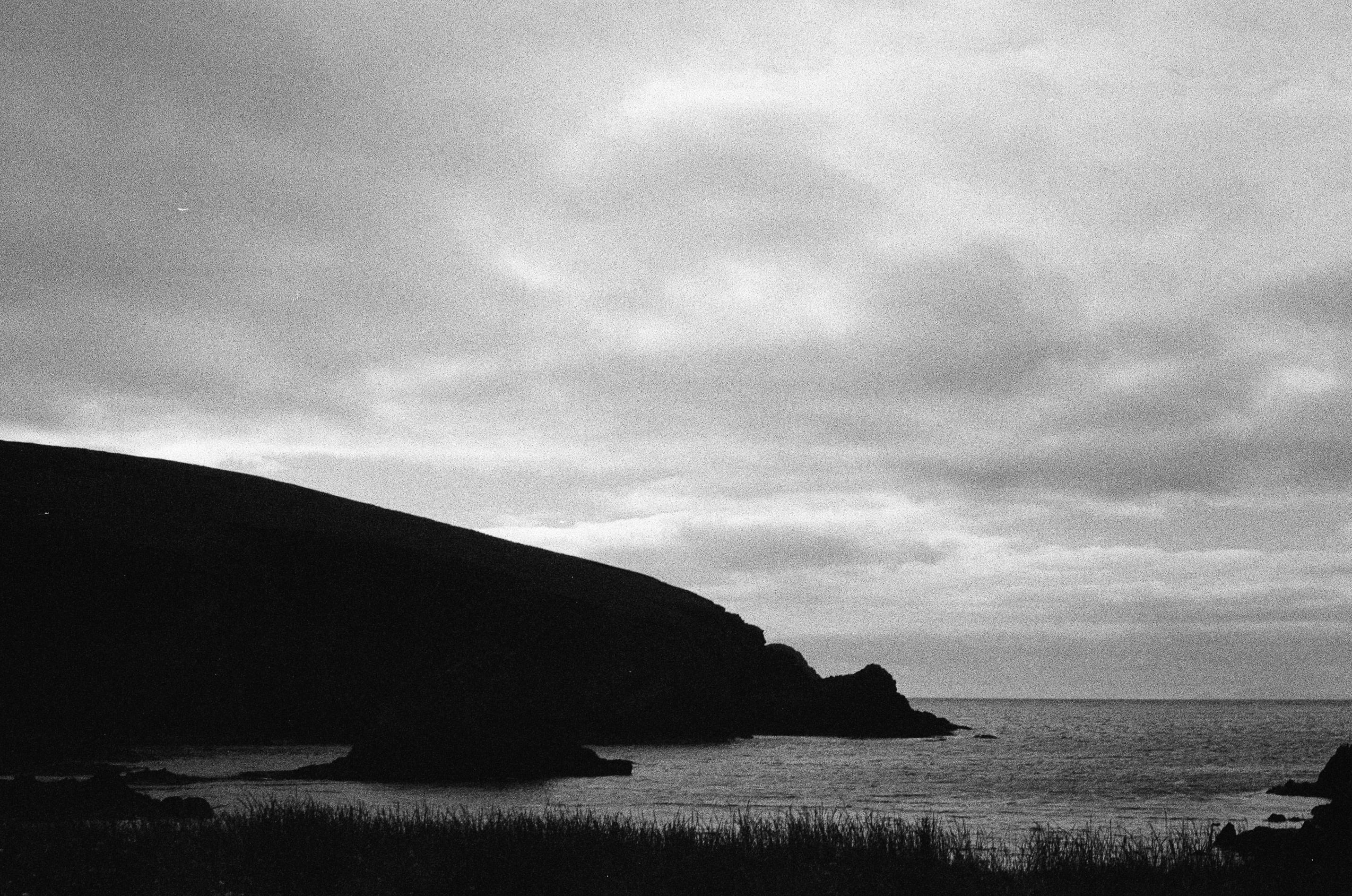
On one of our first nights in Shetland, we took a small boat trip to the uninhabited island of Mousa. The boat leaves after sunset - nearly 11pm, at sixty degrees north - and sails into what local folk call the ‘simmer dim’: the blue glow of a sky which, for a few weeks either side of the summer solstice, never turns entirely dark. Our guide was a gentle, local man, his accent soft and lilting with broad, flat vowels: so different from the Glaswegian of a few days before, but so different, too, to the sing-song speech of my Hebridean family. He showed us the bench he’d crafted from pieces of fence post and boat wood, stationed precisely on the 60°N line.
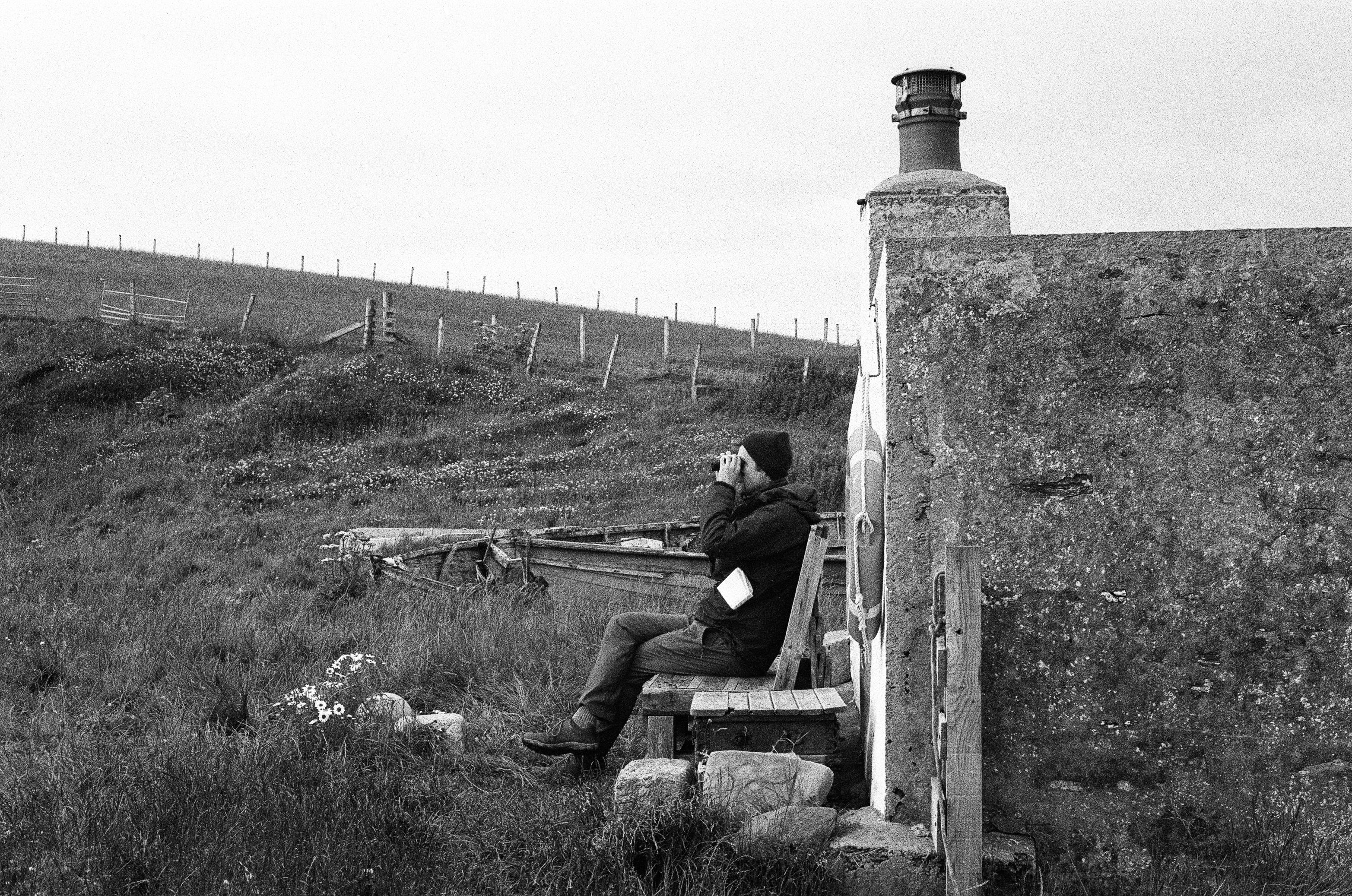
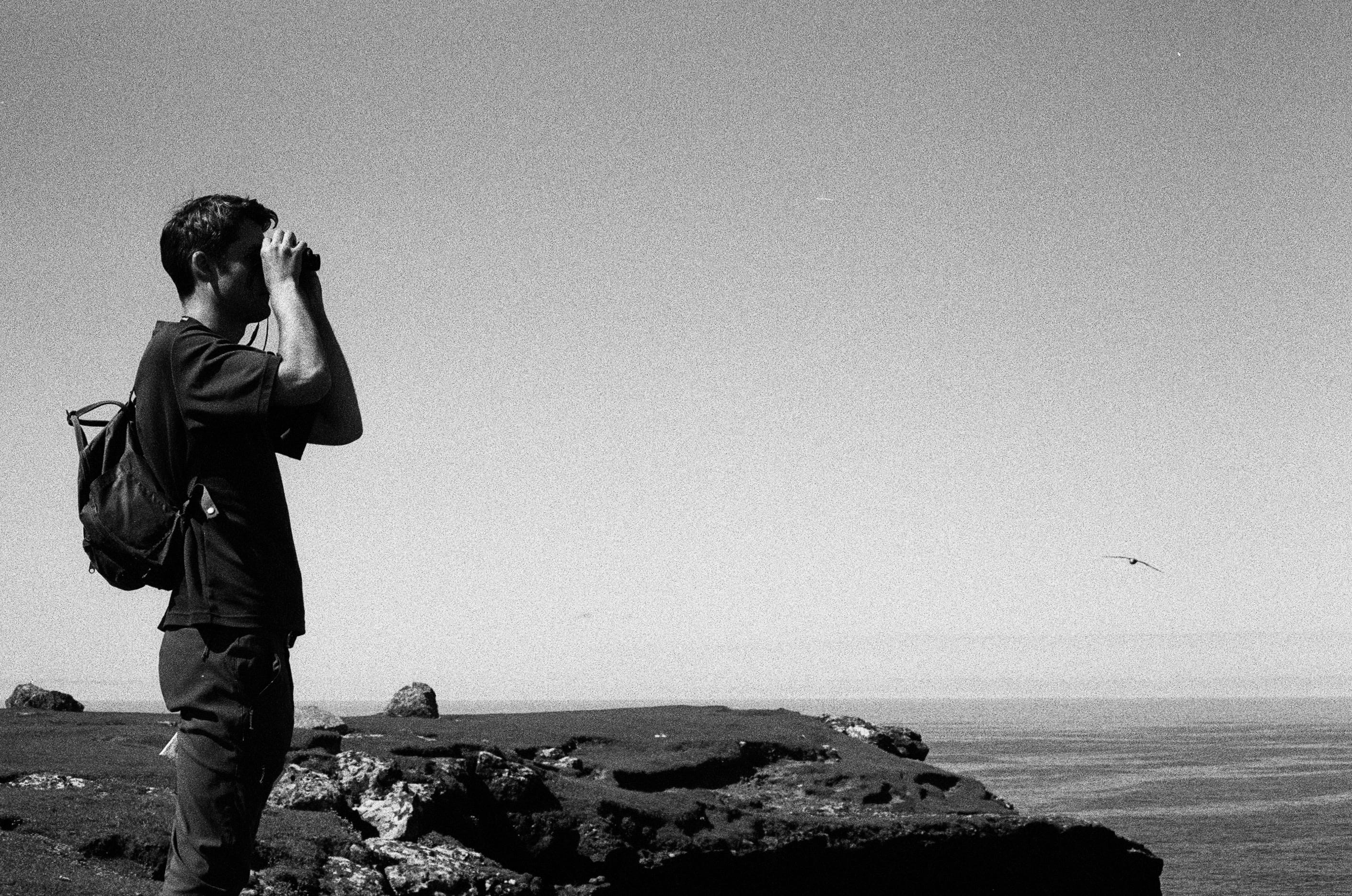
We had gone to Mousa, ostensibly, to see the birds: at this moment of high summer, eleven thousand breeding pairs of storm petrels - sea birds - arrive at dusk each night from deeper waters to nest. They fly every year from South Africa and Namibia to the same spot to lay their eggs and raise their young before returning weeks later to the warmer Indian ocean. Sam loved the birds and watched them for hours, binoculars in hand. I liked them too, but I was much more mesmerised by the building they had chosen as their home: Mousa Broch, an impressively preserved iron-age roundhouse, thirteen metres tall and nearly two and a half thousand years old. As we climbed the winding staircase to the top - stairs! stairs from 300BC! - and crouched as the petrels darted into their wall nests around us, the guide told us stories of the Broch from Norse sagas. We sat in perfect darkness and imagined those characters - a couple, eloping and shipwrecked on their way to Iceland - breathing the same magical air as we were.
I don’t think I’ve ever been anywhere - certainly not in the UK - which is quite so surrounded by and aware of its own history as Shetland is. The Mousa Broch is momentous and seductive, but it’s not even the oldest thing on the island. At Jarlshof, at the southern tip of the mainland, you can walk through over four thousand years of remarkably preserved settlements: layer upon layer of human history and development, stretching from the Bronze Age through the Iron Age and Viking era and into medieval and early modern history - then covered by land and soil until it was stumbled upon by an unsuspecting nineteenth-century farmer. 2,500 BC, I kept whispering to myself. BC. Almost as many years BC as we are AD. We so rarely get to think of time, of human time, on that scale. If the Mousa Broch builders of 300BC went to Jarlshof, and they probably did, they would have been visiting a settlement that was already two thousand years old.
The Viking history, too, feels vibrantly, thrummingly, alive. In the village of Haroldswick, there’s a perfect reconstruction of a Viking longhouse and longboat, to climb on and to sit in and to marvel at. And when I return to Shetland one day, it will be for Up Helly Aa, the annual winter festivals where islanders dress in Viking costumes for a torch procession, culminating with setting a longboat, ceremonially, on fire.
Shetland is part of Scotland now but the islands belonged to Norway until 1479, when the then King of Norway graciously included them as part of a dowry payment for his daughter, betrothed to the Scottish King. The nordic connections have survived a lot longer: not in a subtle way but, in linguistic terms, glaringly, fascinatingly obvious. There’s the islands’ motto - með lögum skal land byggja - immediately recognisable and comprehensible to anyone with a rudimentary grasp of any Scandinavian language: it’s actually Old Norse, later replaced by the old language Norn, spoken by islanders until Scots and finally English took over. In Shetland, I felt as if every new place revealed another linguistic connection, each new place name was another line drawn in the fascinating web of words and history and people that draw places together.
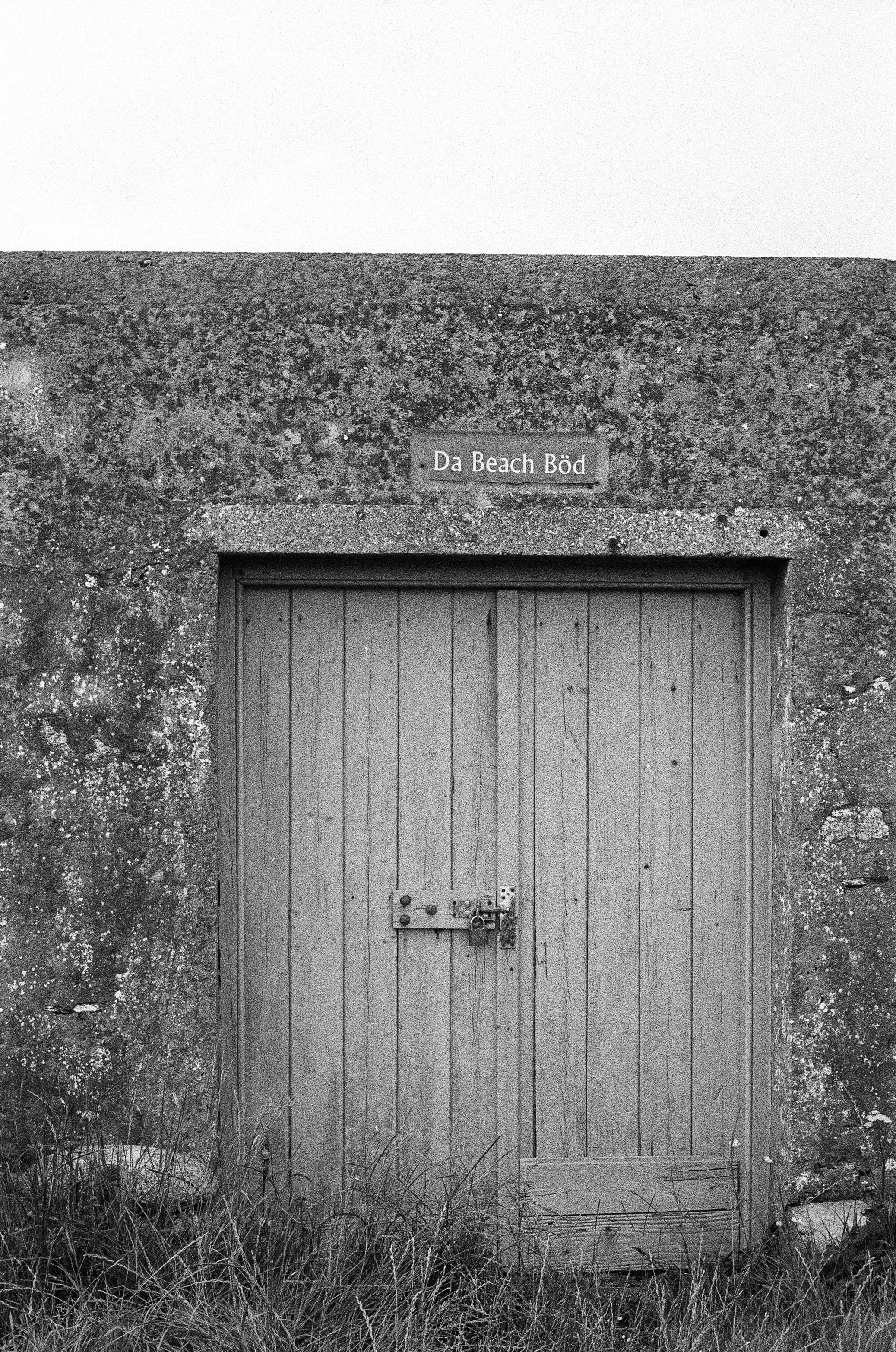
There’s the definite article, da, much more prevalent than ‘the’ in local names, a halfway point between English and Scandinavian det. There’s the -ay suffix, meaning island, at the end of Bressay and Hildasay and Whalsay, just like the many -oy and -øy islands I dream of visiting in Norway. There are the -wick inlets and small bays - Lerwick, Hillswick, Sandwick - just like Sandvik and other -viks I’ve encountered in Scandinavia. And there’s Jarlshof, a name so much more Scandinavian than Scottish, meaning the same (Earl’s Court?) to a contemporary Norwegian or Swedish speaker as it would have meant to the Old Norse speaker who named it.
In a Swedish lesson the term after I went to Shetland, we were discussing the Scandinavian languages and the similarities between them. There were four, our teacher said: Swedish, Danish, Norwegian and Icelandic - not counting the fact Norwegian has two official written forms, or the many dialects within each of them. ‘Men det finns ett språk till,’ I volunteered. There is another language. My Swedish teacher looked at me blankly, as I started talking about Shetland, about old Norn and the dialect people still speak there today. He had no idea; he’d never heard of it. I wondered how representative that was. Scandinavia’s influence is everywhere in Shetland, but does Shetland make any mark at all on Scandinavia?
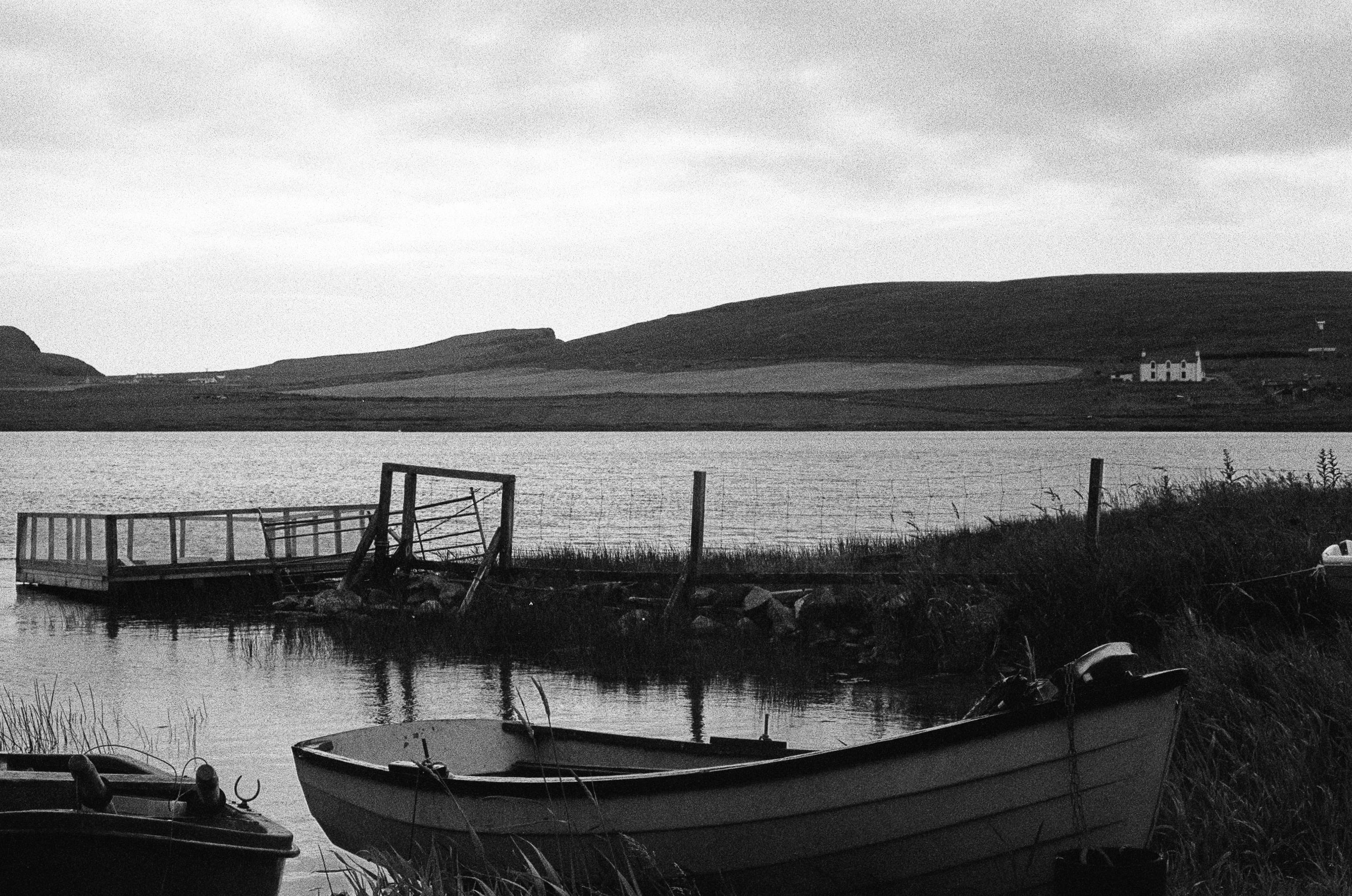
You don’t need to know a word of a Scandinavian language to notice the nordic influence, though. Shetland’s official website boasts of local houses built to Scandinavian insulation standards, easy to spot in their distinctive red timber. Until the early 2000s, passenger ferries ran between Shetland and Norway, so when you drive out of the ferry terminal car park you’re greeted by instructions in both English and Norwegian: Shetland council have not yet updated their road signs. And because of the Norwegian tourists (who still visit in their hundreds, despite the lack of ferry), many of the tourist sites have information boards in both languages too. The ferry used to depart Bergen and stop off in Shetland and Orkney before heading west to the Faroe Islands and finally to Iceland, and I could somehow feel it, this new and different focal point, this other sense of place. I thought I knew what to expect from Shetland: I’ve often visited the Isle of Barra in the Outer Hebrides where my grandmother grew up, and I expected one remote Scottish island to feel rather like any other. But I hadn’t considered how much the words, and the place names, shape how it feels to be in a place, and how fundamentally the Gaelic translations - Bagh a Chaisteil for Castlebay; Na h-Eileanan Siar for the Outer Hebrides - remind me of where I am. Here in the North Sea, the signs and sounds and even flags of Nordic countries recentre the map. All this time I’d thought Shetland was far away and removed from the mainland, from Europe. But how silly of me: it was actually the beating heart of its North Sea community all along.
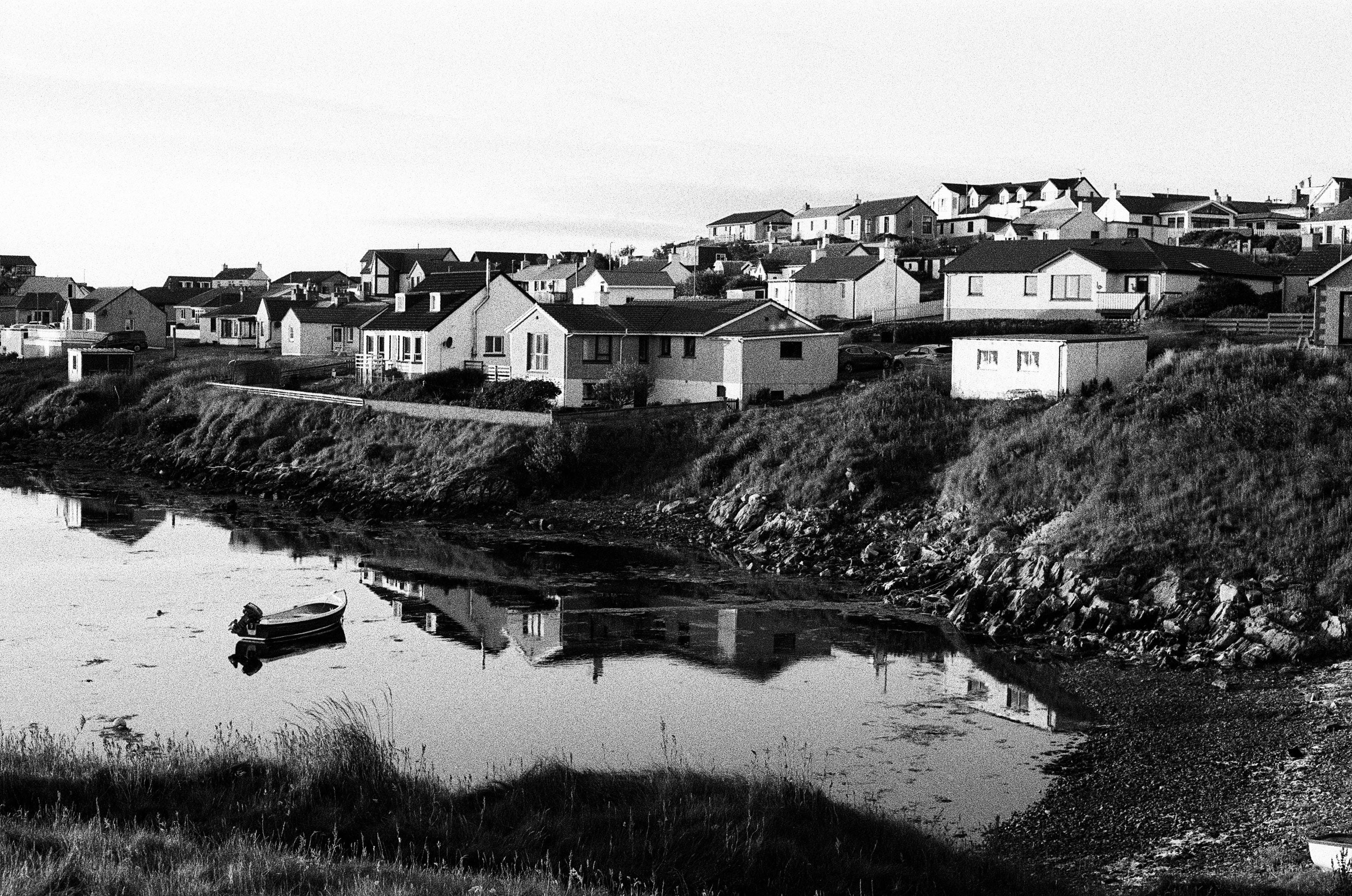
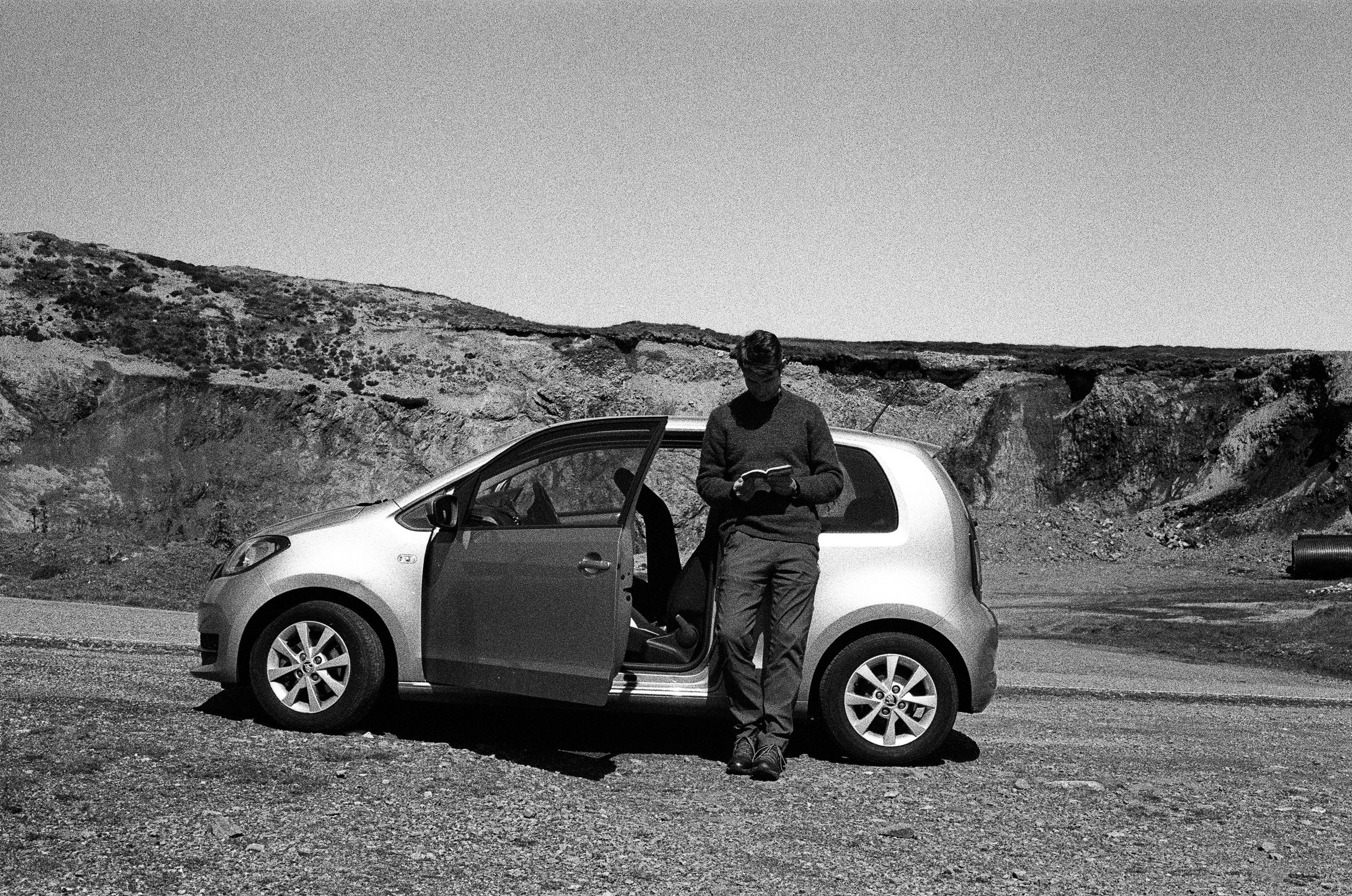
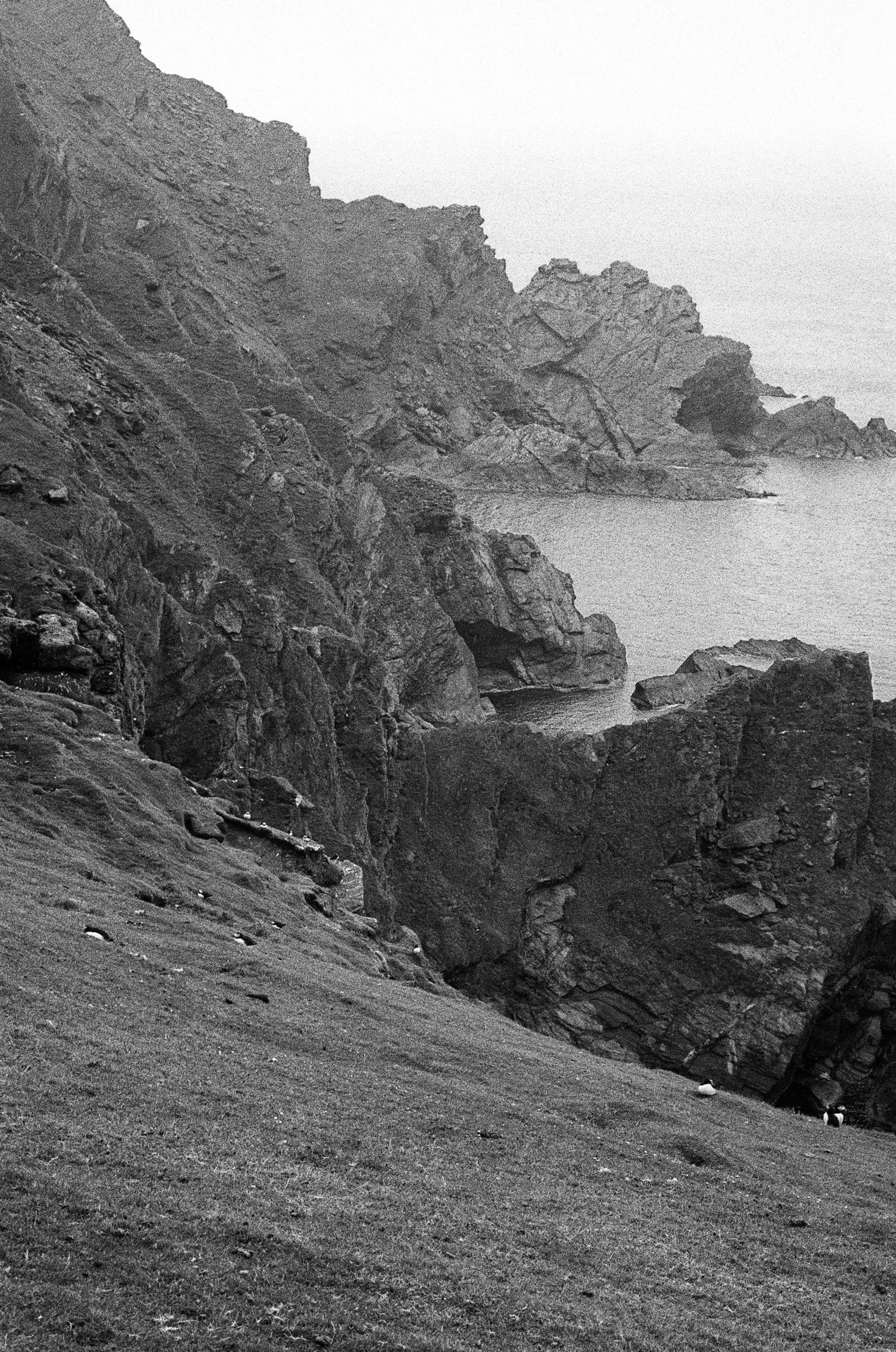
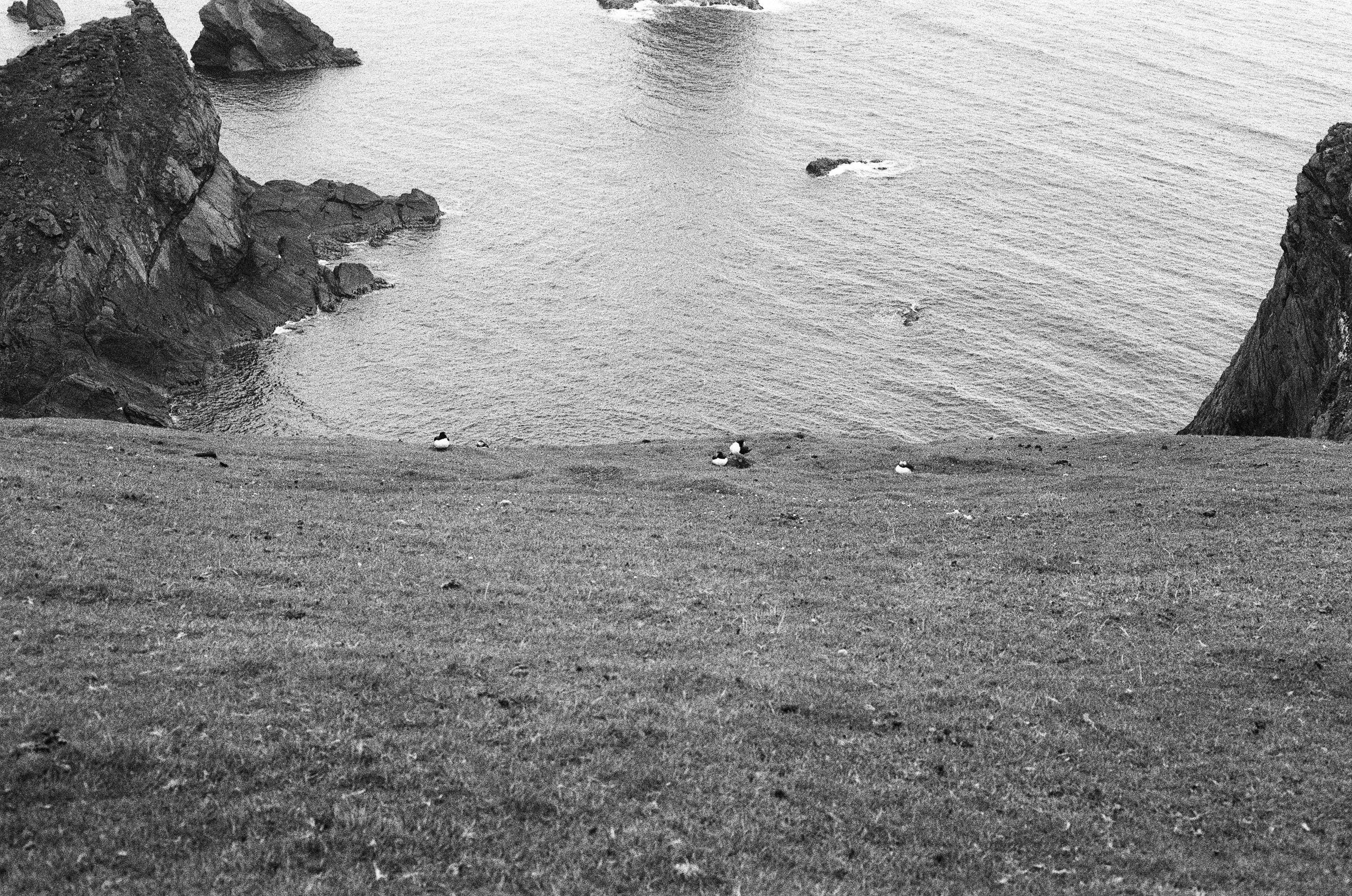
In Shetland, we chased the weather. Or rather, it chased us and we ran from it, finding snatches of blue sky and sunlight between icy breezes and thick clouds. One day, we drove from the mainland to the northernmost tip, a journey which included a ferry to the south of the island of Yell, which we crossed, and another ferry to Unst. We ate cheese sandwiches in the UK’s northernmost café and saw a local history exhibition at Haroldswick village hall. Then, a treacherous clifftop walk at Hermaness - the kind of place where you really feel the wind might sweep you off your feet and into the crashing waves below - but worth it to see the puffins, smaller and sweeter than I’d imagined, nesting on the rocks, and the mighty Muckle Flugga lighthouse (Muckle Flugga! Could there be a more wonderful name?) standing proudly beyond.
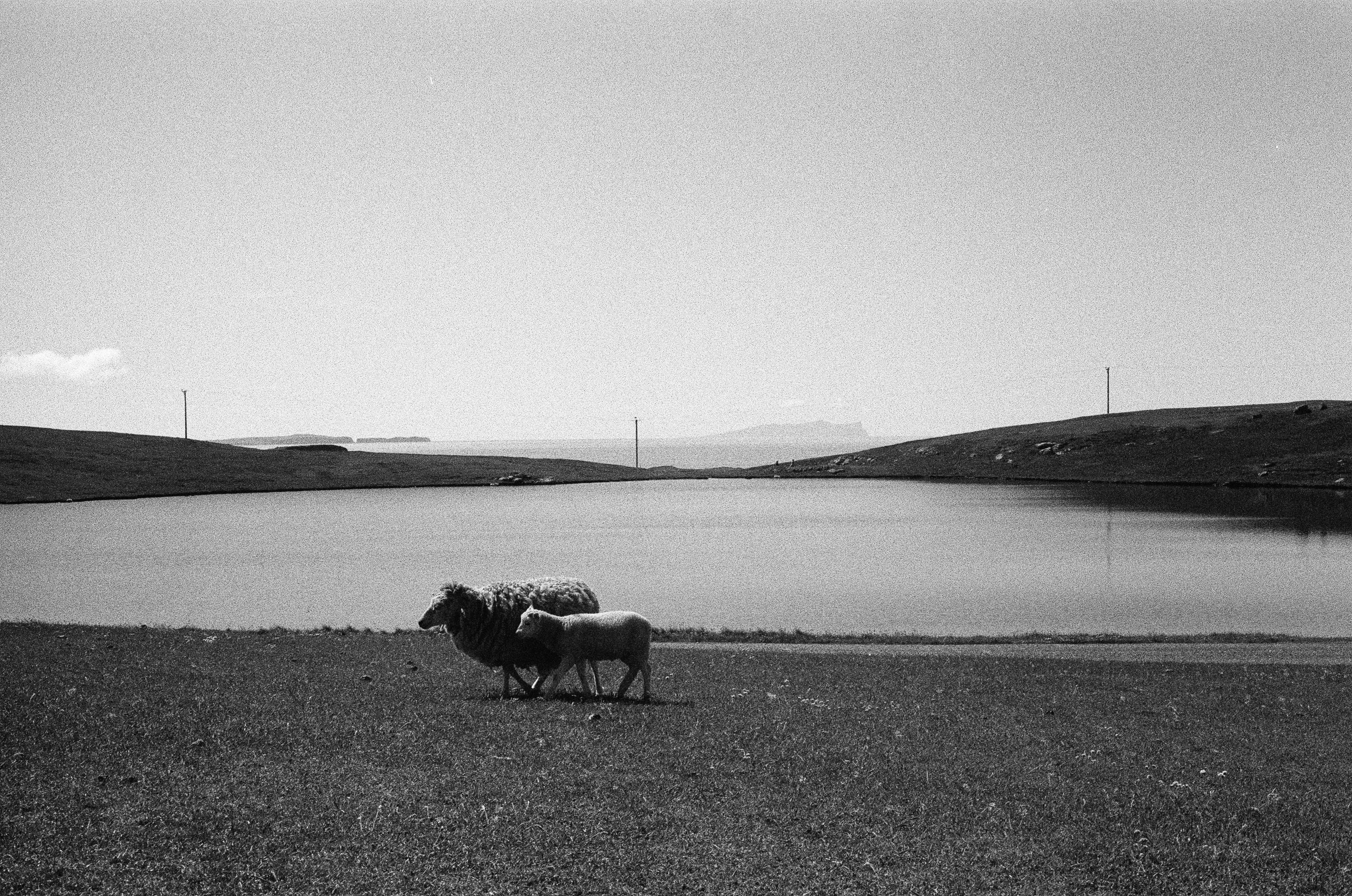
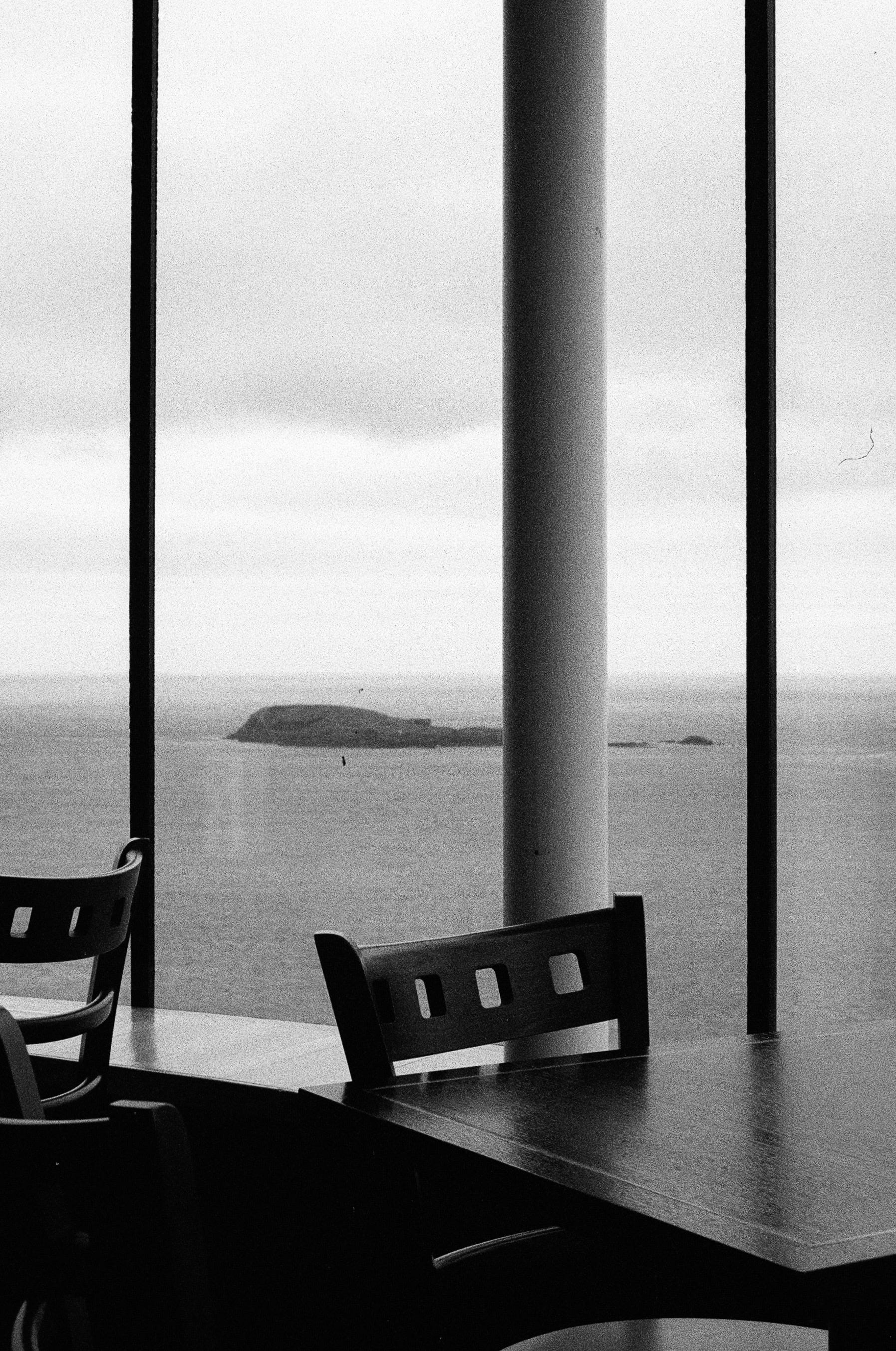
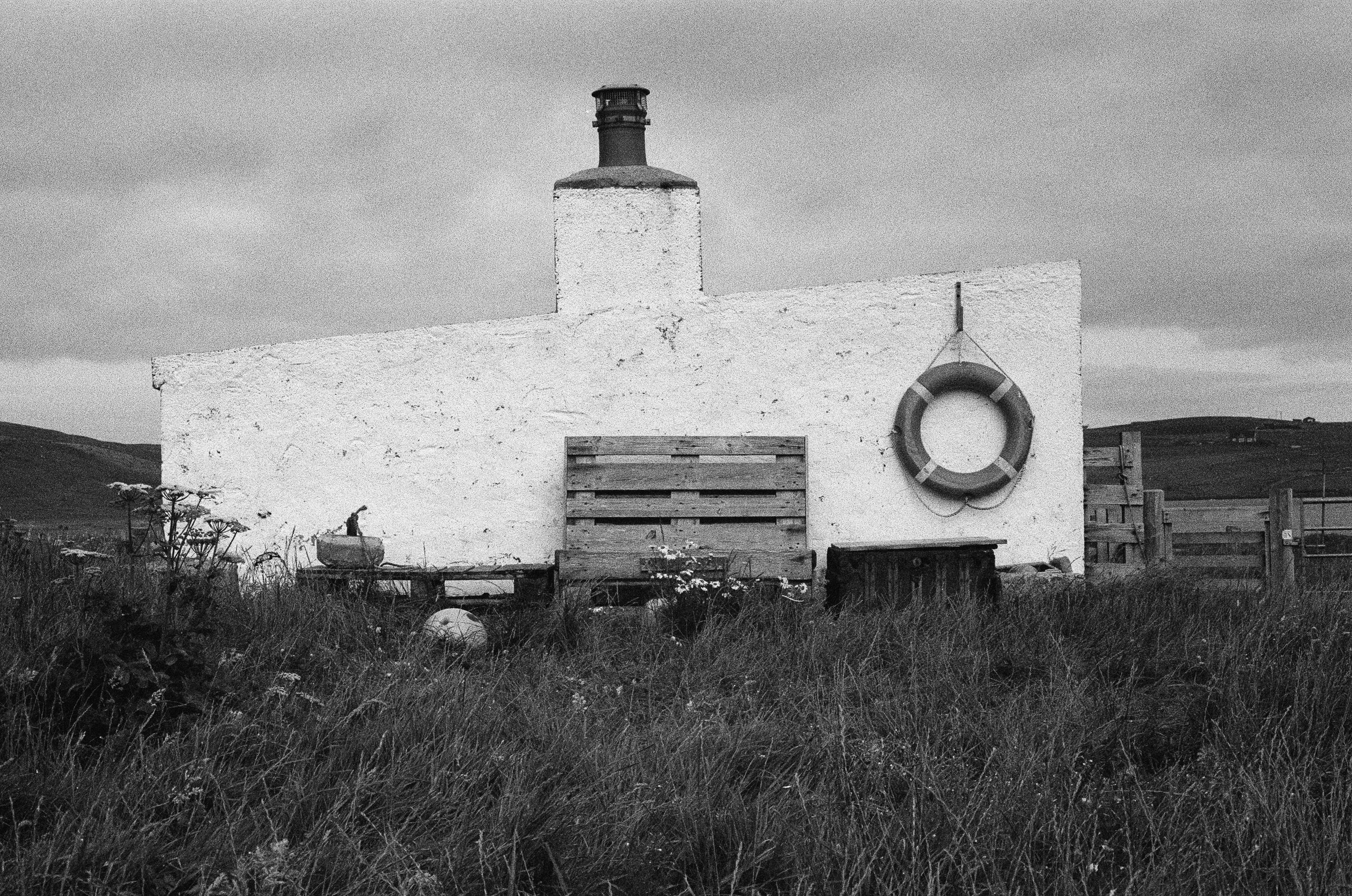
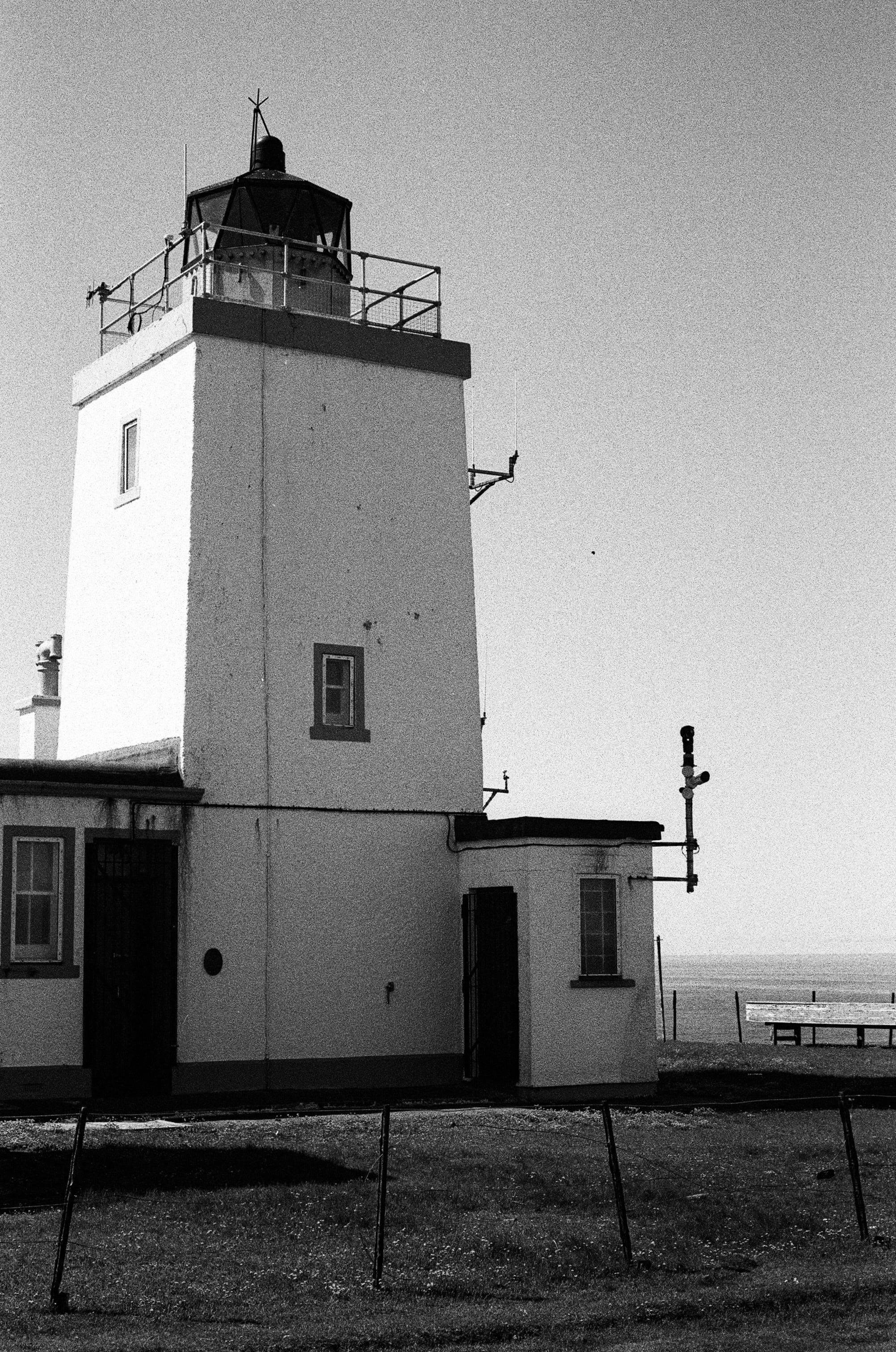
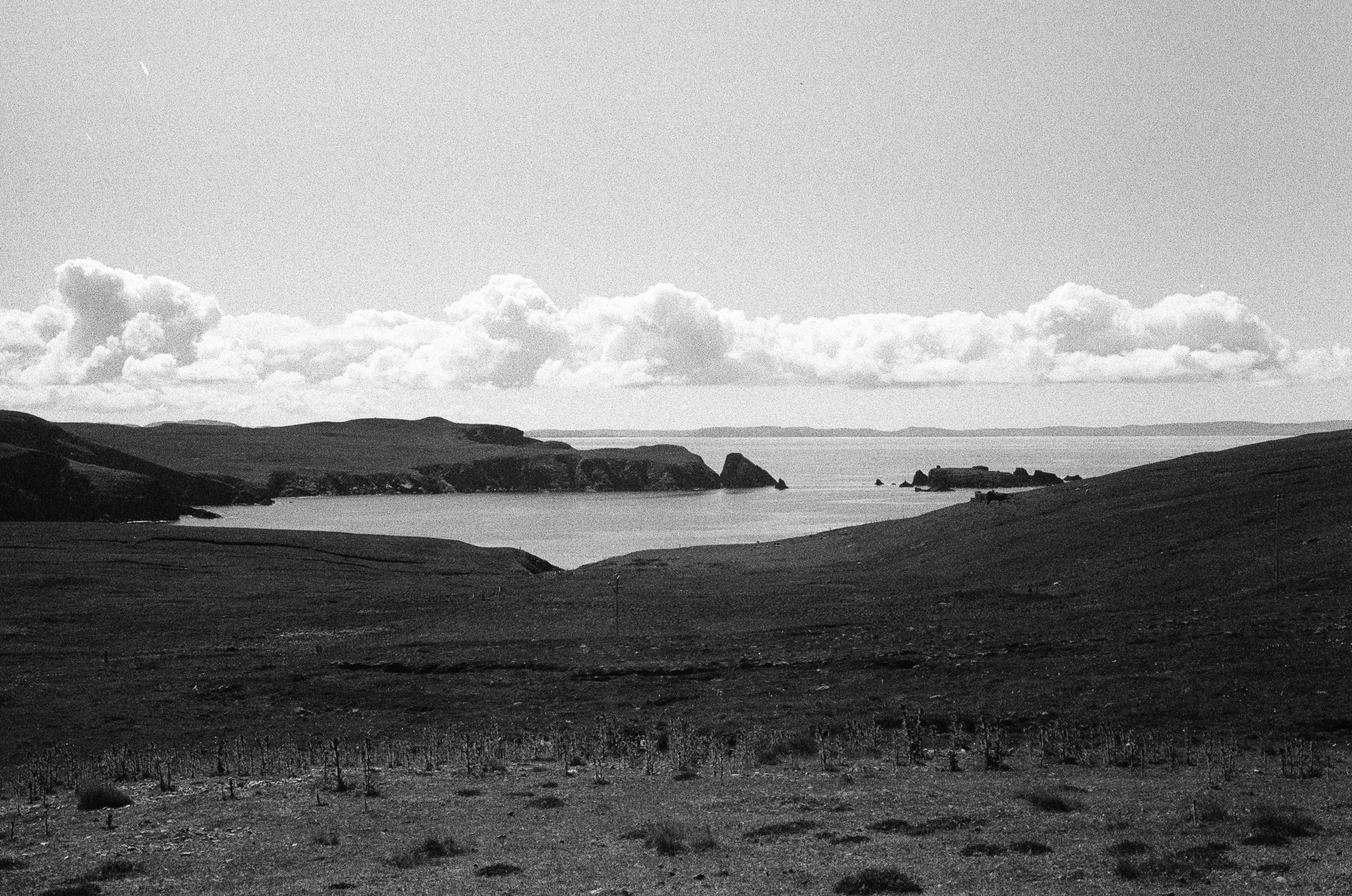
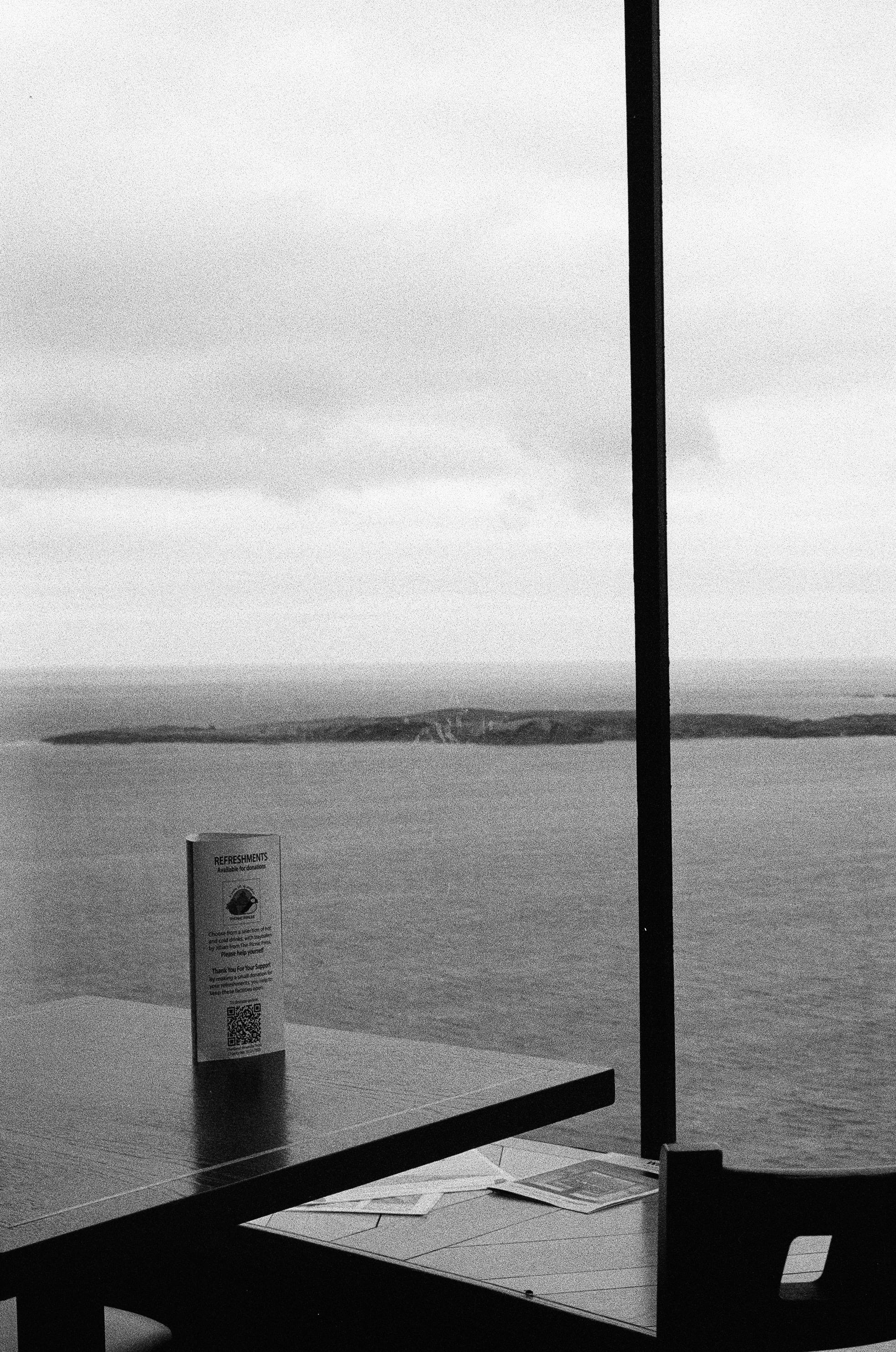
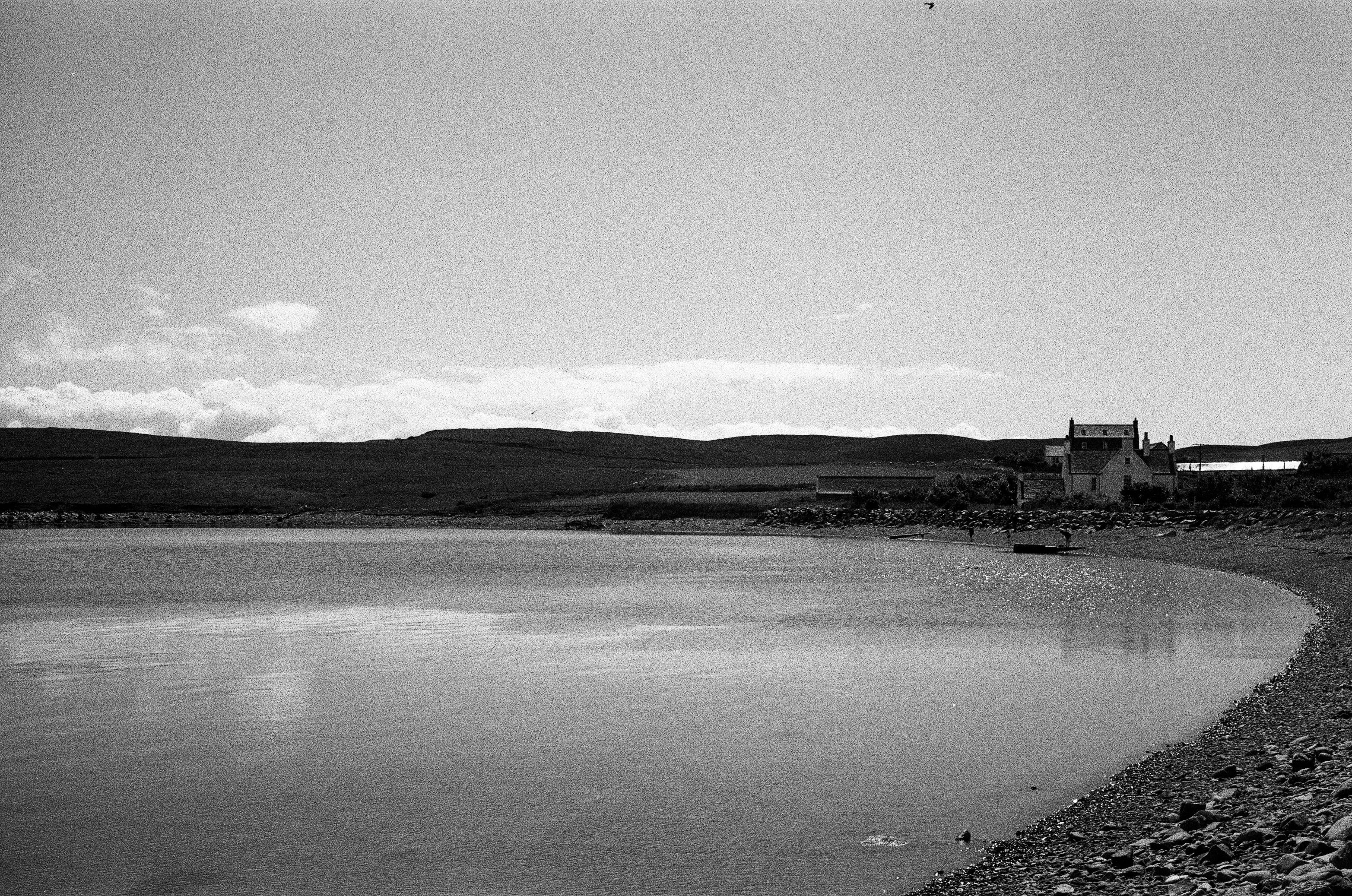
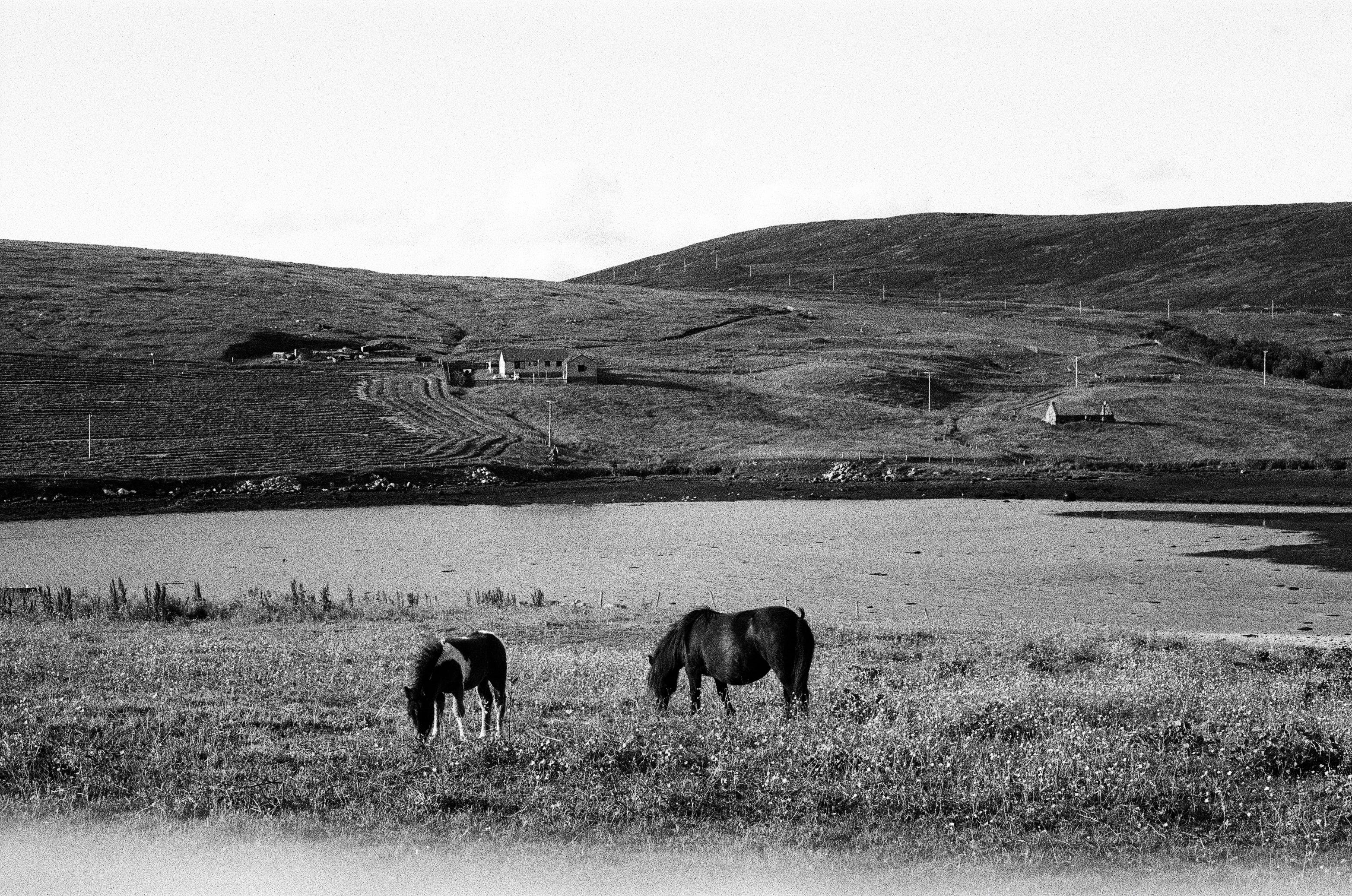
As you drive, you pass Shetland ponies, fluffy and plump. You also pass, to my delight, cake fridges, stocked with delicious homemade flapjacks and brownies, inviting you to take your pick and leave the money in an honesty box. In Shetland, valleys open themselves out into vast canvasses, clouds casting dramatic shadows onto tree-less hills. Sometimes, a road will twist to reveal giant feats of human infrastructure - wind farms and power stations, with all their concrete and vehicles and man-made industry - but then it will twist again, and suddenly the only man-made thing you can see is the road you’re driving on. When we ventured west, we found majestic, sweeping cliffs at Eshaness, and a 10.30pm sunset so perfect it felt otherworldly. To the south, we sat in the lighthouse cafe at Sumburgh head, sea birds swooping on the other side of the window. And, like magnets, we were drawn back to Lerwick over and over again: a town big enough to have a few choices of places to eat and shops to browse, but small enough to feel like you might have arrived in heaven, the air piercingly fresh and the waves lapping against the stone.
Things to read
I learned a lot about Shetland, as a place and as a lifestyle, from Storm Pegs, Jen Hadfield’s marvellous memoir of her life in the twenty years since she moved there. It taught me many things: about the way the weather and the light shape the way people live; about the turbulent politics surrounding the construction of new power stations and wind farms; and most of all, about how Shetland may be far away but it doesn’t feel remote: it’s the centre of its own thriving community. You can buy a copy from Shetland’s lovely bookshop here.
I loved Amy Liptrot’s recent Substack essay about her visit to the Faroe Islands, and the kinship she found there with Orkney, where she grew up. Read The Faroes: Our North Atlantic Neighbours.
There is also Sixty Degrees North by Malachy Tallach, which tells the story of a journey across this wonderful line of latitude - through Alaska and Canada, Greenland and Iceland, then across the north Sea and into Scandinavia and the Baltics. I’m stubbornly saving it for my next trip to this part of the world, but you can beat me to it and buy a copy here.
Getting there
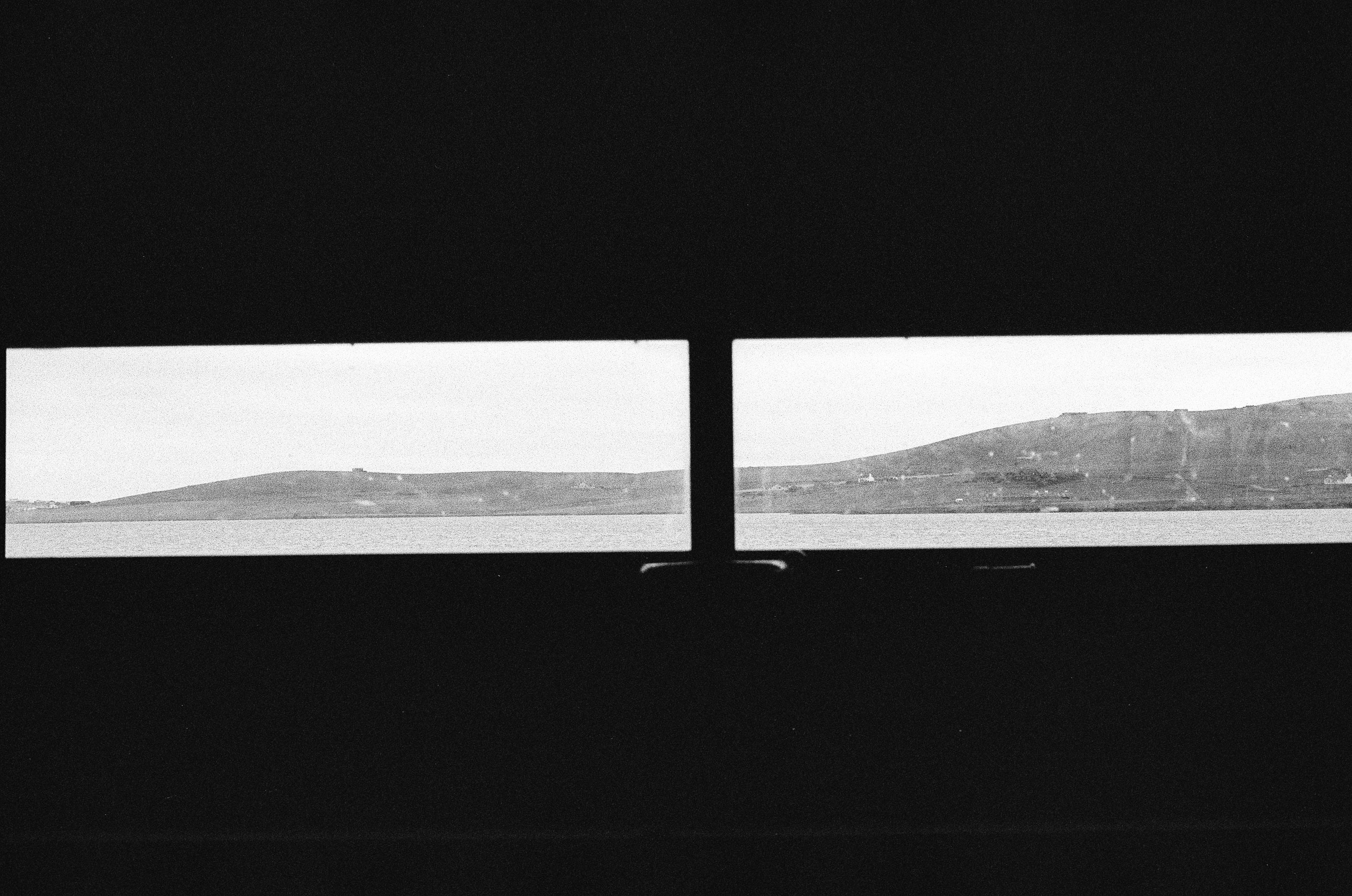
The ferry - the ‘night boat’ - runs daily between Aberdeen and Lerwick, sometimes via Orkney. It takes twelve hours and is always overnight. You can pay extra for a private cabin with beds and even more for a window. You can pay a lot less for a comfortable recliner seat in a password-only lounge - this is what we did, and, with eye masks and ear plugs, slept well. Or, for no extra charge, you can set up camp on the many communal seats and corners - and possibly not sleep at all.
The ferry terminal in Aberdeen is a short walk from the station. Direct trains run from London to Aberdeen several times a day, although we took a train from London to Glasgow to visit friends before travelling the final three hours to Aberdeen the next day. You should do that too, if you are lucky enough to have friends in Glasgow as lovely as Polly and Jo.
Once you’re on Shetland, you’ll almost certainly need a car - there are buses, but they’re few and far between, and it’s much bigger than you think. Happily, there’s a car hire service right next to the ferry terminal.
You’ll also need to take ferries between the mainland and the other islands: these run regularly but perhaps less regularly than you might expect. You can see the timetables here, and booking - over the phone - is advised.
Comments
Nothing yet. Say the first thing.
Sign in to join the conversation.