
(This piece picks up where vestland in may left off. You might also like stockholm in january and helsinki in february and norwich in march and paris in april.)
Bergen was a holiday, but Oslo was for work. I had been invited by a Norwegian arts funding body to spend the week learning about the Norwegian publishing scene: meeting editors and agents, visiting bookshops and enviably swanky publishing houses, hearing authors give readings, hearing from staff about just how generously Norway supports its writers and champions its literature. I was learning so much, and the week passed in a hazy fever dream: was this really work? This, one of the best weeks of my life? Pinch me.
It had been a feat of logistics, working how to pack for two very different weeks in Norway in one medium-sized suitcase. For Bergen, I’d taken hiking boots and fleeces, and I'd pretended not to notice when one of my dorm mates watched in confusion as I hung a smart black blazer from my bunkbed in the hostel. I needn’t have worried. I’d imagined Bergen and Vestland to be rugged and outdoorsy and Oslo their chic, sophisticated opposite, but really there was a softness, an ease, that pulled them together and made them feel similar. Oslo, I realised, was just very Norwegian.
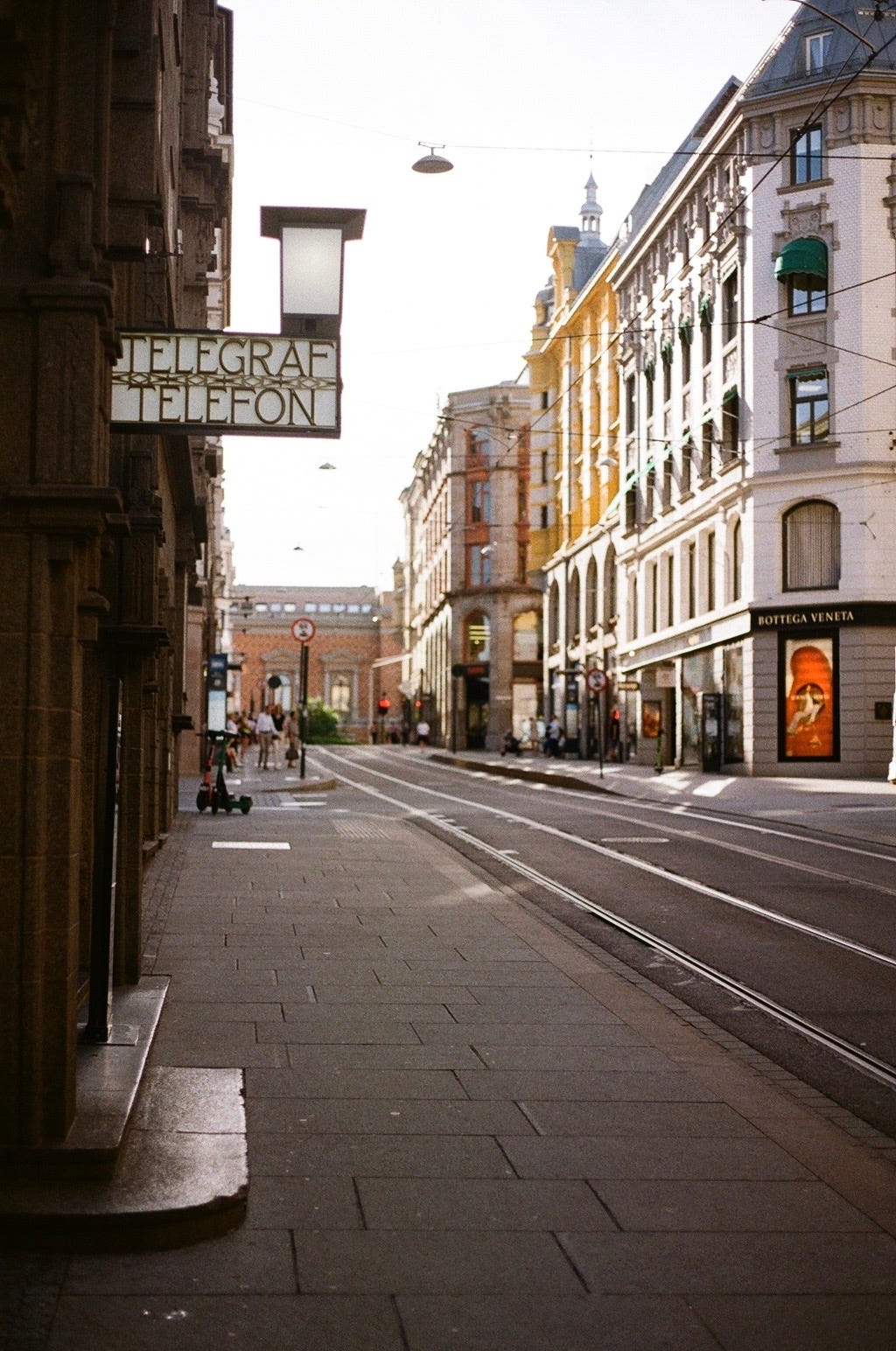
But that aside, the weeks were very different, in a way I’d anticipated but underestimated. Norway is expensive. I’d heard the rumours but had shrugged them off: I’d been to Sweden, after all, and that hadn’t felt very different to London. My mistake. In Bergen, I was on a budget, boiling pasta in the hostel kitchen, packing supermarket crispbread into my tupperware for packed lunches, treating myself to the occasional beer but wincing at the price of wine. In Oslo, though, I was a guest, and my hosts were determined to show me the very best their city had to offer.
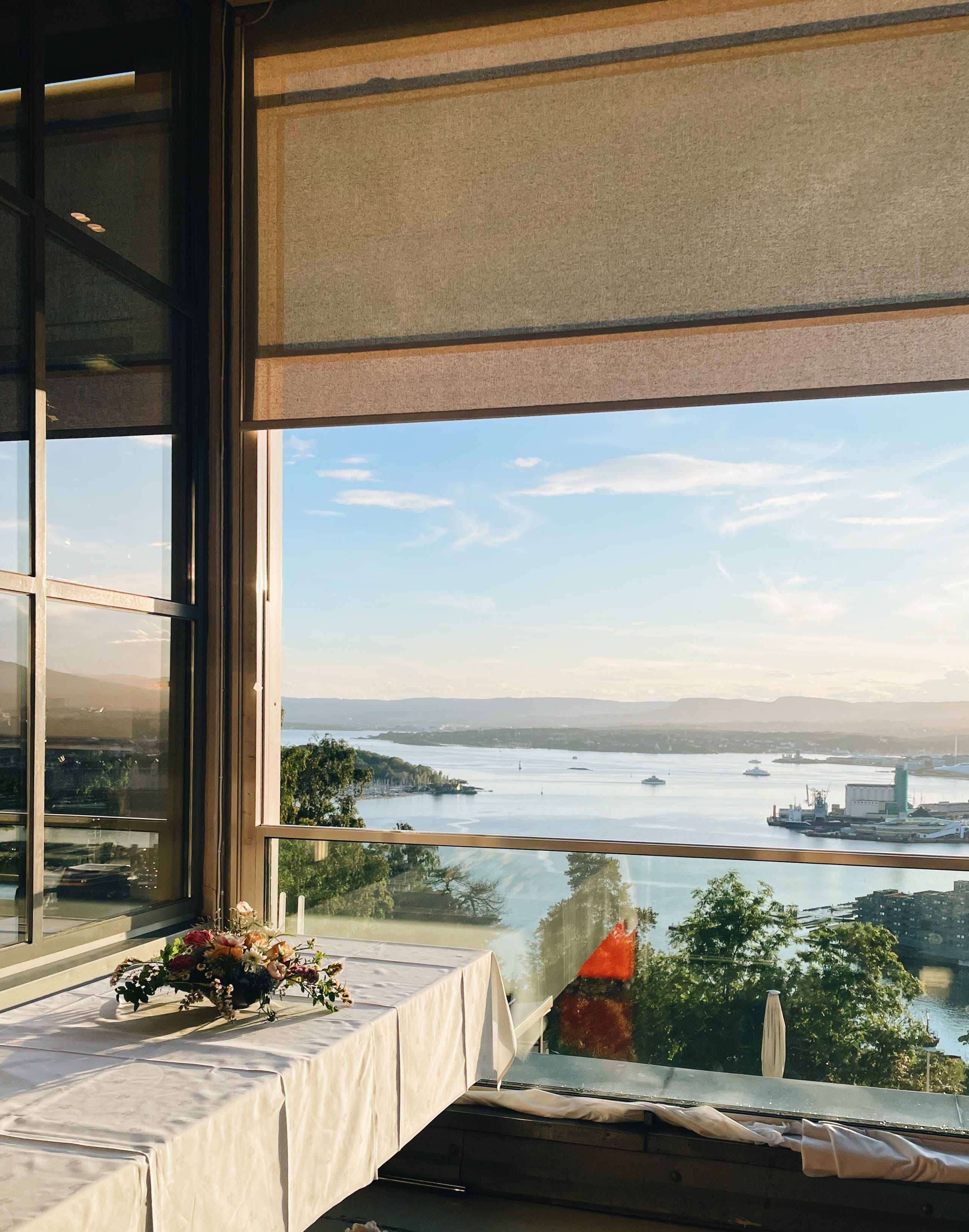
It’s hard to imagine what I would have made of Oslo if I hadn’t been hosted in this way: first impressions count, and Oslo for me will forever remain a city steeped in luxury. On the first evening, we took the tram to Frognerseteren, a wooden cabin lodge restaurant perched high on a hill, overlooking the Oslofjord, where we were served five courses: flakes of perfect white fish; cuts of red meat; lingonberries on lingonberries; wine with every course. I forced myself to remember the hot dog I’d bought in Bergen a few days before, and how much of a dent it had made in my daily budget.
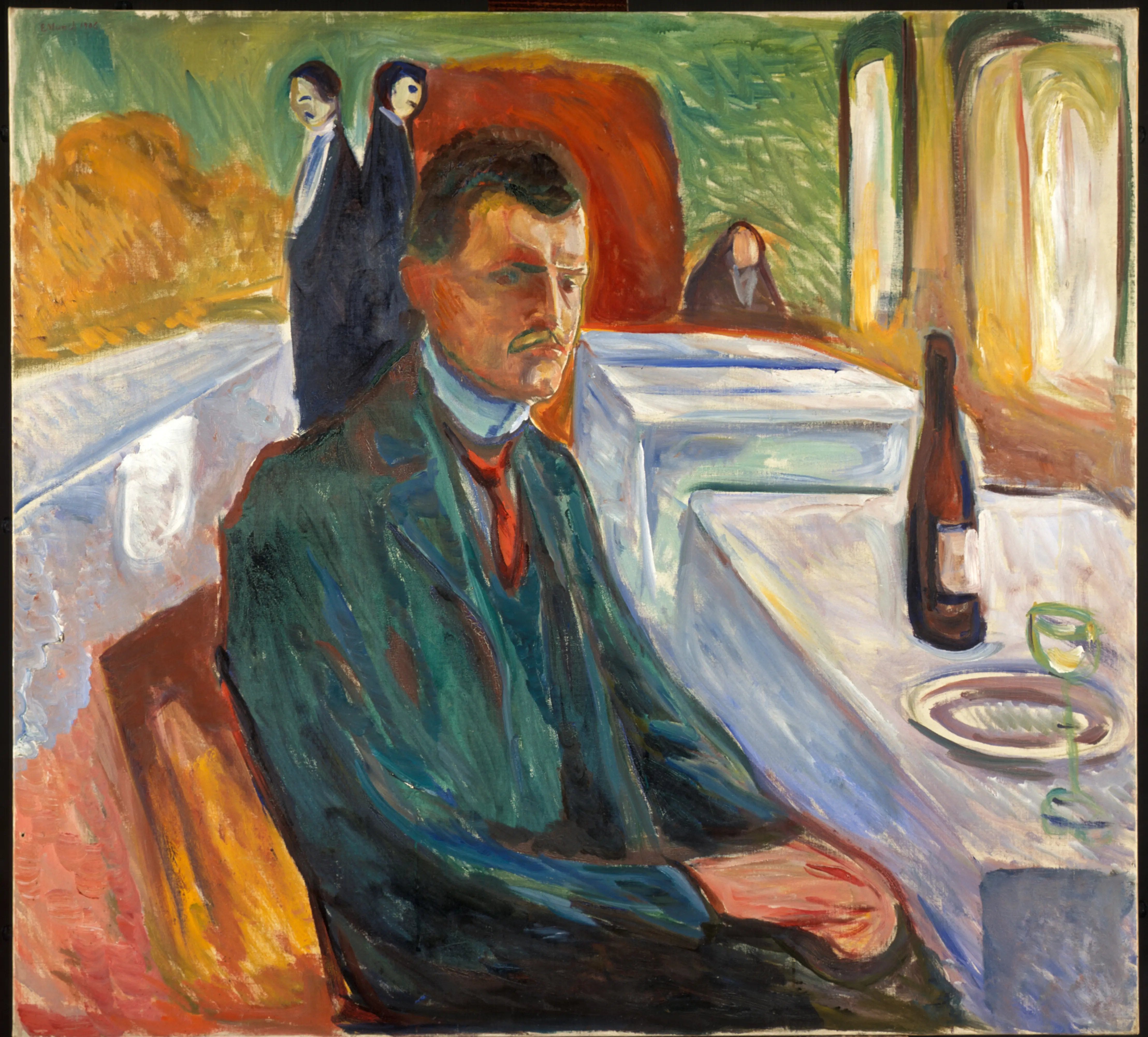
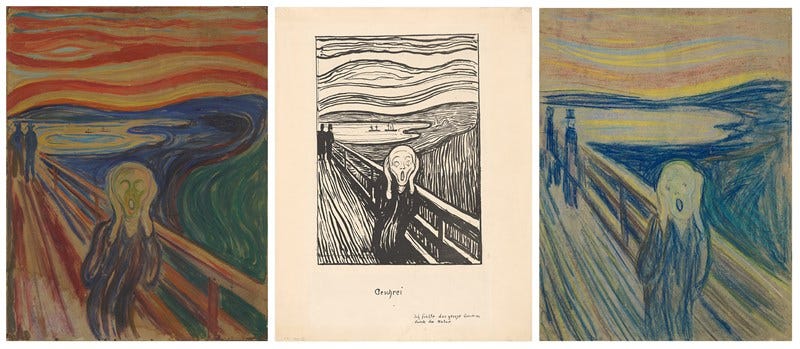
On the second evening, our hosts had arranged a private tour of the Munch museum, the kind of insane, am-I-dreaming treat that would ordinarily be too far out of my reach to even contemplate. I was excited, of course, to see The Scream, and I had no idea that there were in fact three separate versions, painting, drawing and print, and that the gallery rotates between the three every half hour. It was the print I saw, a black and white lithograph, both smaller and more mesmerising than I’d imagined. But I loved so many of his other works too: his wistful, moody scenes of lonely domesticity - like if you got Manet to paint what Hopper was feeling. And I adored his tapestries, vast scenes of colour and energy, suspended from walls in their own huge gallery. They looked how Norway felt: endless and expansive and honest, full of light and life.
Another thing I adored: the three course meal in the glitzy top floor restaurant after the tour, floor-to-ceiling windows showing off Oslo below us, the water glistening with the magical late-evening sunshine you get at sixty degrees north in June.
I am making it sound as if all our hosts did was take us out for nice meals. This is not the case. The pristine galleries and exquisite food were outward displays of wealth, yes, but generosity and quality too - and what I was learning during the day was just how fundamentally these principles shape Norway’s literary and cultural life. One example: Norway pays writers generous salary-like stipends, somewhere in the region of £30k, irrespective of any advance or royalties they earn from their books. These stipends are competitive and awarded on merit - but they exist, and they mean writers can afford to write; that writing is something that is valued and taken seriously. Another example: the Norwegian government purchases, as a matter of routine, six hundred and something copies of every single Norwegian-language book published in Norway, one for every library in the country. This means that, wherever you live in Norway, from southern cities to remote fjord villages and arctic islands, you’ll be able to find and read every new book with relative ease. It also means, crucially, that publishers can afford to publish; that a government contract for six hundred copies of every title means they’re unlikely to make a loss on even the smallest print run of the most obscure literary novel. This - from a UK publishing perspective - is unbridled heaven.
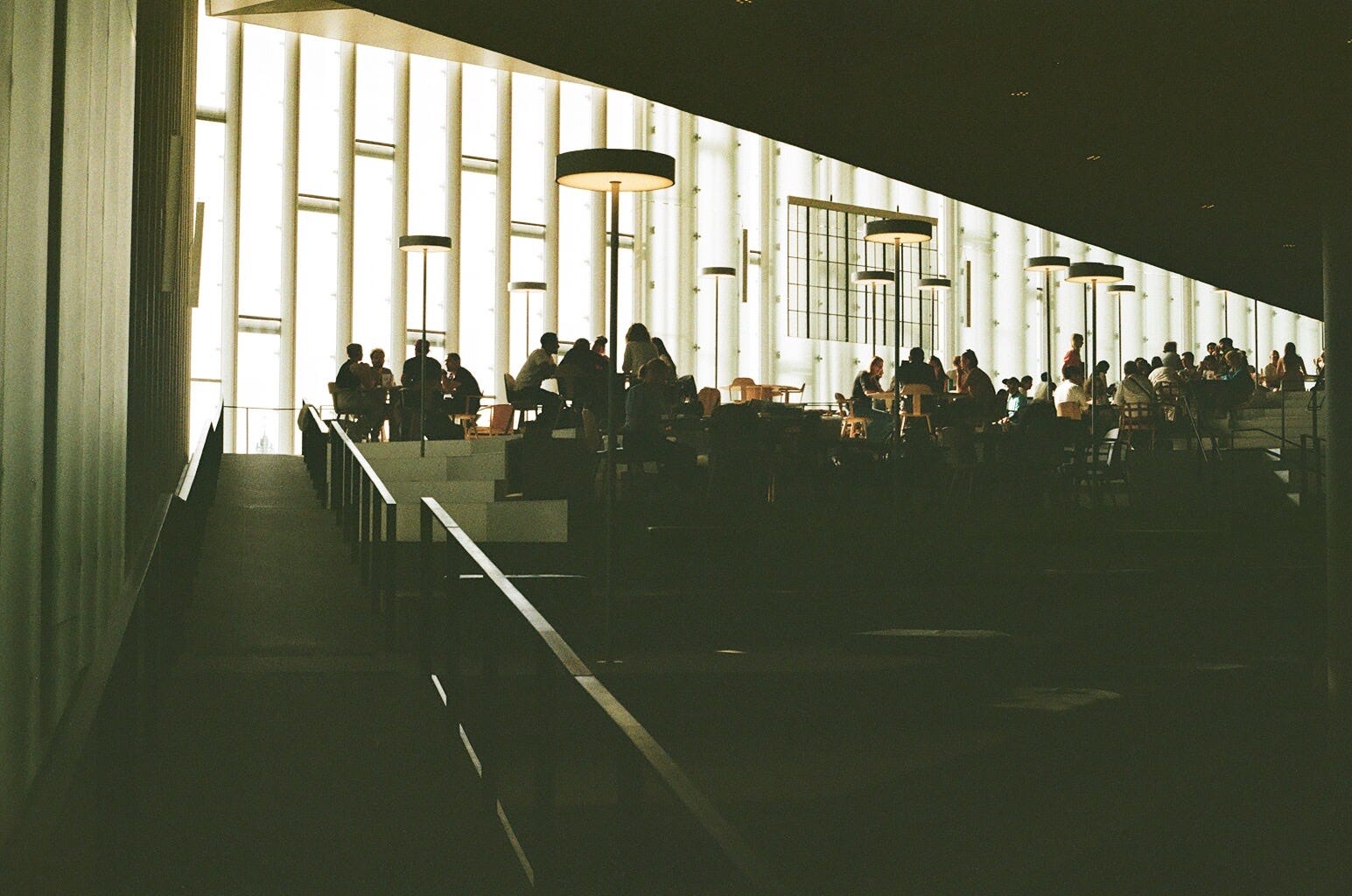
All of this comes together at Oslo’s central Deichman Bjørvika library, which quite literally is heaven, and I’m sorry but also not sorry to keep using that word. It’s a vast, glassy, oddly shaped building which sits on the edge of the Oslofjord, so light floods the inside and you can sit and read as water laps beneath you. There are six floors, so plenty of places to sit and read: swivelling leather armchairs; lumbering wooden steps; sofas and benches and desks and stools. There are, obviously, lots of books, of all genres and ages and languages, arranged in clusters of sleek shelves. But the delight of the library was all the things that were not books; all the many ways people were using this brilliant, free public space for things other than reading and writing. Babies crawling on soft mats while their mothers chatted; an elderly couple playing chess; teenagers flicking through the day’s newspapers; a drop-in session for migrants to practice speaking Norwegian; a woman practising, with headphones, a fiendishly difficult Chopin ballade on one of the many digital pianos. People studying, writing, drawing, sitting. Scandinavia understands the value of perfect space and the expansiveness of what a library can be. It was a wonderful place to wile away a few hours even while the sun beat down outside; I could only imagine what a haven it must be in the dark depths of Norwegian winter.
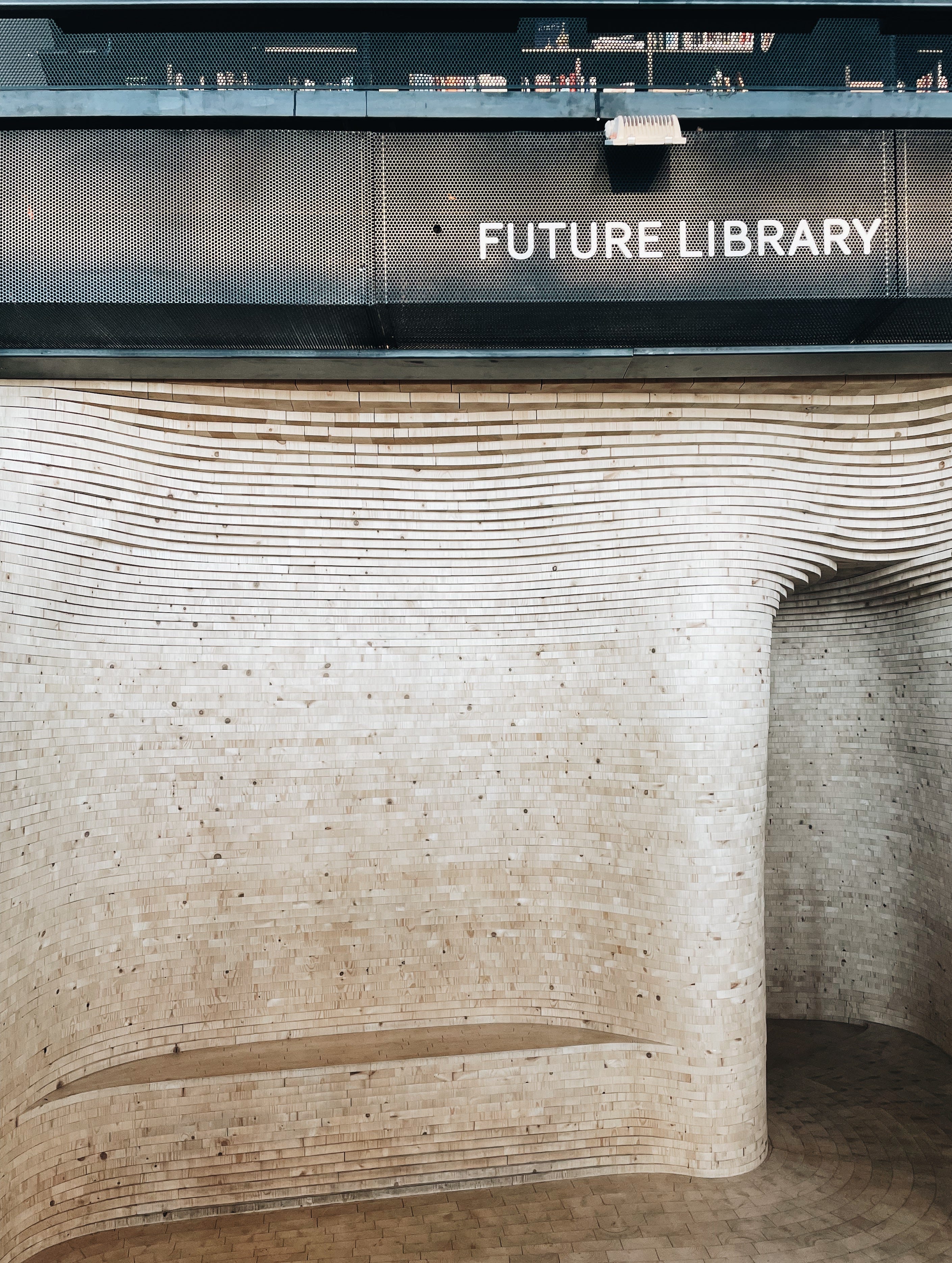
In a quiet corner of the top floor of the library, something extraordinary is happening. Breaking with the sleek glassy walls of the rest of the building, a wooden enclave twists inwards. You have to take off your shoes - to show respect - and let the curving walls lead you into a small space, only big enough for a few people at once. It is intimate without being claustrophobic; perhaps like a carving of a womb, or a beehive without the stinging. Scattered around the walls are one hundred glass drawers, gentle lights glowing behind them. In ten of these drawers, stacks of paper are visible, their authors’ names etched into the glass. The remaining ninety will be filled, year after year, not to be opened for a century. This is the silent room of the Future Library project, and I am so filled with hope I could cry.
A forest in Norway is growing. In one hundred years it will become an anthology of books. Every year, a writer is contributing a text that will be held in trust, unpublished, until the year 2114. The texts will be printed on paper made from the trees, only to be read a century from now.
Better, I thought, to use the project’s own description of the magical thing they’re doing here than try to cobble together my own. It was 2024 and the first ten authors had contributed their manuscripts to the project: now, at the time of writing, there are eleven, with a twelfth to join the ranks this year. They include Karl Ove Knausgård, Margaret Atwood, David Mitchell, Valeria Luiselli, Han Kang and Elif Shafak: all authors who know they won’t be around in 2114 when the drawers are opened, and who have donated their work to the future anyway. Our guide encouraged us to spend some time in the silent room; to breathe it in and think about what it all meant. 2114, I thought. I tried to work out whether I could be there to see it: I’d be turning 119 that year, so it hovered on the very faintest outer limits of possibility, barely worth considering. But the babies playing a few floors below? They might get to open these drawers and read these works. Their children and grandchildren almost certainly would. In 2024 I was deep in the throes of climate anxiety, and was struggling to forgive myself for having flown to Norway in the first place, but here, on the top floor of the library, I felt something shift. Here was something tangible and good about the way the world was heading. Here was hope that good things could continue, that perhaps the future wasn’t something to be feared.
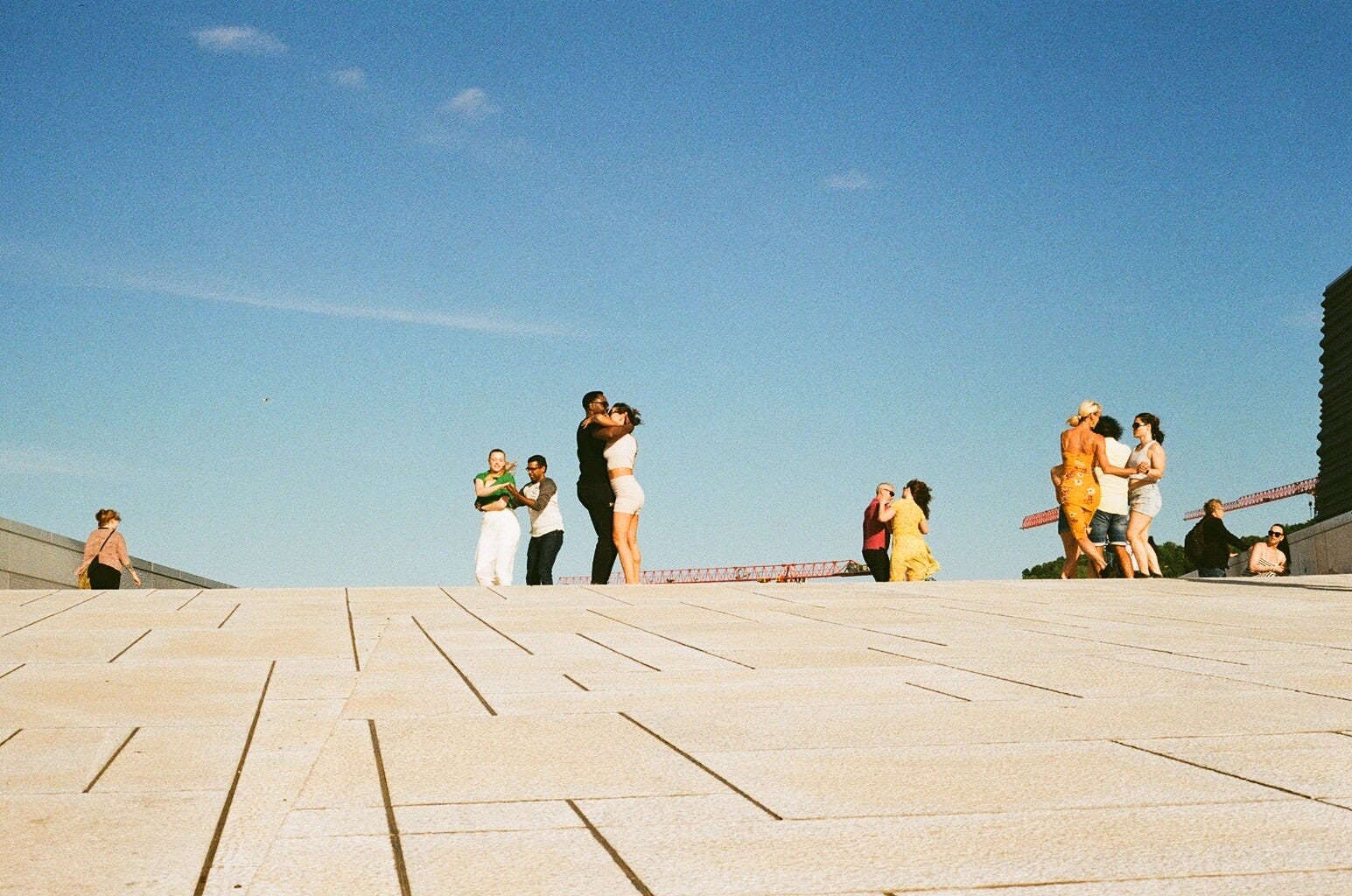
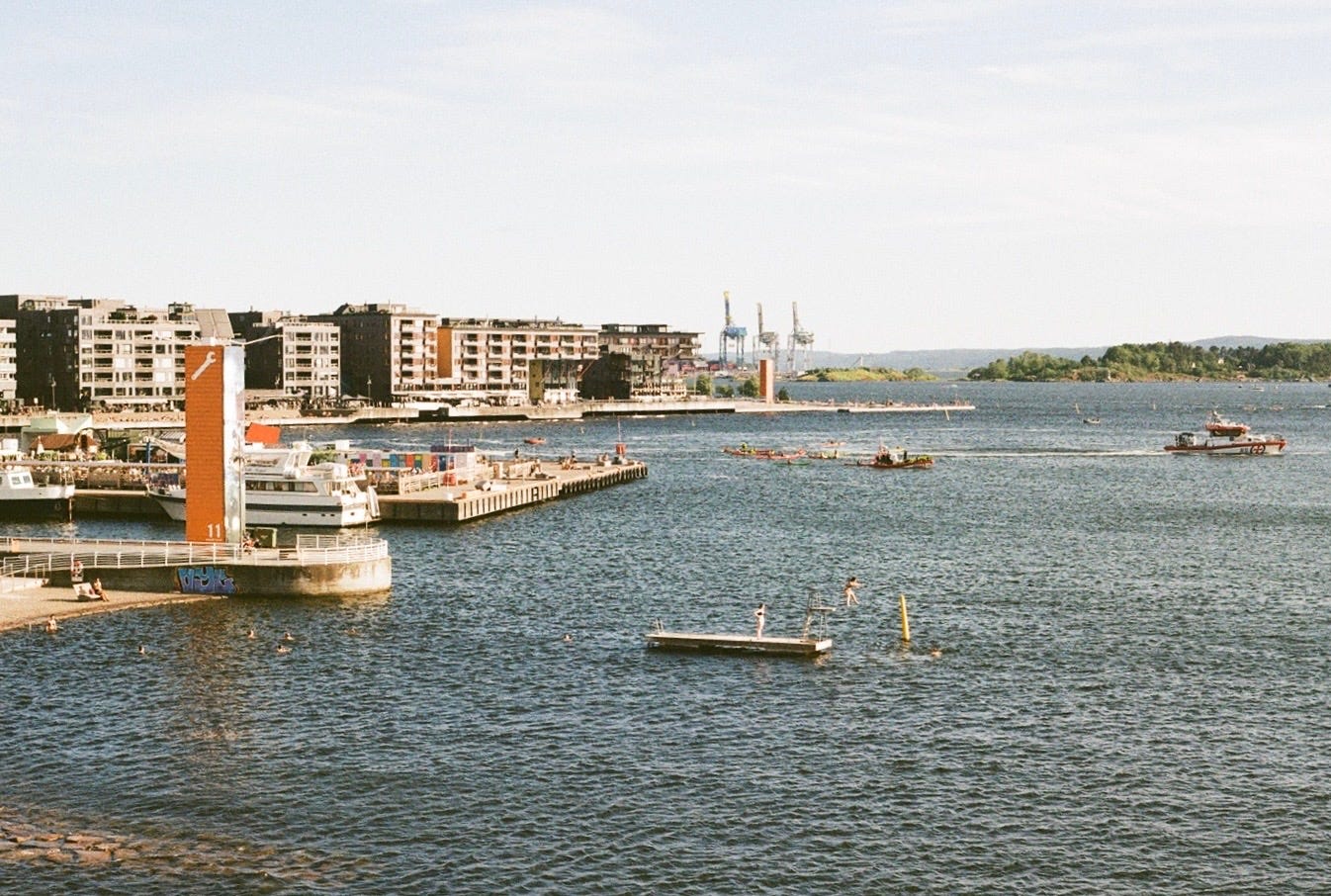
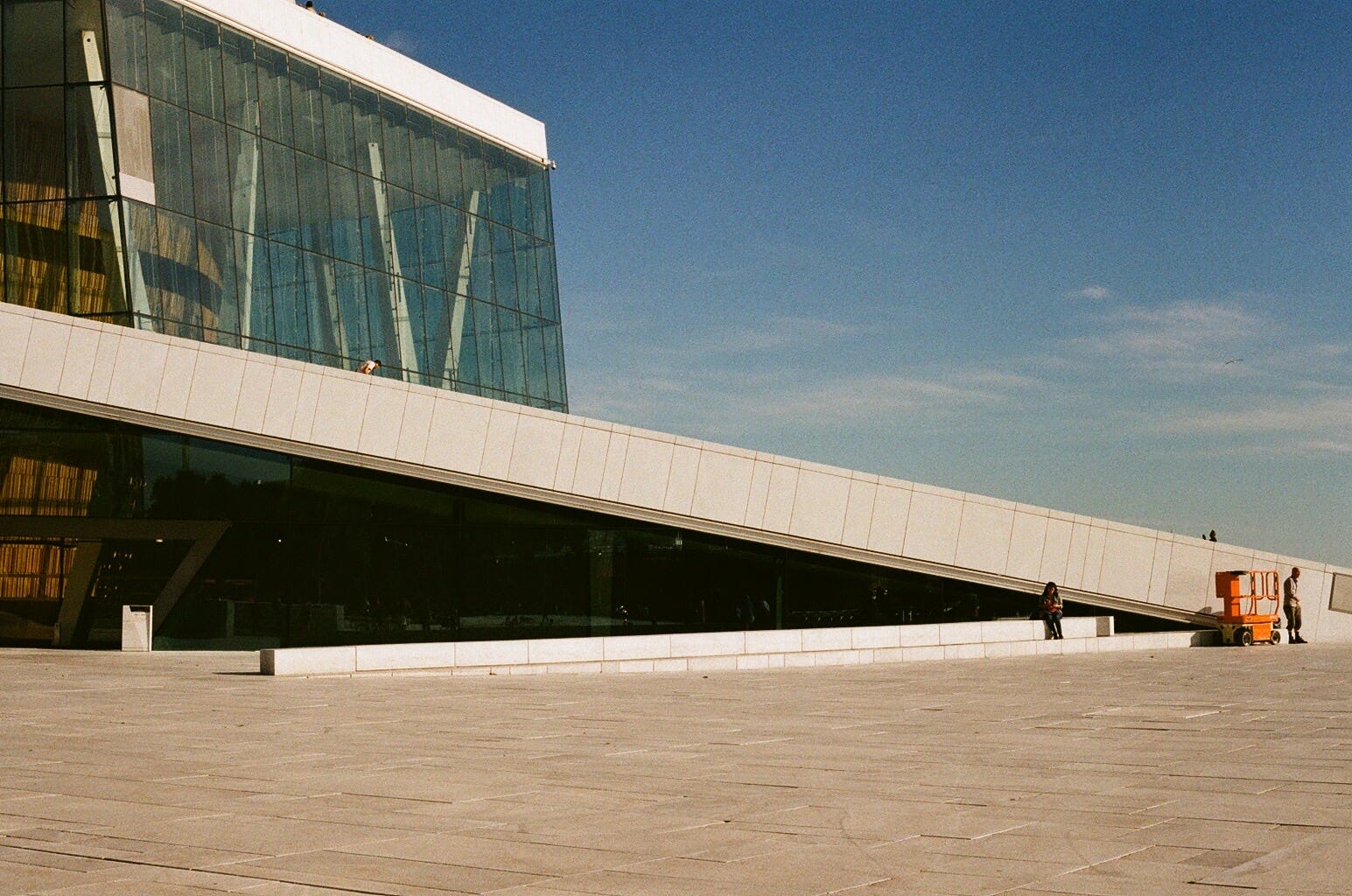
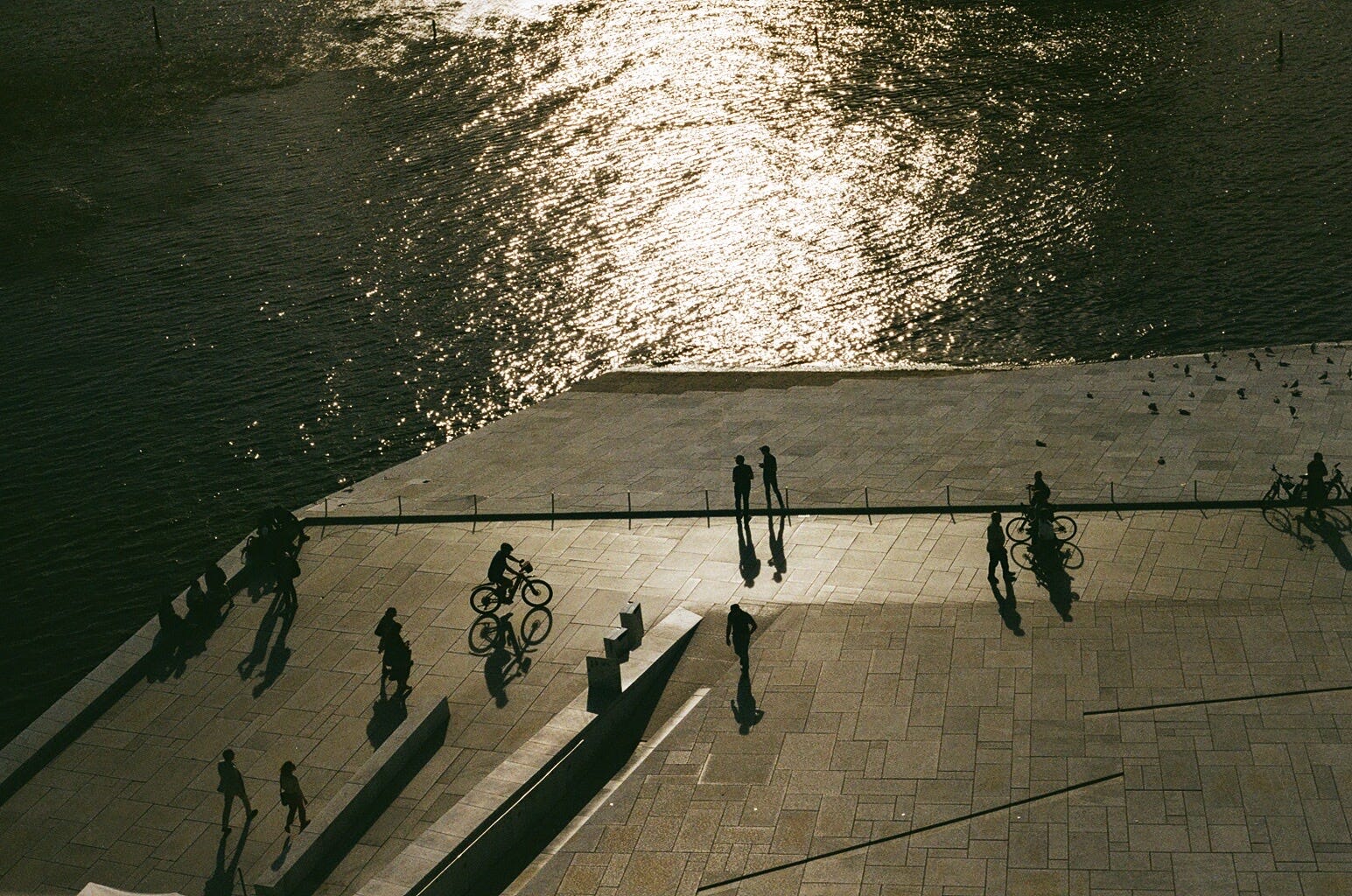
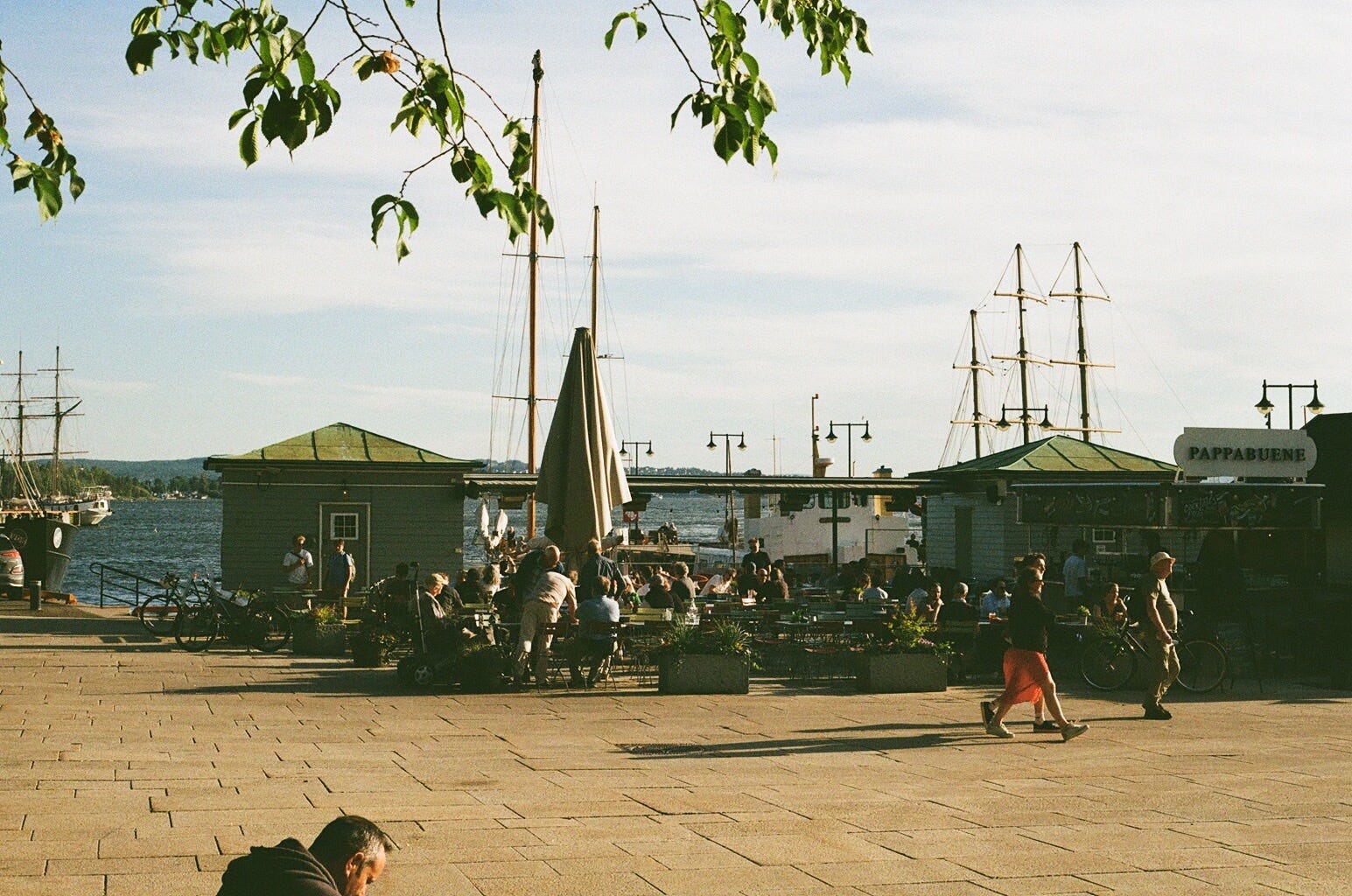
And so, back out into the fresh air, feeling lighter. Oslo sparkled that evening: it was as if a weight had been lifted. A little further along the quay from the library, the roof of the opera house slants to its full height from ground level: I walked all the way up the slope, to find people dancing - dancing! - at the top. I wanted to dance too: I would be as happy, I thought, if I lived somewhere like this. From the roof, I could out into the fjord. It was a warm evening and people were swimming, and I thought about how wonderful it would be to be able to do that, on a weekday after work, without the apps and tickets and advance bookings London swimming spots force you through. Further away, a ferry shuttled from the city to an island, dense with trees, and I remembered the editor I’d met a few days before, who told me he lived on a little island in the fjord and commuted by boat each day. For our final evening, we walked around the sculpture park at Ekeberg and ate in their sublime art deco restaurant. One of the American editors on the fellowship was celebrating her birthday, and our hosts stood up to sing the Norwegian birthday song, which involves hand gestures, hopping and spinning. Outside, the sky glowed pink and orange and blue, a spectacular final sunset. Much, much later that night - or the early hours of the morning, difficult to tell when it doesn’t really get dark - a few of us found ourselves in a bar so eccentric and joyful and perfect that I wondered if I’d stumbled into a film set, the kind of film that makes you feel nostalgic about a time you didn’t live through. But here was Oslo, living it.
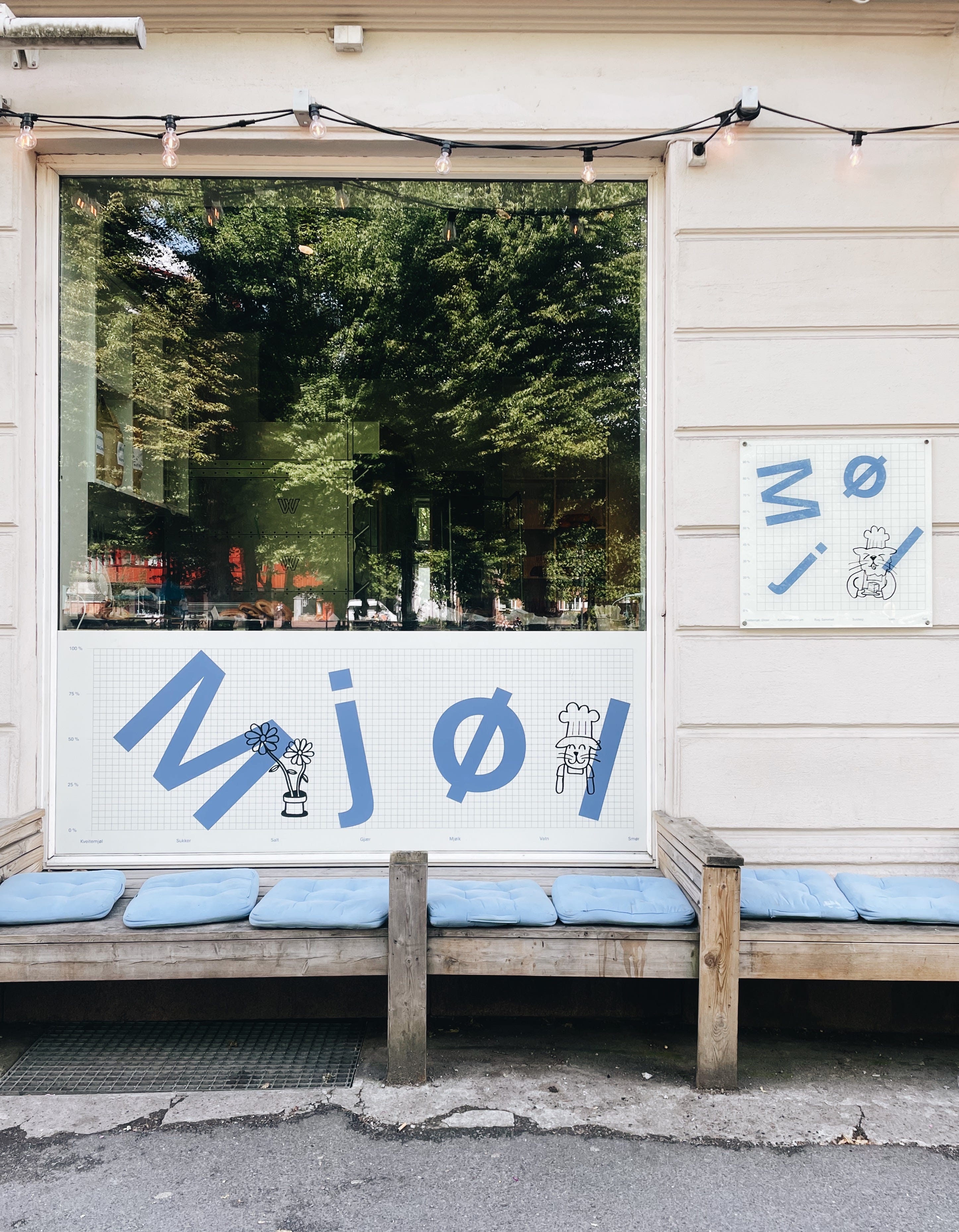
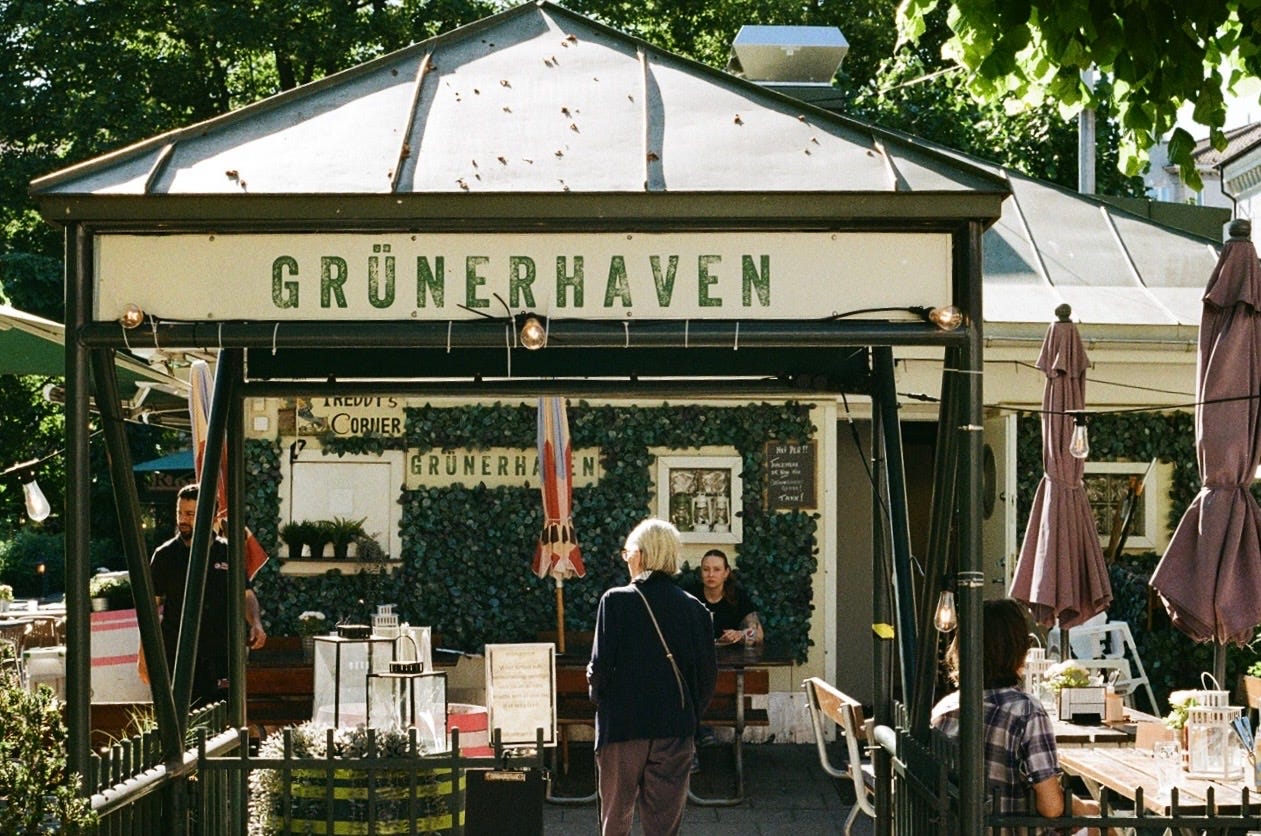
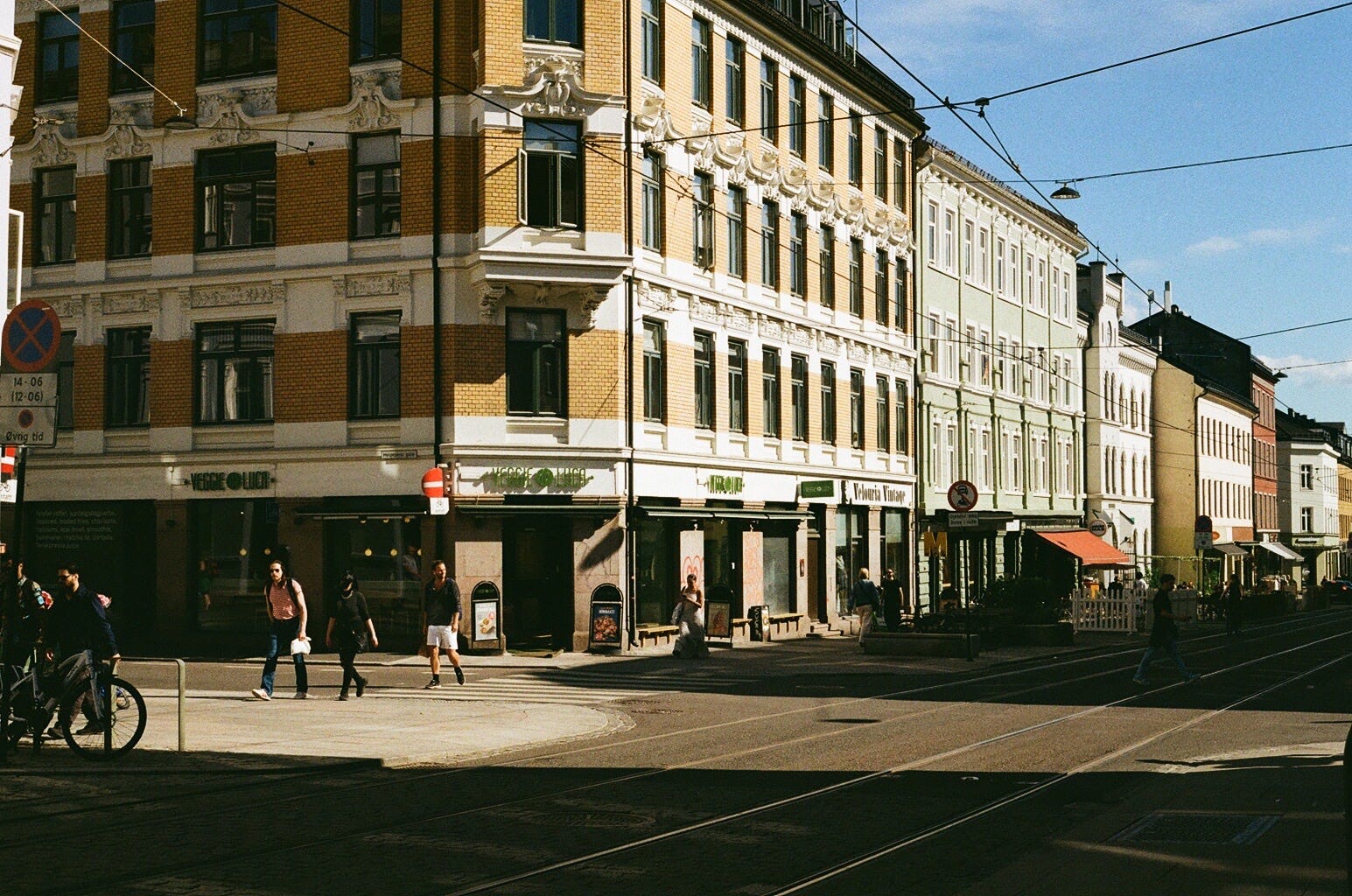
My week in Oslo was so unlike the way I usually travel that it hardly felt real. There was no budgeting, but because of that, I hadn’t spent any time doing my favourite new city pastime: wandering around and pretending to live there. I’d realised this during the final dinner, and had asked the Norwegian agent opposite me where she lived. Sagene, she said, a suburb in the north east of the city. Did she like it? Yes, she said - it was ordinary but very nice. There was a good bakery. So on my final morning, I left my suitcase in the hotel and took the tram to Sagene. I found the bakery and ate a delicious cinnamon bun. And then I walked for hours, drifting slowly back towards the centre, through trendy Grünerløkka and affluent Majorstuen, along hilly streets of elegant dark brick and quintessential Scandinavian wooden houses, red and yellow and green. In a vintage shop I bought an oversized woollen jumper, intricately patterned, for a quarter of the price of the new ones I’d been eyeing up in Bergen. Another coffee, another cinnamon bun, a final rye bread-based lunch. This was a whole other Oslo. It’s the one I can’t wait to explore next time.
No posts
Comments
Nothing yet. Say the first thing.
Sign in to join the conversation.