
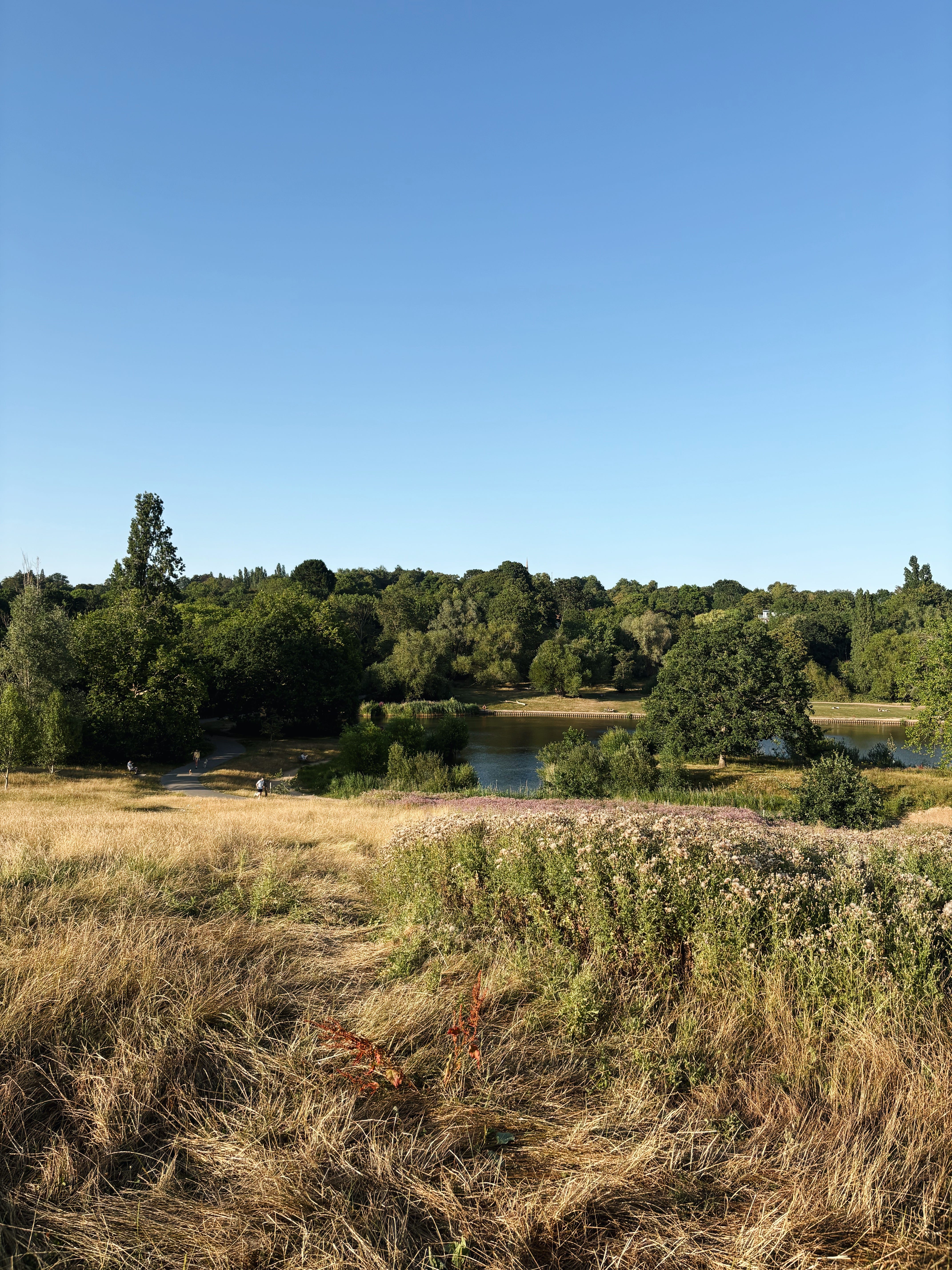
Late July, and already everything is dying.
The Heath - my measure of all things in London - has faded from green to brown, dusty and ashy, grass so brittle it might snap. The flowers are withering. In the woodland, gold is creeping onto the leaves, just on the fringes for now but threatening to encroach further. Autumn is coming. But first, a heatwave.
Another heatwave.
It will be mid-thirties again this week and I am getting our flat ready. I will hang bedsheets in windows, an extra layer to block the sun. I will close the door to the living room and leave it shut, a space we need but which gets too stuffy to bear. We have a tried and tested routine of how to control the airflow on those sticky nights when it’s too hot and heavy to sleep. When to open windows and when to close them. Where to angle the fan, and whether it even helps. On the worst nights, cold showers in the early hours of the morning, half asleep and delirious. Midnight ice packs from the freezer.
It’s not supposed to be like this.
Canada is burning and Spain is burning and France is burning. Andy Burnham is approving new oil drilling in the north sea. Rivers all over the world are running dry, earthy beds exposed. Tech companies are building AI data centres the size of cities, great water-guzzling monsters fuelling to destroy us all. Norway is burning and Scotland is burning and Essex is burning. Andy Burnham is flying between Manchester and London on a private jet. I scroll past photos of queues, people with suitcases and expressions of agitation. Hard, these days, to know whether they’re holidaymakers or wildfire evacuees.
The climate we thought we were living in no longer exists. It’s a line which is trotted out on social media over and over again, brutal because it’s true. It’s easy to disregard a statement like that, so I force myself to think about it, what it actually means. I think about the summers of my childhood: jeans and hoodies in a West Midlands park; raincoats and wellies and a chilly Brittany breeze; the revelation of warm sun in the rare year when we ventured down to Languedoc. The way we used to talk longingly of how nice it would be to have a ‘guaranteed summer’; school fêtes held under marquees in drizzly fields; getting changed for PE when term finally started again and my pasty celtic skin glowing white next to the girls who had been to Portugal. I think of primary school, of drawings and songs about autumn leaves, orange and golden and crisp. How do you explain the autumn term to a child now, when everything turned brown in July? I used to lament my August birthday because everyone was on holiday and nobody could come to my party. Now I dread August because it’s the month when nature feels most desolate, most dead.
‘We’ll be celebrating Christmas Aussie style in a few years’, I overhear a man joke on the bus. It’s a boiling day and it’s even hotter inside the 390: Boris Johnson thought of back stairs and triple doors but ventilation escaped him. ‘Forget New South Wales, they’ll be putting shrimp on the barbie in Swansea.’ He is visibly proud of his joke, and fair enough. But it makes me want to throw up, what he’s saying. A heatwave is one thing when it’s light outside, when you can spend long evenings outside and console yourself with the fact that it is summer, after all. Instead, I imagine a heatwave outside of British Summertime, when it’s dark at four and the trees are bare: carrying a Christmas tree home in shorts and sandals, cosy candles and fairy lights on a balmy night. It got to nineteen degrees in Germany in December 2022. It’s scarily plausible.
This year’s heatwaves are redrawing my hopes for the future. In the worst, hottest, days of June, all I could think about was our tiny, furnace of a flat, and how imperative it felt to find a different way to live, to not sentence ourselves to any more summers of sweltering, sleepless nights. HR sent an email about heatwave working arrangements and assured us about the aircon in the office. Ok, I wanted to reply, can I spend the night there too? Instead I escaped to my parents’ house for a few nights, but the heat followed me, and Buddy the border collie pawed desperately at my door before vomiting in the early hours, too hot (and too foolish to accept the damp towel I’d been trying to cool him down with). I used to daydream about moving north to escape from the climate crisis: Scotland, probably; Scandinavia, if I could work out how to get a visa, respites of cool breezes and cosy jumpers. But this month, wildfires have swallowed the Cairngorms and Oslo’s suburbs, and it’s becoming increasingly clear that the climate crisis isn’t something any of us can run away from.
So here it comes, the heatwave. The flat is ready now, and I am remaking my plans: I will not host a friend for dinner in my kitchen, it is too hot; I will not go running this week, it is too hot; I will absolutely not set foot in the central line. Tiny adaptations while the world keeps burning.
On a beach in Sweden last week, I swam out a little way. The sea was gentle and shallow, until suddenly it wasn’t: the waves came out of nowhere, thrashing and confident, consuming everything in their wake. I found my footing and waded back towards the shore. I could withstand the waves at first, but they started to wear me down. They were irregular and almost unconnected: the fact that one big wave had broken ten seconds ago didn’t mean an equally powerful one couldn’t follow immediately. The sea waves were like heatwaves, in that way: each new wave was coming, whether or not I’d had time to recover from the last. All I could do was steady myself and try my hardest to move out of its path.
No posts
Comments
Nothing yet. Say the first thing.
Sign in to join the conversation.