
Have you noticed that we live in a generation drunk on the supernatural? Many people make major life decisions heavily influenced by spiritual conviction and leading. Yet many are dangerously illiterate about the origins of the spirits, powers, and authorities they have allowed to lead them. They do little to ascertain or confirm the source of what they are following. They chase what looks like light without questioning who lit it. But the Scripture is clear: not every light is the Sun, and not every voice is the Lord’s.
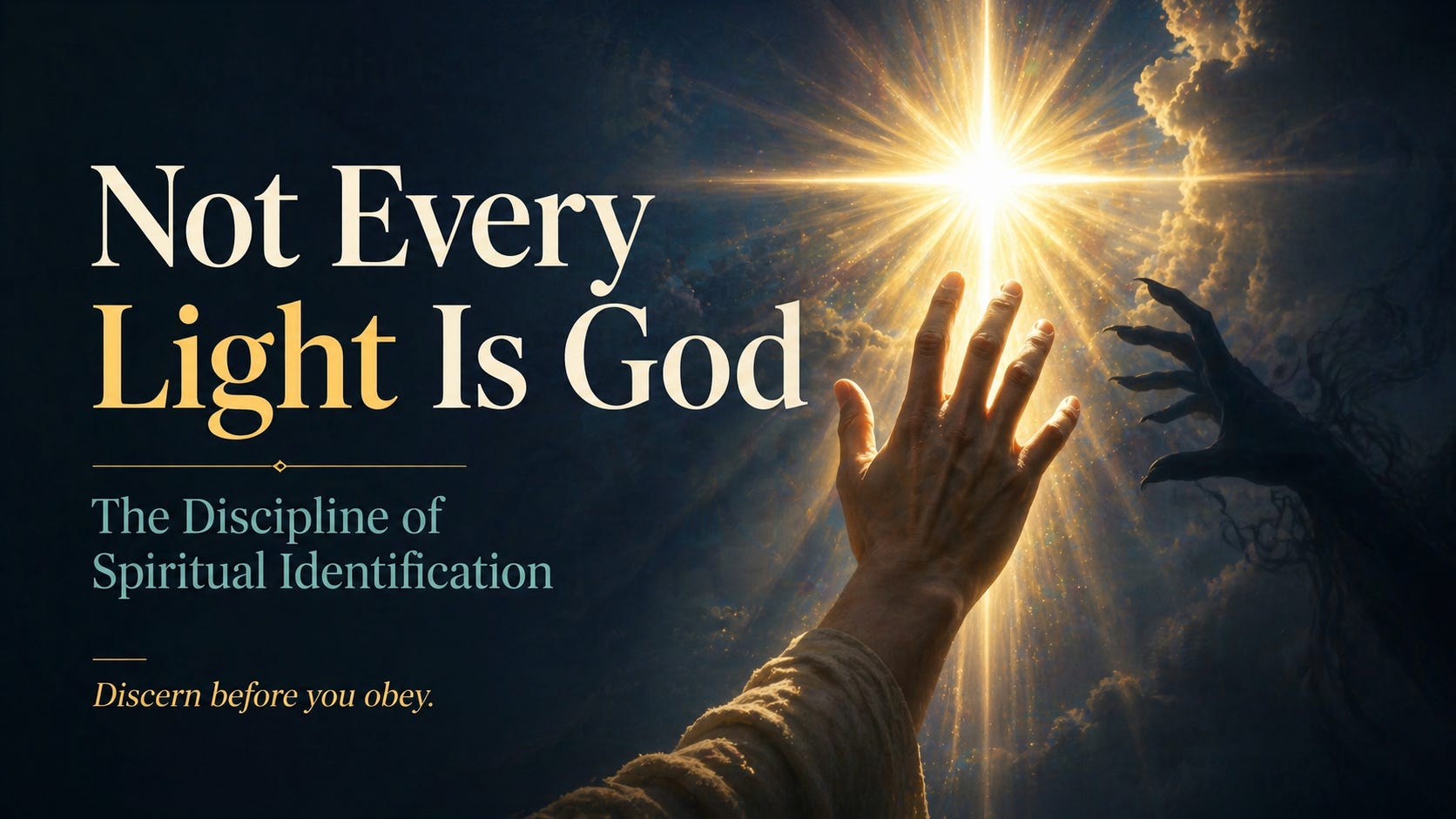
In Acts 9:5, Saul lay helpless on the Damascus Road; sincere yet wrong, convinced yet blind, moving with authority but against God. He was on a dangerous mission to persecute, arrest, and kill believers when a light from heaven stopped him cold.
But notice what Saul did not do. Despite lying blind on the ground, he did not immediately accept that the encounter was divine. He did not surrender blindly. He demanded an identity first: “Who art thou, Lord?” (Acts 9:5).
Saul understood a principle we have largely abandoned: an encounter without an identity is a deception in the making. If you do not know who is speaking, you do not know who you are serving.
This is where many believers fail. You experience something unusual. You feel something intense. You hear something spiritual. And you immediately conclude: this must be God. Be careful.
The spirit of the age is loud. The spirit of religion is convincing. We are not called to feel our way through the spirit realm. We are commanded to test every spirit.
There is a divine protocol for this. It is called discernment. It is one of the gifts of the Spirit, and it is available to every believer. Discernment is not doubt. It is the refusal to call the works of Satan the works of God, and vice versa. God is not offended when you question in order not to fall into error. He is honored by the hunger for truth.
Even Joshua, the great general, challenged the Heavenly Visitor. On the battlefield, he encountered a man with a drawn sword whose presence was powerful and fearful. Joshua did not bow immediately. He drew his own sword, advanced toward the figure, and demanded clarity: “Art thou for us, or for our adversaries?” (Joshua 5:13).
The answer was sobering: “Nay; but as captain of the host of the LORD am I now come” (Joshua 5:14). Even in a moment that looked holy, Joshua demanded identification before yielding. Many today would have collapsed in worship before asking a single question. Joshua verified first.
In Philippi, a slave girl with a spirit of divination followed Paul and Silas through their ministry. She proclaimed to everyone: “These men are the servants of the most high God, which shew unto us the way of salvation” (Acts 16:17). That was the truth. But the source was demonic.
Accurate words. Wrong spirit.
Paul did not celebrate the endorsement. He discerned the source and cast the spirit out (Acts 16:18). Truth spoken by the wrong spirit is still deception. You are not called to evaluate words only. You are called to identify their origin. A familiar spirit can preach an accurate sermon and still lead you into a ditch.
The Bereans were called noble, not because they believed quickly, but because they examined thoroughly. “They received the word with all readiness of mind, and searched the scriptures daily, whether those things were so” (Acts 17:11). That is the balance. They did not reject Paul’s message outright, nor did they swallow it without examination.
True prophetic encounters will always lead you deeper into the Word, never away from it. If the voice you are hearing contradicts Scripture, the voice is not from God. “Let God be true, but every man a liar” (Romans 3:4).
This is the standard: try every encounter, every word, every prophecy, every manifestation in the light of God’s written Word. “Prove all things; hold fast that which is good” (1 Thessalonians 5:21). Open your heart, but examine the spirit. The command is plain: “Beloved, believe not every spirit, but try the spirits whether they are of God: because many false prophets are gone out into the world” (1 John 4:1).
When Saul asked “Who art thou, Lord?” he was not confessing Jesus. He was acknowledging a supernatural power that had stopped him. The word “Lord” was reverence for the force that had way-laid him on the road, not a statement of faith. He genuinely did not know who it was.
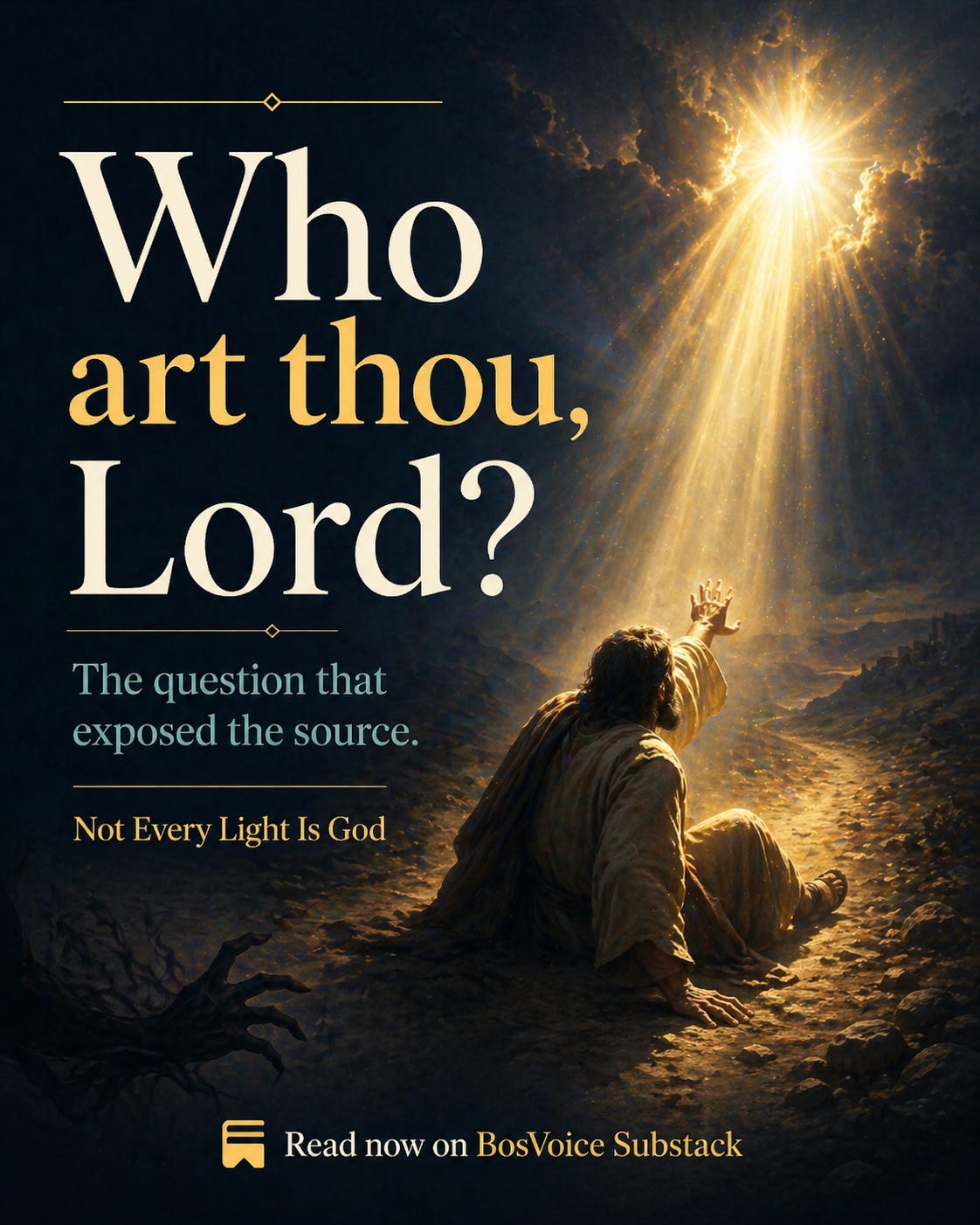
Paul did not collapse into blind acceptance out of fear. He acknowledged the supernatural, and he still asked for identity. Because identity matters.
Until identity is established, obedience is dangerous. Whoever you obey is your lord.
Many believers are obeying voices they never verified because a big title precedes the speaker’s name. They submit to encounters they never questioned and call it faith. That is not faith. That is an open door.
Not every light that shines on you is divine. Not every presence that feels powerful is holy. Some spirits persuade. Some mimic. Some infiltrate through familiarity. If you do not develop the discipline of identification, you will cooperate with what you should confront.
Identify the Voice: Is it the Shepherd or a stranger? (John 10:5)
Identify the Fruit: Does it lead to holiness or high-mindedness? (Matthew 7:16, 20)
Identify the Authority: Does it submit to the written Word? (Matthew 24:35)
Spiritual encounters are not proof of God. Discerning the spirit behind them is. Saul’s one question turned a persecutor into an Apostle. It changed his name from Saul to Paul. His discipline for spiritual identification gave him clarity and assurance that he was speaking to Jesus, and not some spirit. Demand the same clarity. Before you move, before you obey, before you put your head under any anointing, practice the discipline of spiritual identification, because not every light is God. Ask. God is not offended by the question. He will answer. And the answer will either free you or expose what you almost followed.
“Beloved, believe not every spirit, but try the spirits whether they are of God” (1 John 4:1). That is not a suggestion. It is a command.
“Take heed that no man deceive you. For many shall come in my name, saying, I am Christ; and shall deceive many” (Matthew 24:4-5).
— • —
This article grew out of our regular Sunday gathering, where we read a chapter of Scripture together and allow everyone to participate, ask, reflect, and contribute so that all may learn. (Acts Chapter 26).
To learn more about the fellowship, or to receive weekly teaching rooted in Scripture, subscribe to this channel or visit our fellowship website.
Comments
Nothing yet. Say the first thing.
Sign in to join the conversation.