
What do we talk about when we talk about Hunter Biden?
Hunter Biden, the former President’s recovering addict-turned-artist-turned-s**tposter son, is not really political. He’s a political football, yes, and has been for many years - it was his conduct, after all, that led to the impeachment inquiry into his father, way back in 2023. Yet, despite the memoir, despite the leaked laptop photos, despite the really rather good paintings, Hunter has rarely weighed in one way or another, until recently finding his voice on Twitter.
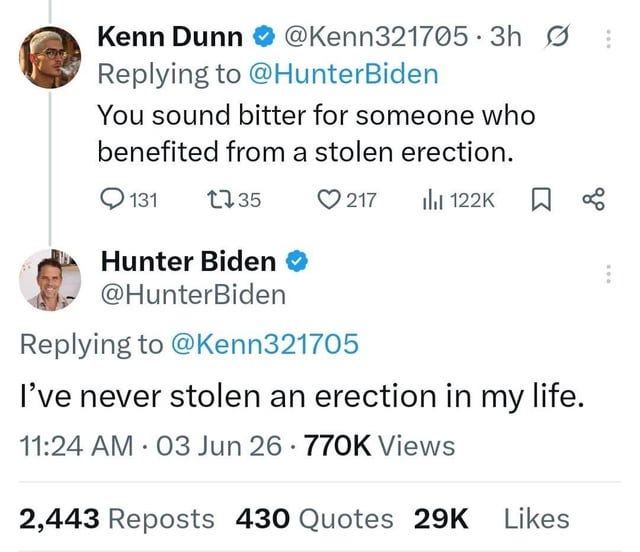
On one hand, there is little to say here that Biden hasn’t already said himself - the posts themselves are a mixture of recovery messaging and milquetoast anti-Trump sideswiping of the kind that has so animated the American centre left for the last ten years. He’s taking more than a helping hand from ChatGPT in their composition, and there’s also something a little coy about the son of a career politician railing against fat cats and the “Epstein class”. That, perhaps, speaks to just how much those sentiments have become buzzwords in their own right: post-Sanders, and post-AOC, we are all revolutionaries in a minor key.

But what is interesting, in the ever-evolving world of political comms, is that Hunter Biden is using a candidate’s playbook without being a candidate. He’s running defence for his father as part of a family business, of course. But the reason this is all so charming (and charming it is: AI or not, there’s something increasingly rare about seeing someone actually enjoy themselves on Twitter) is precisely the lack of necessity. He is in it, simply, for the love of the game.
Gavin Newsom, the omnipresent governor of California, has made this kind of messaging central to his inevitable 2028 run. But as with everything behind that man’s gimlet eyes, there is an inherent cynicism - the sense that this is style, and a style, at that, that has been carefully focus-grouped. For Biden, effectively unemployed, it’s attention-seeking with a patina of righteous anger: the ingredients, of course, for the best kind of s**tposter.
For the publicly shamed in modern America, the path to redemption flows directly through a memoir and a handful of podcast appearances, where the contrite pick their poison between Joe Rogan and Adam Friedland. Biden has already done those things, to a general shrug. The carpe diem mode of “owning one’s narrative” seems vaguely passé, long gone in the #MeToo wing mirror. But here is one of the great anti-heroes of American politics being funny, and being weird. If the long heralded ‘Dark Woke’/’Woke 2.0’ is anything, maybe it’s precisely this: Hunter Biden, political scion, calling CNN’s Jake Tapper ‘Brick Tamland’ on the internet. Is that really so dreadful?
To a trillion… and beyond!
Most companies going public ask the market what they are worth. SpaceX appears to have asked something rather different: do you believe? After all, this is a company whose stated mission is to “extend the light of consciousness to the stars.”
As sci-fi as that sounds, it is remarkably close to the language surrounding the IPO. That’s because the $1.77 trillion valuation rests not on what SpaceX has already done, but on a list of things it might do - Mars colonies, orbital AI data centres, and the domination of a future space economy that barely exists.
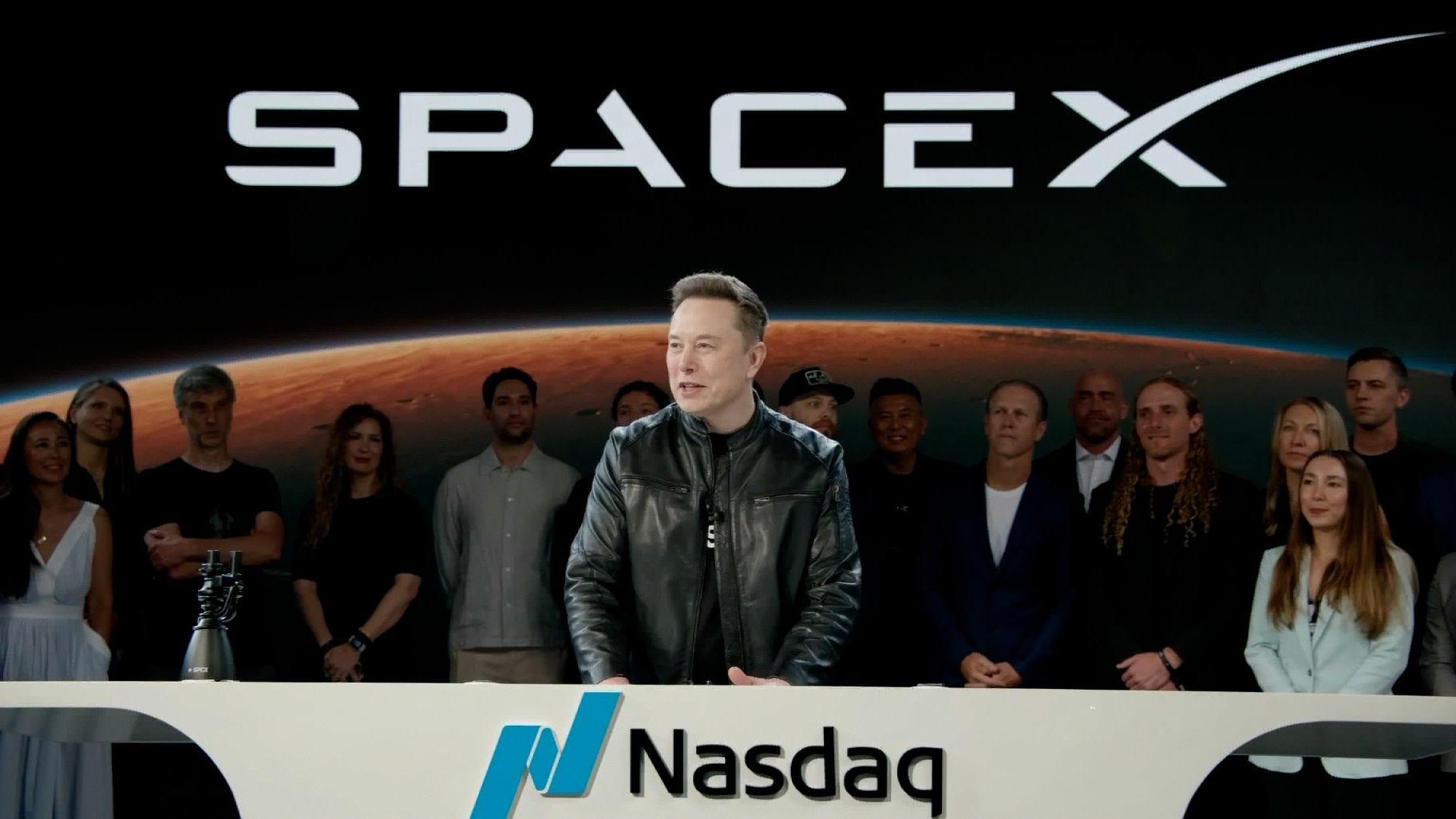
SpaceX’s COO Gwynne Shotwell herself said “what folks who invest in SpaceX need to know is that what we’re doing is very futuristic.” It’s an unusual way to drum up support for the cause, but also, arguably, the whole strategy.
The confidence of their position is reflected in how the IPO was structured. Rather than offering a price range and letting demand set the final figure, Musk set a fixed price and invited investors to take it or leave it.
When it comes to the maths, SpaceX is valued at almost 100 times its annual revenue. The sceptics are saying ‘computer says no.’ Musk’s supporters say the sceptics have been wrong before - think reusable rockets, Starlink, self-driving cars. Shotwell’s own pitch to sceptics was that “Elon jokes that we make the impossible, we just make it late.”
That “joke” is doing a lot of heavy lifting. It asks investors to suspend their disbelief and focus on Musk’s long record of eventually delivering on seemingly impossible projects.
SpaceX isn’t really selling shares, but a vision that things which currently sound absurd will eventually become real. Perhaps it’s less of an IPO and more like an audition for Starfleet. Investors are being asked to back a company determined to boldly go where no listed company has gone before, and trust that the profits will follow later.
Backrooms, Obsession and Hollywood
For the past decade, there has been a trend in Hollywood, one that has led to recent film lineups and streaming services bloated with never-ending cinematic universes, reboots and unwarranted sequels to beloved franchises. But with the recent major successes of two relatively low-budget horror films, Obsession and Backrooms, it’s safe to say that Hollywood may soon be staring down the barrel of an existential crisis.
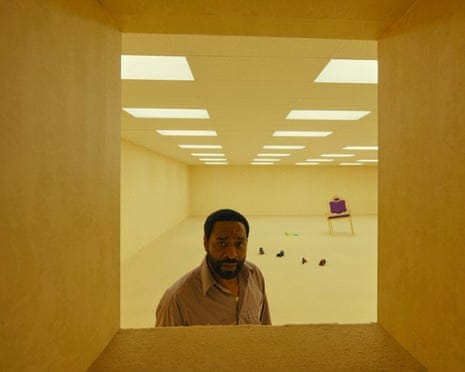
Both films come from young directors who, not that long ago, would have struggled to even get a meeting in Hollywood. Both are original ideas that speak to a younger generation bored half to death from endless rehashes of pre-existing IPs, and their runaway successes may rewrite how Hollywood responds going forward. What’s interesting about Backrooms and Obsession is that neither feels like the result of a committee trying to reverse-engineer audience demand.
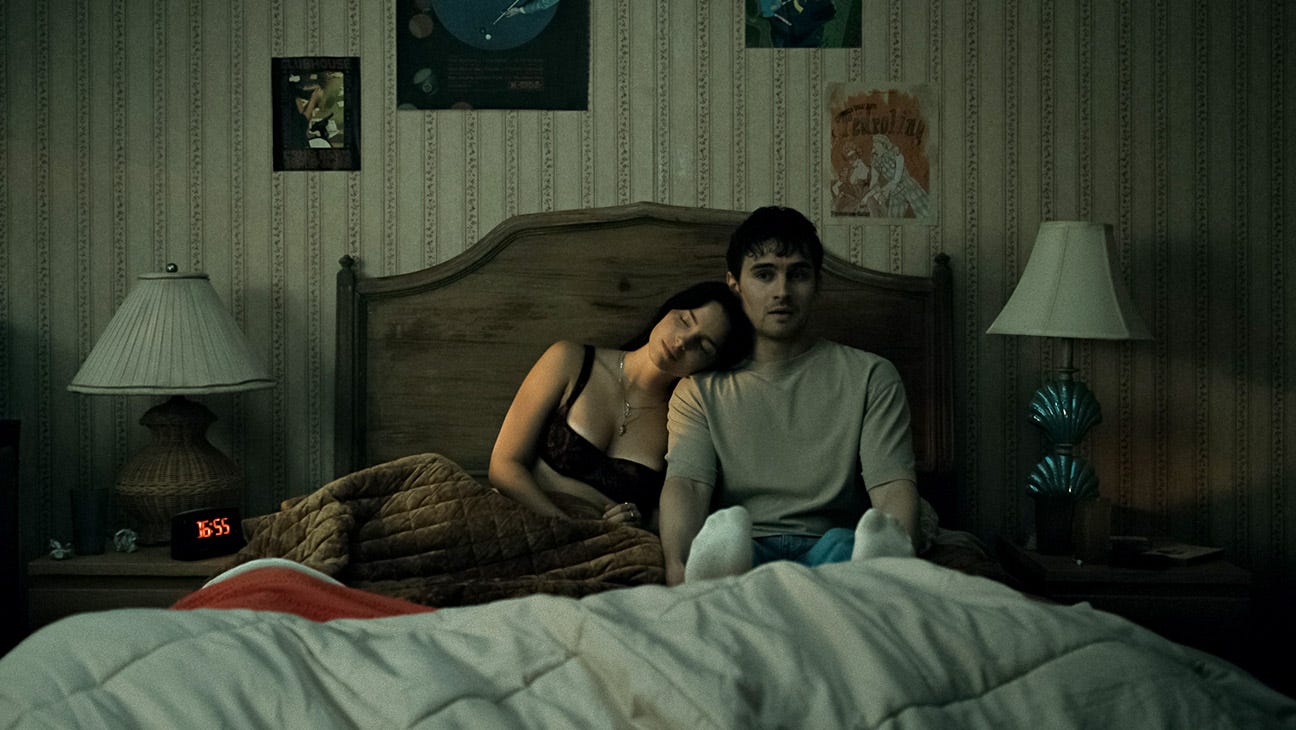
Even Steven Spielberg weighed in on the phenomenon, praising the achievements of both young filmmakers, but also cautioning that success on one project in no way guarantees success on the next. It’s sensible advice from someone who has spent decades navigating an industry that can build people up as quickly as it tears them down.
These are projects made by people with a clear idea of what they wanted to create and have been rewarded exponentially by audiences as a result. Attention has become the most valuable commodity in almost every industry, and the lesson here is that people will only engage if it gives them a reason to care.
That’s a lesson Hollywood has seemingly forgotten in recent years. Originality has come to be perceived as too great a financial risk, and endlessly repackaging the familiar became the safer bet. Yet the success of Obsession and Backrooms suggests audiences may be far more adventurous than executives have given them credit for.
Comments
Nothing yet. Say the first thing.
Sign in to join the conversation.