
Hello, Friends and Neighbors!
In my first post, I proposed the idea that books may be the means of saving us from the chaos, disconnection, and oppression of our time. Today’s post will discuss one of the central reasons I believe this is true.
Thanks for reading! Subscribe for free to receive new posts and support my work.
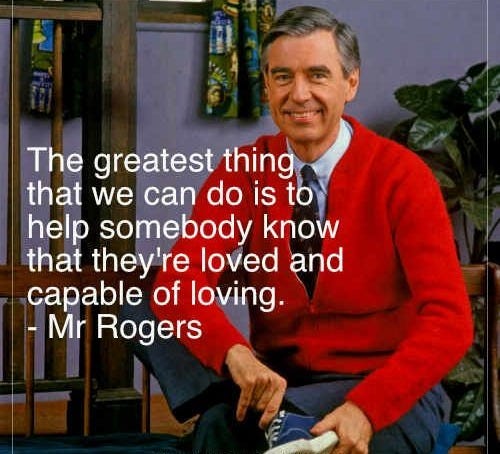
I’ve been a high school English teacher, a college professor in Theatre and Film studies, and a professional playwright and theatre director over the last two decades. While working in storytelling and story analysis, I have come to believe that every story is a “love story.” Every story, regardless of genre, has lessons to teach us about love, in all its forms, and the lessons we learn as we read each story are capable of changing our lives, relationships, and world. Sometimes these stories are cautionary tales that tell us what not to do, and that can also save us. To know that you should not pine over someone like Daisy Buchanan is a great lesson to learn from The Great Gatsby!
C.S. Lewis is attributed with the quote, “We read to know we are not alone.” In this world where there is a “loneliness epidemic,” books remind us that no one is alone in our shared human experience. In a time of cruelty and division, books remind us that our neighbor is not our enemy. No one needs to be out for themselves because no one is in this alone. We each have a deep need to love and be loved in return, and so it makes sense that the stories we tell each other would all have something to say about love. We tend to think of love stories as a genre or subplot of different genres, but all stories have things to teach us about how to love in fuller, truer, and healthier ways.

When studying stories in class, my students will often confuse topics with themes. I try to explain that topics are the subjects that a story discusses, and themes are the lessons that the author is trying to teach about those topics. When I ask what the topic of a story is, they often say “love,” or they say something that relates to how we love, like “friendship,” “loneliness,” “betrayal,” “longing,” or “family.” When I ask for a theme, I remind them not to repeat the list of topics but to seek to identify the lessons we are being invited to learn. What is the author telling us about friendship, marriage, heartbreak, etc? And, in the end, what they come to realize is that there are real and vital lessons for their lives in every book that we study together.
I find this work with them to be the most important work that I do as a teacher, and it’s what I hope to do here with all of you. I believe that we are living in a time of story-deficiency, meaning that people are not experiencing the life-giving lessons that only stories can teach. People struggle to find time and energy to read whole books as they grapple with heavy workloads and distractions from technology and lives that don’t slow down. We read short pieces of information, opinions, arguments, and gossip sent to us throughout the day, but these can’t replace the nutrients that a full story can provide.
A fellow teacher recently shared that at her school, her students only read excerpts from Madeline L’Engle’s novel, A Wrinkle in Time, in their textbook. And what worried her was that the students then would say they had read the story as though they had read the entire book. She said that she was trying to get whole novels into her classes’ curriculum, but it has been a struggle. Movie theaters are closing down because fewer people go to the movies, and fewer people can tell me the TV shows that they watch because there are so many to choose from, and they don’t have the time to commit. Live theatre prices are often prohibitively expensive, and professional theaters are struggling to get audiences. These things concern me since stories teach us how to be empathetic, generous, selfless, connected, joyful, calm, and kind. Without engaging with these full stories, we begin to crave shorter and shorter content. If people no longer have the attention span for a whole episode of TV, reading a novel is going to feel like an impossible task.
I believe this boredom with reading and stories that demand attention and learning creates a culture of people who are cut off from their own personal stories, feelings, and experiences, and are disconnected from each other as well. We will continue to see the daily headlines about people feeling depressed, anxious, lonely, entitled, violent, judgmental, and uncaring towards themselves and others until we can allow our curiosity and empathy to grow from putting ourselves into the stories that books offer us.
When I was 10 years old, my mom, a passionate university professor of literature, theatre, and film, took me to see Franco Zeffirelli’s Hamlet in the movie theater. I was completely moved by the experience. I didn’t understand all of the language, but I felt the depth of meaning in what the characters were saying and doing in front of me, and as we walked out of the theater, I was still drying my eyes, and I overheard a small group of college-aged boys saying about the movie, “That was so boring.” And, without a second thought, I turned on them and said, in what would become my disappointed teacher/director/mother voice, “Everybody died!” I was scandalized by the fact that people could be bored by a story that depicted human suffering, loss, fear, confusion, and deep love. I continue to struggle with the question: if we think that’s boring, what do we care about?
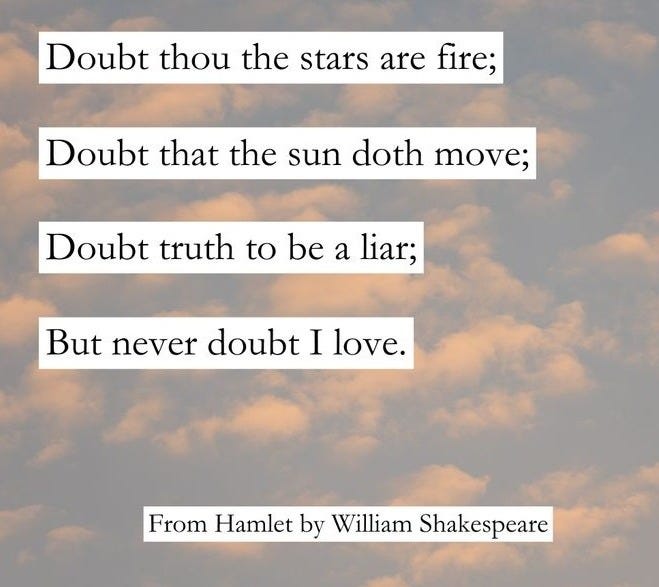
A few years ago, I had my most moving experience with Shakespeare and the story of Hamlet. I was teaching the play to a group of high school seniors at an all-girls school. One of my most engaged students seemed disconnected from the scene we were discussing until I saw that there was tears in her eyes. The scene was the brutal break-up scene between Hamlet and Ophelia. After class, I kept her back with one of her friends and asked her if she was OK. She started crying again, so I asked if I could give her a hug, and she told me that her boyfriend had broken up with her over the weekend. The weekend of prom, no less. I told her how sorry I was that she was hurting, and she said something I’ll never forget. She said, “Yeah, it’s just a hard day to read Hamlet.”
My student had seen herself in Ophelia, a character written 400 years earlier, because she had also been young and had her heart crushed by a boy whom she loved. I was proud of my student for being able to emotionally connect with the story in that way, and I was moved to see her grapple with her own decisions and pain because of her empathy with Ophelia. The mom in me wished I were a math teacher who could have offered her an escape from thinking about love by talking about numbers for an hour. English class is not for the faint of heart.
As she left with her friend still comforting her, I searched my mind for the name of a novel, play, short story, or poem that we could have been reading that would have been easier for her. Was there any story that didn’t have something to do with love? And, after about five minutes of fruitless searching in the database in my mind, I came to a simple but startling conclusion that inspired this post. There is not a single story, in any form, that does not deal with love. Whether a cautionary tale, family drama, friendship dilemma, romantic relationship, unrequited, betrayed, ended, or eternal - every story deals with love, and so every story is a love story. And, that’s great news, because that means that as long as we keep reading, telling, studying, discussing, and loving stories, we can become better people for each other. In upcoming posts and discussions, we will explore some of these specific stories and authors and the lessons they teach. We can make the real stories of our lives more loving by implementing the lessons we learn from the stories we read, hear, and see. These stories are here to remind us that everything we do, everything we are, it’s all a love story.
Thanks for reading! Subscribe for free to receive new posts and support my work.
Comments
Nothing yet. Say the first thing.
Sign in to join the conversation.