
On February 18, 2025, New York correctional officers from 25 different facilities participated in unauthorized strikes, resulting in widespread lockdowns, suspended visitations, and the deployment of the National Guard. The strike spread to nearly all of New York state’s 42 correctional facilities and on March 10, after 22 days, it officially came to an end. At least seven incarcerated people died during the strikes, including Messiah Nantwi, who was beaten to death by corrections officers (now charged with his murder), just months after ten corrections officers were criminally charged in the fatal beating of Robert Brooks at Marcy Correctional Facility.
During the strike, many incarcerated individuals faced lockdowns and the curtailment of access to programming and library services. Many of the letters that we received last month mention the strike’s impact and the ways in which access to books became a lifeline in the face of a profoundly uncertain situation. An incarcerated individual at Mid-State, for example, writes that the cancellation of college course classes on mental and physical wellbeing prompted them to attempt to continue their learning independently, while an individual at Woodbourne reported that no educational programs were running and that books from the general library were unavailable due to the restriction of inmate movement. It would be, they were told, “a few months” before the situation was resolved.
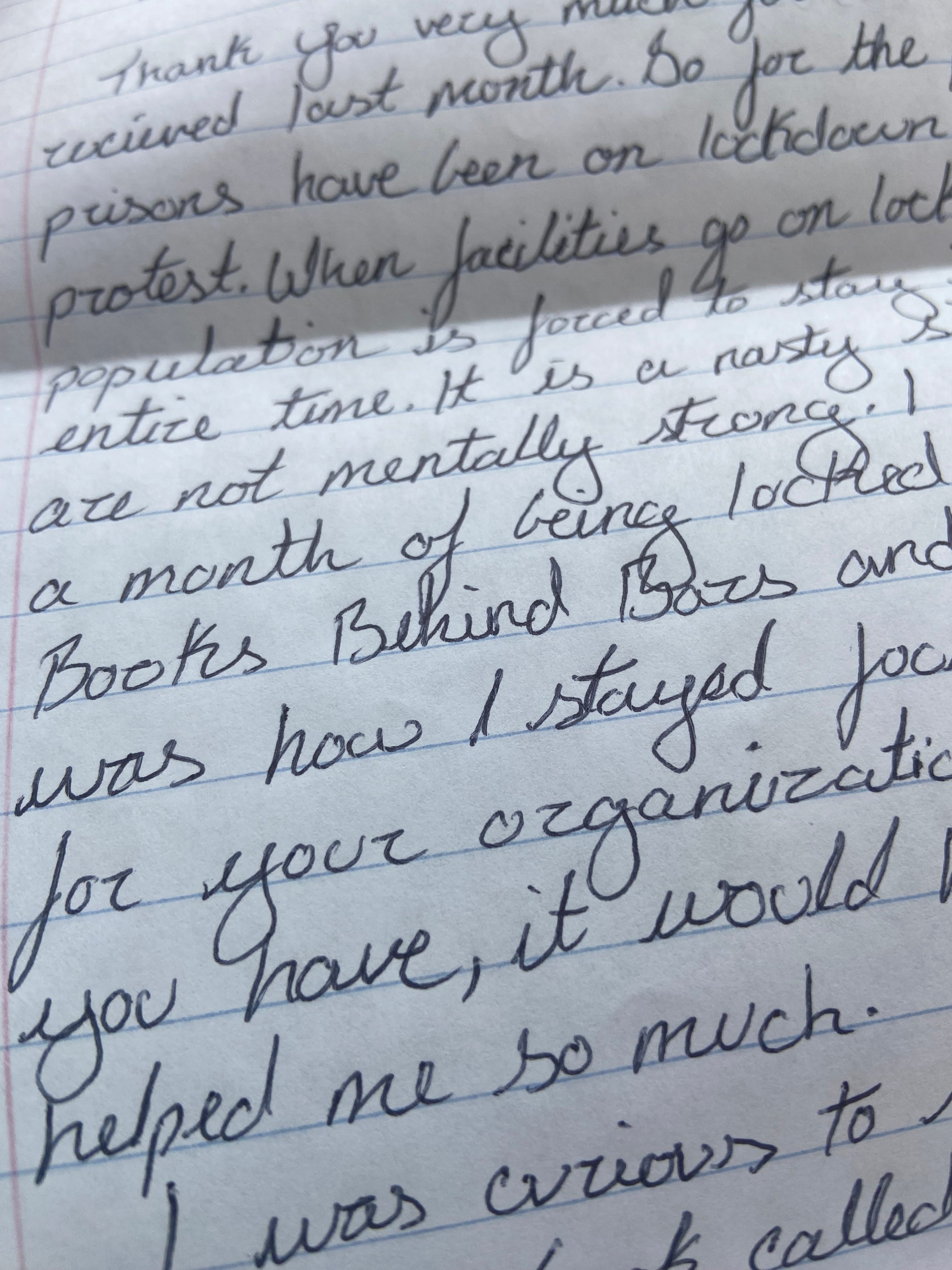
However, many individuals in New York prisons continued to receive books from Books Beyond Bars during the strike and expressed their gratitude. An individual incarcerated at Green Haven writes that the title they received helped them to keep their mind busy during a monthlong facility lockdown. “Without your amazing generosity sending books to incarcerated individuals” they write, “things would have been much worse. With your books I was able to say mentally strong. Thank you for all you have done.” An individual at Mid-State agrees, writing: “Times are tough right now in New York prisons with the strike and everything else going on, but books provide a safe haven even in troubled times.”
An individual at Green Haven details what happens during a facility lockdown: “The inmate population is forced to stay in our cells for the entire time,” he writes. “It is a nasty situation to be in if you are not mentally strong. I was able to get through a month of being locked down with the help of Books Beyond Bars and the books you sent me. If not for your organization and the amazing staff you have, it would have been rough. Your books helped me so much.” An individual at Eastern expresses similar sentiments, adding observations about his experiences with prison employees and members of the National Guard: “Our facility, along with many others, is on lockdown and being operated under the supervision of the U.S. Army National Guard. The National Guard members, along with the remaining correction officers, have been very respectful to us. They treat us with humanity. The few remaining officers are the ones who aren’t out on strike and most of them only desire to keep us safe by doing their jobs. It does get frustrating at times, but we try to remain calm.”
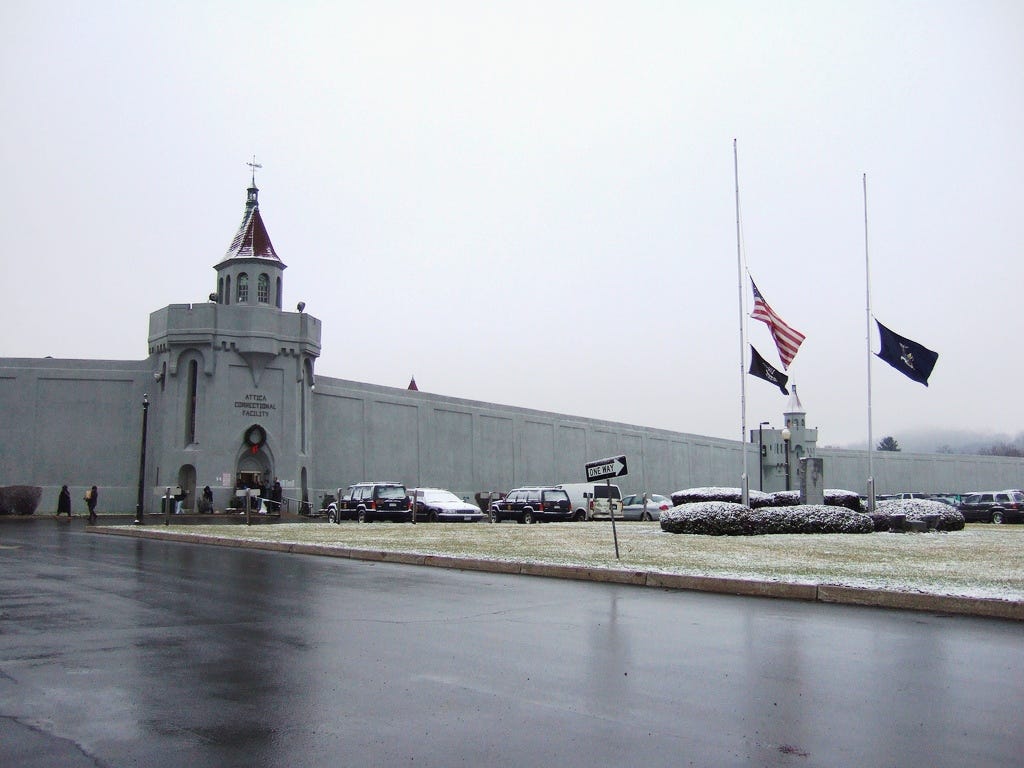
Above: Attica Correctional Facility, New York. Photo by Jayu from Harrisburg, PA, U.S.A., CC BY-SA 2.0, via Wikimedia Commons
Finally, a note from an individual at Clinton sums up the power of books to make even the bleakest of conditions feel a little lighter: “I am currently incarcerated at Clinton Correctional Facility, and they are still currently on lockdown, and I didn’t have anything to read from the beginning of the strike. I was losing my mind stuck in my cell 24 hours a day, but on April 2, I received the two books. Thank you very much, I enjoyed those two books. I read them, it took me one day, so I read them again.”
No posts
Comments
Nothing yet. Say the first thing.
Sign in to join the conversation.