
Hello all,
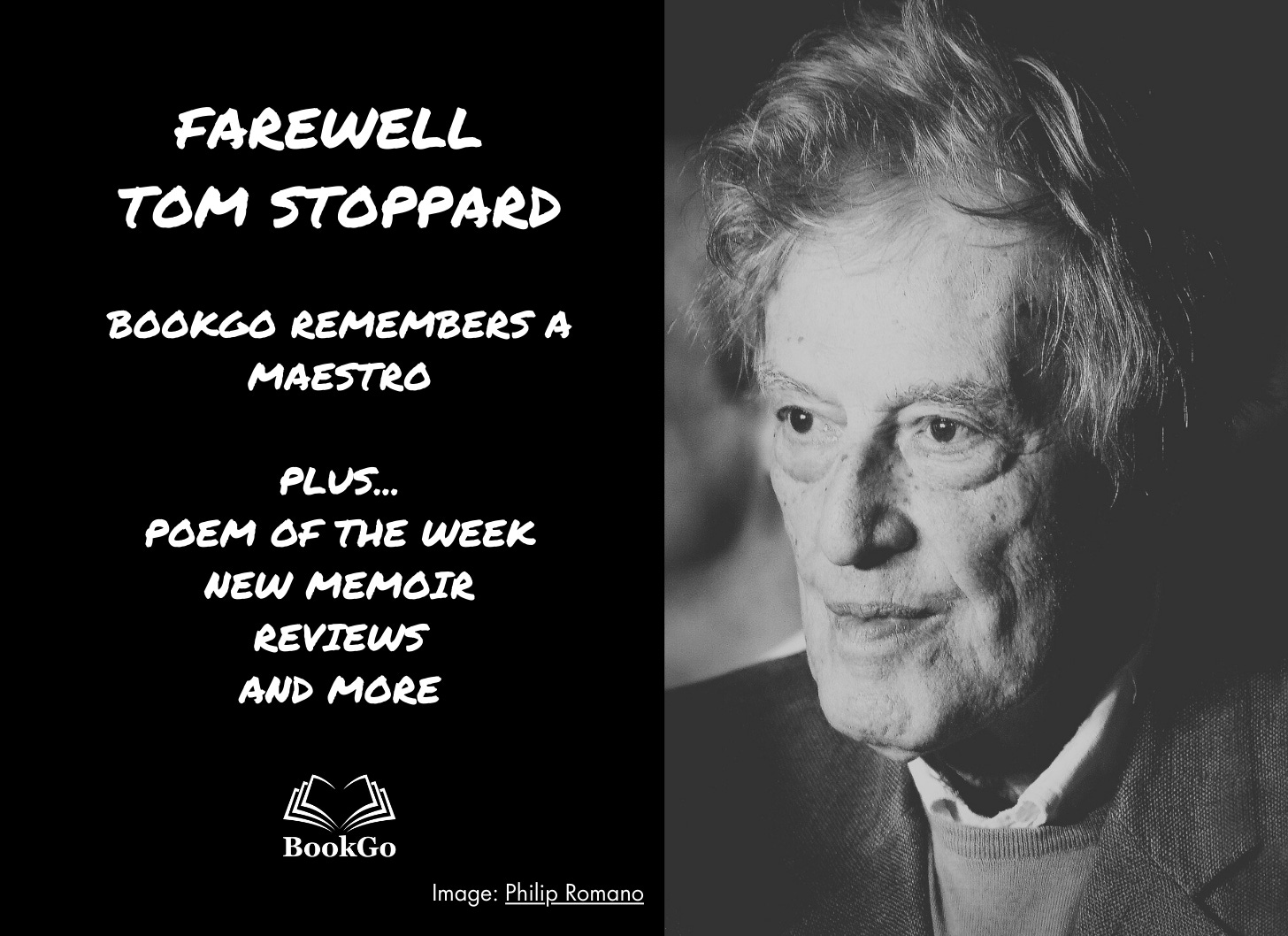
We hope you are having a lovely start to December, but we lead off this week on a sad note, with a tribute to one of the most gifted dramatic writers and wordsmiths to have ever written for the English stage: Tom Stoppard, who died on 29 November 2025. He was a writer who inspired each and every one of us at BookGo, and Michael pens a tribute to this literary great.
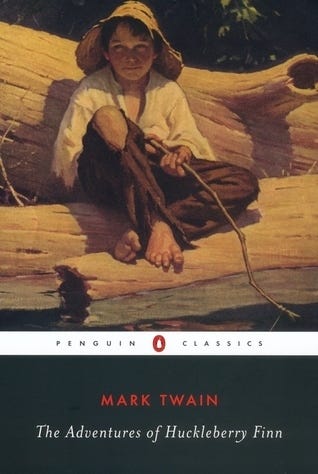
Elsewhere this week, we have the perfect poem to welcome you into the snows of December: Mary Elizabeth Coleridge’s chilling work, “The Witch”. Then, in our ongoing series of reviews of great contemporary works, Nancy gives her verdict on the Pullitzer-prize-winning novel James by Perceval Everett, the thrilling reimagining of that classic American tale, Mark Twain’s Adventures of Huckleberry Finn.
Finally, don’t forget that BookGo’s inaugural flash fiction and poetry prize is still accepting submissions until 15 December! $500 cash and an editorial development opportunity are up for grabs — read on to find out how to enter!
Feature: ”Remembering Tom Stoppard” by Michael McKinley
Poem of the Week: “The Witch” by Mary Elizabeth Coleridge
Book Sale: Get Around the World in 80 Years by Peter Felix – reduced to $2.99 – on sale now!
What to Read: “James by Percival Everett – From Good to Great to Genius!”
Competition: $500 winning prize and 3 x $100 runner-up prizes in BookGo’s first flash fiction and poetry competition!

By Michael McKinley
So farewell then, Tom Stoppard. The greatest living playwright in English died on November 29, at the age of 88, in Dorset, England. I felt a blow when I saw the headline in my inbox, for Tom Stoppard has been my guy for a while now when it came to admiring a writer, and for counting on them to produce masterpiece after masterpiece. I thought he was the best.
I first encountered Tom Stoppard as an undergraduate. I was reading his play Rosencrantz and Guildenstern Are Dead and in doing the research for the essay I was writing, came upon an interview Stoppard had done before the play launched in 1966. Someone asked him what it was about and he said, “It’s about to make me very rich.”
I loved his answer, and I loved R&G, and I was hooked. The first Stoppard play I ever saw live was Arcadia, starring Rufus Sewell, in London. I was working for an academic summer school at Oxford University where I was a grad student, and we took the students up to the city to see Arcadia. I remember one of my students, Brandon, had never been to the theater before. After watching this brilliant, moving play, I told him not to expect that every night at the theater would be like this. He smiled, and said he would keep that in mind, but that he was now addicted to the theater. Stoppard had done that.
I had the pleasure of meeting him, once, from a distance. It was while I was a student at Oxford that he came to speak. I went. We were in the library of the Oxford Union, and there were TV cameras. I was at the back of the room, and when Stoppard lit up a cigarette, so did I. I got dirty looks, but if they told me to put it out, they would have to tell him to do the same, and no one was going to do that.
When it came time for questions, he got the usual volley of academic speeches posing as queries, and he tolerated them with good humor. I raised my hand at the back of the room, and he saw that his fellow smoker had a question, so he picked me.
“When you go to the theater, Mr. Stoppard,” I asked. “what do you like to see? Do you have a favorite play or playwright?”
He smiled as if in thanks. He said, “Yes, I do have a favorite play. It is called Next Time I’ll Sing For You by James Saunders. It’s a marvelous play. See it if you get the chance.”
It debuted in 1963, and it wowed them. “The best play in London,” said Harold Hobson in The Sunday Times. Robert Gellert, in The New Statesman, praised its “nervous and sophisticated brilliance”. Theater critic Kenneth Tynan found it “a series of grotesque and disturbing observations on the nature of illusion and reality.”
The play features five characters, and one of them says, “The problem of identity has been the hobby of the intelligentsia for at least two millennia.” The play explores this problem through the character of a hermit at its center, a guy who really existed: Alexander James Cameron of Great Canfield, Essex, who lived as a recluse for forty-two years. Why? A playwright called Rudge, and three actors called Lizzie, Meff and Dust, try to work out an answer.
Indeed, Stoppard’s Arcadia, which premiered thirty years later in 1993, has a lot of the spirit of Saunders play within it. Like Shakespeare, Stoppard borrowed from the best and made it better.
I have seen his plays The Real Thing, the Invention of Love, the Coast of Utopia, and Leopoldstadt, as well as his movies, the one I most enjoy being Shakespeare in Love. But it was his answer to me in the library of the Oxford Union that made me realize how writing all connects, not just three centuries earlier, when Shakespeare, whom I was studying, was connecting to writers in his writing, but right now, with playwrights like Stoppard.
When I was home that Christmas, Stoppard’s interview at Oxford showed up on Canadian television. I missed it, as I was out with friends. When I got home, my mother had written a note and left it by my door. “Saw you on TV tonight with Tom Stoppard. Didn’t know you smoked.”
I knew, upon reading that, Tom Stoppard would have laughed. As did I. I no longer smoke, but let’s just say I lit one in my imagination to say farewell to a maestro, in flaming gratitude for the majesty that he gave to us all.

By Mary Elizabeth Coleridge
Text within this block will maintain its original spacing when published
I have walked a great while over the snow,
And I am not tall nor strong.
My clothes are wet, and my teeth are set,
And the way was hard and long.
I have wandered over the fruitful earth,
But I never came here before.
Oh, lift me over the threshold, and let me in at the door!
The cutting wind is a cruel foe.
I dare not stand in the blast.
My hands are stone, and my voice a groan,
And the worst of death is past.
I am but a little maiden still,
My little white feet are sore.
Oh, lift me over the threshold, and let me in at the door!
Her voice was the voice that women have,
Who plead for their heart’s desire.
She came—she came—and the quivering flame
Sunk and died in the fire.
It never was lit again on my hearth
Since I hurried across the floor,
To lift her over the threshold, and let her in at the door

The new memoir by YourBook affiliate Author Peter Felix only $2.99 for a limited time only!

The new memoir from international management consultant and explorer Peter Felix tells his incredible life story, from his birth in London in 1944 to an English mother and a father fleeing Nazi persecution, through corporate and charitable work in Pakistan, Hong Kong, the US, Algeria, and beyond.
Along the way, Peter Felix describes the highs and lows of his rich and varied international career, from navigating the oil crises of the 1970s, to crossing paths with figures like Princess Margaret and Donald Trump, to his anxiety waiting for news of his wife June following the attack on the twin towers on 9/11.
Candid, fascinating, and inspiring, Around the World in 80 Years captures a life lived without borders — an invaluable guide to any aspirational young explorers and entrepreneurs seeking to chart a new path through our rapidly changing world.
Buy now - $2.99 limited time offer
“What distinguishes this memoir from typical travel writing is its sense of purpose and reflection. Felix does more than recount destinations—he illuminates experiences. Whether describing vibrant cities or remote landscapes, his storytelling carries a natural ease, combining vivid detail with gentle humour and hard-earned wisdom. The result is a narrative that feels immersive without being indulgent, insightful without being overtly philosophical.”
“For anyone who loves travel memoirs, business reflections, or stories of a life well-lived, Around the World in 80 Years is both inspiring and grounding. It reminds us that success is not just measured in achievements, but in the people we meet, the places we discover, and the lessons we carry with us.

By Nancy Merritt Bell

Erasure, Percival Everett’s 2011 satirical novel, I read with painful delight and some very uncomfortable laughs. The book’s bleak comedy is set in the land of publishing in which Thelonious “Monk” Ellison, a Black novelist, is thwarted by the expectations of the very White and rich and privileged editors and publishers—my people! To beat them at their own game, Monk writes and then happens to live out those very expectations by writing a spoof, entitled My Pafology. And, as it is with The Producers, it is a surprise hit. Where did he go right, I asked myself? The answers are as hilarious as they are disturbing in the White world of publishing.
James, Everett’s satirical novel of 2024, and 2025’s Pulitzer Prize winner, I also read with aching delight and also with awe. Everett has not just written another good book—number 24: this one is great—it is a masterpiece. His slicing wit and his gorgeous skill at taking the history of racism and rendering it as a social satire is at its fiendish best. While in Erasure, Everett hoists up the mask of would-be wokeness and exposes the agony and the “performance” its expectations impose on Black culture, in James, Everett begins with the trap of performance. The performer, though, is not a captive in publishing land, but a slave on a massive literary stage. Everett takes a bold and brilliant step out with this satire: James is a retelling of another masterpiece, an American one and a sentimental favorite: Mark Twain’s Adventures of Huckleberry Finn. Twain’s 1884 comic novel, we might recall, follows Jim, an escaped Black slave, and Huck, the other half of the runaway odd fellows as they sail up the Mississippi River.
We’re let in right away to the trap, to the insanity of Jim’s performance, that of a helpless, deferential, ignorant slave--and James, as he calls himself, who is nothing like that. In an early chapter, James recalls teaching his own daughter how to play the slave, and why: “White folks expect us to sound a certain way and it can only help if we don’t disappoint them... The better they feel, the safer we are”, or “Da mo’ betta dey feels, da mo’ safer we be”, he says in “the correct incorrect grammar” required by what Jim calls “situational translations”.
Jim-James works hard to keep to his role and play “situational translations” throughout the book as he also struggles to protect Huck, his charge, as they both run away from Huck’s guardian who is also James’s owner, Miss Watson. Huck is in trouble with her, but she has broken her own promise to not sell James’ wife and daughter. After their sale, James is bound to find them and free them, even if he himself isn’t free.
The joint escape and the journey of Huck and Jim becomes a social satire odyssey as they elude slave hunters—by Huck pretending he owns Jim. But their act only gets them in more danger when Jim is trapped in a scam by a bunch of vagabonds—who are also performing--acting as broke aristocrats. Add here yet another layer of performance when James is sold to a Black-face minstrel company in which he is the only Black face. Although he is a valued member, James knows the company, though they appear to be devout abolitionists, would sell him out in a second for a good buck. Indeed, if anyone knew who James really was, a caring, brilliant autodidactic satirist, he would be dead.
We don’t just watch James’s living performance as Jim in “situational translations” as the situations he faces become more and more deadly. Everette, writing in the first person, allows us deep into James’s psyche. Here, he engages in dream dialogues with the philosophical heroes of freedom, Voltaire and John Locke, as James takes on their narrow, privileged view of human rights. In one dream, as Civil War is breaking out, James confronts Locke, who likens slavery to a war that can only end when it is won by the victor. In another dream, James encounters a character from Voltaire’s Candide, the disillusioned aristocrat, Cunégonde, who reveals to James he will always be owned, if not as a slave, then as ‘human capital’.
For Jim, embattled within and without, the only way out is to rise up in fearlessness, and the book also rises to the occasion, ascending from great to astonishing as Jim murders a rapist slavedriver, then finds his wife and daughter in a horrific slave-breeding farm. Here, he launches a huge attack and when the dust settles, Jim is no longer alone on the road to freedom--which is actually in Iowa—but with his beloved family and many others. And Jim is no longer Jim but has earned the name James. It is a resounding conclusion that, while you ponder the book’s literary take on the history of racism, you can also stand up cheering.
BookGo is currently accepting submissions for its inaugural writing prize. We are accepting submissions on any topic, fiction or non-fiction, of flash fiction or poetry, up to a maximum of of 500 words!
Our winner and three runners up will receive a free development session with BookGo’s team of writers and editors, and their work published next year.
Deadline: 15 December 2025

Comments
Nothing yet. Say the first thing.
Sign in to join the conversation.