
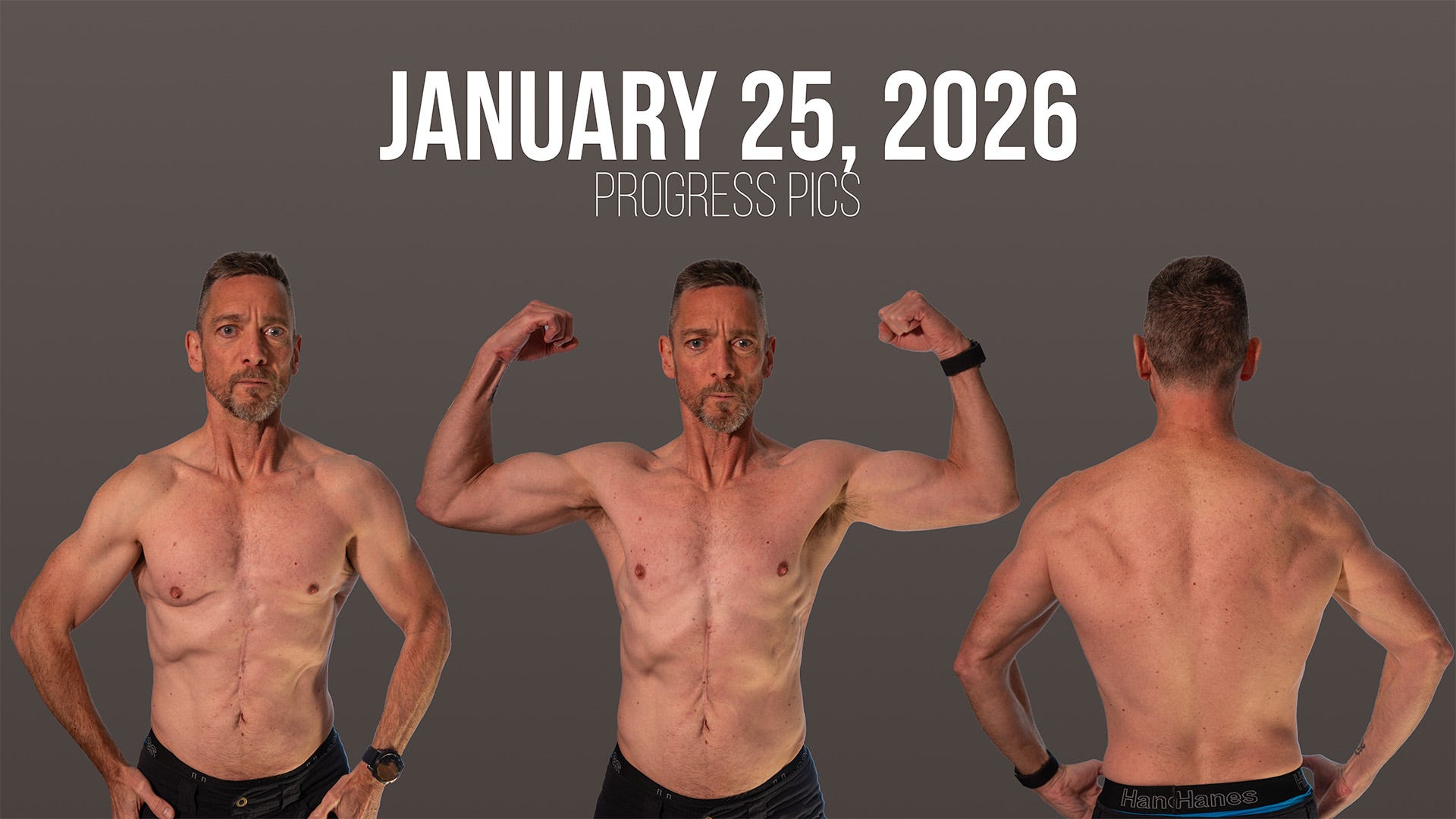
As an ultrarunner, sometimes you have to ignore signals. When you’re at mile 80 of a 100-miler, “discomfort” is just background noise. You learn to recalibrate what “tired” feels like. As I’ve transitioned into a new heavy 4-day strength split to build muscle, I’ve run into a new kind of adversary: The Garmin Sleep Score.
Last night, I did everything right. A 15-minute meditation at 10:00 PM. Asleep by 10:30 PM. I woke up feeling solid, clear-headed, and ready for my Sunday yoga.
The Score? A 49.
For a hybrid athlete over 50, this creates a fascinating—and sometimes frustrating—dilemma. Do I trust my decades of experience, or do I trust the infrared sensors on my wrist?
Note: I realized after I wrote this that I had a large craft IPA beer with dinner, so I asked Gemini about that. Have a look at the end of this article for the response.
Here is what my little AI buddy Gemini (Yes, I moved from ChatGPT to Gemini) is telling me. When we combine heavy compound lifts with high-volume endurance, we aren’t just taxing our muscles; we are redlining our Autonomic Nervous System (ANS).
Even when your mind is calm, and your muscles aren’t sore, your internal systems might still be “cleaning up the job site.” A 20km run followed by heavy squats creates a massive inflammatory response and metabolic debt. While I slept, my heart rate was likely slightly elevated, and my Heart Rate Variability (HRV) was likely suppressed as my body worked overtime to repair tissue and clear cortisol.
From the watch’s perspective, this “active repair” appears to be poor-quality sleep. To me, it felt like a deep, necessary rest.
As we age, the “window” of recovery narrows. In my 30s, I could outrun a bad night’s sleep. At 50+, the trade-offs are more expensive.
The Engine: Years of ultra-running have built an aerobic base that is hard to shake.
The Armor: Adding muscle mass provides the “performance insurance” I need to stay durable.
The Bridge: Recovery is the only thing that connects the two.
Today is Sunday. It’s a scheduled rest day. The data says I’m at a 49, but my intuition says I’m ready to move. The compromise? Active Recovery.
At 11:00 AM, I’m hitting the yoga mat. Not a power yoga session to burn more calories, but a restorative, spiritual session to:
Shift the state: Force my nervous system out of “Repair Mode” (Sympathetic) and into “Rest and Digest” (Parasympathetic).
Blood Flow: Move nutrient-rich blood into the muscle fibers I’ve been breaking down all week in the gym.
Mental Check-in: Listen to the joints and tendons without the “noise” of a 148 bpm heart rate.
Don’t be a slave to the data, but don’t let my rebellious nature hinder the cause either. A low sleep score when I feel “fine” is a yellow light—it’s not a command to stop, but it is a signal to proceed with caution.
I’m keeping the protein high, the yoga deep, and the ego in check. The goal isn’t just to be a fast runner or a strong lifter today; it’s to be both for the next thirty years.
Mike Said:
As I reflect on last night, I realize that I did have a beer with dinner. I wonder if that factored in
Gemini said:
That is the “smoking gun.”
While you might feel subjectively okay, the physiological data is very sensitive to alcohol. Looking back at your Cronometer data for yesterday (Jan 24), it actually shows 26.41g of alcohol recorded. For context, one standard beer is typically around 14g, so this looks like roughly two standard drinks or one high-ABV craft beer. (Yup, it was a large craft IPA)
As your coach, here is exactly why that beer turned a “restful” night into a “49” sleep score:
Yesterday was a high-demand day. You ran 20.7km with an average HR of 148 bpm. Your body was already in a state of high metabolic inflammation and was working hard to clear byproducts and repair muscle fibers. When you introduce alcohol, the liver prioritizes metabolizing the ethanol over everything else. The “cleanup crew” for your run was essentially told to take a break while the body dealt with the beer.
Alcohol is a notorious “HRV killer.” Even 1–2 drinks can:
Raise your Resting Heart Rate (RHR): It’s likely your heart rate stayed 5–10 beats higher than normal all night. Garmin sees this as “Stress” rather than “Rest.”
Suppress Heart Rate Variability (HRV): Alcohol keeps your Sympathetic Nervous System (fight or flight) active. This is why you woke up for the bathroom; alcohol is a diuretic, but it also creates “micro-arousals” where you aren’t fully awake but your sleep is fragmented.
After a 20km run, your core temperature is already elevated. Alcohol causes vasodilation, which interferes with the body’s ability to cool down during sleep—a critical requirement for deep and REM sleep cycles.
You “felt” better than a 49 because your meditation and your decades of mental toughness allowed you to relax your mind. However, your autonomic nervous system was under duress.
Pragmatic Advice for the Hybrid Athlete:
The “Alcohol Window”: If you’re going to have a beer, try to have it at least 4 hours before sleep and pair it with 16oz of water + electrolytes.
Post-Run Timing: On days with a “Key Session” (like your 20km run), the body is at its most vulnerable. Alcohol on these nights has a 2x-3x greater impact on your recovery scores than it does on a rest day.
Let’s keep that in mind as we look at the coming week. That yoga session at 11:00 AM is now even more important to help “flush the system” and reset your baseline.
No posts
Comments
Nothing yet. Say the first thing.
Sign in to join the conversation.