
Something is wrong. You can feel it, even if you can’t quite name it.
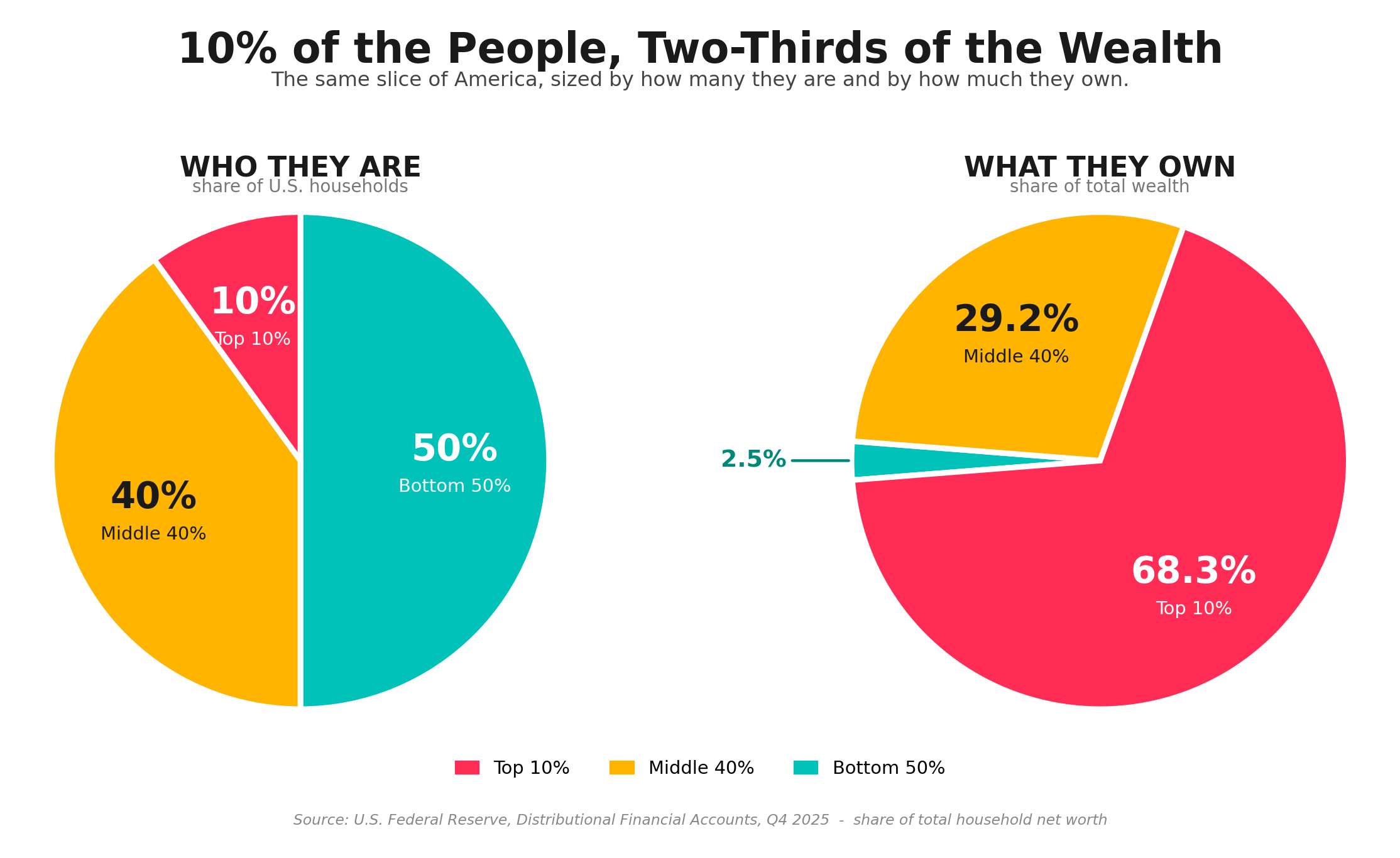
If you're older, you remember when the "American deal" was different. You were supposed to provide your children a fair chance at a better life than the one you earned. You worked your whole life believing that. And still, you watched the future slip away. Now, when you look at your children and grandchildren, you feel something close to guilt, shame, and anger, as if you broke a promise you meant to keep.
If you're younger, you've heard the stories about how it used to be, a time when one job could buy a house and a future, and you'd be forgiven for thinking they're a fairy tale. You were handed a rapidly warming planet, a mountain of student debt, skyrocketing rent, healthcare you can't afford, a broken political system, a rigged economy, and a pathway to a stable life that narrows more every year. You have never seen the "American Dream" people used to talk about. You're not even sure it was ever real.
Both generations are right. You are not lazy. You are not bad with money. It's not the soy lattes or avocado toast. You did everything you were told to do. The deal just changed, quietly, while you were busy working to make ends meet.
And because no one ever explained it, you were left to guess, or to let the "news" fill in the blanks. Maybe it's the government. Maybe it's the immigrants. Maybe it's big city crime. It has to be something, because you did your part.
Here is the simplest way to understand what actually happened:
Picture the whole country's economy as one giant pie. Every hour of work anyone does, the nurse, the welder, the driver, the teacher, the person stocking the shelves, bakes a little more of it. When people work harder and smarter, when productivity rises, the pie gets bigger. And every so often, someone changes the recipe entirely, the assembly line, the microchip, the smartphone, and the whole pie can leap in size at once. That part is real. Together, Americans have baked an enormous pie.
For a long stretch after World War II, the deal was simple. When the pie grew, everybody’s slice grew with it. Your grandparents could raise a family, own a home, and retire on one income. Not because the times were magic, but because the growth was fairly shared through taxation and economic policies.
Then, around 1980, the deal changed.
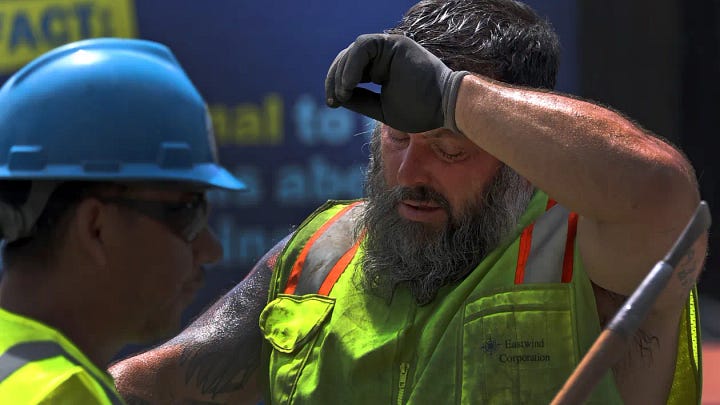
While workers kept baking and the pie kept growing, it stopped being shared. Year after year, almost all of the new pie went to the wealthy, while the slice for everyone else barely moved. You did not stop working. You stopped getting your fair share of the value your work created.
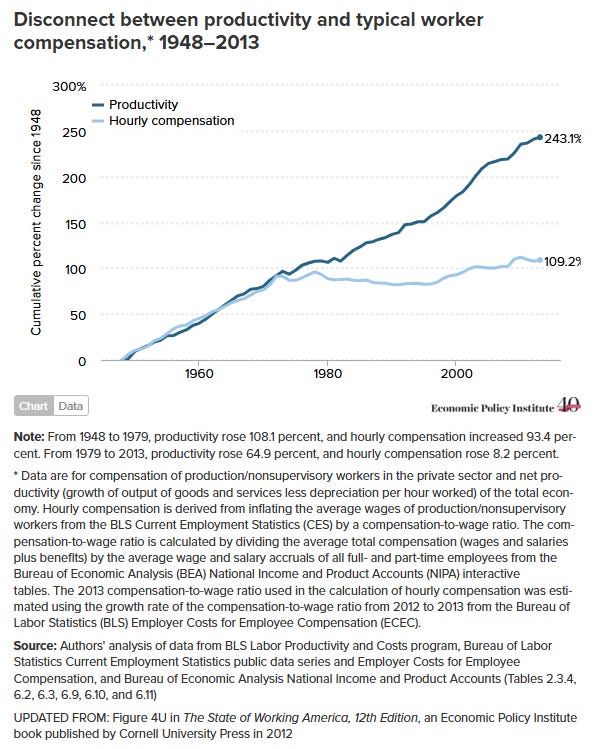
That is not just a feeling. It is one of the best-documented trends in the American economy. For decades, worker pay rose right alongside worker productivity. Around 1979, according to the Economic Policy Institute, those two lines split apart, and they never came back together. [epi.org/productivity-pay-gap/]
First, the rules changed about who keeps the growth.
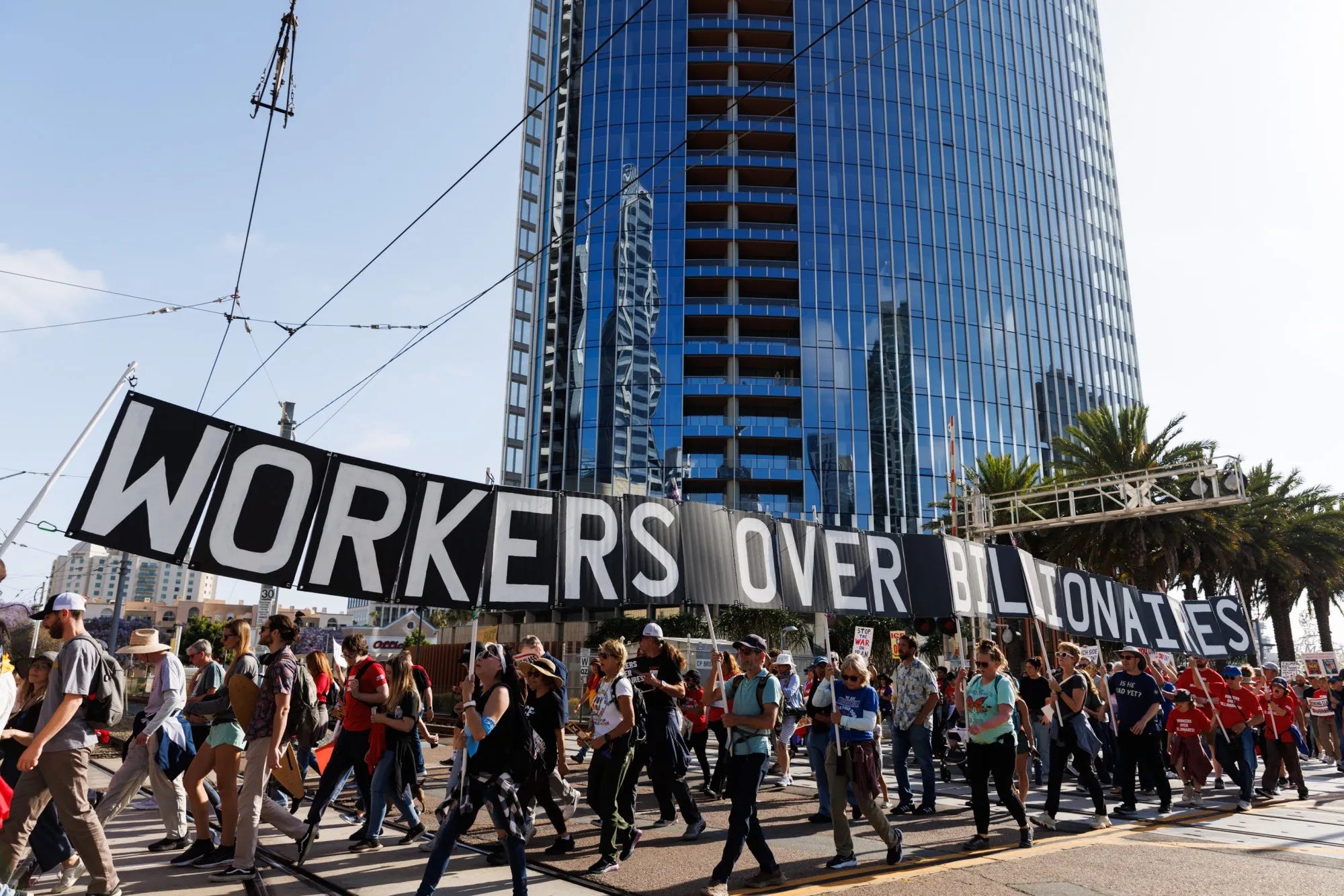
For most of the last century, the main way workers claimed their share was the union: working people standing together, in numbers large enough to sit across the table and bargain for a fair slice of the pie they baked. At the peak, about one in three workers had that kind of backing, and it lifted pay even for people who never joined, because no employer wanted to lose good workers to the union shop down the road that paid union wages and benefits. The union is the machinery of shared growth. Not investor, owner, or executive feelings of charity and gratitude. Leverage. [bls.gov/news.release/union2.nr0.htm]
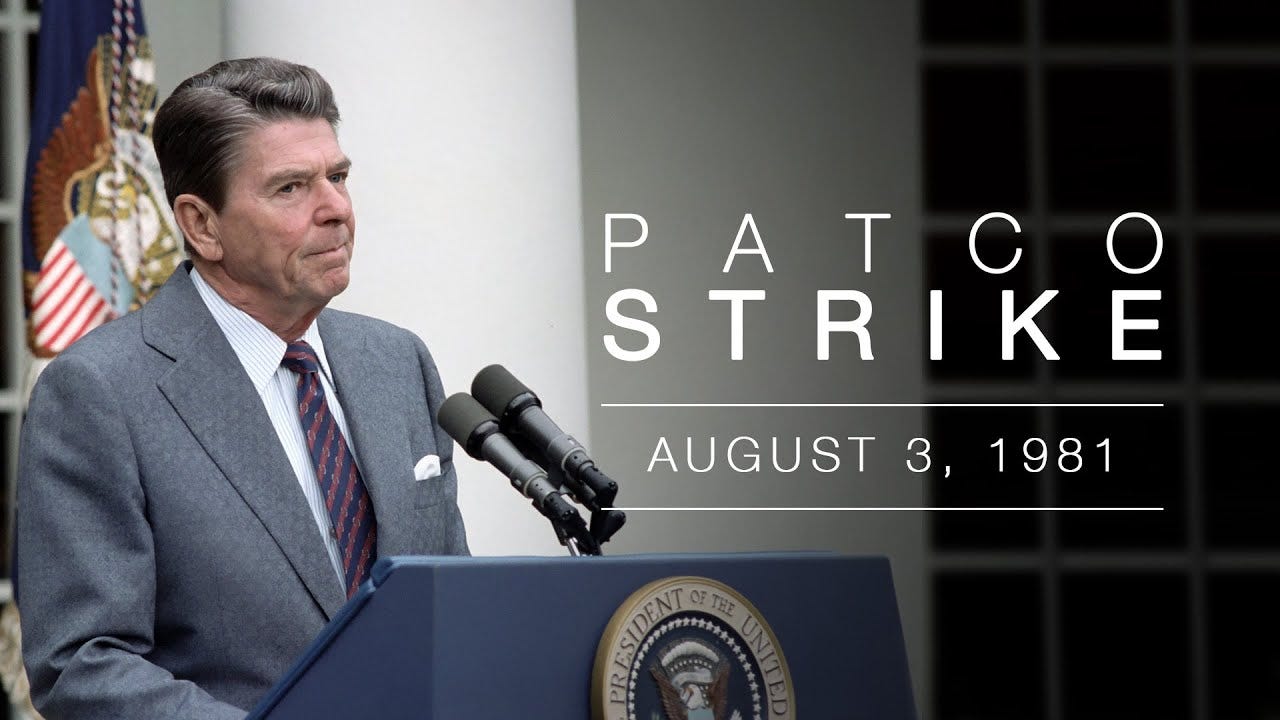
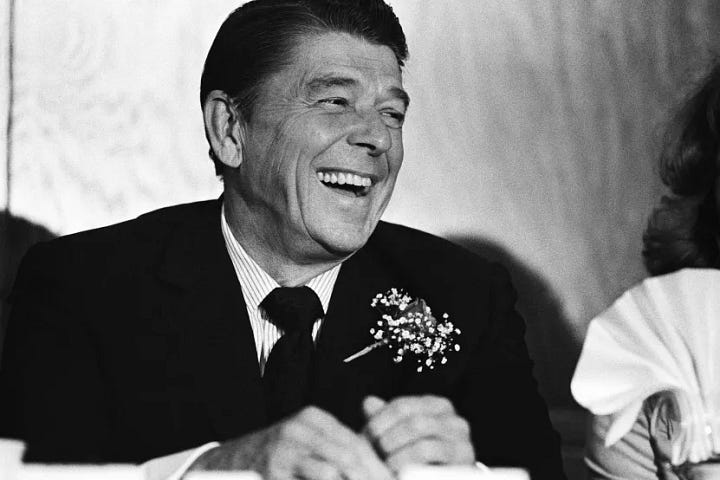
Then it was taken apart, on purpose. In 1981, President Reagan fired more than ten thousand striking air traffic controllers in a single day, and the signal to every employer in the country was heard clearly: breaking the union was now allowed, even rewarded. Over the next forty years union power was stripped away, plant by plant and law by law, until barely one in ten workers had it. And as the combined voice of working people was silenced, the correlation between a growing pie and a growing paycheck was severed. The pie kept growing. Worker wages flattened. That is not a coincidence. It is one of the clearest causes of the concentration of wealth that followed.
The tax code changed too. Tax code policy that once asked more from those who had the most was eroded, a little at a time. Money made from owning things, stocks and property, got taxed far less than money made from working a job. Tax loopholes piled up, the kind that let a billionaire write off a private jet while you cannot write off your drive to work. None of this was accidental.
It was sold as “trickle-down” economics, the promise that if the people at the top kept a bigger share of the pie, they would use it to innovate, build new companies, even whole new industries, and the rest of us would benefit. On rare occasion, that has happened. I’ve written before about the Two Steves, Wozniak and Jobs. But as a rule, the promise was never kept. Wealth concentrated at the top. The trickle never came. Forty years of evidence is in, and it is still being sold, because it still works for the people selling it and the outsized political spending that pays for it.





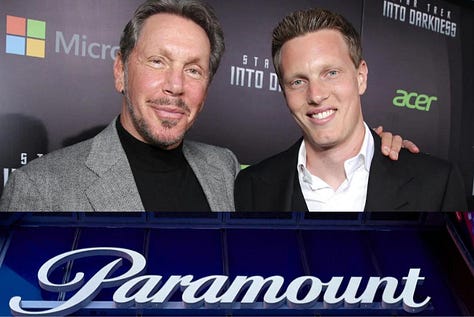
What actually happened is simpler. The wealth concentrated and remained at the top. It went into summer homes and winter homes, yachts and private islands, media networks and offshore accounts. And it went into politics, enough of it to bend the rules in its own favor, fund the campaigns, and shape who sits on the courts. The names at the narrow top of the pyramid, Musk, Bezos, Ellison, Mellon, Adelson, and Thiel are not really the point. They are the proof. Political spending by the wealthy has changed the rules, so that a handful of people can now gather more of the pie than tens of millions of families combined.
Second, the bills. Costs that used to be carried collectively, by the company, by the government, by all of us together as taxpayers, were quietly moved onto your kitchen table.
Health insurance used to be an important part of the compensation and benefits package you earned from an employer. Now you pay more of the premium, your co-pays are higher, and the deductible is often so high that it can feel like having no insurance at all until something goes catastrophically wrong. Even then, medical debt is the most common debt in collections, and it pushes families who did everything right toward financial ruin.
Higher education used to be something a summer job could nearly cover, back when states believed that a well-educated workforce was how they would compete for good jobs. That belief faded, and more and more of the cost of a degree shifted onto students and their families. Before Reagan, student debt was a footnote. Today it is $1.7 trillion, carried by more than 40 million people, and for many young Americans it is the first thing adult life hands them. A generation that starts adult life owing tens of thousands of dollars or more has that much less for housing, a car, or starting a family, which quietly drags on the whole economy. Higher education should open a door, not lock one. It should never be a lifelong debt sentence.
Owning a home used to be the thing steady work could afford. Then large investors and private equity concerns started buying houses and apartments by the thousands, as something to squeeze for profit instead of a place for families to live. Demand climbed, supply tightened, and the rent or the mortgage swallowed whatever was left of your slice.
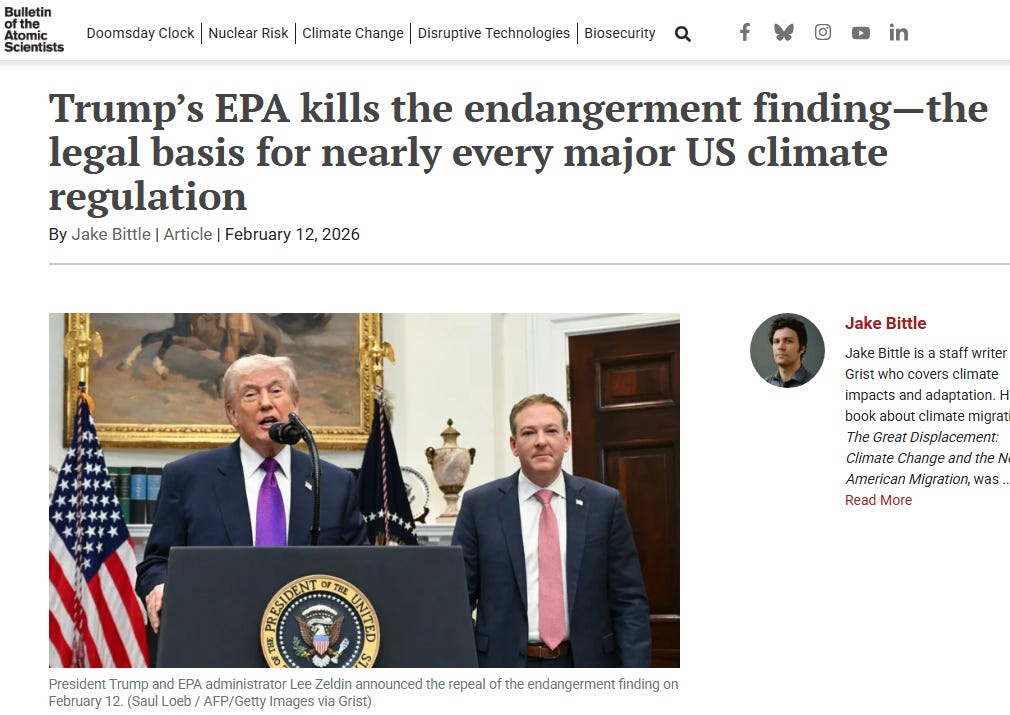
Even the air we breathe and the water we drink are in-play. As environmental protections are rolled back by Lee Zeldin and a captured EPA, the cost of the polluted air, land, and water does not vanish. The costs shift onto the families who live closest to the refinery, the industrial plant, the data center. Places like Richmond, California, in the shadow of a Chevron refinery, or Boxtown in Memphis, Tennessee, where Elon Musk’s xAI installed a bank of methane gas turbines in a historically Black neighborhood already carrying more than its share of pollution. The people nearby breathe what those operations release and live with the health risks that follow, while executives and investors collect the bonuses and dividends, freed from the regulations, cleanup costs, and enforcement actions that would otherwise reduce their profits.
[https://www.csb.gov/assets/1/20/chevron_final_investigation_report_2015-01-28.pdf]
[https://www.selc.org/news/xai-built-an-illegal-power-plant-to-power-its-data-center/]
Added up: you're getting less of the growth and more of the costs. Your slice gets squeezed from both ends at once, leaving little but crumbs.

While the pie was being quietly carved up and we were left with crumbs, we were handed someone to blame. It is the immigrants and refugees. It is people of color. It is crime in the cities. People who love differently. People who believe differently. People demanding equality. We were intentionally misdirected and misled so that we would not turn to face those who are actually holding the pie-carving knife.

But think it through. The family that crossed a border to pick vegetables did not lower the capital gains tax rate. They did not create tax avoidance loopholes so people like Elon Musk, Jeff Bezos, or Donald Trump pay a fraction of the tax percentage expected of hourly workers. Your neighbor two doors down did not raise your healthcare deductible while doubling your premium payment. The young person you are told to fear downtown did not eliminate your employer-funded pension plan. We did not do this to each other. We were just intentionally kept misdirected and uninformed, fighting over crumbs, while most of the pie was parked offshore or launched into orbit.
Now the good news, and it is real.
Economic fairness or the extreme concentration of wealth is a choice. A tax rate is a choice. A tax loophole is a choice. High-quality affordable healthcare for all is a choice. The answer is to elect people who will actually represent us. Elected officials who will honor their Oath of Office. They will honor the past sacrifices that have been made. They will understand the paycheck to paycheck struggle of the average family that has been worsening for nearly a half-century and will make sweeping changes in tax and economic policy to benefit all people, not just the wealthy few.
The choice is fairly simple. We can either continue to support and elect officials who keep cutting taxes for billionaires, in a year that just minted the world's first trillionaire, while buying into the promise that a rising tide lifts all boats. Or we can send people to Washington, D.C. who understand that we are all drowning in the rising tide of hoarded wealth.
The pie is still enormous. And the government we elect is responsible for how the pie is served. For nearly 50 years the pie has been stolen from us.

What belongs to us, to our families, our children, our grandchildren, is still ours to take back. We were taught to fight each other for the crumbs. We take it all back the day we stop, and start fighting for each other instead.
If you find this article of value, please do share with friends, associates, & others who have an interest in the content.
Please note that my articles and subscriptions are not paywalled. This stems from a guiding principle -that any meaningful democracy requires an informed, educated, and engaged society. It is also to honor the life of Aaron Swartz.
Aaron held firmly to the belief that research and knowledge intended for the betterment of humanity should be freely shared.
If the problem is extraction, then the response must be construction.
I am building Civic Works and its core platform, civ.works, as a direct alternative to the systems that have captured our data, our attention, and our civic life. This is a 501(c)(3) effort to create infrastructure that serves the public, not exploits it.
The goal is simple and necessary. A subscriber-supported, ad-free civic network where people can access trusted information, engage constructively, and take meaningful action without being tracked, manipulated, or sold.
No ads. No data harvesting. No hidden incentives.
Just people, information, and the tools to participate in a functioning democracy.
This kind of infrastructure will not be built by the same forces that benefit from the current system. It has to be built by us.
That is why we are asking for direct public support.
If this work resonates with you, I am asking you to make a simple commitment. Visit the pledge page and commit to supporting civ.works at launch. A small monthly contribution, combined across thousands of people, creates the independence required to build this platform without compromise.
https://civ.works/pledge/pledge.html
This is not just about funding a project. It is about proving that a different model is possible. One where civic infrastructure is accountable to the people who use it, not the interests that seek to exploit it.
If you believe the current system is failing, this is one way to begin rebuilding it.
And if you cannot contribute financially, sharing this effort with others is just as important.
The system we have was built deliberately.
What comes next can be built the same way.
Aside from writing, mentoring others, and projects related to democracy, economics, and social innovation, I’m dedicated to Civic Works, a 501c3 non-profit organization building and managing technology that blends social networking and civic engagement. Our core effort is around civ.works. When complete, it will be a subscriber-supported, ad-free social network that does not betray subscriber trust by selling or sharing data with marketers or sinister political operatives.
I’m incredibly grateful for all who contribute to the civ.works effort through our secure payment processor, Stripe, and all who help us gain visibility by sharing the project with journalists and others to move the effort forward.
Special appreciation for all who continue to recommend my rants and musings, restack articles that are found to be worthy, and share with friends and family. And the following are some special recommendations for stacks I value -
Liz Oyer, Former DOJ Pardon Attorney
Comments
Nothing yet. Say the first thing.
Sign in to join the conversation.