
The following essay is part of a triptych of texts originally commissioned for ‘Fashion Time’, a book edited by Marlie Mul. This was part of a wider a project initiated during her professorship on the Work.Master MFA programme at HEAD Genève between September 2021 and May 2022, developed in conversation with a cohort of fine art students. ‘Fashion Time’ asked what it means to make fashion today, understood not only as spectacle, but as material practice and cultural force.
After funding for the book was pulled last minute, these texts were left adrift – until now. Together, they reflect on fashion’s entanglements with art, labour, authorship and power, and we’re very happy to be able to give them a home. See the first entry, written by Alberta Romano, here.
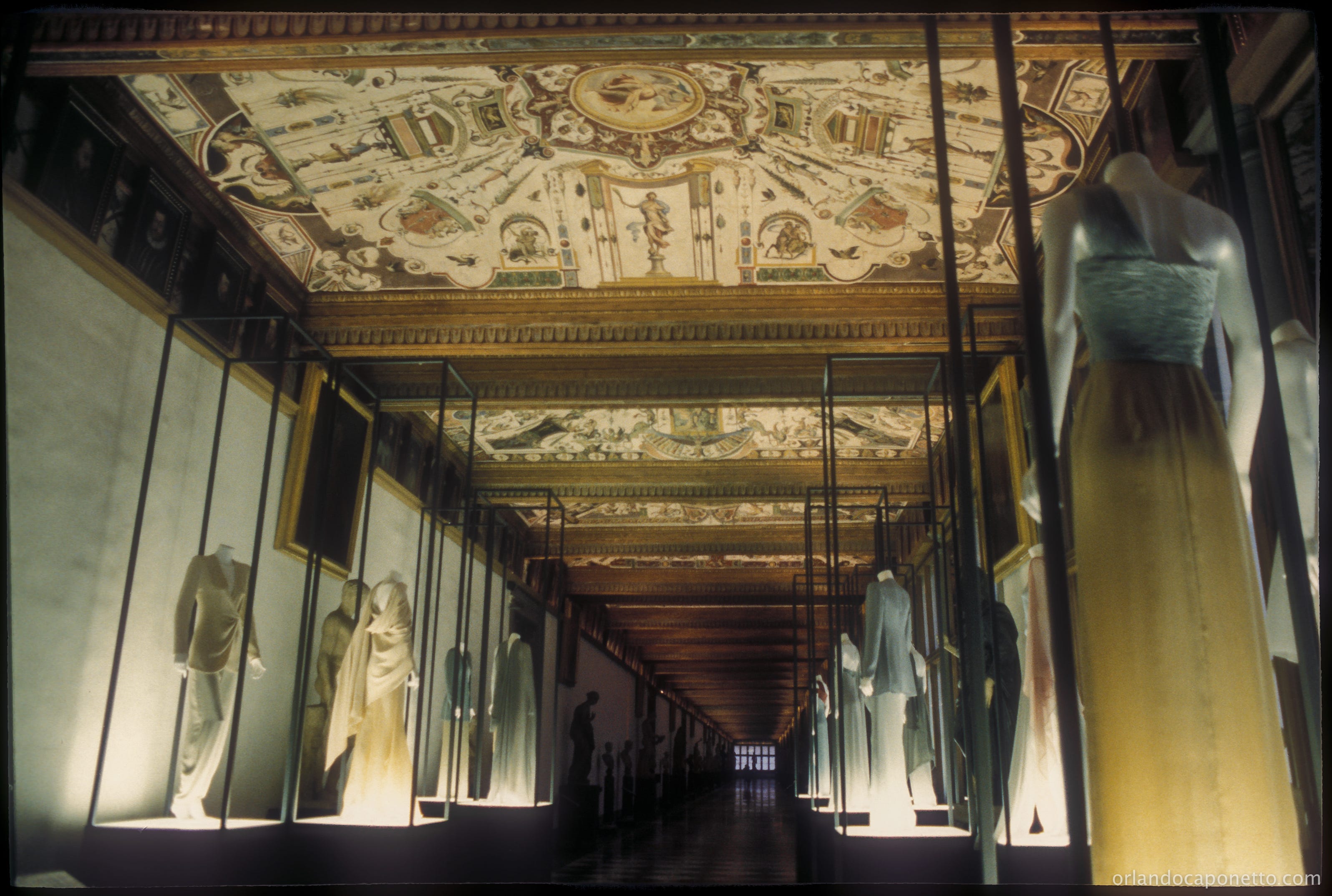
Words: Aude Fellay
The relationship between art and fashion is as old as the fashion industry itself. Early twentieth century couturiers such as Paul Poiret were notorious art aficionados. Over the past decade, this relationship has arguably evolved to become tighter, if more fraught. For art critic Benjamin Buchloh, reviewing its highest-profile iteration in the work of Anne Imhof (famously, a good friend of Demna during his time at Kering-owned Balenciaga), the relationship is symptomatic both of the “fashion industry’s ever more voracious and desperate forms of compulsive self-affirmation” and of “the increasing despair of current artistic production.”1
In the case of Balenciaga and Imhof, art and fashion come together in their ability to capture and monetise cultural expressions: club culture, subcultures and class cultures are appropriated and stripped of life to reappear in a zombie-like form under brand names. This is arguably one of the points artists Hito Steyerl, Miloš Trakilović, and Giorgi Gago Gagoshidze strove to make in their performance and installation piece MISSION ACCOMPLISHED: BELANCIEGE. Fashion eats up whatever it can get its hands on. But arguably, so does art.
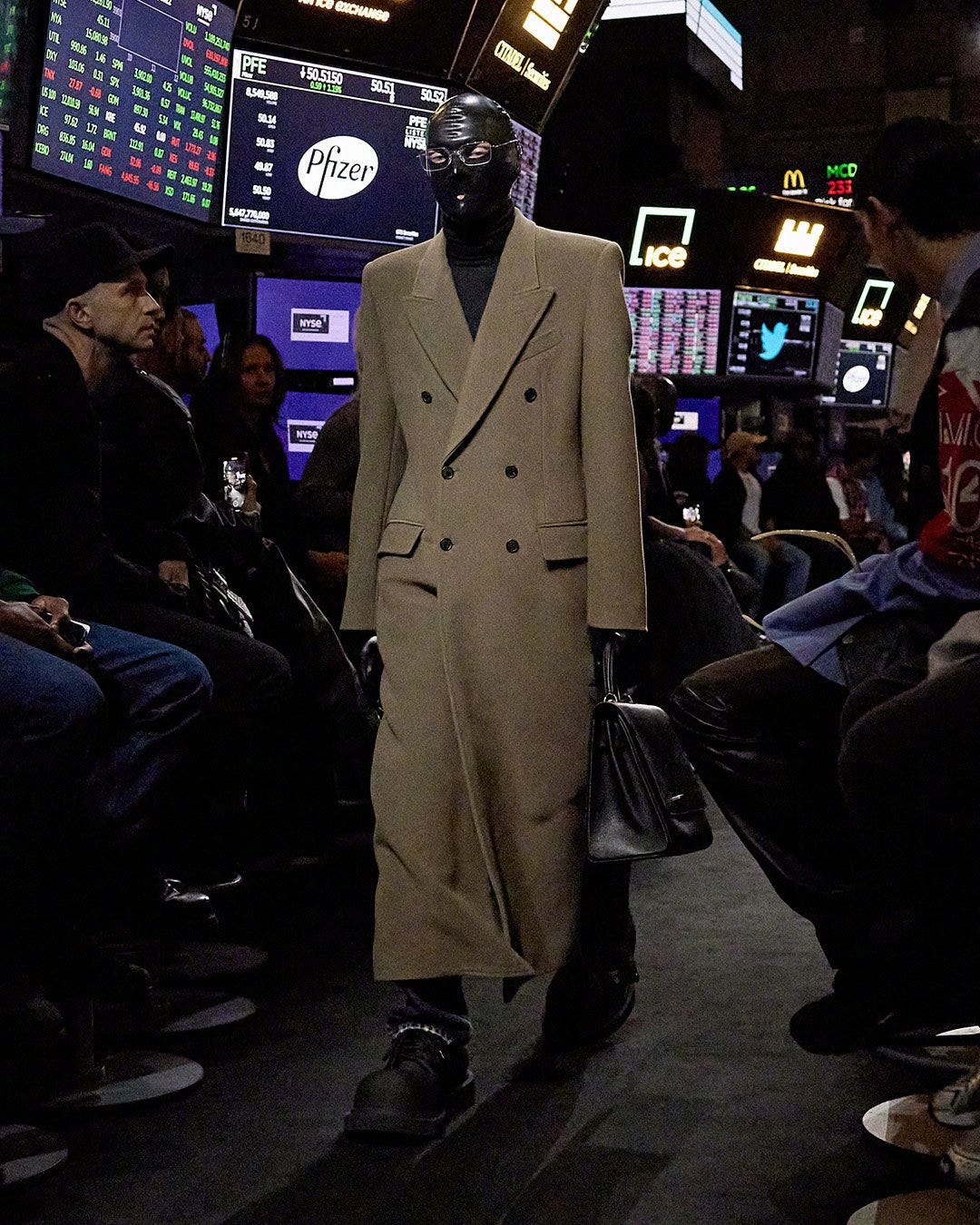
What these artists’ interest in fashion reveals is that fashion, spurred by its nonstop mediatisation, has become a full-blown pop cultural phenomenon.2 Its inclination toward the spectacle naturally befits the current media environment, and the selfie (today’s all-pervasive media form) has made clothing a central aspect of culture at large. Art, then, looks to fashion seemingly for both cultural clout and as a lens into late capitalism. Fashion is both capitalism’s shiniest object and, in the case of Balenciaga, a commentary on global capital, which made the brand under Demna’s tutelage a focal point of artistic collaborations and critical scrutiny.
From an institutional perspective, this renewed interest in fashion comes as sweet revenge. Fashion studies and fashion design have struggled to establish their worth and disciplinary singularity within higher education.3 Legitimacy is less of an issue for the industry as a whole; the trillions of dollars it generates give fashion reason enough to exist. The billionaire owners of fashion conglomerates have sought, however, greater cultural significance through the more elite pursuit of art collecting and museum building. This is symptomatic of a key bind within the relationship: fashion remains a somewhat degraded cultural form yet an extremely profitable one, while art continues to signal a more virtuous conduit for fashion’s “dirty” money.4
Nancy J. Troy’s Couture Culture, A Study in Modern Art and Fashion (2003) is perhaps the first detailed study of art and fashion’s conceptual ties. By drawing parallels between the early logics of high fashion and debates in art at the time, Troy outlines the discursive role of fine art within haute couture’s economic model.5 By self-fashioning as artists, couturiers such as Poiret marketed their originality both to cultivate their aura among an art-savvy elite and to promote the mass production of their designs. Insisting on the “rarity of the producer (that is the rarity of the position he occupies in the field),” as Pierre Bourdieu and Yvette Desault put it in 1975, together with the relative abundance of the product, became fashion’s winning formula.6
“Fashion eats up whatever it can get its hands on. But arguably, so does art.”
From the outset, the fashion industry was indeed a “global export industry.” It relied on the symbiotic relationship between the “craft-based French fashion system and the mass production of the American garment industry”.7 Put differently, couturiers sold ideas, not merely dresses. Their value depended on both their perceived originality and the couturiers’ ability to claim property rights over them. Unsurprisingly then, over the course of the century Parisian couturiers, from Vionnet to Dior, went on to battle copyists by pushing for legal protections over their designs in order to “establish and sustain global hegemony over style.”8
The history of Western high fashion might be understood as one of enclosure – a fencing-off that runs parallel to its democratising thrust. Briefly put, this process involved a discursive component in the adoption of the figure of the artistic genius, a racial license to copy, and a related series of legal and economic tools that came to fruition in the postwar years.9 When the gates of high fashion were eventually ‘flung open’ to greet a mass audience, it was because the leveraging of brand names and design identities (or ‘house codes’) as intellectual property had made ‘democratisation’ a possible and profitable enterprise.
The figure of the designer-as-artist found its culmination in the star designers of the late 1990s and early 2000s, high fashion’s so-called golden age, which owes much to its pillaging of non-western cultures. Designs from the period by the likes of John Galliano are today carefully displayed by museums alongside panels about cultural appropriation. Minh-Ha T. Pham argues that “the informal allocation of the rights to copy and not be copied” underwrites the mining of a non-Western “commons” and its recasting as the “expressive work” and property of a Western author (or brand).10 In fact, the first couturiers displayed few qualms when it came to their own ‘copying’ – or, more accurately, acts of dispossession.11 Colonialism had enshrined this cultural mining as a right, or as Min-Ha T. Pham describes it, as “a property of whiteness.”
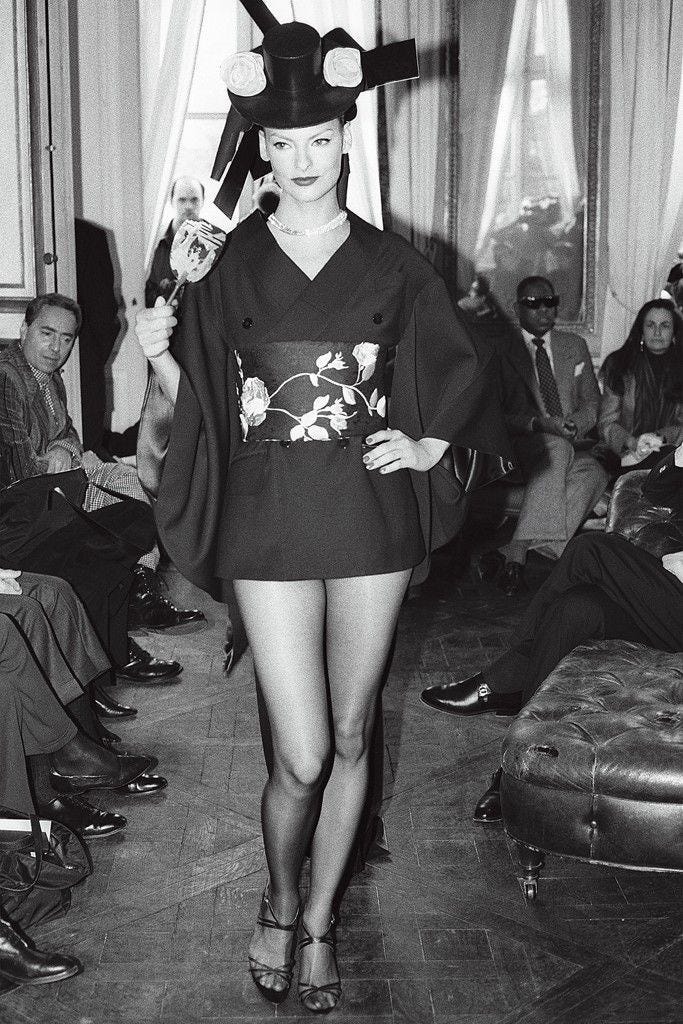
The late 1990s also marked a renewed proximity between art and fashion. In 1996, art curators Germano Celant, Luigi Settembrini, and Ingrid Sischy organised the first (and last) fashion biennale in Florence, which saw artists collaborate with fashion designers on small pavilions and installations. Damien Hirst was paired with Miuccia Prada, Comme des Garçons with Oliver Herring, and Helmut Lang with Jenny Holzer.12 In many ways, the star-studded cast epitomised the rise of a ‘creative class’, famously pitched as the saviour of post-industrial economies in the wake of globalisation’s disruptions.13
Looking at New Labour’s reign in the UK, Angela McRobbie has shown how creativity “c[a]me together as a form of governmentality,” depoliticising workers by promoting entrepreneurship over waged labour and expressive freedom over financial security, and thereby further eroding welfare rights and labour organising.14 Giulia Mensitieri’s 2018 investigation into the hidden abodes of high fashion’s dreamworlds, where forms of “self-exploitation” proliferate, brought renewed attention to the subject of labour.15 Similar debates on the “decommodification” of cultural work have taken place in the field of art: Leigh Claire La Berge’s 2019 Wages against Artwork: Decommodified Labor and The Claims of Socially Engaged Art is a notable example.16
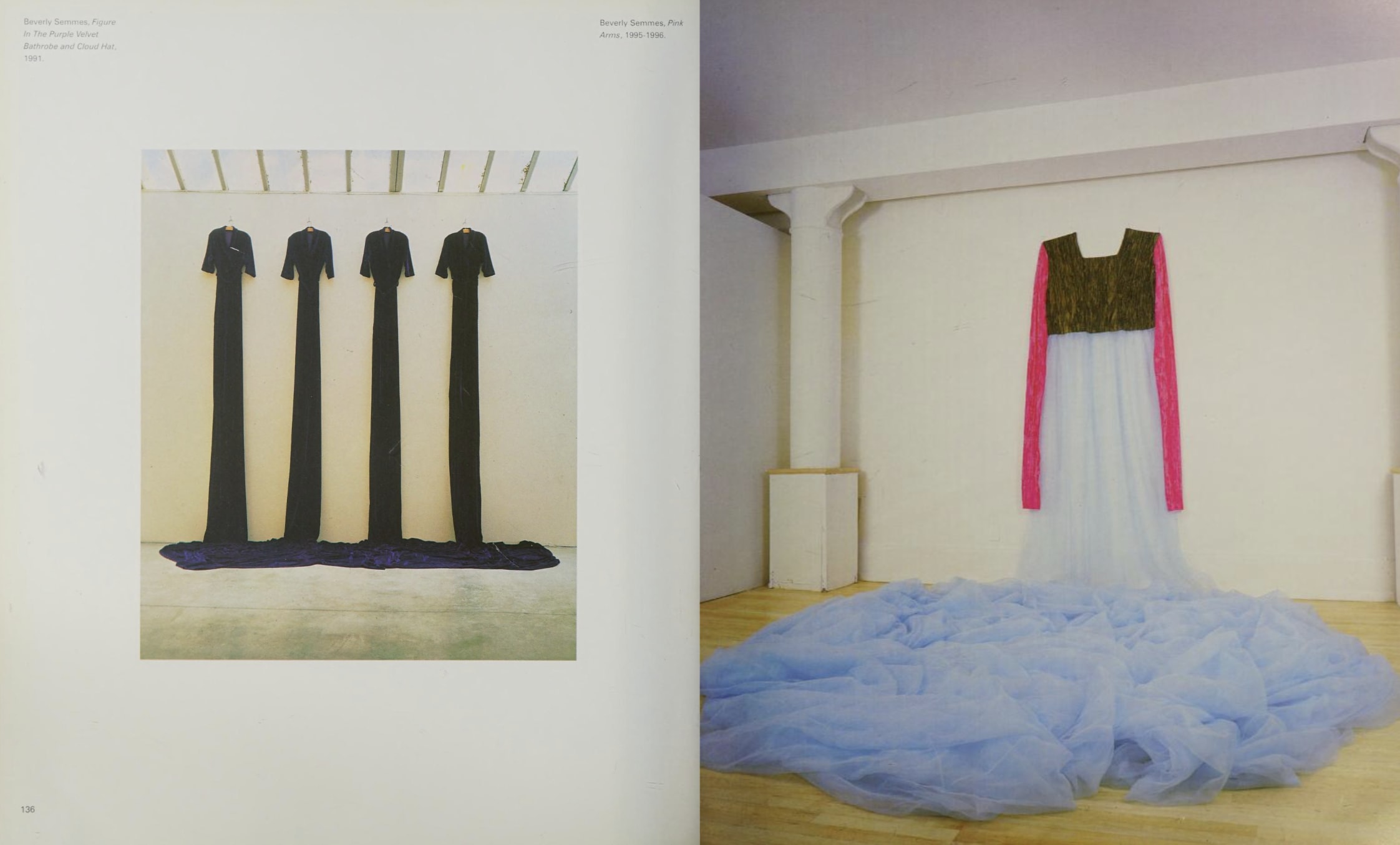
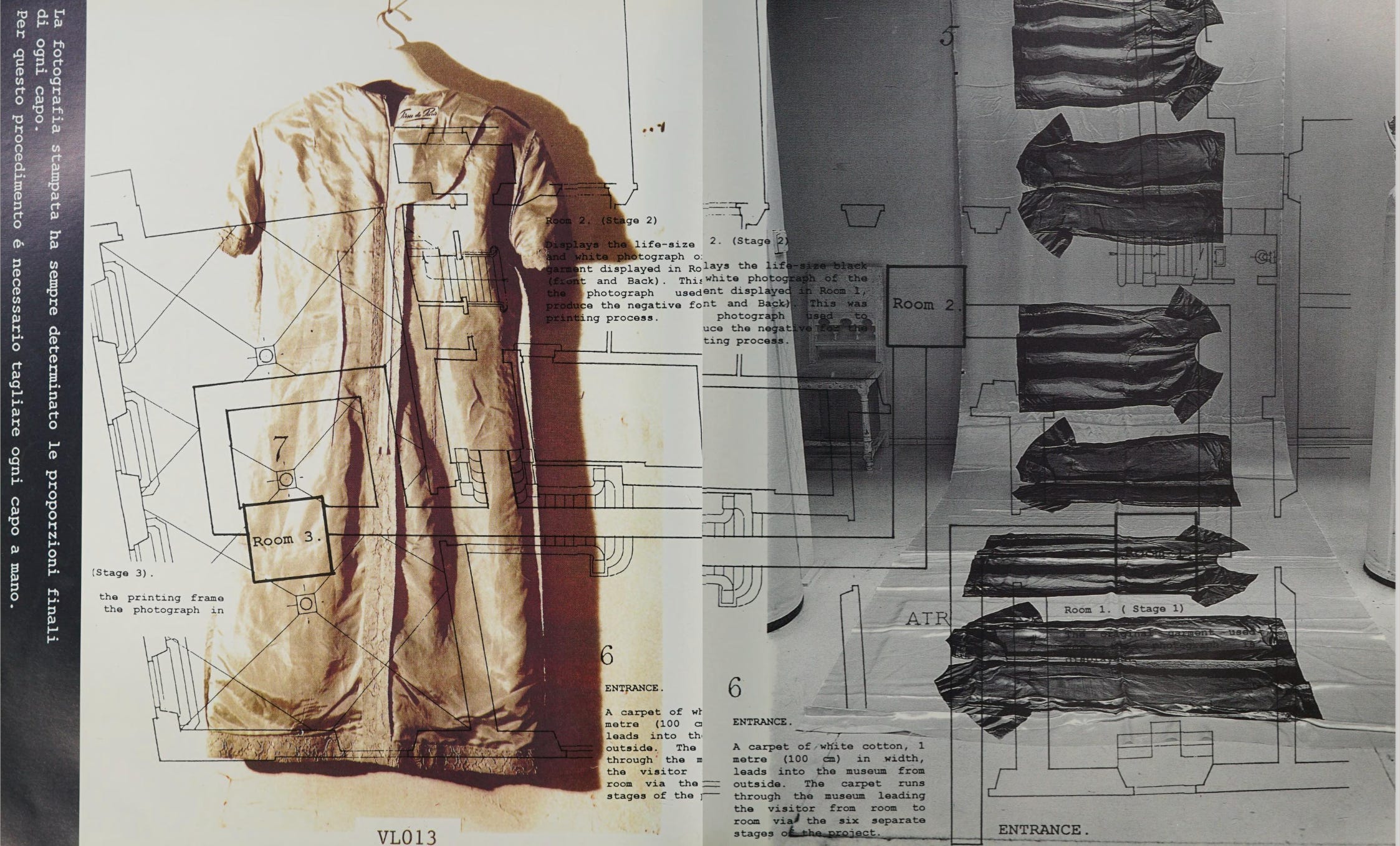
Despite converging struggles, the relationship between art and fashion has seemingly evolved into a more ambiguous one, as the various crises capitalism engenders have sharpened and concerns for the environment have grown. On the one hand, art is confirmed as the lesser evil, if not a redemptive choice in the face of fashion’s disastrous ecological impact. On the other hand, certain practitioners have adopted craft and DIY fashion methods to both scrape together a living and mount a critique of capitalism. In fact, some corporate art galleries have been quick to capitalise on this trend by setting up online platforms to sell “artist-designed” products, riding on fashion’s bad reputation while borrowing from its book – and hijacking the modest commercial models’ artists have drawn up to make ends meet.
This renewed and broad interest in craft has also benefited established high fashion houses, which are all too eager to showcase their unique set of craft skills, as well as the designers who astutely play up – or rather, embody17 – the value of craftsmanship and design knowledge. Fashion scholars have questioned the politics of ethical fashion discourses, including the revival of craft. Christina H. Moon notes that “the fetishisation of making” tends to pit the “moral” making of objects in the West against their “immoral” mass production abroad in racially coded terms.18 Craft, narrowed down to its moral heft, is seemingly an insufficient strategy on which to hinge the future of art and fashion.
Of course, as a feminised field of cultural production, fashion has always been readily demonised. The practice itself registers as the problem, and its popularity is explained away as a matter of false consciousness. This has arguably forestalled solidarities, discredited its voice and obscured its lessons. For one thing, what is quite evident from the many documentaries about the making of high fashion such as Loïc Prigent’s Marc Jacobs & Louis Vuitton (2007) or the 2017 documentary about the early Margiela studio We Margiela, is that fashion enlists a distinct form of creativity, one that is more overtly collaborative – and desirable on those grounds.
“Fashion remains a somewhat degraded cultural form yet an extremely profitable one, while art continues to signal a more virtuous conduit for fashion’s ‘dirty’ money.”
In the context of the fashion industry, that fact must be carefully managed; it is fitted into a hierarchical structure which seeks, at every turn, to foster competition and enhance exploitability. As a marketing strategy, the mediatisation of fashion’s workers, and in particular its craftspeople, functions as an ‘ethical’ justification for the prices luxury items command, and for the industry more broadly, as it draws both on the moral value of skilled work and the collaborative aura of fashion’s creativity. The art world, for its part, seems less eager to have its anonymous workers be seen.
In her introduction to Be Creative, Angela McRobbie asks how we might “resist this imperative to become creative” in the face of creativity’s entanglement with capitalism’s neoliberal turn.19 Put differently, how does one betray “the creative classes”? Perhaps by joining forces as workers against those who profit from and curtail creativity, confining it to the ‘productive’ spheres of art and fashion, and by paying attention to the ways in which both overflow the dams and pipes laid out to capture them.
Credits
Series editor: Marlie Mul
Editor: Perri McKenzie
Ciao for now!
Valerie Steele famously unpacked academia’s dismissal of fashion in her 1991 essay ‘The F*word’. While the situation has improved since then, fashion continues to raise eyebrows in some academic and cultural circles.
Both of the two major fashion conglomerates, LVMH and Kering, have invested heavily into art. Most visibly, by building or opening museums to house their collections: the Fondation Louis Vuitton (Arnault), the Bourse de Commerce (Pinault) and the Palazzo Grassi (Pinault).
Nancy Troy, Couture Culture: A Study in Modern Art and Fashion (Cambridge, Mass and London: MIT Press, 2003).
Pierre Bourdieu and Yvette Delsaut, ‘Le Couturier et sa griffe : contribution à une théorie de la magie’, Actes de la recherche en science sociales, no. I (1975) : 21, 23.
Caroline Evans, Mechanical Smile, Modernism and The First Fashion Shows in France and America, 1900-1923 (New Haven:Yale University Press, 2013).
In addition to selling their ideas, couturiers began selling their names through licensing agreements, for example.
Véronique Pouillard, Paris to New York, The Transatlantic Fashion Industry in the Twentieth-Century (Cambridge, Ma and London: Harvard University Press, 2021), p.2.
Minh-Ha T. Pham, Why We Can’t Have Nice Things (Durham and London: Duke University Press, 2022), p.50. Drawing on the frameworks of Indigenous and critical race intellectual property (IP) scholars – and, notably, on Cheryl Harris’s formulation of whiteness as property – Pham, whose book focuses on fashion and IP regulation, highlights that the conceptual roots of IP rights lie in the Doctrine of Discovery, the “sixteenth-century European legal principle justifying Western imperialism,” and argues for an understanding of “intellectual property as a racial project.”
Khémaïs Ben Lakdar, reviewing the work of Paul Poiret among others, argues that cultural appropriation forms the very bedrock of an inherently colonial system of creation. Khémaïs Ben Lakhdar, L’Appropriation Culturelle, Histoire, domination et création : aux origines d’un pillage occidental (Paris: Stock, 2024).
Other exhibitions followed. In 1997, the Guggenheim staged an exhibition titled Art/Fashion, and a year later the Hayward Gallery presented a survey exploring the relationship between art and fashion throughout the twentieth century.
Richard Florida, The Rise of The Creative Class (New York: Basic Books, 2002).
Angela McRobbie, Be Creative, Making a Living in the New Culture Industries (Cambridge: Polity Press, 2016).
Giulia Mensitieri, ‘Le Plus Beau Métier du Monde’, Dans Les Coulisses de L’industrie de la Mode (Paris: La Découverte, 2018).
“Decommodified labor” describes a “slow diminishment of the wage alongside an increase in the demands of work.” La Berge, Wages Against Artwork, Decommodified Labor and The Claims of Socially Engaged Art (Durham and London: Duke University Press, 2019), p.ix.
Christina H. Moon, Labor and Creativity in New York’s Global Fashion Industry (New York: Routledge 2020), p.74.
McRobbie, Be Creative, p.13.
Comments
Nothing yet. Say the first thing.
Sign in to join the conversation.