
Is it just us or does it feel like everything is closing down? If not closing, enclosing. Becoming more private, more expensive, more out of reach. Which is very much the theme of today’s bogstack. In a kind of bittersweet way? Maybe not, we’ll let you decide.
For some context: we are writing this in the wake of two bouts of news that make us feel quite winded. Firstly, Glasgow’s arts institutions all seem to be on the precipice of total collapse. Trongate 103, home to Glasgow Print Studio, Transmission, and Project Ability, is very much under threat as Glasgow City Council has ended their tenancy and upped the rent fourfold. (There’s a protest against this rent hike today from 12-2 if you’re in town, and if you’re an artist you can help materially by signing up to be a member of Transmission for £20/year.)
This comes just months after the CCA (Centre of Contemporary Arts) went into liquidation in January, an awful depressing end to the amazing struggle by Art Workers for Palestine Scotland that resulted in the resignation of some evil slimy zio board members and directors. Then just this month Listen Gallery was evicted from its home, another victim of Glasgow’s rent increases (you can help them find a new space by donating here).
At the other end of the cultural spectrum, just a couple of days ago we found out that the last style + culture mag in London that we like is folding. They haven’t announced it yet, so we don’t want to steal their thunder, but just know it’s duhpressing news. It is perhaps an unhappy coincidence that the last magazine we bought was a copy of this soon-to-be-gone magazine from Brixton News, Pritesh Patel’s newsstand at Brixton station which he was forced to close after TfL tripled the rent. By the end of next month, both the magazine and the place where we got it will be gone.
But, really, is this a coincidence? Not really. All these closures feel like victims of the same forces of cultural enclosure within the UK today – the siloeing of certain cultural forms into profit-making enterprises (or their transformation into profit by way of extractivist rents).
Our current rumination is part-inspired by Aude Fellay’s essay we published last week, in which she argues the history of fashion (with a capital ‘F’) is a history of enclosure. Building upon Minh-Ha T. Pham’s framing of “intellectual property as a racial project,” she locates the enclosure of ideas and forms in fashion she places within colonialism-capitalism, which, like the many acts of enclosure (both legal and gestural) that have taken place throughout history, has framed ideas in fashion as ‘private property’, owned by ‘artistic geniuses’ and luxury conglomerates:
Cultural enclosure is not some new idea we’ve just come up with, but we find it’s often used and/or understood in the context of the privatisation of heritage (tourism, museums, et cetera). What we’re trying to get at is that there is a middling place that exists within our collective access to culture, be it through a publicly funded gallery, a magazine, or the very site where you access said printed matter. ‘Commons’ may be too strong a word for this space, but you get the gist. And that is currently being both closed and enclosed.
In other words, it feels like access to stuff is shrinking. Part of this is due to stuff is getting really expensive – this extends to our hobbies too. Like consuming old clothes. Mr. Vintage Fayre a couple of weeks ago was a complete cesspit of price-gouging fuckery, but more than that – it felt like one’s love of old stuff was becoming increasingly enclosed; privatised and gentrified for a tiny elite of marketing dads. This may sound facetious, and we don’t intened it to, but why the actual fuck would someone buy a pair of patched up trousers for £800.00? You are literally being scammed.
Not everything is so awful though, and there is still plenty happening that is not closed or enclosed. Such as the very affordable Brixton Community Cinema screening of Landlessness (2017-2022), The Black and the Green (1983) and The Ban (2025) – at a thriving community centre in Stockwell that happened on Monday night.
It is not particularly surprising to feel that all three have resonances that are deeply relevant today – particularly their touching upon the effect of the OG kind of enclosure that involved the stealing of common land and turning it into private property (of which there’s actually a really good two-part podcast on enclosure with legend historian Peter Linebaugh here and here) and the spreading of this out towards other territories in what we now describe as the colonial project.
As Emma Dabiri pointed out in the q&a after the screening on Monday, we’ve gotta talk more about enclosure guys!! Because all the stuff that’s being taken from us is by capital, not other people. Even the price-gouging fuckery at the menswear fair – can we really be angry at some dudes just cashing in on a trend? There is indeed a strongly-believed narrative that loss is caused by the Other (the migrant, or in our stupid analogy, the menswear seller), rather than our boss, our government, and the big spectral figure we call capital.
Perhaps somewhat appropriately, then, we have two things to share with you that feel like they’re pushing back against this kind of alienation, and supporting people pushing back on the various frontiers of neocolonial enclosure and deep, irreversible loss in Palestine and Lebanon. First, we’d like to share with you a fundraiser for mutual aid groups in both Lebanon and Palestine on Saturday 4th April some friends are co-organising at the Horse Hospital in London, with a roster of donations from many fantastic friends and family (including us fyi). There’s too many to list and we don’t want to start in case it looks like favouritism, but at the end of the newsletter you can hear about a few of the magic things they have (which will all be pay what you can on the day). We also spoke to them about the groups they are raising money for, the realities of the situation in Lebanon, and how you can do your own fundraising. Skip to the end for this. —>
& if you are not in London, but you are in Brussels, the 2DAY store will be on for 4 (!) days between the 9th and 12th of April at Place de la Justice, 27-28 feat. LOADS MORE fabulous people we love: Giovanna Flores, Kersti Jan Werdel, Christaseya, Kostas Murkudis, Series of Aesthetic Manufacturing, Atelier E.B……. the list goes on and on. A percentage of all sales will be split between Singa, a Brussels-based non-profit who create meeting places for the city’s residents and newcomers (asylum seekers, refugees, undocumented people, migrants); and UAWC, an org that works alongside Palestinian, Arab and other international organisations to support and protect the rights of Palestinian farmers.
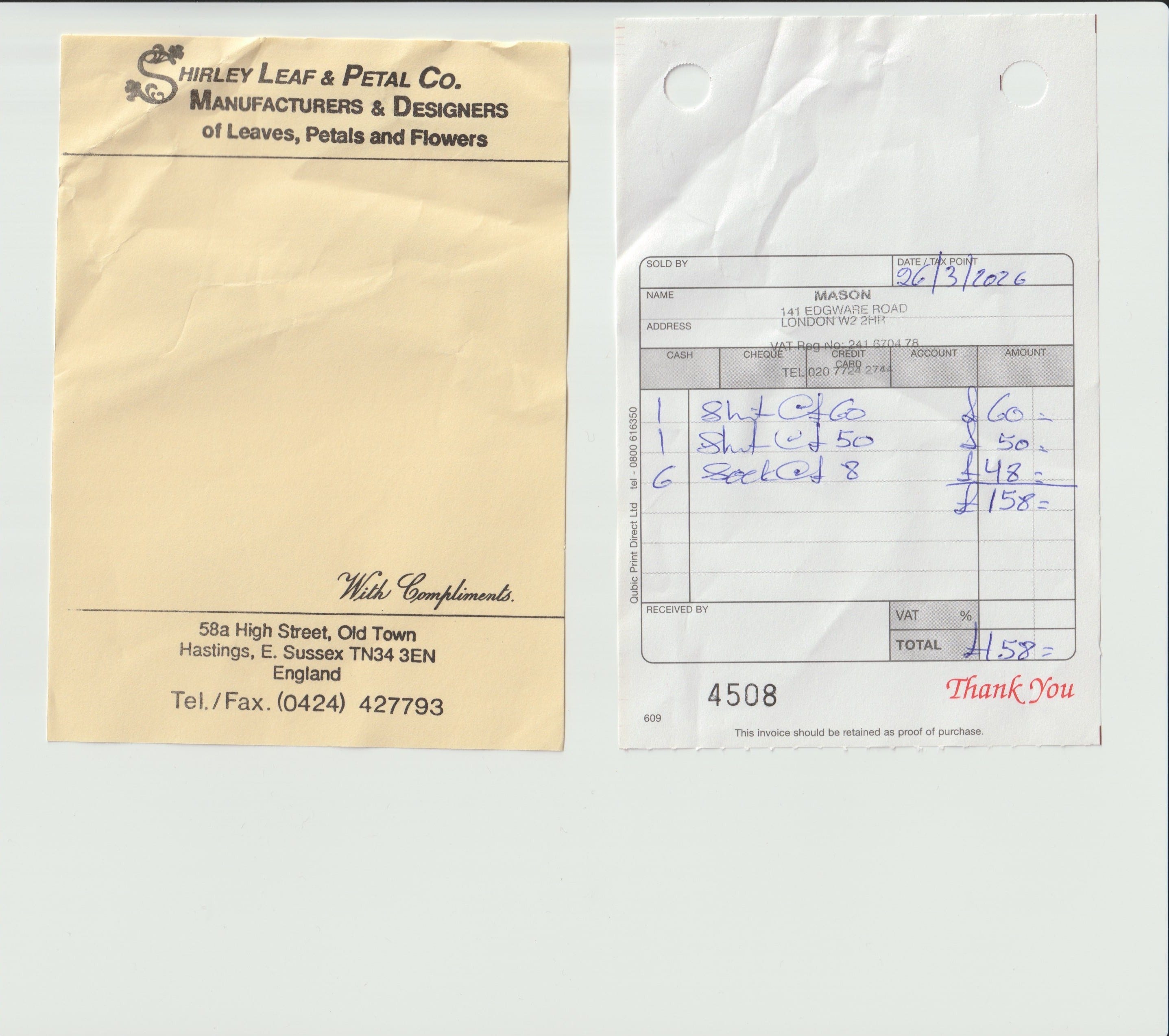
Clearly, this week we have been thinking a lot about what we are collectively losing. This also extends to the making of certain things too, and their first point of circulation: the shop. You know we love a shop here at bog, and we’ve just discovered two amazing ones which are unfortunately closing down. Both, however, are wrapping it all up due to old age rather than rent hikes, which is sort of bittersweet. In some way, these businesses are coming to the end of their natural lives, dealing in objects that don’t seem to have a wide-ranging customer base in the late 2020s. Sad, but inevitable when a place becomes a relic of a long-gone form of consumer culture.
Don’t get us wrong, we hate to see an old shop go, but perhaps it’s better to close something down that still has some spirit, than to let someone come across and hollow it out. 🥲
So, now as they enter their final months of operation, we wanted to give you all a chance to visit them before they’re gone:::::::::::
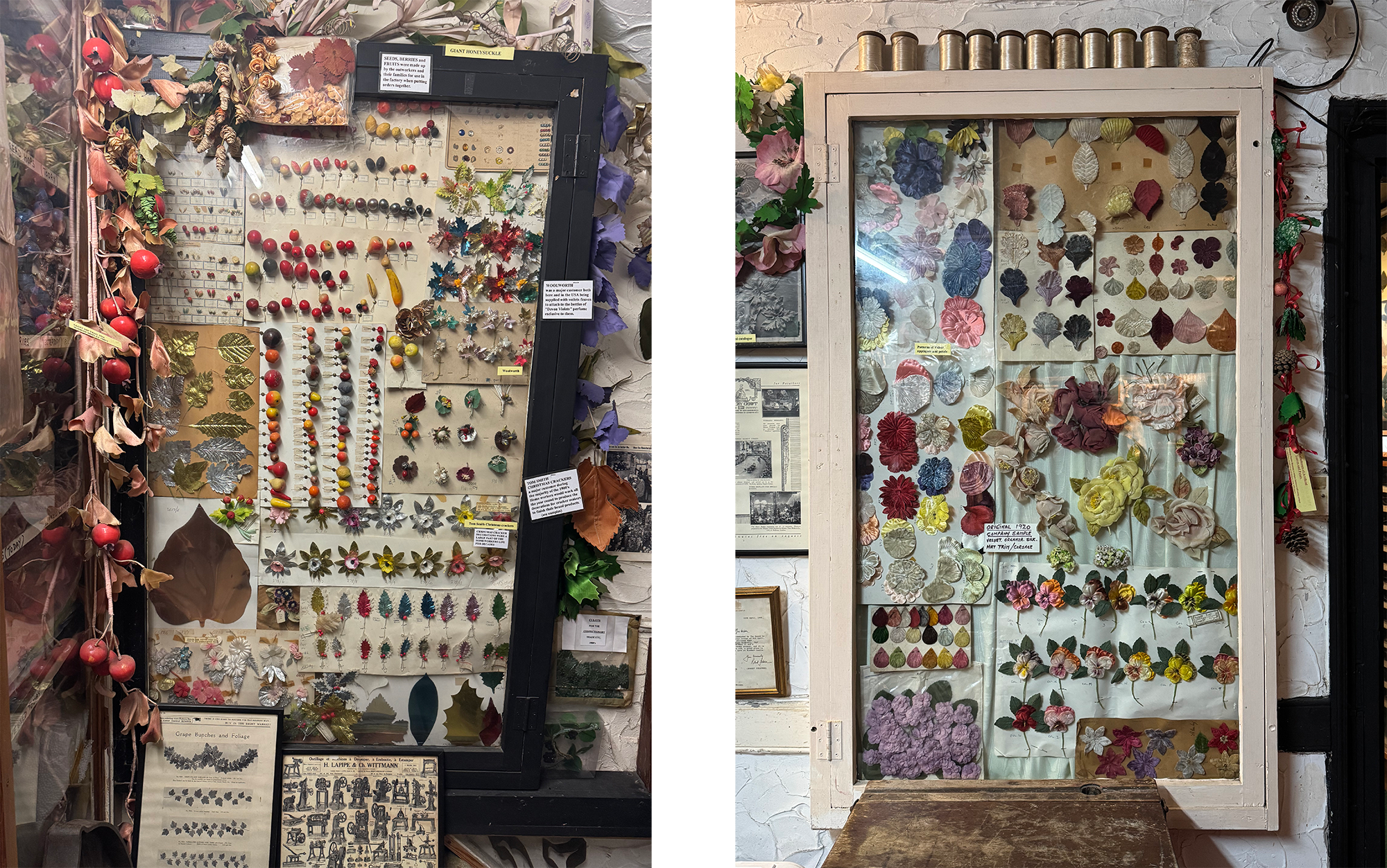
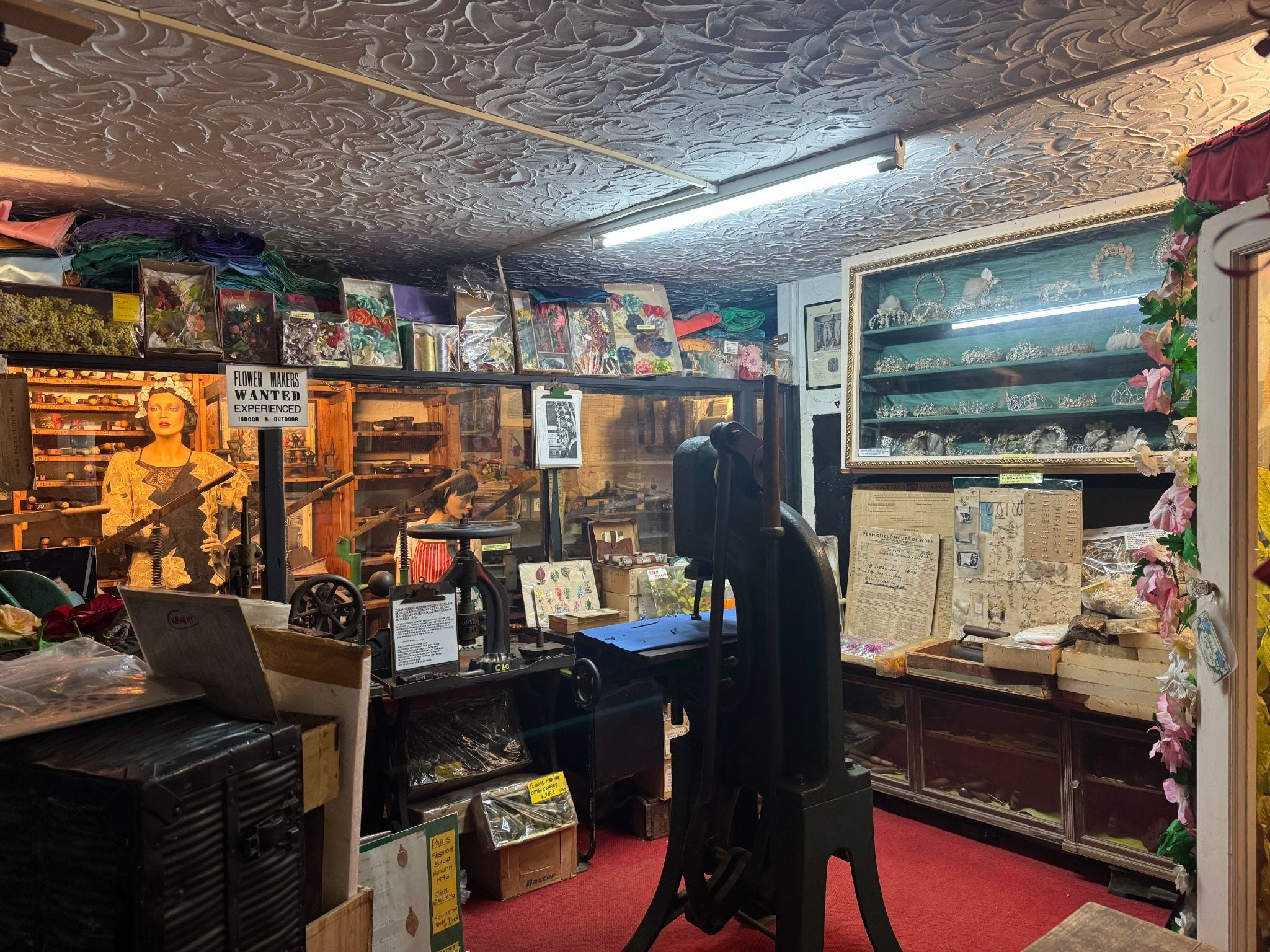
Within walking distance in Hastings, there is a shipwreck museum (ft. lots of cool objects dredged up from shipwrecks), a fishing museum (ft. a bit of a ship with excellently-dressed life-size wax figures of 1970s-era fishermen) and, as we very recently discovered, a fabric flower makers museum in the basement of a building whose foundations date back to the 14th century. Safe to say, Hastings is one of the best populated place for incredibly good heritage museums – which will sadly be depleting in number quite soon.
The building that the Hastings Flower Makers Museum occupies is being sold by the owner’s daughter, who lives quite far away. The woman who owns the building, Brenda Wilson, bought the whole place in 1981, including the Shirley Leaf and Petal Company that resides within it, from an elderly couple who were eager to retire. The ground floor has been kept as a working shop, selling fabric flowers and greenery for some very decent prices, as well as bolts of 1920s cotton velvet for £20/yard.
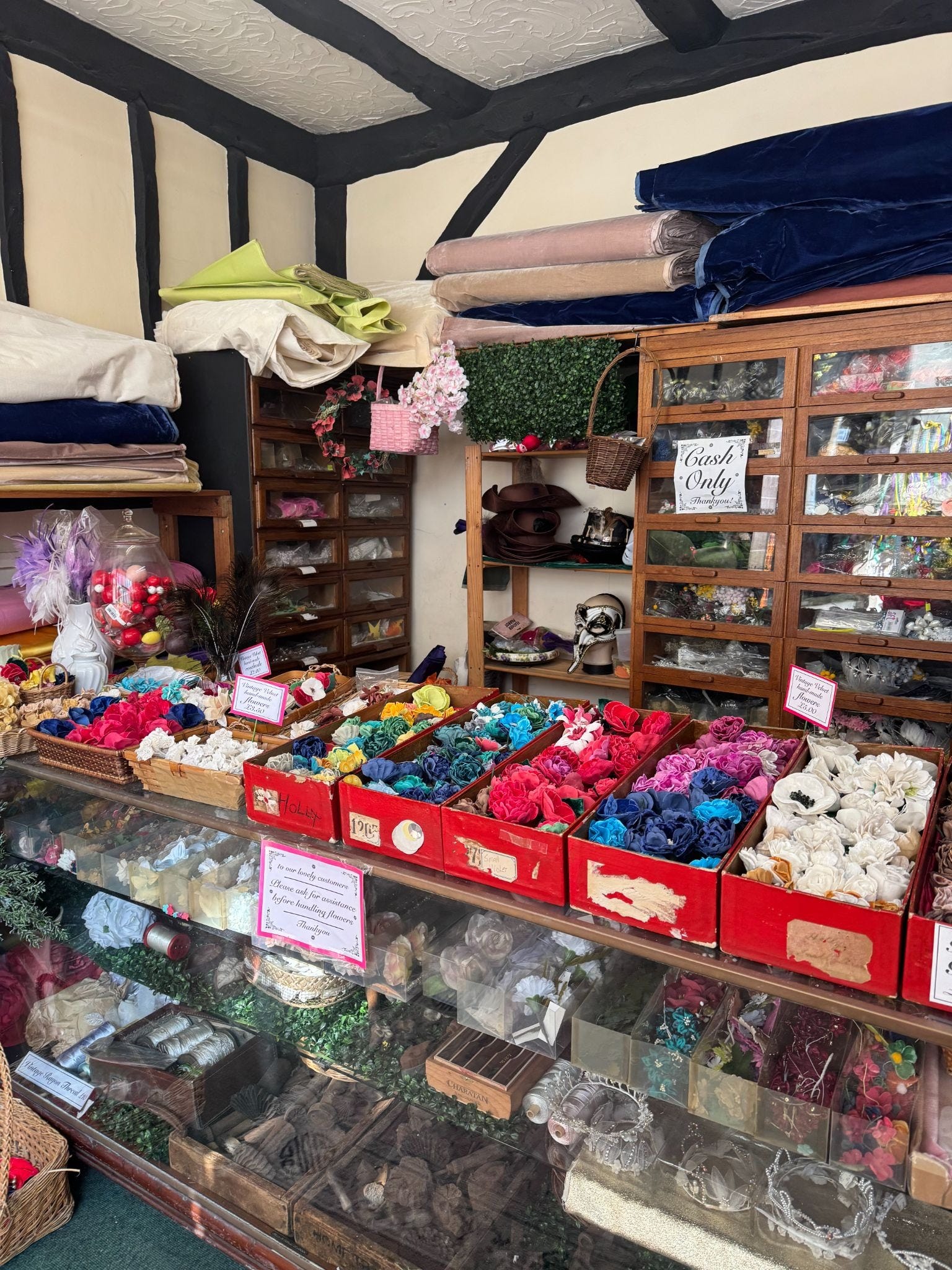
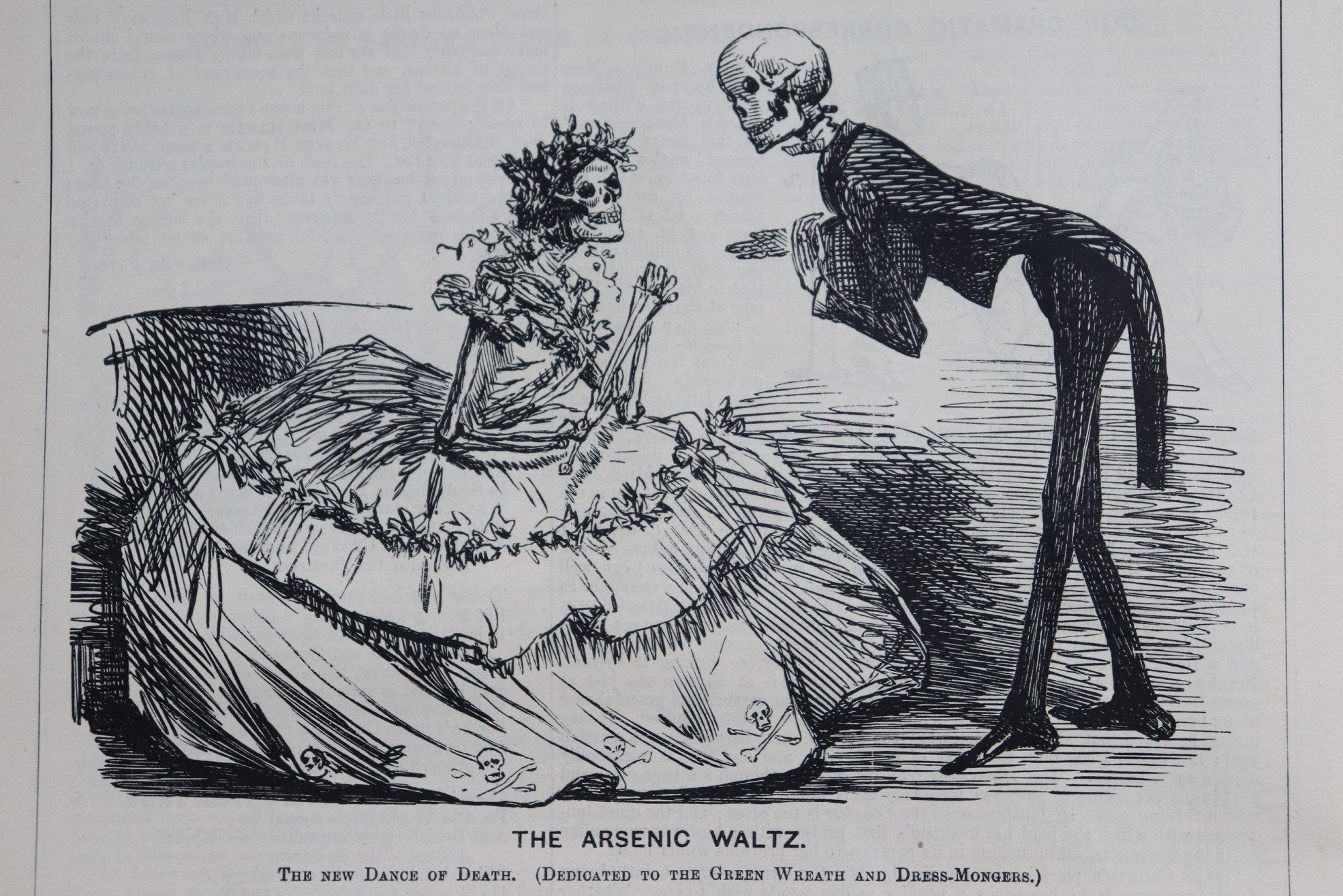
The museum has been operational since 1993, when Wilson decided to share the now-115-year history of the company that first opened its doors in Bow, East London. In particular, she felt inclined to document the history of homeworkers: women, children, and disabled people who were often employed to do this kind of fiddly work, many of them from home. It was often extremely toxic, too. “The children, their hair used to turn green with the lead that was in the products and they used to lose their hair at the front,” Wilson explains in an interview for the Museum Mapping project. Alison Matthews David, in her book Fashion Victims, describes the horrors many women in the industry faced due to their exposure to arsenic, and recounts the grisly story of Matilda Scheurer’s death, a 19-year-old flower maker who died of arsenic poisoning, whose skin and eyes were said to have turned bright green. These powders and dyes killed both the workers, and made the wearers violently ill.
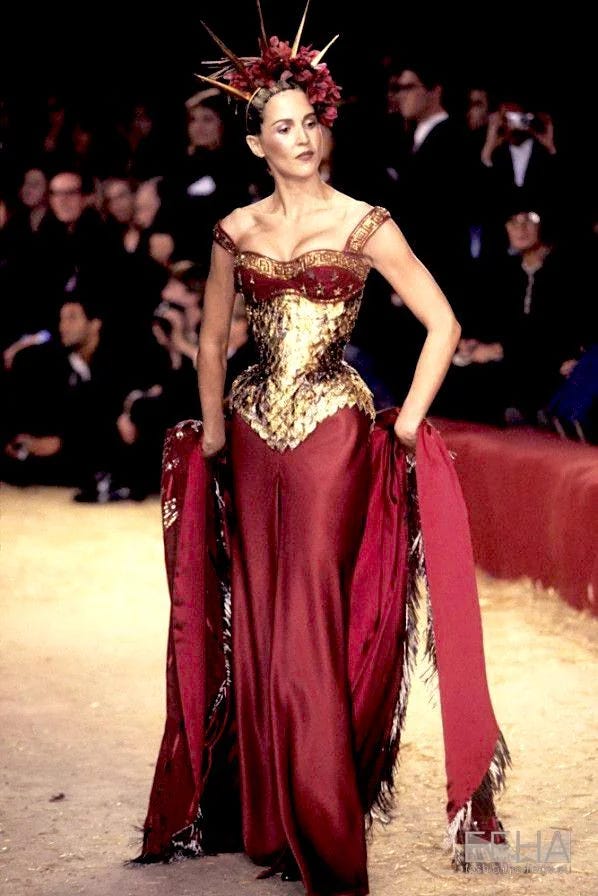
Having previously worked for the NEC (National Exhibition Centre) in Birmingham, Wilson was able to run the shop and museum supported by nice big contracts with theatre and TV clients such as the National Theatre and the Munich Opera. Before taking on the company, she’d helped the business score work with Selfridges and Harrods to produce Christmas decorations, and in the late 1990s, was tasked with making the fabric flowers for this John Galliano corset for his SS97 show:
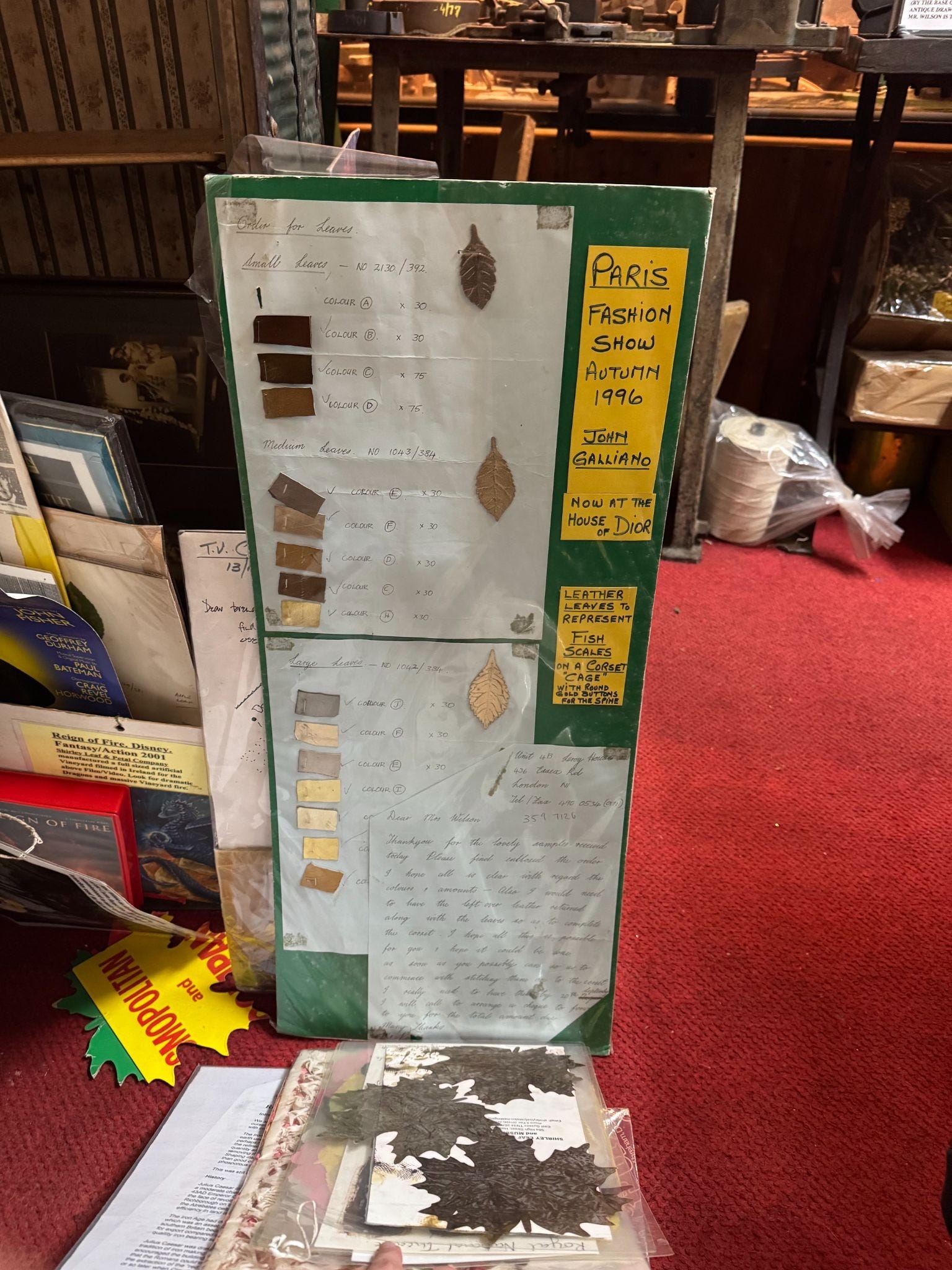
More recently, we were told, they’d sold a very large supply of velvet to the costume designers of Bridgerton.
The interview with Wilson is a very special read, and demonstrates how the shop sits within the community as a historical, social and cultural resource, not just as a shop. As recently as 2018, the company was still employing elderly homeworkers to produce fabric flowers, which, as Wilson explains, gave them something to get involved with. “They love earning a little bit of money because it’s something for them to do, to keep the hands supple,” she says in the q&a.
Flower-making has been a type of work available to women and disabled people since the 19th century, providing income for those who had little recourse to much else, and a way to avoid the evils of the poor house. Still, it seems to have always been paid terribly and was, as we already mentioned, potentially very dangerous. Thomas Holmes, the British philanthropist who set up the Home Workers Aid Commission in 1904, which provided this very precarious workforce with with annual holidays and recreational facilities, wrote of the trade: “Artificial Flower Making is one of the most interesting home industries. It is also one of the worst paid…This work makes a great strain on the wrist, the arm, and the chest.”
& on the process of making the flowers themselves:
The centre of the flower is first made; for upon this whole flower is built. In the creation of the centre the skill of the artist is apparent, for this gives the character of the flower…One by one sufficient petals are added, the calyx is slipped along the wire stem and glued into position…a few deft touches from clever fingers press the petals into the required position, the warm curling tongs are skilfully applied to the edges of the petals, and, hey presto! The flower is finished, and has become “a thing of beauty” if not “a joy for ever.”
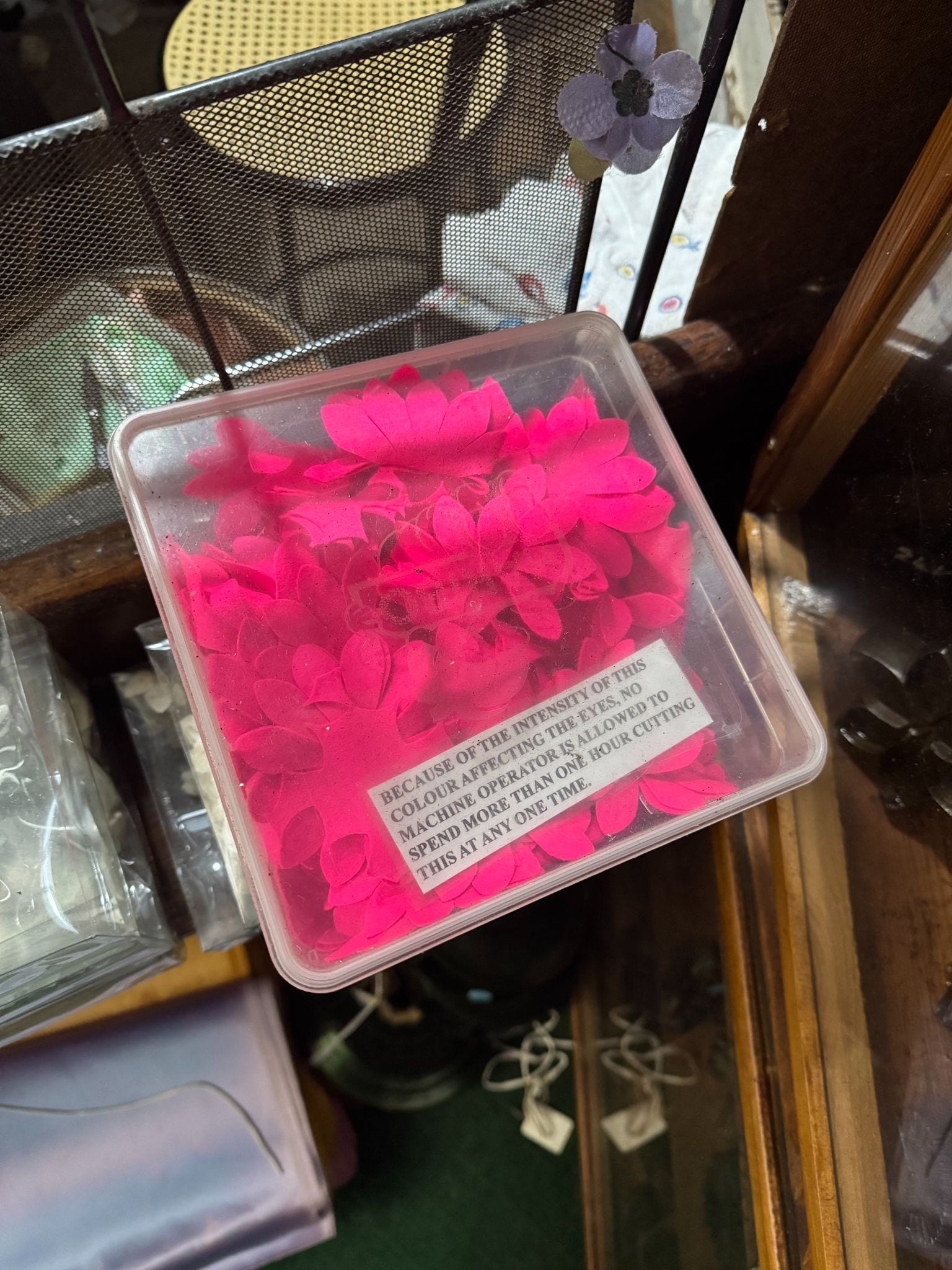
We feel a pang of great distress that this place will be gone before long, and considering that flower making is a critically endangered craft, it may be the last time we have access to such objects and their method of production outside the crystallised realm of the state-funded museum. That is, if the contents of the shop even make it to a museum… Which we suppose might not be guaranteed. All the more reason to go while it’s still there.
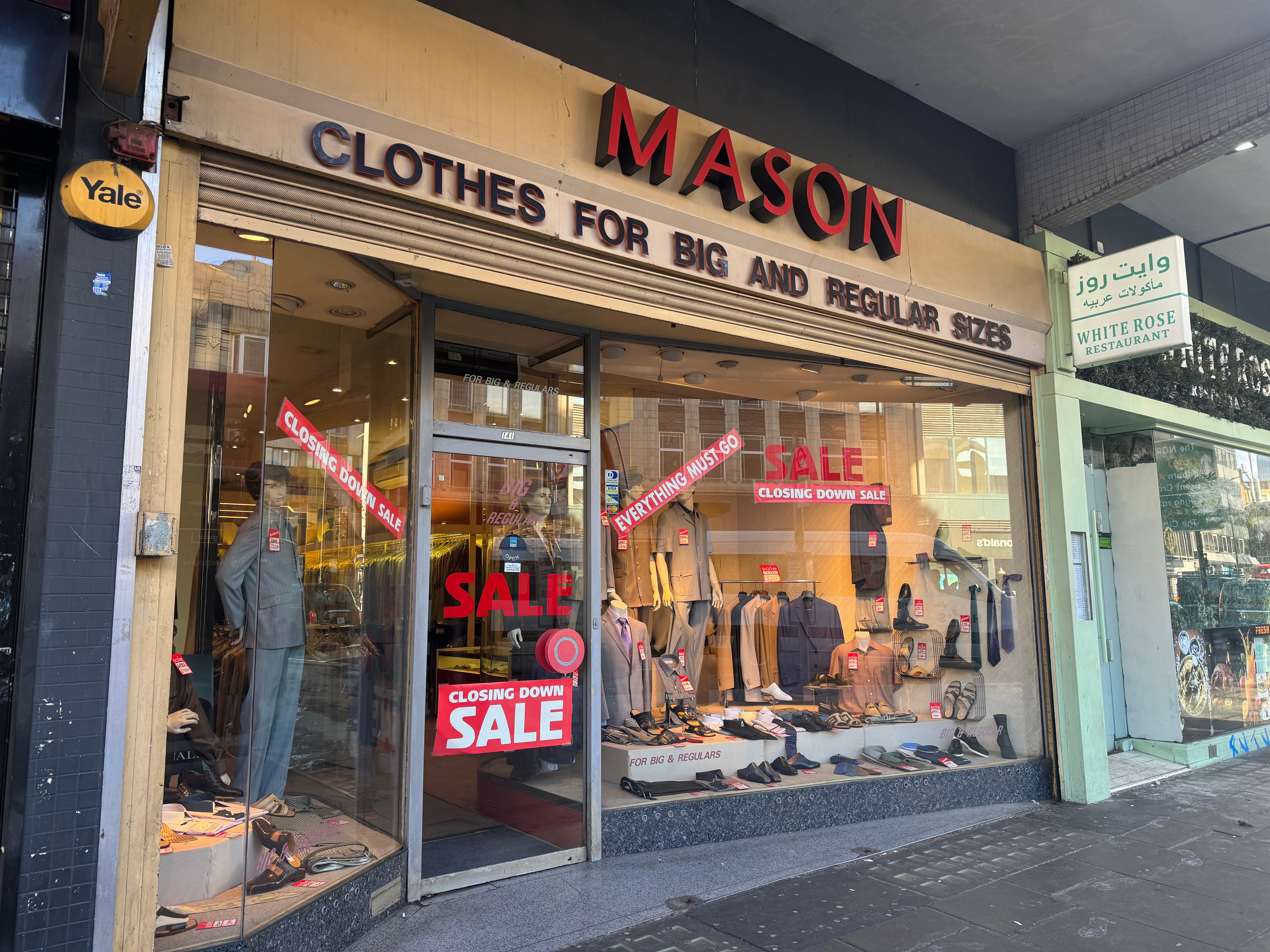
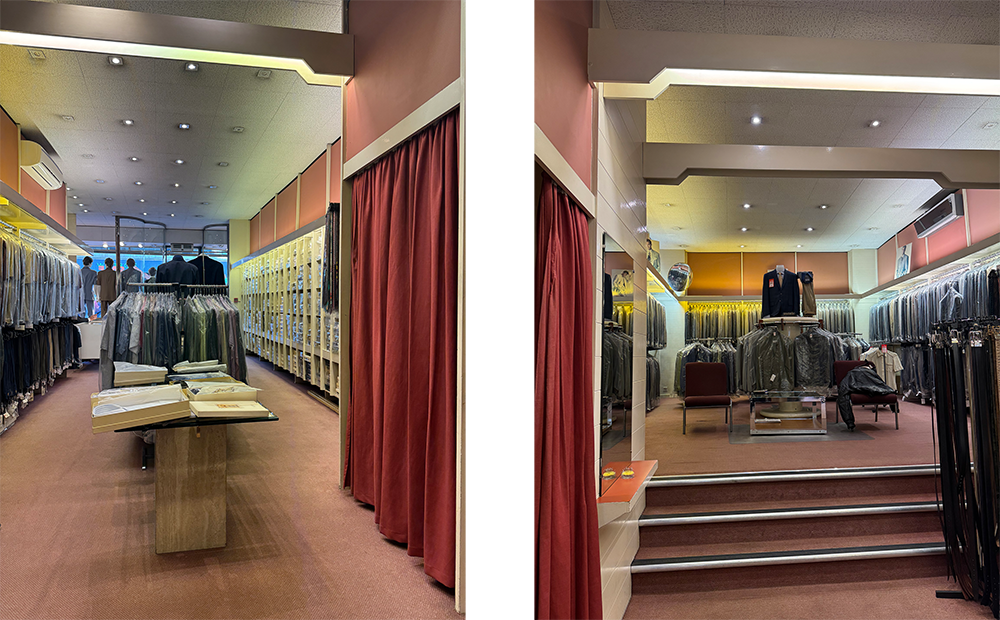
Word broke last week that a very interesting shop was having a mega closing down sale. Opened in 1974, Mason Menswear is quite possibly the last shop of its kind in the UK – although please correct us if we are wrong because we would love to be wrong. A total men’s outfitter, Italian style, and very much worthy of M. Tony Soprano, Mason specialises in custom-designed and ready-to-wear tailoring in ‘larger’ sizes, much of it designed by Mason and produced in Italy, and footwear each of which is made from genuine exotic leathers (ostrich lizard, etc.)
Mason is now ready to retire, having been in the business for 52 years. At 81, he still feels the need to be in the shop every day to show face. Simon, his lovely, more chatty left hand, is there every day too, and if you get talking (not super hard) he very much loves to show you the stuff. It’s very unlikely the shop has changed much in at least 40 years (maybe ever, but we forgot to ask when the last refurb was) and is cloaked in dusty coral carpeting.
The general vibe is kind of like the dream shop, and Simon knows this too. He seemed amazed that so many ‘young people’ had come through the shop that week, but said he knew that if they just made it a bit more hospitable, put in a few more sofas, offered clients a drink upon arrival, their sales would increase in a heartbeat. But Mr. Mason, he said, was just ready to retire.
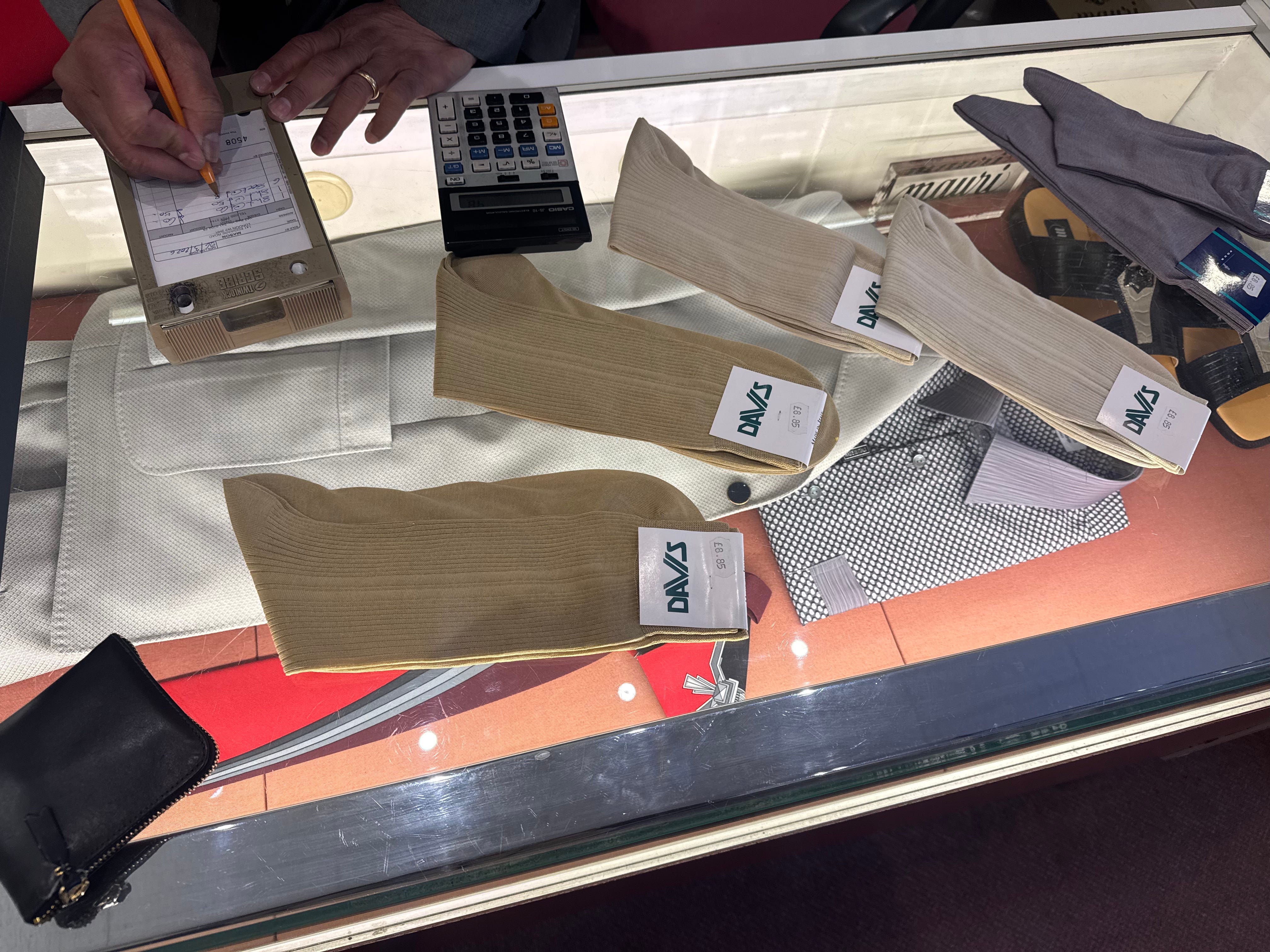
As for the clothes: think sexy southern Italian geezer in, like, 1996. Or 1986. There’s a sort of strange timelessness to the pieces. The fabrics are completely wild (Kiko eat your heart out) and many of the garms, as we said, were designed by Mr. Mason and produced in Italy specifically for the shop – so you will not find them anywhere else.
You’d be hard pressed to find a place like this outside of Italy (or maybe, like, Belgium or Switzerland). If you’re in the business for a suit, there are literally three entire walls lined with them; a flashy shirt in a sexy box, probably like 150+ on offer. Their backless exotic leather loafers, however, are maybe the most enticing thing, quickly followed by the belts and the ties.
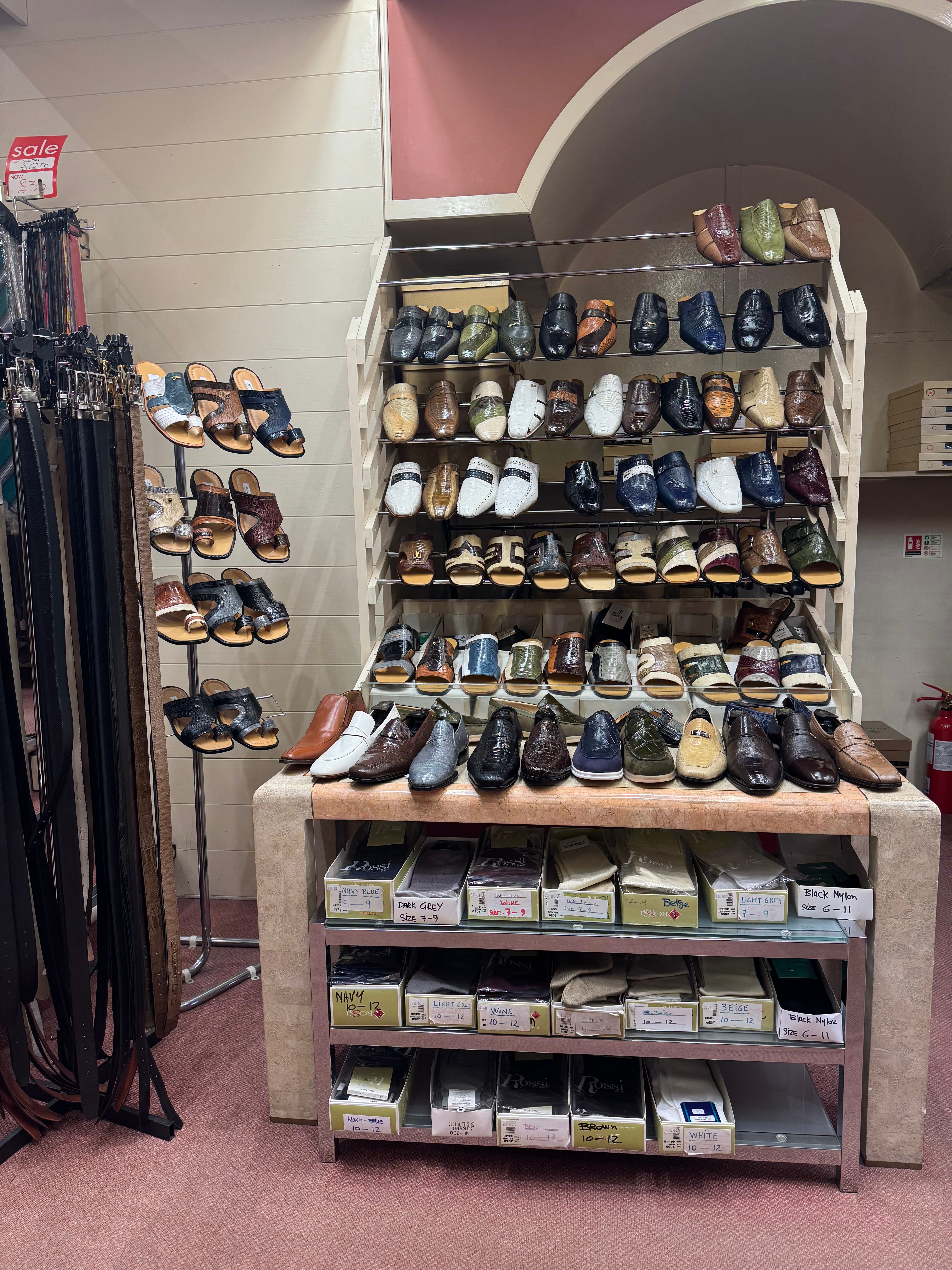
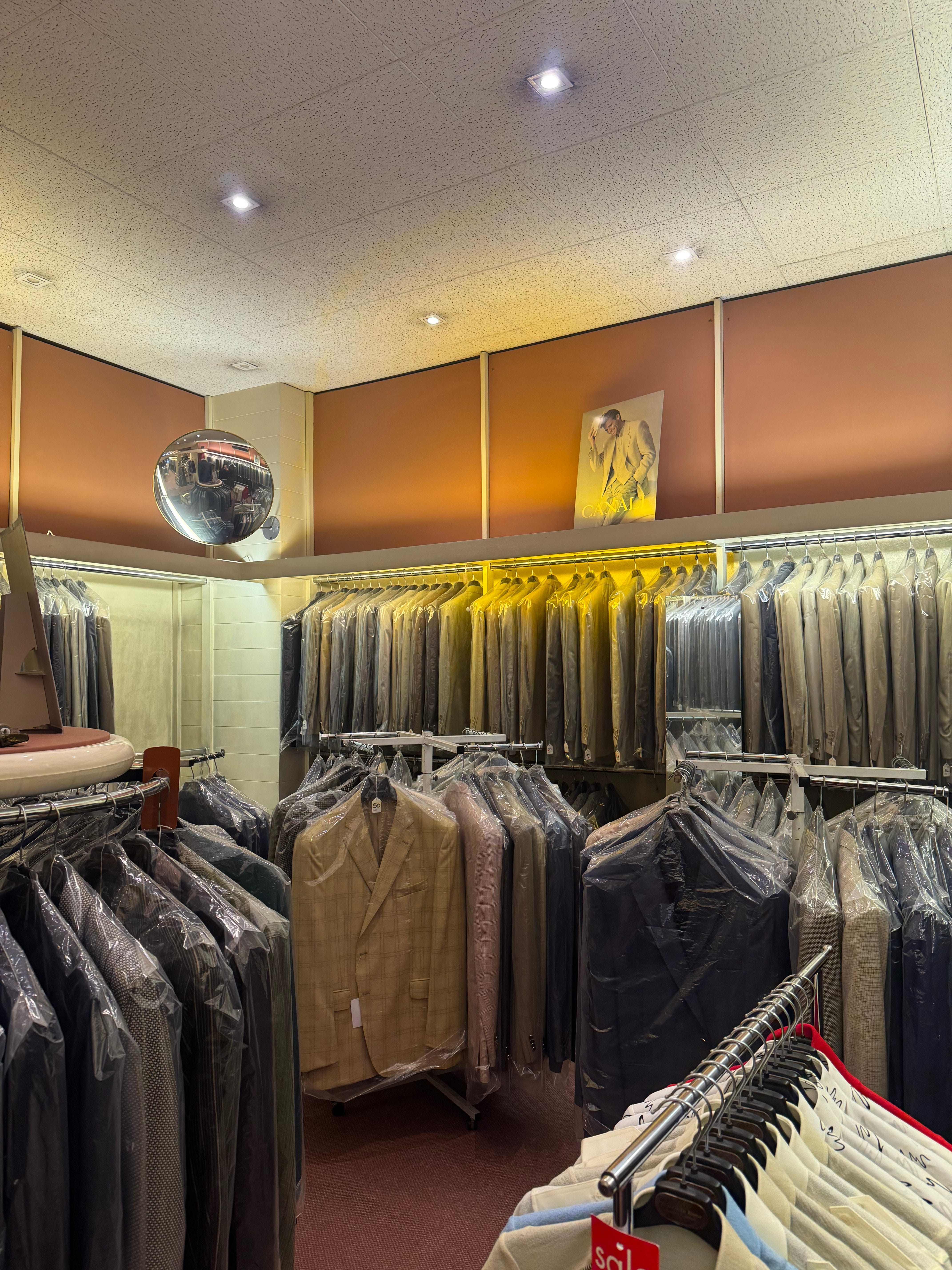
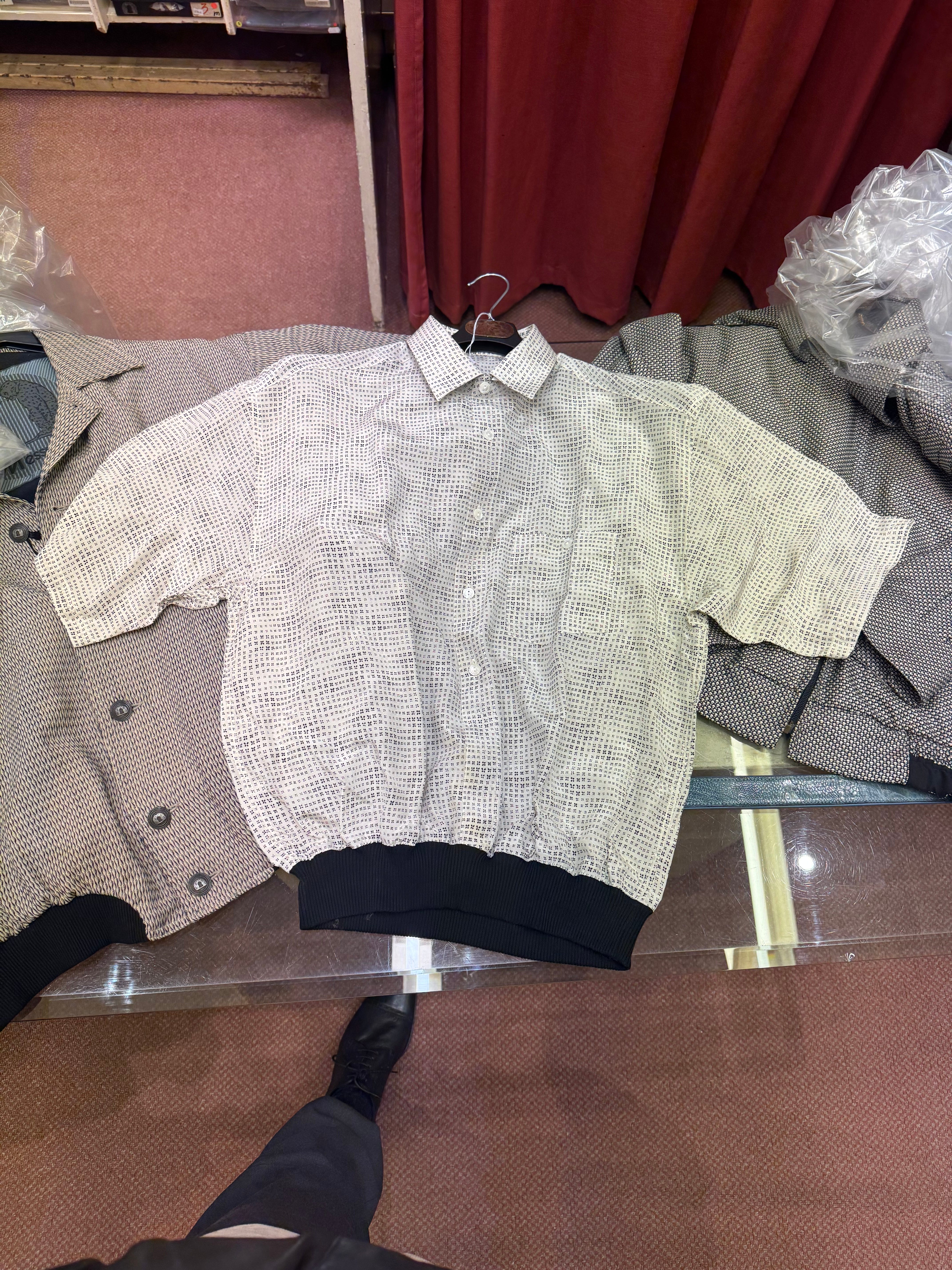
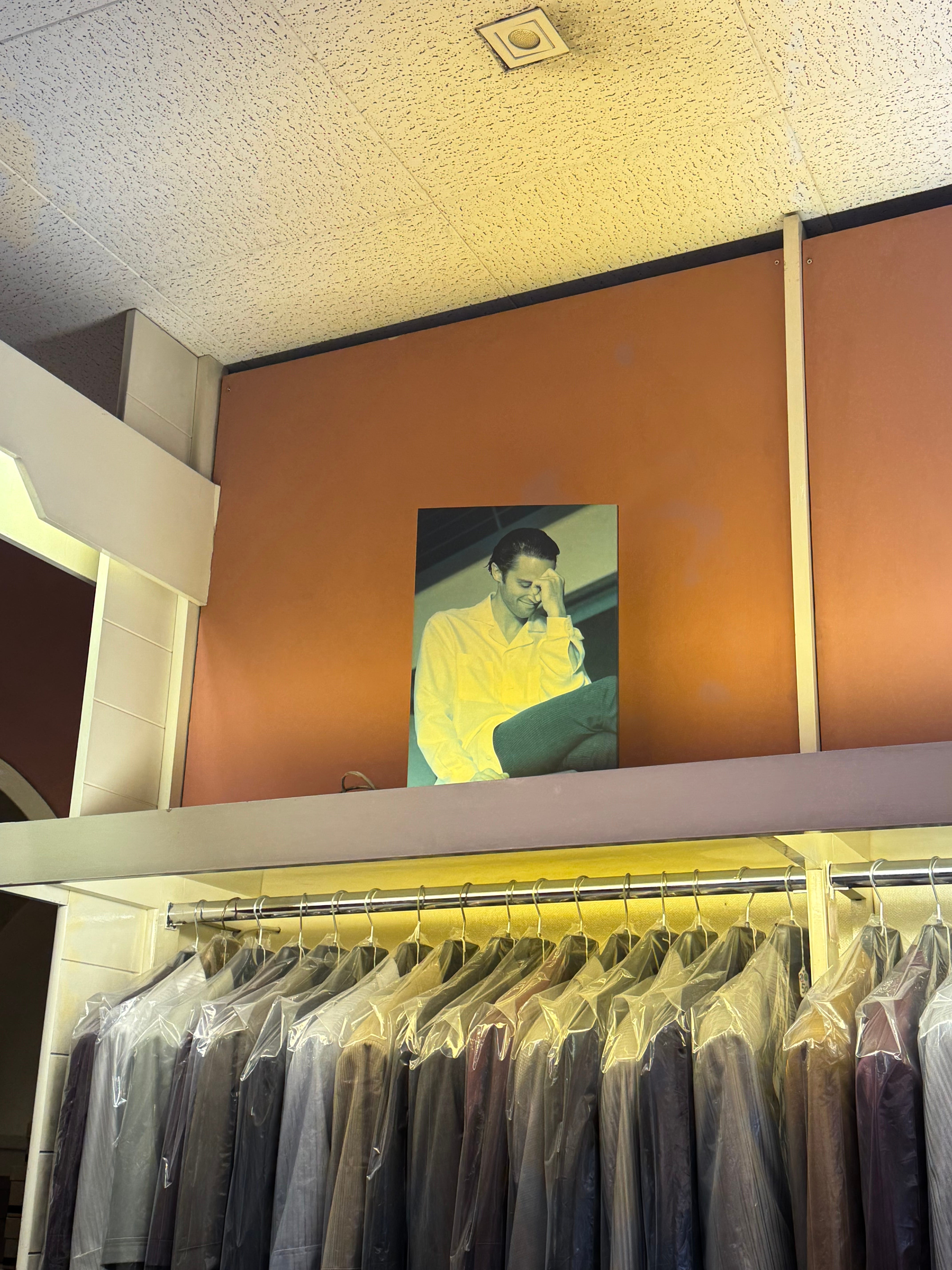
Simon mentioned they’ll only close when they’ve sold all the stock, and there is A LOT. So you probably have a good few months to get there. And if you’re interested in the shop space, as it is, not to develop into some ugly pret(!), we know that they are renting……… If you’ve ever wanted a dream shop on Edgware Road, or to at least do something (anything!) in a space like this in London, this may be your last chance!!
We loved this rumination on Akshi Singh’s relationship to the pleats of Issey Miyake. She traces how her attraction to the pleats – where they come from, how they’re made, how they look and how they feel – is embedded deep within her psyche, her desire for the garments caused by a wide, sprawling network of associations she has with the folds. Some of the best writing about clothes we’ve read in a long time.
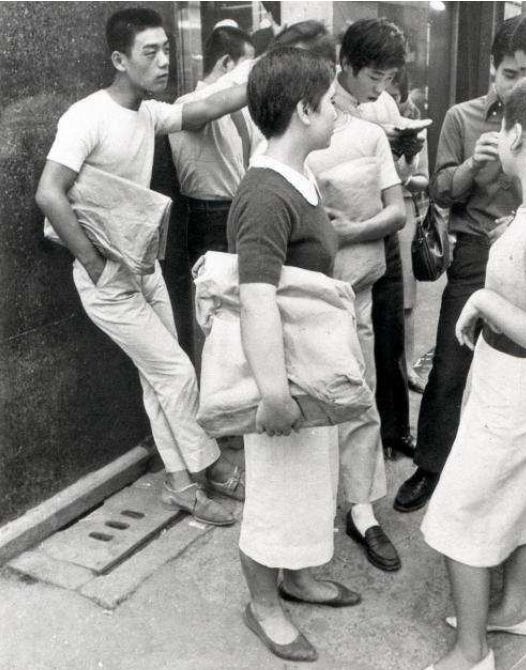
We were reading a great essay by Hiroshi Narumi about postwar subcultures in Japan, and this detail about the Miyuki-zoku (Miyuki street tribe) emerged, whereby they repurposed imported coffee sacks as a fashionable garm called the fūten bag. Their loitering on Miyuki street was seen as threatening, and on 22nd September 1964 it’s been said that 100 of them were arrested in preparation for the Tokyo Olympic Games.
Given that this was when student revolts were murmuring below the surface across Tokyo, v interesting to think about why young people were consistently denied access to public space. If anyone knows anything/anyone who has written about the connection between the left wing protests in the 1960s and 1970s and the emergence of spectacular subcultures in the English language (also/or if there is an English translation to this book) PLEASE tell us because we are desp to know.
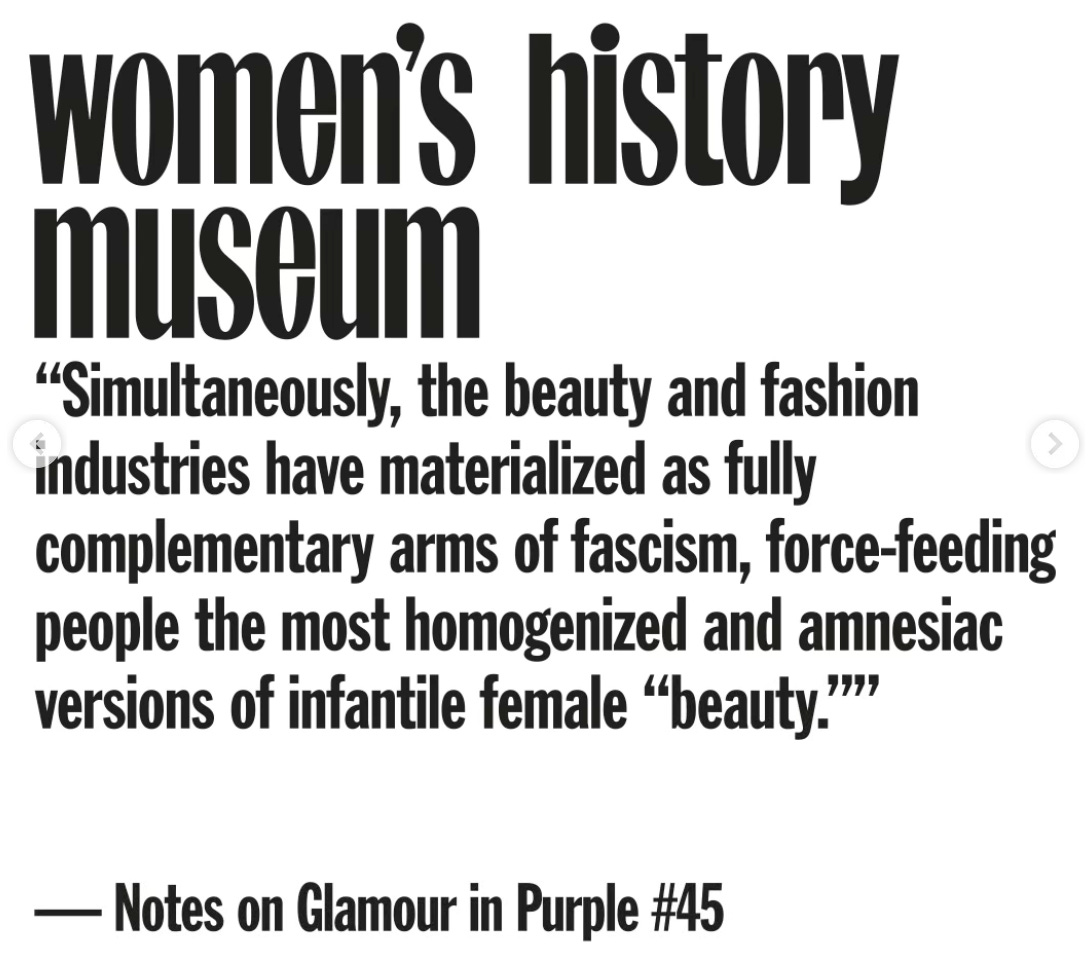
Because we make all our money in fashion rn, sometimes it can feel like we are going crazy. So when you see some fab girlies going for the jugular, it’s just a joy to see.
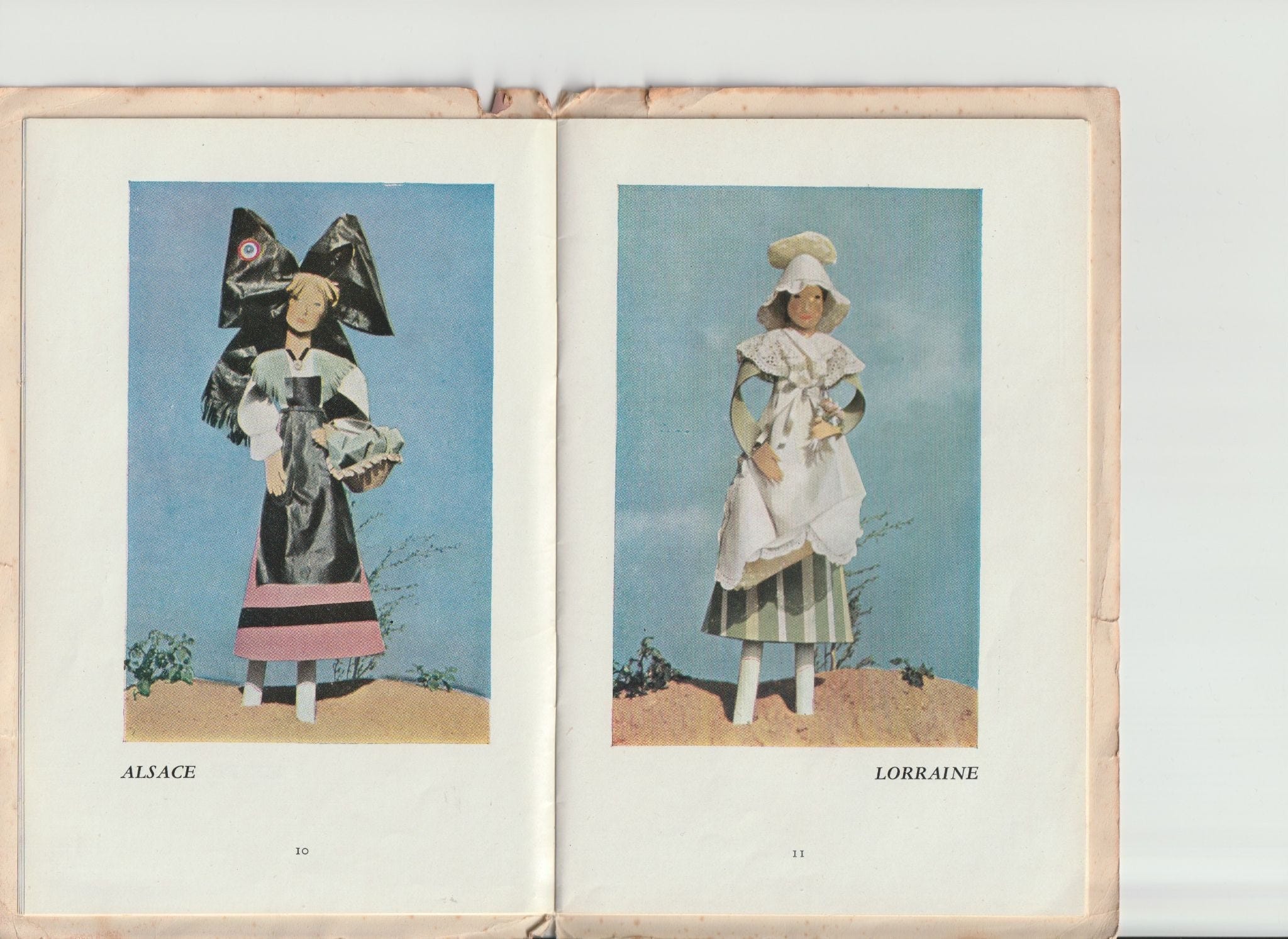
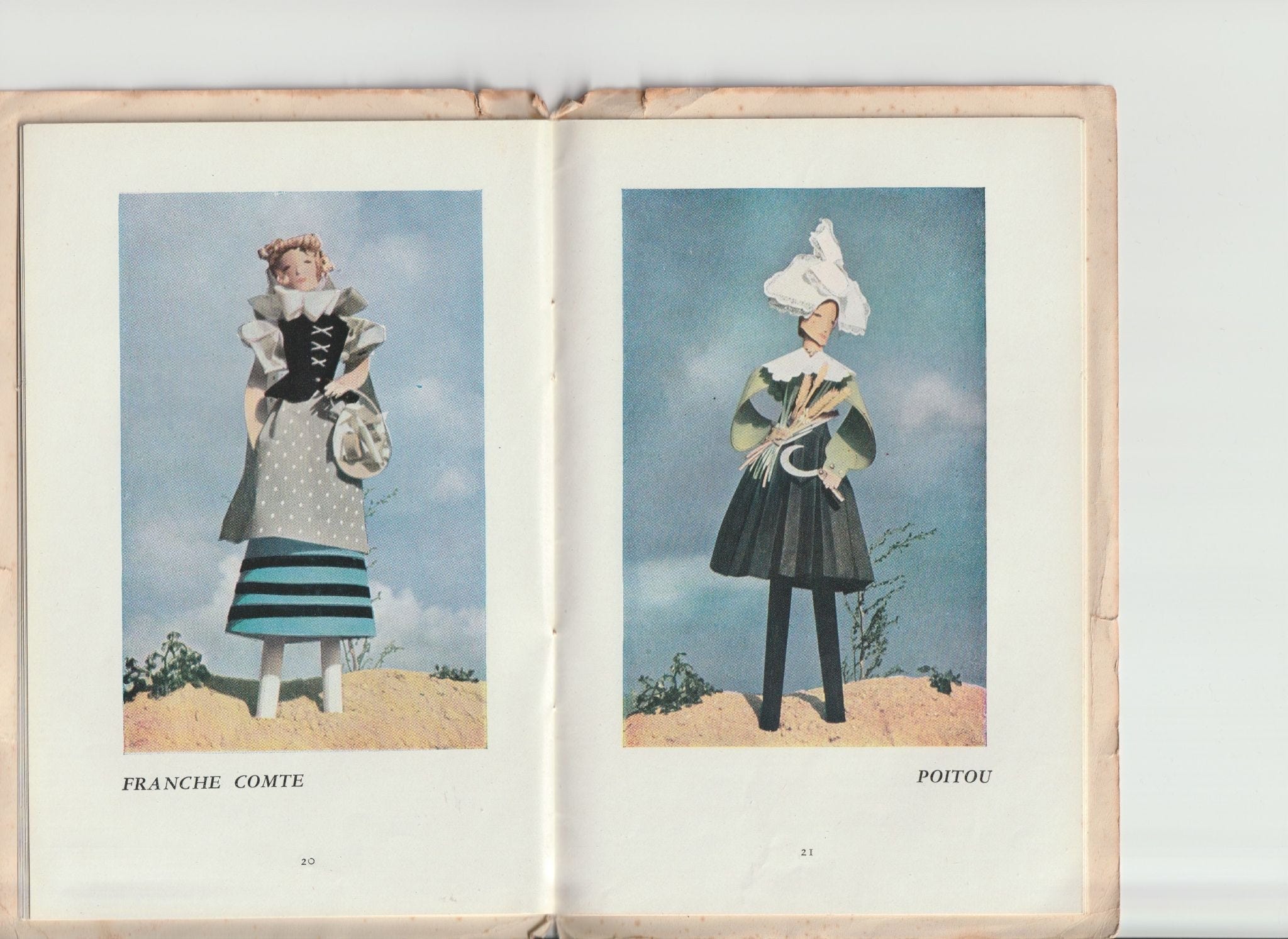
A small book we picked up at Perfect Lives with an intro by James Laver we haven’t read yet. The full thing will be in the secret PDF folder for paid subs SOON.
Tell us what you’re raising money for (in your own words rather than ours)?
The solidarity market is raising funds for mutual aid networks that we have connections to in Lebanon and Palestine. In Palestine, The Sanabel Team food bank provides emergency aid for families in Gaza, delivering meals and daily necessities. The Sanabel Team initiative started in Khan Younis in 2018 to provide support for Palestinians living under the decades-long Israeli blockade through funding education, distributing food and emergency aid, and supporting displaced Palestinians in Egypt. Since Israel’s genocide in Gaza began in 2023 it has been growing its food bank and food distribution to try and meet the escalating needs of besieged Gazans, particularly with ongoing Israeli-created starvation.
Its name, Sanabel, refers to the part of a plant with which love is formed, and is a religious name used in the Quran: ‘like a grain, seven seeds sprouted in every one of the hundred grains’.
Many mutual aid networks have been extended, re-mobilised, or newly set up in Lebanon since the bombing by Israel resumed on 2 March. As of today (26 March), a fifth of the population, 1,000,000 people, have been displaced in Lebanon, with more than 1,000 people killed.
The funds raised at the market will in part be distributed to friends in Beirut who have set up a relief network that is working in tandem with several grassroots initiatives already assisting those suffering through this current mass displacement. This effort is focused on neglected areas around the mountains, Beirut’s north and east, providing heating, food parcels, baby kits, medications and other survival necessities. The funds will also go to a mutual aid network in South Lebanon, providing emergency shelter for displaced communities.
Whilst we are directing our funds to Gaza and Lebanon, we want to add that it is harder to directly support people under siege in Iran in the ways we describe here. International sanctions have made monetary transfers from Europe or the US to Iran difficult - because of legal restrictions and criminalisation. Donating directly to the Iranian Red Crescent Society is one way that’s possible right now.
What is the reality for the friends you’re in contact with on the ground?
In Lebanon, our contacts have emphasised the centrality of self-organisation: unions, cooperatives and neighbourhood committees to strengthen their steadfastness and reclaim genuine political spaces where they can sustain each other. The central Lebanese government has betrayed its people in the South, they survive on solidarity, local and global.
In both Lebanon and occupied Palestine, people feel compelled to record their experiences to call on the international community for support. For this reason, we focus on supporting them so they can focus on resisting the senseless aggression they are facing.
The recent attempts to exploit sectarian divides in Lebanon (for instance, with Israel ordering Shia communities to evacuate to predominantly Christian areas, or else be bombed) have proven futile. The solidarity across the region and resistance of US-Israeli expansionism – which the genocide in Gaza, that the West did nothing to stop over the past two and a half years, set a renewed precedence for – is unwavering.
How can people contribute beyond coming and buying something?
We want to stress that organising a solidarity market or event is doable with a few friends and a little time. We are organising the market together after one of us posted an instagram story expressing the wish to organise another market to raise money for networks in Lebanon and Palestine. At the first one in November 2023, we raised over £3,000. Doing it feels easier than doing nothing.
Across London others are organising raffles, gigs, screenings, supper clubs… Even getting friends together for a meal and each making a small contribution to a food bank makes a meaningful difference. It can be seen as an internationalist way of sharing a meal together.
Fundraising efforts here in London in support of the region have dwindled a bit since 2023. Now we’re at another critical point of escalation – an escalation coming from the unholy US-Israeli alliance, which the British government, as well as governments across the EU are scrambling to support in countless ways – that demands a recommitment to international solidarity work. Fundraising is just one of them.
The most meaningful way to get more involved is with something that is doable for each person. If it is also sustainable to go beyond these moments where there is a rush of action, into times where fewer funds are coming in but the on the ground networks are still working, this is even more meaningful.
You’ve decided to make everything purchasable to anyone no matter their income, using a pay what you can system. Why is that?
We want it to be as manageable and affordable for as many people as possible, meaning that it will be pay what you can – no questions asked. We’ll include guide prices to give an indication of how much each item would sell for elsewhere. Only a few items come with a reserve. This is rooted in the market’s purpose. Being a solidarity market means coming together for a cause across our different means and circumstances. Rather than to help somebody else, somewhere else, this is just one way to try to make a liveable life across struggles.
What are some of the things that we will be able to get on the day?
In terms of fashion, have some specially selected vintage, with brands such as Margiela, Costume National, JW Anderson, Sarah Pacini, et cetera, on top of donations from London-based designers like Martine Rose, Cecile Tulkens, Katya Zelentsova, Jawara Alleyne, LEUDER and more.
One of the more unusual things is a year-long Cafe OTO membership, a way to turn something that you might be thinking about anyway into a meaningful donation. As well as merch and records from Rita P, Still House Plants, 5 gate temple, Kelman Duran & Annie MacKinnon, to name a few.
Although some of the artworks have higher guide prices, the solidarity market is an opportunity to buy a work from somebody you admire, even if you aren’t in a position to collect otherwise. Palestinian artist Izdihar Afyouni is making a series of new works on paper for the market. Mica Levi and Hannah Black have both donated paintings. Sophia Al-Maria has given us a range of things from her studio: original artworks and even some reference materials (including some old Egyptian Film Posters) meaning this is a rare chance to own something by her at any price point.
Aside from those we’ve named, the generosity of the makers, designers, and artists means there will be something for everyone. We’ve received one-off artworks; signed and framed artist editions; fashion, accessories, bags, jewellery and millinery by London designers; archival clothes; revolutionary propaganda; theory books; art books; specially selected second-hand books; poetry books; fiction books; records and merch; posters and bumper stickers; home-made butter; Lebanese meze; lamps; candlesticks; hand-made quilts and rugs; metalwork; really, everything…
We can’t overstate how grateful we are to everybody who has helped make this happen. The Horse Hospital for providing us the venue and support setting it up so quickly, everyone who has asked in their networks for donations, everyone who has helped with collections, offering to pitch in on the day, sharing donation details for our friends in Palestine and Lebanon. Thank you.
Ciao for now!
Want more?
Comments
Nothing yet. Say the first thing.
Sign in to join the conversation.