
Words: Eilidh Duffy
Many of us who have been besotted by fashion from a young age have no doubt worn, bought, begged someone for, or simply coveted, a counterfeit luxury good. My own relationship with fake stuff began in an alleyway behind Canal Street in New York’s Lower East Side when I was around 13. I think I had saved up (or begged my parents for…) just enough money – around $30? – to purchase a really shittily made Louis Vuitton Speedy.
These were, however, the (OG) days of Gossip Girl and Alexa Chung. So the next was a plasticky Mulberry Alexa ordered from a dodgy online store. An upgrade, even though the photo looked nothing like what arrived in the post. Little did I care. It fulfilled a fantasy of mine, albeit on a budget, and my poor mother had finally shut me up. We had both reached some kind of peace.
Silvia Bombardini, a researcher, educator, and writer, might say, however, that my acts of counterfeit consumption were some of my earliest rebellious acts against the Fashion System. My insufferable moaning and begging was not the vain lament of a teenage girl but a slight against the luxury industry; a jab at those very forces that made me desire these objects with such intensity. That’s because Silvia thinks that the counterfeit luxury object is a rupture in the systems that produce our desires for luxury goods.
This she argues in her 2019 article Luxury for the Many: Politics and Virtues of the Knockoff. In it she posits that the proliferation of counterfeit luxury objects might be a way to break the capitalist system itself, and positions the production of counterfeits as a postcolonial practice.1
This isn’t the only subversive act of shopping Silvia has looked at. We first met in 2022 after I’d encountered her research into Victorian shoplifting clothing. She also seemed to flit between academia and journalism, and wanted to explore different ways of communicating her research into the subversive sides of consumption – namely, thieving and looting. So we worked on a project for the last full issue of Bog released in 2023.
The premise behind much of her work is that people, usually women, can circumvent the restrictions of capital through unconventional methods of consumption. Silvia, like us, loves stuff. But she’s also inherently very radical. “I guess my whole career is a way to try and reconcile my love of things with my political views,” Silvia laughs.
Seven years on from her initial writing of the text, our collective societal relationship to the fake has shifted. Where the counterfeit used to be derided, it feels, more and more, as though buying fake (now often referred to as ‘replica’) luxury goods is an acceptable, even a consumer-savvy, thing to do.
Through the rise of dupe culture, the accessibility and normalisation of counterfeits through forums and platforms like AliExpress, the proliferation of the higher-quality ‘superfakes’, and the relatively recent proposition that to get back at Trump’s tariffs you could buy a fake bag from Chinese manufacturers, fake luxury goods are now shaking off some of the shame previously attached to them.
Silvia, contra to me, has not had a near-lifelong relationship with the fake (she claims she doesn’t own one counterfeit designer piece!) but she’s thought about them significantly more than I have. After discovering her article a couple of months ago, I begged her to sit down with me to discuss all the new developments in the world of the fake.
Is the dupe still revolutionary? What does it mean if there are fake-looking ‘authentic’ luxury goods? And what if there were no class distinctions in fashion at all? Find out the answer to all of these questions and more, below.
Eilidh Duffy: I thought it’d be nice to start by giving readers a quick overview of the text, and perhaps where these ideas came from.
Silvia Bombardini: I was thinking about why we feel disappointed when we buy something that we find out is a fake. I propose, in the text, that it is a way that capitalism imposes on our lives. I had recently read the chapter titled ‘Utopia as Replication’ in Valences of the Dialectic (2009) by Frederic Jameson and he discusses the American supermarket chain Walmart. He’s trying to see if this example of extreme capitalism could be conceived as self-destructive. I was considering what it is that fakes do, specifically our mass consumption of them. Could we perceive that as a kind of uprising of the masses against luxury?
Alongside that I was thinking about women and mimicry, and how both the consumption of fakes and the idea of pretence are habits and traits associated with the feminine. Then some of the telltales of fakes, and this idea that they might break down because they are perceived as ‘low’ quality, whether or not that’s true in most cases. Essentially, I was asking: can we reframe the whole idea of the fake?
I was doing my MRes at Goldsmiths at the time, and I think it’s quite important to relate this to some of the discussions that were happening. It was 2019, and everyone was talking about accelerationism.2 So, broadly, this idea that pushing back against capitalism was not working, and you have to fight it from within. I was somewhat seduced by the idea that there might be extreme expressions of consumer culture that could be a way through capitalism. That could expose how the system is fundamentally cracking. Later on, when I wrote about shoplifting for my PhD, I felt this was also an expression of that.
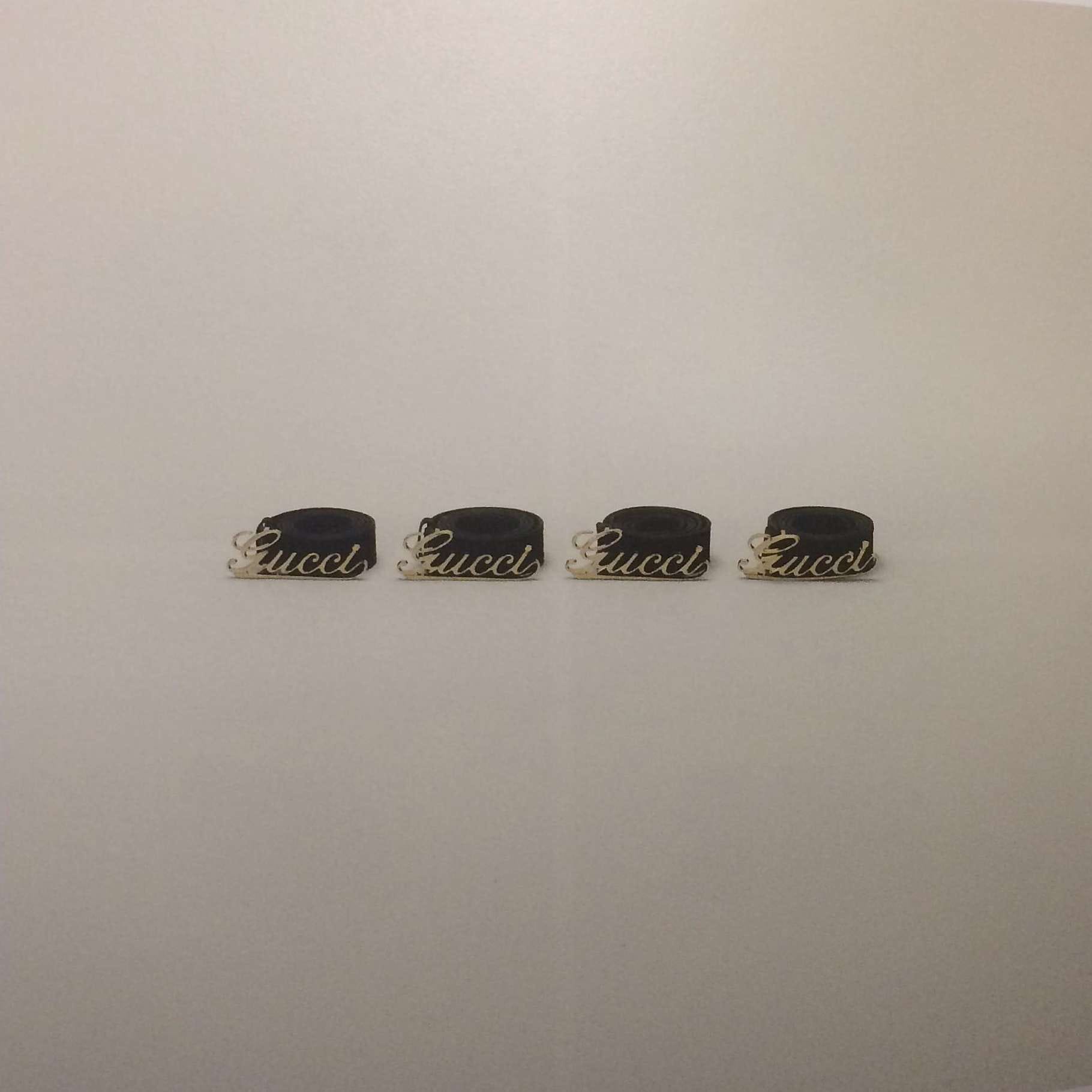
There’s a line that’s running throughout all of your research – this text, your work on shoplifting clothing, and in the past we’ve discussed your interest in shopping riots – which posits that consumption can be subversive in certain contexts. It’s a novel idea, as you point out in this text, considering that abstention from consumption is so often what is perceived as the ‘moral’ or ‘ethical’ approach.
There’s this idea, which is very widespread on the left in general, that you should not consume. That you should be ‘better’ than the person who does. I find it very problematic. The idea that you should not consume, or abstain from desire, I find that repressive and misogynistic. It’s also a bit elitist. Fundamentally, though, it is not working.
If we consider shoplifting, for example, it is a form of consumption. Looting is a form of shoplifting, but it is more generally accepted as rebellious, or as a rebellion against consumption. I think buying fakes – or stealing fakes – should also be considered in that vein. I would like, if I find some funding at some point, to research riots as well. Riots within stores. I also wonder if, now that shopping occurs mostly online, there are similar strategies that are going on in the digital sphere.
Saying that stuff got lost in the post, but it didn’t.
Exactly. I actually met someone in New York who is an artist, who is ordering things from stores and then returning her own versions of them, but keeping the originals.
I’d really love to discuss this idea that fakes are part of the underbelly of consumption, and how you think consuming them can be dangerous in some way to the capitalist system itself. In this text in particular, you use these consistent metaphors for the fake object being a disease: ‘parasitical and clandestine’, emerging in ‘schismatic multitudes out of background haze’; an ‘out-of-sight parasite that subsists from and plagues [capitalism]’. I’d like you to tell me a bit about this framing, of the counterfeit as a life-draining parasite or disease.
Fakes have indeed proliferated but, to be honest, have not necessarily destroyed any luxury brands. The reason brands go after counterfeiters is that they harm the reputation of that brand. It could be because they’re sometimes not made as well, but I also think it’s about scarcity. We see a lot of Louis Vuitton bags, so we perceive them as ubiquitous and that harms the Louis Vuitton brand.
So, I think this is more a question of numbers than a question of quality, right? You sell something that’s supposed to be exclusive. Suddenly, a lot of people have it, and it becomes less desirable because of that. You find examples where this ubiquity is threatening. For example, with Burberry, when fake Burberry check was being worn in the UK by working-class people and football ‘hooligans’, it did really harm the reputation of the brand.
And maybe the type of person who owned that object with the Burberry check is a different kind of person from who they want to see it on.
Yeah, you price something at a certain amount in order to limit the number of people who can afford it. That doesn’t mean it isn’t mass-produced, but it keeps it exclusive in an economic sense. There’s very little materially that you can do to justify that price. The idea that it is scarce is the justification.
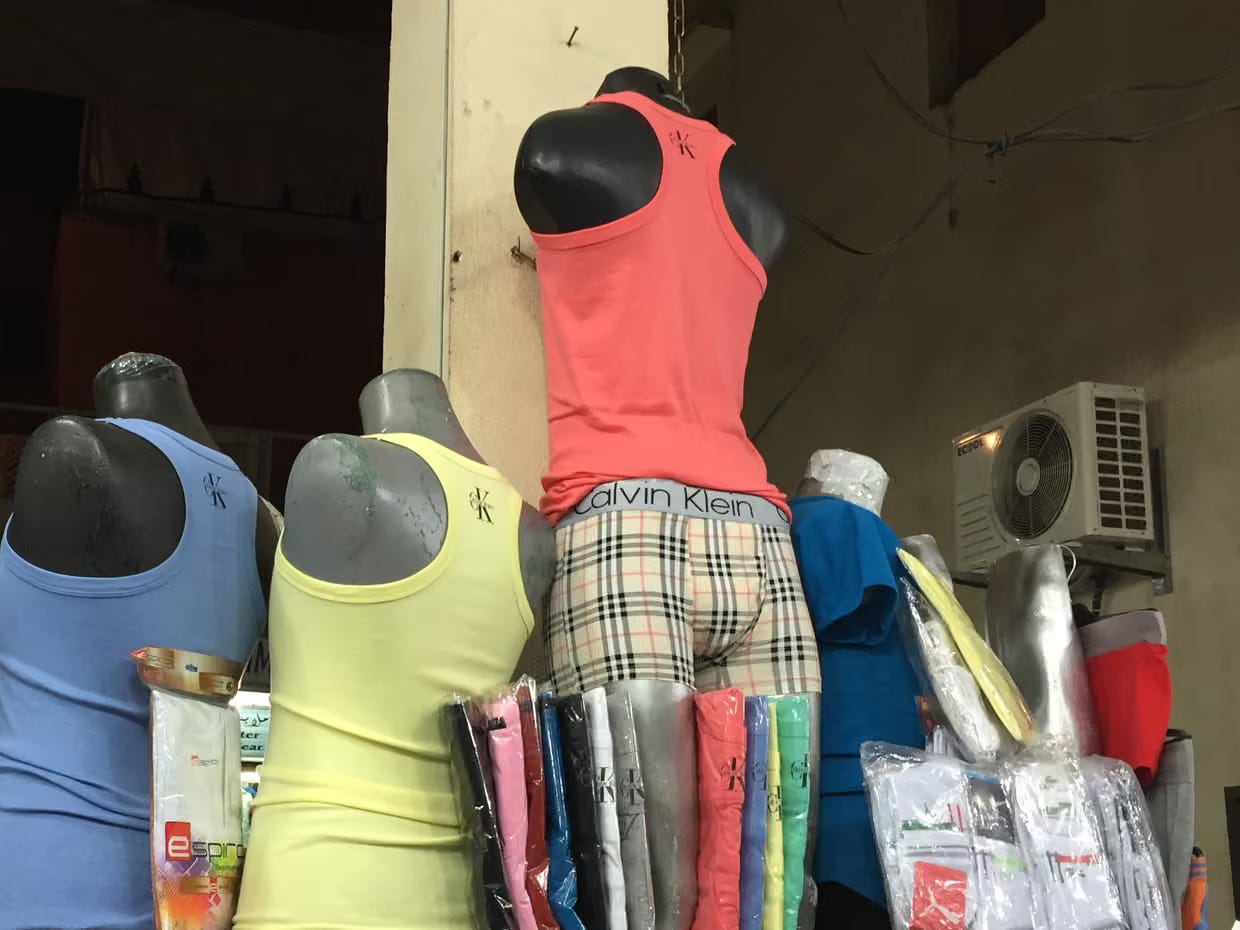
I keep returning to this idea, which is not what you discuss in the essay but I am interested to talk about it, which is that scarcity – post-streetwear – is now a really large part of what makes something a luxury object. The thing other people literally can’t have unless they have specific knowledge about fashion or dress, even if they have all the money in the world. It’s the thing they’ve made only 100 of, or there’s only one in the entire world. Or vintage pieces that are scarce. Like, you know, dudes who will pay thousands of dollars for a certain kind of T-shirt.
Yeah, so perhaps this justification of luxury being high quality is actually completely out of the window, and now it’s all about scarcity. At least it’s more transparently the thing that matters nowadays.
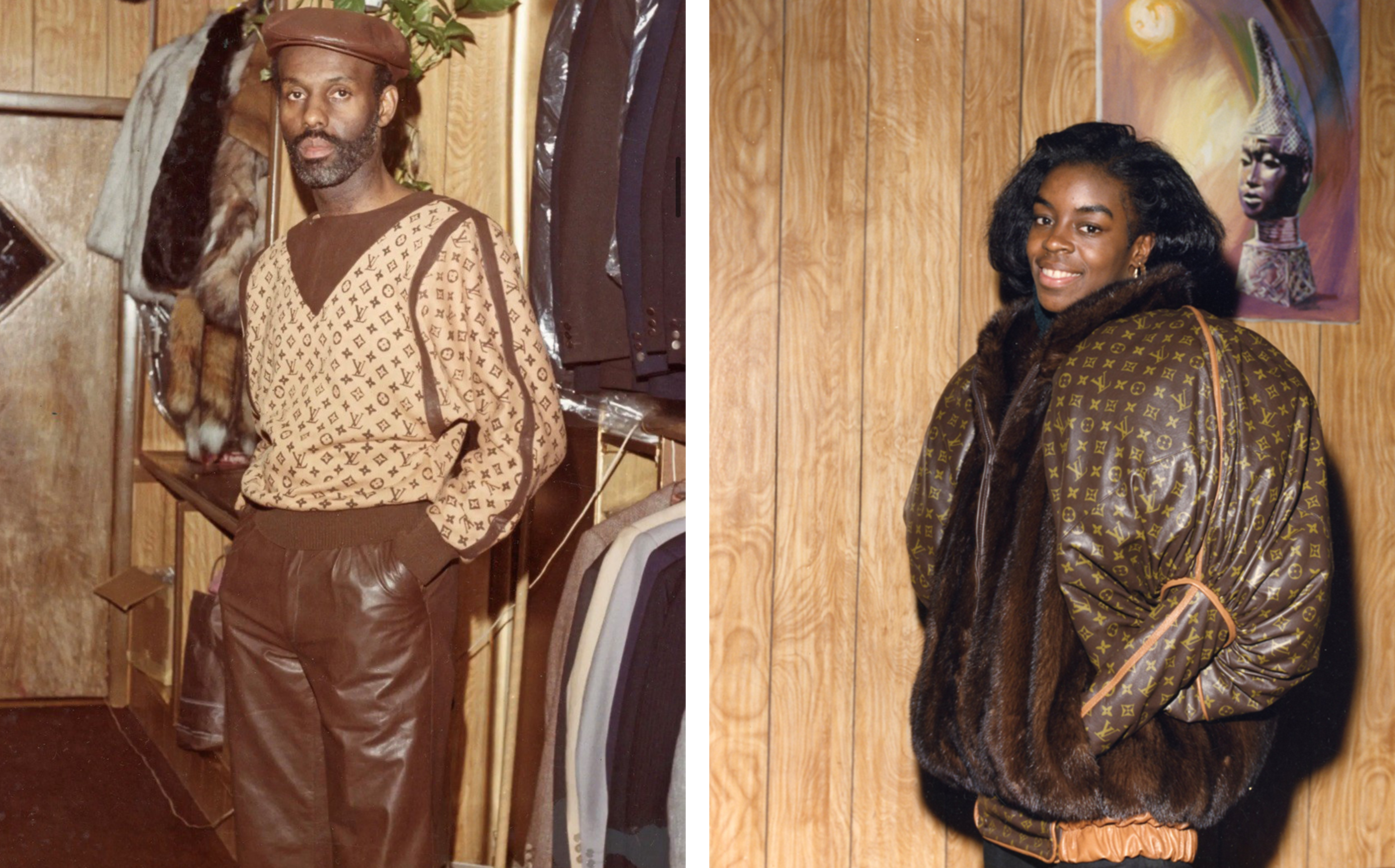
I also think it’s interesting to think about which period of time we were in when class distinction mattered. Someone like Dapper Dan, who in the 1980s and 1990s was, you know, screen printing his own fabrics with luxury logos. His business was destroyed by a cease and desist in 1992, because luxury brands basically did not want Black people wearing their logos. Burberry’s business was affected by counterfeiting in the late 1990s and early 2000s. Whereas what I feel is happening now is that luxury is somehow trying to appeal to the masses. And has subsumed the codes of these moments – Burberry with the check, Alessandro Michele and Gucci rehashing Dapper Dan’s work – back into their lexicon.
I don’t know if luxury is truly trying to appeal to the masses or it’s just an aesthetic turn. I still think that if everyone was able to wear real pieces from, let’s say, Balenciaga or Prada, it wouldn’t quite keep its appeal. The purpose of luxury is distinction.
But it’s nuanced, right? If we’re talking about, let’s say the mid-1990s versus now, there is a vibe shift in how people interact with brands. Luxury conglomerates have grown in size, they’re selling way more product and prices are crazy high. What I think is interesting right now is the appeal of the aesthetics of the fake, as demonstrated by Demna’s work more broadly, and particularly with his version of Gucci – the little bumbags – it’s almost trying to bring that back into the language of luxury. So what does this mean for the fake? Is a fake still subversive if it’s been subsumed into luxury?
Hmmm. To me, the aesthetic of the fake is not what is important, it’s the systems it exposes. The thing that matters is not the quality, it is not the make, it is the intention. Of course, there are very good fakes that are very expensive and close to the original and there are very cheaply made fakes. I consider them both equally subversive, but the ‘original’ that imitates the fake is not, because it’s authentic. The intention of the ‘original’ will always be distinction.
So when I say intention, I do not necessarily mean the intention of the maker or wearer of the fake, but of the fake itself. In terms of the actual production of these fakes, a lot of counterfeiters just want to make money, and people who buy fakes just want to look richer or more fashionable, right? But that doesn’t mean that the act itself isn’t rebellious in some way. This has also been an important part of my thinking around shoplifting as well, because I think that the act is subversive in itself even if the person who steals or wears the fake garment does not do it with a conscious political or subversive intention.
Thinking about why things that look ‘fake’ are appealing and being adopted by luxury brands now – well, if you can’t beat them, join them. And the idea of the cease and desist is fundamentally deeply uncool. Saying that, though, maybe more people are buying fakes because they are realising that the differences between what is ‘fake’ and what is ‘real’ are essentially made up.
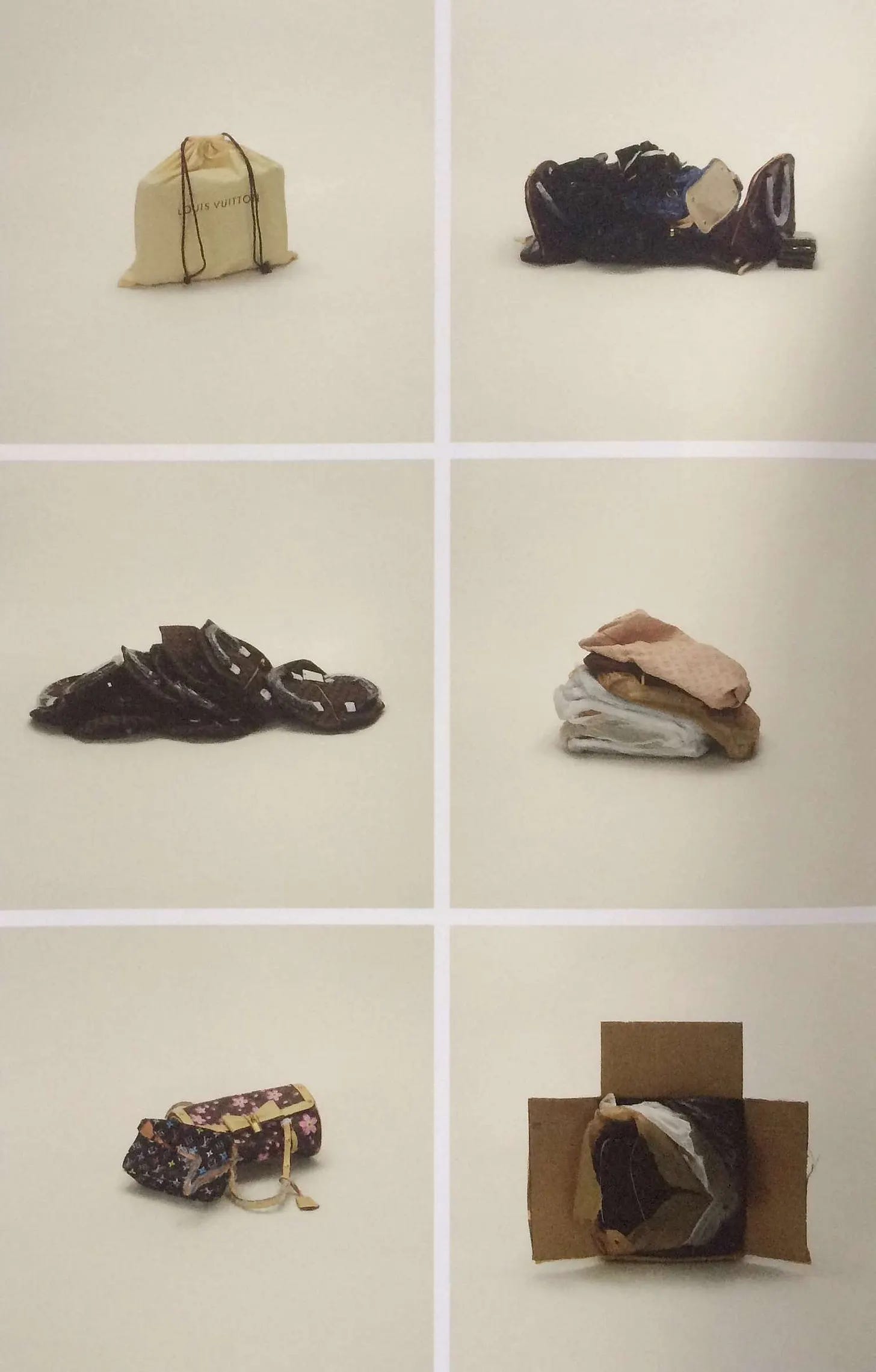
Can you just explain that a little?
Occasionally fakes are made in the same factories by the same workers with leftover raw materials. So, exactly the same, but produced after hours. The distinction between fake and original comes down to when it was made.
I also remember reading an interview with a counterfeiter in Shenzhen, and she was saying that her system worked like this: people who were going to buy from her would pay in advance. She would then use this advance to buy the original to copy it. Sometimes she would improve on it. Sometimes it was not that good, a bit scratchy in places, for example, so she made it better and then she would sell it. She was definitely a high-end counterfeiter, and not everyone works like this.
I feel like luxury has actually started making the signifiers of luxury harder to copy. For example, forgoing the primacy of the logo in favour of a distinctive weave, a fabric, or a shape – the feeling of a luxury good. The quiet luxury thing, for example. And this has, in tandem, ushered in dupe culture. For example, The Row is one of the most duped brands, but there is no big logo or overt signal that The Row is The Row, aside from its shape or its texture. Interestingly, it’s also a smaller pool of people who would even be able to recognise that, versus the LV monogram or double C for Chanel. The dupe is not an overt display of luxury, but you’re displaying a certain level of taste.
Is quiet luxury a reaction against fakes? Probably not. But it would be interesting to think of it that way. This rise of extreme knowledge of details as a form of distinction, it’s perhaps a way to say: ‘It doesn’t matter to me that people recognise I’ve paid £5,000 for this coat, because I know that I have and the other people who recognise it are the only ones who matter.’ It’s not new though. Margiela’s labels were originally meant to be cut out, right? The idea was that you would buy the piece because it’s well made, and then own it for a long time.
Quiet luxury is perhaps more interesting than this Margiela example, though. There is this idea that knowledge is capital in the Bourdieu sense.3 It’s still based on distinction, but just a different type. Intellectual property is, for me, also a form of property. Property is theft, and if you’re against capital, you’re against property. I do think intellectual property should belong in that category as well. You get your ideas because you have the privilege of receiving an education, and you get this education because other people are working.
Just thinking about intellectual property in the UK, the current laws around it don’t protect concepts or ideas. But they do protect designs.
What would be the distinction between stealing ideas and stealing a design?
A design being a thing that is made and has sketches and toiles or prototypes – something to show there has been a concrete development process. But an idea, a concept, a vibe being something more ephemeral and hard to pin down. It’s why it’s so hard for young brands to prove that the Zaras, the H&Ms, or other luxury brands have ‘copied’ their work. Which is a whole other side to this conversation…
I still think you can be critical of this kind of copying when it happens. Not on the basis of ownership, but by understanding the power dynamics between the corporation, whether it be Gucci or H&M, and the independent individual. I do, however, think that ideas circulate, and I don’t think they should be owned – and by the way, saying this, my PhD was sponsored by the European Patent Office…
Well, this kind of brings me to my next question. You discuss the ‘counterfeit’ as a Western concept. I was wondering if you could tell me a bit about that history, because I don’t know anything about it.
Well, I don’t know if I know enough about the history of the counterfeit, but there is a book by Byung-Chul Han called Shanzhai: Deconstruction in Chinese and he discusses the idea of authenticity in both a Western and Eastern context. For example, a temple in Japan, Ise Jingu, is rebuilt every 20 years, and it is still considered an ‘original’.
In relation to luxury brands, however, I was more interested in the nature of the production and dissemination of their goods. Brands will often go somewhere where labour is cheaper to make their ‘originals’, but we only call them ‘originals’ because they are handled and sold in a particular way through a particular route, and then the label is attached in Europe. It’s a neocolonial process, the exploitation of people and places outside of the West, therefore the making of fakes in these places and by the same people making the ‘original’ authentic bags could be framed as a postcolonial practice.
When I was writing this essay, the predominant places producing fakes were Turkey, Shenzhen, and Bangladesh. If I had more funding and time, it would have been good to go to these places and do some fieldwork there, talk to people.
That would be super interesting.
You know, one of the criticisms I now have for this essay is that it’s just theory, right? Can you ever make an argument that intention doesn’t matter?
Well, what’s exciting about the text that you’ve written is that it’s a proposition. You’re giving people a chance to think through this type of object that has social and political value in a different way to what’s intended.
Sometimes I do feel there are so many counter-arguments to everything. When I talk about shoplifting as a feminist practice, I always get people saying, ‘Oh, but my dad has a little shop, and someone will come and steal and this will be a tragedy.’ When I talk about fakes, especially in fashion design schools, people always talk about when this happens to small brands, so I feel like there’s a distinction to be made about theoretical arguments, and real life situations. For example, when we say that ideas do not belong to people, but to society, it is still different if something is patented by a working-class woman in the 1800s, versus a company like Zara.
Right, and we are in a time during which algorithms are basically scouring the internet to find young designers’ work to reproduce it for Shein. Perhaps the ‘fake’ is a more contentious thing today, in terms of where the ethical lines lie within that argument.
If you were using Jameson’s utopian method to an extreme degree,4 perhaps you could go and see this algorithmic distribution of ideas as potentially threatening the system of distinction in itself, right? Could there be a radical potential in this distribution of ideas? Who knows.
Suspend reality for a moment: what would this look like, the complete disintegration of distinction?
I guess it’s a bit of a dream... But let’s just focus on fashion for now. I’d be interested to see whether we can separate taste from the exhibition of status. I would like to think so. I obviously think people would still wear different clothes, express style, in this new reality. Most people don’t wear clothes because we need to show how rich we are.
But everything we’ve talked about in relation to fashion – and I don’t just mean buying expensive things to show that you can, but also the ‘drop’ and having that one T-shirt that there’s only three of – is about status in some way. Getting that shirt, even if it was not expensive to begin with, shows you were able to get it first, so you are able to be there at the right time in the right place, you have the knowledge. That knowledge is another form of status because – going back to Bourdieu – you get knowledge in our society by having time and connections.
I actually think subcultures can give us kind of a glimpse of what fashion can be without economic or class status. Although it is another form of status-signalling. You know, subcultural knowledge is still a form of status…
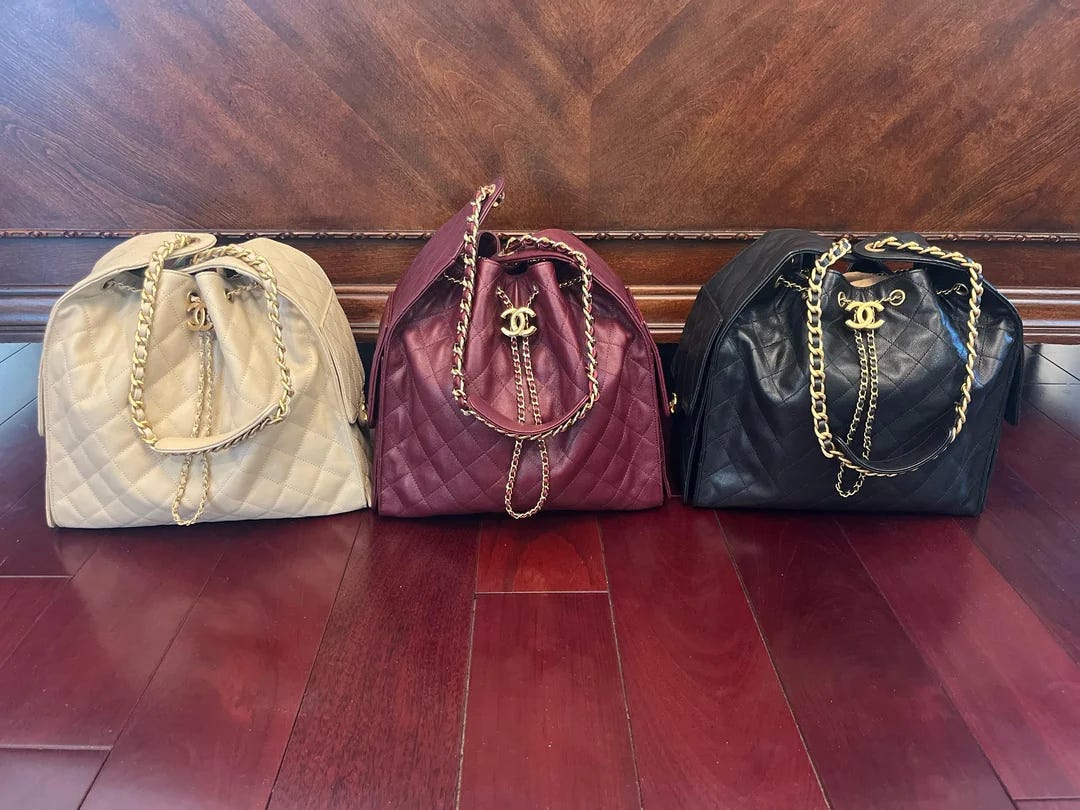
I guess there is one last thing that I want to maybe tease out a bit more, related to this idea of the algorithmically-designed dupe. Does the dupe, something that kind of looks like a luxury piece but is not, have the same function as the fake – something counterfeited? Does an Amazon Chanel-style pump do the same thing as a counterfeit quilted flap bag complete with Chanel logo? Does it have the same potency?
Well, the dupe seems to be a way to avoid lawsuits, which I appreciate. Obviously, there’s something about the counterfeit which is particularly explicit in its subversiveness. It is a recognisable sign of distinction amongst a larger group of people. But I think the subtlety of the dupe can also be strategic in an interesting and productive way, as if to say: there’s nothing that special about this thing that costs £5,000. This idea that supposed quality is what distinguishes it, but we know that it’s not necessarily the case and, really, it’s crazy to spend that much money on purchasing it. So, let me just take it.
Hines, Alice. ‘A Copy of A Copy’, Vestoj, March 8, 2018.
Lin, Ming and Alexandra Tatarsky. ‘The Shanzhai Lyric’, The New Inquiry, September 28, 2015.
Steyerl, Hito. ‘In Defense of the Poor Image’, e-flux journal, no. 10, November 2009.
Ciao for now!
More bog?
The Never-Ending History of Disintegrating Clothes
‘Postcolonialism’ refers to the study of the cultural, political, and economic impacts of colonialism. If something is ‘postcolonial’ it means that is has a relation to the impacts of colonialism and imperialism.
Accelerationism is a political and philosophical idea that posits that we should try to break the current political and economic system by pushing technology, politics, and social change to their absolute limit. Within the framework of accelerationist thinking, only then can a new system come into being. In the West, this is usually used within a left wing or right wing framework. In left wing thinking, the new system would be communism (see Fully Automated Luxury Communism), and within the right, this looks like enacting so much terror and violence that white supremacy can rule the West once again. Silvia’s work sits within left-wing thinking, obvs.
In The Forms of Capital, French sociologist Pierre Bourdieu identifies cultural capital and social capital, as well as economic capital, as the three key forces of social power.
Jameson’s ‘utopian method’ refers to his critical framework that perceives imagining utopia(s) as a political tool to break through the ideology of capitalism. As Silvia mentioned at the beginning of the conversation, this is used to think through Walmart as an example of capitalism destroying itself in his essay ‘Utopia as Replication’.
Comments
Nothing yet. Say the first thing.
Sign in to join the conversation.