
Finding cool stuff in a city is a skill, and one that many of our friends have in droves. So once in a while, we’ll ask one of them to share some secrets with us in a super special guide to the most unique aspect(s) of their home. Today we have Athens-based Celia Phillips who runs the store Sacrificium, alongside her incredible blog of the same name. She moved to Greece in 2020 with her Athenian husband, but, as she writes below, her relationship with the city and its culture runs deep. Celia takes us round some of her favourite spots to experience the rich folk history and craft of Greece.
Words and images: Celia Philips
My first experience of Greece, the place, was in 2013 after meeting a Greek boyfriend in London. I had grown up in Hamilton, New Zealand, where the rolling hills that made up the majority of the setting in Peter Jackson’s Lord of the Rings was just a short drive away. My mother was a classics teacher, so our home was filled with books like Robert Graves’ The Greek Myths, The Iliad, Euripides, Aristophanes, and books about ancient Greek ruins.
When I first visited, I was overcome to see the country for the first time. It felt a bit like landing on the moon: the arid rocky landscape, the endless sun, the crumbling neoclassical buildings and terraced apartments, not to mention the strong, sweet iced coffee – and there were cats everywhere. From then, I started visiting Greece every year and, in 2020, I settled in Athens permanently with my husband, who grew up in the city.
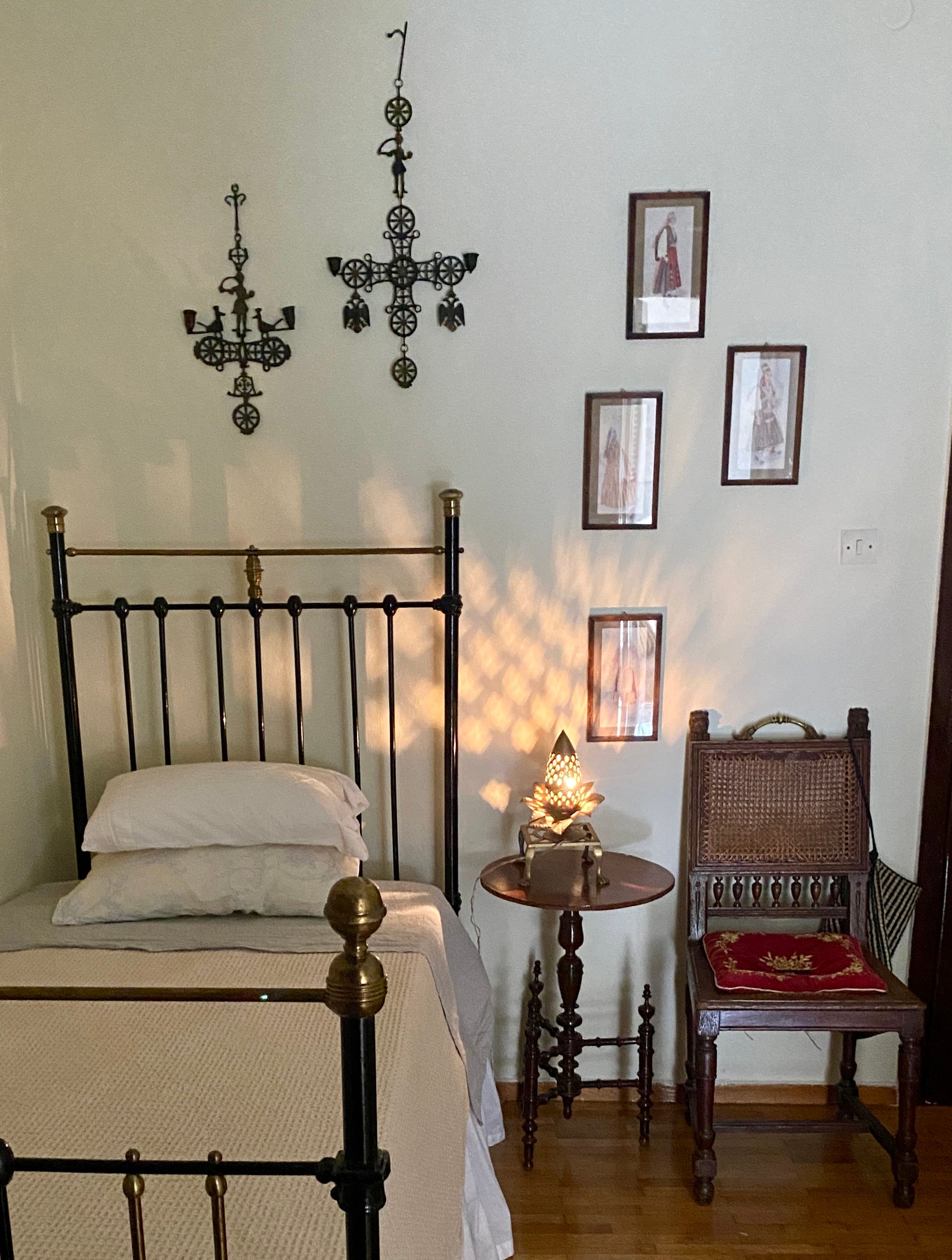
I found out rather quickly that Greece can get under your skin. There is something about the light here that gives everything a certain luster. And since moving here, as an outsider I have found that the best way to understand Greek culture and history is by immersing myself in the country’s folk craft. The beautiful handmade tools, the textiles and ornaments that reveal narratives, superstitions and traditions, be they personal, protective, religious or mythological.
After the end of the Second World War, Greece underwent a process of rapid urbanisation. As people were leaving rural, agricultural ways of life for an urban alternative, many of these folk craft traditions were left behind. Thanks to a handful of visionaries such as Ian Vorres and Angeliki Hatzimichali, who understood folk craft’s importance and were involved in setting up some of the places mentioned in this guide, these special objects and traditional skills have been preserved.
Here, I will take you through some of my favourite places in Athens where you can admire, and sometimes acquire, pieces of this rich folk tradition.
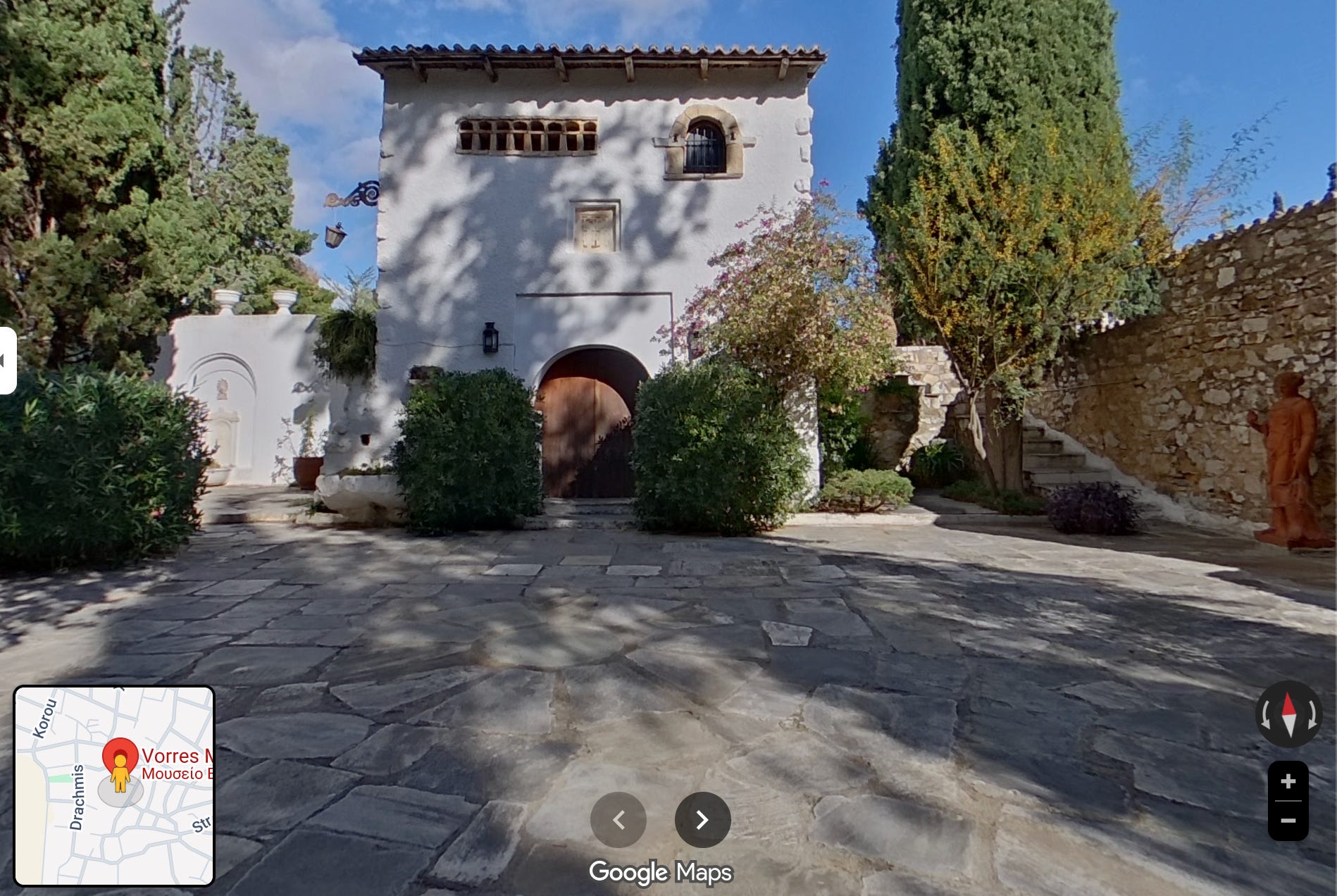
One of the best places to immerse yourself in an older way of life is at the Vorres Museum. Tucked away in a serene garden in the Athenian suburb of Paiania, inside a whitewashed stone house that holds the museum’s folk art collection, you will find what is, in my opinion, the best collection of Greek folk craft available in Athens.
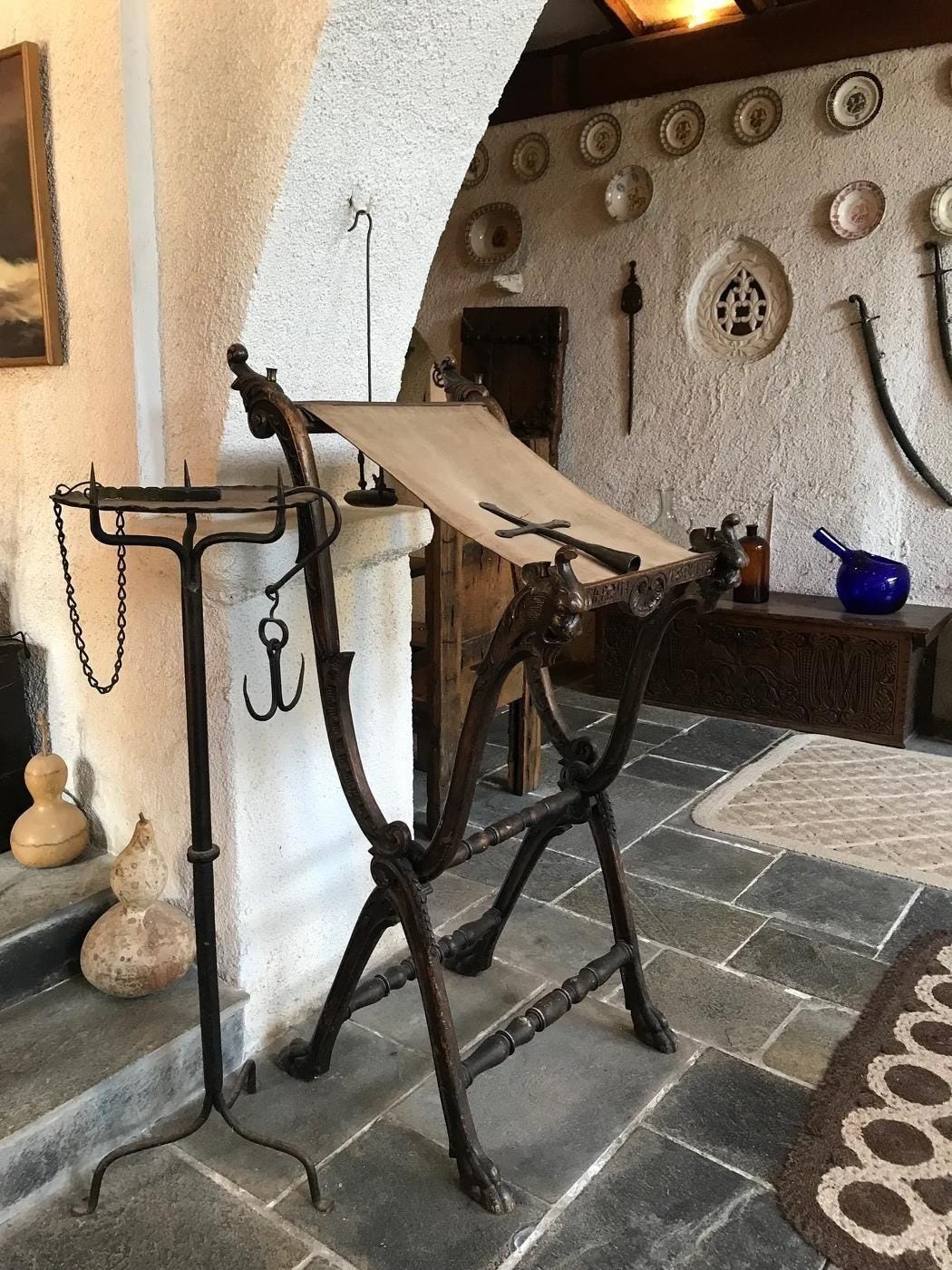
The collection consists of hundreds of beautiful handmade objects made of wrought iron, terracotta, ceramic, wool, wood and marble. Even the heavy wooden doors of the house are closed with elaborate, heavy, hand-forged locks. In particular, I love the wrought iron candelabras that look like some kind of medieval torture device.
Ian Vorres, the museum’s founder, was an obsessive collector of folk pieces that people were throwing away as they left their island homes. Here, hand-forged scythes and intricate embroidery are displayed with equal reverence as the fine art which populates the museum’s contemporary art wing. It is a magical place to visit and has inspired my own small collection of folk craft.
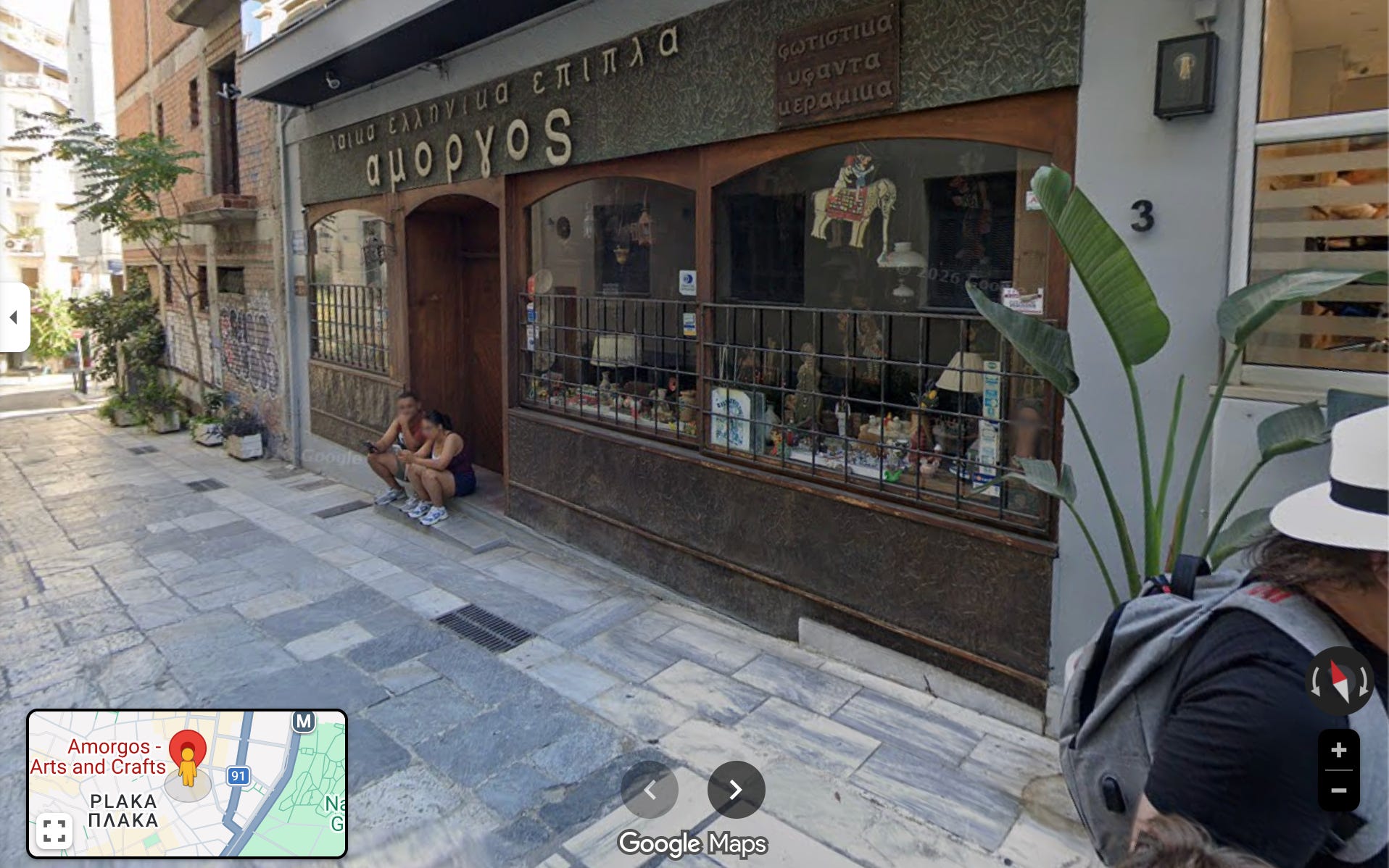
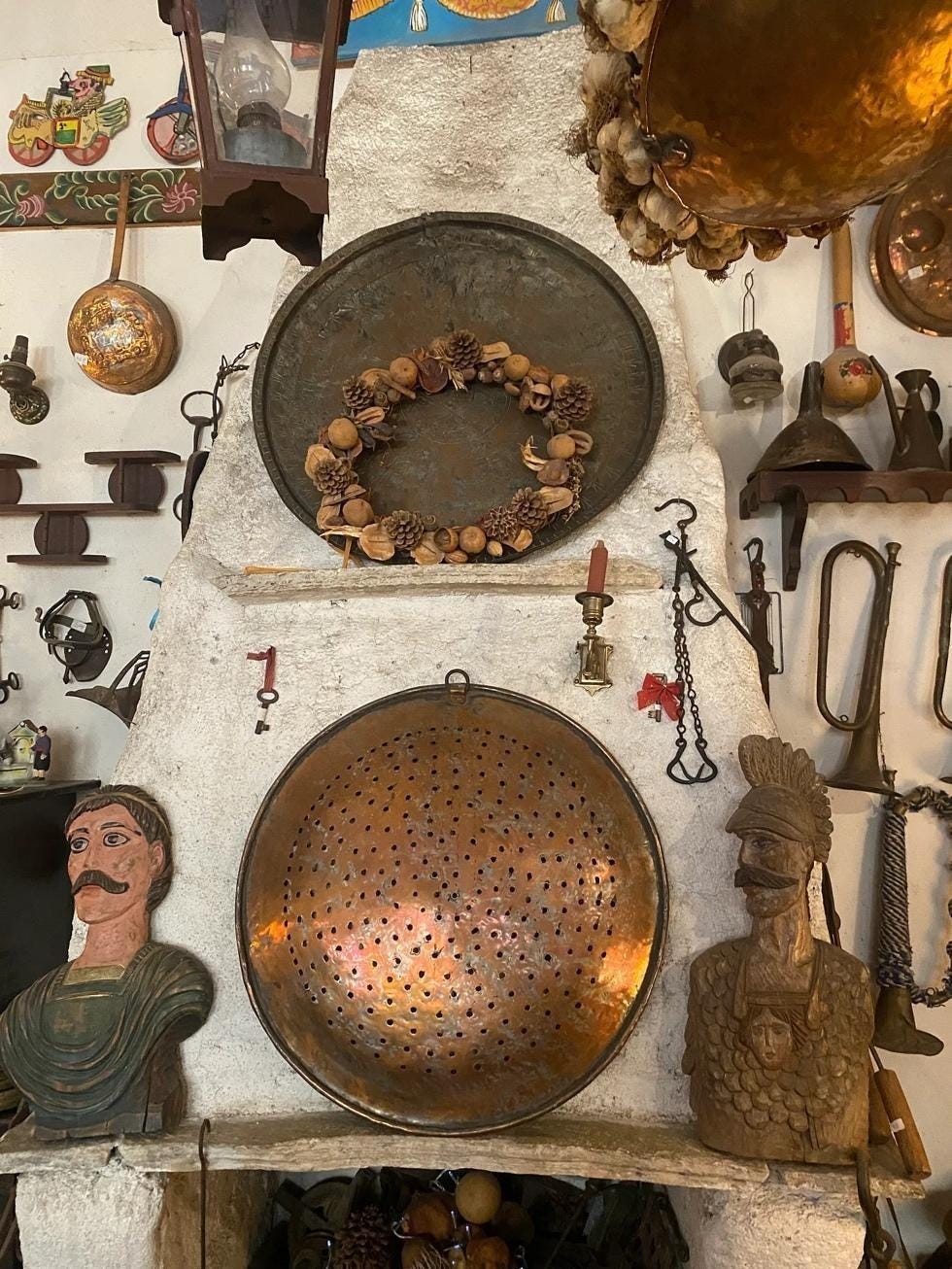
In the neighbourhood of Plaka in the centre of Athens there is a dimly-lit store down a pretty stone alley called Amorgos Arts and Crafts. The store specialises in folk craft, both antique and contemporary, and here you can find carved and painted wooden shelves, statues and stools, an array of wrought iron hooks and doorknobs, folk jewellery, intricate lace-edged textiles and traditional pottery. On the ceiling above you, and in a manner evoking the placement of items in a traditional Greek home, hangs a collection of shadow puppets, copper scales and iron lanterns.
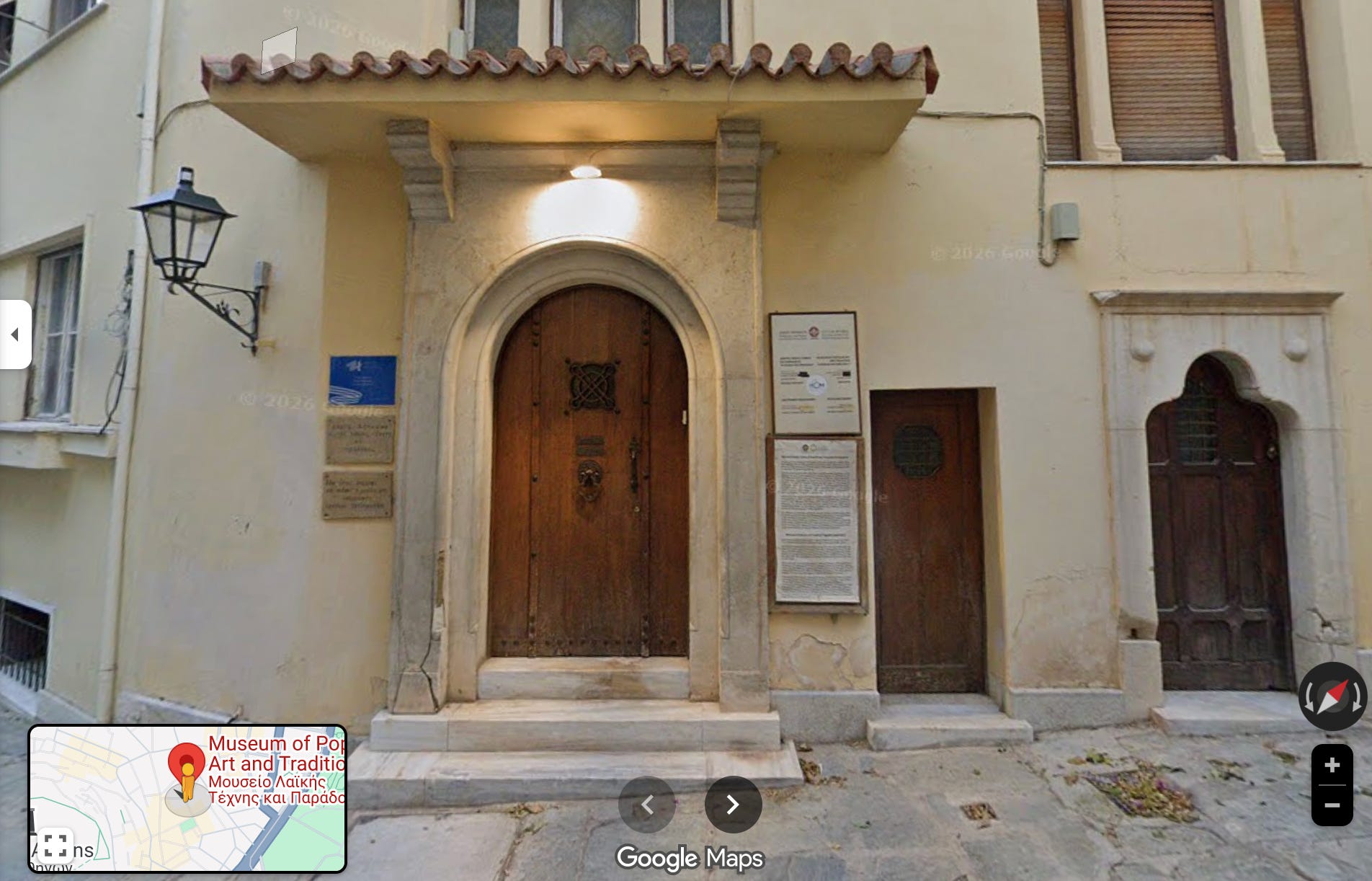
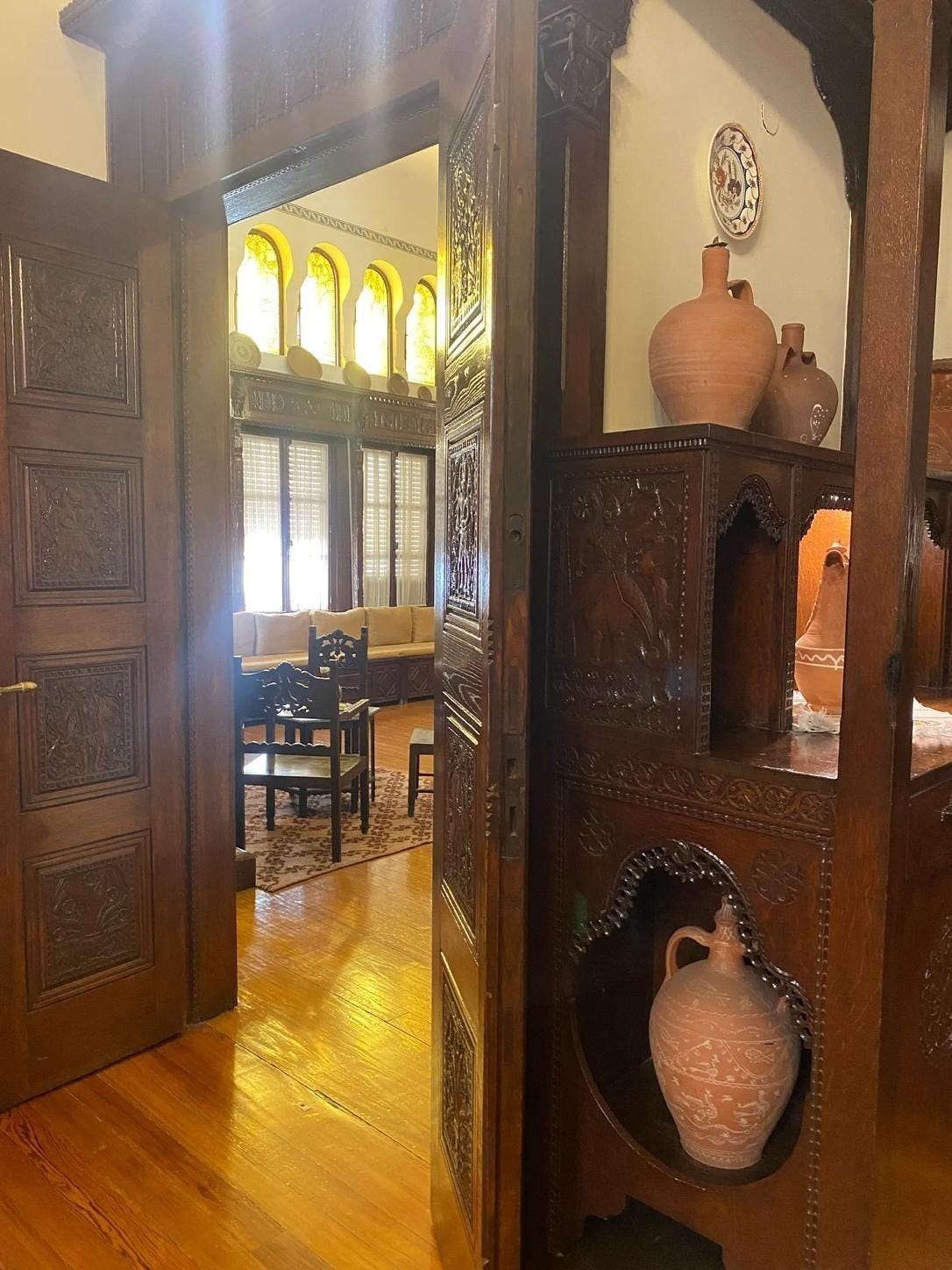
Just around the corner from this store lies the Museum of Folk Art and Tradition. Housed in a traditional mansion, this was once the home of prominent Greek folklorist Angeliki Hatzimichali (1895–1965). Hatzimichali made it her life’s mission to document the daily customs and crafts of Greek rural life and was heavily involved in the preservation and promotion of these practices. One prominent instance is her exhibition of Greek Folk Handicraft held at the Delphic Festival in 1927. This was said to be one of the highlights of the celebrations and one of the first instances of folk craft being exhibited in Greece.
The interior of the Museum is cavernous. Dark, carved wooden shelves line the walls, replete with objects like painted pottery and wooden filigree distaffs, an ancient tool used for spinning wool. Upstairs you can see a tunic in the ancient Greek style, formerly owned by the founder of the Delphic Festival, Eva Palmer-Sikelianos. It is hand woven from thick wool and looks like it would have been rather scratchy and uncomfortable to wear.
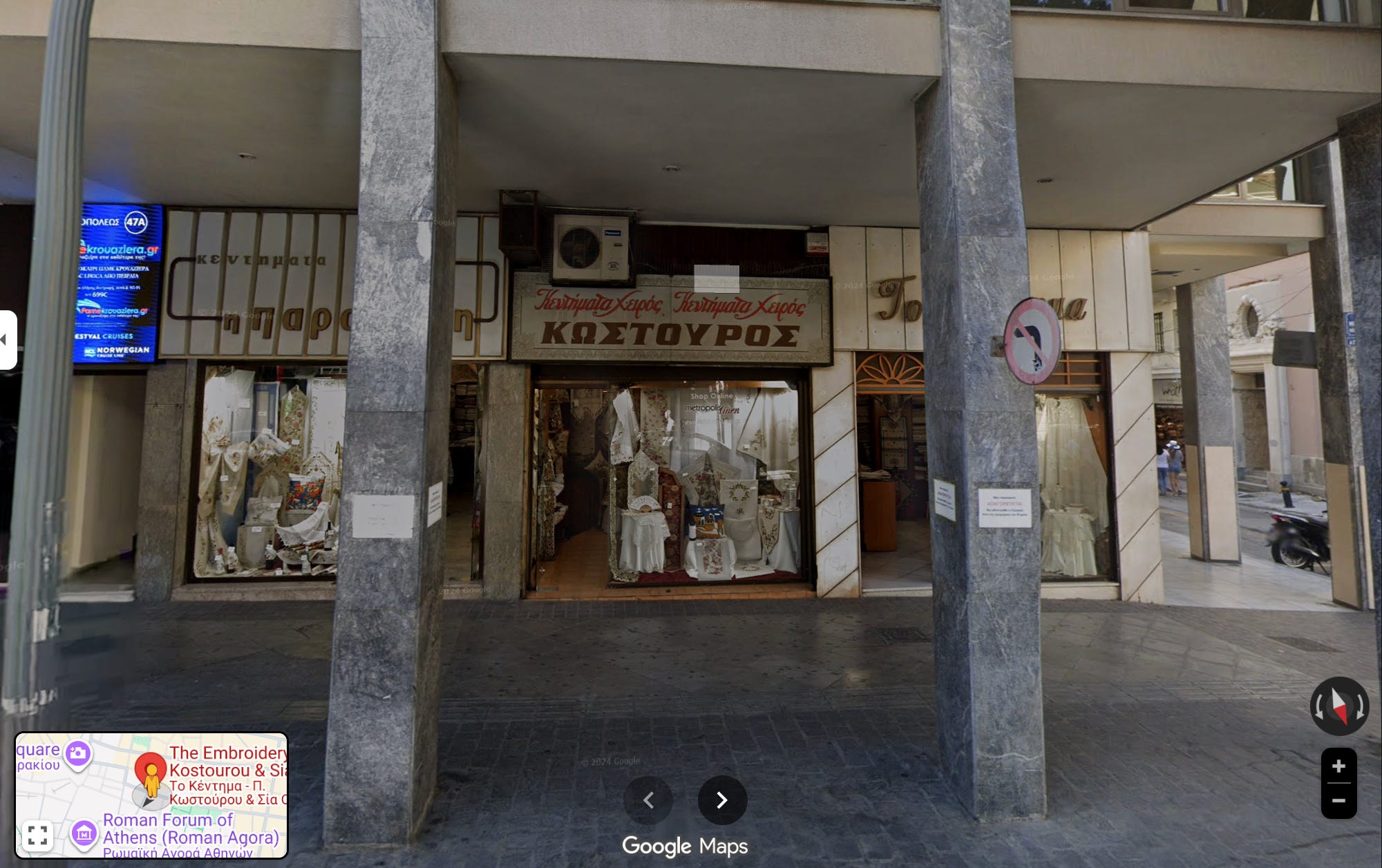
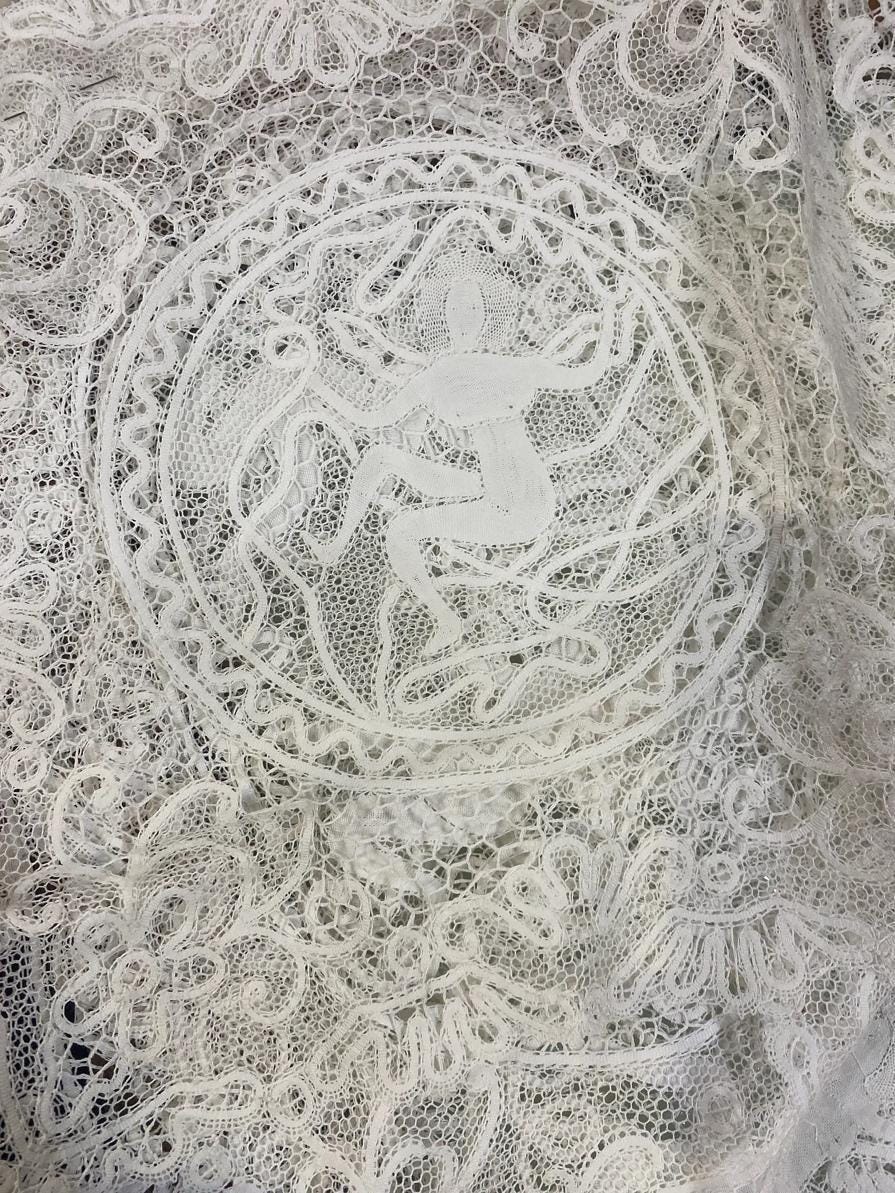
Also in the city centre, on Mitropoleos 47, three unassuming stores stand in a row, their windows filled with embroidered textiles in various shades of white. If you ask the shop attendants, you can see intricately hand-embroidered traditional curtains, sheets, tablecloths and cushion covers in all shapes and sizes, all kept in wooden drawers that line the store’s walls.
Gradually the skills to make these handmade textiles are being lost, and machine embroidered pieces are starting to make up a lot of their stock, although they still work with a select few traditional embroiderers to produce new work. To see the handmade pieces, you need to ask, and some of them are very old, bought from artisans many years ago.
Particularly impressive and beautiful are the intricate Kopaneli bobbin lace pieces made on the islands of Aegina or Crete. They are called Kopaneli after the rhythmic clinking of the sticks that hold the threads when they are made, and their construction involves crossing and twisting threads on a bolster pillow: it is skilled and patient work.
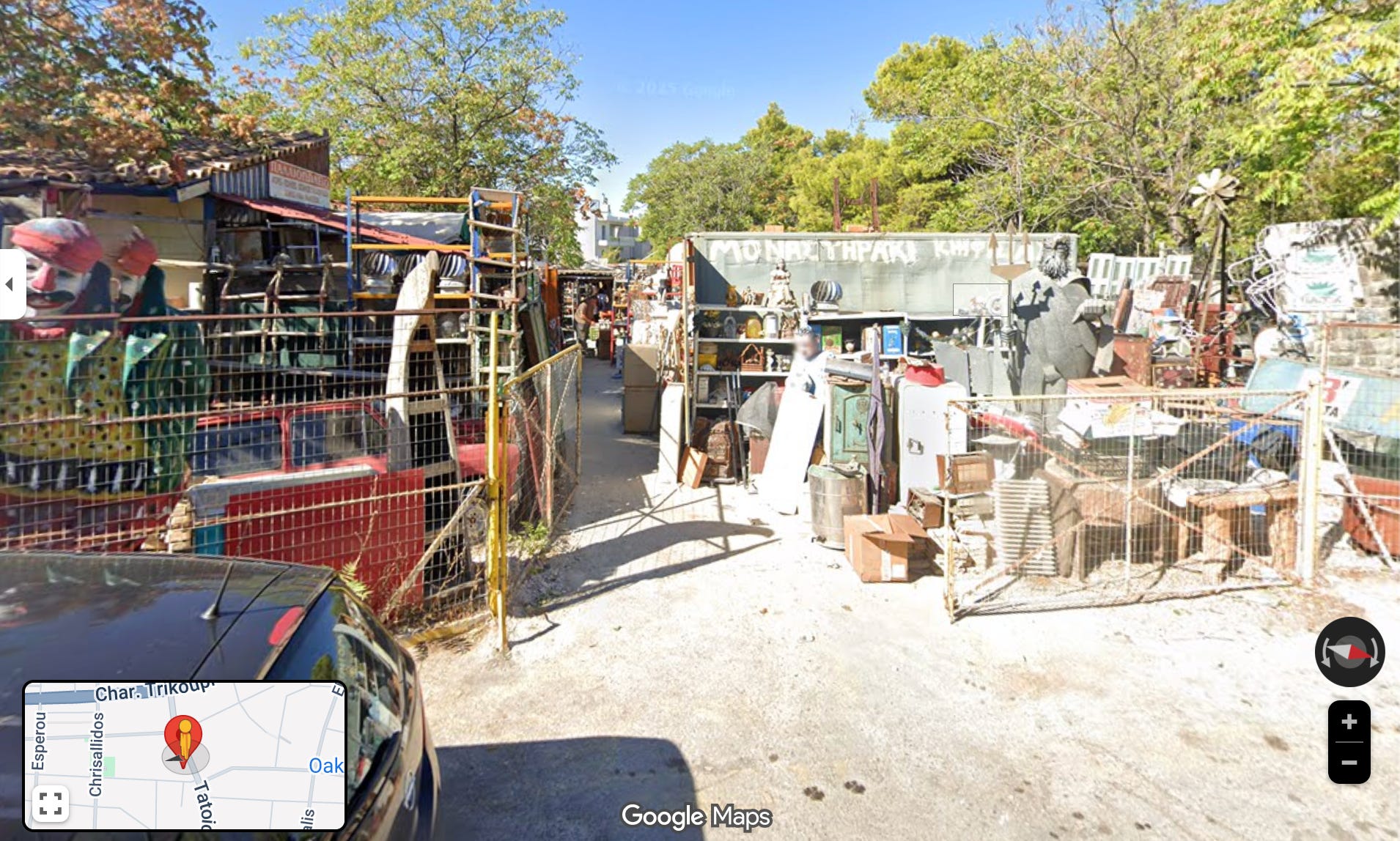
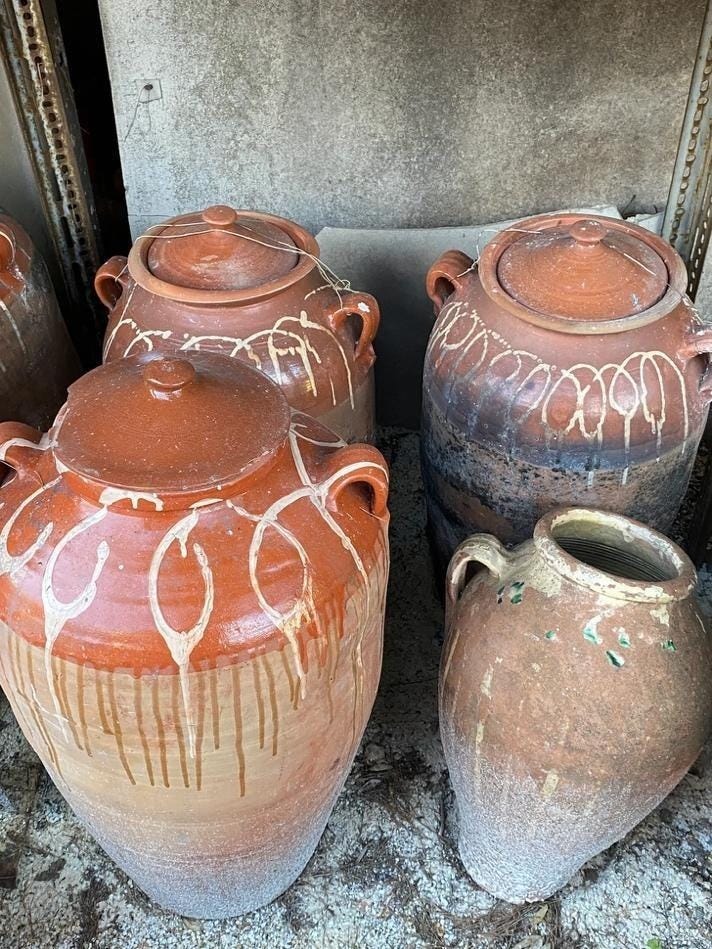
Take the train from Monastiraki and you’ll reach the neighbourhood of Kifisia in the northern suburbs. A short walk from the train station on Tatoiou 69, you can have a less curated shopping experience by visiting the architectural salvage yard. It’s a massive place, full of objects cleared from old buildings that have been renovated or demolished. Here you can find an amazing array of terracotta pots which were traditionally used to store olive oil.
I am particularly interested in their terracotta antefix (in Greek, acroceramo): moulded blocks that cap the edge of roof tiles which often use mythological imagery. Even though the use of antefix originated in antiquity, they can still be seen lining the edges of neoclassical buildings. The most interesting ones have the face of the god Hermes peeking out from the middle of the acanthus leaf!
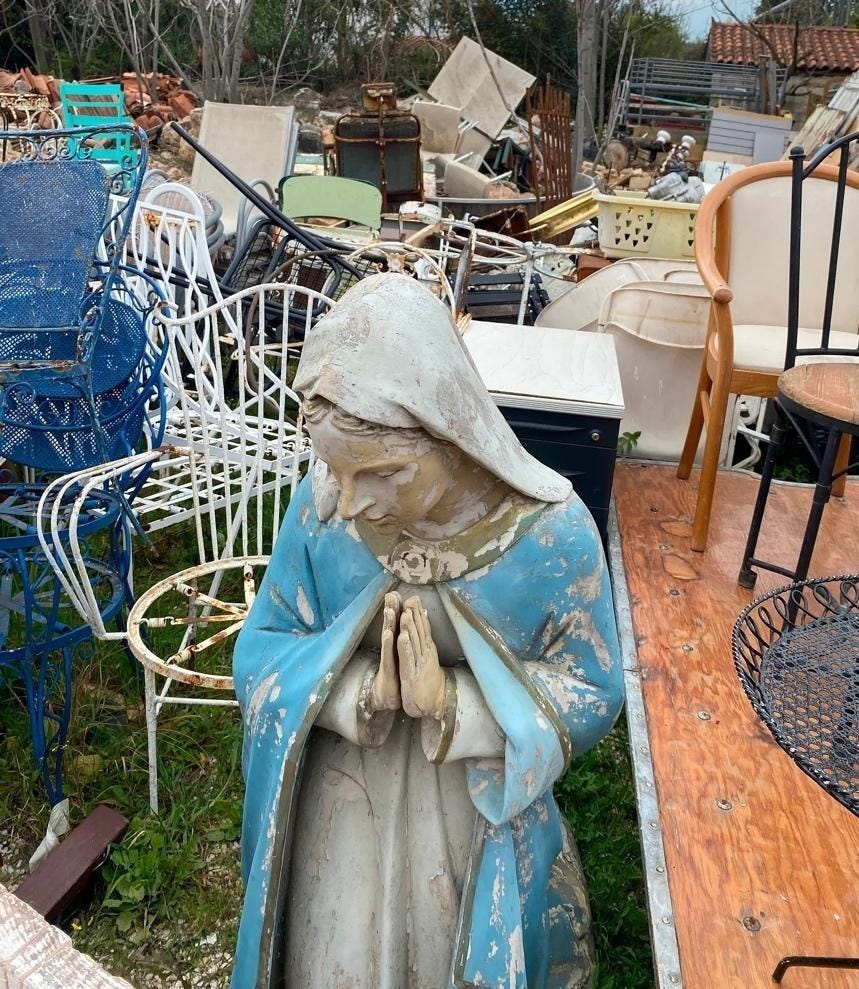
They also have a huge array of antique hand-blown glass bottles – some large flagons once used for wine production, others from ancient pharmacies now long gone. Amongst shelves of brass and a tangle of iron there are strange statues, some taken from old nativity scenes and others made by mysterious and grandiose outsider artists. In the salvage yard you can find almost anything, including the ubiquitous Athenian marble kitchen sink.
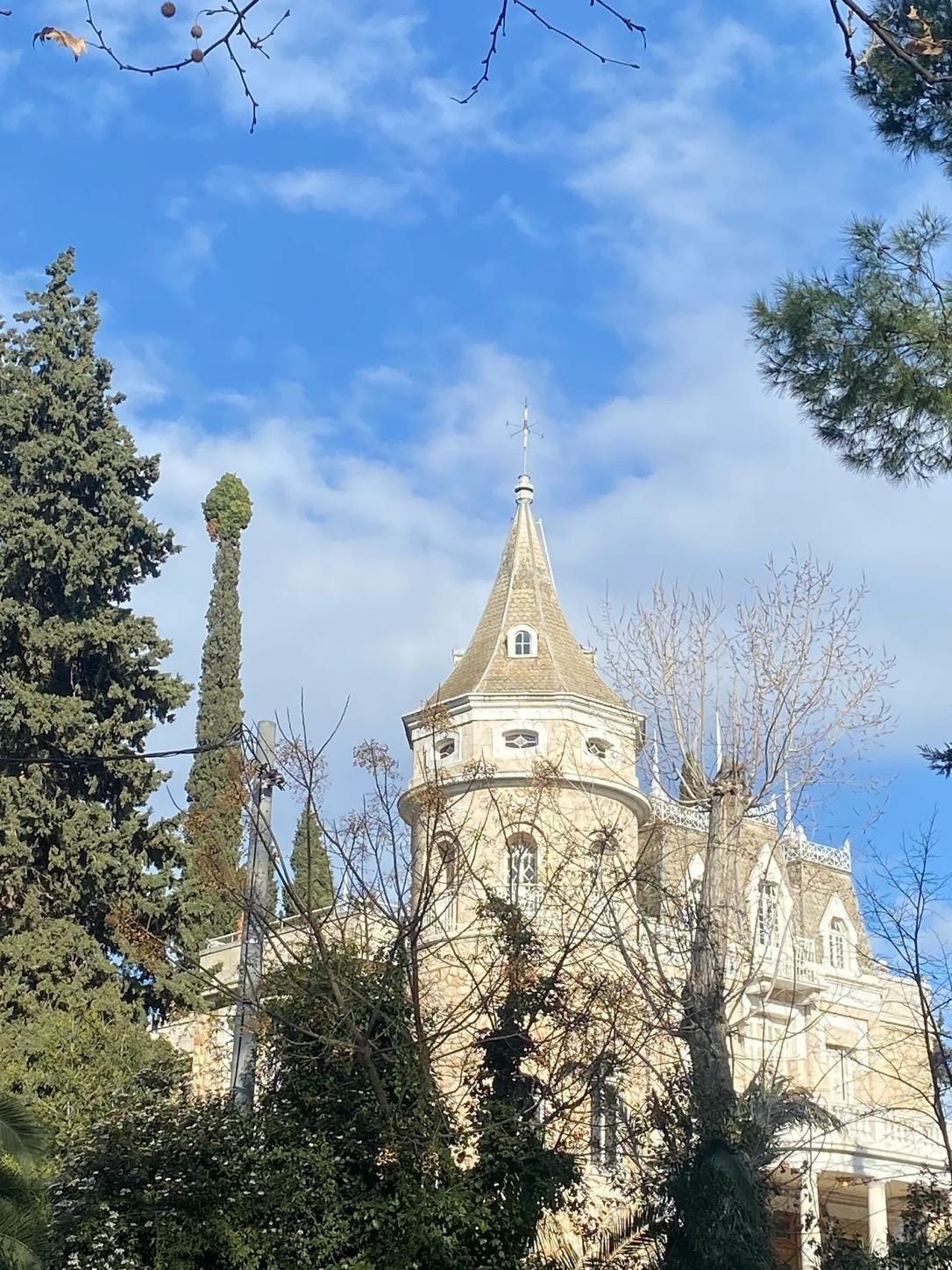
Aside from the salvage yard, Kifisia itself is a beautiful tree-lined neighbourhood where you can see the traces of a more bourgeois way of life. Mansions from the late 19th and early 20th centuries line the streets, some of them featuring fairytale turrets. Others are Bavarian in style, or neoclassical with terracotta statues of goddesses hidden in alcoves on their facade.
These mansions hark back to the time when Kifisia was relatively disconnected from the city, with many upper-class Athenian families choosing to live in this area because of its cooler microclimate and proximity to the Tatoi Palace, the summer palace of the former Greek royal family. If you happen to have a car, to end your journey you can drive a short distance up the mountainside to see the old palace, now abandoned. Another chapter of Greece’s history, now lying in ruins.
Ciao for now!
Comments
Nothing yet. Say the first thing.
Sign in to join the conversation.