
Years ago, before leaving on a teaching trip to Asia, I went to my local travel clinic to update my shots. They gave me 8 inoculations, including a polio booster. A few hours later, halfway through the first class in my Thursday night teaching lineup, I felt a dramatic shift. My heart rate spiked. My blood pressure nosedived, and I felt dizzy. My limbs began to shake with chills.
I asked a colleague taking the class to teach for a few minutes while I sat on a bolster, wrapped in a yoga blanket, to regroup. I felt a volley of anxieties: five years earlier, I’d gone to the emergency room with a bad case of bacterial poisoning from swimming in a lake with high algae levels. Was it happening again? And then it hit me: my body was having a natural response to the travel shots I’d had hours before. My immune system was doing its thing; what’s more, I could feel it as it happened.
What enables us to tap into the ebbs and flows of immune experience in the vast cosmos of our body-brain dialogue? The answer is the sensory system of interoception and one of its primary pathways—the vagus nerve.
If you’re a new subscriber, welcome! I meticulously research and obsess over every piece I write. You’ll find sources listed below the piece, APA-style. All my work is generated by me, so I’ve disabled Substack’s use of Pangram to detect AI.
The vagus nerve (a paired set of nerves, actually) constitutes the tenth and most intricate of twelve pairs of cranial nerves. Containing about 200,000 nerve fibers combined, it begins in the brainstem, travels down the esophagus and alongside the carotid artery, and snakes through the lungs and heart. It terminates in the gut about two-thirds of the way through the transverse colon, the top part that extends horizontally from right to left and connects your ascending with your descending colon. Along the journey from brainstem to gut, the vagus nerve also branches out to your liver, spleen, and kidneys.
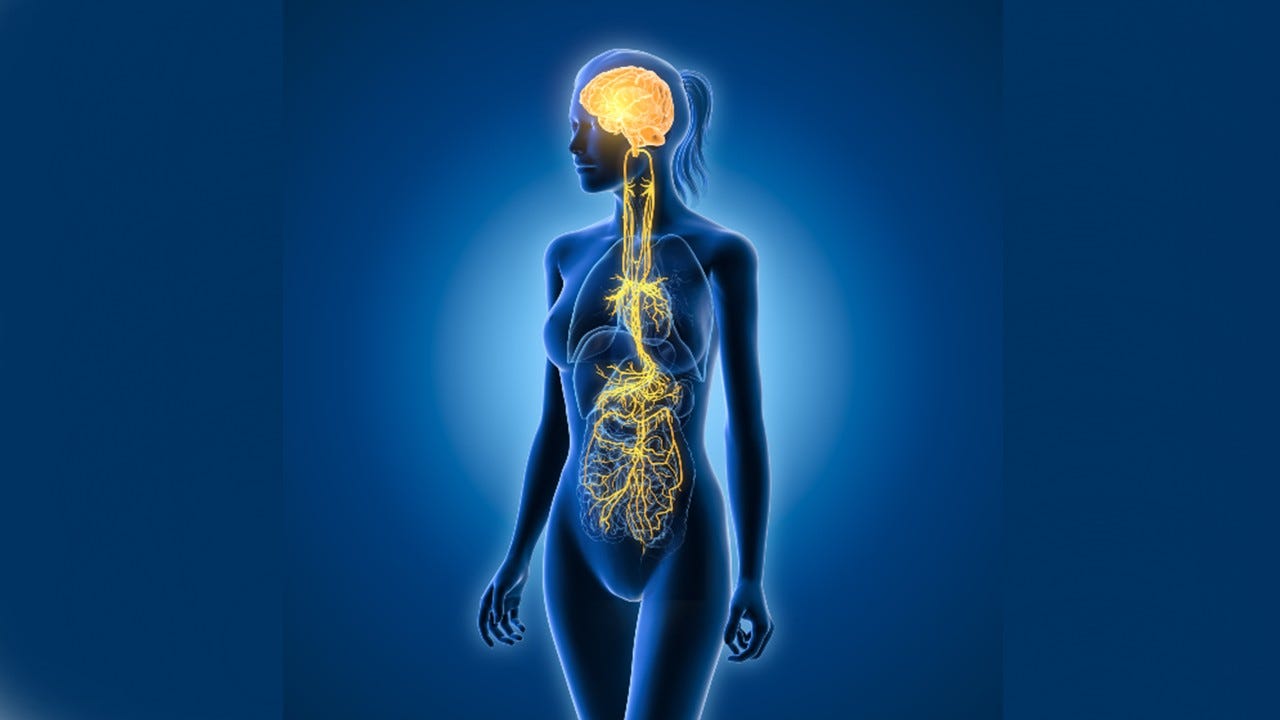
Its serpentine path underscores the vagus nerve’s important role in modulating key aspects of your physiology. It is critical to your autonomic nervous system, which regulates involuntary processes like heart rate, blood pressure, and respiration. In fact, it comprises 75 percent of the fibers in your parasympathetic nervous system (PNS), making it the rest-and-digest system’s primary output nerve. The vagus also modulates myriad other functions including urine output, mucus and saliva production, skin and muscle sensations, speech, digestion, and mood.
Scientific studies have validated new therapeutic techniques to augment autonomic nervous system function. One such technique is vagus nerve stimulation, currently approved for drug-resistant epilepsy, treatment-resistant depression, cluster headaches and migraine, and post-stroke rehabilitation.
Emerging research has begun to explore one of the vagus nerve’s most compelling roles and a new use for vagus nerve stimulation: modulating inflammation.
Inflammation is not inherently negative; we need it to survive, particularly in its short-term acute and mild forms. When we’re infected by a virus, for example, the immune system ignites an acute inflammatory response, releasing molecules that drive swelling, redness, pain, and other reactions to heal injured tissue.
We also experience a short-term inflammatory response after exercise. Here, the immune system deploys T regulatory cells to repair injured skeletal muscle.
But chronic low-grade inflammation is unhealthy. It drives global mortality: more than half of all deaths occur due to inflammatory illnesses like ischemic heart disease, cancer, diabetes, kidney disease, and autoimmune illnesses. And the standard treatments don’t often address the root cause of the inflammation.
That’s where vagus nerve stimulation comes into play. There are three main types of non-invasive stimulation. Transcutaneous auricular vagus nerve stimulation (tVNS) delivers mild electrical impulses through surface electrodes that clip to the ear. Transcutaneous electrical nerve stimulation (TENS) attaches electrode pads to different areas of the body to stimulate distinct portions of the vagus nerve. And novel experiments are “branching out” to study abdominal vagus nerve stimulation as a way to reduce chronic systemic inflammation.
This new method has exciting implications for many chronic illnesses in which inflammation is a throughline, including depression, autoimmune diseases, mast cell activation disorders, gut-brain illnesses, dysautonomia, chronic fatigue syndrome/ME, post-viral syndromes like Long Covid, and neurodegenerative disorders like Parkinson’s and Alzheimer’s. The method also holds promise for people with Ehlers-Danlos Syndrome, a group of connective tissue disorders that overlap strongly with immune, autonomic, gut-related, neurodegenerative, and post-viral syndromes.
Today’s piece focuses the lens on abdominal vagus nerve stimulation for inflammatory diseases. (At the end, you’ll find three options you can do on your own.) To begin, let’s take a quick tour of the inner sensory intelligence that links the vagus nerve and the immune system.
The vagus nerve is a major avenue through which input from sensory organs—the gut, heart, lungs, kidneys, and more—travels from the body to the brain and back. This makes the tenth cranial nerve a key interpreter in your body-brain dialogue.
The main purpose of the body-brain dialogue is to establish homeostasis, internal stability amid a changing external environment. Take core body temperature: if it rises above a healthy range, your vagus nerve conveys a signal to your brain, which tells your blood vessels to widen and initiates sweating to cool you down.
About 80 percent of vagal nerve fibers are afferent, and send signals from your organs to your brain. This makes the nerve a specialist in talking to your brain. About 20 percent of its fibers are efferent, and convey signals from your brain back to your body. But the bi-directionality of the vagus nerve allows it both to sense (body-to-brain) and regulate (brain-to-body) bodily signals.
It is therefore a vital conduit for interoception, a cardinal sensory system and the root sense of embodiment.
Interoception refers to your capacity to receive, interpret, respond to, and regulate signals that come from inside the body. Although it’s always occurring under the surface of your awareness, you can also cultivate it consciously. Think of how you can feel your heartbeat speed up, register a fullness in your abdomen after a meal, notice soreness in your muscles after a workout, or sense the moment when a vaccine booster ignites an immune response.
Interoception encompasses a wide range of sensations, including:
cardiovascular, such as heartbeat
gastrointestinal: the esophagus, stomach, small intestine, colon, and microbiome
distention of the abdomen, bladder, or rectum
hunger, thirst, and fullness
sensations of breath, including shortness of breath, or “air hunger”
temperature (warmth or coolness)
pricking pain or burning pain
itch, shudder, or tickle
vasomotor flushing (aka hot flashes)
muscular sensations, e.g. tension, soreness, and isometric or dynamic exercise
bone bruising, fracture, joint ache
nausea or cramps or illness
headache and migraine
fatigue, including chronic fatigue
sensual touch, also referred to as social or affective (emotional) touch and sexual arousal, touch, and orgasm
More recently, the definition of interoception has expanded to include the molecular processes of acute or chronic inflammation.
For ten years, scientific research has linked deficits of interoception with anxiety, depression, chronic pain, eating disorders, and excessive substance use, making interoception training an adjunct form of mental health. Those insights are only now trickling through into mainstream understanding.
But emerging research is taking that understanding of interoception—and with it, the role of the vagus nerve—to new levels.
Since 2024, exciting new studies illuminate a vital role for interoception and the vagus nerve in cardiovascular, gastrointestinal, muscle and bone metabolism-related, and cognitive health. Inflammation underpins these nodes of health.
A study published in Nature in March 2026 connects interoception in the gut with age-related cognitive decline. Conducted in mice, the study outlined a key revelation: changes in the diversity of the gut microbiome increase inflammation, which impairs the vagal nerves that convey signals from the gut to the brain. These changes reduce interoception, particularly in the gut brain axis, by skewing these interoceptive signals.
This explains why disorders of the gut-brain axis can occur independently of tissue damage to gut tissue itself. Some gut disorders involve a reduced interoceptive signal strength, which you can think of as a reduced capacity to receive signals. Others involve funky interpretation of those signals, such as the tendency to catastrophize the normal sensations of digestion that occurs in IBS.
Importantly, the 2026 study shows that increased inflammation, damage to the vagus nerve, and funky interoception all contribute to neuro-inflammation, which translates to age-related neuro-cognitive decline.
In my opinion, gut-brain disorders, immune-related conditions like mast cell activation syndrome, dysautonomia (disorders of the autonomic nervous system like postural orthostatic tachycardia syndrome or POTS), post-viral illnesses, and Ehlers-Danlos Syndrome all involve dysregulation of multiple barriers of the body. This dysregulation of the body’s key barriers—gut lining, gut-blood barrier, respiratory tract, blood-brain barrier, blood vessels—damages the vagus nerve.
Evidence to support this notion includes the following:
SARS-CoV-2 infects receptors on the vagus nerve, contributing to dysautonomia and chronic inflammation in Long Covid
A 2023 study found inflammation of the vagus nerve in people with Long Covid
Pilot studies have also explored the benefits of vagus nerve stimulation for Long Covid as well as other inflammatory disorders
Your immune system’s primary role is to maintain the integrity of your body. It continually answers the question of what is you and what is not you. This inquiry scaffolds not only your borders but your sense of self. In the words of neuroscientist Antonio Damasio, “the self is whatever the immune system decides is part of the body.”
A growing trove of evidence suggests that to decide what is or isn’t you, the brain continually monitors your moment-to-moment immune status. It does this by interpreting input from pro-inflammatory and anti-inflammatory molecules, hormones, and the vagus nerve to form a representation of your immune status. It can then initiate a neuro-immune reaction that modifies immune status.
To describe this ability, a group of researchers coined the term immunoception, a riff on interoception that illustrates the role interoception plays in immunity. What’s more, the key higher brain area for processing interoception, the insula, also stores immune representations.
The immune system is sentient: capable of sensing, feeling, and perceiving. It monitors the brain even as it’s being monitored. It is also intelligent: possessing of a tremendous capacity for learning, memory, and problem-solving. In a striking study illustrative of the immune system’s extraordinary capacity for memory, researchers showed that prior experiences of inflammation can be retrieved through activation of neural ensembles in the insula that were active during the initial inflammatory experience.
Consider the following examples of immune system intelligence:
Sepsis is a life-threatening response to an infection. When sepsis occurs, the brain activates a corrective “inflammatory reflex,” which is considered a parasympathetic nervous system anti-inflammatory reaction.
Arthritis patients treated with an anti-TNF-α drug showed changes in brain activity before the onset of clinical improvement. (When elevated, TNF-α, a pro-inflammatory molecule, can catalyze autoimmune tissue damage.)
Sensory neurons and vagal fibers that carry signals to the brain express receptors that recognize components of invading pathogens.
Recently, researchers from Harvard Medical School and the Dana Farber Cancer Institute demonstrated that these T regulatory cells can also suppress post-exercise skeletal muscle inflammation that that counters performance-enhancing muscle adaptations.
Similarly, researchers believe that neurodegenerative diseases may be caused not by brain problems, but by malfunctions in communication between the brain and the immune system.
Communication throughout the immune-brain axis is facilitated by the vagus nerve.
Over 25 years ago, scientists identified vagus nerve involvement in immune-related sickness behaviors, including fever, spikes in blood corticosterone, amplified pain responses, suppression of food intake, and social withdrawal. More recently, researchers have identified a body-brain feedback loop that begins in the brainstem in the nucleus of the solitary tract (NST), an area rich in microglia, the “supercells” that regulate neurons. The NST acts as a relay station for sensory information traveling from the body to the brain via the vagus nerve.
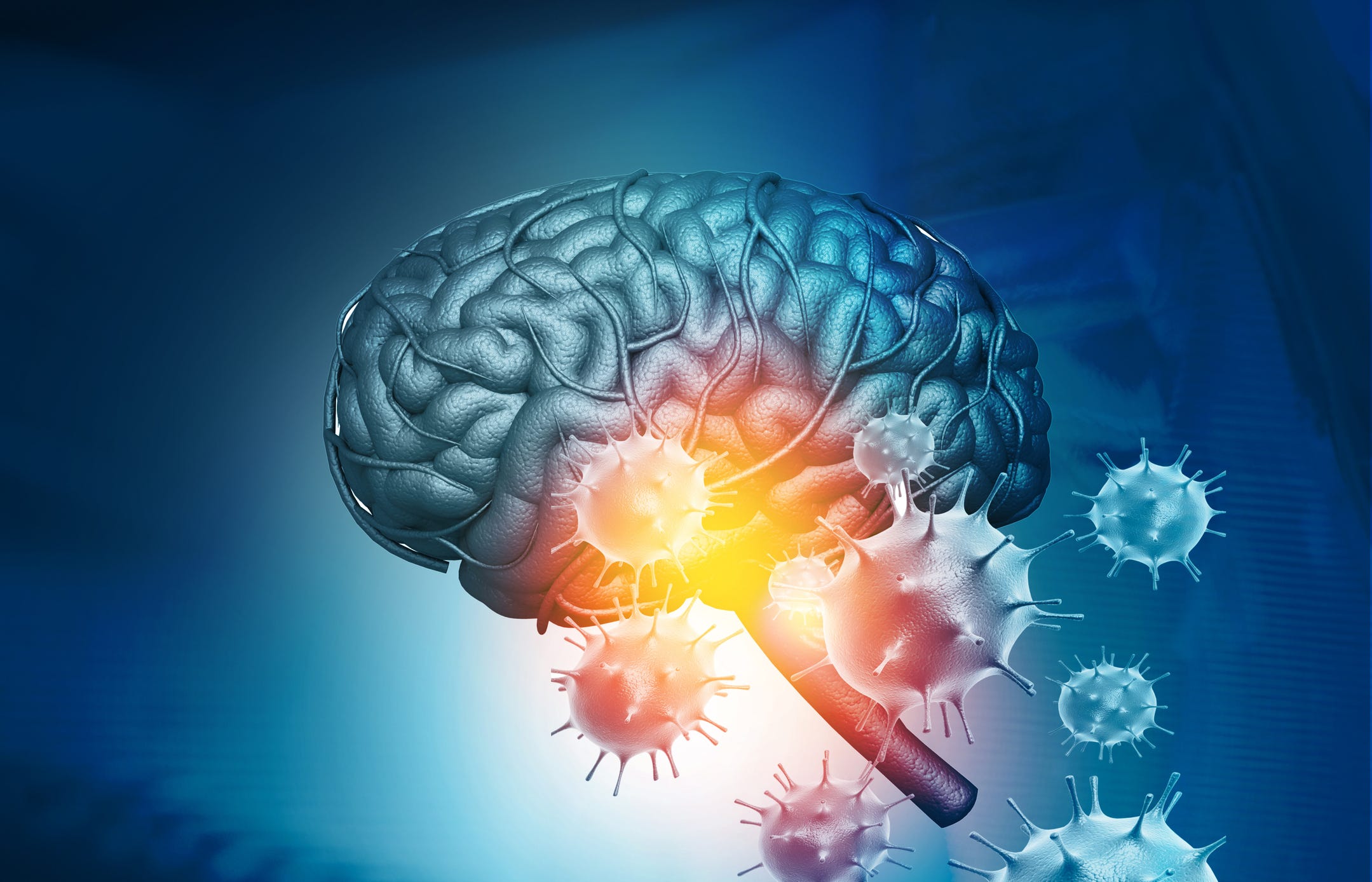
Multiple studies demonstrate that the vagus nerve regulates the production of pro-inflammatory cytokines, small proteins that signal and regulate inflammatory reactions. A 2024 study identified that some vagal neurons in the body-vagal-brain immune loop respond to pro-inflammatory signals, while others respond to anti-inflammatory signals. These groups of vagal neurons convey the signals to the NST in the brainstem.
The regulatory role of the vagus nerve supports the body’s capacity to experience the kind of immune response that fights infection and helps us heal from injuries but at the same time moderates excess inflammation.
That insight brings us to the topic of vagus nerve stimulation.
It’s a jungle out there when it comes to vagus nerve stimulation, with many methods—slow diaphragmatic breathing, humming, cranial-sacral therapy, cold water exposure, safe social connections, for example—touted as valid.
To be clear, I’m in favor of epistemic and ancestral knowledge as well as deductive experimentation, which are far older than science. I also believe in the importance of clarity in qualifying which kind of support exists (and which does not) for specific interventions.
Researchers divide vagus nerve therapy into direct vs. indirect, and invasive vs. non-invasive methods. (As the field evolves, these designations will, too.)
The direct method, done in a hospital, implants a device beneath the skin of the chest. The device sends 30-second pulses to the left vagus nerve every 5 minutes. (The nerve on the right is more likely to affect cardiovascular functioning.) The intermittent stimulation can control the vagus-brain inflammation circuit in both animals and people.
Indirect methods include transcranial auricular vagus nerve stimulation (tVNS), which uses an electrode clipped to the ear, and transcranial electric stimulation (TENS), which employs small electrode pads in specific areas to stimulate different parts of the vagus nerve. But a fascinating new method uses ultrasound to target specific portions of the vagus nerve to reduce inflammation in the body.
An ultrasound can also target specific elements of the vagus nerve to reduce inflammation. It may be the area of research closest to hands-on methods like abdominal connective tissue massage. Many studies have been conducted on our rodent relatives, who share immune and inflammatory pathways with us. Here’s what the latest studies have to say:
In 2019, researchers from the Feinstein Institutes led a study in rodents. Their findings suggested that ultrasound applied to the spleen (in the upper abdominal cavity) stimulates an anti-inflammatory pathway and reduces the production of inflammatory cytokines at a level comparable to a vagus nerve implant.
In 2023, the same group conducted the first human trial of focused ultrasound stimulation for inflammation management. They measured circulating levels of tumor necrosis factor (TNF) in 60 healthy people. Two-thirds of the participants received focus ultrasound stimulation. The remaining third (20 people), intended as the control group, had their spleens imaged by ultrasound with no stimulation.
The results were striking: Every participant had lower levels of TNF inflammation, even the ones who only had their spleens imaged. The researchers recruited another 10 participants to serve as controls and unplugged the ultrasound. Those who received abdominal ultrasound or imaging had a consistent inflammatory response no matter the strength of the stimulus. A day later, the results returned to baseline, suggesting that regular stimulation might be optimal for reducing chronic inflammation.
In a 2026 study, researchers injected lipopolysaccharides, an endotoxin, into mice. Abdominal ultrasound activated vagal fibers that communicate with the brainstem. The technique significantly reduced blood levels of tumor necrosis factor (TNF) and suppressed systemic inflammation. When the researchers cut or blocked the vagus nerve, the anti-inflammatory affects decreased.
To be sure, there’s a divide between ultrasound stimulation and manual pressure-induced stimulation of the abdominal vagus nerve. But research is beginning to narrow that divide. A 2025 review of studies examined the effects of abdominal massage on disorders of gut-brain interaction. Several studies documented that hands-on manual therapy of the abdominal fascia alleviated constipation and post-operative intestinal blockage—conditions similar to postoperative ileus in the abdominal vagus nerve studies discussed above. To indulge a little non-scientific guesswork, I’d say that an improvement in gut motility makes it highly likely that the vagus nerve, which controls gut motility, had a hand in that improvement.
There’s another reason why we can be more confident than ever that the vagus nerve can be stimulated by hands-on manipulation of abdominal connective tissue. The vagus nerve also specializes in another sensory system of embodiment: proprioception, your awareness of movement, spatial location, and pressure. The vagus nerve responds to mechanosensory pressure from sensory cells in the larynx, respiratory system, heart, gut, and other organs. Think of the movement and pressure of food traveling through your intestines, for example, or the pressure you feel in your esophagus as you swallow. Abdominal pressure registers in the sensory nerves of the abdomen, which relay that mechanosensory input to the vagus nerve.
And now, on to three options for stimulating the connective tissue of the abdomen to boost the vagus nerve and reduce inflammation.
OPTION I: ABDOMINAL MASSAGE
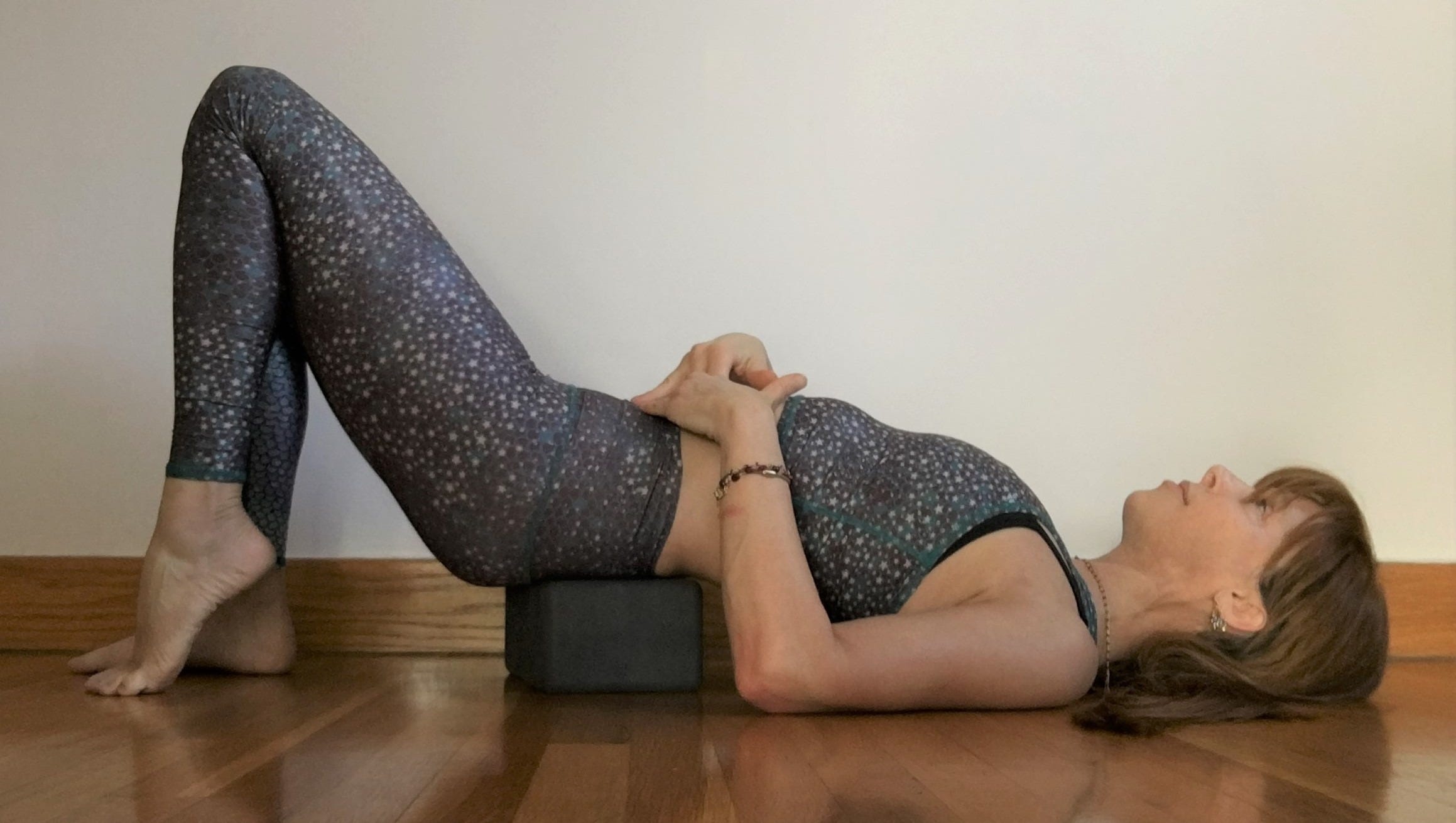
Tip: It’s great if you can be skin-on-skin here. You can use oil or moisturizer to help your hands glide more easily.
Step One: Lie on your back with your knees bent and a block underneath your sitting bones in supported bridge pose.
Step Two: Take a moment to “prime” the area you’re about to engage with before beginning. Lie on your back with your knees bent. Place both palms on your abdomen and rest them there. Begin to breathe in and out through your nose. Bring your awareness to the contact point between your hands and your body, and let it pool there. When you feel that awareness is gelling here, direct your breath to the area under your hands as well. The abdomen is subject to so much social pressure that it’s possible to have complex feelings about it, or even to “hate” it. Just resting our hands here is a lot, and may bring up emotions. If that’s the case, you might find it helpful to remain in this stage (hands on the belly, saying hello) for many months or longer.
Step Three: Start at the lower left corner of your abdomen just medial to (toward the center) your hip bone. Apply gentle pressure with the pads of your fingers, the heels of your hands, or your palms. Move in a circular motion or rest with gentle pressure over areas of tenderness or swelling. Progress over toward the lower right side of your abdomen in the same way, allowing time to pause in areas that feel tender or uninhabited, as though they are absent of awareness. (This is a connective tissue pose that touches many other elements of the mind, brain, and body network—the autonomic, enteric, and immune systems, for instance—but it’s also an interoception-building pose.) Continue at your own pace, moving from the lower right side upward toward your ribs until you reach the upper right. In time, you’ll move your hands across to the upper left. And then you’ll move downward to the lower left side of the abdomen, your starting point. (Note: This sequence mirrors the path of digestion.) You can make a second or third “lap” around your abdomen. Notice if certain spots that may have felt tight or sore begin to feel different as you revisit them.
Step Four: Ease your way out slowly. When you’ve done a “lap” or two around your abdomen and your body feels complete in the pose, return to Step One. Rest your palms on your abdomen. Bring awareness back to the contact point between your hands and your belly. As you let awareness saturate your abdomen, consider this an active “listening” moment in which you attend to any images, emotions, or messages that come forth. As a prelude to completion, slide the block out from underneath your sacrum and spend several moments with your spine resting against the ground. If you wish, you can stretch your legs out along the blanket before curling onto your side and coming up to sitting.
____________________________________________________________
OPTION II: FACE-DOWN BURRITO POSE

Fold a yoga blanket three times the long way so that you have a long and thin fold, and so its width spans your abdomen without extending to your ribs or to your pelvis. If you have a second blanket, roll it up to rest under your ankles (the added blanket roll is not pictured above).
Lie over the thin fold of the blanket; turn your head to whichever side is most comfortable. Breathe in and out through your nose; to further stimulate your vagus nerve, lengthen your exhale so that it’s longer than your inhale. You can remain here for 5 to 30 minutes, or as long as is comfortable.
Roll onto your back and rest with your knees bent and your spine against the mat underneath you for a minute or two before rolling up to sitting.
To be guided through Face-Down Burrito Pose on video, click here.
____________________________________________________________
OPTION III: ABDOMINAL MASSAGE WITH A COREGEOUS BALL
I do this one almost every evening to stimulate gut motility. It requires the coregeous ball from Jill Miller and Tune Up Fitness or the equivalent. (I’m not an affiliate of Tune Up Fitness, but Jill has been kind enough to offer a 10% off coupon for readers of this column. Use the code EDS10 through September 30 to receive your discount.)
To be guided through the coregeous ball abdominal massage by Jill, click here.
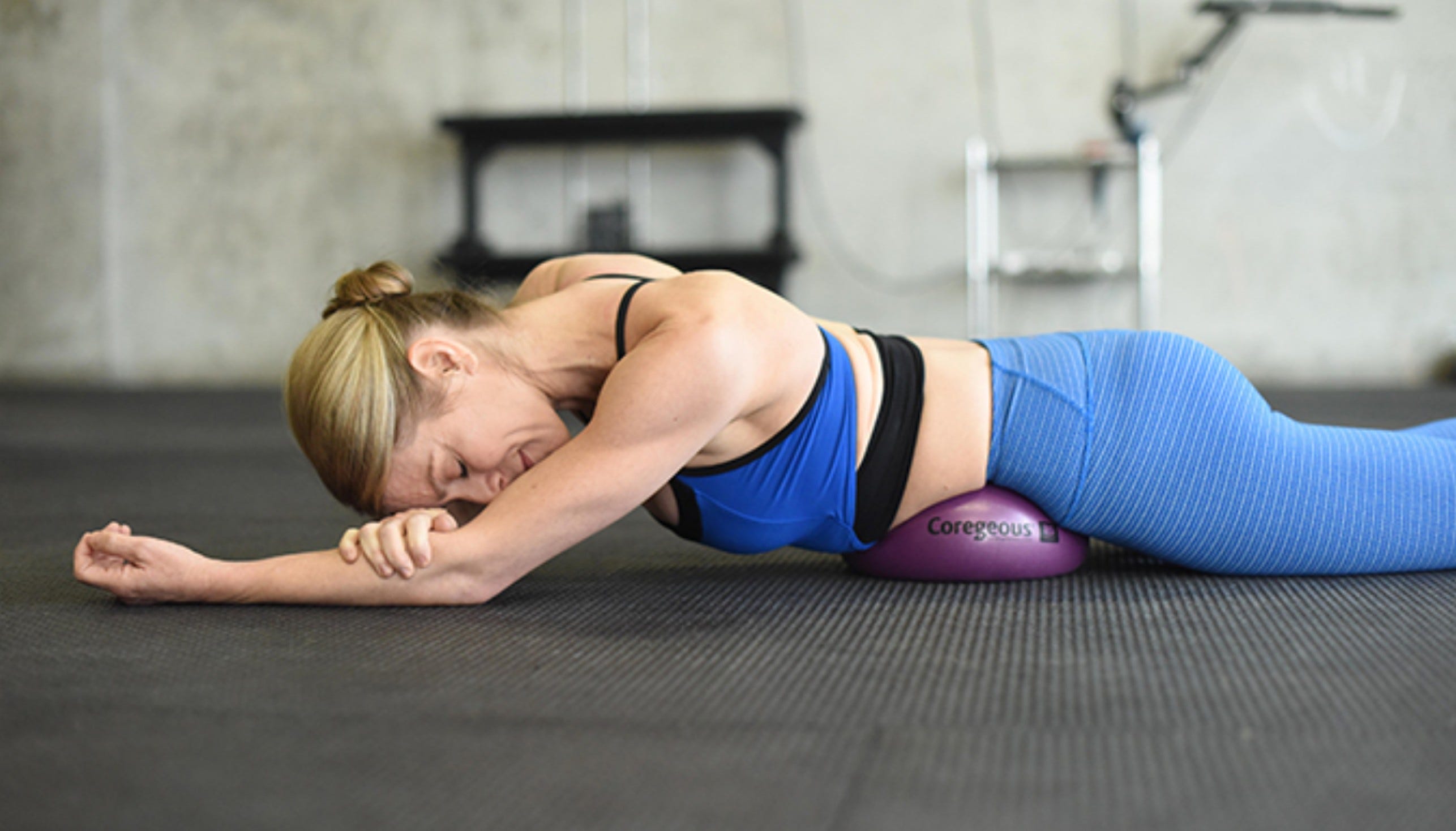
Here’s my personal version of this exercise.
Place a blanket or mat on the floor to cushion your legs and arms. Ensure that the coregeous ball is not fully inflated and has ample “give” to it. Place the ball under your belly. If you’d like, begin on the lower right side, leaning over to that side and then back to center, moving slowly as you rock back and forth horizontally and vertically. After a minute or two, adjust the position of the coregeous ball so that it’s just below your lower ribs. Rock gently back and forth there, too, noting any pockets of swelling or tenderness. In addition to a slight rocking motion, you can also rest in one position. Breathe deeply through your nose. If you encounter tenderness in your abdomen, you can soften the pressure a little by bearing more weight on your forearms; you can also lengthen your inhale, letting it extend longer than your exhale.
If you’d like, you can extend one or both arms along the floor in the direction of your head as you see Jill doing, above; this can help you (and the ball) access added layers of tightness, tenderness, or inflammation. At first, the movements can feel a bit “staccato.” By the third or fourth time, you’ll be more comfortable letting your body intuitively guide your movements.
As you continue, you’ll move the positioning of the ball from the upper right side of your abdomen toward the upper left side, stopping to alternate horizontal and vertical rocking and rolling.
Do the same from the upper left side to the lower left, slowly rocking and resting as you trace the path of digestion. You can visit any of the spots that felt tender, if you’d like, and spend more time there.
Slowly remove the ball and lie on your back with your knees bent and your hands on your abdomen, breathing deeply through your nose. You can add a little interoception, noting what feels different and observing the state of your mind and nervous system, before completing the practice.
In particular, it contains 75 percent of your parasympathetic: Vagus Nerve: What It Is, Function, Location & Conditions. (n.d.). Cleveland Clinic. Retrieved July 29, 2026, from https://my.clevelandclinic.org/health/body/22279-vagus-nerve
Recently, researchers from Harvard Medical School and the Dana Farber: Langston, P. K., Sun, Y., Ryback, B. A., Mueller, A. L., Spiegelman, B. M., Benoist, C., & Mathis, D. (2023). Regulatory T cells shield muscle mitochondria from interferon-γ–mediated damage to promote the beneficial effects of exercise. Science Immunology, 8(89), eadi5377. https://doi.org/10.1126/sciimmunol.adi5377
Chronic inflammatory diseases contribute significantly to global mortality: Furman, D., Campisi, J., Verdin, E., Carrera-Bastos, P., Targ, S., Franceschi, C., Ferrucci, L., Gilroy, D. W., Fasano, A., Miller, G. W., Miller, A. H., Mantovani, A., Weyand, C. M., Barzilai, N., Goronzy, J. J., Rando, T. A., Effros, R. B., Lucia, A., Kleinstreuer, N., & Slavich, G. M. (2019). Chronic inflammation in the etiology of disease across the life span. Nature Medicine, 25(12), 1822–1832. https://doi.org/10.1038/s41591-019-0675-0
The vagus nerve is also linked with proprioception, our awareness of: Prescott, S. L., & Liberles, S. D. (2022). Internal senses of the vagus nerve. Neuron, 110(4), 579–599. https://doi.org/10.1016/j.neuron.2021.12.020
Auricular transcutaneous stimulation of the vagus nerve improves interoception: Ventura-Bort, C., & Weymar, M. (2024). Transcutaneous auricular vagus nerve stimulation modulates the processing of interoceptive prediction error signals and their role in allostatic regulation. Human brain mapping, 45(3), e26613. https://doi.org/10.1002/hbm.26613 See also: Paciorek, A., & Skora, L. (2020). Vagus Nerve Stimulation as a Gateway to Interoception. Frontiers in psychology, 11, 1659. https://doi.org/10.3389/fpsyg.2020.01659
This allows your vagus nerve to sense and to regulate homeostasis or internal stability: Singer, J., & Damasio, A. (2025). The physiology of interoception and its adaptive role in consciousness. Philosophical Transactions of the Royal Society B: Biological Sciences, 380(1939), 20240305. https://doi.org/10.1098/rstb.2024.0305
A study published in Nature in March 2026, for example, connects interoception: Cox, T. O., Devason, A. S., de Araujo, A., Mason, S., Subramanian, M., Salvador, A. F. M., Descamps, H. C., Kim, J., Zhu, Y., Litichevskiy, L., Jung, S., Song, W.-S., Cortés-Martín, A., Henderson, N. T., Huang, K.-P., Nguyen, T., Sae-Lee, W., Umana, I. C., Sacta, M., … Thaiss, C. A. (2026). Intestinal interoceptive dysfunction drives age-associated cognitive decline. Nature, 652(8109), 442–450. https://doi.org/10.1038/s41586-026-10191-6
SARS-CoV-2 has been found to infect receptors on the vagus nerve: Khan, M. W. Z., Ahmad, M., Qudrat, S., Afridi, F., Khan, N. A., Afridi, Z., Fahad, Azeem, T., & Ikram, J. (2024). Vagal nerve stimulation for the management of long COVID symptoms. Infectious Medicine, 3(4), 100149. https://doi.org/10.1016/j.imj.2024.100149
And a 2023 study found inflammation of the vagus nerve: Woo, M. S., Shafiq, M., Fitzek, A., Dottermusch, M., Altmeppen, H., Mohammadi, B., Mayer, C., Bal, L. C., Raich, L., Matschke, J., Krasemann, S., Pfefferle, S., Brehm, T. T., Lütgehetmann, M., Schädler, J., Addo, M. M., Schulze Zur Wiesch, J., Ondruschka, B., Friese, M. A., & Glatzel, M. (2023). Vagus nerve inflammation contributes to dysautonomia in COVID-19. Acta neuropathologica, 146(3), 387–394. https://doi.org/10.1007/s00401-023-02612-x
As neuroscientist Antonio Damasio has said: Damasio, A. (2003). Mental self: The person within. Nature, 423(6937), 227–227. https://doi.org/10.1038/423227a
That the brain continually monitors immune status, and can modify: Rolls, A. (2023). Immunoception: The insular cortex perspective. Cellular & Molecular Immunology, 20(11), 1270–1276. https://doi.org/10.1038/s41423-023-01051-8
Researchers call this ability immunoception: Koren, T., & Rolls, A. (2022). Immunoception: Defining brain-regulated immunity. Neuron, 110(21), 3425–3428. https://doi.org/10.1016/j.neuron.2022.10.016
The insula, a key brain area for processing interoception, also stores: Rolls, A. (2023). Immunoception: The insular cortex perspective. Cellular & Molecular Immunology, 20(11), 1270–1276. https://doi.org/10.1038/s41423-023-01051-8 See also: Koren, T., Yifa, R., Amer, M., Krot, M., Boshnak, N., Ben-Shaanan, T. L., Azulay-Debby, H., Zalayat, I., Avishai, E., Hajjo, H., Schiller, M., Haykin, H., Korin, B., Farfara, D., Hakim, F., Kobiler, O., Rosenblum, K., & Rolls, A. (2021). Insular cortex neurons encode and retrieve specific immune responses. Cell, 184(25), 6211. https://doi.org/10.1016/j.cell.2021.11.021
In a striking study, researchers showed that prior experiences of inflammation: Koren, T., Yifa, R., Amer, M., Krot, M., Boshnak, N., Ben-Shaanan, T. L., Azulay-Debby, H., Zalayat, I., Avishai, E., Hajjo, H., Schiller, M., Haykin, H., Korin, B., Farfara, D., Hakim, F., Kobiler, O., Rosenblum, K., & Rolls, A. (2021). Insular cortex neurons encode and retrieve specific immune responses. Cell, 184(24), 5902–5915.e17. https://doi.org/10.1016/j.cell.2021.10.013
Sepsis is a life-threatening response to: Pavlov, V. A., & Tracey, K. J. (2017). Neural regulation of immunity: molecular mechanisms and clinical translation. Nature neuroscience, 20(2), 156–166. https://doi.org/10.1038/nn.4477
For example, arthritis patients treated with an anti-TNF-α drug evidenced changes: Hess, A., Axmann, R., Rech, J., Finzel, S., Heindl, C., Kreitz, S., Sergeeva, M., Saake, M., Garcia, M., Kollias, G., Straub, R. H., Sporns, O., Doerfler, A., Brune, K., & Schett, G. (2011). Blockade of TNF-α rapidly inhibits pain responses in the central nervous system. Proceedings of the National Academy of Sciences of the United States of America, 108(9), 3731–3736. https://doi.org/10.1073/pnas.1011774108
And sensory neurons and vagal fibers that carry signals to the brain express receptors: Koren, T., & Rolls, A. (2022). Immunoception: Defining brain-regulated immunity. Neuron, 110(21), 3425–3428. https://doi.org/10.1016/j.neuron.2022.10.016
Recently, researchers from Harvard Medical School and the Dana Farber Cancer Institute demonstrated: Langston, P. K., Sun, Y., Ryback, B. A., Mueller, A. L., Spiegelman, B. M., Benoist, C., & Mathis, D. (2023). Regulatory T cells shield muscle mitochondria from interferon-γ–mediated damage to promote the beneficial effects of exercise. Science Immunology, 8(89), eadi5377. https://doi.org/10.1126/sciimmunol.adi5377
Emerging research shows that the vagus nerve regulates the production of pro-inflammatory: The Vagus Nerve: A Key Player in Your Health and Well-Being. (n.d.). Retrieved July 30, 2026, from https://www.massgeneral.org/news/article/vagus-nerve
A 2024 study identified that in the body-vagal-brain immune loop: Jin, H., Li, M., Jeong, E., Castro-Martinez, F., & Zuker, C. S. (2024). A body–brain circuit that regulates body inflammatory responses. Nature, 630(8017), 695–703. https://doi.org/10.1038/s41586-024-07469-y
The intermittent stimulation can control the vagus-brain inflammation circuit: Vagus nerve stimulation: How it works, approved uses | Northwell Health. (2024, October 17). https://feinstein.northwell.edu/news/insights/vagus-nerve-stimulation
In 2019, researchers from the Feinstein Institutes led a study in rodents: Cotero, V., Fan, Y., Tsaava, T., Kressel, A. M., Hancu, I., Fitzgerald, P., Wallace, K., Kaanumalle, S., Graf, J., Rigby, W., Kao, T.-J., Roberts, J., Bhushan, C., Joel, S., Coleman, T. R., Zanos, S., Tracey, K. J., Ashe, J., Chavan, S. S., & Puleo, C. (2019). Noninvasive sub-organ ultrasound stimulation for targeted neuromodulation. Nature Communications, 10(1), 952. https://doi.org/10.1038/s41467-019-08750-9
Then, in 2023, the same group researchers followed up with an elegant: Zanos, S., Ntiloudi, D., Pellerito, J., Ramdeo, R., Graf, J., Wallace, K., Cotero, V., Ashe, J., Moon, J., Addorisio, M., Shoudy, D., Coleman, T. R., Brines, M., Puleo, C., Tracey, K. J., & Chavan, S. S. (2023). Focused ultrasound neuromodulation of the spleen activates an anti-inflammatory response in humans. Brain Stimulation, 16(3), 703–711. https://doi.org/10.1016/j.brs.2023.04.003
In a 2026 study, researchers injected lipopolysaccharides, an endotoxin: Shimoyama, K., Tanida, M., Aruga, J., Furusato, T., Wu, C. H., Nakamura, Y., Takahashi, D., Kanzaki, G., Maeda, A., Shioya, T., Tsuboi, N., Abe, C., Yokoo, T., Umene, R., & Inoue, T. (2026). Abdominal ultrasound activates afferent vagus nerve fibers and induces anti-inflammatory effects. Proceedings of the National Academy of Sciences of the United States of America, 123(7), e2518969123. https://doi.org/10.1073/pnas.2518969123
The subdiaphragmatic vagus, the portion below the diaphragm, is comprised of 80: Gottfried-Blackmore, A., Habtezion, A., & Nguyen, L. (2021). Noninvasive vagal nerve stimulation for gastroenterology pain disorders. Pain management, 11(1), 89–96. https://doi.org/10.2217/pmt-2020-0067
Finally, a 2025 review of studies looked at the evidence for abdominal massage: Durga, G., Mooventhan, A., Gowthami, R., Nivethitha, L., & Manavalan, N. (2025). Scientific Evidence-based Effects of Abdominal Massage in People with Constipation: A Narrative Review. International journal of therapeutic massage & bodywork, 18(4), 76–84. https://doi.org/10.3822/ijtmb.v18i4.1137
Comments
Nothing yet. Say the first thing.
Sign in to join the conversation.