
This week has been tough one to metabolize for survivors of sexual assault.
I’m talking, of course, about the implosion of the Graham Platner campaign.
The consultants behind Graham Platner, the politicians who endorsed him, and the voters who traded their integrity to support him ignored multiple red flags—a Nazi tattoo, a history of violent and misogynistic statements, sexting a dozen women while married—to put Graham Platner in power.
The death knell for his campaign sounded this week, when Jenny Racicot told CNN that Graham Platner raped her in 2021.
Twenty-four hours later, Platner resigned, as he should have months ago.
And now, it turns out, the key consultant behind the Platner Campaign has his own history of sexual predation.
While the dust continues to swirl, survivors are once again asked to swallow that bitterest of pills: the visible evidence that even for people opposed to violence, sexual assault should be overlooked when something else matters more—in this case, the political need to flip a Senate seat in Maine.
Voters optimistic about Platner’s chances to beat Susan Collins feel angry and betrayed. Yet tellingly, most are directing their anger not at Platner himself or the independent consultants who sold voters a false story but at Jenny Racicot, the woman he assaulted.
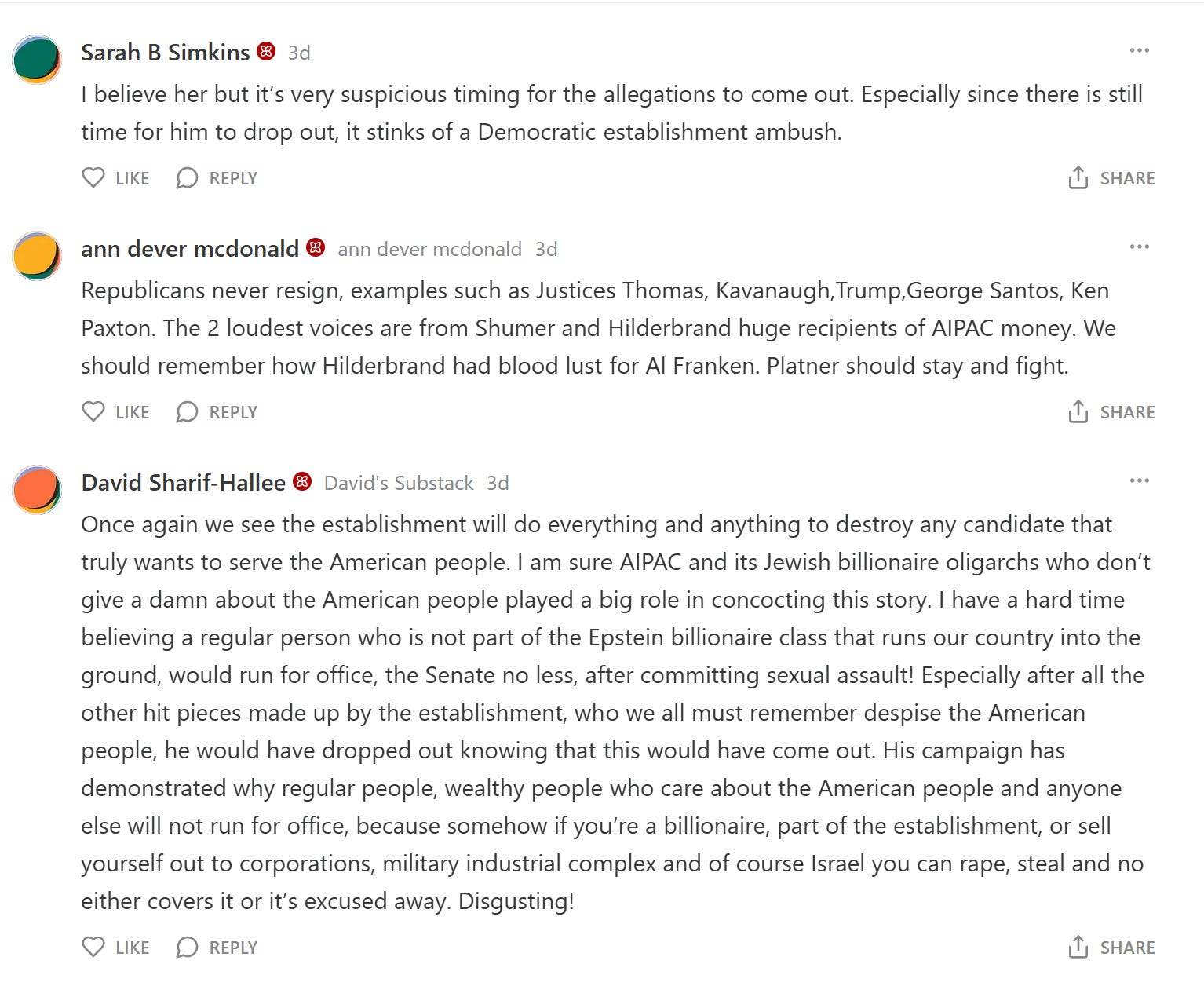
Pundits, influencers, and ordinary people are also saying that the Politico exposé and New York Times coverage is a “hit piece” powered by conservative groups like AIPAC to ruin the “only” campaign that had a chance of unseating the dishonorable Susan Collins of Maine.
The misdirected anger and the allegiance to white men in power is nothing new. It illustrates why survivors wait so long to come forward—if we do come forward at all.
Although Jenny Racicot’s interview with CNN is widely available, online misinformation continues to pass along falsehoods that discredit her account of what happened. Let’s center her story first.
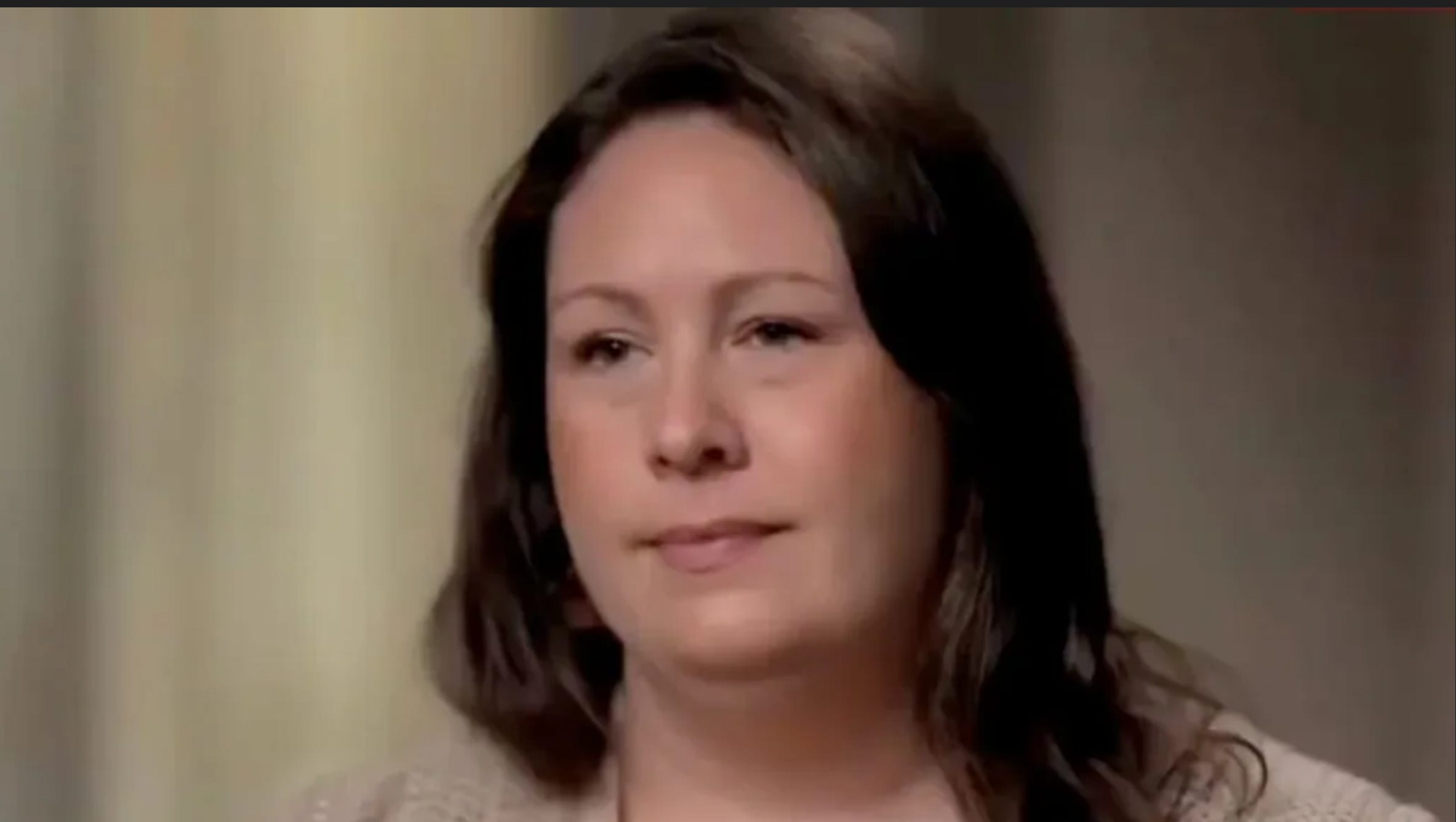
Jenny Racicot told Politico that she’d had an on-again, off-again relationship with Platner for more than two years before the night in 2021 when he entered her rural Maine home against her wishes, deeply intoxicated. Platner ignored Jenny’s protests and continued to grab her after knocking over an antique sewing kit, spilling small needles everywhere. He forced himself on her while she repeatedly told him to stop.
“I remember him grabbing my pelvis and being really forceful of me,” Jenny said. “I remember the specific moment where I thought to myself, like, ‘This is no longer my choice.’” Despite her requests that he pull out, Platner ejaculating inside her, leaving her worried that she might be pregnant.
Platner claimed not to remember what he’d done. After telling him days later in writing that the account was not consensual, thus leaving him in no doubt of what he’d done, Jenny cut off contact.
This might have been the moment when Platner, knowing his history of PTSD and violent behavior, could have attempted to make restitution of some kind, such as paying for Racicot’s therapy. (Platner comes from many generations of wealth, making such restitution a drop in the bucket for him.)
A wealth of misinformation about the details of Jenny’s story has flooded social media. Her story has multiple corroborating sources. Here’s a partial history of her private disclosures long before Platner announced his Senate run.
Jenny showed Politico recent emails with her therapist in which she explained she was talking to the media about her relationship with Platner and the “sa/rape,” using an abbreviation for sexual assault.
She also shared details about the alleged assault with a man she began dating in 2022. The man, speaking anonymously, told Politico that Jenny had shared bits and pieces with him before confiding the full details of the incident in 2023. The man, who was granted anonymity out of concern for his personal privacy, told POLITICO that Racicot had told him in bits and pieces about a bad experience with Platner before confiding the full details of what had happened in 2023.
Politico also viewed a series of private messages that Jenny exchanged with an acquaintance in 2023 via Facebook, warning her not to get involved with Platner and describing him as “consensually careless.” The reporters spoke with Jenny’s acquaintance, who confirmed her receipt of the messages.
Jenny thought about coming forward, but feared retaliation from Platner, and felt uncomfortable potentially telling a police officer about such a personal experience.
Perhaps the most egregious campaign oversights occurred before the campaign even got off the ground.
New revelations about independent strategist Daniel Moraff, who handpicked Platner, have just come to light.
On July 10, journalist Mike Elk of Payday Report, a left-leaning, pro-labor news outlet, published a shocking article.
Elk learned that progressive Congresswoman Summer Lee barred Daniel Moraff from her 2022 congressional campaign after receiving at least three complaints of sexual misconduct against him. Seven different activists confirmed the report.
After the allegations, progressive political action committee (PAC) group Justice Democrats refused to work with Moraff. The group is known for recruiting and supporting grassroots candidates to challenge establishment Democrats in primary elections in much the same way that Moraff was hired to do with Platner. (Justice Democrats helped elect Alexandria Ocasio-Cortez, Rashida Tlaib, and Ilhan Omar.)
Elk wrote that in the winter of 2022, consultants working for Justice Democrats instructed activists, staff, and volunteers to stop communicating with Moraff, despite his repeated attempts to contact them to influence Lee’s campaign.
It may surprise few of us, then, to learn that Moraff brushed aside multiple red flags, foremost among them Graham Platner’s treatment of women, while handpicking Platner for the Maine Senate race.
In a shocking television interview from June of this year, Aaron Zitner of The Wall Street Journal met with Moraff and his partner Leanne Fan.
The couple met in 2020 while working on Bernie Sanders’s presidential campaign.
Aaron Zitner asked Moraff and Fan about their vetting process at some length. How did they vet candidates and choose Platner, he wanted to know?
Moraff and Fan recounted the process of looking at hundreds of candidates without finding a single suitable contender. Then Moraff saw a video of Graham Platner in his boat, zooming ruggedly across the water like a rugged individualist, discussing his experience as an oyster farmer. They learned that he’d given money to the Sanders campaign.
And that, apparently, was “it” for them. “We felt we had the best prospect we’d ever seen,” Moraff told Zitner.
They brought in political consultant Morris Katz, another independent who had been deputy media consultant for John Fetterman’s 2022 Senate campaign and Zohran Mamdani’s 2025 mayoral campaign.
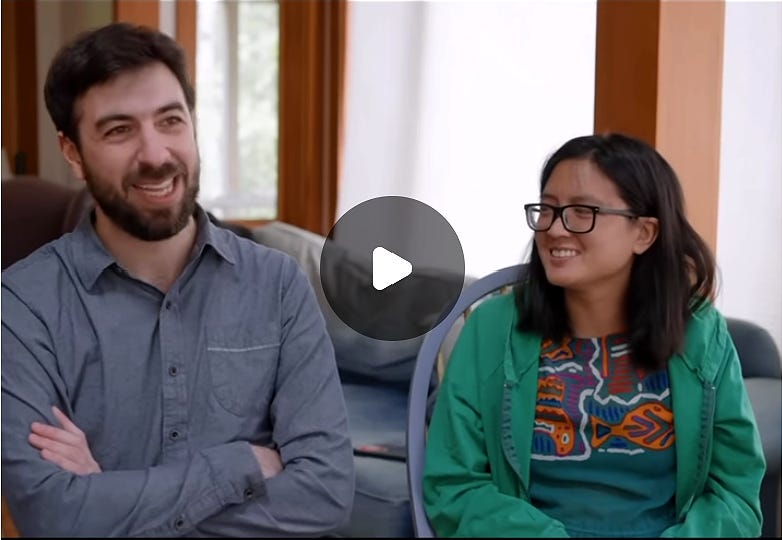
Zitner pushed back. “You hadn’t done a full scrub of who he is. How did you go about vetting him?” he asked.
Moraff began to chuckle and crossed his arms. “Yeah, we paid a nice firm a whole chunk of money and got some stuff back” he said. “Some of what you’ve seen on the news, we got back; other stuff we didn’t.”
“Did the vetting process turn up the tattoo that became so controversial?” Zitner asked, referring to the Nazi tattoo on Platner’s chest for which Platner apologized in the fall of 2025.
“No,” Moraff responded.
“The Reddit posts, did that turn up in the vetting process?” Zitner pressed.
“The firm sent us a ‘thing,’ and it had some of the posts, but it didn’t have all of them.”
“None of this will or should stop him from becoming a U.S. senator,” Moraff added.
After talking with Platner over the course of a week, Moraff persuaded Platner that he would earn the backing of U.S. Senator Bernie Sanders and raise the millions needed to win the Senate seat.
Moraff lobbied Sanders to support the Platner campaign.
Less than two weeks later, at a Labor Day rally in Portland on September 1, 2025, Sanders endorsed Platner, emailing millions of followers across the country and encouraging them to donate.
Thanks to Sanders’s backing, Platner had raised $3.2 million in thirty days.
Poor foundation aside, you might wonder how much of the Platner campaign’s implosion is a genuine surprise either to campaign staff or discerning voters? The sequence of events leading up to Platner’s resignation defies belief.
On July 8, The New York Times published an investigation that detailed the timeline of red flags—buried by people in the Platner campaign—that led to the current crisis. Reporters Lisa Lerer, Katie Glueck, and Michael Kruse interviewed over 30 people in their investigation, including current and former campaign advisers, Democratic officials, and others close to Platner or his campaign.
August 27, 2025. The Sexting. Just days after Platner announced his bid for the Senate and shortly before a key Labor Day rally with Senator Bernie Sanders, Graham’s wife, Amy Gertner, approached Genevieve McDonald, a former state legislator and the Platner campaign’s political director since August of 2025. Amy informed her that Graham had been exchanging sexual text messages with over a dozen women. She expressed concerns that Graham’s behavior could become a political liability.
October 16. 2025. The Reddit Posts. CNN and other news outlets uncovered a cache of inflammatory Reddit posts that Mr. Platner had written between 2009 and 2021, which included dismissive comments about rape and sexual assault in the military. In 2013, Graham posted that women afraid of rape should not get so drunk that they “wind up having sex with someone they don’t mean to,” a remark for which he later apologized. He also called Mary, the mother of Jesus, a “skank.”
October 17, 2025. The Resignations Begin. Genevieve McDonald resigned from her position as director of the Platner campaign because, she said, she could not overlook the volume and nature of comments that Platner had made about sexual assault not in the remote past but recently. “These statements were not known to me when I agreed to join the campaign,” McDonald said in her resignation letter.
October 17-22, 2025. The Totenkopf Tattoo. Photos of Mr. Platner’s tattoo from his wife’s Facebook account began leaking to news organizations. As a 23-year-old Marine in Croatia in 2007, Platner got drunk and got a tattoo on his chest. He chose the Nazi Totenkopf, the death’s head popular with the Schutzstaffel, more commonly known as Hitler’s elite guard. The specific symbol Platner chose was preferred by the SS-Totenkopfverbände, whose main role was running the concentration camps responsible for killing at least 2.7 of the 6 million Jews murdered in the Holocaust. Although a self-proclaimed history buff, Platner claimed not to have known the meaning of the tattoo when he got it or afterward, until it came up on the campaign trail. On October 22, Platner announced that he had covered up the tattoo.
October 31, 2025. More Resignations. Ronald Holmes III, Platner’s national finance director, resigned from the Platner campaign. “I joined this campaign because I believed in building something different: a campaign of fresh energy, integrity, and reform-minded thinking in a political system that often resists exactly those things,” he wrote on LinkedIn. “Somewhere along the way, I began to feel that my professional standards as a campaign professional no longer fully aligned with those of the campaign.”
April through June 2026. The New York Times conducted in-depth conversations with several women who dated Platner. While several of the women romantically involved with Platner recalled him as a fun and caring partner, three women described volatile, even “toxic” relationships that were emotionally challenging. They said that he behaved in a way that was demeaning to women and, in one case, physically threatening. He drank heavily and was frequently unfaithful.
June 2, 2026. Democratic senators, including Chuck Schumer, met with Mr. Platner to ask whether there was anything else in his background that might emerge. He assured them there was nothing, but predicted that his adversaries would lie about him.
Early July 2026. Second Thoughts. Remember campaign strategist Ronald Holmes III, who resigned on October 31, 2025? In July of 2026, Holmes told The New York Times that he had asked Mr. Platner directly and repeatedly whether anyone had made sexual assault allegations against him and the candidate had said no. Holmes then told The Times that Platner was “seriously flawed,” and faulted Mr. Platner’s team—though not himself—for failing to “ask the right questions and get honest answers.”
July 9, 2026. Jenny Racicot, who dated Graham Platner, told Politico and CNN that he sexually assaulted her in late 2021.
In June, as rumors swirled about a damaging story coming from the Times featuring several of Mr. Platner’s ex-girlfriends, independent consultant Morris Katz called a top national Democratic strategist. According to a source with direct knowledge of the conversation, Katz insisted that Mr. Platner’s past had no issues involving his treatment of women.
On July 10, The Intercept reported that members of the Democratic Socialists of America circulated a letter calling on candidates and elected officials to refuse to work with Morris Katz and Flight Agency, the consultants who handled Graham Platner’s campaign, according to screenshots of the letter shared with The Intercept.
“This disastrous decision not only elevated a man with a Nazi tattoo and accusations of domestic violence and sexual assault to a position of power, but has dealt a significant blow to the effort to defeat Susan Collins,” the letter read, referring to the incumbent Senator in Maine. “This is not the first time Katz and Fight Agency have appropriated the American working class’s burgeoning desire for authentic champions,” the letter read.
The letter stated that even as the scandals mounted, Morris Katz continued to put the full weight of his consultancy behind Platner’s candidacy, cutting off the chance to replace Platner with another candidate before the primary.
Katz also reportedly threatened a former Platner staffer for helping verify allegations and controversies surrounding the campaign.
When asked about the implosion of the Platner campaign, Katz acknowledged that the he and the other consultants should have heeded the many warning signs. “I think it is fundamentally true that Congress needs more working-class representation,” he said. “That takes a lot of different forms, none of which should be people accused of sexual assault or rape.”
I’m not a big fan of Jake Tapper for many reasons. That said, there’s a prescient moment in his interview with Jenny Racicot that echoed in my body long afterward. Tapper asked Jenny, “There are going to be Democrats who say, “I believe you but I don’t care. I’m gonna vote for him anyway, because we need a progressive voice in the United States Senate. Are you going to be OK with that? Are you going to be able to handle it?”
Jenny bit her lip nervously. “No, I—I have friends who feel that way. And that’s been a hard pill to swallow.” Almost as though asking a question, Jenny added, “I guess I need to not ask, potentially? Maybe I need to not ask in order to not care.”
I can’t imagine what it would be like to summon the courage to come forward at such a difficult juncture in the nation’s history and disclose sexual assault at the hands of a candidate who should have been disqualified from the start… only to read the unkind comments circulating across the internet.
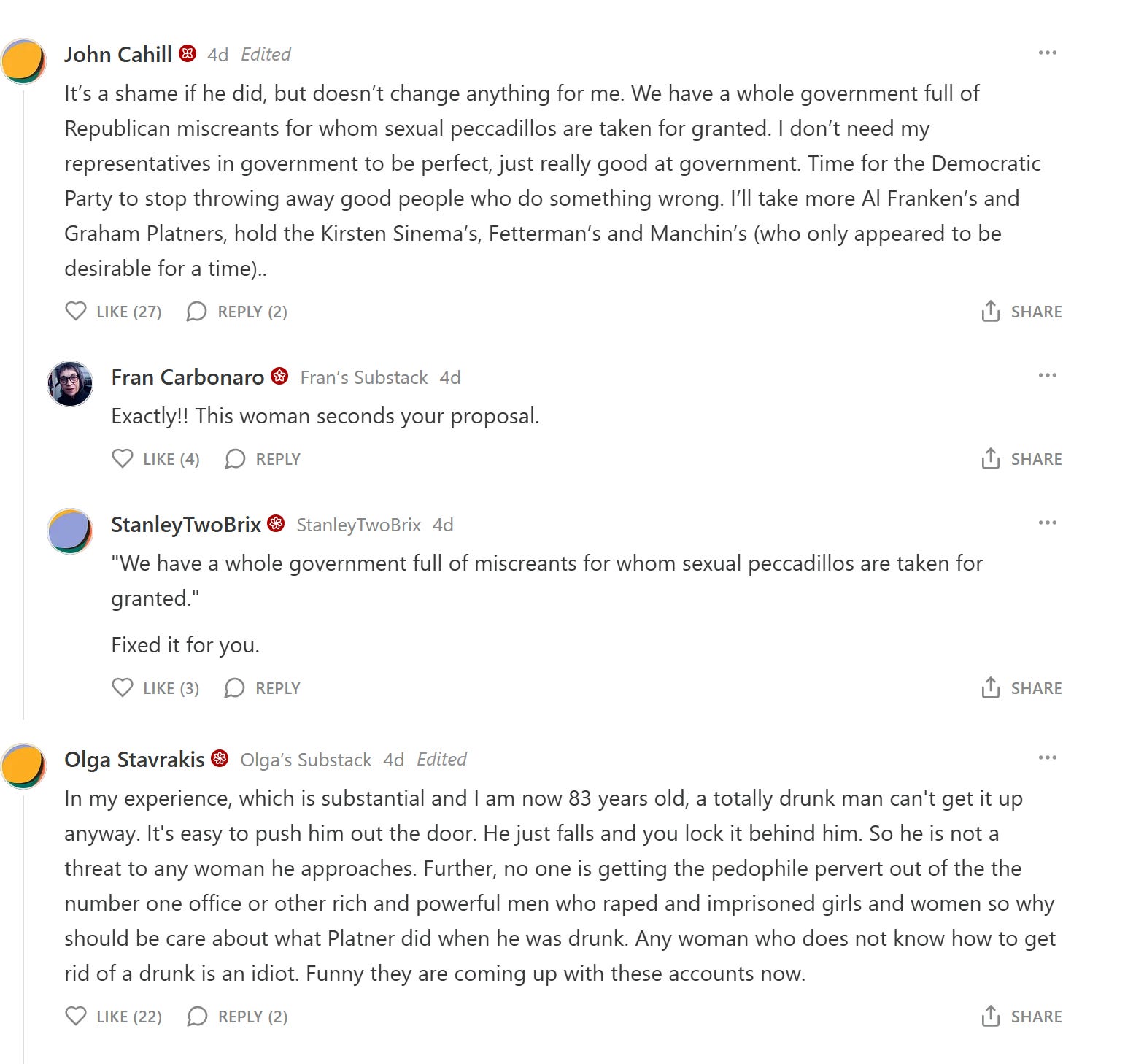
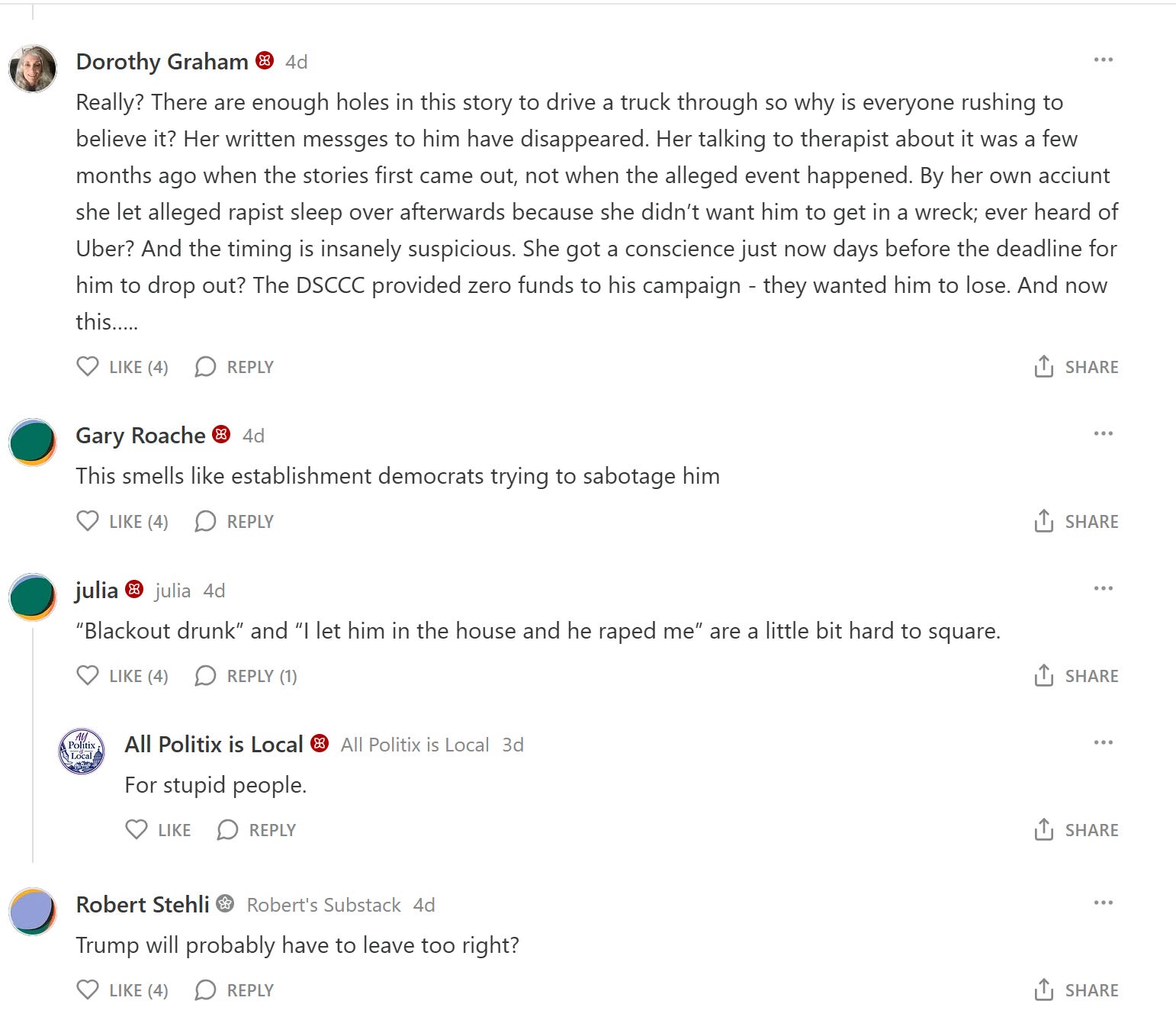
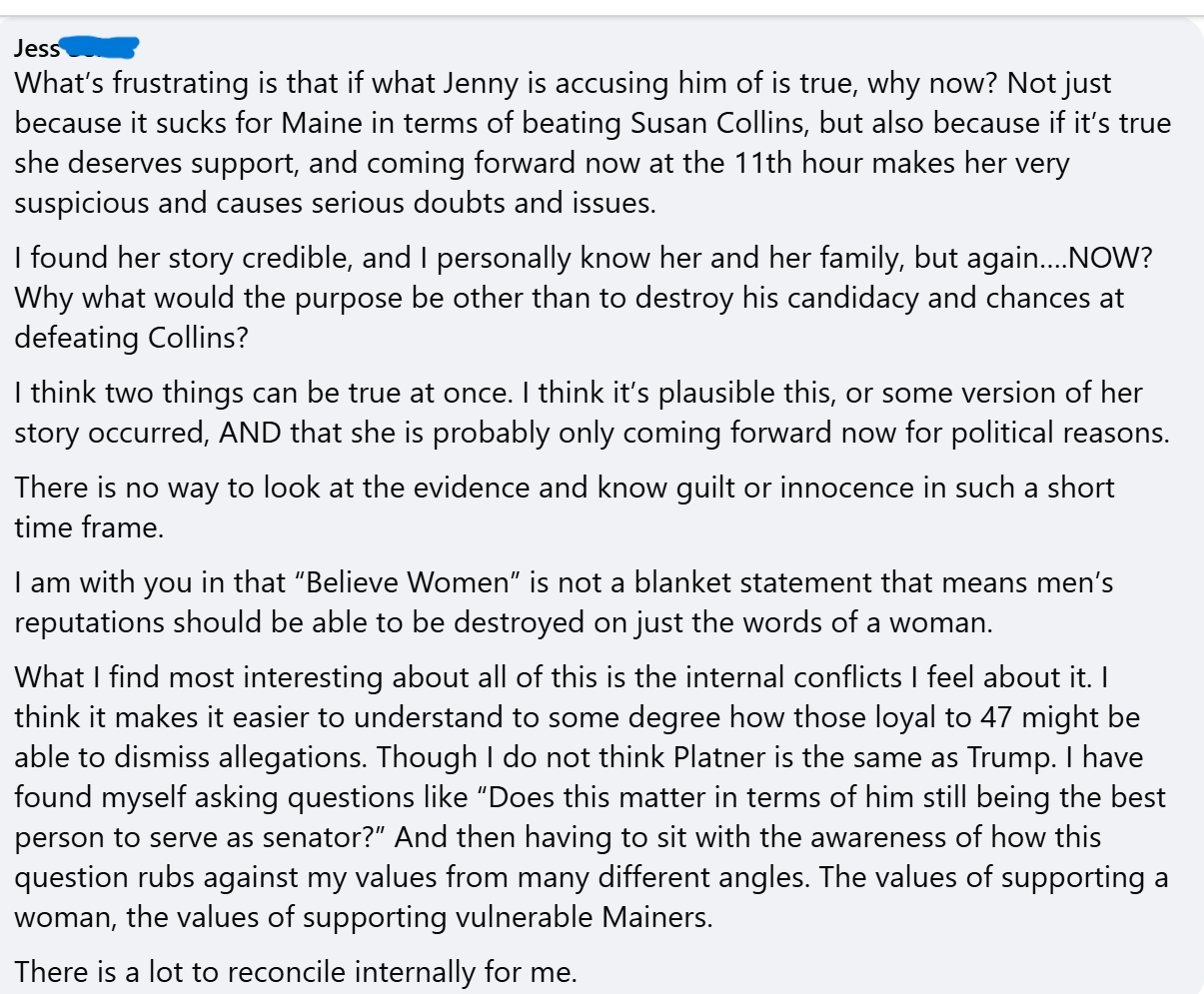
I’m going to post some of the conversations I’ve seen online at the bottom of the post, as the content can be a lot to digest for survivors.
In a chilling piece in its July 1 edition, The New York Times interviewed several women voters in Maine. Most believed Jenny Racicot’s report of assault by Platner, but decided to vote for him anyway. Cory Upton-Cosulich told The Times that she believed the woman who had accused Mr. Platner of rape, and the other allegations as well, but decided to support him anyway because he had “promised to work on her behalf.” Survivors have heard that story before, with the women, many of them white, who voted for Donald Trump in 2024.
It disappoints me profoundly to see so many people with social and political beliefs that align with mine—they advocate for Palestinian sovereignty and self-determination, are against Trump’s war in Iran, and believe in Medicare for all—doubt Racicot’s account of the assault despite so many corroborating sources.
It’s gutting to see allies supporting Platner using the logic that “Trump also committed assault, so what’s the big deal?” or “I believe survivors, but the timing is suspect.”
None of my Palestinian friends and colleagues would vote for a political leader who has committed sexual assault, has a Nazi tattoo, lied about his background in multiple ways, and has behaved and spoken in ways that demean women.
It’s bizarre to read countless comments from progressives who harbor suspicion regarding the media outlets reporting on Platner’s many issues. While some of those outlets (such as The New York Times and Politico) have an established pro-Israel bias, the facts simply don’t support the allegations as a political hit job.
The term “embodiment” has a meaning that’s less often discussed than it should be. The term refers to the level of relationship we have with our sensory intelligence. But it also connotes a consistency between how we present ourselves to the world and the way we act and move in the world and with others. Do our actions and movements match how we think of and present ourselves?
In Jenny’s case, there’s so much corroborating evidence: a therapist with whom the assault has been discussed for years, a boyfriend to whom it was disclosed in 2023 when Jenny had difficulty with intimacy, friends with whom she talked about, and written messages to people warning them away from him long before he had a campaign.
To overlook the evidence and say you believe it, but that you’d be OK with having a predator in office for the sake of beating Susan Collins is the ultimate in disembodiment. Senator Collins herself enabled a predator to take office, namely Supreme Court Justice Brett Kavanaugh. As sexual predators do, he lied about protecting women’s right to healthcare, which contributed to the repeal of Roe v. Wade.
It’s heartbreaking to read so many comments saying, “I believe women, but…” or “I believe Jenny, but…” and who then go on to say that they find the timing of her disclosure suspect. She should have come forward earlier, they say. There’s no “but” in supporting and believing survivors: either we do, or we don’t.
Moraff’s indifference to Platner’s red flags and voters’ “I believe survivors, but“ suggest the same Faustian bargain: I saw enough to know who Platner was, and chose to uphold his abuses of power nonetheless.
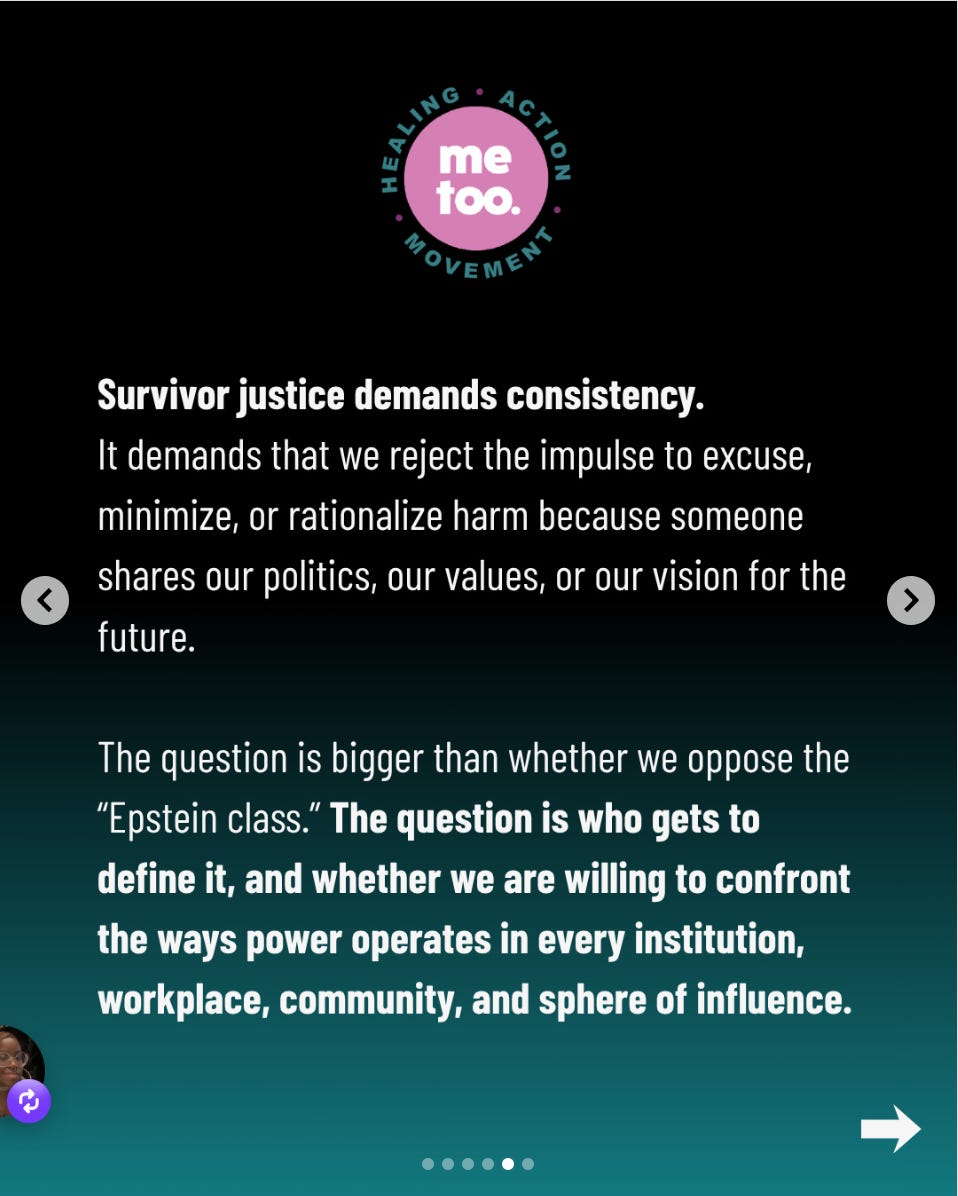
In the wake of the Platner revelations, Tarana Burke and MeToo International released a statement. They state,
“A framework that defines accountability by who it opposes has no principled way to respond when allegations emerge from within its own ranks. That is precisely what is unfolding here. Rather than centering the survivors and the allegations themselves, much of the public conversation quickly shifted to the political consequences of accountability–-whether Platner should remain the Democratic nominee and whether winning a U.S. Senate seat is too important to risk. Once again, accountability is being framed as a threat to something larger. The result is a familiar and dangerous calculus: protecting political power is more urgent than confronting the ever growing pattern of allegations concerning violence against women. Survivor justice demands consistency. It demands that we reject the impulse to excuse, minimize, or rationalize harm because someone shares our politics, our values, or our vision for the future.”
I haven’t seen a single comment on social media that mentions one of the most important reasons that survivors come forward: to protect future victims from a perpetrator’s sexual assault. Survivors often take the risks we do to warn future victims, and to give past victims a voice.
Imagine Graham Platner and his red flags in Washington, engaging with interns and other vulnerable people from a position of even greater power. That image should be reason enough for not holding one’s nose and voting for him just to get a leftist in the Senate.
From the perspective of sexual perpetrators and those who uphold their power, there will never be an “opportune time” for survivors to report or disclose sexual assault. Most predators and those who uphold their power will always make it about them: their needs, their wants, their reputations.
While editing this article, I felt a deep sadness—the sensation of a fist squeezing my chest, a staccato pattern to my breath. I realized how many days of research went in to establishing the facts and defending Jenny Racicot. This is the default setting for survivors. But the evidence doesn’t matter; the system we uphold keeps centering itself relentlessly. Keeps adapting to the evidence. Reinvesting itself in subtler forms.
As Tarana Burke says, that’s the systemic pattern we need to fight—not only for survivor justice, but to put leaders in power who will fight for us not only when it’s easy to do so, but when it costs something, which is when it really counts.
From the Platnersphere:
In a chilling piece in its July 1 edition, The New York Times interviewed several women: Davies, E. (2026, July 10). Why Some Women in Maine Are Mourning the End of Graham Platner’s Campaign. The New York Times. https://www.nytimes.com/2026/07/10/us/politics/women-maine-graham-platner-campaign.html
Racicot told Politico that she had had an on-and-off relationship: Exclusive: Woman who dated Graham Platner says he sexually assaulted her. (n.d.). POLITICO. Retrieved July 10, 2026, from https://www.politico.com/news/2026/07/06/graham-platner-sexual-assault-allegation-00987737
Jenny also shared details about the alleged assault with a man: Exclusive: Woman who dated Graham Platner says he sexually assaulted her. (n.d.). POLITICO. Retrieved July 10, 2026, from https://www.politico.com/news/2026/07/06/graham-platner-sexual-assault-allegation-00987737
Even as time passed, Jenny said that she felt uncomfortable: Exclusive: Woman who dated Graham Platner says he sexually assaulted her. (n.d.). POLITICO. Retrieved July 10, 2026, from https://www.politico.com/news/2026/07/06/graham-platner-sexual-assault-allegation-00987737
Payday Report learned that Congresswoman Summer Lee barred Daniel Moraff: Platner’s Daniel Moraff Barred from Summer Lee’s Campaign Over Sexual Misconduct Complaints. (n.d.). Retrieved July 10, 2026, from https://paydayreport.com/platners-daniel-moraff-barred-from-summer-lees-campaign-over-sexual-misconduct-complaints/
After the allegations, progressive political action committee (PAC) group Justice Democrats refused: Platner’s Daniel Moraff Barred from Summer Lee’s Campaign Over Sexual Misconduct Complaints. (n.d.). Retrieved July 10, 2026, from https://paydayreport.com/platners-daniel-moraff-barred-from-summer-lees-campaign-over-sexual-misconduct-complaints/
In a shocking television interview from June of this year, Aaron Zitner: The Wall Street Journal. (2026, June 7). Where Did Graham Platner Come From? Inside Democrats’ Riskiest Senate Race | WSJ [Video recording].
After talking with Platner over the course of a week, Moraff persuaded Platner: Platner’s Daniel Moraff Barred from Summer Lee’s Campaign Over Sexual Misconduct Complaints. (n.d.). Retrieved July 10, 2026, from https://paydayreport.com/platners-daniel-moraff-barred-from-summer-lees-campaign-over-sexual-misconduct-complaints/
Within a month, thanks to Sanders’s backing, Platner had raised $3.2 million: Otterbein, H. (2025, October 1). Scoop: Bernie-backed oyster farmer raises $3.2M in Maine Senate race. Axios. https://www.axios.com/2025/10/01/maine-senate-graham-platner-fundraising-sanders
According to an investigation by The New York Times, Platner’s former national finance director: Inside the Implosion of Graham Platner’s Maine Senate Campaign: ‘A Slow-Rolling Disaster’—The New York Times. (n.d.). Retrieved July 9, 2026, from https://www.nytimes.com/2026/07/08/us/politics/graham-platner-campaign-implosion-maine.html
Just days after Platner announced his bid for the Senate, his wife, Amy Gertner: Glueck, K., & Lerer, L. (2026, May 30). Platner’s Texts With Women Concerned Campaign as Senate Race Took Off. The New York Times. https://www.nytimes.com/2026/05/30/us/politics/graham-platner-maine-senate-texts.html
McDonald told multiple media outlets that she could not overlook: Graham Platner’s political director resigns over candidate’s controversial comments. (2025, October 18). WMTW. https://www.wmtw.com/article/graham-platners-political-director-resigns-over-candidates-controversial-comments/69078524
The specific symbol Platner chose was preferred by the SS-Totenkopfverbände: Cole, M. (2026, July 10). Graham Platner’s Tattoo Was the Alarm Bell. Slate. https://slate.com/news-and-politics/2026/07/graham-platner-nazi-tattoo-sexual-assault-victims.html
Among the disturbing comments Platner has made online: Keefe, J. (2026, May 11). Read our full archive of Graham Platner’s deleted Reddit comments. The Maine Monitor. https://themainemonitor.org/platner-reddit-comments/
According to The Maine Monitor, which published a full timeline: Keefe, J. (2026, May 11). Read our full archive of Graham Platner’s deleted Reddit comments. The Maine Monitor. https://themainemonitor.org/platner-reddit-comments/
“I joined this campaign because I believed in building…”: Over the past few months, I’ve had the privilege of serving as National Finance Director for the Graham for Maine campaign. Today, I resigned from that role effective immediately. I joined this… | Ronald Holmes III. (n.d.). LinkedIn. Retrieved July 9, 2026, from https://www.linkedin.com/posts/ronaldholmes3rd_over-the-past-few-months-ive-had-the-privilege-activity-7390017091254452224-Q9iX
The New York Times conducted in-depth conversations with several women who dated Platner: Several Women Who Dated Graham Platner Recall ‘Unsettling’ Behavior—The New York Times. (n.d.). Retrieved July 9, 2026, from https://www.nytimes.com/2026/06/04/us/politics/platner-maine-senate-girlfriends-relationships.html
Democratic senators, including Chuck Schumer, met with Mr. Platner: Epstein, R. J. (2026, June 2). Graham Platner Meets With Senate Democrats Amid Texting Scandal. The New York Times. https://www.nytimes.com/2026/06/02/us/politics/platner-senate-democrats-washington-meeting.html See also: Several Women Who Dated Graham Platner Recall ‘Unsettling’ Behavior—The New York Times. (n.d.). Retrieved July 9, 2026, from https://www.nytimes.com/2026/06/04/us/politics/platner-maine-senate-girlfriends-relationships.html
In June, as rumors swirled about a damaging story coming from the Times featuring: Inside the Implosion of Graham Platner’s Maine Senate Campaign: ‘A Slow-Rolling Disaster’—The New York Times. (n.d.). Retrieved July 9, 2026, from https://www.nytimes.com/2026/07/08/us/politics/graham-platner-campaign-implosion-maine.html
Holmes told The New York Times that Graham Platner was “seriously flawed,” and:
Inside the Implosion of Graham Platner’s Maine Senate Campaign: ‘A Slow-Rolling Disaster’—The New York Times. (n.d.). Retrieved July 9, 2026, from https://www.nytimes.com/2026/07/08/us/politics/graham-platner-campaign-implosion-maine.html
Jenny Racicot, who dated Graham Platner, told Politico and CNN that he sexually assaulted her: Tapper, A. G., Jake. (2026, July 6). Woman alleges Graham Platner raped her in 2021 while they were dating, which he denies. CNN. https://www.cnn.com/2026/07/06/us/graham-platner-racicot-allegation-maine-invs
On July 10, The Intercept reported that members of the Democratic Socialists of America circulated a letter: DSA Members Urge Campaigns to Ditch Platner Consultant Morris Katz. (n.d.). Retrieved July 11, 2026, from https://theintercept.com/2026/07/10/dsa-graham-platner-morris-katz-consultant/
When asked about the implosion of the Platner campaign, Katz acknowledged: Goldberg, E. (2026, July 10). D.S.A. Members Blast Mamdani Adviser for Elevating Graham Platner. The New York Times. https://www.nytimes.com/2026/07/10/nyregion/platner-katz-mamdani-dsa.html
Comments
Nothing yet. Say the first thing.
Sign in to join the conversation.