
In parallel with the re-issue of seven remastered Moff Skellington albums a piece of creative writing was developed by Cassion Umbershaw which was inspired by the those releases and reflected the unique world that music and art is based in.
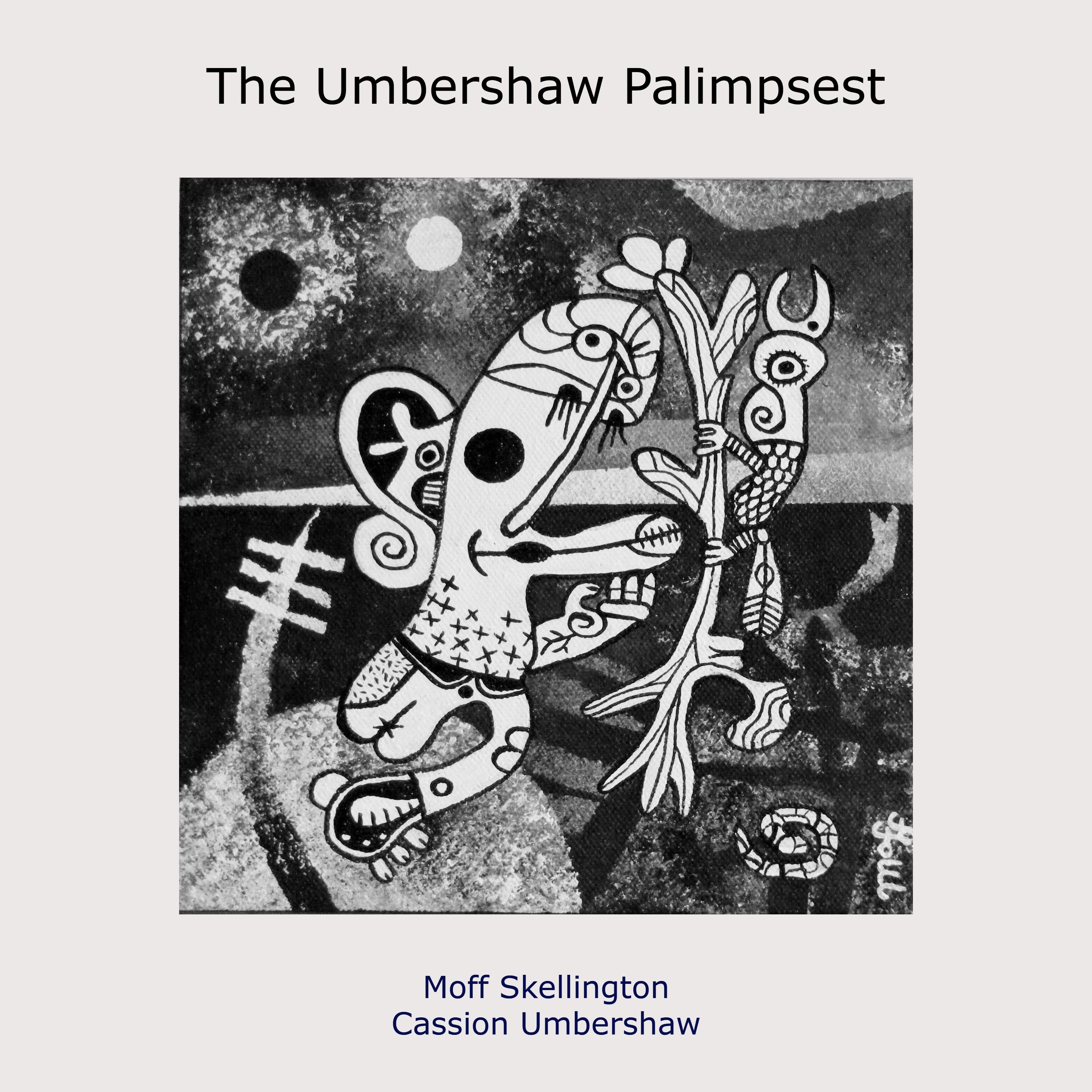
Abstercot is the Brigadoon of Dreamsleep. These writings by Umbershaw which include examples of Moff’s art describe a unique journey through that town as well as other places that emerged as part of a creative exercise - here as a teaser are the first sixteen pages of that seven part novel. The full novel is available for download as PAY WHAT YOU LIKE at the Bandcamp link below alongside seven new music tracks from Moff plus some introductory notes
All proceeds from this work will donated to UNICEF for the Gaza Appeal for Children In Crisis.
The album which inspired the first part of the writing can be found here
Illustrations and Conceptual Framework - Moff Skellington
Narrative - Cassion Umbershaw
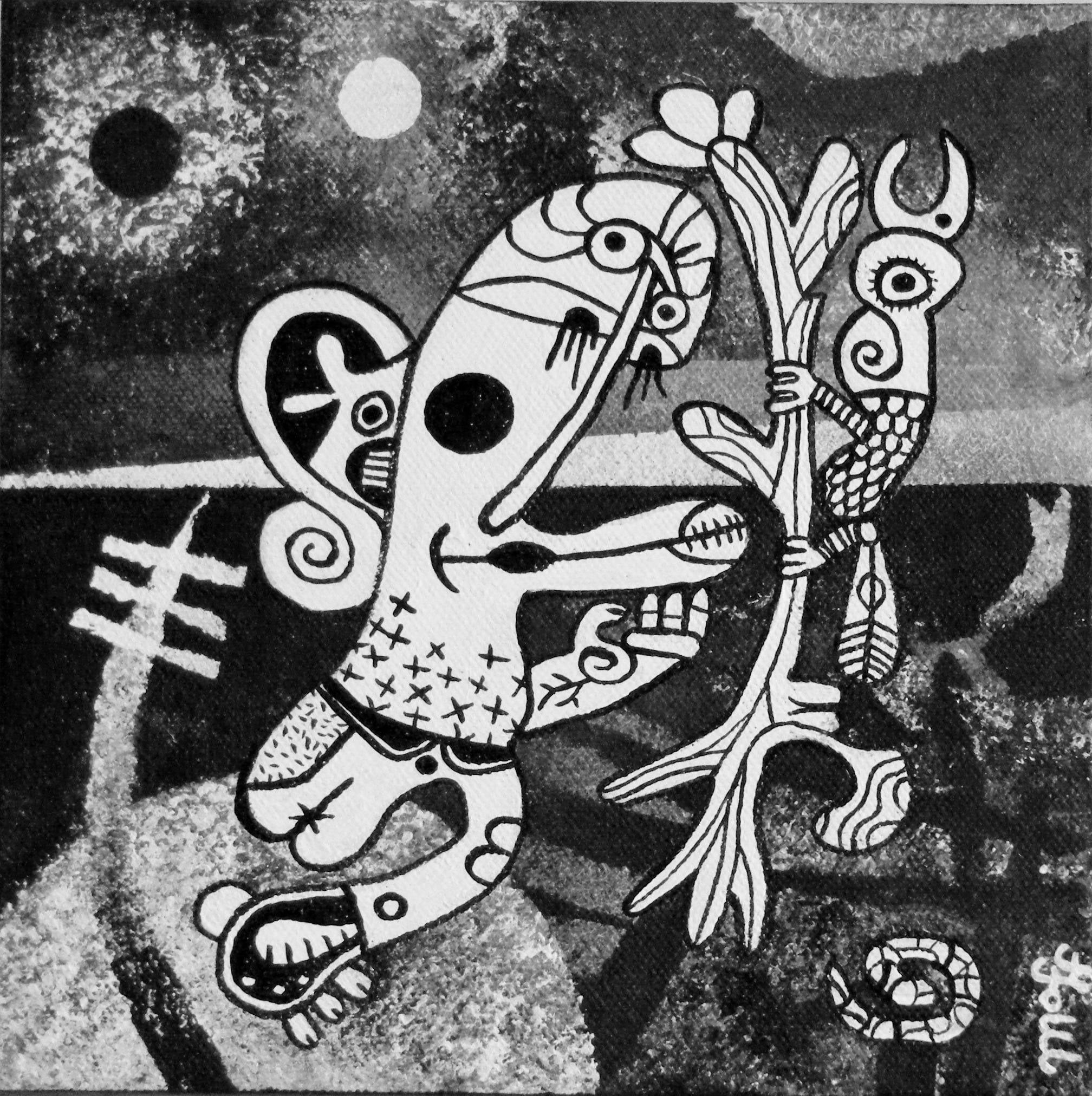
A town that should not exist
However, a town that does
A town that wants you
For something or another
For now……or right at this moment….or never
These are the chronicles
Your narrators are O, S, M & Q
Please continue
The First Part
And so it begins…….
Again I came to Abstercot, not the long way, as most people do, I came through the back lanes, the bramble‑choked cut‑throughs, the unofficial paths that appear only when you’re not looking for them.
The town doesn’t welcome direct approaches. It prefers the oblique, the sidelong, the accidental. It is a place that reveals itself only in peripheral vision.
The Aromancers had told me to expect this. They traffic in scents, yes, but not the kind you bottle. They read the world through vapours, through the musk of forgotten rooms, through the tang of rusted railings and the sweet rot of old allotments. They said Abstercot was a town built on odour‑lines, currents of memory and myth that drifted like invisible weather. Follow the right smell and you’d find the truth. Follow the wrong one and you’d never be seen again.
I had been an apprentice Aromancer but I failed the practical test and did not graduate.
I trusted them. Or rather, I trusted the inevitability of their presence. The Aromancers always arrive where the world is thinning.
And Abstercot, Abstercot was thinning fast.
The first sign was the conduit. A thorn‑wrapped pipe, thick as a man’s torso, running along the edge of the disused tramway like a vein exposed by some careless god. It pulsed faintly, as if carrying a liquid that wasn’t liquid, a current that wasn’t electrical. The thorns were fresh, green, alive — growing from the metal itself, as though the town had decided to reclaim its own infrastructure and remake it in its own image.
I crouched beside it, inhaling. Aromancers’ habit. Old reflex. The scent was impossible. A mixture of hot tarmac, wet leaves, burnt sugar, and something older— the smell of a childhood memory you never had.
A voice behind me said, “You’re early.”
I didn’t turn. I knew the cadence. Dry, amused, carrying the faintest trace of smoke and lavender. It was Liss, the youngest of the Aromancers, her presence always announced by a scent that shifted depending on her mood. Tonight she smelled of rain on brickwork and the inside of a long‑abandoned cinema. “You said the conduits were waking,” I replied. “And they are.”
She stepped beside me, boots crunching on gravel. Her eyes followed the thorny pipe as it disappeared into the undergrowth, vanishing toward the centre of town like a buried serpent. “The conduits are becoming roots” she said.
“Routes?”
“No, Roots!”
“Roots of what?”
She smiled. “Of whatever’s coming.”
Behind her, the other three Aromancers emerged from the dusk— Merrin, tall and silent, carrying the copper‑cased inhaler that held the scents of lost futures; Darrow, broad‑shouldered, his coat stitched with vials that clinked like wind chimes; and Ephra, the archivist, whose notebooks were filled with odour‑maps of towns that no longer existed.
The Aromancers. My former colleagues. My burden. My only hope of understanding Abstercot.
Liss crouched beside the conduit, her fingers brushing the thorns with the tenderness of a gardener greeting an old friend. “It started here,” she said. “Whatever the Calumny brought with it. Whatever it seeded in the soil.”
I felt the name like a bruise. The Calumny— the shadow‑myth that had fled Eccles, slipping through the cracks of the parallel, seeking a place where stories were soft enough to reshape. It followed me like a ghost.
Abstercot was that place. “Where does the conduit lead?” I asked.
Merrin answered, voice low. “Everywhere. Nowhere. The conduits run beneath the whole town. They’re connecting something. Or preparing to.”
Darrow sniffed the air, frowning. “There’s another scent here,” he said. “Something layered.
Something old.”
Ephra opened her notebook, pages fluttering like startled birds. “Thorn‑lines,” she murmured. “Recorded in the Abstercot Manuscripts. A network of living conduits that appear only when the town is about to change shape.”
I stood, brushing conduit dust from my coat. “So the town is changing.”
Liss shook her head. “No. The town is becoming.”
The conduit pulsed again, a slow heartbeat beneath the earth. And in that moment, I understood that the Aromancers had brought me here not to observe, not to chronicle,
but to witness the first tremor of a transformation that would ripple far beyond Abstercot.
A transformation seeded by Calumny. Balanced by Harmony. And now rooted in the soil of a town that should not exist. The thorny conduits were only the beginning.
The Aromancers looked to me— not as leader, not as guide, but as the one who would have to walk ahead into the dark streets of Abstercot and name what was coming. I inhaled once more, letting the scent of the conduit settle into my lungs.
“Right,” I said. “Let’s begin.”
Liss smiled “You need to rest, we will proceed tomorrow.”
We proceeded to the Hounds and Hare and settled in for the night.
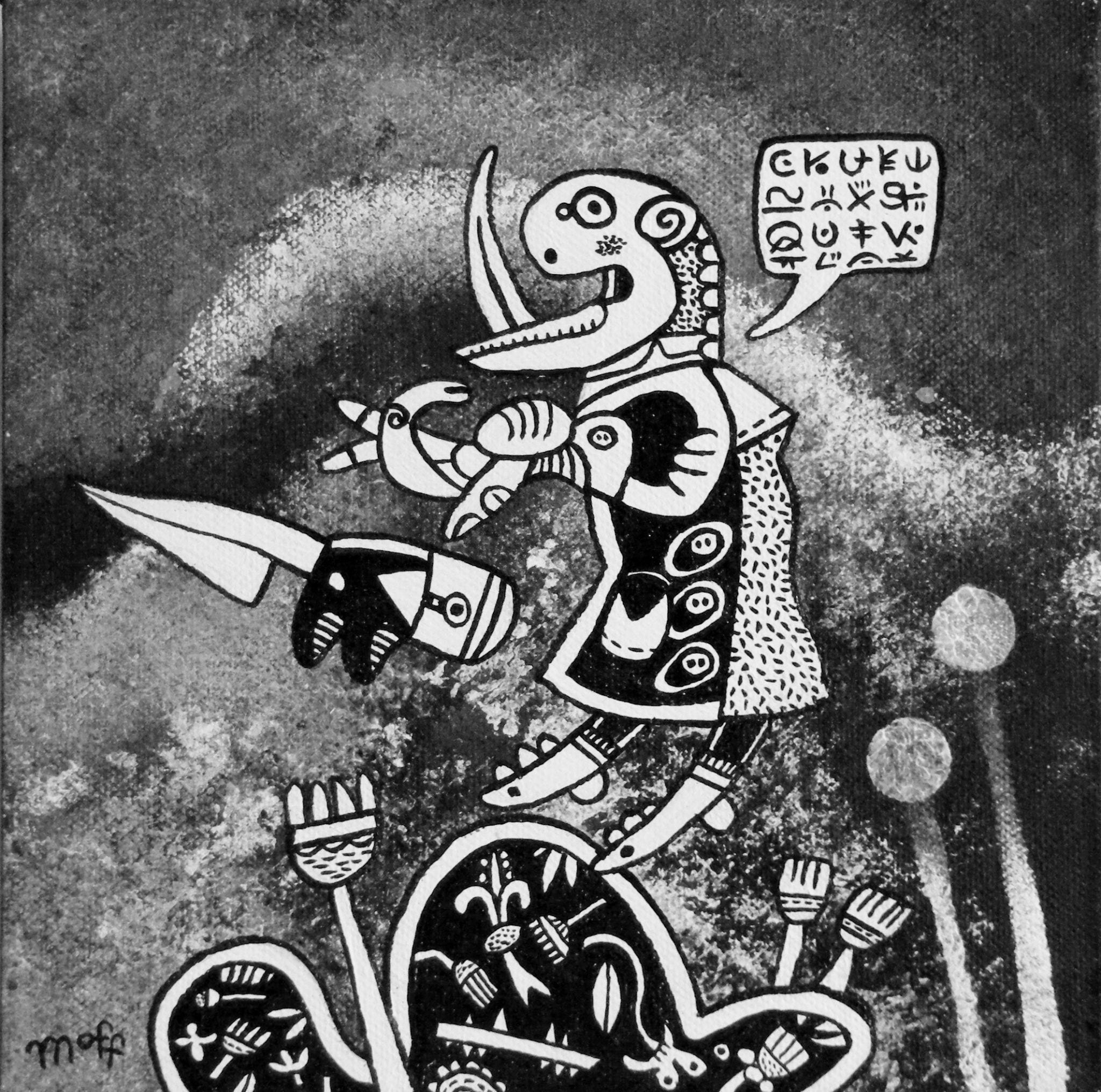
The first time I saw the Spudsack Soldiers, I thought they were scarecrows. Figures propped in the allotments behind the old biscuit factory, leaning at angles that suggested wind damage or municipal neglect.
But Abstercot doesn’t like to do scarecrows that often.
It does warnings.
The following day we went in search of them.
The Aromancers had brought me here deliberately, though none of them would admit it. They drifted ahead of me like a weather front— Liss with her rain‑cinema scent, Merrin with his copper inhaler, Darrow clinking faintly with each step, Ephra scribbling notes in a book that seemed to write back.
In the damp corner we came to the allotments. They were overgrown, a tangle of nettles and rusted tools, the soil cracked like old skin. And there, in the centre, arranged in a loose semicircle, stood the Spudsack Soldiers.
They were taller than I remembered them to be. Seven feet, maybe eight. Bodies made of burlap sacks stuffed with earth, potato plants sprouting from their shoulders like epaulettes. Faces stitched from twine and broken buttons. Hands fashioned from fork handles and snapped spades.
Liss inhaled deeply, eyes half‑closed. “Rot,” she murmured. “Fertility. Old earth. Something else underneath.”
Darrow stepped closer, boots sinking into the soft ground. “They weren’t here last week.”
Ephra flipped through her notebook, pages fluttering like startled birds. “They’re mentioned in the Abstercot Histories,” she said. “Guardians. Or warnings. Or both.”
Merrin crouched beside one of the figures, touching the burlap with a gloved hand. “They’re warm.”
I felt a prickle at the base of my spine. “Alive?”
“Not alive,” Merrin said. “But not dead either.”
The Spudsack Soldier nearest to us shifted. Just a fraction. A settling of weight. A tilt of the head.
Liss stepped back. “They’re responding to us.”
Darrow frowned. “Or to something behind us.”
I turned. The thorny conduit from the previous night— the one we’d found near the tramway— had grown. It now snaked into the allotments, burrowing beneath the soil, emerging between the soldiers’ feet like a root system seeking new hosts. The Spudsack Soldiers were connected. Fed. Awakened.
Q had once said to me when we were drinking ale in the Hounds and Hare “The Spudsack Soldiers. The most passionate advocates of the poetic imagination, they are often scruffy bastards. My Mum always told me I looked like them… like a sack ‘o muck.”
This lot looked a little more coutured.
I mused. S had warned me about this sort of thing in Northampton— how towns develop their own immune systems, their own antibodies, their own militia of the uncanny. But Abstercot was different. More deliberate. More organised.
Liss whispered, “They’re waiting.”
“For what?” I asked.
“For orders,” she said.
The air thickened. A scent rose from the soil— earthy, metallic, tinged with something chemical. A smell I recognised from decaying town centres, old industrial estates, abandoned shoe factories, from places where the ground remembers what was buried in it.
Ephra’s voice trembled. “The Calumny.”
The word hung in the air like a bruise.
The Spudsack Soldiers straightened. All at once. A single, unified motion. Their button eyes turned toward us.
Darrow reached for one of his vials. Merrin stood, inhaler ready. Liss stepped forward, palms open, as if addressing a congregation. “Easy,” she said. “We’re not here to fight.”
The soldiers didn’t move. Didn’t blink. Didn’t breathe. But the conduit beneath them pulsed,
a slow heartbeat of something ancient and hungry.
I felt the town shift around us— streets rearranging, alleyways lengthening, the geometry of Abstercot tightening like a noose. The Spudsacks were not guardians. They were servants. And the thing they served was waking.
Liss turned to me. She said softly, “We need to leave. Now.”
I nodded. But as we stepped back, one of the Soldiers raised its arm— a slow, deliberate gesture— and pointed toward the centre of Abstercot.
Toward whatever waited for us there. Toward whatever the now departed Calumny had seeded.
Toward the next section.
The Origin Of The Spudsack Soldiers
Legend would have it that they were created during the early municipal‑mythic phase of Abstercot, when so-called Alderman Sparra Carcus began inventing administrative structures to justify his own authority. They were introduced as his imaginary enforcement arm. Named after the coarse potato‑sacks used in Abstercot’s storage yards. Sparra claimed these sacks could be “activated” into service by stamping them with his personal seal. However no mechanism was ever demonstrated. Possibly foolishly Abstercot residents treat them as a running joke even going so far as to suggest they do not exist.
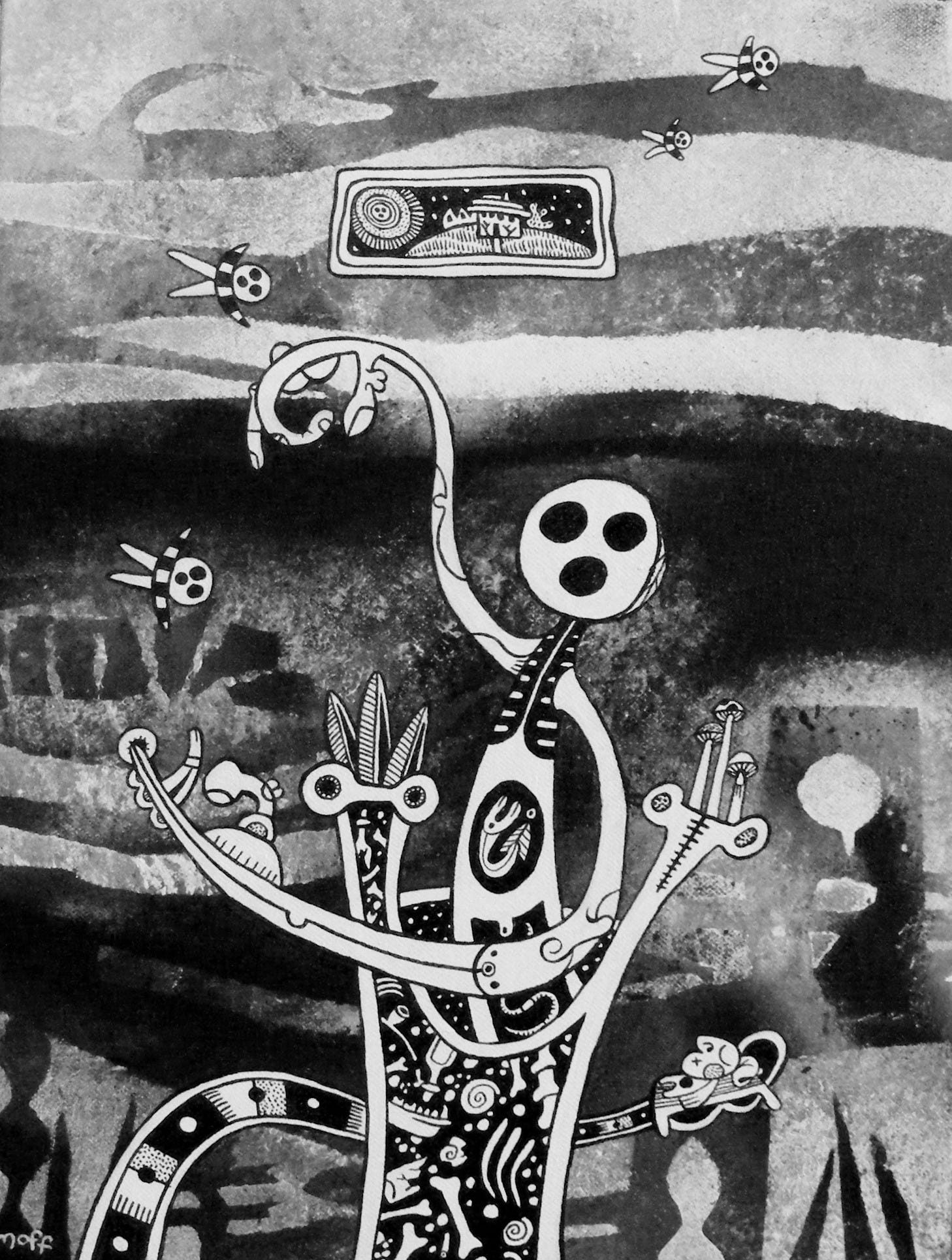
We moved forward towards the centre of town and came upon the birds.
The birds were the first proper sign that Abstercot had shifted again. Not the usual starlings or the fat‑bellied pigeons that haunted the precinct bins, but a stranger breed entirely long‑beaked, soot‑feathered creatures perched along the telegraph wires like punctuation marks in a sentence the town hadn’t finished writing. They moved in unison, a slow ripple of black bodies, each one dipping its head to pluck the red berries that had begun sprouting from the wires overnight. The berries pulsed faintly, as if lit from within, and the birds swallowed them whole with a kind of reverence.
Liss stood beside me, her scent transforming into a mixture of wet bark and old paperbacks. She watched the birds with narrowed eyes. “Those aren’t berries”, she said. “Not really.”
Merrin lifted his copper inhaler, drawing in a slow breath. “Memory seeds”, he murmured. “The town’s growing them. Feeding them to the birds so they can spread whatever’s coming.”
Darrow spat into the gutter. “Birds as couriers. Figures. Abstercot never uses a straight line when it can use a crooked one.”
Ephra was already scribbling, her notebook pages twitching like nervous skin. She whispered the phrase ‘birds eating berries’ over and over, as if repetition might unlock a meaning the rest of us couldn’t see.
The birds shifted again, a wave of black feathers and red glints. One dropped a berry onto the pavement. It didn’t burst. It didn’t roll. It simply sat there, humming faintly, as if waiting for someone to pick it up. Liss crouched beside it, inhaling. “Childhood”, she said. “And something else. Something sour. Something borrowed.”
I stepped closer. The berry vibrated, a tiny tremor that travelled up through the soles of my shoes. The conduit roots from the allotments had reached this far. I could feel them beneath the tarmac and cobble stones, threading through the town like veins, carrying whatever the Calumny had seeded.
A bird landed on a lamppost above us. Its eyes were wrong. Too bright. Too knowing. It tilted its head at me, as if recognising something. Or someone.
Liss said quietly. “Don’t look at it too long.” But I couldn’t help it. The bird’s gaze held me, and for a moment I saw something behind its eyes: a map of Abstercot drawn in black lines, each one pulsing like a heartbeat. The town was preparing. The conduits, the Spudback Soldiers, the berries, the birds. All parts of a system we hadn’t yet understood.
The bird swallowed another berry. Its feathers shivered, shifting colour for a moment, a flicker of deep violet before settling back to black. Ephra gasped.
“That’s not natural.” Darrow snorted.
“Nothing here is natural.” Merrin lowered his inhaler. “They’re changing. The berries are rewriting them.”
Liss stood, brushing dirt from her knees. “And they’re watching us while they change.”
The birds began to move, lifting from the wires in a single coordinated motion, a black cloud drifting toward the centre of Abstercot.
Murmurations.
The berry on the pavement cracked open with a soft sigh, releasing a thin thread of smoke that smelled of burnt sugar and old regrets. Ephra snapped her notebook shut. “They’re heading for the centre of the town”, she said. “Whatever’s happening next, it starts there.”
I watched the birds disappear over the rooftops, their shadows rippling across the brickwork like warnings. The Aromancers waited for me to speak. I didn’t. The town was speaking for itself now, through birds and berries and conduits and soil. Abstercot was becoming something new, something deliberate, something different.
We followed the birds to the town centre.
Another day had passed without us noticing. The Hounds and Hare was full, a visiting group of mendicants had won a pile of money on the ferret racing and decided to take over the pub for a party. We would need to rent other rooms quickly as the day was drawing to a close.
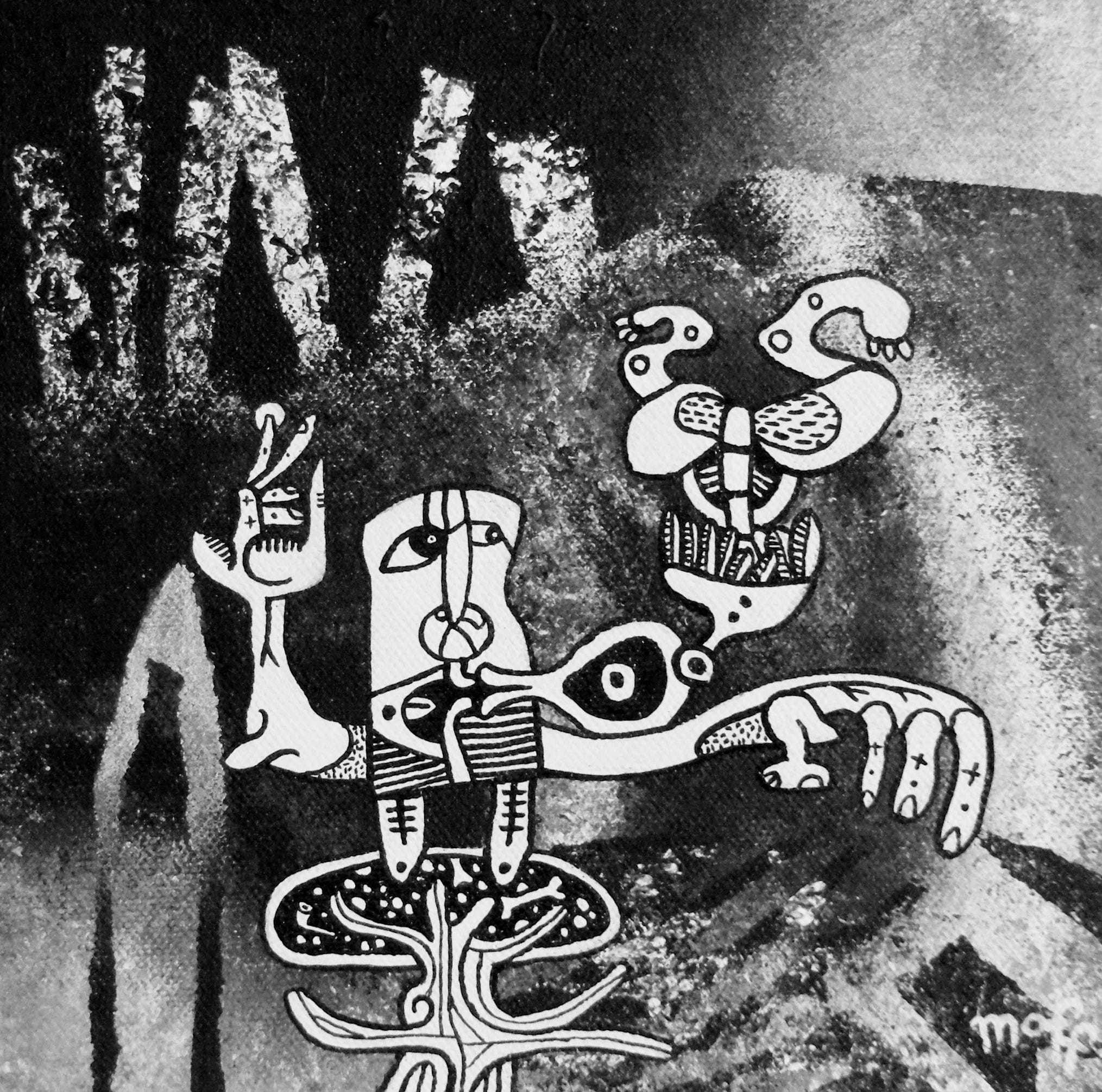
The following morning I found the card on the windowsill of the room we had rented above the Abstercot Central Post Office, the one with the peeling paint and the view of the alley where the cats gather at dusk like a committee of minor gods.
The card hadn’t been there the night before. I would have noticed. It was the only thing in the room that looked new. A cheap greetings card, supermarket stock, the kind you buy when you’ve forgotten an anniversary and need something that looks like effort. The front showed a heart made of red paper roses, but the printing was slightly off, the colours misaligned, giving the whole thing a faint double‑vision. The word Valentibe was written across the centre in looping cursive. I opened it. Inside, a single sentence written in a hand I didn’t recognise.
You are being watched by the ones who remember
Abstercot had begun to insert narration. Always centred, always bold.
No signature. No date. No scent. Nothing for the Aromancers to trace. Just the sentence, sitting there like a dare.
I read it again, squinting, and that’s when it hit me. The t and the b. The looped flourish. The slight blur. My Saving Specs had failed me again.
It is Valentine not Valentibe!
Of course it was Valentine. The town hadn’t invented a new word. My eyes had. Abstercot didn’t need to distort language when my own vision was already doing half the work. But the correction didn’t make the message any less unsettling.
Some time ago Q had warned me that Abstercot would start speaking to me directly. He said the town had a way of folding narrators into its fabric, turning them into conduits, mouthpieces, or warnings. I’d laughed at the time. Now I wasn’t laughing. I took the card downstairs to show the Aromancers. They were gathered in the sorting room, surrounded by sacks of undelivered mail that hummed faintly with the static of abandoned intentions. Liss took the card from me, holding it delicately between two fingers as if it might bite.
“Valentine”, she said. “Not a mistake. A signal.”
Merrin inhaled deeply, eyes half‑closed. “Paper roses. Synthetic dye. A trace of something older underneath.”
Darrow frowned. “Someone wants you to know they know you’re here.”
I took the card back and put it in my pocket.
Ephra flipped through her notebook, pages rustling like restless leaves. “The ones who remember. That phrase appears in the Abstercot Histories. It refers to a group. Or a place. Or both.”
I felt the weight of the card, heavier than paper should be. The room seemed to tilt slightly, as if the town had shifted its attention toward me. The Aromancers watched me carefully. They knew something was happening. They just didn’t know what shape it would take.
You must gather your fellow narrators - the story is too heavy for one
Somehow knowing, Q arrived a moment later. Tall, his round spectacles sitting low on his nose and catching what little light the town allows. His long, heavy coat hanging with mechanically neat precision — edges crisp, seams exact, pockets aligned as if measured against Abstercot’s own skewed geometry. Standing upright and slightly tense, braced against the town’s shifting logic, hands moving with a precise, almost metronomic deliberation. His narrow, thoughtful face holding its habitual half‑frown of concentration, short tidy hair leaning forward as though pulled by the weight of thought itself. Around him the air thickens, faintly vibrating, as if the world is adjusting to his presence rather than the other way round. HIs coat dusted with the pollen‑like residue that clung to the thorny conduits. I gave him the card, he looked at it, then at me.
“You’ve been marked”, he said. “The town’s chosen you for something. Or against something. Hard to tell which.”
I asked him who the ones who remember were.
He shook his head. “Not who. Where. Abstercot remembers itself. Every version. Every draft. Every abandoned street plan and forgotten myth. And now it remembers you. You could draw a map of the town and it would be nothing like I imagine Abstercot to be.”
Outside, the birds were gathering again, their black bodies shifting along the telegraph wires, swallowing the red berries that pulsed like tiny hearts. The conduits beneath the pavement throbbed in response, a slow rhythm rising through the soles of my shoes.
The card, back in my pocket, warmed.
Valentine. A greeting. A warning. A beginning.
I stepped outside into the dusk, the Aromancers following behind me like a weather system. The town breathed in. The birds swallowed. The conduits pulsed.
And somewhere in the distance, Abstercot whispered my name.
M arrived, shorter than Q and myself built with a slight paunch. He wears a simple T‑shirt and jeans, the fabric sitting comfortably rather than neatly, reinforcing his lived‑in, unvarnished presence. He is balding, with the remaining hair kept close, and his face is unshaven, giving him a rough, everyday texture rather than any cultivated style. A persistent mischievous glint sits behind his eyes, an undercurrent that offsets his otherwise slow, weighted movements. His posture remains steady and contained, arms held close to the body, fingers carrying a muted tension. The air around him retains its faint heaviness — a dormant pressure that hints at the deeper transformation that will eventually surface.
Introducing M
He comes out of Manchester the way a figure steps out of a half‑lit corridor, not fully arriving, not fully leaving. The streets around him are ordinary enough—bus fumes, shuttered units, the slow tilt of a tower block against a washed‑out sky—but something in the angle of his walk suggests he is already elsewhere. Abstercot rises around him like a second atmosphere, a dream state stitched to the edges of waking life. He doesn’t enter it so much as fall sideways into it, a slip between paving stones, a change in the temperature of the air. In that place, the ground feels provisional, as if the town has been assembled from memory and misremembered civic signage. He moves through it with the quiet certainty of someone who has walked these streets before. He notes small disturbances—the dropped parcel, the mis‑timed greeting, the page of an unclaimed manuscript drifting across the slabs—as if they were clues in a case that refuses to declare itself. Figures appear at the edges: his friends and the Aromancers. M acknowledges them with the smallest tilt of the head, then continues on, following a route that feels both predetermined and improvised simply present in the drift, letting the town rearrange itself around him, one quiet anomaly at a time.
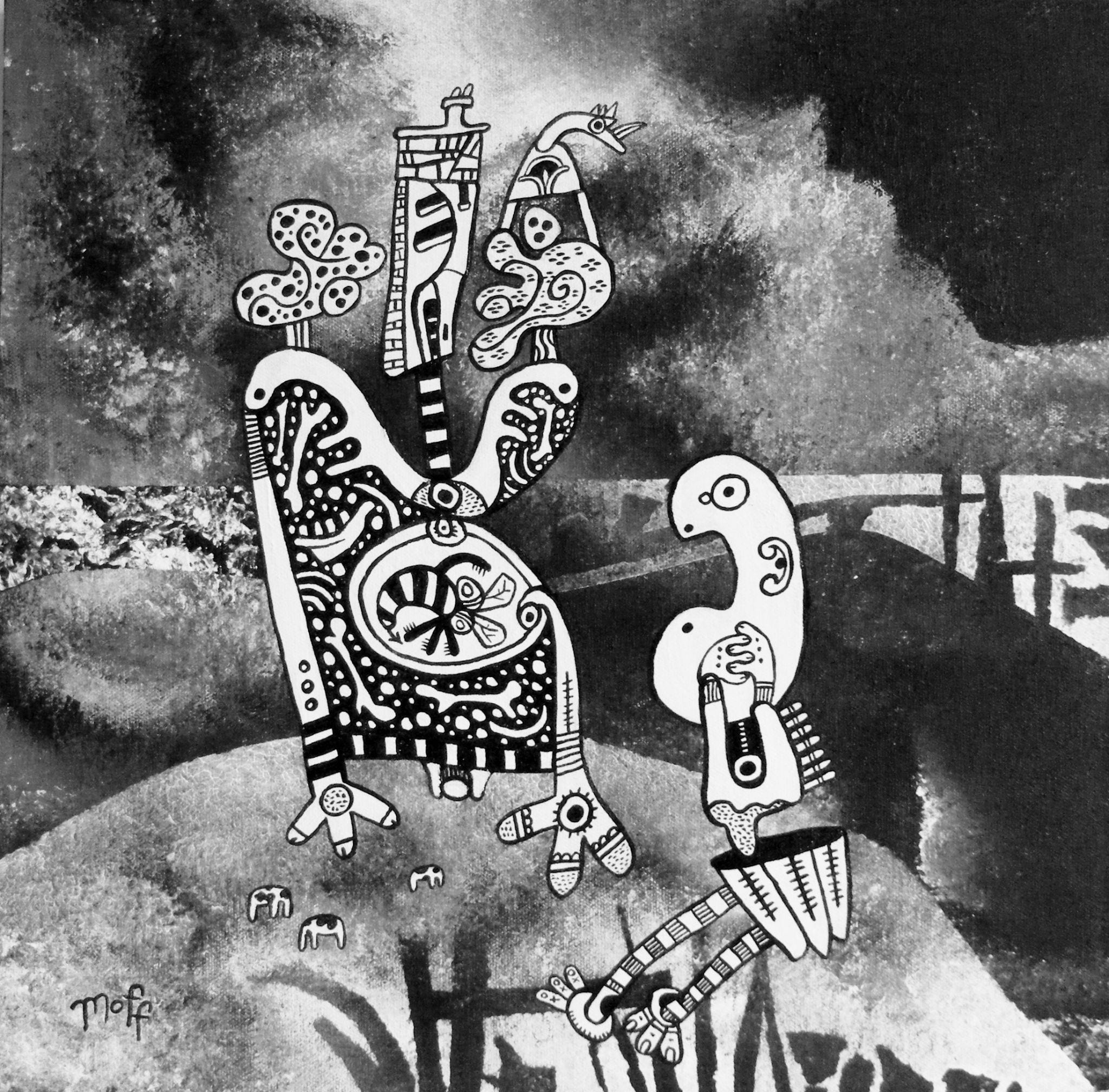
I came into the story sideways, as is my habit. Through a service door behind the Abstercot Working Men’s Club, past the stacked chairs and the smell of spilled bitter, into the alley where the cats walk like they own the place. I wasn’t invited. I rarely am. I arrive where the air feels thin and the ground hums with the promise of something about to go wrong.
Name’s M. Punk poet. Occasional entertainer. Professional interrupter of narratives. I’ve played gigs in rooms where the wallpaper peeled itself off the walls to escape the noise. I’ve read poems to crowds who looked at me like I’d just insulted their mothers. I’ve danced on stages that weren’t there the next morning.
Abstercot suits me fine. And sometimes it will speak to me.
The Kneeling World began at dawn
Not the poetic kind of dawn. Not the golden‑hour nonsense photographers get excited about. This was Abstercot dawn: a grey bruise spreading across the sky, the kind of light that makes you think the sun’s embarrassed to show its face.
I was standing on the corner of Phipps Lane, watching the town bowing.
Not metaphorically. Literally.
People on their knees in the street. Shop shutters half‑open, half‑closed, as if unsure whether to participate. Birds perched on the telegraph wires, heads dipped, eating berries. Even the bins seemed to lean forward in a gesture of reluctant reverence.
The whole world was kneeling. But I stood, someone has to.
Q arrived a moment later, coat flapping like a crow with a grudge. He looked at the kneeling figures, then at me.
“You’re late,” he said.
I shrugged. “The world kneels, I stand. It’s a brand.”
He didn’t laugh. Q . He’s a man who carries the weight of the town like a rucksack full of wet bricks. The Aromancers trailed behind him, drifting like a weather system. Liss smelled of cold metal and forgotten birthdays. Merrin carried his inhaler like a relic. Darrow clinked. Ephra scribbled.
O was behind them looking dishevelled.
“If M’s here, where’s S?”, O asked.
Q sighed. “Bored. Went off to Northampton looking for the history of Phipps Brewery.”
O sighed also “Of course he did. When the universe bends itself into a new shape, S goes hunting for the lineage of an ex-defunct Northamptonian ale. He needs to get his priorities in order.”
The kneeling figures began to hum. Low. Resonant. A sound that vibrated in the teeth. The Aromancers stiffened.
“This is new”, Liss whispered.
“This is wrong”, Merrin added.
“This is Abstercot”, I said.
The humming grew louder. The ground trembled. The thorny conduits pulsed like arteries. The birds on the wires swallowed their red berries in unison, their throats glowing faintly.
The Kneeling World was waking up.
Q knelt beside one of the figures, a woman in a supermarket uniform, eyes closed, lips moving silently.
“What’s she saying”, he asked.
I leaned in. The words were faint, but familiar.
“She’s reciting street names”, I said. Old ones. Ones that don’t exist anymore.
Ephra’s pen scratched furiously. “The town is rewriting itself again” she observed.
Darrow cracked his knuckles. “And we’re in the middle of it.” The humming stopped.
Silence.
Then every kneeling figure lifted their head at the same moment, eyes opening like shutters.
They looked at us. Not past us. Not through us. At us. For the town.
And they spoke one word.
Merriment
Q turned to me. “What did you do?”
“Nothing”, I said. “Probably”.
The world kept kneeling. The conduits kept pulsing. The birds kept swallowing their impossible berries.
And Abstercot, in its infinite strangeness, had decided it wanted me. “Right then”, I said. “Let’s see what the town wants”. The Kneeling World waited.
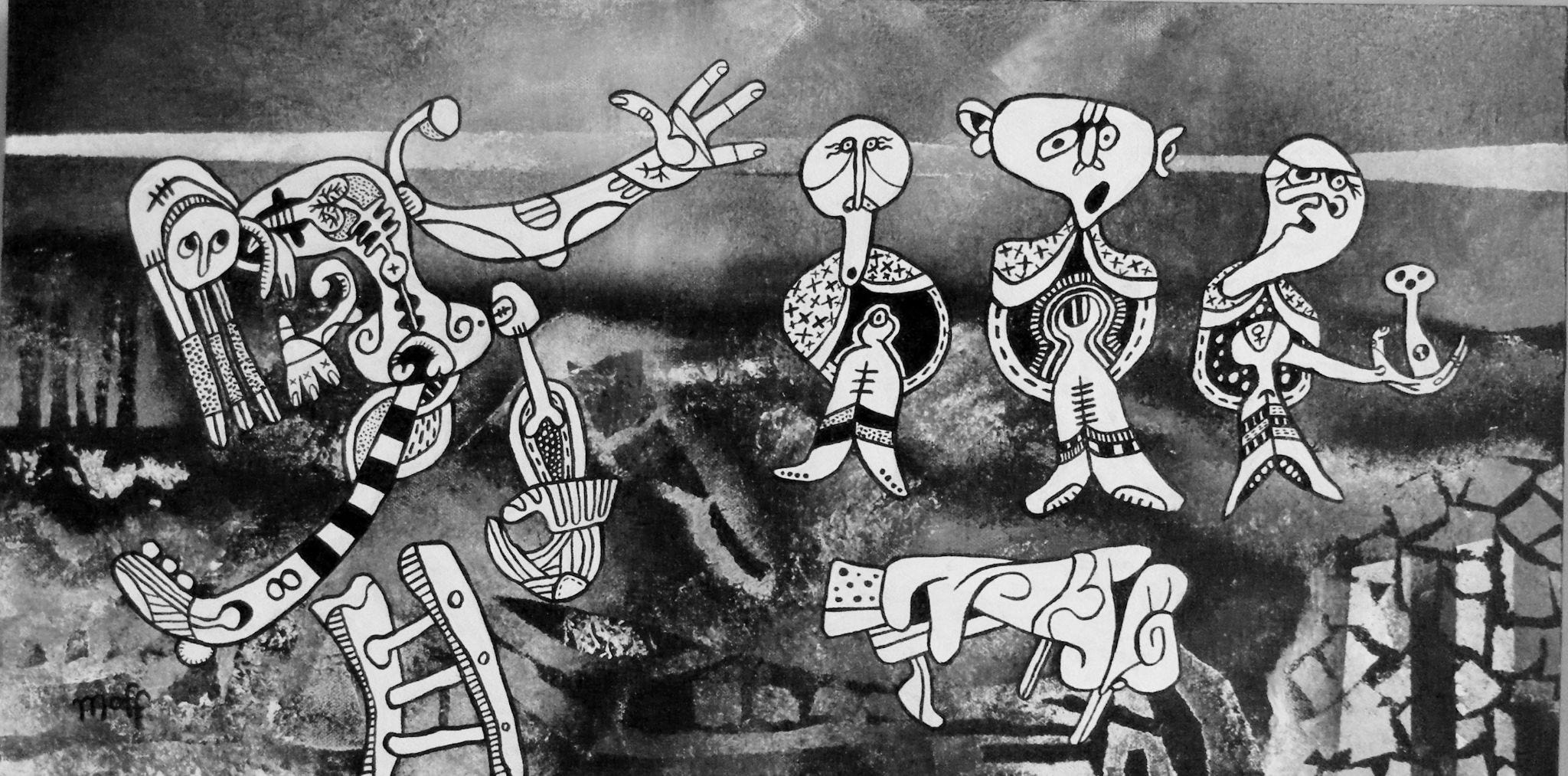
Comments
Nothing yet. Say the first thing.
Sign in to join the conversation.