
If you’re new to my Substack I’m a prostate cancer patient that has been receiving treatment with drugs that cause side effects that mimic those of perimenopause and menopause. I’m in the unique position of being a biological man who understands the life challenges that women experience in menopause. I have experienced nearly every symptom of menopause, including hot flashes, memory loss, brain fog, weight gain, osteopenia, low libido and more. In an effort to learn how to cope with these symptoms, I educated myself on menopause to see how women can work through them. I have read countless books and articles by noted women health experts, doctors Lauren Streicher, Kelly Casperson, and Jen Gunther just to name a few. I’ve taken the time to learn about how changes in estrogen, progesterone, and testosterone levels affect women and have come to realize that women even get treated like second class citizens when it comes to women’s healthcare. I don’t think that’s fair and the first step in righting the wrong is education.
My mission with my Substack posts is to educate men how and why they can and should support their female partners from peri-menopause through post-menopause. If you’re a woman on a journey through menopause, I hope you consider printing out this post, and sharing it with your male partner. It might help you! Also, please consider sharing this post with a friend or re-Stacking it. I would be honored if you would do so.
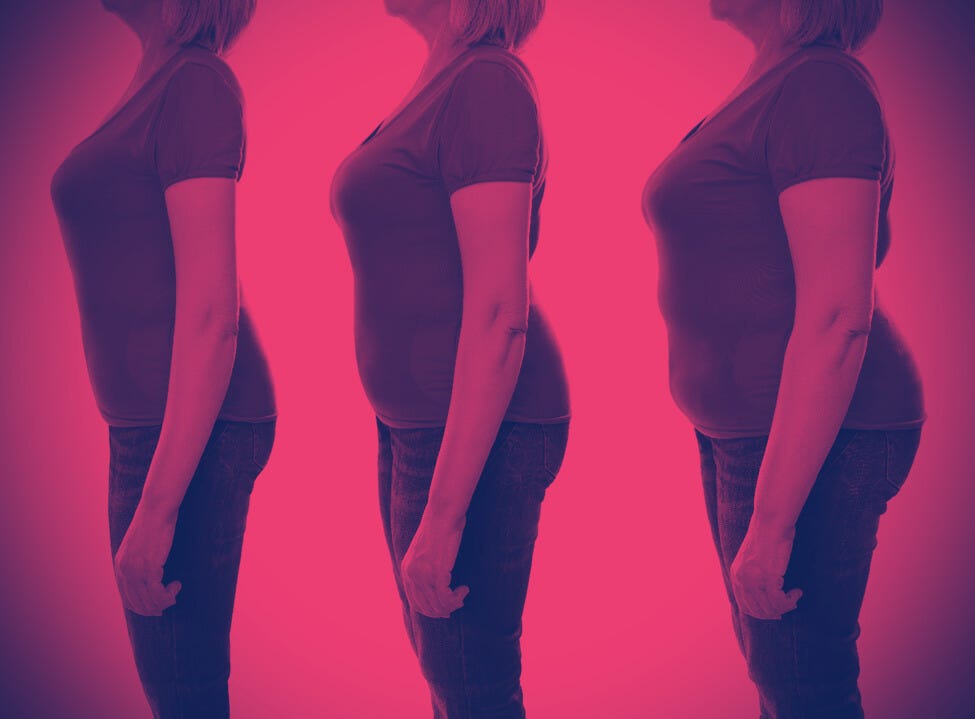
Original photo courtesy Cleveland Clinic
I used to be thin! What the hell happened to me?
A few years ago I looked at myself in the mirror and decided to get down to a healthy BMI. I wasn’t obese, but I was certainly a bit overweight. I bought an Apple Watch to track my move calories and started using the NOOM app to manage my intake. The result was I lost 25 pounds in four months. I looked great and felt even better. I had to buy a new wardrobe and reinvented my “style”. I gained 5 pounds back, but it was incredibly easy to maintain that adjusted weight by eating responsibly most of the time and exercising vigorously most of the time. I maintained my weight through cancer surgery, radiation, and chemotherapy. I exercised less but my daily calorie burn was down about 30% due to nausea. In March 2025, my testosterone and estradiol levels (Yes, men have estrogen too!) plummeted to near undetectable levels and my personal shit show of weight gain began. The side effects from having near undetectable hormone levels made my menopause like symptoms near unbearable. My oncologist and I decided to stop the cancer drugs altogether, and let my testosterone recover. To my surprise I watched my weight go up almost 1 pound a day for two weeks. I grew love handles and I exchanged my prior flat stomach for a man’s version of menopause belly. I did not think it was possible. I’ve heard of women in menopause suddenly gaining 20 pounds within a month, and while I couldn’t believe it then, I believe it now. I’m working hard to lose this weight and fat. It’s a much greater struggle than I experienced when my hormones were normal and I have a deep appreciation for what women go through with weight gain and distribution during menopause.
During perimenopause and menopause, estrogen, progesterone and testosterone levels decline, resulting in a change in body metabolism. Muscle mass decreases, resulting in less calories being burned for the same amount of movement. Fat typically starts to accumulate in the belly. It is also often re-distributed from other parts of the body to the lower abdomen. That fat can be subcutaneous, which means that it’s contained in the layer just beneath the skin or visceral fat which surrounds organs within the abdomen. Neither is good, but visceral fat is quite unhealthy and can actually be dangerous.
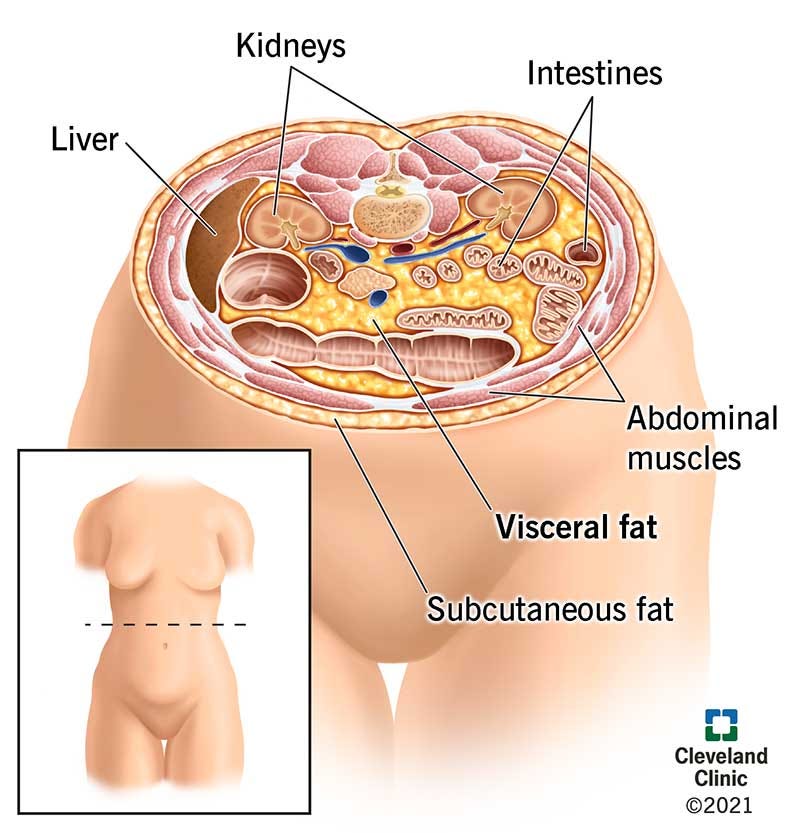
Photo courtesy of the Cleveland Clinic
A good example of easy to see and feel subcutaneous fat is love handles. Anywhere you can grab and pinch skin together however and have an inch or so between your fingers, that’s subcutaneous fat. Visceral accumulates fat within the body cavity and typically surrounding organs within the abdomen. If visceral fat is dense enough, it can make one’s belly feel hard causing a woman or man to appear like the third trimester of pregnancy.
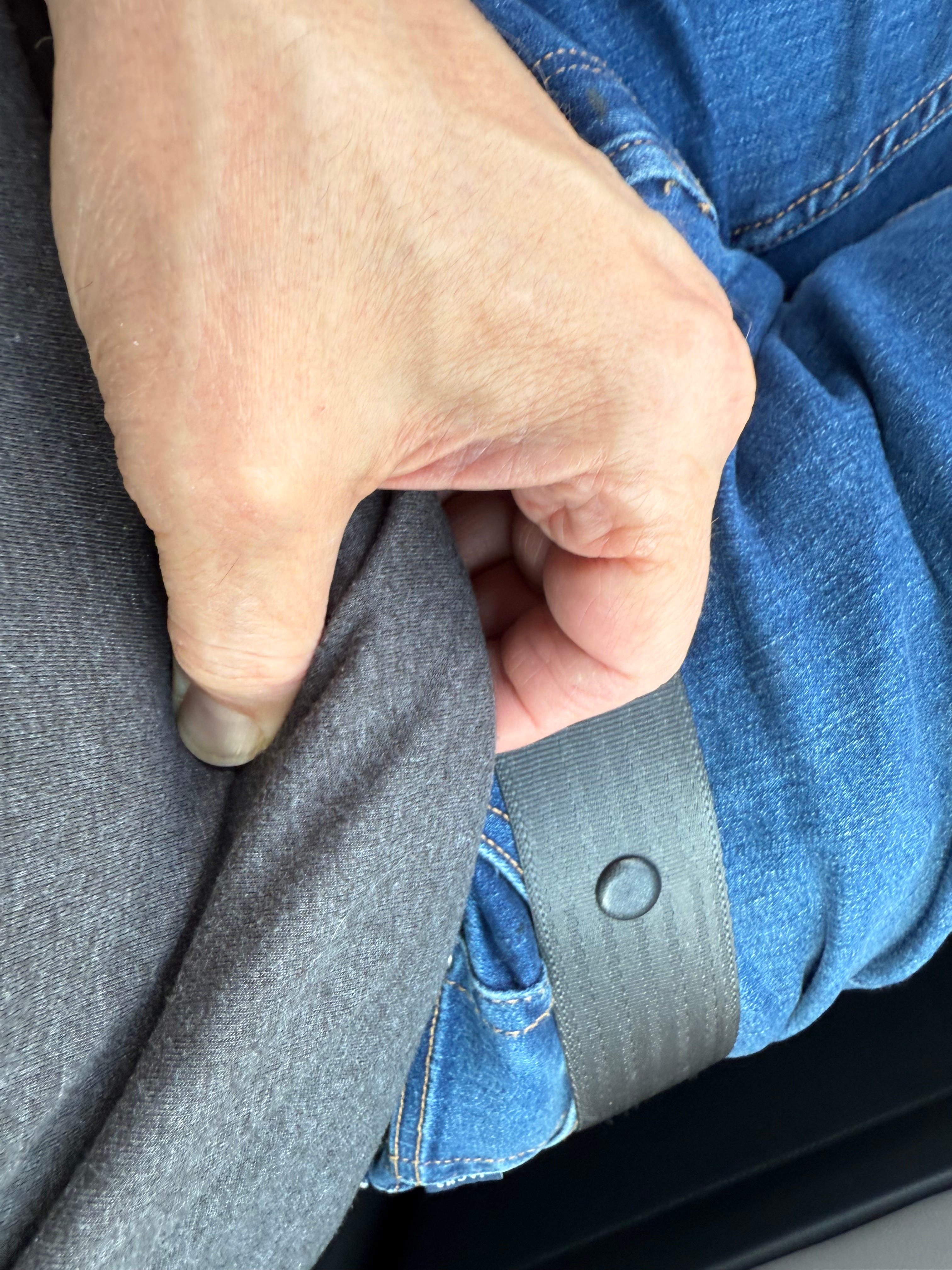
My personal inch of subcutaneous belly fat
Fat gained during menopause is extremely difficult and slow to lose because of changes in metabolism. Cutting calories alone doesn’t seem to work. Dr. Mary Claire Haver is a doctor that specializes in menopause care and she recommends a high protein reduced carb diet in combination with increased calorie burn for exercise. She has an the guide on her website for 28 day challenge to reduce belly fat. I can’t say I followed it to the letter, but it has influenced how I exercise. Here’s a link to the challenge: https://thepauselife.com/blogs/the-pause-blog/the-pause-belly-fat-blast-challenge
I belong to a health club and work out at least 4x a week. My workouts are a combination of moderate cardio on an elliptical machine, weight training, and brisk walking. I’ve been advised that weight training itself burns few calories. Walking is a bit better, but vigorous exercise on an elliptical moves large larger muscles like those in the legs and can help burn more calories.
If you’ve gained some belly fat through menopause, you’re not a failure. You may have to do some things differently to live your best life and the results will be worth the effort.
No posts
Comments
Nothing yet. Say the first thing.
Sign in to join the conversation.