
Some people seem to have the worst luck. As a practicing physician, I occasionally run into families that have experienced more than their share of procedures and operations that have ended badly. Oddly, this affliction also seems to run in families.
I often deal with young patients with chronic abdominal pain and learn that after undergoing an exhaustive series of tests, their immediate relatives have suffered the sequential removal of adenoids, tonsils, appendices and gallbladders. After the surgery, there is often brief improvement only for the symptoms to return as bad or worse than they were before the operation. Sometimes, there are post-surgical complications which include removal of the wrong organ, tying off a vital blood vessel or development of post-surgical infection or scarring.
What could possibly explain so much bad luck in any one family? Wondering about some underlying genetic predisposition to disaster, I have come to realize that these stories obey the hidden law of nature, termed “#Las Vegas Rules”.

Let me explain. Gambling in Las Vegas is supervised and highly regulated. Whether it is blackjack or slot machines, casino games provide a statistically significant chance of winning. However, all of these games of chance are tilted slightly in favour of the house. If the tilt worked in favour of players, the casinos would eventually go bankrupt. The essence of gambling is that as the tilt favours the house, any one player on any one throw or pull of the lever has a chance of winning but overtime the statistics govern the game. For a group of players, the question is not whether you will win or lose, if you continue to play, the question is whether it will take a short time or a long time to lose your stake.
Oddly, the same rules apply to medical tests and operations. There is only a small risk of unexpected complications for most things in medicine and surgery. In most cases, the risk is small enough that folks agree to undergo the test or operation. However, Las Vegas rules dictate that if a person has a series of tests or operations, statistics kick in and these folks are the ones more likely to experience the rare complication.
The patient who has unexplained symptoms that drive them to seek two, three or four or more opinions steadily increases the probability of problems. When faced with a patient with a long history of unexplained symptoms, some health care practitioners are predisposed to action. The doctor orders a test, a medication, a procedure or surgery. The more invasive, the more likely the test will flush out some seemingly abnormal result which then requires a second test which may clarify the problem but could also represent another roll of the dice.

There are special risks involved in surgeries. Most but not all surgeons, are action oriented. If a patient is turned down by the surgeon who days “An operation will not solve your problem”, the patient can eventually find a surgeon who will acquiesce. For a number of reasons that surgeon may not be the “best in class” and therefore more likely to have a higher rate of complications and post-operative infections. Their availability itself may be a clue that their colleagues hold them in lower esteem. Canadian patients seeking care in the capitalist #American Health Care system may be unaccustomed to the extent corporate profit distorts decision making.
In the face of our current access problems, Canadians have recently witnessed the arrival of for-profit free-standing health clinics. These clinics offer “#Executive Health Care Packages” that include a yearly battery of diagnostic tests usually involving bloodwork and ultrasounds. The “gold star packages” include an upper GI endoscopy and colonoscopy. Some even include total body MRI. Promotions subtly remind customers of the benefits of an early diagnosis of cancer and other scary ailments.
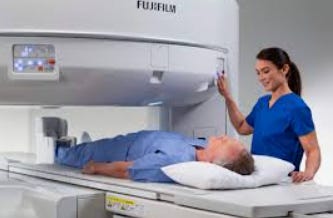
What these clinics don’t mention is the burden of “false positive” diagnosis. One questions the overall worry burden of a slightly elevated finding of liver functions test after vigorous exercise or elevated blood pressure with anxiety labelled the “white coat syndrome”. Almost all abnormal tests require a follow-up investigation that adds to the burden of either time, expense or both.
Ultimately, the decision to undergo private pay preventative screening is personal. While there is no evidence that these services improve health outcomes overall, they are well worthwhile for the small number who uncover some treatable problem. Many people derive pleasure from the reassurance of normal results. Others may decide that $3000 would be better spent on essentials, a major purchase or possibly exotic travel.
However, there are real risks for those families who pursue opinion after opinion and test after test hoping for an explanation of chronic symptoms. If this results in an endless series of tests, procedures, medications and surgeries, try to remember that there is a downside as well as an upside to health care played like the Las Vegas slots.
No posts
Comments
Nothing yet. Say the first thing.
Sign in to join the conversation.