

Spring brings an incalculable explosion of life. A single tree that produces 100,000 leaves can generate billions of pollen grains per season. The resulting allergy symptoms include #red itchy eyes, excess nasal mucus, scratchy throat and sneezing. These symptoms last for weeks until the first blush of Spring turns to the explosion of summer grass. If you want to know if allergy season has arrived, examine a tissue that you wipe over a window or the hood of a car.
While folks have been suffering with tree allergies as long as there have been folks and trees, we’re not sure why all forms of allergy have increased in the last 40 years. There is evidence that climate change is contributing to an earlier and longer allergy season.
Whatever the cause, there is a great interest in ways to prevent, reduce or modify the symptoms. Global sales of anti-allergy medication amounted to $24 billion in 2024
While recent developments are available in many of these categories, you have probably missed the opportunity to prevent #tree pollen allergy through desensitization. You could still get the jump on preventing grass and ragweed allergy with allergy shots and now #Sub Lingual Immunotherapy as daily meltaway pills known as “SLIT”.
Traditional treatments include antihistamines, decongestants, topical steroids and bronchodilators for people with respiratory symptoms. Traditional antihistamines with active ingredients of diphenhydramine (Benadryl and Chlor-triplon) have been around for decades. Their side effects, which cause fatigue and sleepiness). Allergists are promoting their replacement with non-sedating second generation antihistamines, listed in the attached table.
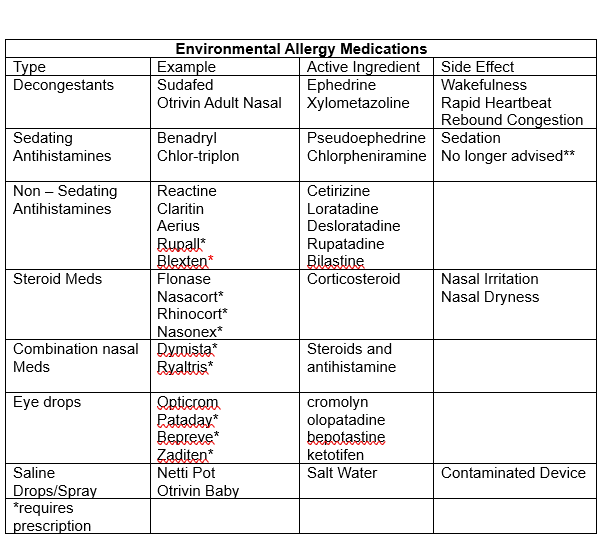
Though these have been around for years, consumers remain confused because these medications are often marketed in combination with anti-inflammatories such as acetaminophen or ibuprofen.
The clue to finding the right product for your problem is to avoid products which are listed as daytime and nighttime. Daytime products often include ephedrine, an adrenaline like medication which can have the side effect of rapid heartbeat, edginess and insomnia in susceptible individuals. Single ingredient Sudafed (ephedrine) is now kept behind the counter to keep people from buying to make home grown amphetamine.
Otrivin nasal spray has similar ingredients and can provide instantaneous but not long-lasting relief for people already experiencing congestion. These nasal decongestants become habit forming and highly discouraged for use for over 3 days. Some folks find the use of a “Netti Pot” as a way of clearing their sinuses. It’s important to keep the “Netti Pot” clean to prevent mold growing in the device. Heat sterilized or distilled water is recommended for nasal saline rinses as well.
Because of these sedating properties, the “nighttime products” that contain diphenhydramine, Nytol, Sominex and ZZZQuil) are often sold separately as a mild sleep aids.
Topical steroids, Flonase, Nasacort, Rhinocort and Nasonex, very effective preventative treatments are sold as nasal spray. Recent studies suggest that you can increase their effectiveness by starting them 2-3 weeks before peak pollen allergy season, i.e. any time now. Recently combination nasal steroids and antihistamines are available for use to not only improve control of allergy symptoms but also decrease need for oral antihistamines.
Using eyedrops such as Opticrom or Zaditin can reduce children from constantly rubbing their eyes and the risk of developing a condition called keratoconus. My pediatric ophthalmologist colleague recommends Pataday (olopatadine)as the most effective antihistamine/mast cell stabilizer eye drop.
Lastly, folks who are very sensitive might consider environmental practices that minimize the amount of pollen in your home. These include keeping the windows sealed and using a well-maintained furnace filter or air conditioning. Using a free standing Hepa filter pulls the pollen out of the air. Very sensitive folks go as far as vacuuming their jackets when they come home and then confining them to a closet and damp dusting surfaces from time to time.
If you experience a lot of difficulty, work with your family physician or allergist who can do skin testing to identify specific sensitivities and who can recommend the use of medications targeted to your issues.
These same medications are used to treat seasonal allergies throughout the year. Grass and ragweed allergies often cause problems during the summer and allergies to leaf mold sensitivity occur in the fall. Dust mites are a perennial allergen that drives a lot of allergy symptoms throughout the winter
Comments
Nothing yet. Say the first thing.
Sign in to join the conversation.