
SPACE / AI INFRASTRUCTURE
I have been thinking a lot more about space lately.
Not in the vague, sci-fi way where every chart goes up and every company with a rocket render becomes investable. That is usually how people lose money in frontier markets.
The farther away the revenue is, the easier it becomes to confuse imagination for underwriting.
But something feels different now.
Core thesis: The space economy only becomes investable when transportation cost, government demand, and private infrastructure start reinforcing each other.
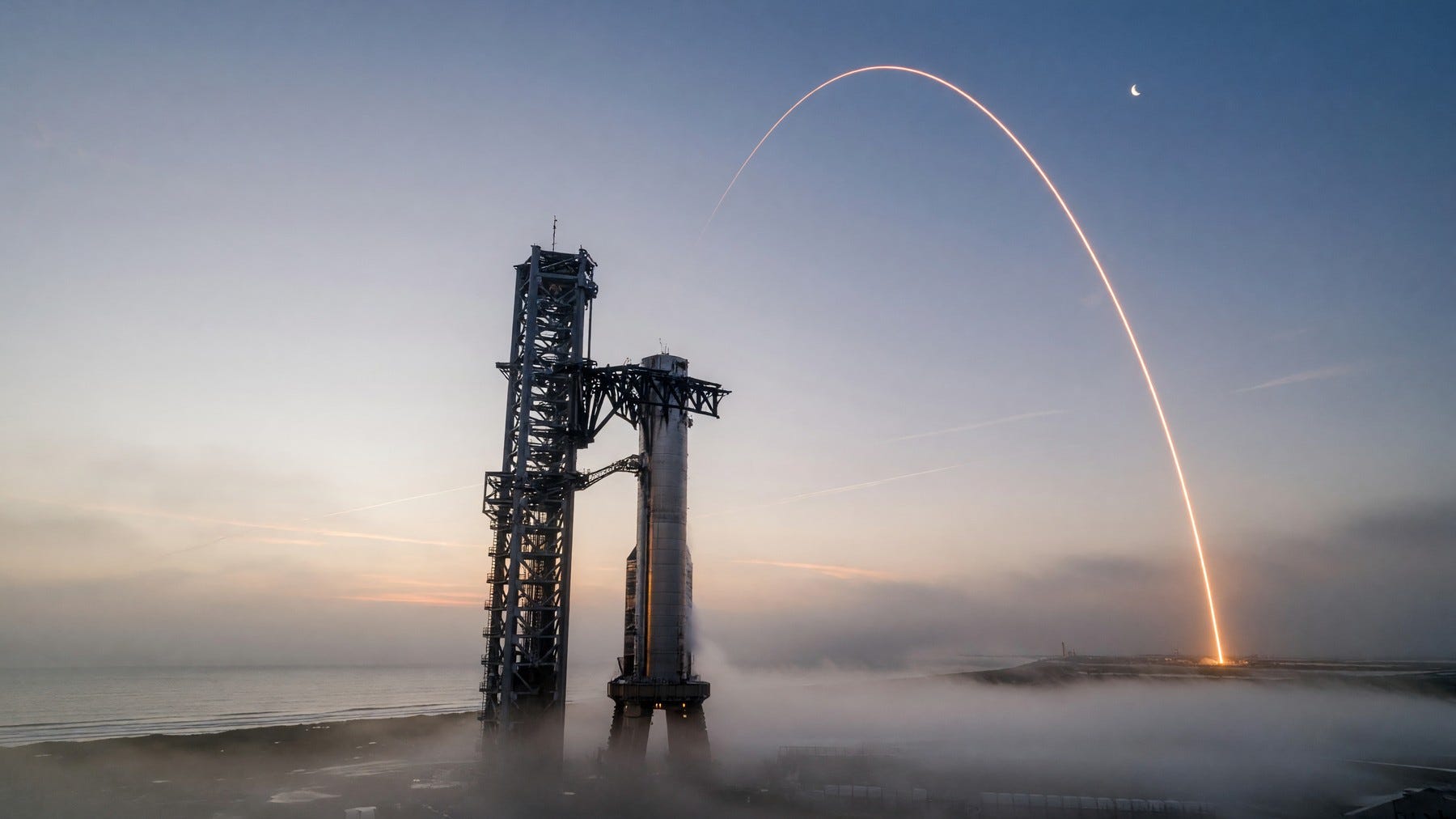
The way I am framing the category is simple:
Starship lowers the transportation constraint — which expands what can be built.
Artemis creates the first recurring demand surface — which gives builders a reason to scale capability.
The Moon becomes the proving ground — where robotics, power, communications, logistics, and autonomy get stress-tested.
Orbital compute connects space back to AI — because energy may become the bottleneck that forces infrastructure to look beyond Earth.
The investable story is not rockets by themselves. It is the infrastructure stack that becomes possible if launch cost keeps falling.
The SpaceX IPO expected this Friday makes the timing impossible to ignore. If SpaceX starts trading under SPCX, it could become one of the most visible investing events of this cycle. It will pull attention, capital, analysts, and retail excitement into the category overnight.
But I do not want to confuse the financial event with the industrial event.
The IPO may decide who gets direct equity access. It may reset how public markets talk about space. It may make every adjacent public company feel more relevant for a while. But the reason I am spending more time on the category is not the IPO itself.
My excitement comes from Starship.
More specifically, it comes from what Starship is trying to turn space into: not a one-off expedition business, but a repeatable transportation layer. That is the unlock. If the cost of moving mass into orbit falls by an order of magnitude, space stops being only a place for satellites, governments, and science missions. It starts becoming an industrial zone.
That is the shift I care about.
Every major S-curve has a moment where the enabling cost curve breaks. Semiconductors did it for computing. Fiber and wireless did it for the internet. Cloud did it for software. Batteries are trying to do it for electrification. Launch cost is the equivalent constraint for space.
For decades, the space economy has had demand waiting behind a wall. The wall was not simply ambition. It was transportation cost, cadence, payload mass, reliability, and the inability to build big things cheaply beyond Earth.
Starship is the first credible attempt to punch a real hole through that wall.
This piece is my current thesis, not a victory lap. A lot still has to work. Starship has not yet become the fully and rapidly reusable system SpaceX is targeting. Lunar infrastructure is still early. Orbital data centers are still closer to research programs and early demonstrations than scaled commercial infrastructure.
But investing is about recognizing when a curve may be bending before it becomes obvious in reported numbers.
And right now, I think space is beginning to look like one of the most important S-curves of the next decade.
This is the cost curve that everything else depends on.
Space has always had a brutal economic problem: it is expensive to put mass where the opportunity is.
That sounds obvious, but it is the whole category.
If every kilogram is expensive, every design decision becomes constrained. Satellites have to be lighter. Hardware has to be smaller. Systems have to be over-engineered because replacing them is hard. Experimentation is slower because failure is costly. Infrastructure has to be assembled in tiny pieces or not assembled at all.
That is why Starship matters.
SpaceX describes Starship as an effort to solve one of the hardest engineering problems in history: developing a fully, rapidly reusable rocket. That phrase matters more than the rocket itself. Reuse is the economic model.
Falcon 9 already proved that reusing rockets changes launch cadence and industry structure. SpaceX's own launch statistics show hundreds of booster landings and reflights. That is not theoretical anymore. Reuse moved from impossible, to weird, to normal.
Starship is the next step because it is aiming at much more mass, much higher cadence, and full-system reuse.
The difference between partially reusable medium-lift and rapidly reusable super-heavy lift is not linear. If it works, it changes the design space for the entire industry.
Instead of asking, "What can fit inside today's launch constraint?" companies can ask, "What would we build if mass to orbit were cheap enough to matter less?"
That is where the thesis starts getting interesting.
Cheaper launch makes existing satellites cheaper and opens categories that were previously uneconomic:
larger satellites and more capable constellations
private space stations and orbital manufacturing
lunar logistics and surface equipment
fuel depots and in-space transportation
space-based solar and compute experiments
massive astronomy, sensing, and communication systems
robotics-heavy infrastructure beyond Earth
The simple version: when transportation cost collapses, the market stops optimizing only for scarcity.
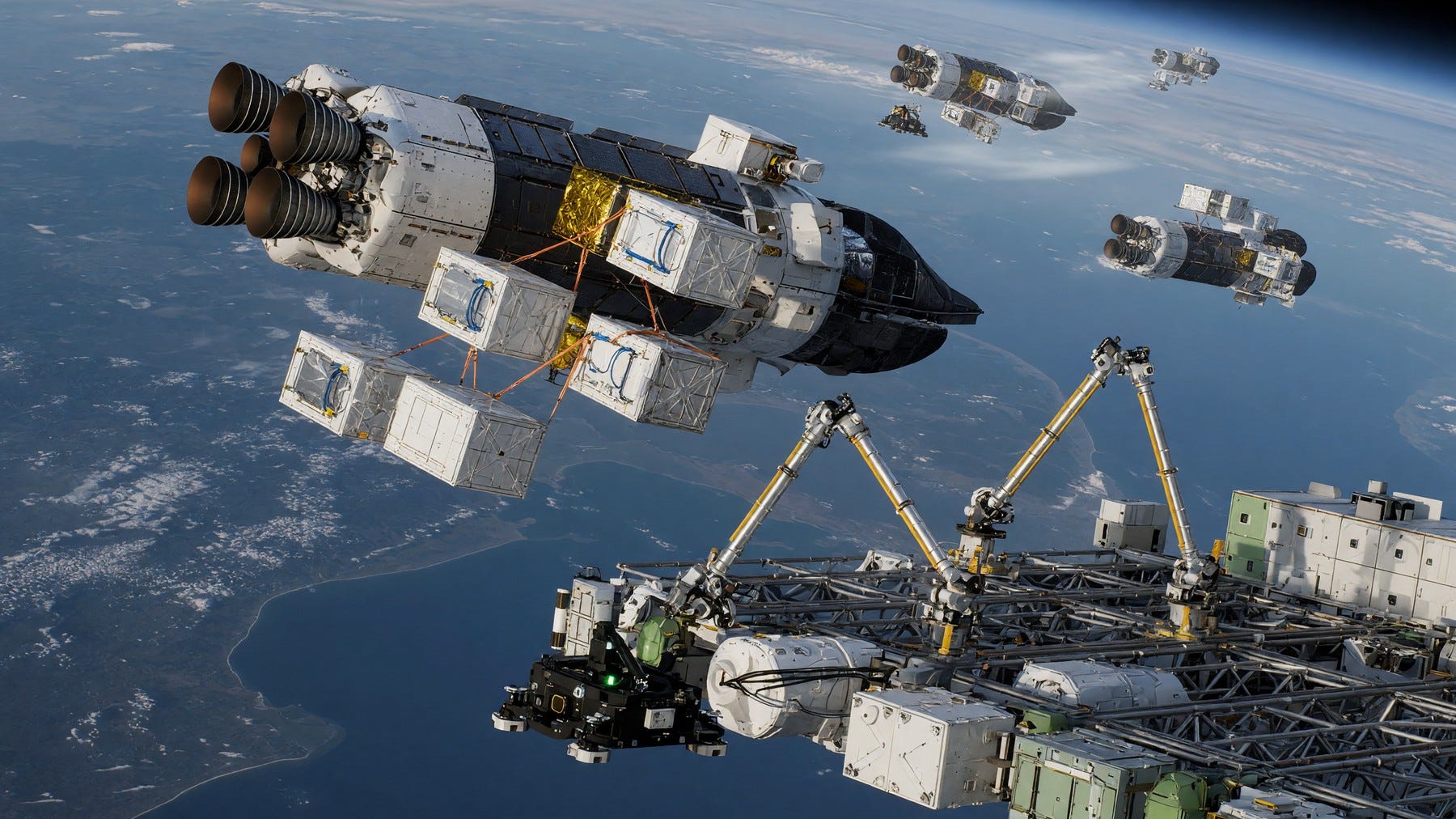
The internet did not become the internet because people made dial-up slightly better. It became the internet because bandwidth got cheap enough for new behavior to emerge. Streaming, cloud software, video calls, mobile apps, and AI distribution all depended on bandwidth and compute becoming abundant enough to feel normal.
Space needs the same kind of abundance event.
Starship is not guaranteed to deliver it. But it is the first system that makes the question serious.
Google's Project Suncatcher research is a useful marker here. Google is exploring solar-powered satellite constellations carrying TPUs and connected by free-space optical links. In its writeup, Google notes that launch costs have historically blocked large-scale space systems, but its analysis suggests that launch pricing could fall below $200/kg by the mid-2030s with sustained learning rates. At that level, Google argues the cost of launching and operating a space-based data center could become roughly comparable to reported terrestrial energy costs on a per-kilowatt-year basis.
That sentence is easy to skip past. I think it is one of the most important signals in the entire space thesis.
A hyperscaler is not saying, "space is cool." It is saying that if launch cost keeps falling, space-based AI infrastructure may stop being physically or economically absurd.
That is the kind of thing I look for in S-curves: not hype, but a credible path from impossible to expensive, from expensive to possible, and from possible to obvious.
The progress matters. The uncertainty still matters too.
I want to be careful here because frontier investing rewards imagination but punishes sloppy certainty.
Starship still has a lot to prove.
The full dream is rapid reuse: booster reuse, ship reuse, fast turnaround, payload operations, orbital refueling, heat-shield durability, launch pad cadence, regulatory cadence, and eventually human-rating for lunar and Mars-related missions. That is a lot of hard engineering stacked on top of hard engineering.
But the direction of travel matters.
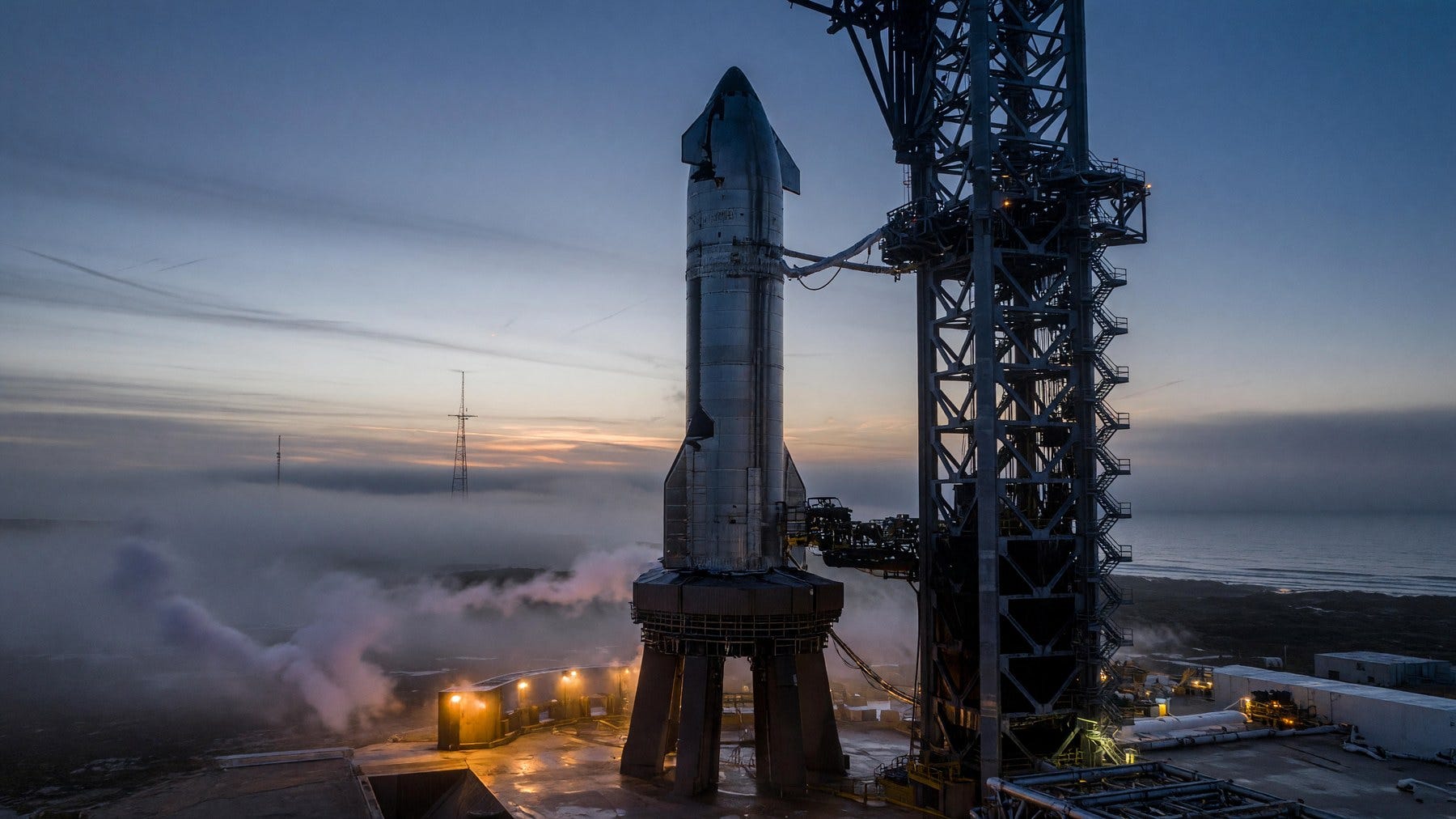
On Starship Flight 5, SpaceX caught the Super Heavy booster with the launch tower on its first catch attempt. That was one of those moments that looked like science fiction for about five seconds and then immediately became part of the roadmap. On Flight 11, SpaceX said every major objective was achieved, including full-duration ascent, Starlink simulator deployment, a third in-space Raptor relight, and a soft splashdown of Starship. On Flight 12, the first V3 flight, SpaceX demonstrated all 33 Raptor 3 engines at liftoff, deployed Starlink simulators plus modified Starlink satellites to image Starship in space, gathered reentry and heat-shield data, and executed a splashdown burn, even while the flight also exposed problems in both booster and ship performance.
That last part matters. The point is not that Starship is already done. It is not. The point is that the test campaign keeps turning unknowns into engineering work.
The V3 upgrade path tells the same story. SpaceX's May 2026 Starship V3 update describes changes designed around higher flight rate, full reusability, long-duration flight, docking, propellant transfer, stronger booster catch operations, redesigned propulsion systems, Raptor 3 engines, and a new launch pad. SpaceX also says V3 includes docking hardware and propellant feed connections for ship-to-ship propellant transfer.
Those are not cosmetic upgrades. Those are the pieces of a transportation network.
If Starship becomes a reusable truck to orbit, the business model of space changes. If it becomes a reusable truck plus a refueling architecture, the map gets bigger again. If it can move mass to lunar orbit and the lunar surface at declining cost, the space economy stops being only low Earth orbit.
That is why the SpaceX IPO conversation still feels secondary to me, even this week.
Friday may be the market event. Starship is the industrial event.
The IPO may decide who gets direct equity access. Starship decides whether the category itself gets bigger.
Frontier markets usually need a first serious buyer.
The second piece of the thesis is Artemis.
I do not think investors should ignore the government role in early frontier markets. In fact, the government often acts as the first large buyer when the private market cannot yet underwrite the infrastructure alone.
That was true in semiconductors. It was true in aerospace. It was true in the internet. It is true again in space.
NASA's Artemis campaign is much more than a return-to-the-Moon branding exercise. NASA describes Artemis as a path to land humans on the Moon, establish long-term presence, work with commercial and international partners, and use what is learned on and around the Moon to prepare for Mars. NASA's own Artemis materials say the agency plans to build an Artemis Base Camp on the lunar surface and Gateway in lunar orbit.
That matters because long-term presence requires an ecosystem.
A flag-and-footprints mission can be heroic without being economically transformative. A recurring lunar architecture is different. It needs landers, suits, rovers, power systems, communications, habitats, logistics, launch cadence, surface mobility, software, robotics, maintenance, and cargo delivery.
That is how an industrial base forms.
NASA's partner page says Artemis prime contractors have more than 2,700 suppliers across 47 states contributing to Kennedy's lunar spaceport, Orion, SLS, Gateway, human landing systems, spacesuits, and lunar mobility systems. NASA also says SpaceX has a contract to develop Starship HLS for Artemis III and IV, Blue Origin has a contract to develop Blue Moon MK2 for Artemis V, and both companies are being developed for cargo versions of their landers that could deliver large equipment and infrastructure to the lunar surface.
That is the government creating the first real demand surface for a lunar economy.
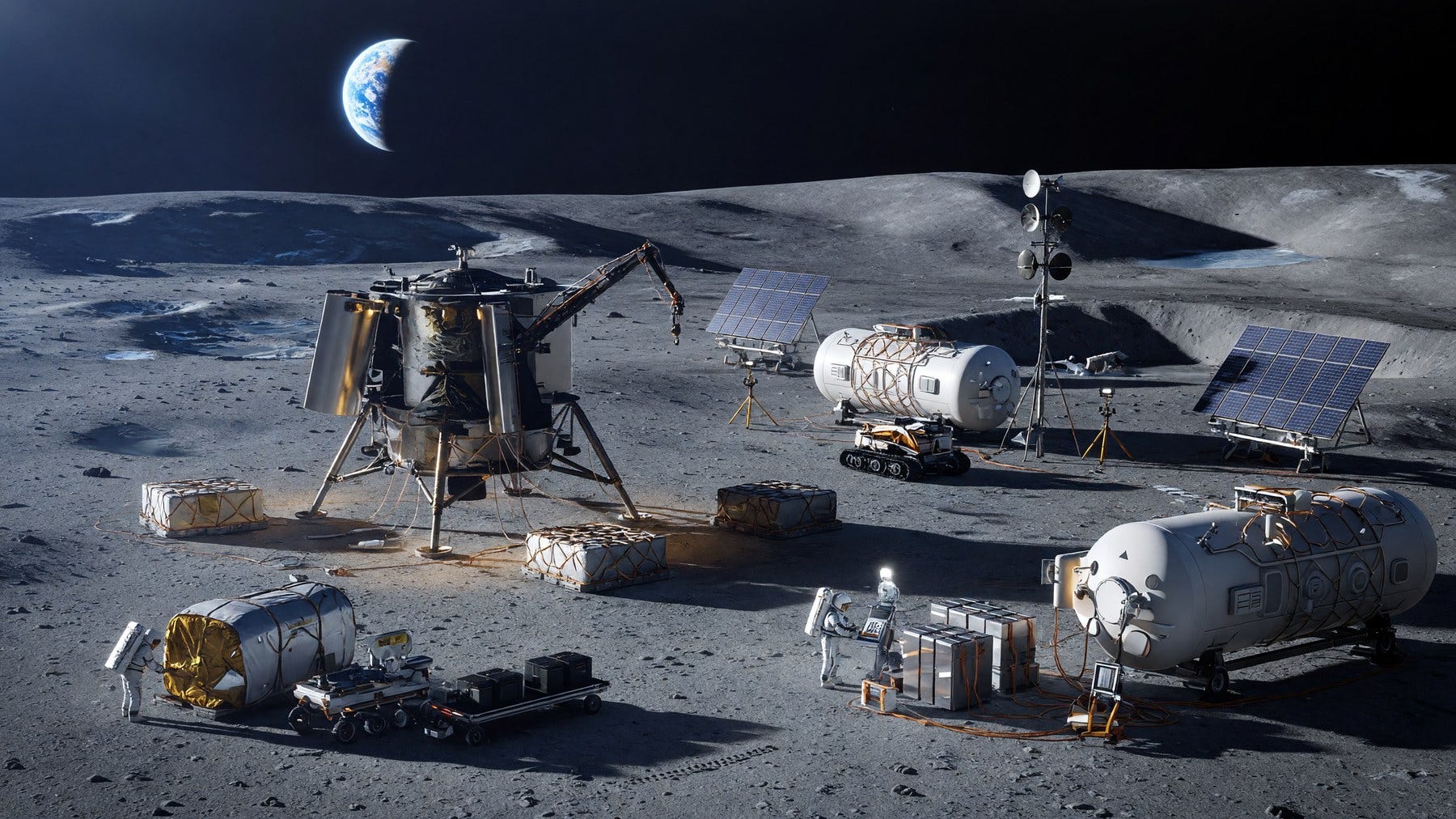
The timing is still moving. NASA's 2026 architecture update shifted Artemis III into a 2027 low-Earth-orbit systems and operational test and pointed Artemis IV toward a 2028 lunar landing, with NASA discussing at least one surface landing every year thereafter. That schedule may keep changing. Space schedules almost always do.
But from an investing perspective, the exact date is less important than the structure of the demand.
NASA is not simply buying one rocket. It is trying to create a repeatable architecture with commercial competition embedded inside it.
That is a better model than a single government-owned stack.
Competition matters because it forces the cost curve down. It gives private companies a reason to build capabilities that can serve NASA first and other customers later. It also creates second-order beneficiaries: suppliers, materials companies, propulsion systems, sensors, autonomy software, communications, lunar construction tools, power systems, and eventually resource utilization.
This is the part of the space thesis I think many equity investors underappreciate.
Government demand does not have to be the whole market. It can be the bridge.
If NASA helps create the first recurring lunar missions, and Starship or other vehicles reduce the cost of moving mass, then private companies get a testing ground for a much larger commercial market. The early economics may be government-led. The later economics may be industrial.
That is a classic S-curve pattern.
The Moon matters because it forces the stack to become real.
The Moon matters because it gives the space economy a place to practice.
That sounds simple, but it changes how I think about the opportunity.
Low Earth orbit is already commercializing. Satellites, broadband, imaging, launch, national security, and space-station services are real markets. The Moon is different because it forces companies to solve the problems that make deep-space infrastructure possible: power, dust, thermal extremes, autonomy, communications delay, landing precision, construction, life support, and logistics.
A lunar base is not valuable only because people may live there. It is valuable because the process of trying to build it creates technologies that can compound back into the broader space economy.
Power systems built for the lunar surface may matter for remote terrestrial infrastructure. Autonomous robotics built for lunar construction may matter for mining, defense, energy, and hazardous industrial work. Communications and navigation built for cislunar operations may become the backbone for a new traffic layer. Materials and habitats designed for extreme environments may spill into other hard-tech markets.
This is why I like the phrase "lunar economy," even though it can sound promotional if used lazily.
The lunar economy is not people buying coffee on the Moon. It is the supply chain required to make the Moon operational.
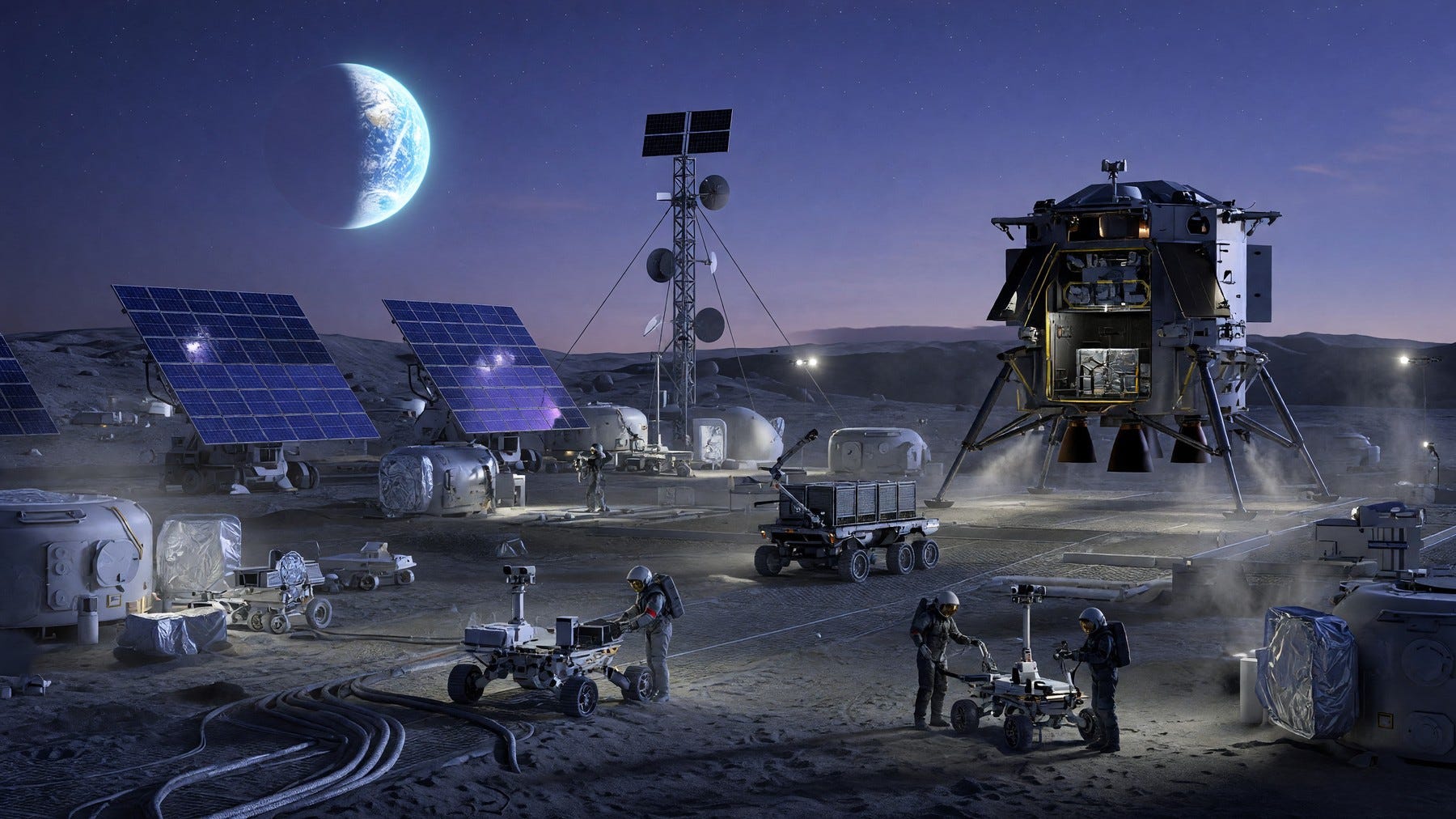
And because the United States is pushing this through a mix of NASA leadership, private competition, and international partnerships, it creates a powerful flywheel:
NASA defines the mission.
Private companies compete for the capability.
Suppliers build the components.
Launch cadence lowers the cost.
Lower cost expands the market.
A bigger market pulls in more capital.
More capital accelerates the capability.
That is how S-curves build.
Not in one clean line. In messy loops.
This is the part of the thesis that sounds strange until the energy math starts to matter.
The third piece is the one I think could become the biggest over time: orbital data centers.
AI is turning compute into one of the most important infrastructure markets in the world. But the bottleneck is not only chips. It is energy.
Data centers need land, power, cooling, grid interconnects, transformers, turbines, water, permitting, and political tolerance. The industry can solve pieces of that on Earth, but the scale of demand is becoming absurd.
The International Energy Agency said data center electricity demand rose 17% in 2025, with AI-focused data centers growing even faster. It expects data center electricity consumption to double by 2030 and AI-focused data center power use to triple. Goldman Sachs Research estimates the global data center market uses about 55 gigawatts today and forecasts power demand could rise 165% by 2030 versus 2023 levels.
That is before we even get to the next wave.
Enterprise agents are going to increase inference demand. Robotics will increase inference demand. Autonomous vehicles, drones, humanoids, industrial automation, defense systems, scientific reasoning agents, and personalized AI systems all push toward more compute in more places, running more often.
Training gets the headlines because the clusters are huge. But inference may be the more persistent demand curve.
Every useful agent has to think. Every robot has to perceive, plan, and act. Every enterprise process automated by AI increases the amount of machine reasoning running in the background. If AI becomes a labor layer, inference becomes the electricity bill of digital labor.
That is why space-based compute is not as crazy as it sounds at first.
In orbit, solar energy is abundant and consistent. Google notes that in the right orbit, a solar panel can be up to eight times more productive than on Earth and can produce power nearly continuously, reducing battery needs. Space also offers radiative cooling advantages, though thermal management remains a serious engineering challenge.
The idea is straightforward: if Earth-bound AI infrastructure becomes constrained by energy, land, cooling, and grid bottlenecks, then a portion of future compute may migrate toward the place with abundant solar energy and no local zoning board.
That does not mean all compute goes to space. Latency-sensitive workloads, regulated data, and many enterprise applications will stay terrestrial. But not all AI compute has the same requirements.
Some workloads can tolerate latency. Some can be batch-processed. Some scientific workloads, frontier simulations, model training tasks, or space-native applications may benefit from orbital infrastructure. Over time, if optical links, launch costs, radiation-hardened accelerators, and thermal systems improve, the addressable workload set could expand.
This is why Project Suncatcher matters. Google is not saying orbital data centers are ready today. It is saying the physics and economics may not rule them out.
That is the beginning of a thesis.
And if Starship materially reduces launch costs, the orbital data center thesis becomes much more credible.
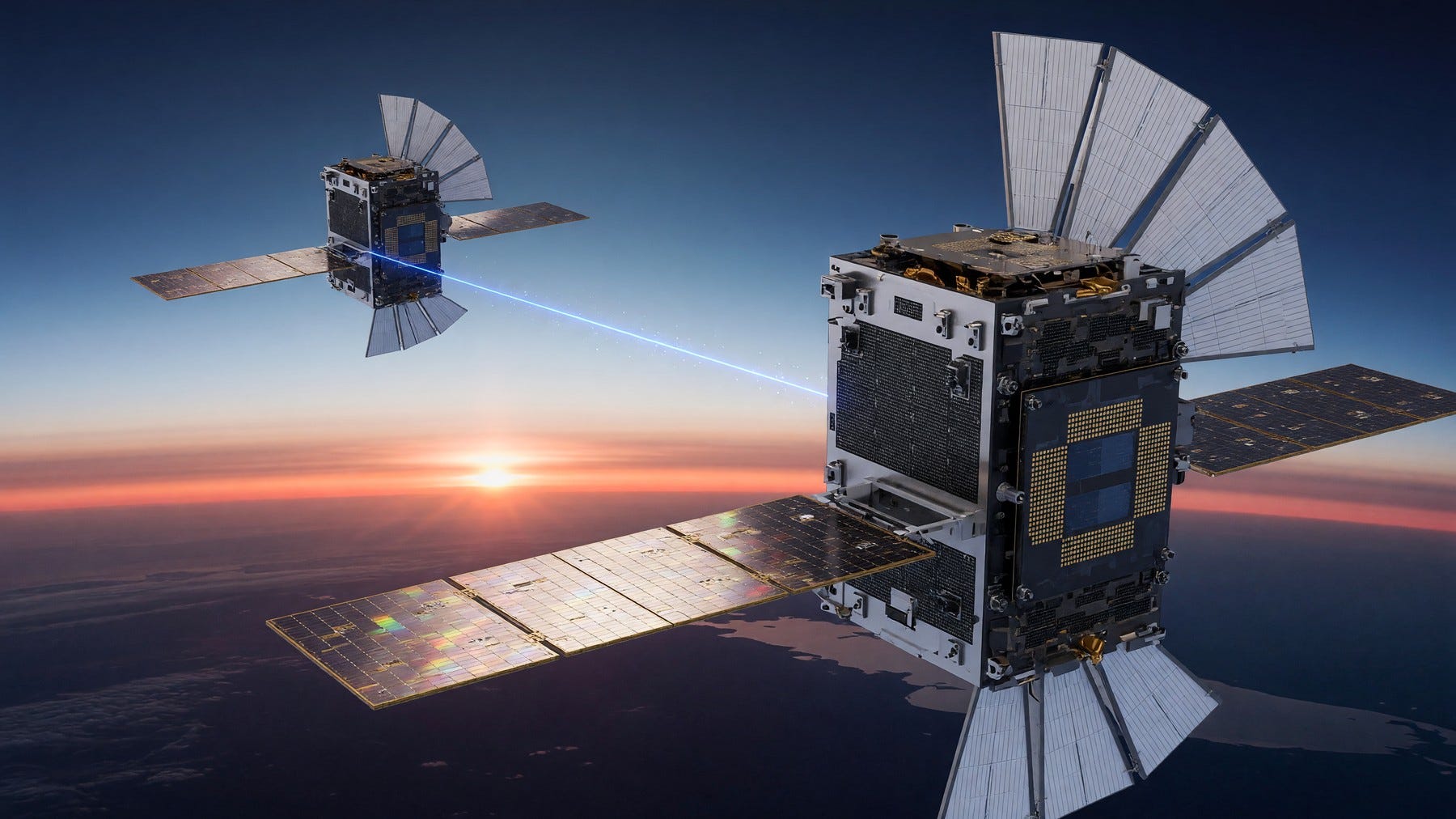
Space may not only consume AI infrastructure. It may demand better AI engineering.
There is another layer here that I think matters for the long run.
If we are going to explore and industrialize space, we will need more than rockets and capital. We will need better science and engineering loops.
Space is an environment where mistakes are expensive, testing is hard, and systems interact in ways that are difficult to model perfectly. That makes it a natural market for advanced reasoning agents.
I expect the best AI systems over the next decade to become increasingly useful in physics, materials science, propulsion, robotics, mission planning, simulation, anomaly detection, and autonomous operations. The frontier of space will create demand for agents that can reason through hard technical problems instead of merely summarizing documents or writing code.
That creates a feedback loop:
AI needs more compute.
More compute needs more energy.
Space may offer abundant solar energy.
Building in space requires better AI-driven engineering.
Better AI-driven engineering improves the space economy.
That loop is early, but it is powerful.
The biggest space companies of the next 20 years may not look like traditional aerospace companies. They may look like combinations of launch, robotics, autonomy, energy systems, materials science, defense, cloud infrastructure, and AI research labs.
That is why I think this S-curve could become larger than investors expect.
The first-order view is rockets.
The second-order view is satellites.
The third-order view is infrastructure.
The fourth-order view is space as an extension of the compute and energy economy.
That is where my head is going.
The thesis is large. So are the execution risks.
This is still a hypothesis.
A good thesis needs both vision and humility. The vision is that space becomes a major S-curve because launch cost declines, Artemis creates recurring demand, lunar infrastructure becomes a proving ground, and orbital compute eventually becomes a serious answer to AI's energy bottleneck.
The humility is that almost every part of that sentence has execution risk.
Starship needs to prove full reuse and cadence. Orbital propellant transfer has to work. Heat shields have to survive repeated use. Launch infrastructure has to scale. Regulation has to keep up. NASA timelines have to become missions rather than plans. Lunar systems have to operate in a hostile environment. Orbital compute has to solve radiation, thermal management, connectivity, servicing, and economics.
There will be failures. There will be delays. There will be public companies that attach themselves to this theme and still do not deserve investor capital.
That is normal.
Early S-curves always have frauds, tourists, overfunded dreams, and real builders standing next to each other. The job is not to buy the theme blindly. The job is to identify which companies turn the theme into revenue, cash flow, defensible capability, and compounding advantage.
I am not treating the SpaceX IPO as permission to buy every public space-adjacent stock.
I am not assuming orbital data centers are inevitable just because the idea is interesting.
I am not confusing a big theme with a good entry point.
This is where the theme turns into an actual investing process.
This is where the thesis becomes practical. I am not trying to buy every space label or chase every IPO-adjacent move. I am watching for the places where the cost curve turns into revenue, cash flow, and durable advantage.
Starship cadence: reuse, payload deployment, orbital refueling, and return-to-launch-site operations.
Artemis demand: contracts that create recurring demand for landers, rovers, habitats, power, communications, and cargo.
The AI power bottleneck: whether sustained data-center power demand makes orbital compute less crazy over time.
Public-market beneficiaries: suppliers, infrastructure, chips, defense primes, materials, communications, autonomy, and space services — not just obvious space labels.
That fourth point is especially important this week.
A SpaceX IPO can make the category feel obvious overnight. That does not mean every public space stock becomes good, and it definitely does not mean the right move is to chase anything with a rocket, satellite, lunar, or AI-in-space label.
The right move is not to chase every rocket label. It is to find the bottleneck businesses that become unavoidable.
The best investment in an S-curve is not always the obvious company. Sometimes it is the supplier. Sometimes it is the bottleneck. Sometimes it is the picks-and-shovels business that quietly becomes unavoidable.
That is how I plan to approach space.
Not as a meme.
Not as an IPO chase.
As a multi-decade hunt for the companies that benefit if humanity's industrial boundary moves beyond Earth.
The mental model matters more than the Friday headline.
I think space is moving from inspiration to infrastructure.
That is the thesis.
Starship is the transportation unlock. Artemis is the government demand signal. The lunar economy is the proving ground. Orbital data centers are the bridge into AI, energy, and compute. Deep physics reasoning agents may become part of the engineering loop that lets all of this compound.
I could be early. I probably am early.
But that is usually where the best S-curves begin.
The market tends to wait until a category has revenue, indexes, ETFs, analysts, earnings calls, and clean labels. By then, the biggest mental-model shift has already happened.
I do not want to wait until space is obvious.
I want to understand the curve while it is still forming.
And right now, the curve I am watching most closely may not be on Earth at all.
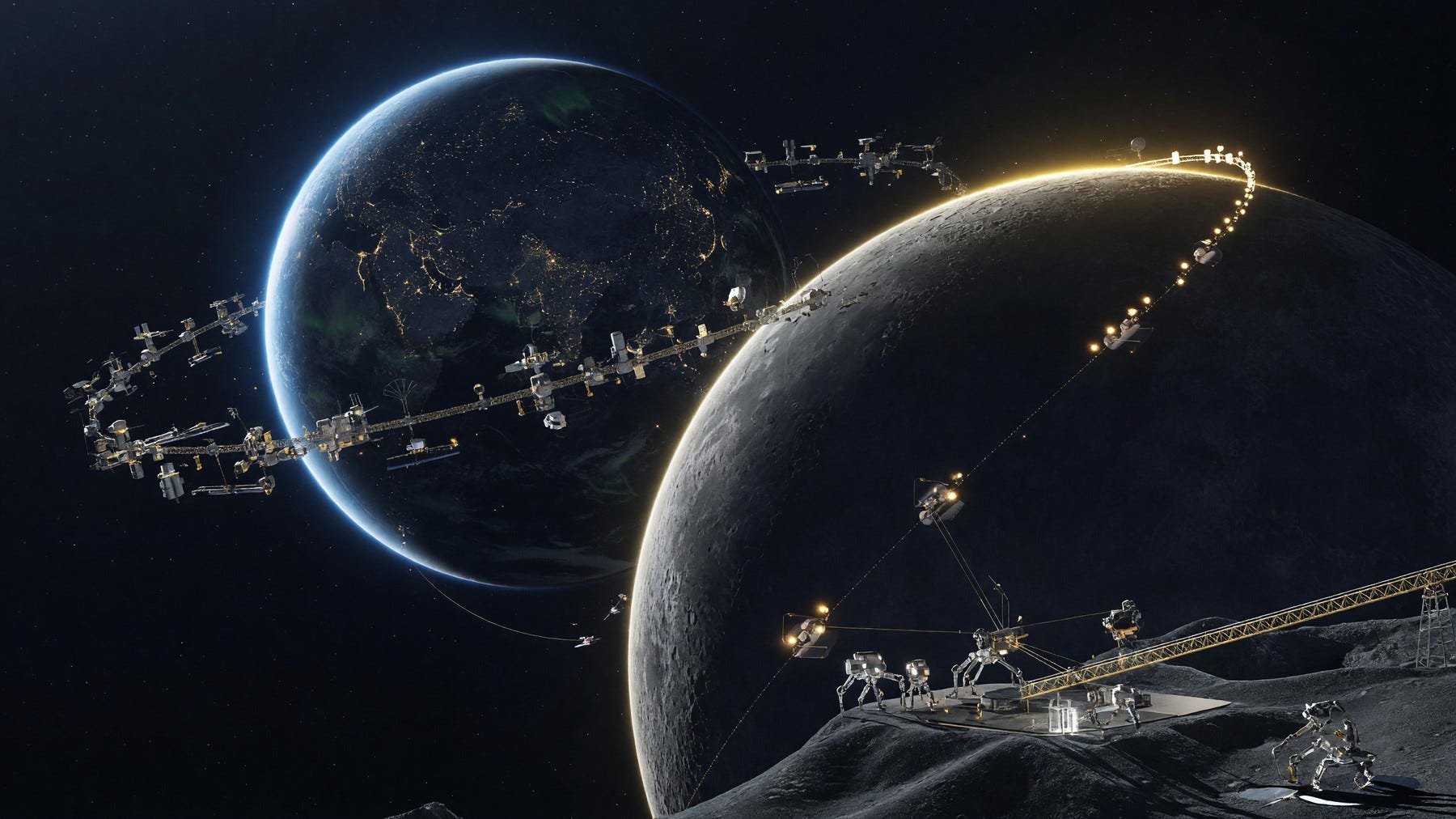
If you want to follow the actual portfolio behind this research, I publish the live BluSuit Growth Investing Portfolio on SavvyTrader.
FOLLOW THE BLUSUIT GROWTH PORTFOLIO
This is not a trade alert or a promise of performance. It is the public portfolio surface for seeing what I own, what I am watching, and how this process turns into real decisions over time.
No posts
Comments
Nothing yet. Say the first thing.
Sign in to join the conversation.