
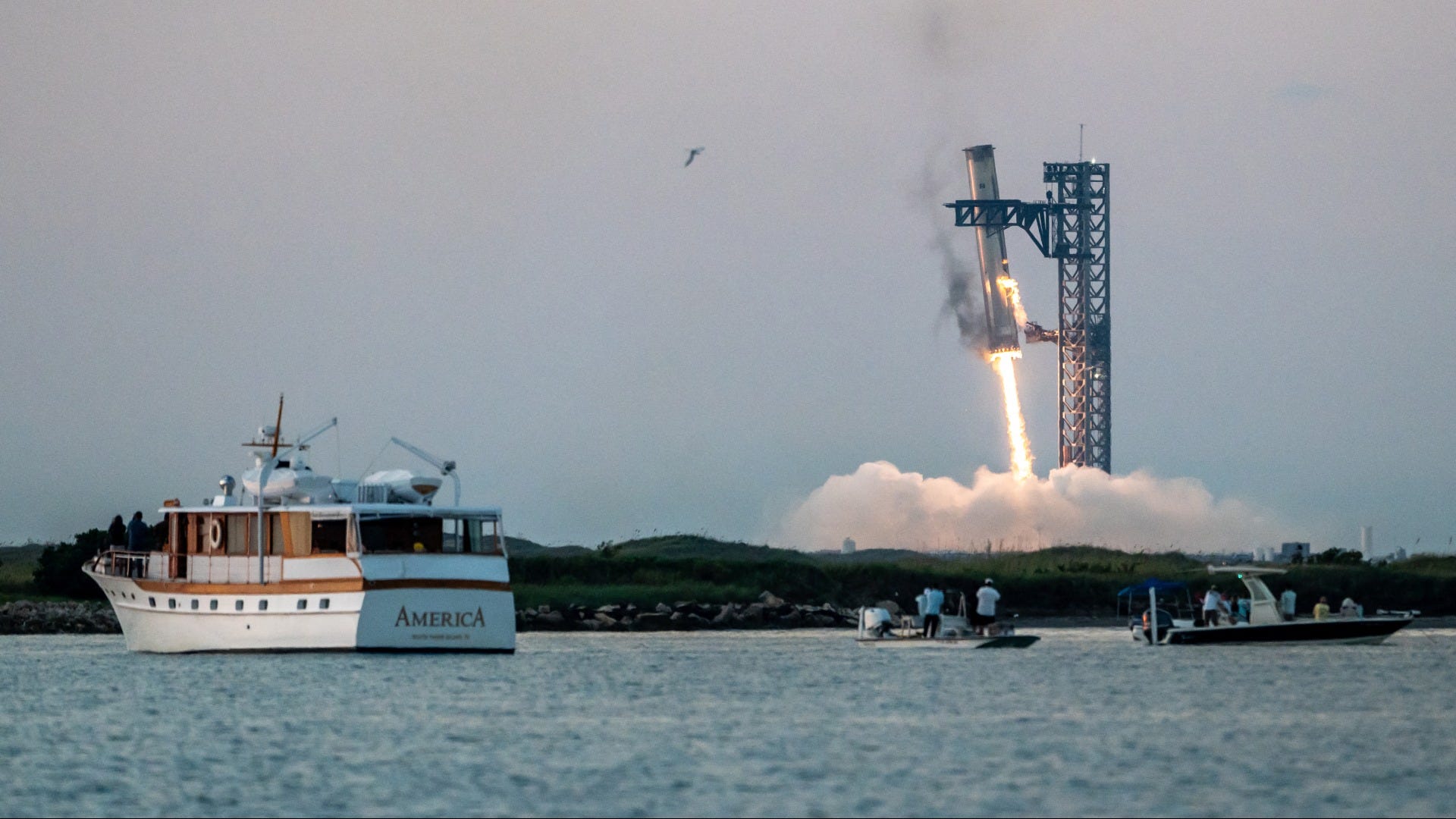
Starlink is the proof. Starship is the hinge. AI is the bet.
Most people are never going to read an entire S-1. That is normal. These documents are long, legal, repetitive, and written for risk disclosure as much as investor education. But a good S-1 still tells you how a company wants the market to understand it.
My read on the SpaceX filing is simple: SpaceX is asking investors to stop thinking about it as a rocket company and start thinking about it as an infrastructure company.
The rocket business is the foundation. Starlink is the business that proves the foundation can turn into cash flow. Starship is the hinge for the next step-change in capacity. AI compute is the long-term ambition that changes the size of the opportunity and the size of the risk.
SpaceX is trying to build the physical infrastructure layer for the next economy: access to orbit, connectivity from orbit, and eventually compute in orbit.

SpaceX is one of the few companies in the world that can credibly say it changed the cost curve of an entire physical industry. The company started with launch. It made rockets reusable, increased launch cadence, lowered the cost of reaching orbit, and turned something that used to feel like a government-scale activity into a repeatable commercial operating system.
The filing says SpaceX has launched more than 80% of mass to orbit globally each year since 2023, with an over 99% mission success rate for Falcon rockets. That is not a normal competitive position. That is infrastructure control.
That matters because the rest of the company sits on top of that control. Starlink only exists because SpaceX can launch and replace satellites at scale. Direct-to-mobile only matters if SpaceX can keep expanding the constellation. Orbital AI only becomes even remotely plausible if SpaceX can move enormous payloads to space cheaply and repeatedly.
So when I look at SpaceX, I do not see three unrelated bets. I see one machine where each layer feeds the next.

Space: Falcon, Dragon, Starship, government missions, commercial missions, human spaceflight, satellite deployment, and eventually lunar and Mars-related infrastructure.
Connectivity: Starlink, the financial center of gravity today, with broadband, mobile, enterprise, government, aviation, maritime, and global coverage use cases.
AI: xAI, Grok, X, COLOSSUS, COLOSSUS II, third-party compute services, and the bigger ambition of orbital AI compute.
On its own, launch is a serious business. But inside SpaceX, launch is more important than its reported revenue suggests because SpaceX also uses launch capacity internally. A Starlink deployment may not show up as a third-party launch sale, but it still creates value for the company because it expands the network.
As of March 31, 2026, the filing says SpaceX had roughly 9,600 Starlink broadband and mobile satellites in low-Earth orbit, serving about 10.3 million Starlink subscribers across 164 countries, territories, and markets.
That is the part of the company public investors can understand fastest: global broadband, subscription revenue, enterprise adoption, government use cases, mobile coverage, and operating leverage as the network scales.
The public-market SpaceX filing is not simply SpaceX plus Starlink. It is SpaceX plus Starlink plus xAI plus X. That changes the whole filing. AI makes the upside larger, but it also makes the financials messier and the capital intensity much higher.
The impressive part of SpaceX is not only that it has a huge vision. Plenty of companies have huge visions. The impressive part is that SpaceX has repeatedly turned impossible-sounding physical systems into operating routines.
It landed and reused orbital-class boosters.
It scaled Falcon into the dominant global launch platform.
It built Starlink into a live global network with millions of subscribers.
It created a satellite manufacturing and deployment loop that competitors and governments are still trying to match.
It has pushed satellite-to-mobile service into roughly 30 countries, with about 650 V1 Mobile satellites supporting approximately 7.4 million monthly unique devices as of March 31, 2026.
That is why the filing is so unusual. Normally, when a company talks about a giant future market, investors have to ask whether the company has earned the right to attempt it. SpaceX has at least earned that question.
2025 Connectivity revenue: $11.4 billion.
2025 Connectivity operating income: $4.4 billion.
2025 Connectivity segment Adjusted EBITDA: $7.2 billion.
Q1 2026 Connectivity revenue: $3.3 billion.
Q1 2026 Connectivity operating income: $1.2 billion.
Q1 2026 Connectivity segment Adjusted EBITDA: $2.1 billion.
Starlink subscribers: 10.3 million as of March 31, 2026, up from about 5.0 million one year earlier.
Starlink ARPU: down from $86 per month in Q1 2025 to $66 per month in Q1 2026, according to the filing.
That ARPU point is important. It can be fine if the company is expanding globally, lowering unit costs, and growing the addressable market. But it means the Starlink thesis is not simply “more subscribers equals more profit forever.” The question is whether subscriber growth, enterprise demand, mobile services, and network efficiency can keep outpacing the lower ARPU mix.
Starlink is the part of SpaceX that makes the IPO understandable. Starship and AI are the parts that make it asymmetric.

If there is one operating milestone that matters most, it is Starship. The filing says Starship is expected to begin payload delivery to orbit in the second half of 2026. Starship V3 is designed to deliver 100 metric tons to orbit in a fully reusable configuration, with future generations designed to double that payload capacity.
This is not a side project. It is the hinge for the entire long-term thesis.
SpaceX says current Falcon rockets, including Falcon 9 and Falcon Heavy, are not capable of deploying V3 Starlink satellites or V2 Mobile satellites. It also says a single Starship launch is expected to deploy up to 60 V3 Starlink satellites, representing a potential twenty-fold increase in Starlink downlink capacity deployed relative to a Falcon 9 launch.
That is the key. Starlink’s next capacity step, direct-to-mobile expansion, and orbital AI compute all lean on Starship. If Starship works at scale, SpaceX gets a bigger pipe into orbit. If it does not, the long-term vision slows down fast.
This is why I would not frame SpaceX as a simple “buy the IPO because Starlink is great” situation. The better question is: do you believe the company can turn Starship from flight-test progress into a high-cadence commercial system?
The AI section is where the filing stops sounding like a space-and-connectivity IPO and starts sounding like a full infrastructure wager on the future of intelligence.
The company says it was the first to deploy a coherent gigawatt-scale AI training cluster.
It says COLOSSUS and COLOSSUS II are part of a gigawatt-scale training system.
It says Grok benefits from X as a real-time distribution and data engine.
It says SpaceX expects to begin deploying orbital AI compute satellites as early as 2028.
That is a massive claim. The logic is not random, though. AI is increasingly constrained by power, chips, data centers, interconnection queues, permitting, and deployment speed. SpaceX is arguing that if it can own launch, satellite manufacturing, connectivity, compute infrastructure, and AI models, it can attack those bottlenecks from a different angle.
The most important customer signal in the filing is Anthropic. In May 2026, SpaceX entered into cloud services agreements with Anthropic for access to compute capacity across COLOSSUS and COLOSSUS II. The customer agreed to pay $1.25 billion per month through May 2029, with ramping at reduced fees in May and June 2026. Either party can terminate on 90 days’ notice.
That matters because it gives the AI infrastructure buildout a possible revenue bridge. SpaceX can use compute internally for Grok and also monetize capacity with third parties. But the termination right matters too. Investors should not treat every dollar of that agreement like permanent, risk-free revenue.
The Cursor agreement is another clue. SpaceX entered into a compute and option agreement with Cursor in April 2026, with the right, but not the obligation, to acquire Cursor. If exercised after the offering, the consideration would be SpaceX Class A stock based on an implied Cursor equity value of $60.0 billion.
That tells me SpaceX sees coding workflows as one of the most valuable AI demand surfaces: high-frequency usage, fast feedback loops, structured work, and sustained inference demand. AI is the part of SpaceX where the upside is enormous and the underwriting gets hardest.
The company is already very large. But this is not a clean software-margin story. It is a vertically integrated infrastructure company deliberately spending through the income statement and balance sheet to build the next layer.
Consolidated revenue: $18.7 billion.
Operating loss: $2.6 billion.
Adjusted EBITDA: $6.6 billion.
Capex: Space $3.8 billion, Connectivity $4.2 billion, AI $12.7 billion.
Consolidated revenue: $4.7 billion.
Operating loss: $1.9 billion.
Adjusted EBITDA: $1.1 billion.
Capex: Space $1.1 billion, Connectivity $1.3 billion, AI $7.7 billion.
That is the tension. Starlink is producing real profit at the segment level. Space is strategically essential but still absorbing Starship R&D. AI is generating revenue but losing money and consuming enormous capital.
The bull case is that SpaceX can keep using each successful layer to fund the next one. Falcon created launch advantage. Launch advantage created Starlink. Starlink creates cash flow. Starship expands capacity. More capacity supports mobile broadband, orbital logistics, and eventually orbital compute. AI demand creates another reason to build the biggest physical infrastructure stack in space.
The bear case is that the loop gets too capital intensive before the next layer proves itself.
SpaceX is trying to turn space from a destination into an operating layer of the economy.
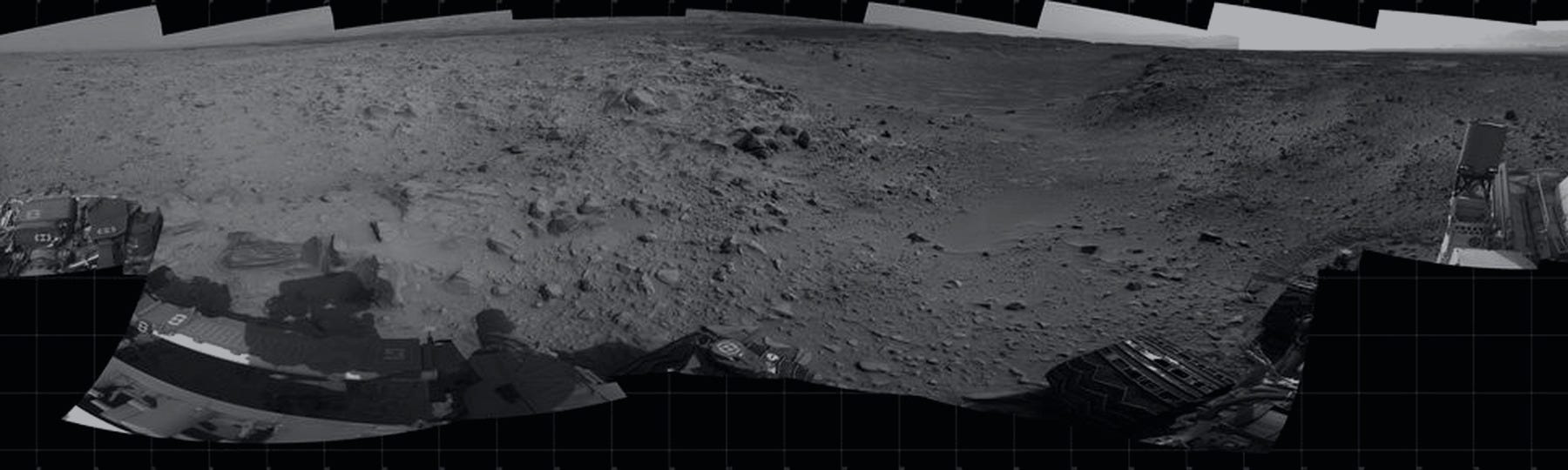
This is where I want to be very clear: everything in this section is speculation. The S-1 gives us the current business and the direction of travel. It does not prove a lunar economy, a Mars economy, asteroid mining, or interstellar colonies. Those outcomes require huge technical, regulatory, biological, political, and economic breakthroughs.
But I also think the mistake is capping the imagination too early. A $100 trillion SpaceX sounds absurd if I think about SpaceX as a rocket company. It sounds less absurd if I think about SpaceX as the company trying to own the physical infrastructure layer for a multi-planet economy. That does not make $100 trillion likely. It makes it possible in a very specific version of the future.
The 30-year thesis is not that SpaceX sells more launches. The 30-year thesis is that SpaceX becomes the railroad, telecom network, power layer, logistics company, compute provider, industrial landlord, and toll road for economic activity beyond Earth.
Starlink and direct-to-mobile: potentially $300 billion to $700 billion of annual revenue if satellite broadband, mobile backhaul, government connectivity, aviation, maritime, enterprise, defense, IoT, and global mobile coverage keep scaling.
Earth-based and orbital AI compute: potentially $2 trillion to $5 trillion of annual revenue if AI demand keeps compounding and power becomes one of the defining industry bottlenecks.
Launch, orbital logistics, refueling, satellite deployment, human transport, and in-space operations: potentially $500 billion to $1 trillion of annual revenue if space becomes an industrial operating zone.
Lunar economy: potentially $500 billion to $1 trillion of annual revenue over time through cargo transport, surface infrastructure, communications, power, research, defense, mining support, construction, fuel, and logistics.
Mars economy: not a clean near-term revenue model, but potentially enormous if permanent settlement becomes real.
Asteroid and in-space resource infrastructure: potentially $500 billion to $1 trillion of annual revenue in a true upside case, with SpaceX monetizing the logistics layer before it ever owns the mineral layer.
Interstellar colonies: option value, not something I would put into a normal 30-year valuation model.
Strong Earth-and-orbit platform case: around $1 trillion to $3 trillion of annual revenue.
Frontier infrastructure case: around $5 trillion to $7 trillion of annual revenue.
Civilization-scale infrastructure case: around $10 trillion-plus of annual revenue.
$3 trillion of annual revenue in 30 years would require roughly 18% annual revenue growth from 2025 revenue of $18.7 billion.
$5 trillion would require roughly 20% annual revenue growth.
$7 trillion would require roughly 22% annual revenue growth.
$10 trillion would require roughly 23% annual revenue growth.
Those numbers are extreme. But they are not mathematically impossible if SpaceX opens multiple infrastructure markets that do not exist at scale today.
$3 trillion of revenue at 40% EBITDA margins and 20x EBITDA would imply roughly a $24 trillion company.
$5 trillion of revenue at 40% EBITDA margins and 25x EBITDA would imply roughly a $50 trillion company.
$10 trillion of revenue at 40% EBITDA margins and 25x EBITDA would imply roughly a $100 trillion company.
$8.9 trillion of revenue at 45% EBITDA margins and 25x EBITDA also gets there.
The $100 trillion thesis is not “SpaceX launches rockets and gets a high multiple.” That is not enough.
The $100 trillion thesis requires SpaceX to become the infrastructure layer for several huge markets: terrestrial connectivity, orbital connectivity, AI compute, orbital logistics, space manufacturing, lunar industry, Mars settlement, and potentially resource infrastructure.
I do not think investors should price all of that in today. But I would include it in the mental model. Because the reason SpaceX is interesting is not that every futuristic idea needs to be priced in today. The reason SpaceX is interesting is that the company has already built the first layers of an infrastructure stack that could keep expanding if the technical milestones keep landing.
That is the 30-year thesis: if space becomes an operating layer of the economy, SpaceX may be the company collecting tolls on the way up, network fees once you get there, compute revenue once intelligence moves into orbit, and logistics revenue when industry follows.
Starship execution: if Starship does not reach commercial cadence, the long-term plan loses a lot of force.
AI capex: the AI business could become a huge advantage, but it could also become a capital sink if revenue does not scale fast enough or if compute pricing compresses.
Starlink economics: subscriber growth is excellent, but ARPU is falling. The company needs scale, enterprise/mobile mix, and network efficiency to keep the segment attractive.
Customer and contract durability: the Anthropic agreement is a major signal, but the 90-day termination right means investors need to keep watching actual realized demand.
Governance: SpaceX will have Class A and Class B shares, with Class B receiving ten votes per share. The filing says Elon Musk will be able to control matters requiring shareholder approval and that SpaceX expects to be a controlled company under Nasdaq rules.
Investors are not only buying the assets. They are buying into the founder’s capital allocation machine. That can be a feature when the machine works. It can be painful when public investors disagree with the mission, spending, or timing.
People are going to ask whether Tesla and SpaceX eventually merge. My answer: I would not make that the base case.
The filing points to more collaboration, not necessarily a full merger. Tesla shows up through Megapack, Terafab, and Macrohard-related collaboration. SpaceX and Tesla clearly have overlapping needs around energy storage, AI hardware, robotics/software workflows, and Elon-controlled infrastructure ambition.
But a merger would be extremely complicated. You would have public Tesla shareholders, future public SpaceX shareholders, valuation questions, governance conflicts, regulatory attention, index implications, and the basic issue that Tesla investors and SpaceX investors may not want the same risk profile.
Near term, I think a full Tesla-SpaceX merger is low probability.
Partnerships, shared projects, related-party agreements, and ecosystem overlap are much more likely.
Long term, I would not call it impossible if the companies increasingly converge around AI, energy, chips, robotics, and physical infrastructure.
But strategic logic is not enough. The transaction would still have to clear shareholder, regulatory, valuation, and governance hurdles. My base case is collaboration without a full merger.
Whether Starship reaches payload delivery cadence.
Whether Starlink subscriber growth offsets falling ARPU.
Whether AI capex turns into durable third-party revenue.
Whether Anthropic/compute demand proves sticky beyond the contract headline.
Whether public-market governance becomes a discount or an accepted feature.
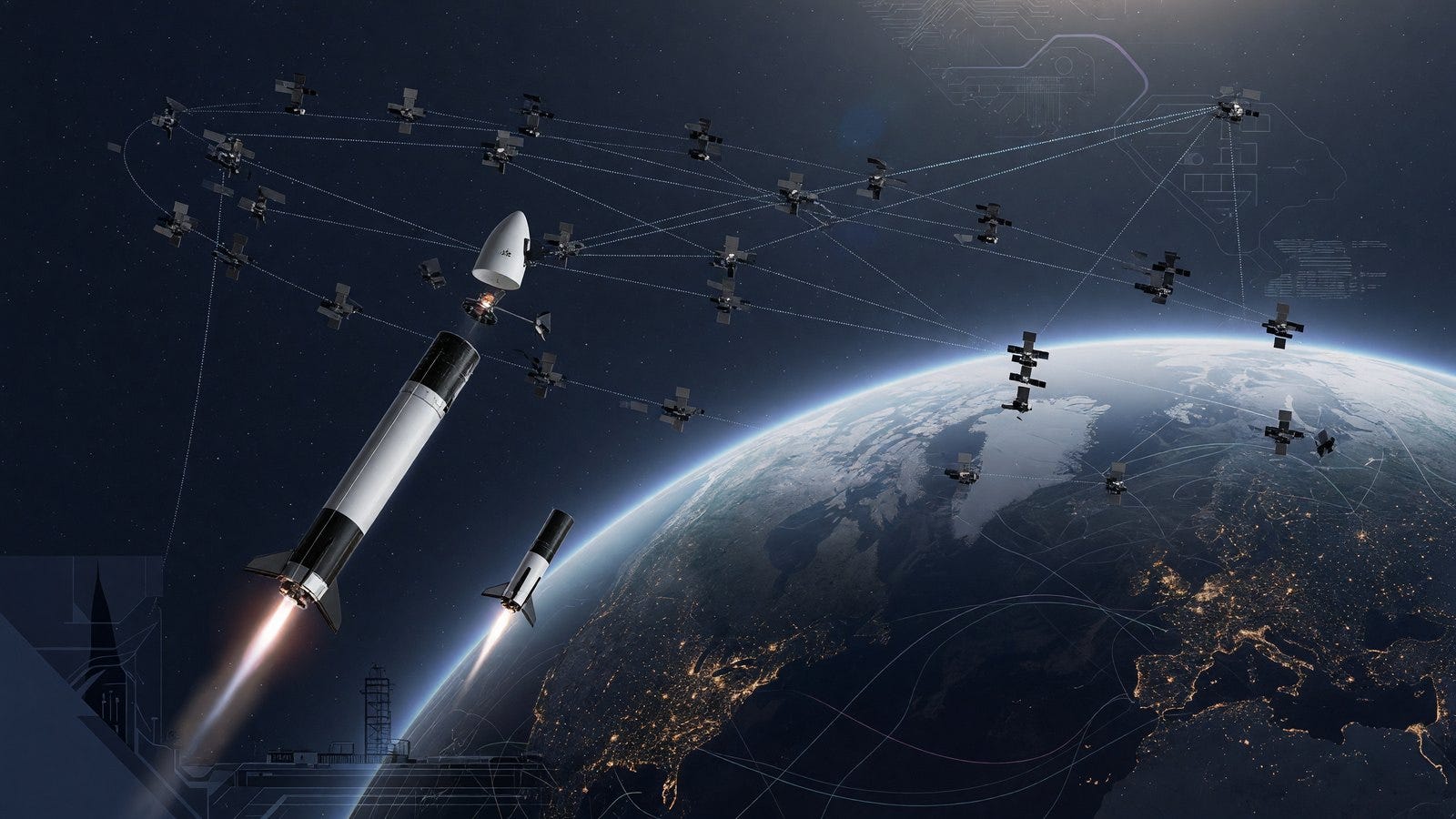
The reason I want this IPO is not simply because space is exciting. It is because SpaceX is one of the only companies I can see becoming a primary infrastructure layer for the next 30 years.
If public investors only get Starlink plus launch, that is already rare. If Starship works, SpaceX becomes the distribution rail for orbit. If orbital compute works, it starts competing for one of the largest profit pools on Earth. If the lunar, Mars, and resource layers become real, SpaceX becomes less a transportation company and more the toll road for civilization expanding off Earth.
That is why I am comfortable letting the thesis be aggressive. I do not need every far-out branch to hit. I need the core loop to keep compounding: cheaper launch, more satellites, more connectivity, more cash flow, more Starship capacity, more AI infrastructure, and more demand for space.
There are execution risks everywhere. The valuation may be uncomfortable. The governance will not be built for passive shareholders. But this is the kind of rare company where the upside case can look crazy before the infrastructure is obvious.
So my conclusion is simple: I want exposure if I can get it. I’ll be doing what I can to buy this IPO and submitted my LOI as soon as it came up on my phone. Portfolio allocation will be 10%+ if I have it my way.
No posts
Comments
Nothing yet. Say the first thing.
Sign in to join the conversation.