
As a new year begins, I’d like to call for a pause; a pause looking at a sun rising, a ripple lapping against a stone in a river, a snowflake melting on the skin, a clock that marks the start of a new year.
You can also find the same kind of pause in an exhibition.
An exhibition is an invitation to break out of familiar rhythms, to take time away, to rise above habitual speed, from the normal order of our daily routines, to think about how we feel and what we think about something, to be in the present, and reflect on the past or future.
Yet many exhibitions of digital art do the opposite.
The exhibition space is too often packed with bright screens, quick-moving pictures and saturated colors. The art and sound fill every corner. The energy urges us to respond quickly, to turn our gaze from one stimulus to another. Speed and intensity appear to be the basic characteristic of digital culture.
And this is where my curatorial work with Blueshift started. I want to create spaces that require calm presence. I look for exhibitions where we can breathe.
In the practice I developed in the past years, I created what I call a new curatorial ecology.
This is not a formula, there is no strict recipe. It is the soft way of caring for attention, for place, for bodies, for voices. An exhibition is a lively ecosystem where every elements play a part in what the visitors will feel, think, remember. An exhibition is a site of embodied experience, it is not some container or spectacle, it is a ritual.
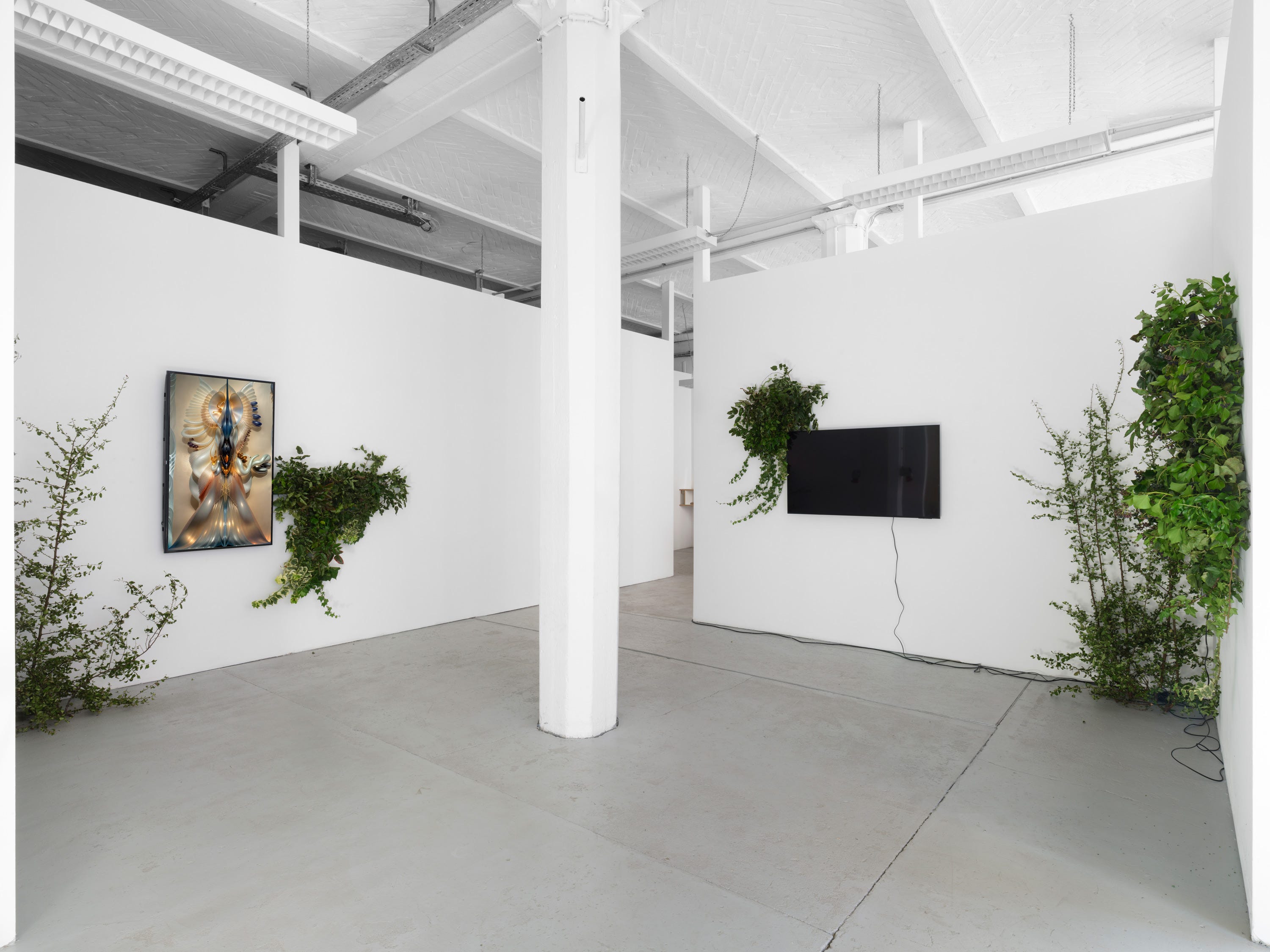
The exhibition “Down the Silicon Meadow”, co-curated with OFFICE IMPART (Berlin, early 2025), really captured this idea. Instead of going all-in on flashy digital effects, the exhibition found a quiet middle ground between the digital and the living, plant-filled world. The setup felt simple, almost sparse. The artworks were presented on screens, but not all at the same time. Everything was intentional. Visitors moved slowly, taking in each piece one by one. The space itself almost asked you to slow down, to really look, not just react.
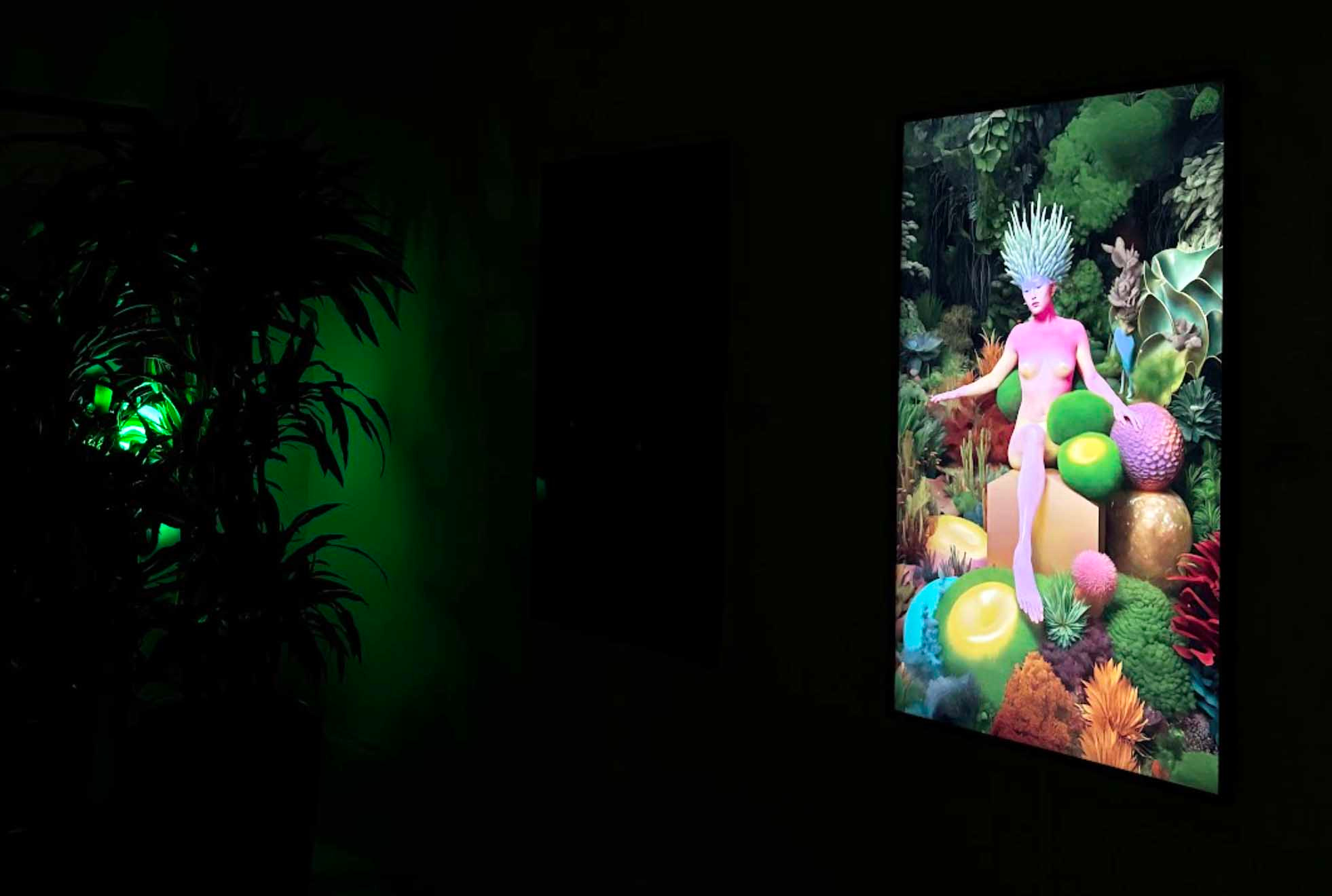
Before that, I experimented with a similar curatorial direction with the exhibition “Soft Mutations — Alienation as Transformation” presented at Artverse (Paris, late 2024). I thought of the scenography like a dance between the different screens fixed on the walls, choreographed instead of thrown together. Nothing screamed for attention. Screens blended into darkness. Sound drifted in and out, soft as breathing. And this was not it, we lowered the environmental impact of the show itself so it could be aligned with the topics addressed by the artworks. We used only screens already -site, reduce the screens luminosity, kept the lights low, and even had some of the artists’ fees go to an eco-themed NGO. That wasn’t just for show, we were not bragging about it, those choices set the pace and the values for the whole exhibition, and I believe visitors could feel it.
I am convinced visitors can sense the intention of an exhibition, the artwork presented and the curatorial direction, just like a thin layer of purpose that changes the depth of the visitor experience. We have developed an instinct for knowing whether something is done with care and meaning, or not. And messages or stories told in these contexts have a stronger impact on people’s feelings and behaviors.
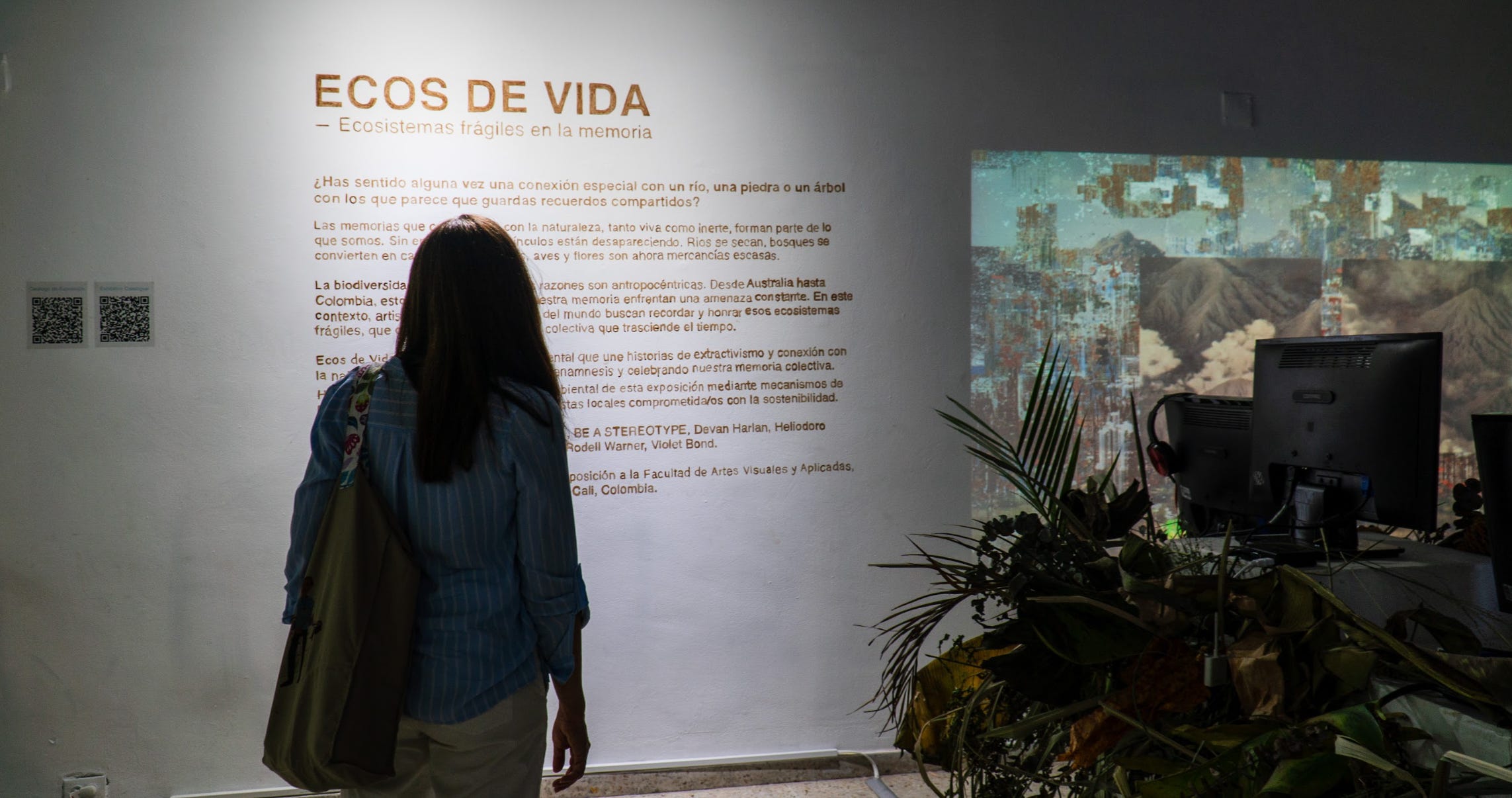
This is something that became obvious when we asked for visitor feedbacks during the exhibition “Echoes of Life, Memories of Fragile Ecosystems”, co-curated with Ana Aguirre, at the Institute of Fine Arts in Cali (Colombia, late 2024). For this show, we extended the concept of exhibition-ecosystem with a low-tech approach mixed with re-used local material and resources, fitting the topics of the artworks: the cause of biodiversity loss. While artworks were showing impacts of extractions or mono-culture, perfume of coffee grounds and corn leaves filled the space.
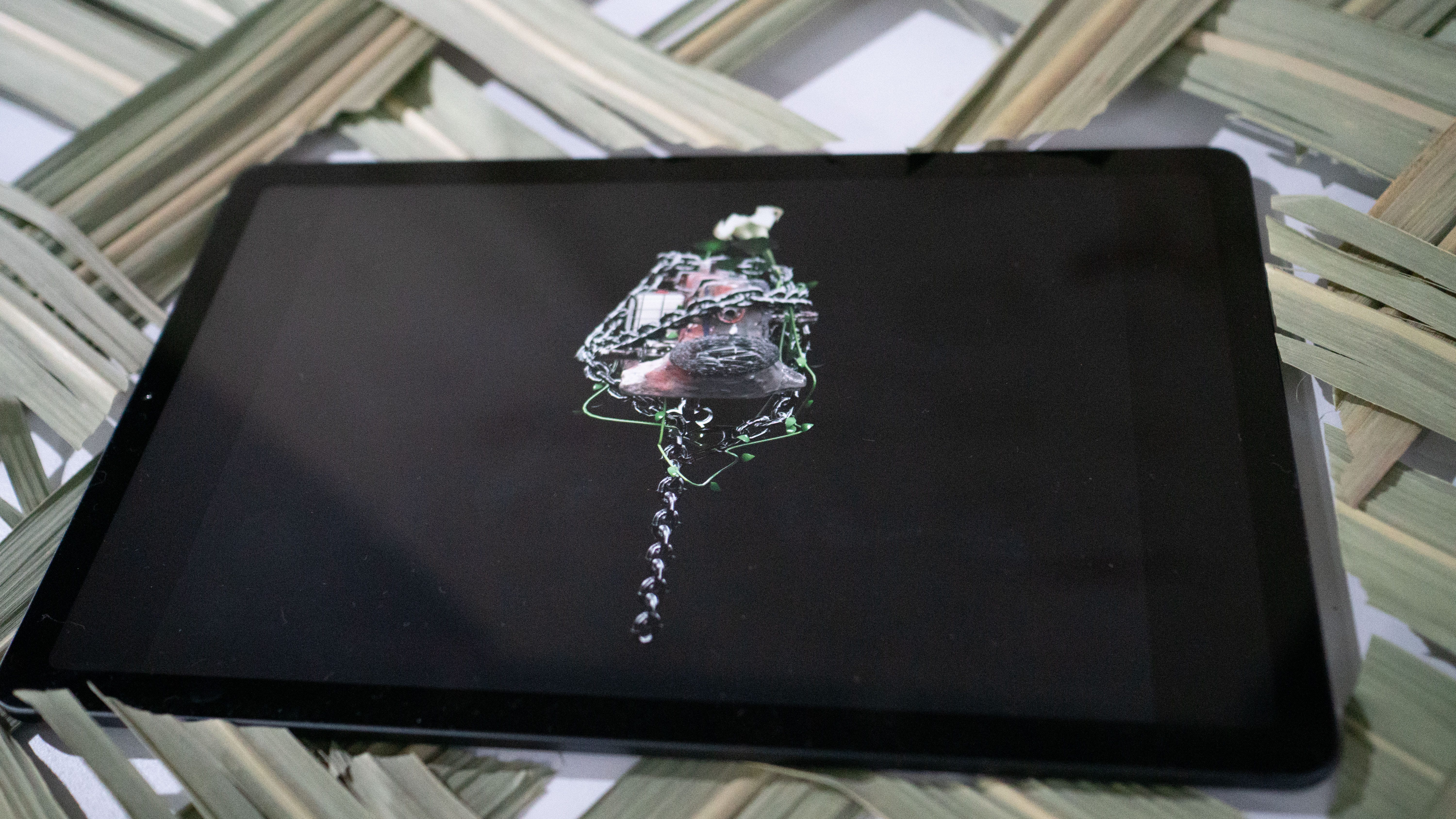
One visitor told us: “I smelled and recognized the scents of certain plants and coffee, felt so connected with being in the space.” Another said: “This exhibition repurposes elements that were discarded in a frantic rush to acquire the latest technology, rescuing screens that were on the path to their own extinction.”
Without us explicitly explaining how the exhibition scenography was made or where the equipments or materials used were coming from, visitors could sense it, and made the connection with the exhibited artworks. It worked so well.
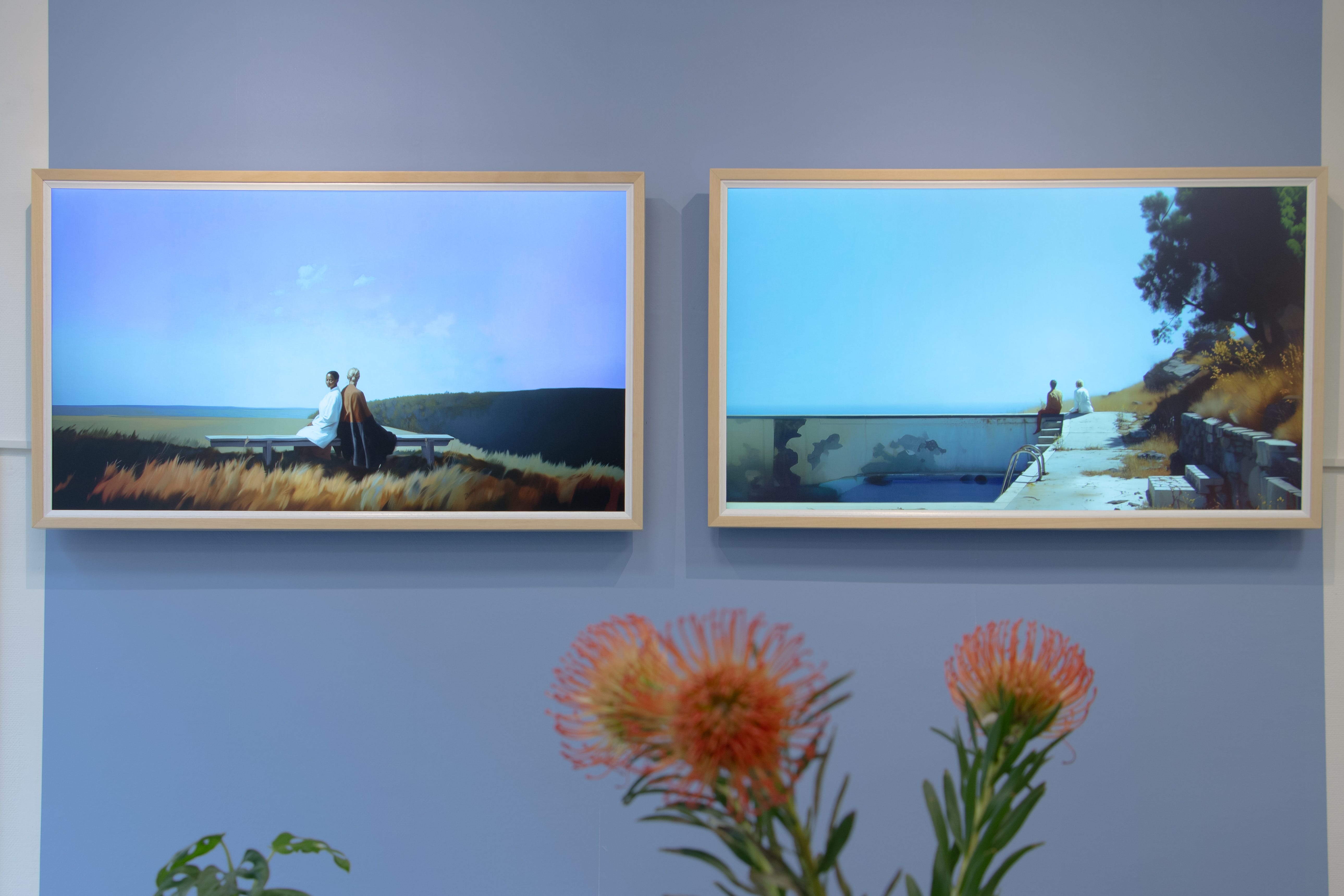
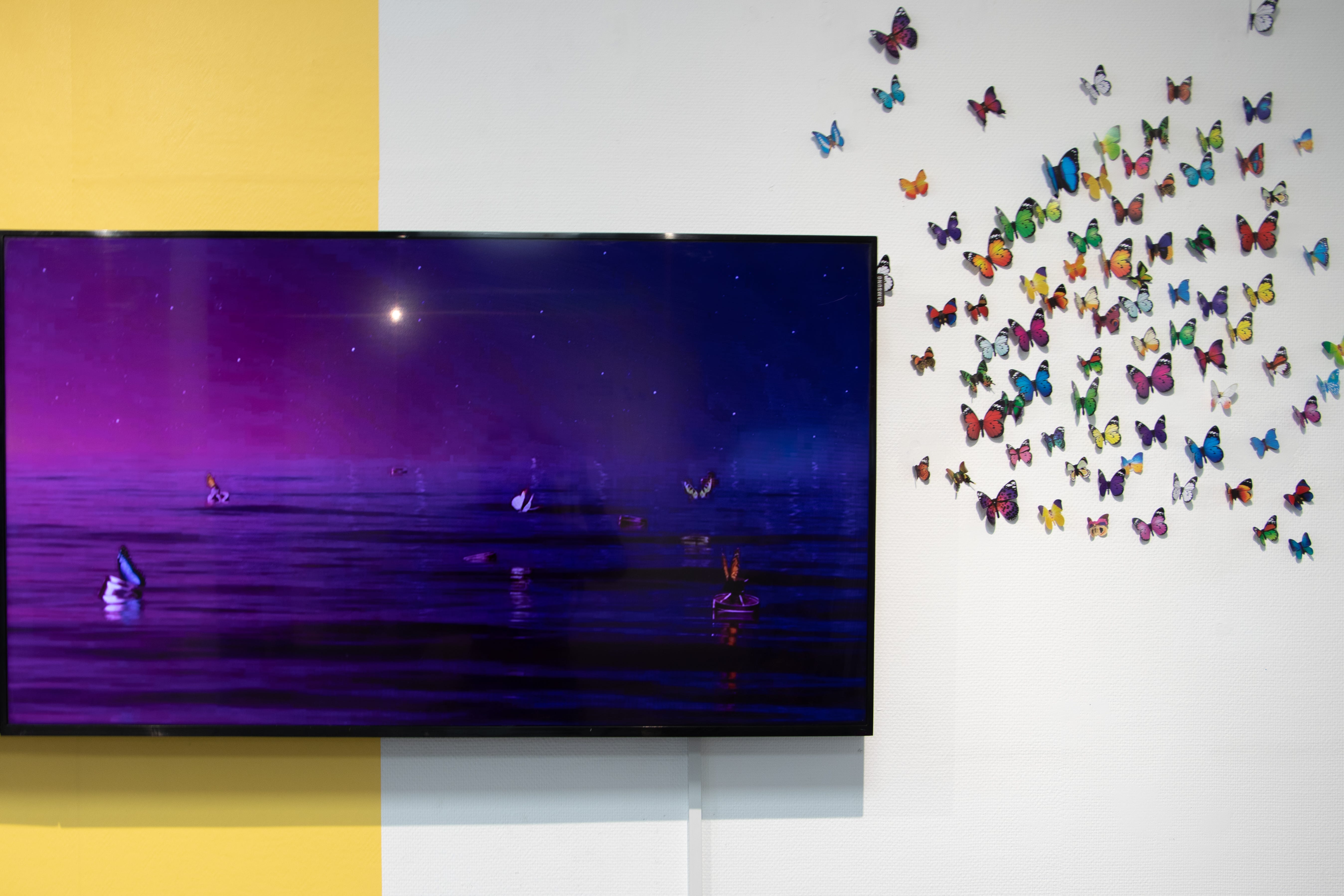
Lately, it is through the exhibition “After Light, The Bloom” at Bleur Gallery (London, late 2025 - in collaboration with DANAE), that another ecosystem of care was presented. This time, the intention could be sensed through the artworks curation and a subtle scenography inviting visitors to wonder from one landscape to the other, contemplating a slow rhythm and feeling anchored in a symbol-heavy reality through butterflies resting all around the gallery, orchids both real and artificial, dried herbs, lemons undergoing transformation. The exhibition invited a slow stroll through different times and spaces, moving smoothly from one color to the other.
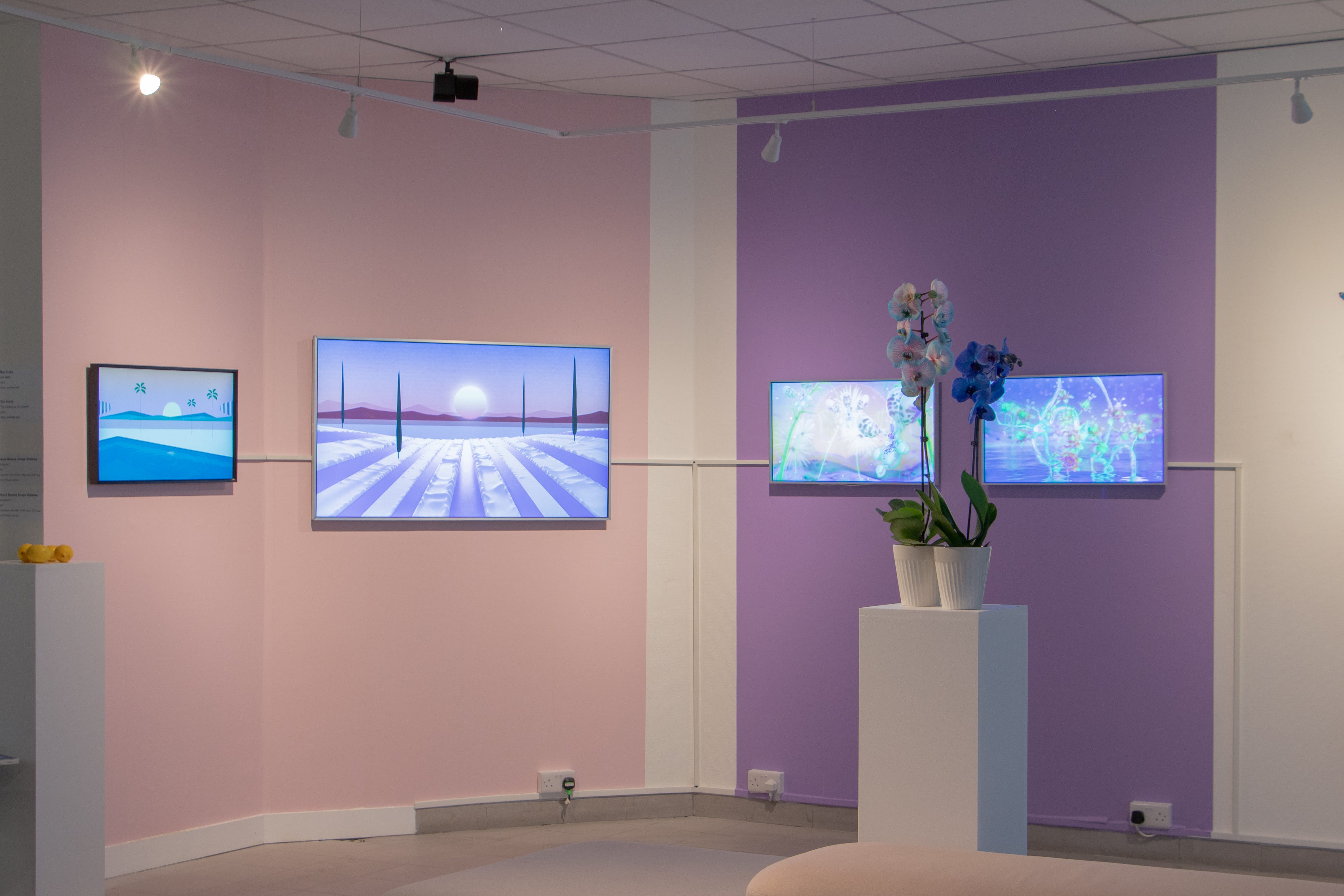
So what does it really mean to curate with ecology in mind?
In this new curatorial ecology, everything counts: the artworks, the lighting, the fluidity of the space, the smells, the materials, everything. None of these choices are purely aesthetic. They are all ethical. They transform the exhibition into something alive, rather than an object of consumption that we will easily forget.
Slowness is not a design flaw, it is a method. Breathing, pausing, letting the moment stretch out: that is the true medium.
But it is also not about turning away from technology. It is about using it differently. With a certain limitation and care, digital art can actually make us more aware of our environment. It can spark new ways of imagining, new ways of connecting to everything around us.
Curatorial ecology is a state of mind, a practice, a way of relating to artists, visitors, the world, what comes next.
If you want to know more about my curatorial practice through Blueshift, check the website: https://blueshiftart.com/
No posts
Comments
Nothing yet. Say the first thing.
Sign in to join the conversation.