
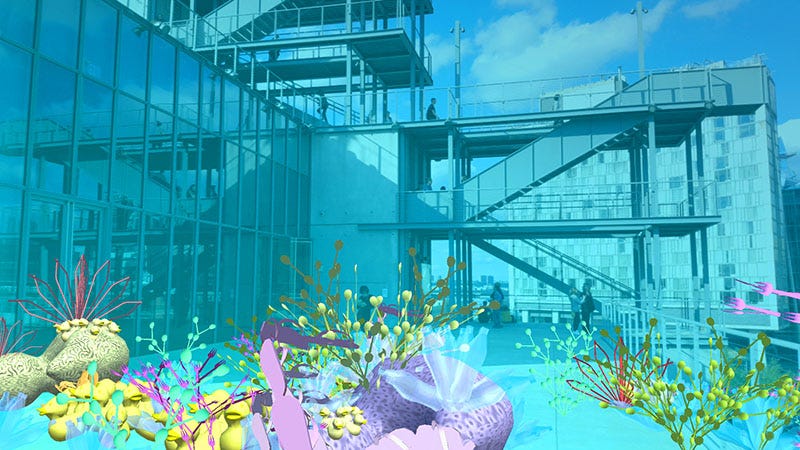
One of the artworks from Tamiko Thiel I always admired was a commission by the Whitney Museum of American Art called “Unexpected Growth” in 2018. Its apparent simplicity and naivety were actually hiding a strong critique of our current consumption-based society and waste system and their impact on coral reefs and beaches.
So when Tamiko suggested exhibiting part of “Unexpected Growth” in our show curated with Tina Sauerlaender, On the Edge of the Horizon, I couldn’t believe it.
In the following interview, Tamiko speaks with us about exponential climate collapse, the ethics of aestheticizing garbage, and how art can awaken ecological awareness, not through guilt, but through emotional connection.
Diane Drubay: You’ve been working at the intersection of technology and ecology for decades. How has your thinking evolved over time, especially as the climate crisis has accelerated?
Tamiko Thiel: I've always been interested in ecology, and I have to say that no matter what I do, I seem to be incapable of making artworks that don't have some sort of political edge to them. I've tried, and then some sort of political slant always creeps in. In 2015, I was working on a commission for the Seattle Art Museum, researching what native plants might survive the coming climate shifts. I read a scientific paper and noticed their so-called “worst-case scenario” had already become the norm. I contacted the scientists and asked, does this mean we’re no longer in a linear warming process but an exponential one? They said yes, we have gone exponential. At that point, I realized that this was a deadly serious issue. The problems of climate change are not going to get slowly worse and worse, but rather this year’s extreme weather will seem tame compared to what we will experience in a couple of years. What we think we can ignore because it will only affect our grandchildren will threaten our own lives very soon. Now, 10 years later in 2025, you have to have your head in the sand to ignore the dangerous changes that are happening from year to year right now.
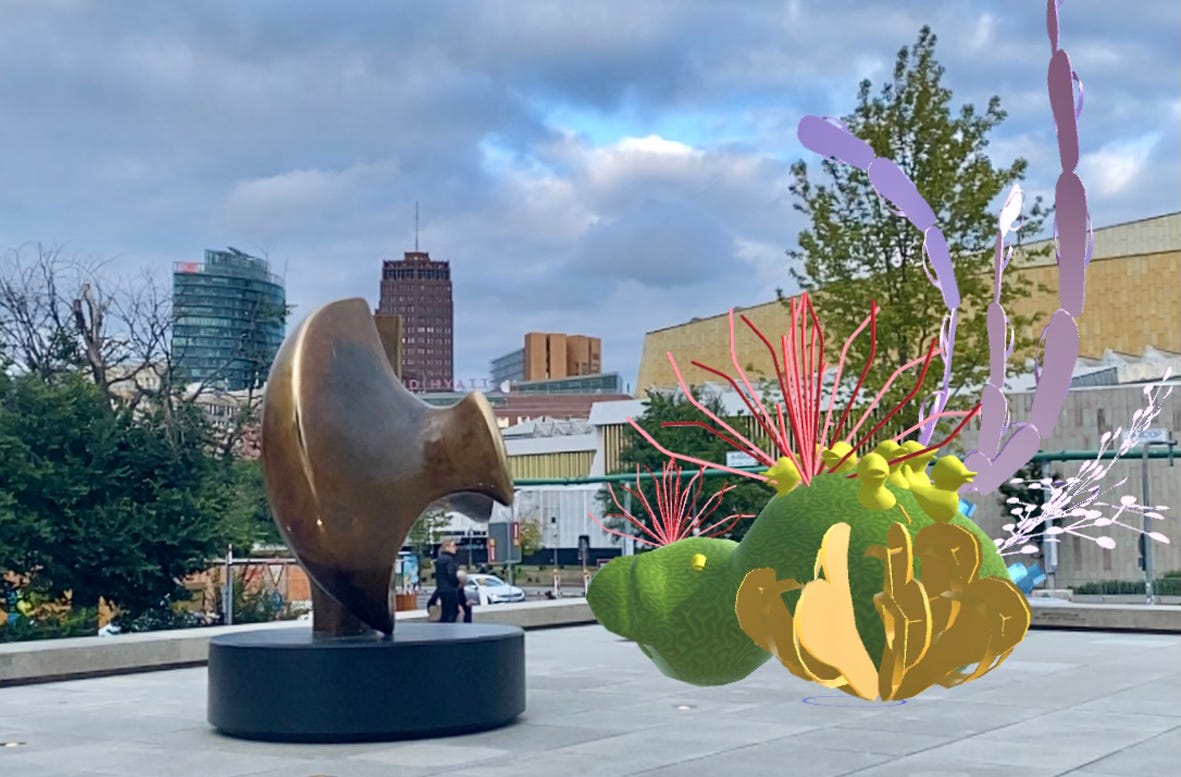
DD: Invasive Growth IG001, the piece you’re showing in the exhibition, is a coral made out of plastic waste. What sparked the idea to hybridize reef ecologies with human debris?
TT: It started in 2013. I was on an artist residency in Penang, Malaysia. On a sailing cruise we visited an uninhabited island—but it was ankle-deep in plastic waste. The labels were not just from Malaysia, but included ones from Germany, Japan, and the US. That’s when I understood that so-called “recycling” in the Global North was being offloaded to poorer countries. Out of sight, out of mind. We all know the horrific photos: dead birds with stomachs full of plastic. They force you to recognize the severity of the crisis and should be shown again and again. But they’re so difficult to look at that they don’t get the repeat exposure they should have to keep the issue in the public eye. I wanted to create something you could bear to look at, something you look at every day, that draws you in and then unsettles you, and keeps the topic in the forefront of your consciousness. These “plastocoral sculptures” of mine are seductive, but they’re made from the very things destroying the oceans.
DD: And yet there’s an emotional clarity to the work. What do you think art can do in the face of ecological collapse?
TT: At Art Karlsruhe, I showed “Plastocene Reef,” a 3-meter x 3-meter wall treatment with 2D images of these sorts of plastocorals. A boy, maybe seven or eight, stood in front of it completely absorbed. His father said, “I thought you wanted to go home,” and the boy replied, “Let me look at this first.” I then showed him the augmented reality that transformed the 2D images into 3D “plastocorals” growing out of the wall. He started pointing out flip-flops, forks, spoons, straws, and rubber duckies that all made up the plastocorals. That opened the door for me to explain to him how over 90% of plastics can’t actually be recycled and often are shipped to poorer countries to be disposed of in any way they choose, and how they often end up in the oceans. The next day, his father sent me a message saying they’d gone to the pool afterwards. When his son was putting on his bathing flip-flops, he stopped, stared at them, and declared, “These are NOT going to end up in the ocean!”
So when adults ask skeptically if my bright, colorful works can really change anything, I tell that story. Maybe some adults struggle to see the message hiding in plain sight, but children understand it right away. That’s why I’ll keep making these pieces: to keep the topic alive in the public discourse long after we’ve grown tired of being told to use fewer plastic bottles and bags.
DD: The work we’re showing is interactive; it’s an AR sculpture that viewers can place in their homes, on their tables, next to their plants. What changes when these virtual ecologies enter personal space?
TT: AR brings the garbage back home. You place it on your floor, your desk, and suddenly the line between nature and waste collapses. It’s no longer out there; it’s with you. The sculpture seems to breathe and sway like a living coral in the water. You start to care for it, even though it’s made of virtual plastic. That paradox is powerful. I want people to ask themselves, "Why do I feel some sort of attraction for this little, inanimate thing?" And then: “What does that mean for how I choose to live in the future?”
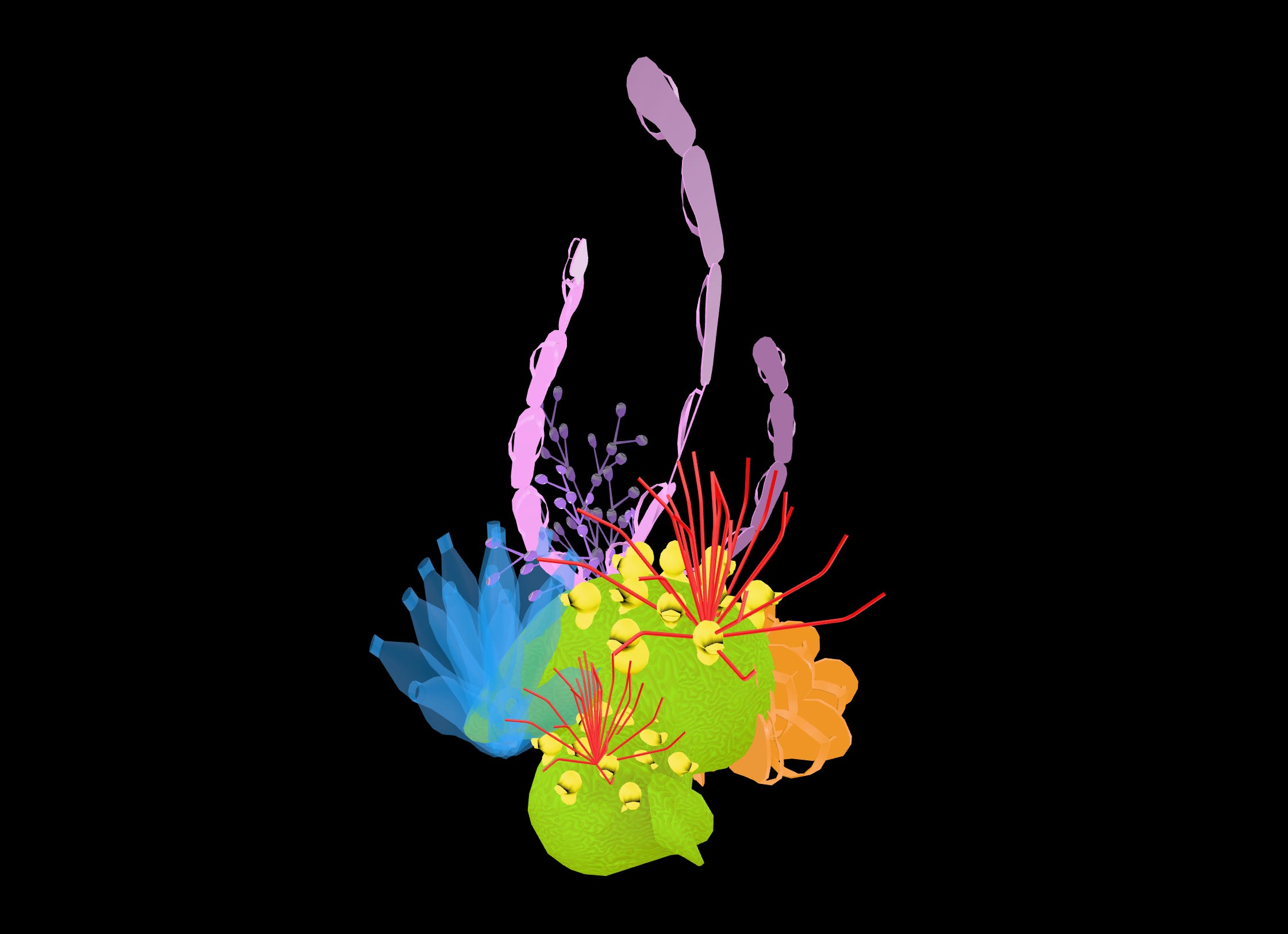
Tamiko Thiel’s Invasive Growth IG001 is not just a coral. It’s a mirror. It reflects our desires, our consumption, and our disconnection. But it also offers a new way of seeing, through wonder, not despair.
This interview has been conducted on the occasion of the online show On the Edge of the Horizon, co-curated with Tina Sauerlaender. The show can be viewed here:
https://on-the-edge-of-the-horizon.common.garden/
Stay tuned for our next artist’s interview!
Comments
Nothing yet. Say the first thing.
Sign in to join the conversation.