
I am no “Good Christian” in the slightest; though I paid for it in blood and dark tears. Nevertheless, here are some of my favorite most grotesque, forgotten and sometimes gloriously cinematic moments from the much less read “Book of Acts.” These are the moments that make “the Bible” … fun, for me. The Book of Acts is wilder than you remember. Many of these stories could easily be invented, evidence of the willingness of the gullible to mistake otherwise ordinary events as extraordinary, and others are just chilling good stories.
Acts 14:8–20
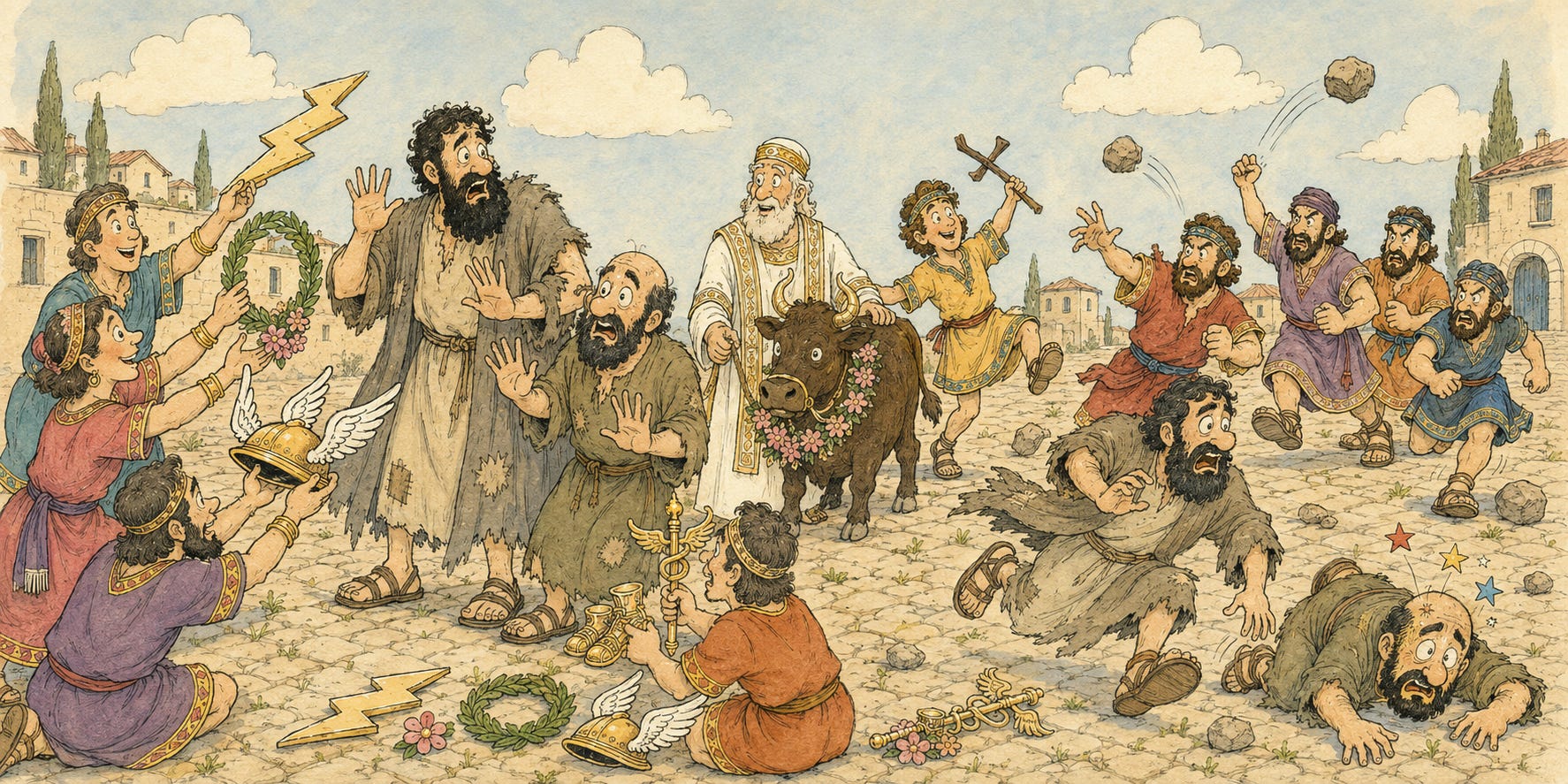
Paul heals a man who had never walked: the people of Lystra decide that the gods have descended among them: Barnabas is Zeus, while Paul, as the principal speaker, is Hermes. The priest of Zeus arrives at the city gates with garlanded bulls, causing the two horrified apostles to tear their clothes and rush screaming into the crowd before they can be sacrificed to as gods. Then, the same people want to stone Paul, and abandon their former “Hermes” as a corpse.
Acts 8:9–24
Simon, formerly celebrated throughout Samaria as a possessor of divine power, watches the apostles transmit the Holy Spirit and thinks he has discovered a superior form of professional magic. He offers Peter money for the secret, only to be met with the terrifying answer that his silver should perish with him because he imagined that the gift of God could be purchased. Simon begs Peter to pray that none of his threatened punishments will happen to him.
Acts 12:20–23
Herod appears before the people of Tyre and Sidon in his royal robes, seats himself upon the throne and delivers a public address to display the full brilliance of kingship. The crowd cries that it is the voice of a god rather than a man, and Herod, instead of rejecting their worship, luxuriates in his own political apotheosis. An angel immediately strikes him down, and the dazzling body beneath the royal robes becomes carrion from within: he is eaten by worms and dies.
Acts 19:11–20
Seven itinerant exorcists, the sons of a Jewish chief priest named Sceva, attempt to use the name of Jesus as though it were an especially powerful magical formula: “Jesus whom Paul proclaims.” The possessing spirit answers with icy contempt, “Jesus I know, Paul I recognize, but who are you?” The possessed man then springs upon them, and sends them fleeing from the house naked and bleeding, after which terrified magicians publicly burn a fortune in occult books.
Acts 5:1–11
Ananias and Sapphira sell a property, secretly retain part of the money and then present the remainder while pretending that it represents the whole price. Peter exposes Ananias’s lie, and the man immediately falls dead at his feet; young men wrap the body, carry it outside and bury it before his wife even knows what has happened. Three hours later, Sapphira enters, repeats the lie, sees the feet of her husband’s gravediggers waiting at the door and collapses upon the same spot.
Acts 13:4–12
On Cyprus, Elymas the Jewish sorcerer serves as an adviser to the Roman governor Sergius Paulus and attempts to prevent his patron from accepting the apostles’ message. Paul, filled with the Holy Spirit, fixes his eyes upon the rival magician, calls him a child of the devil and announces that the hand of God is against him. Mist and darkness immediately close over Elymas’s eyes, leaving the courtly sorcerer groping helplessly for someone to take him by the hand.
Acts 20:7–12
As Paul continues preaching until midnight in a brightly lit upper room, a young man named Eutychus falls asleep while sitting in a third-storey window. Overcome by sleep as Paul talks, he pitches out of the window, strikes the ground below and is taken up dead. Paul throws himself over the broken body and embraces it before declaring that life remains in him; then he goes upstairs, resumes the gathering until dawn, and the congregation eventually carries the young man home alive.
Acts 16:16–40
After being stripped, beaten with rods and locked in the innermost cell at Philippi, Paul and Silas sit with their feet fastened in stocks and sing hymns at midnight while the other prisoners listen. An earthquake tears through the foundations, throws open every door and releases every chain, causing the awakened jailer to draw his sword and prepare to kill himself rather than face punishment for losing his prisoners. Paul’s voice suddenly cries out from the darkness that everyone is still there.
Acts 19:23–41
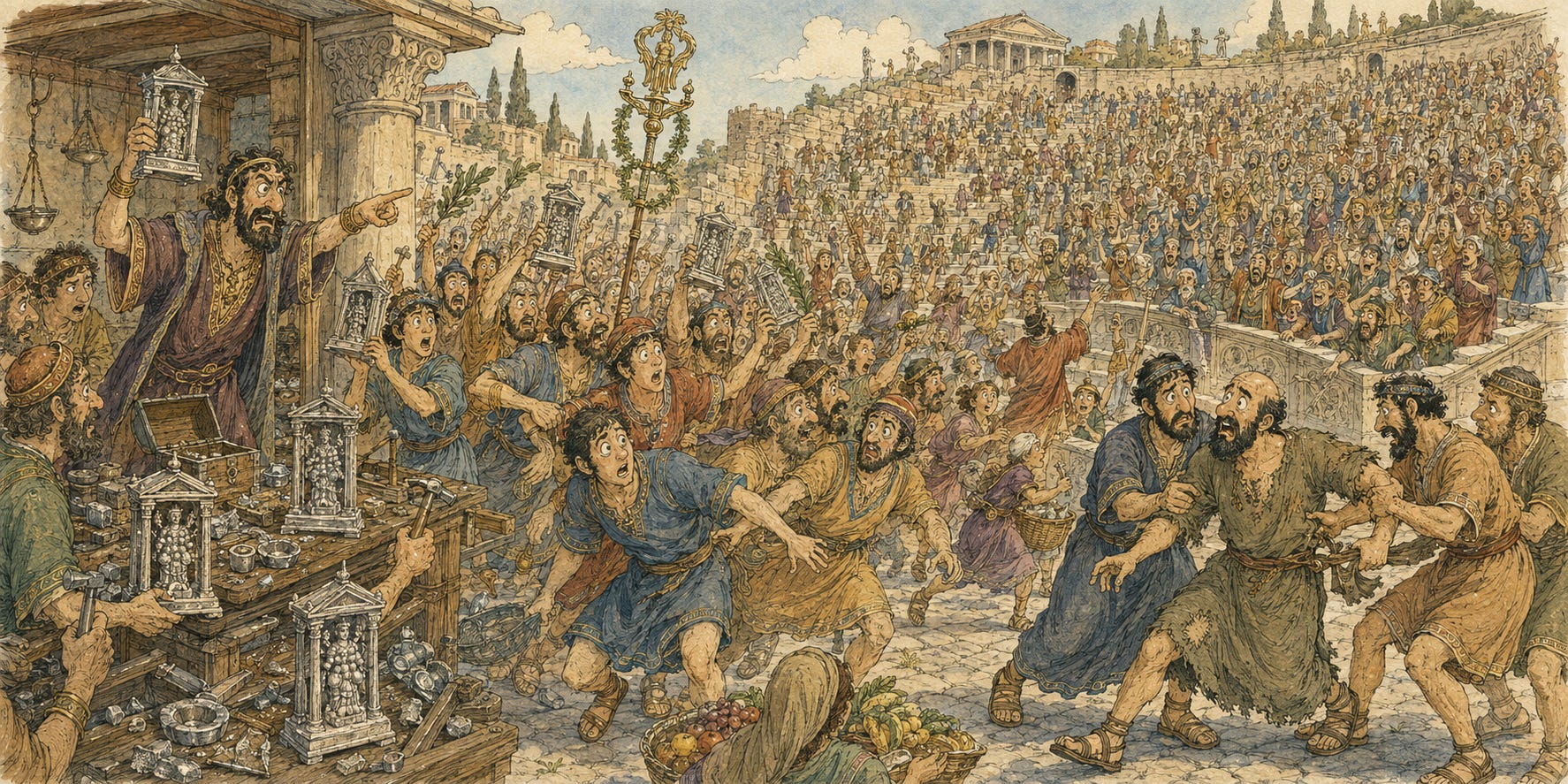
Demetrius, a manufacturer of silver shrines of Artemis, realizes that Paul’s attack upon handmade gods threatens not only the dignity of the goddess but the profitability of an entire industry. Economic panic becomes sacred fury, Paul’s companions are dragged into the theatre, and the city roars “Great is Artemis of the Ephesians!” while Paul’s friends prevent him from entering the mob. The assembly is in complete confusion, while most do not even know why they have gathered.
Acts 27:1–28:10
Paul becomes the effective commander of a doomed ship, prevents the sailors from escaping and promises that all 276 people aboard will survive even though the vessel itself must be destroyed. The ship is smashed apart, but they reach Malta on wreckage. Paul escapes drowning only for a viper to crawl from the firewood and fasten to his hand. The islanders conclude that divine justice has caught this obvious murderer, but when Paul shakes the snake into the flames, they reverse themselves completely and decide that he must be a god.
No posts
Comments
Nothing yet. Say the first thing.
Sign in to join the conversation.