
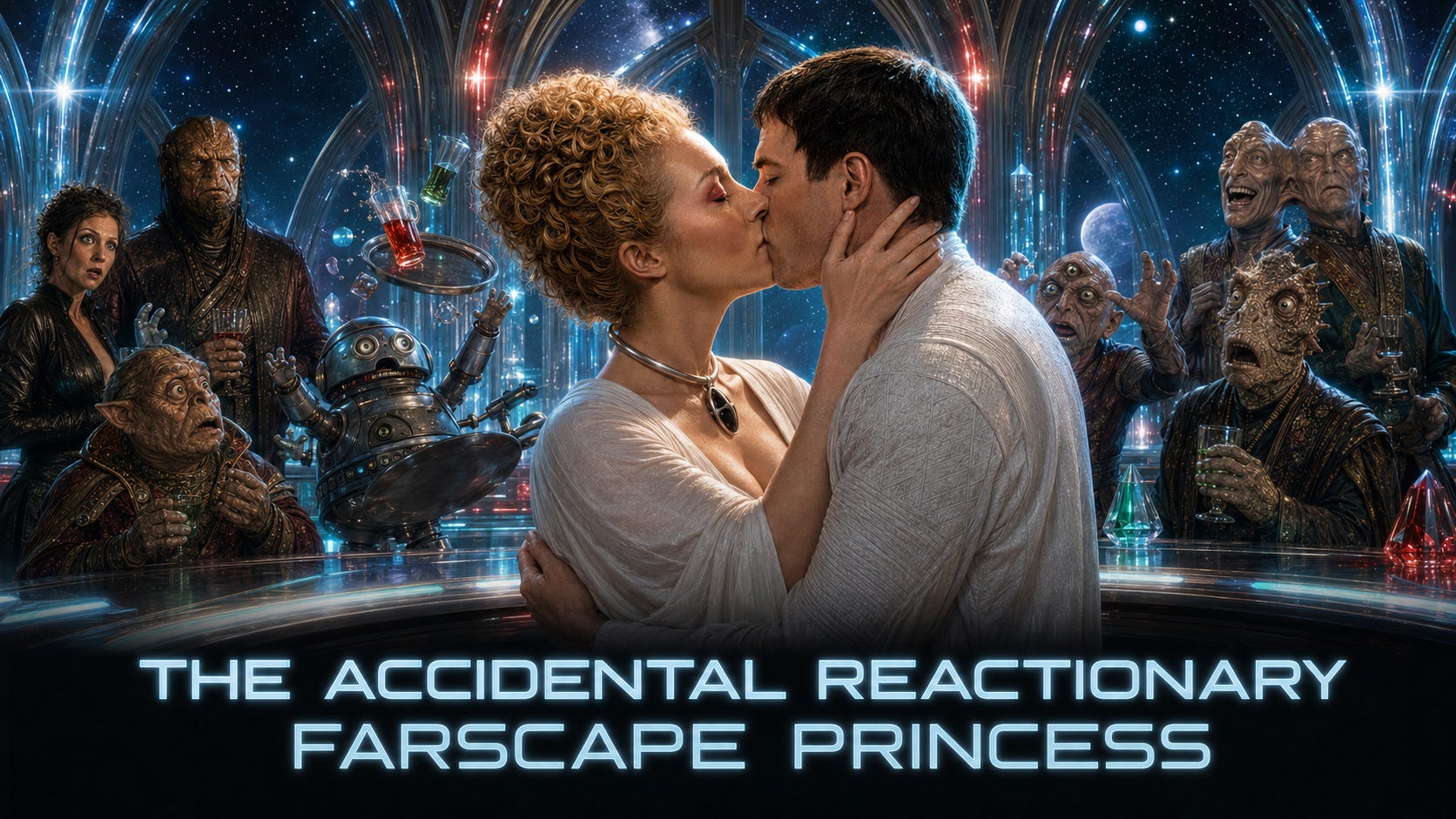
The Look at the Princess trilogy of episodes, in Farscape, is certainly not consciously “racist,” nor does it argue for racial purity. In fact, the genetically acceptable husband is an alien outsider, a human, namely our hero, John Crichton. This is of course not as much of an unconscious or anti-continuity statement as it appears; humans are after all the original base “race,” from which the Sebaceans, were abducted, and genetically engineered in the Farscape universe. The reason why I like Farscape, is simply because, despite the fact, that the Sci-Fi genre space operas are always unfortunately “progressive” in the worst sense of the word, the utopian sense; Farscape has to deal with real lived psychology, which is never neat, “logical,” and muted of passion.
Farscape, being more “Sword and Planet” science fiction than Star Wars, is forced to confront and deal with more unshakeable psychological and sociological realities of human beings and indeed diverse “creatures.” This forces the audience to accept “ideas” which progressives would prefer to politely ignore. The story repeatedly treats ideas now associated with reactionary politics as legitimate political realities. Biological inheritance matters, dynastic continuity preserves peace, foreign powers corrupt domestic elites, rulers require decades of institutional formation. Ultimately, a society survives through Love and Loyalty, as much as through genetics or written law. Farscape does not preach these propositions the way Star Trek preaches an implicit Galactic social democracy; or Star Wars preaches against the “Reactionary Evil” of a Creepy Primordial Religious Anti-Buddhist Emperor, but rather, Farscape makes the audience emotionally experience these realities which progressives would rather pretend, do not exist, or do not matter, one concession at a time.

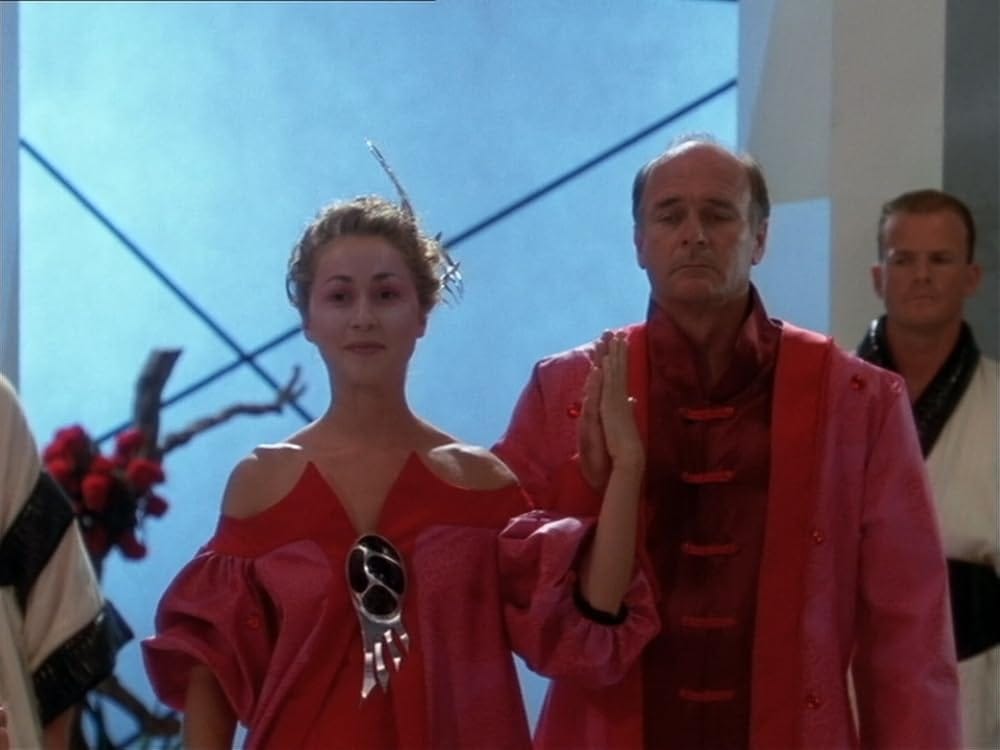
The trilogy begins by turning romance into biological selection. A chemical compatibility test, administered through kissing, determines whether two people can produce healthy children. Princess Katralla cannot marry merely for love, and has no interest in doing so; she must produce a viable successor or surrender her own throne. This is the first “reactionary concession” the story extracts from its audience. Biology is not private; reproduction affects the continuity of the political community, it impacts their order, their equality, their harmony, and their very survival. As the future Queen, who she kisses matters immensely. Katralla’s DNA has been deliberately poisoned to make her incompatible with every Sebacean man. Crichton succeeds precisely because he is human, an outsider whose biology makes him “compatible.”
Farscape does not defend racial purity, it does not need too. All it has to do is suggest a stronger, more subtle “reactionary” point about the brutality of human reality. It defends or demonstrates a more fundamental, and more unsettling proposition; that heredity, reproduction and political continuity cannot always be separated. They go together, and disrupting one, ripples outward to hurt other people. Therefore the princess, can only kiss and marry the “compatible.”
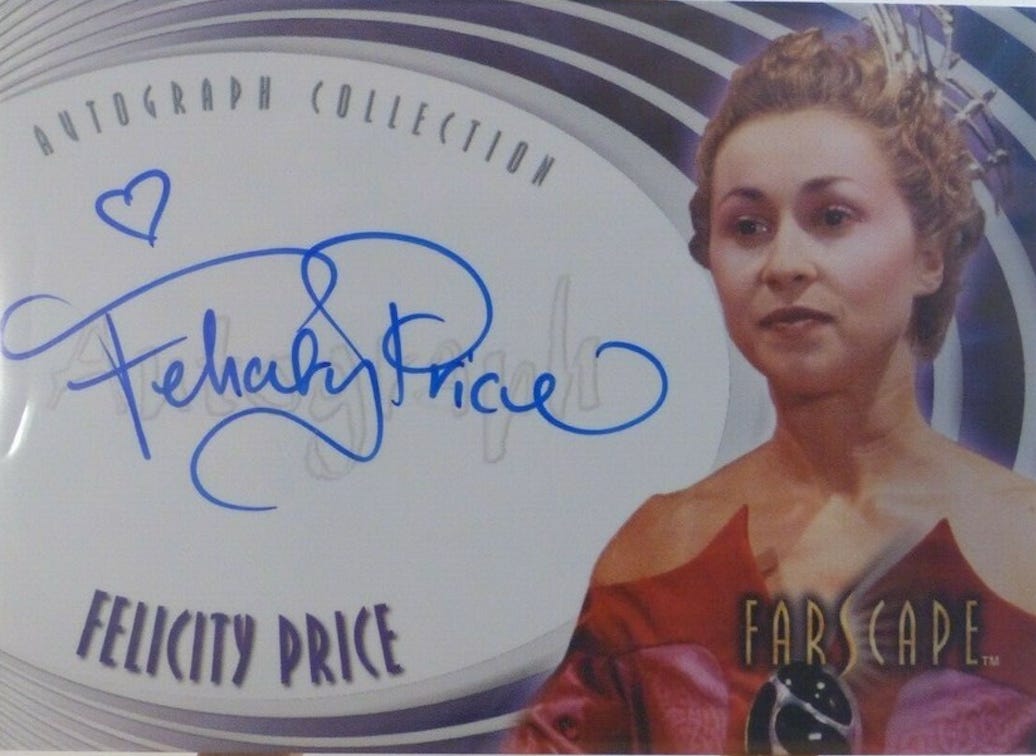
Empress Novia tells Crichton: “My daughter or that abomination. Choose.” Literally, the choice is between marrying Katralla and being handed over to Scorpius. She is not threatening to marry the princess to Scorpius, but the first thought of the viewer is the implicit horror of her marrying the unworthy. Crichton must choose between incorporation into an established political order and submission to a terrifying imperial agent. The marriage preserves the planet’s independence; refusal strengthens Scorpius and leaves the succession crisis unresolved.
Novia’s language about Scorpius also makes biology and political allegiance overlap, but Scorpius is dangerous because he is an imperial predator, not simply because he is mixed-blood alone. The choice does not have to be an explicit, “our race or the foreigner,” to make the point. All she has to say is “continuity under our house or helplessness before an outside power.” Yet Novia expresses that political distinction in unmistakably biological language.
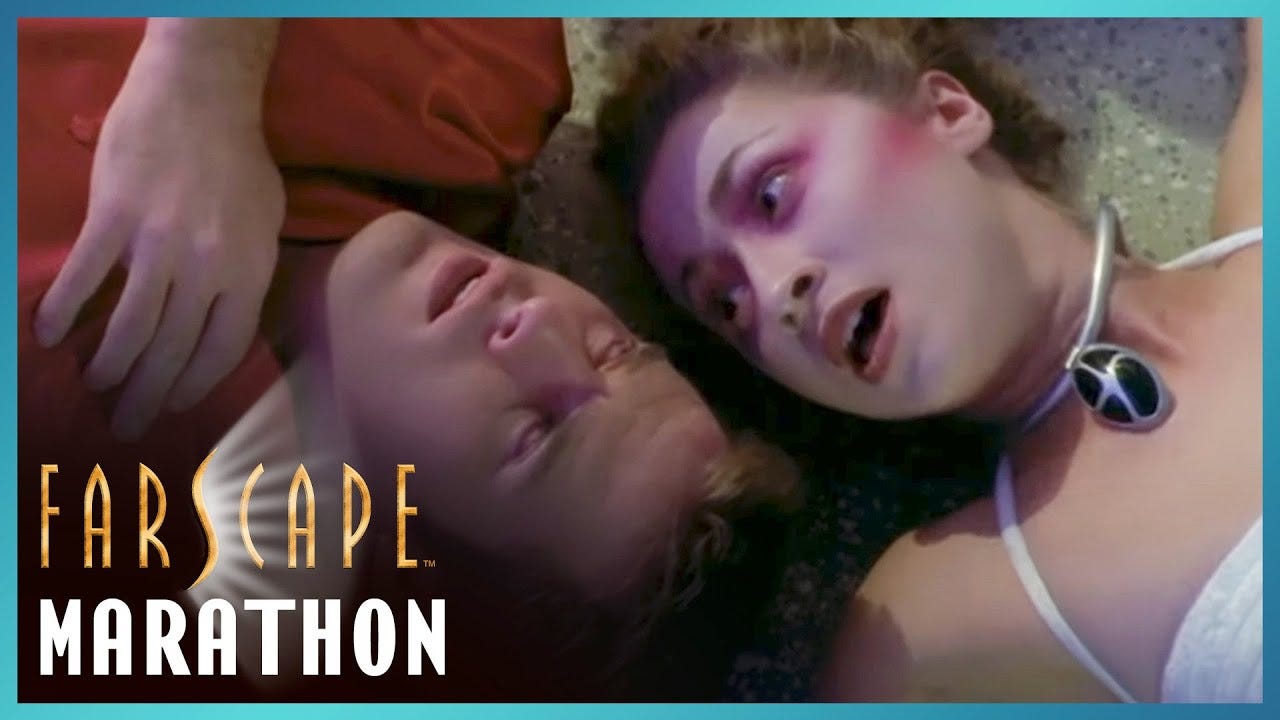
Prince Clavor is the legitimate son of the Empress, yet he conspires with the Scarran agent Cargn. He poisons his sister’s reproductive viability and deliberately creates the constitutional crisis that supposedly entitles him to rule. This produces a strong James Burnham point: A state is not necessarily betrayed by the people outside its walls. It is betrayed when someone already inside the governing house decides that foreign assistance is more valuable than domestic continuity. The servant ro-NA secretly sells Crichton to Scorpius. Jenavian appears to belong to one faction while secretly serving another. Tyno, meanwhile, possesses no biological claim but proves more faithful than the biological prince.
Borders therefore remain necessary but insufficient. Political survival depends upon the loyalties of the people occupying the palace, bureaucracy and royal household.
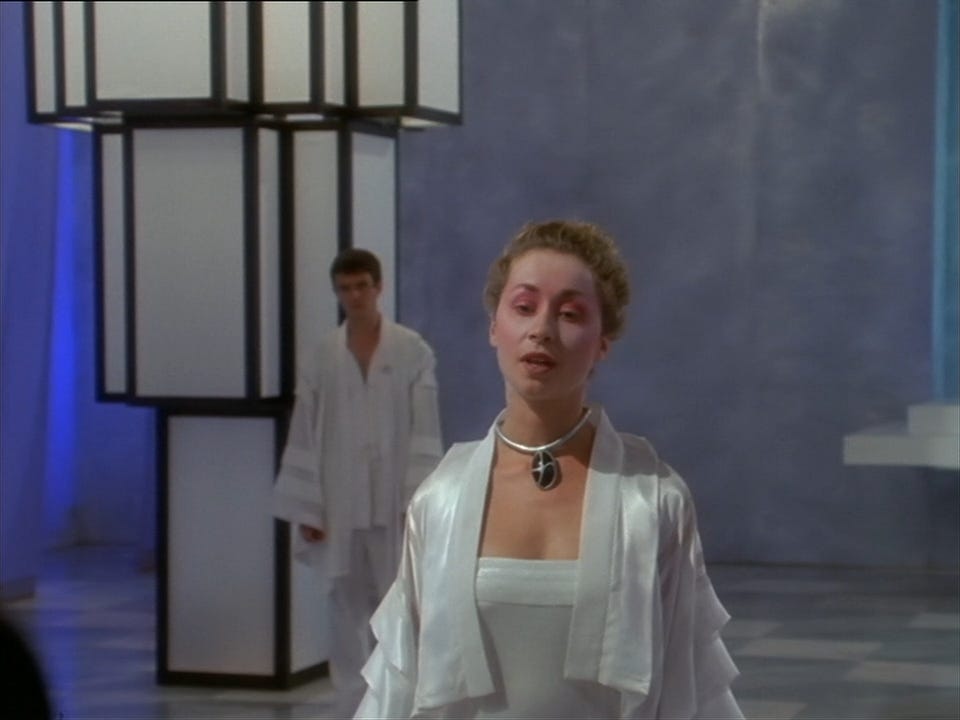
Crichton and Katralla are supposed to remain conscious as statues for eighty cycles. During that time, they will see and hear what happens around them, preside over the Senate and absorb “every single facet” of the governmental system. This is the exact opposite of modern democratic spontaneity. Political authority is not treated as something conferred by popularity, moral enthusiasm or a successful campaign. It requires prolonged observation, education and institutional memory. The society claims that this system has produced nineteen hundred cycles of peace; Farscape treats continuity as an intelligible political achievement.
The future ruler must be formed by the state before being permitted to command it. Eighty years of enforced apprenticeship are presented as a terrible personal sacrifice, but not as a politically irrational one. John is willing to make that sacrifice. He understands that rulership is not self-expression. It is an obligation extending beyond his lifespan, friendships and personal desires.
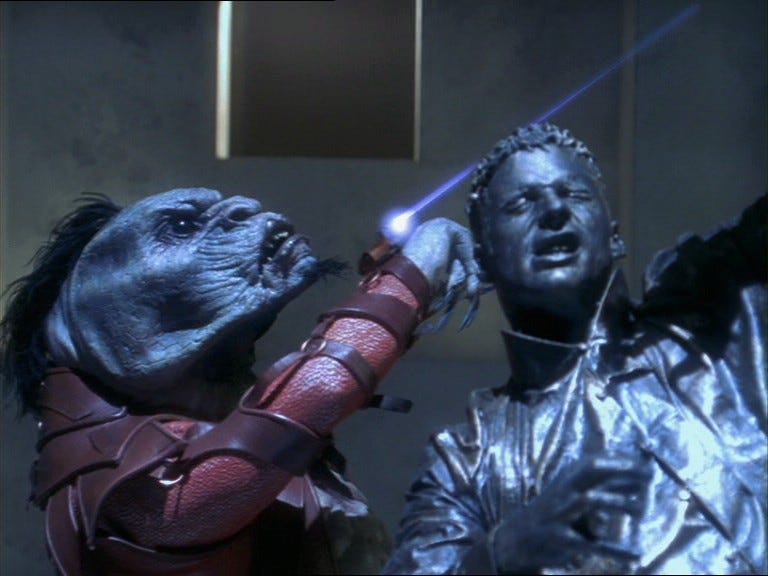
Tyno, Katralla’s counsellor and true love, is genetically incompatible with her. He cannot produce the required heir, but he is loyal, politically competent and devoted to both Katralla and her future. After John learns that Katralla carries his daughter, he volunteers to be frozen again. His human body cannot survive it, so he proposes that Tyno secretly take his place as regent. Tyno will help govern, remain beside Katralla and raise John’s child. The conclusion explicitly establishes Tyno as John’s substitute and the child’s social father.
Genetics can solve the succession problem, but genetics cannot govern. John supplies the viable bloodline; Tyno supplies presence, loyalty and love. The political order requires both. Meanwhile, the biological son, Clavor, “inside the house,” betrays the realm. Biology matters, but cohesion determines whether biology becomes civilization.
Look at the Princess is therefore is something stranger than usual progressive fiction and more interesting: a liberal-era television story that accidentally reconstructs the political reasoning from which “reactionary thought” emerges. It asks the viewer to care about hereditary, continuity, controlled succession, protection from foreign penetration, the institutional formation of rulers and sacrifices made for generations not yet born.
And then it introduces the necessary correction. Neither blood nor law can preserve a society by itself. Clavor has the blood and betrays the house. Crichton has the necessary genes but cannot remain. Tyno lacks genetic compatibility, yet possesses the loyalty upon which the future actually depends. The trilogy’s final message is not simply that “blood matters.” It is even worse from the point of view, of the comfortable supercilious “progressive.” The accidental message is that, continuity requires inheritance, institutions and love, and a civilization becomes endangered whenever it imagines that any one of the three can replace the others.

No posts
Comments
Nothing yet. Say the first thing.
Sign in to join the conversation.