

I find myself in a hallway.
A long, dim, in-between place — somewhere between who I was and who I’m trying to become. A breakup sparked this sense of liminality. This space between no longer and not yet.
Here, there are no open doors, no convenient escape routes. Nor am I looking to escape. Life is telling me something, and I want to listen.
Depression is also present. Makes sense. It’s the unsettling, flickering lights from heartbreak, aimlessness, and questioning one’s purpose. Human stuff. Stuff you can’t outrun.
But I have an edge: depression, anxiety, discomfort — they’re old acquaintances. I don’t like them, but I know them. Like unpleasant neighbors who never move away, they show up often, uninvited. I used to fight them. Yell at them. Slam the door in their faces. Demand they leave. None of it worked.
So I stopped resisting. I learned to let them in — without letting them do me in.
How? There is no middle ground with depression and anxiety. Either you’re in control, or they are. You can’t give these psychos an inch. You find a way to coexist, but on your terms.
I’ve worked hard to learn how to set those terms. I’ve gone to therapy. Taken medications. Tried meditation. Read dozens of self-help books. All of it helps some.
But through years of trial and error, one thing has proven to be the most reliable, potent antidote to these uninvited guests:
Take action. Do shit.
Reading, reflecting, analyzing, philosophizing—they all have their place. But at the end of the day, action is what moves the needle. Nobody, not even your own thoughts, will save you but you. “To save” is a verb. If you want to be saved, you must do the damn saving.
I call the path of saving oneself “Action Therapy”. Here’s the mantra:
Don’t optimize for how you feel, but for what you want to accomplish. Commit to doing, showing up, and creating consistent output. Success isn’t built on fleeting motivation. It’s built on daily discipline. Through action, you shape the life you want. Through action, vision becomes reality. Trust the process, rely on discipline, and take action.
It’s an essential truth: a difference of action creates a difference of reality.
Show up in your life. Put in the reps. Create something. Move your body. Write. Help a friend. Apply for a new job. Do hard things. Disciplined action — not fleeting motivation — is what carries you forward.
But sometimes life is just awful, action or not.
I’m really uncomfortable in this hallway. So I’ve reached for an old medicine: reading. Not to distract myself, but to pull myself forward. To find inspiration strong enough to cut through the fog.
Before picking a book, I asked my AI friend (ChatGPT) to recommend a historical figure I might resonate with. Someone who didn’t just survive hardship, but moved through it.
It gave me Theodore Roosevelt.
And damn, was that a good suggestion.
Theodore Roosevelt was like a great white shark—he had to keep moving to breathe. Stillness wasn’t an option. He seemed wired for motion, born with an unrelenting urge to press forward.
I’d always considered him the poster child of strength and masculine toughness: broad chest, square jaw, that toothy grin illustrated in every history textbook. But that wasn’t always the case.
As a child, asthma nearly took him out. He was sickly, frail, and often bedridden. His father knew his son’s potential and gave him a blunt directive:
“You have the mind but you have not the body, and without the help of the body the mind cannot go as far as it should. You must make your body. It is hard drudgery to make one’s body, but I know you will do it.”1
Twelve year old Roosevelt didn’t flinch. He’s said to have grinned and replied, “I’ll make my body.”
And make it he did. He threw himself into boxing, gymnastics, weightlifting — anything to toughen his body and sharpen his will. He didn’t become rugged by accident; he built himself, brick by brick, through sheer force of will.
I picture the young, wheezing ‘Teedie’, asthmatic and fragile, charging years later at the front of the Rough Riders. That wasn’t destiny—it was choice, repeated daily.
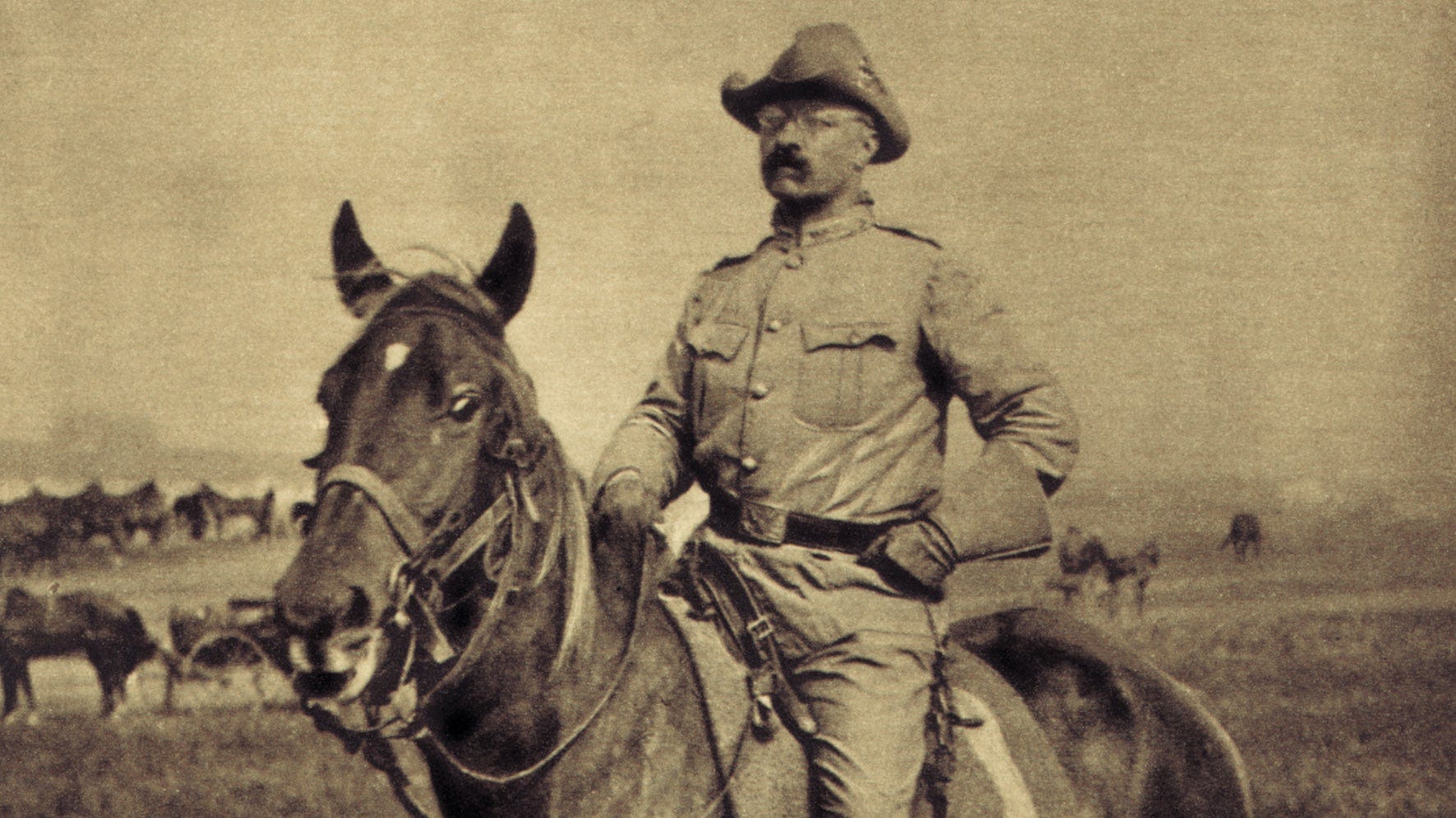
The lesson: don’t accept what you don’t have to.
I accept life is hard. I accept the presence of depression, pain, and heartache.
But that’s where acceptance ends.
Pain is heavy, but you can choose to turn it into fuel. It’s opportunity wrapped in discomfort.
We all inherit unpleasant things—illness, trauma, grief, disadvantage. And while we can’t always change the cards we’re dealt, we can choose how we play them.
Pain is inevitable. Stagnation is optional.
Feel like shit? Of course. Who hasn’t. But don’t stop there. Feel it, and act. Feel it, and build. Feeling is human. It's healthy. Deep souls feel deeply. But don’t let feeling alone steer the direction of your life. Don’t get stuck in what is and forget to reach for what could be.
Even as a child, Roosevelt saw weakness not as a life sentence but as a challenge. He didn’t become a symbol of strength by waiting to feel better. He moved. He worked. He committed. He evolved.
You don’t have to fix everything. Most things are beyond your control anyway. But moving toward better — that’s on you. So is the will to act. So is the effort. And virtue lives in the effort. It lives in the fight, not the outcome.
Stop searching for a door. When you're in the hallway, just keep walking.
Not to say action is easy.
Walking the hallway is brutally hard. I constantly fight the inertia of what is to create momentum toward what I want.
I work out, even when I feel weak. I show up for family and friends, even when it’s hard to show up for myself. I keep dating, even when it feels soul-sucking. I go out, even when I yearn to stay in. I hustle on my startup with Jack and Neil, even when rejection is the only constant.
Novelty helps, so I’m also trying new things. I’m writing. I’m taking yoga and pilates classes to challenge myself beyond weightlifting. I’m preparing to volunteer—tutoring homeless kids and writing to incarcerated inmates through a penpal program.
It’s still hard. Some days, belief wavers. The thoughts can get loud enough to drown out peace. But I keep showing up, because showing up matters.
Even the deepest pain can be a prelude to something greater. And all of it — the highs, the lows — is temporary. To feel fully and act with courage is what it means to live fully.
Roosevelt lived fully, even in his darkest moments.
Roosevelt was rugged, sharp, and a leader of men. But he wasn’t emotionally numb. He didn’t hide from pain. He felt it all deeply.
At 19, he lost “the best man I ever knew”—his father. Most would’ve spiraled. For a time, he did. The grief-stricken Harvard freshman wandered campus, lost in it all.
But he didn’t collapse. He doubled down on his workouts, his studies, his writing. He worked at becoming the kind of man his father would’ve been proud of. He showed us how the only way out is through.
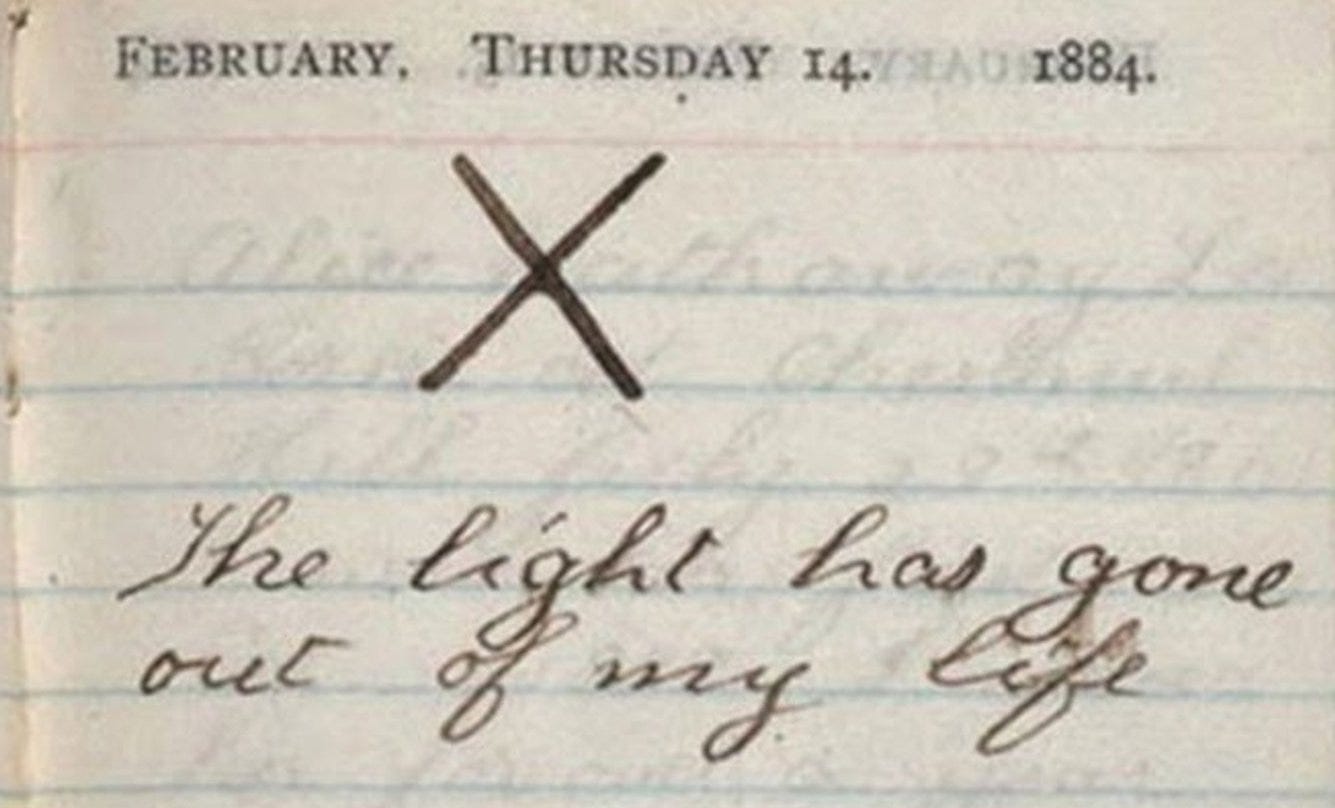
Then, at 25, he lost both his wife and mother — on the same day. Same house. Same date. Valentine’s Day.
I can think of no greater loss. His parents were gone. The love of his life was gone. Life, it seemed, had quit on him. Most would’ve quit back. But Roosevelt didn’t.
He retreated to the Badlands of the Dakota Territory, confronting his pain through isolation, reflection, physical rigor, and the brutal rhythms of ranch life. In the wild, he rebuilt himself — body, mind, and spirit. And when he returned to New York, he came back not unscarred, but unbroken. He came back stronger.
"There is no depth from which you cannot climb." — Theodore Roosevelt
If Roosevelt could keep walking through the hallway he found himself in, so can I.
Nothing in life is promised, least of all happiness. But I’m not playing for guarantees. I’m playing for effort. Because it’s on each of us to rise, act, and leave our mark on the world—even as it leaves its mark on us.
Broken heart? Return to the world anyway. Love again.
A family member dies? Get up. Live in a way that would make them proud.
Fallen ill? Fight to heal, and do it with grace.
We’re all going to die. Our time will run out. What matters is what we do in the time we have.
Action Therapy isn’t just a personal philosophy.
It’s a call to arms, a sentiment echoed across generations of men and women who transformed themselves and the world through consistent doing.
Over a century before I was born, Theodore Roosevelt lived by this code.
He started young, made his body, and joined what he later called “the fellowship of the doers.”2 He lived that way until the very end.
As long as I’m alive, who I am, and what I do, is up to me. Feelings matter. Emotions matter. Thoughts matter. But action reigns supreme. You feel life inside, but you live it by what you do.
So I may wrestle with depression, but that’s exactly what it is: a bout. A fight. A struggle. I am not my afflictions. I am what I do about them.
The world belongs to the Fellowship of Doers. And every day, I hope to earn my place among them.
Edmund Morris, The Rise of Theodore Roosevelt (New York: Random House, 1979), 32.
Edmund Morris, The Rise of Theodore Roosevelt (New York: Random House, 1979), 35.
No posts
Comments
Nothing yet. Say the first thing.
Sign in to join the conversation.