
I've always been drawn to Richard Milhous Nixon. He's widely considered a villain, a crook, a stain on American history. His legacy is often reduced to a single word: Watergate. But that's too simple. Nixon is more than that—an anti-hero, an enigmatic figure easy to hate yet difficult to understand. He is the dark side of the moon—always there, whether you acknowledge it or not. And no matter how you feel about him, his abilities are undeniable. The man rose from poverty in Yorba Linda to the highest office in the land. Yet, his own self-inflicted wounds destroyed his career and legacy. He was both the great igniter and extinguisher of his own flame.
I knew Nixon’s historical role but wanted to understand the man. I picked up John A. Farrell’s Richard Nixon: The Life and quickly realized that defining Nixon is like trying to catch smoke. He was a walking contradiction: brilliant yet insecure, idealistic yet cynical, triumphant yet self-destructive. He was so flawed, so messy—so relatable. I see parts of him in myself: the underdog mentality, the tortured pursuit of purpose, the contradictions, the failures, the longing to be accepted. He won spectacularly. He lost spectacularly. He was the best of us and the worst of us
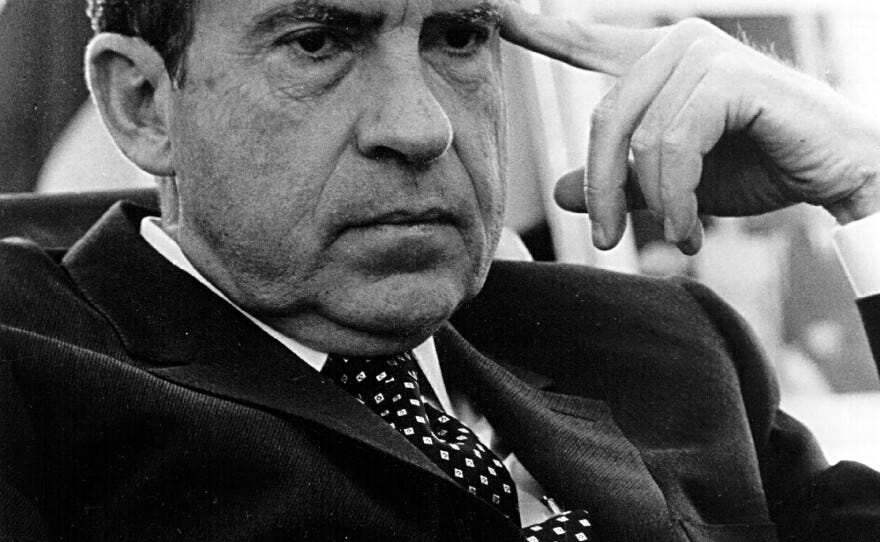
Nixon is often associated with scandal, shame, and treachery. Fine. But what stood out to me was his relentless fight. The man was an absolute brawler with zero quit. He battled poverty, media ridicule, election defeats—including the razor-thin 1960 loss to JFK—and the shame of impeachment and resignation. Most striking (and relatable) was the war he waged within himself. His deep insecurities, his sense of being an outsider, his craving for validation—they made him, and they destroyed him.
In his later years, Nixon reflected on his fight-first mentality:
“What starts the process, really, are laughs and slights and snubs when you are a kid… But if you are reasonably intelligent and if your anger is deep enough and strong enough, you learn that you can change those attitudes by excellence, personal gut performance while those who have everything are sitting on their fat butts.” 1
That hit home. It echoes the power, and danger, of a person driven by deep insecurity. We chase external validation hoping for internal peace—a recipe for quiet suffering. But it’s incredibly human, and I get it. Studying Nixon, I reflected on childhood bullies, dismissive coaches, girls who didn’t like me, teachers who didn’t care. I was not tall enough, not smart enough, not skilled enough, not creative enough. The message was clear: good, but not enough. Never enough.
Like Nixon, I’ve carried a chip on my shoulder. Most of us do. The struggle is consistent, the pain familiar, and fighting the only way to prove self-worth. Nixon wasn’t a Roosevelt, Kennedy, Bush, or Clinton. He wasn’t born into power, privilege, or polish. He wasn’t beautiful, charming, or instantly likable. But he overcame. He clawed, fought, bit, and scratched his way up a mountain where many didn’t want him—and for a moment, he stood at the very top before falling all the way down. That’s a man I can relate to.
It is both his virtues and vices—his rise and fall—that offer lessons worth studying. Here are a few that stood out to me.
In 1960, he fell just short of the presidency, losing several key swing states by razor-thin margins and the popular vote by just 0.17%—the narrowest of the 20th century. It was one of the most crushing defeats in U.S. history. Fucking brutal. I can’t imagine the devastation he felt.
He then ran for governor of California two years later and lost badly. Nixon’s reaction to the press was raw and real:
“You don't have Nixon to kick around any more, because, gentlemen, this is my last press conference.”2
He was tired. Seemingly done. Off he went, into what he called his “wilderness years.” Everyone assumed his political career was over. But Nixon just kept showing up. He resumed practicing law, became a prominent political commentator during JFK and LBJ’s administrations, and strengthened his foreign relationships abroad.
In just four years, he rose from the ashes. Nixon roared back, seized the Republican nomination in 1968, and won the presidency. Unreal. The man came back from the dead to rule the land of the living. He had walked through the political wilderness—and straight into the White House.
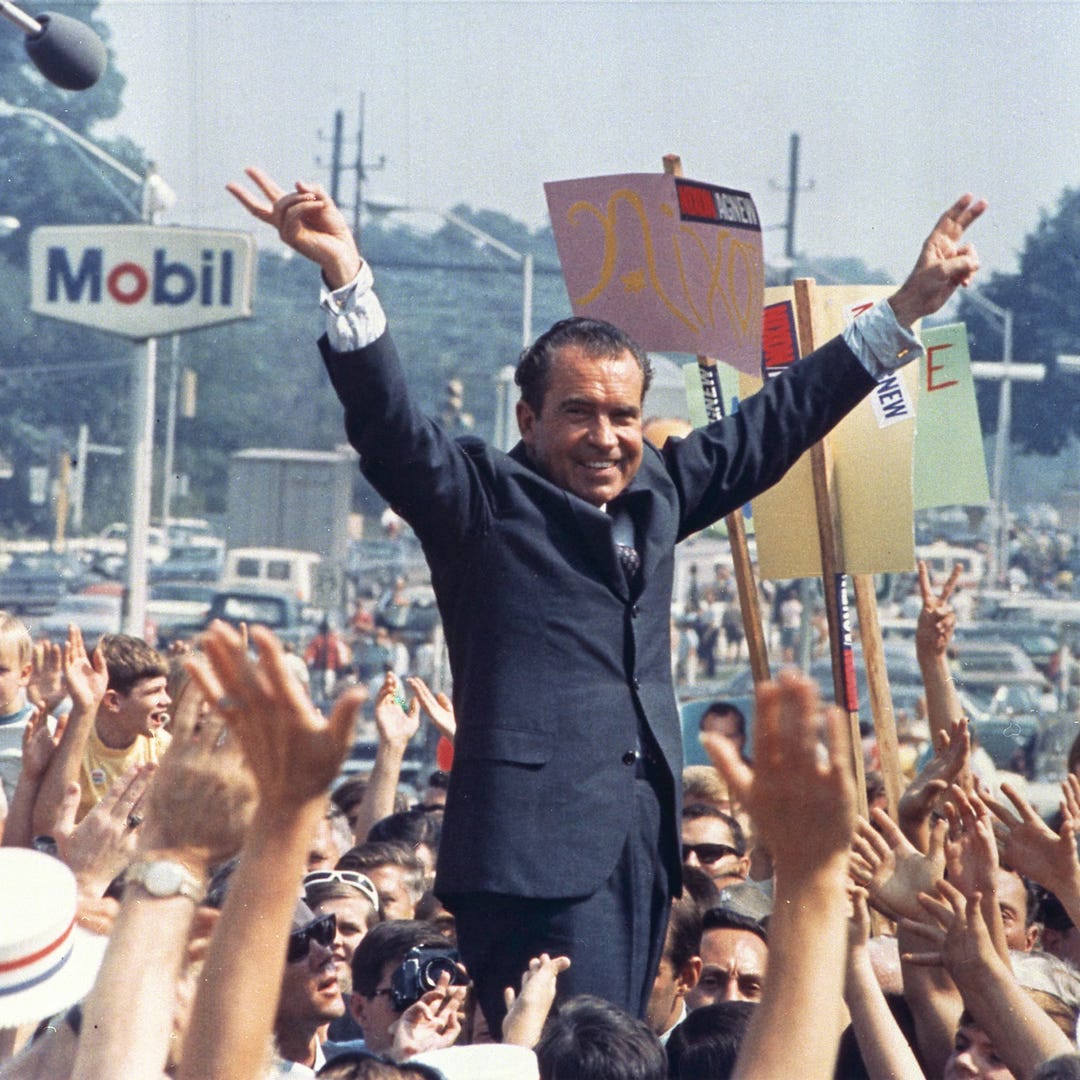
My takeaway? Life is a fight. If you play to win big, you must be willing to lose big. The price of admission is everything you’ve got, win or lose.
I think of my biggest defeats—getting dumped, being fired, starting a business only to watch it immediately fail. And yet, each failure propelled me forward. Pain, suffering, and heartbreak are like manure. They smell like shit, but help you grow.
Yes, I’ve been dumped. I kept dating.
Yes, I got fired. I got hired elsewhere by better people.
Yes, my first business failed. I’m now building my second.
Nixon’s lesson is clear: chin up, chest out, carry on.
Nixon’s "Madman Theory" aimed to keep foreign leaders on edge by making them believe he was unhinged and capable of anything. Whether it worked is debatable, but the broader lesson is valuable: stay disciplined, keep focused, but never become predictable. Predictability breeds complacency, both in yourself and in others.
For too much rigidity has its own cost:
It dulls your own edge. Life becomes so rinse-and-repeat that even you start feeling bored, trapped in an invisible box of your own creation.
It gives others a playbook on you. The more predictable you are, the easier it is for people—especially adversaries—to anticipate your moves, press your buttons, and manipulate you for their benefit.
Sometimes, you have to break patterns to keep yourself engaged and others guessing. Try different foods. Take a new route home. Read something outside your usual genre. Date someone who isn’t your type. Say what you usually keep inside. Step outside the identity you’ve crafted for yourself.
This applies to work, too. In sales, I’ve learned the power of surprise. If I sense a prospect tuning out, I say something: "Hey, the more we talk, the more I get the sense you don’t actually think your team needs this." If I’m nervous to bring up pricing, I don’t hide it: "Look, I’d be bad at my job if I didn’t mention cost—but honestly, I have no idea how you’re going to react."
Authenticity catches people off guard. It gets them to listen. It encourages genuine engagement.
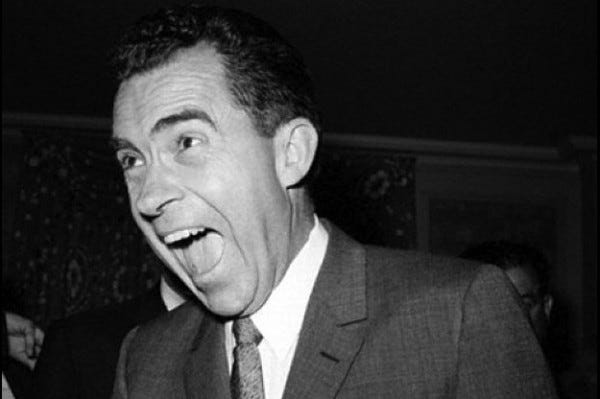
You need not be a politician to learn from Nixon’s Madman Theory. Recognize how you show up in the world—and jailbreak yourself. Identify your habits, patterns, likes, and dislikes, and be willing to mix it up.
It’s hard to stray from the familiar path, but you will be pleased by what you find when you do. Who you are, after all, is the accumulation of your choices. Make different choices, experience a different reality.
And just as importantly, keeps others from thinking they have you figured out and using that to control you. Throw in the occasional zig among your zags.
No achievement, no title, no trophy can silence internal torment. Nixon won the presidency. Twice. Yet his insecurity and paranoia ultimately led to his downfall. Watergate destroyed everything he had built.
We often get too attached with our origin story, even when the narrative is no longer relevant or applicable to our present lives. Ironically, the very thing that gets you to the top is often what brings you down.
Years after his resignation, Nixon had this exchange with journalist Ken Clawson:
Nixon: “It’s a piece of cake until you get to the top… you find you can’t stop playing the game the way you’ve always played it because it is part of you and you need it as much as an arm or a leg. So you are lean and mean and resourceful and you continue to walk on the edge of the precipice because over the years you have become fascinated by how close to the edge you can walk without losing your balance.”
Clawson: “Only this time there was a difference.”
Nixon: “Yes, this time there was a difference. This time we had something to lose.” 3
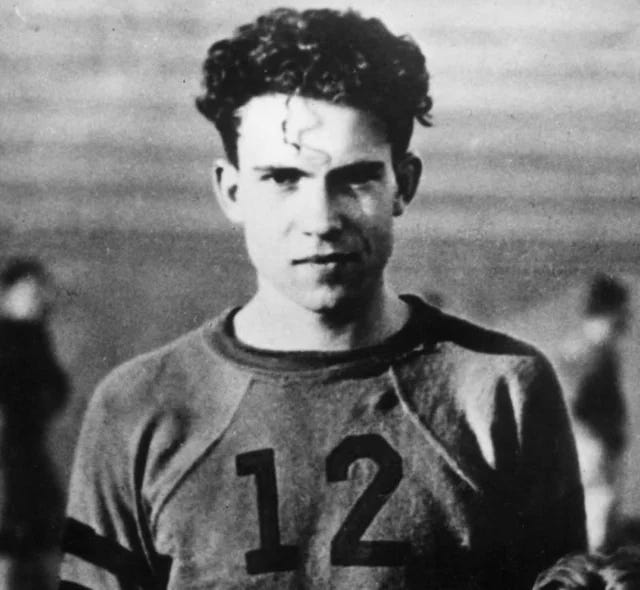
Nixon spent years as the underdog, scrapping for every inch. But by 1968—and certainly by 1972, when Watergate first made headlines—he was no longer fighting from behind. He was arguably the most powerful man in the world, yet he couldn’t shed the mindset that had once fueled his rise but now worked against him. He had everything to lose, and lose it he did.
I see this in myself. I still follow the younger version of me, the one who believed working harder was the only way forward, who brute-forced his way to success. That mindset got me here. But if I don’t evolve, it may be the very thing that stops me from going further.
I’ve learned that hard work is essential, but longevity requires pace. That discipline isn’t just about grinding, but knowing when—and how—to pause, recover, and reflect. That there is strength in stillness. And that a life filled with power and prosperity, but lacking in love, generosity, and inner peace, is neither virtuous nor fulfilling.
The mindset that helps us rise can just as easily consume us. If I don’t adapt, I risk cannibalizing the very things that mentality once allowed me to achieve. Unchecked struggle, left unevolved, can swallow whole even the loftiest of trophies
Nixon remains an enigma. The closer you look, the more he shifts. He defies simple definition.
His life forces me to question: Why do we live the way we do? What motivates us? Does the origin of that motivation still apply? Nixon spent his life chasing achievement, as if success could silence the demons inside. It never did. Shit—he became President of the United States and still couldn’t escape his own torment. Even the highest of highs won’t satisfy those at war with themselves.
That realization resonates with me. I’ve spent years subconsciously convinced that love, self-worth, and acceptance had to be earned—through status, charm, or achievement. It turns out that is bullshit. Accomplishments are neither who you are nor what can bring you peace. Trophies, titles—even presidencies—are just things.
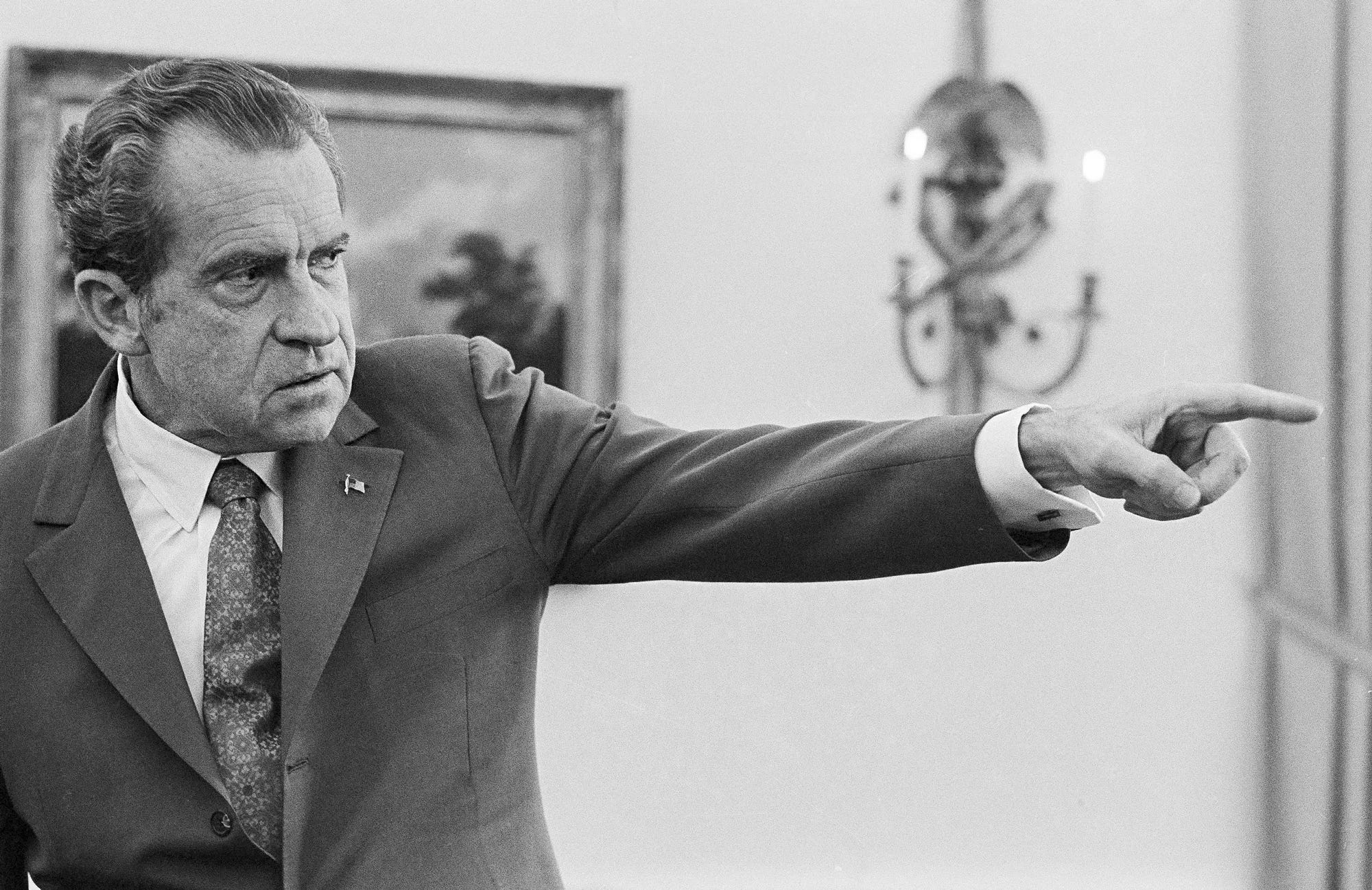
I wonder: how do you strive for greatness without being consumed by the very story that fuels you? How do you give everything—play big, lose big, win big, grow—without letting the pursuit, the pressure, or the outcome become your identity?
Anyone who's truly tried knows the danger. We don’t just chase the dream, we attach to the struggle, the pain, the belief that wholeness lies just on the other side of achievement.
Nixon never mastered that balance. His torment fueled his rise, but it also ensured his fall. In the end, he believed achievement could silence pain. It couldn’t and never can.
But his story still lives on—as both a warning and an inspiration for those of us trying to climb without losing ourselves along the way. With enough awareness, discipline, and sustained effort, perhaps we can succeed where he failed.
Farrell, John A. Richard Nixon: The Life. Doubleday, 2017, p. 535.
Nixon, Richard. “You Won’t Have Nixon to Kick Around Anymore” Press Conference. 7 Nov. 1962, Beverly Hilton Hotel, Los Angeles.
Farrell, Richard Nixon: The Life, 535.
No posts
Comments
Nothing yet. Say the first thing.
Sign in to join the conversation.