
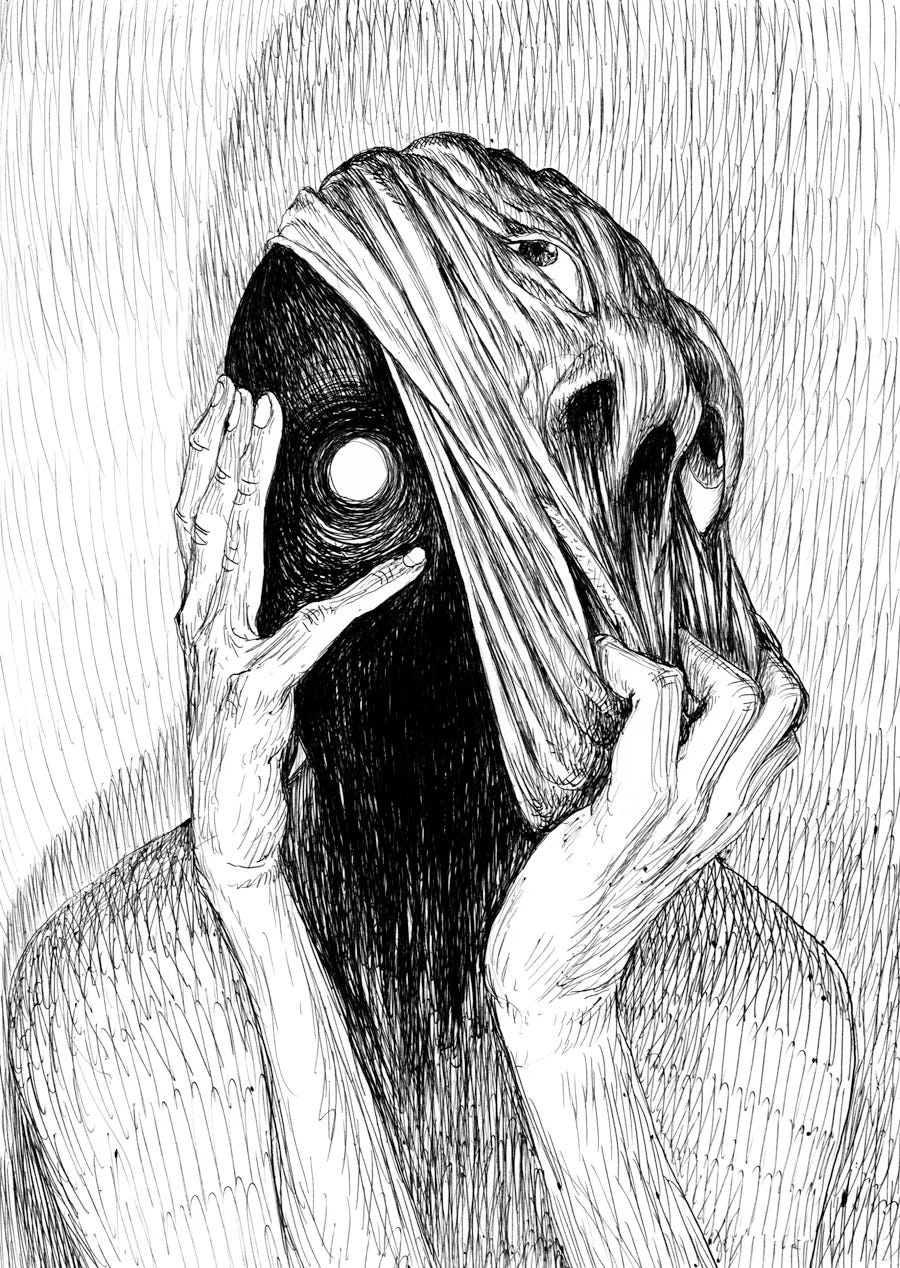
I recently read The Denial of Death by Ernest Becker. It’s a dense, fascinating exploration of the existential dread baked into the human experience. It’s heavy. But lately, difficult questions have been pressing on me every day, lingering in the background of everything I do.
Life is brutal. Everyone suffers. I wanted to understand why—not just emotionally, but philosophically. So I picked up this book to reflect on the big questions: What is the meaning of life? Is there one? And if not… then what?
Becker’s answer isn’t comforting. But it is clarifying.
Here’s the rough arc of his argument:
Life is terrifying and hard.
Humans are conscious of this.
We’re also animals.
That makes us divine in mind, but decaying in body.
We realize— early—that we’re going to die.
We spend our lives trying to deal with that unbearable truth.
Hm. What does one do with this logic?
We’re born into chaos with no map, no meaning, no explanation—and yet we’re expected to live. To keep going. To make something of it.
That’s the contradiction at the center of our existence:
We know we’re here. We don’t know why. And we know we won’t be here forever.
So we scramble to build shadows of meaning—relationships, careers, belief systems—to distract ourselves from that silent scream of existential panic beneath it all. Closure is conspicuously absent from nature, so we try to create it ourselves.
If you’ve ever stared awake at night wondering, Why am I here? or What’s the point of any of this? — you are me. And I am you. That is human.
We come in lost. We leave lost. In between, we do our best.
And this is why I appreciate Becker. He doesn’t offer neat closure or cheap meaning. He doesn’t try to solve the unfixable. He simply names the thing: we are conscious animals cursed with awareness of our mortality. That’s a horrifying reality
But he does map out how we cope. He lays out the various ways humans try to matter in the face of death—how we build systems, identities, and even entire lives around the hunger for significance.
Out of the messiness that is life, we ache to matter. We know we’re alive. We know we’ll die. And that awareness—of being here temporarily, without instruction—demands a response.
So we build systems. Frameworks. Myths. We search for meaning in things larger than ourselves, anything that might anchor us against the weight of death.
These are what Becker calls hero systems: structures we invent to cope with the dread of being alive. They let us feel important in the face of impermanence.
Examples abound.
We create religions that promise afterlives to the virtuous.
We attach identity to flags and national myths—I’m not just here, I’m American.
We chase legacy: art, buildings, memoirs, businesses—anything that might “outlive” us.
We pour meaning into love: My spouse, my kids—they are my purpose. They are what makes life worth it.
These are all ways to escape insignificance. And it makes sense. If life has no inherent meaning, and we don’t try to create any, then how do we justify sticking around for all the pain, confusion, and bullshit?
We wouldn’t be able to. So hero systems are not the problem. We’re all in a state of slow decay. We may as well make something of the time before we become, as Becker puts it, “worm food”.
The issue is when we forget these systems are man-made. That the meanings we serve were created, not discovered. We put them on a pedestal. We worship them. We convince ourselves they’re sacred when they're merely scaffolding assembled to keep the terror at bay.
Meaning is not handed down. It’s conjured. And when we forget that, it’s dangerously easy to get lost in our own sauce.
Early in my career, I chased startups. Not just for the learning or the chaos, but because I wanted to build something of my own one day. Something that could outlive me. I wanted a legacy.
I also wanted to be a hero.
I imagined being this heavy-hitting revenue guy—the one who came in, found product-market fit, and brought a startup to life through sheer will. A two-fold hero, actually: rescuing the company with money and saving customers with a product they didn’t know they needed.
And for a while, I was largely that guy. I helped founders make millions in revenue. Closed huge deals. Raised capital from pedigreed VCs. On paper, I should’ve felt like I had a cape flapping behind me.
But I didn’t. Not at all.
One of the saddest nights of my career was after closing a massive deal—nearly $1M in annual recurring revenue. I’d been chasing that deal for many months. I thought it would change something in me. That I’d close it and feel complete.
We celebrated. I got drunk. And I went home feeling completely empty. Completely alone. Completely lost.
It was a quiet horror: I’d cast myself as the hero in a movie, only to realize I didn’t even care for the plot. The role felt hollow. I wasn’t any wiser, happier, or more fulfilled than I’d been the day before.
And in that trap lies the lesson:
Meaning is vital—but it has to mean something to you.
If you’re chasing a dream because someone else told you it’s “dream-worthy”—whether it’s being a CEO, a doctor, the President—then you might be building your life on a myth you never chose.
As Becker writes:
“Man literally drives himself into blind oblivion with social games, cultural heroics, all so he can convince himself that he has meaning, that he matters in the universe.”1
So yes, convince yourself you matter. That’s part of being human. But make sure the story you’re living is yours.
Otherwise, you’ll reach the end of the rainbow, find there’s no gold—and still be dead.
If hero systems are frameworks for finding value out there—in society, religion, legacy—then the Causa Sui Project is about turning inward. It’s the internal drive to create meaning from within. To sculpt your soul into something that feels true, and offer it to the world before your time runs out.
This is a personal project, an existential act of will. A way of saying: I fucking exist. I matter. I am not just another animal drifting toward death—I am me, and that counts for something.
Everyone faces the abyss differently.
Some paint, bleeding their inner lives onto canvas.
Some build companies—not just for legacy, but to reflect their values, desires, and potential.
Some choose discipline so radical it becomes its own monument. Look at David Goggins. Look at Jocko Willink.
Whether it’s art, music, writing, business, science, or something we can’t even name—these are all attempts to wrestle meaning from the void. They’re how we answer the question: What do I do with the fact that I was born, and I will die?
Becker writes,
“The most that any of us can seem to do is to fashion something — an object or ourselves — and drop it into the confusion, make an offering of it, so to speak, to the life force.”2
That’s what this is: we create ourselves. We channel it into something tangible. We toss that thing into the chaos, not knowing if it matters. We hope it does.
It’s the best we can do. It’s our small offering to the puzzle of existence, even if we never see the full picture.
My Causa Sui Project isn’t a single pursuit but a constellation of a few core projects that orbit and replenish one another. Together, they form a living system—a way of moving through life that’s anchored in three things: learning, creating, and living deliberately.
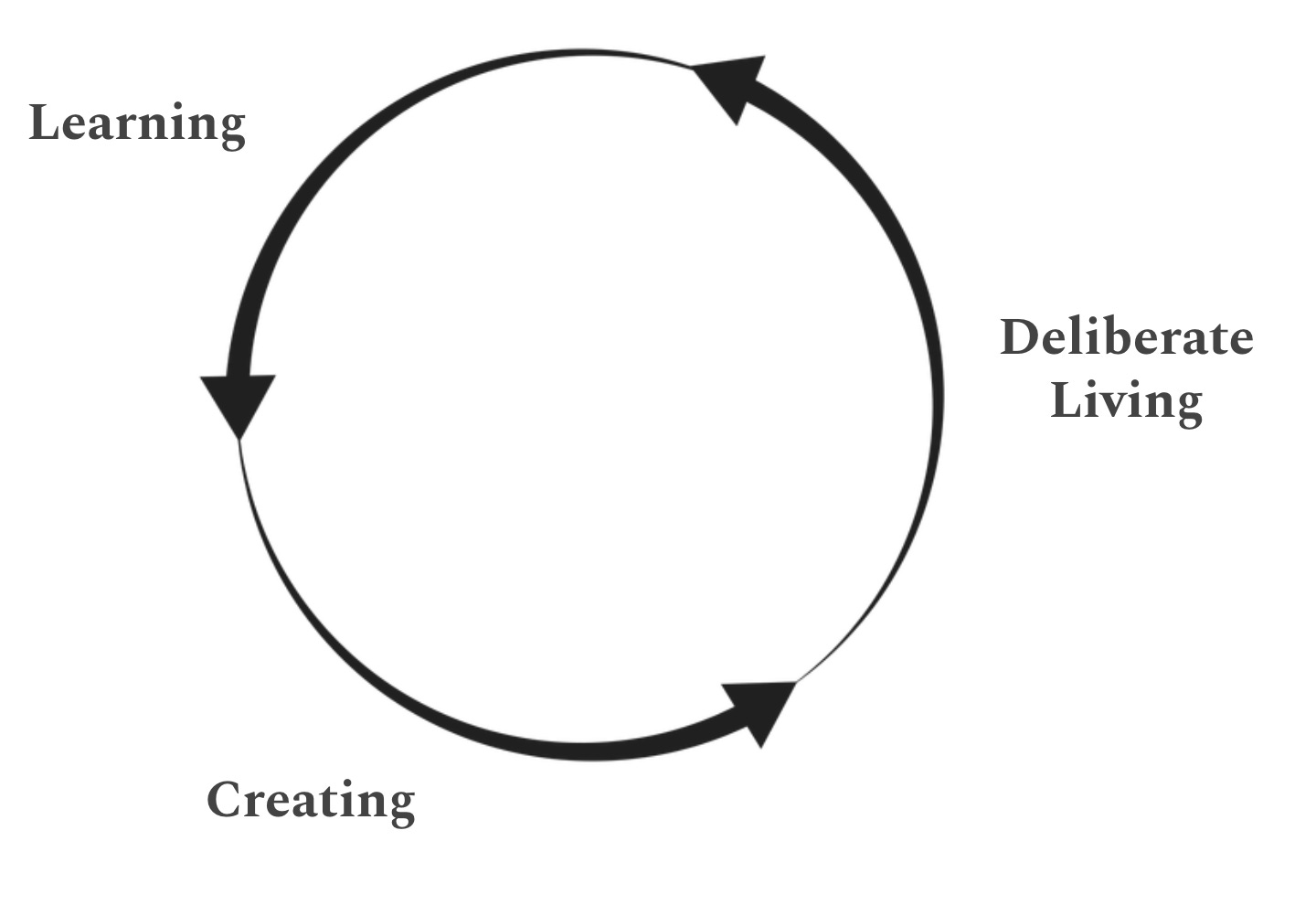
Each project feeds the others.
Learning sharpens creation. Creation forces reflection. Reflection demands better living. The cycle renews, deeper each time.
In essence, my pursuit is to become a kind of Artist–Entrepreneur–Philosopher. Not by title, but by pattern. These are not roles, but modes of being that sustain each other:
As an artist, I give form to what I’ve learned—through hands and essays.
As an entrepreneur, I apply insights to solve real problems—selling solutions to problems I believe worth solving.
As a philosopher, I distill experiences into actionable principles—real ways of living that feel honest, practical, and hard-earned.
Each path pulls something different out of me. But the core intention remains: take what I’ve learned, make it mine, and offer it back to the world.
And to make it mine, I follow one rule when I create:
If my work is just a polished echo of someone else’s, it’s not real creation.
To create, I have to risk being original. My fingerprints must be all over it.
That’s the standard. Whether I’m sketching, building, or reflecting, I want to know what I’ve made carries my voice, my thought, my effort. That it speaks on my behalf when I’m no longer around to explain it.
Because that’s what this whole thing is: A long, imperfect attempt to turn my inner life into something real.
To live in a way that makes life feel worth living.
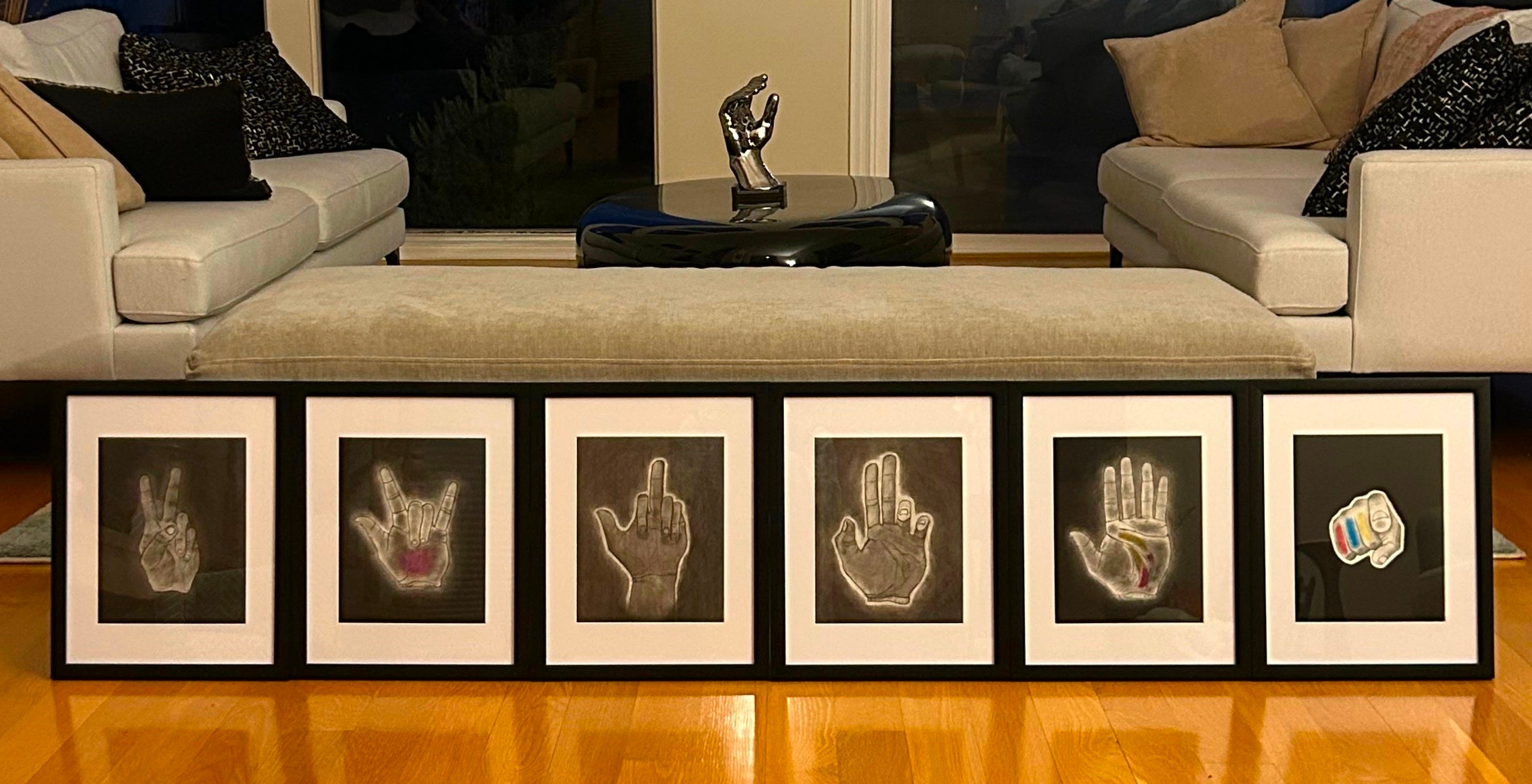
I’m no artist. I’ve never had formal training or much natural artistic talent. But that’s okay. I’ve found a form of expression that feels like mine: drawing hands as symbols.
I wrote about this in a previous post, but hands fascinate me. They’re uniquely human and deeply individual. Every hand is different. Every bend, every wrinkle, every contortion tells a story. They’re small sculptures of who we are—capable, fragile, expressive, and flawed.
When I draw hands, I’m not trying to impress anyone. I’m trying to reflect on where I am. What I’m feeling. What matters to me right now.
My art will never hang in a museum. No one’s going to buy it. That’s fine.
It’s not for public praise. It’s for the quiet dust and the hallway walls that are my life.
Each sketch simply says: Look. I was here. It’s an offering. A small gesture of existence. And when I look at them, I see myself—clearly and honestly.
That makes me smile.
Right now, I’m building Gabber—a software startup that helps anyone create AI personas who can talk, text, and feel human.

I started this with my co-founders Jack and Neil because I care about loneliness. About isolation. About the quiet pain people carry without knowing how to name it.
When people better understand themselves—their desires, their wounds, their needs—they move through the world more peacefully. They hurt others less. They connect more.
And I believe AI, when built intentionally, can facilitate that kind of self-discovery.
That’s why I quit my job to focus on Gabber. No salary. No spotlight. Just me—working quietly, day after day. Not for ego. Not for money. But because I believe in what this can do for others.
There’s a Venn diagram I carry in my mind. One circle is Me—my experiences, values, and abilities. The other is Others—the people around me, their needs, wisdom, and stories. Where they overlap, something essential happens: contribution.
In that shared space, value flows both ways.
Therein lies the meaning: to contribute creatively by building products that serve others—and to keep learning along the way. Gabber is a form my purpose takes right now: a way to create something meaningful, and grow in the process.
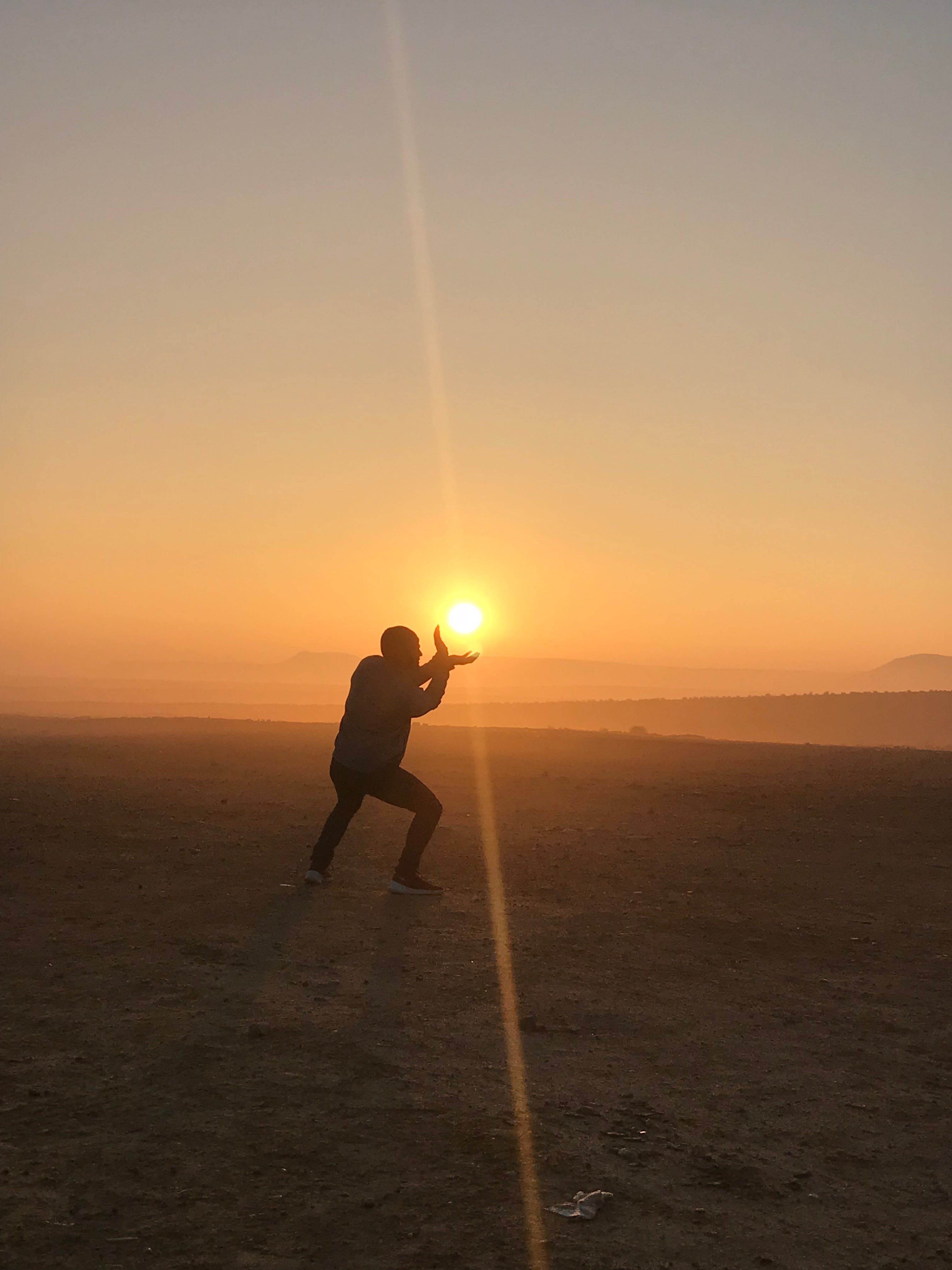
It’s a blessing and a curse, but I can’t stop thinking. Can’t stop analyzing. Can’t stop trying to make sense of it all.
The same obsessive drive that pushes me to read Socrates or write essays like this is the same engine that spins for months after a breakup—trying to understand why it happened, what it meant, what it revealed. Even when there’s nothing there to hold onto.
This part of my project is about chasing insight. Following my own taste in ideas.
I read widely—Nixon to Napoleon, Einstein to Franklin, Da Vinci to Socrates, Marcus Aurelius to Epictetus, Seneca to Hamilton. Different minds. Different centuries. Same yearning. The goal isn’t to blindly follow someone else’s philosophy. It’s to learn from others, then create and live my own.
One core tenet I’ve adopted came from the dialogues of Socrates: live virtuously.
But what does a virtuous life entail? Well, that’s up to me. Here’s how I define it:
Accept truth. Don’t lie to yourself. Don’t choose comfort over reality.
Be absolute. Don’t do in private what you wouldn’t defend in public.
Be honest. With yourself. With others. Always.
Be disciplined. In thought, word, and action. In body, mind, and soul.
Try your hardest. Always. No excuses.
Be kind. Contribute. Uplift.
Be humble. The king today is worm food tomorrow.
None of these are revolutionary. But they’re mine. I learned them through trial and pain. Through wins and heartbreak. Through living.
This is the philosophy I’ve stitched together—my code, my compass. You might not see it, but it’s the backbone of everything I build and believe.
It holds the shape of who I am.
I love this observation—because it’s true. Painfully, hilariously true.
According to Becker, we live with an unbearable contradiction: we are half god, half animal.
The god in us is our consciousness—our ability to reflect, to create, to imagine, to grasp the vastness of existence and still ask: what’s my place in it? And yet—we’re still animals. Trapped in decaying bodies. Driven by the same basic impulses as any beast: sex, food, safety, sleep.
No matter how high our thoughts soar, we still eat, piss, shit, fuck, and die.
Becker puts it bluntly:
“Man is literally split in two: he has an awareness of his own splendid uniqueness in that he sticks out of nature with a towering majesty, and yet he goes back into the ground a few feet in order to rot and disappear forever.”3
It’s humbling.
Yes—create meaning. Pursue it. Build your projects. Give your life flavor, purpose, and shape.
But don’t take it too seriously. Because in the end, no matter what you build, you still return to dirt.
Take me:
I’m not an artist—I just channel meaning through drawing hands.
I’m not an entrepreneur—I just build and sell things I believe can help people.
I’m not a philosopher—I just wrestle with what I learn and try to live it.
At the end of the day, I’m just a blob of cells doing my best.
I have an ass. I poop. I know it.
And I’m at peace with all of it.
Michel de Montaigne once said:
"If you walk on stilts, you're still walking on your feet. If you sit on the highest throne in the world, you're still sitting on your ass."4
I like that. It’s a good reminder that we’re all in the same boat—no matter our station, occupation, health, or wealth.
Life doesn’t come with built-in meaning.
Things don’t happen for a reason.
There is no grandiose plan.
So you make one.
You create your own meaning—your own principles, values, code of ethics.
That becomes your definition of a virtuous life.
Then you live it.
Do your best.
Fail and try again.
And when it’s over, you can take solace in this:
You did the most you could,
with what little you knew,
in the tiny sliver of time you were given.
Becker, Ernest. The Denial of Death. Free Press, 1973, p. 27.
Becker, Ernest. The Denial of Death. Free Press, 1973, p. 47.
Becker, Ernest. The Denial of Death. Free Press, 1973, p. 26.
Montaigne, Michel de. The Complete Essays of Montaigne. Translated by Donald M. Frame, Stanford University Press, 1958.
No posts
Comments
Nothing yet. Say the first thing.
Sign in to join the conversation.