

Teddy Roosevelt said, “The credit belongs to the man who is actually in the arena.” That man was the epitome of being bold, taking action, and pursuing life fully. He believed in “the strenuous life,” that courage is built through repeated bold acts. I believe that, too.
I’ve been undergoing what I call “action therapy.” The formula is simple: every day, when I feel fear, I act against it and then assess the outcome.

I call these “bold reps” because, like lifting weights builds muscle, repetition reshapes how you relate to fear. Fifty-ish days in, it’s already changed my life. I feel more alive, more confident, and less anxious than I have in years.
I suspect many people feel the same. Something’s off, but it’s hard to name. That “thing” is often just fear, hiding in plain sight. Rewiring your relationship with it changes everything. Life is simply better when you’re in the driver’s seat.
That’s why I’m sharing the bold rep process. It’s a framework anyone can use. I’ll walk through exactly how it works, and I’ve made a Google Sheet tracker you can copy and use when you’re ready to step into the arena.
Let’s begin.
Fear is a shapeshifter. It rarely shows up plainly. Instead, it hides behind masks we learn to justify or live with. Some people deal with it by going on offense, becoming bullies or projecting toughness. Others chase trophies, stacking external achievements to prove worth.
For me, fear disguises itself as “thoughtfulness” and “conscientiousness”: putting others first by default, avoiding awkwardness and things that might offend others, cause tension, or attract judgment. I stuck to what I was good at, unknowingly chasing safety and limiting situations where rejection or discomfort seemed likely.
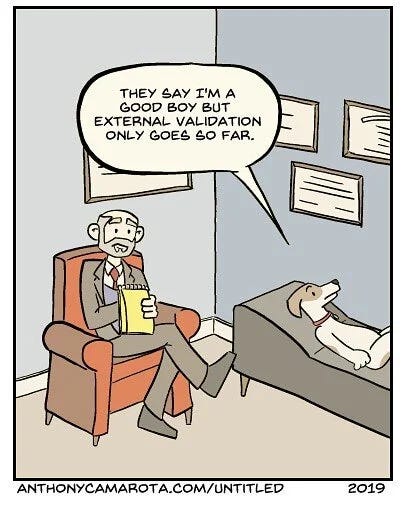
But here’s the truth: living in fear is awful. What looks like caution or kindness can, taken too far, rewrite your entire operating system for the worse. You begin to see yourself as second-class, worth only what others reflect back. You shrink. You avoid. You rely on approval instead of instinct. Fear becomes the driver, and life loses its sharpness. My gut knew something was wrong long before my head realized it.
Everything became suddenly, painfully clear one afternoon at the gym. It wasn’t a grand revelation so much as an internal crack, a moment when all the hesitation and small compromises that had quietly shaped my life suddenly felt intolerable. Something broke open inside me. Behind the curtain of my life, I finally saw the truth: fear. Fear that an external thing would expose that which I dreaded most: confirmation that I wasn’t enough.
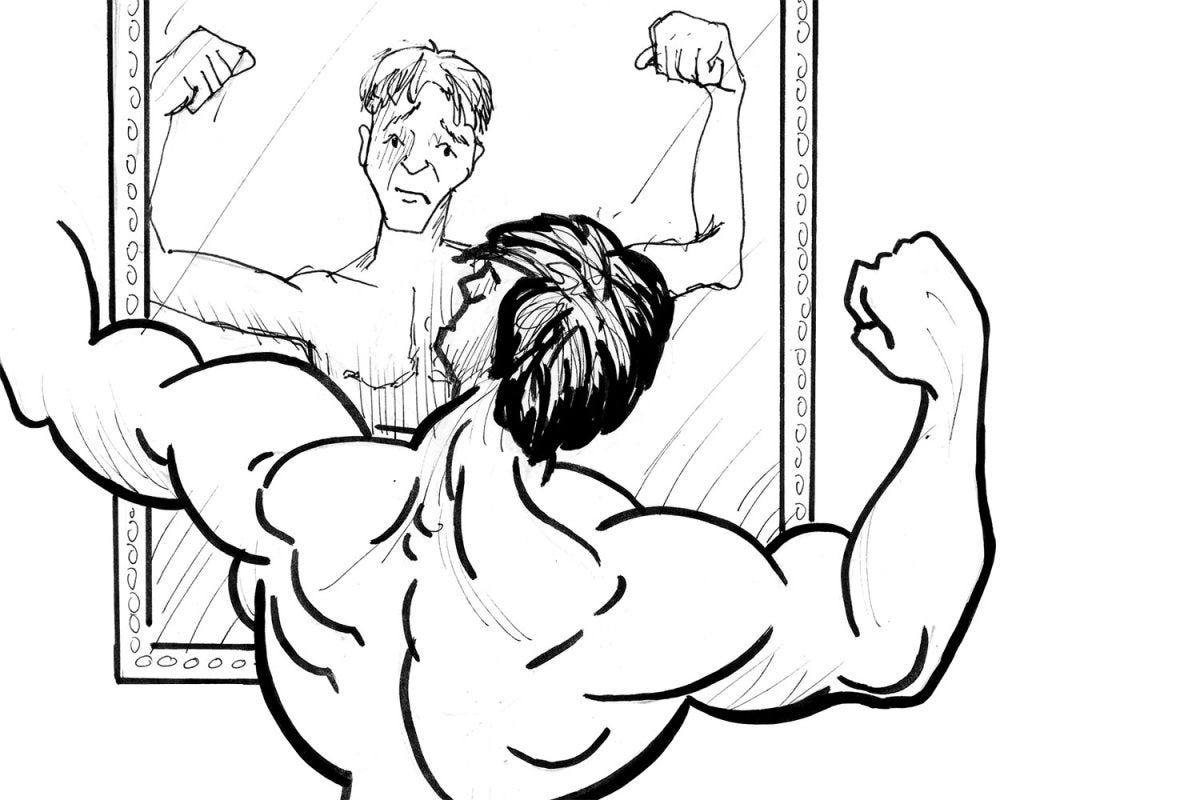
I’d spent years suppressing my instincts: not talking to strangers who seemed interesting, not approaching women I found attractive, not attending networking events I should have — all because I was afraid, The problem wasn’t fear itself, it was that I considered it real and behaved accordingly.
I justified it all by calling myself “conscientious” and “respectful.” But in that moment at the gym, I finally saw it for what it was: utter bullshit. I couldn’t live this way anymore.
I needed a fundamentally different approach. Instead of letting fear run me, I’d treat it like an animal in a lab: observe it, test it, and see what happened after I approached it.
I started with a simple rule for what counts as a bold rep:
If I want to do something, and it’s not harmful to myself or others, I do it.
But a rule wasn’t enough. To truly rewire fear out of my operating system, I needed a repeatable way to track, measure, and learn from each rep. So I built a framework. Every bold rep I logged in a Google Sheet, noting:
Date & Bold Action: What I did, at what moment.
Fear Category: Awkwardness, Confrontation, Judgment, or Rejection.
Fear Level (1–5): From barely noticeable (1) to heart-pounding (5).
Life Category: The area of life it touched (Work, Dating, Family, etc.).
Outcome and Post-Action Feeling: How the situation went and how I felt after.
Lesson & Lesson Category: What I learned (Action > Hesitation, Fear vs. Reality, etc.).
Some may find it strange to be so data-driven about life. I don’t. Fear isn’t surface-level, but a bug buried deep in your operating system. To become who I’m capable of being, I have to cut it out at the root.
Since July 30, I’ve logged 74 bold reps, or about 1.5 a day. Dissecting the data revealed patterns about what fear is to me, where it hides, and its limited power when confronted.
The numbers surprised me. More than half of my reps were about awkwardness, i.e. fear of being weird, out of place, or uncomfortable. But despite the frequency, those were the least intense fears (avg. 1.7). Awkwardness shows up constantly, but it’s a small hurdle that’s harmless once faced.
The most intense fear? Rejection. It was less common, but it carried the most weight (avg. 2.8). That makes sense. Getting denied can feel like an indictment of one’s worth. But even here, the sting faded fast and I was surprised the average fear around rejection wasn’t higher, closer to 3.5 or 4.
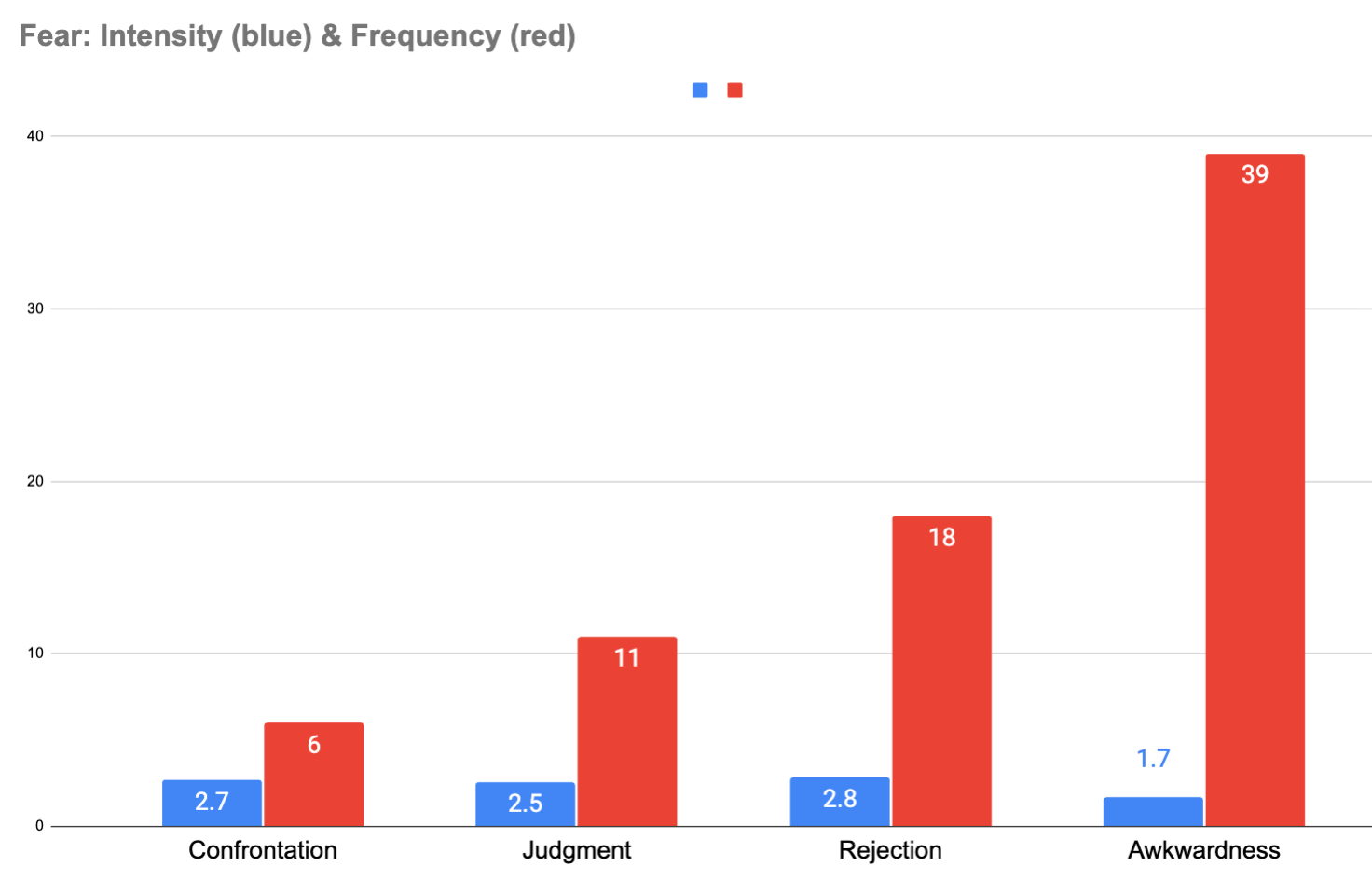
Lesson: fear’s volume and intensity don’t line up. The things I fear most often (awkwardness) matter least. The things I fear most deeply (rejection) rarely happen, and even when they do, they aren’t a big deal at all.
I also wanted to know: did it get easier with reps? Not exactly. The data shows spikes, capturing moments where the fear score jumped up: approaching a stranger cold, attending a wedding alone, going on a first date. The baseline average is 2.2, but there are peaks and valleys.
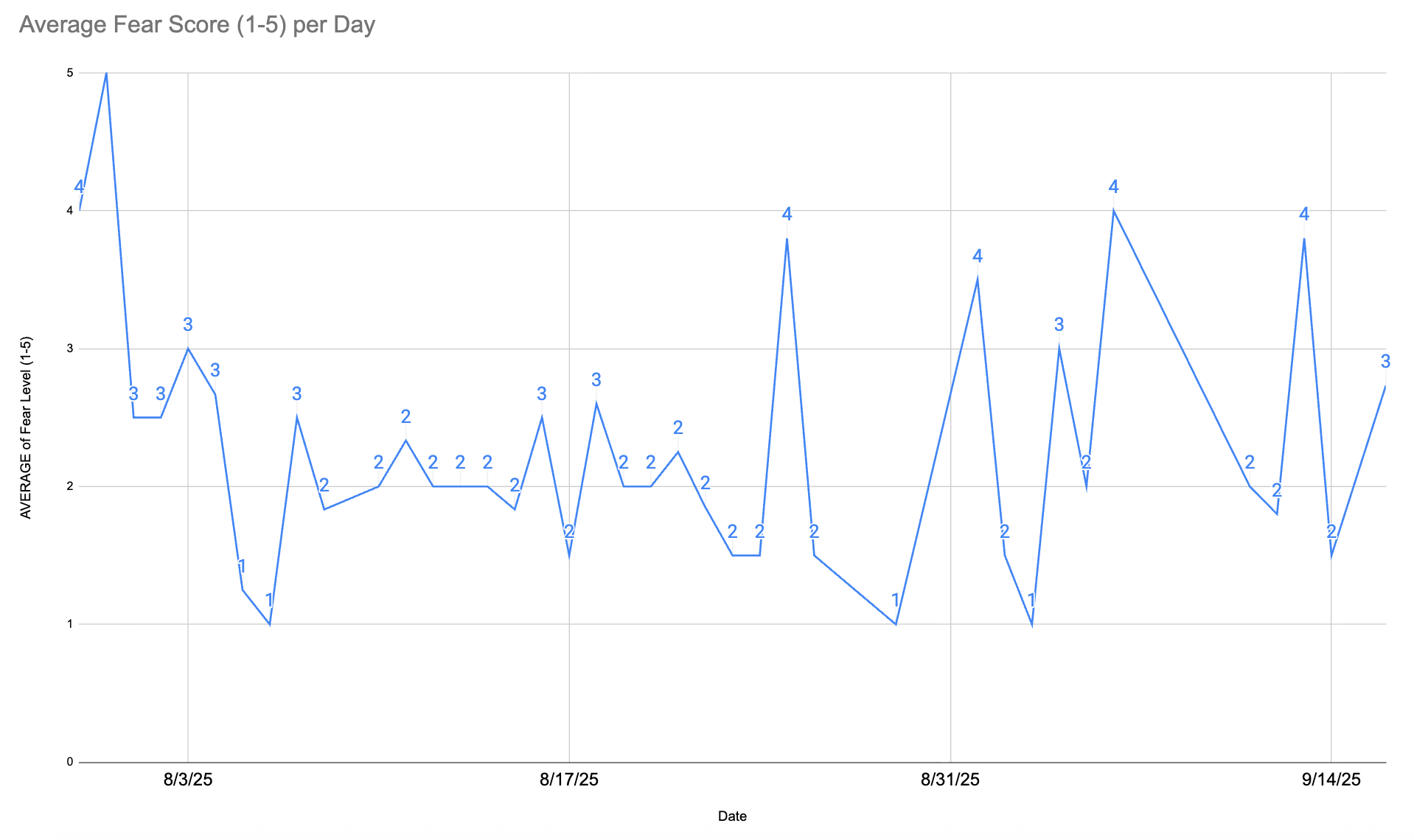
Lesson: Boldness doesn’t erase fear outright, but it does train you to move anyway. And while the data doesn’t quite show it yet, I can already feel a pattern: reps that once spiked my fear (like approaching and talking to strangers) now feel more normal. Higher volume of high-intensity reps tend to shrink what once felt huge into something ordinary.
Breaking it down by life category revealed patterns.
Work had the most reps (20): primarily networking and pitching. The fear here was steady but manageable.
Gym was right behind (19). This has nothing to do with exercise. I’ve gone to the gym daily for many years, headphones in, focused only on my workout. But I’ve expanded the space into a social arena. A place to make eye contact, have conversations, connect with trainers, staff, and regulars. What used to be a private routine became a practice ground for being open and friendly. I faced a lot of early fears in the gym.
Dating/Romantic (14) had the third most reps but the highest average fear (3). Every interaction felt high-stakes because my old operating system equated attention and approval with validation of my worth.
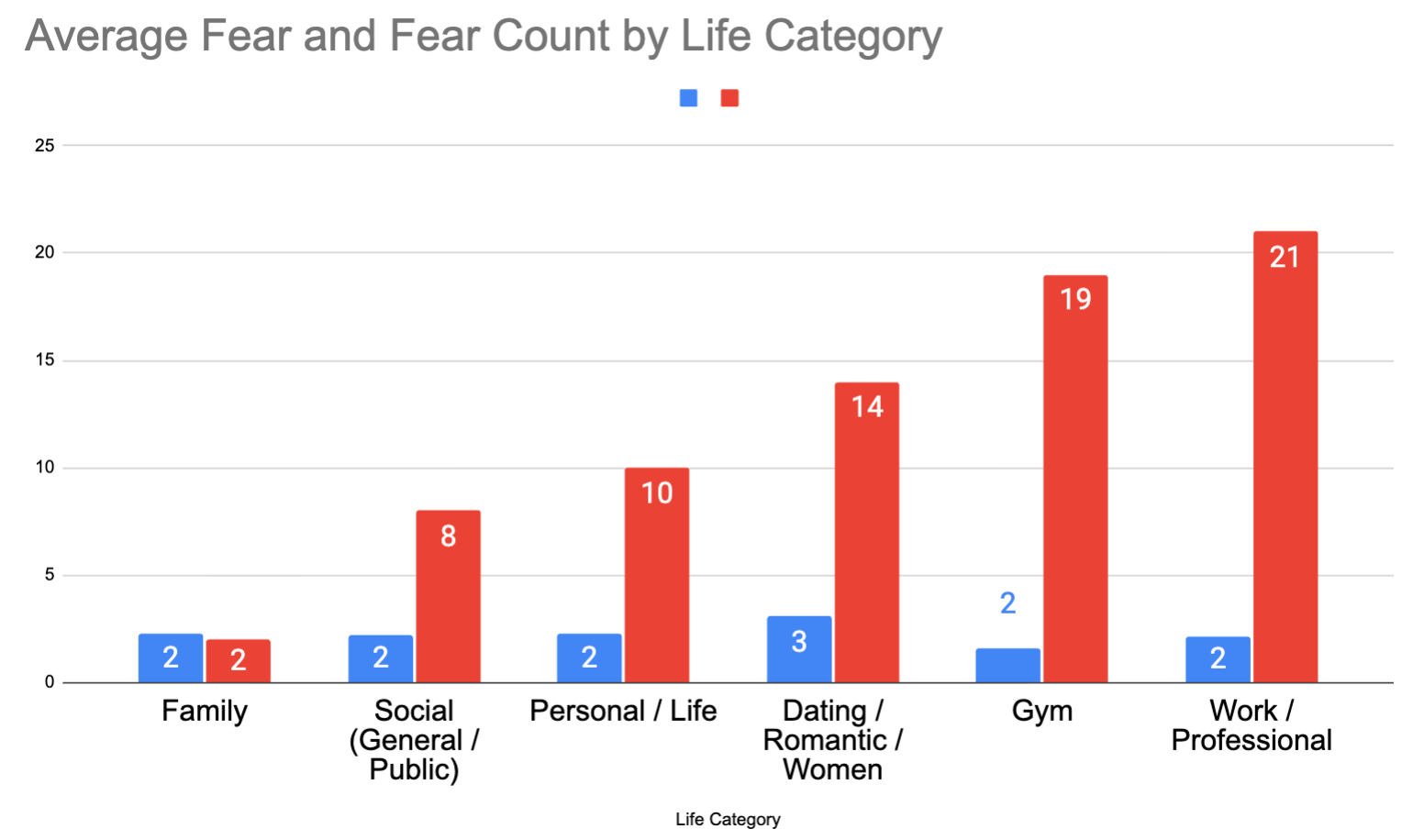
Lesson: Fear isn’t one thing. It’s context-driven. At work, it ties to pride and performance. In the gym, to visibility and exposure. In dating, to validation and worth. Each life category carries cultural weight, which makes the fear feel real. But when you see it for what it is (i.e. context-driven, not fatal or deterministic), you take back the power to face it head on.
This was a big one. Did the things I feared actually happen? Almost never. And when they did, the consequences barely mattered.
85% of reps ended positive (light or strong).
25% of those positive outcomes opened new doors: a new apartment, new VC connections, new friends.
Only 3% had a “Negative” outcome, and those were comically inconsequential: a ghosted text, a cold look after a compliment. Boo hoo 🙄
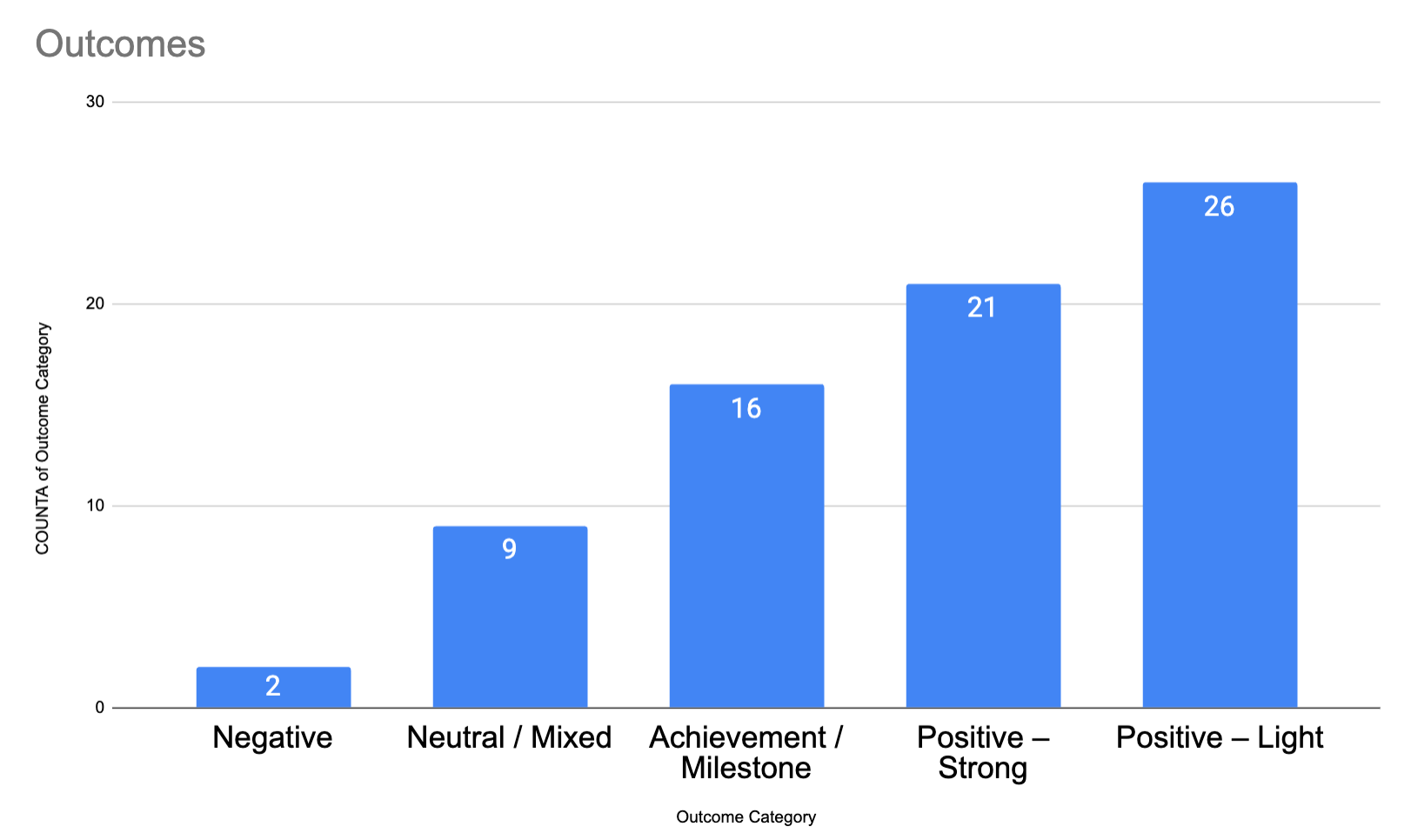
Lesson: The power of fear lives in anticipation, not reality.
After every rep, I recorded both the outcome and the lesson. Reflection is an essential component of rewiring the brain. Each rep became a test: did the fear actually come true? Was it as bad as I imagined? Again and again, assumptions collapsed under real evidence. Over time, patterns emerged, and certain lessons stood out as bold reps accumulated:
Presence & Process: The win is the bold action itself, not the outcome.
Connection & Growth: People are more open than you think. It starts with being open yourself.
Action beats Hesitation: The 5-second rule is key. Move before your brain kills courage.
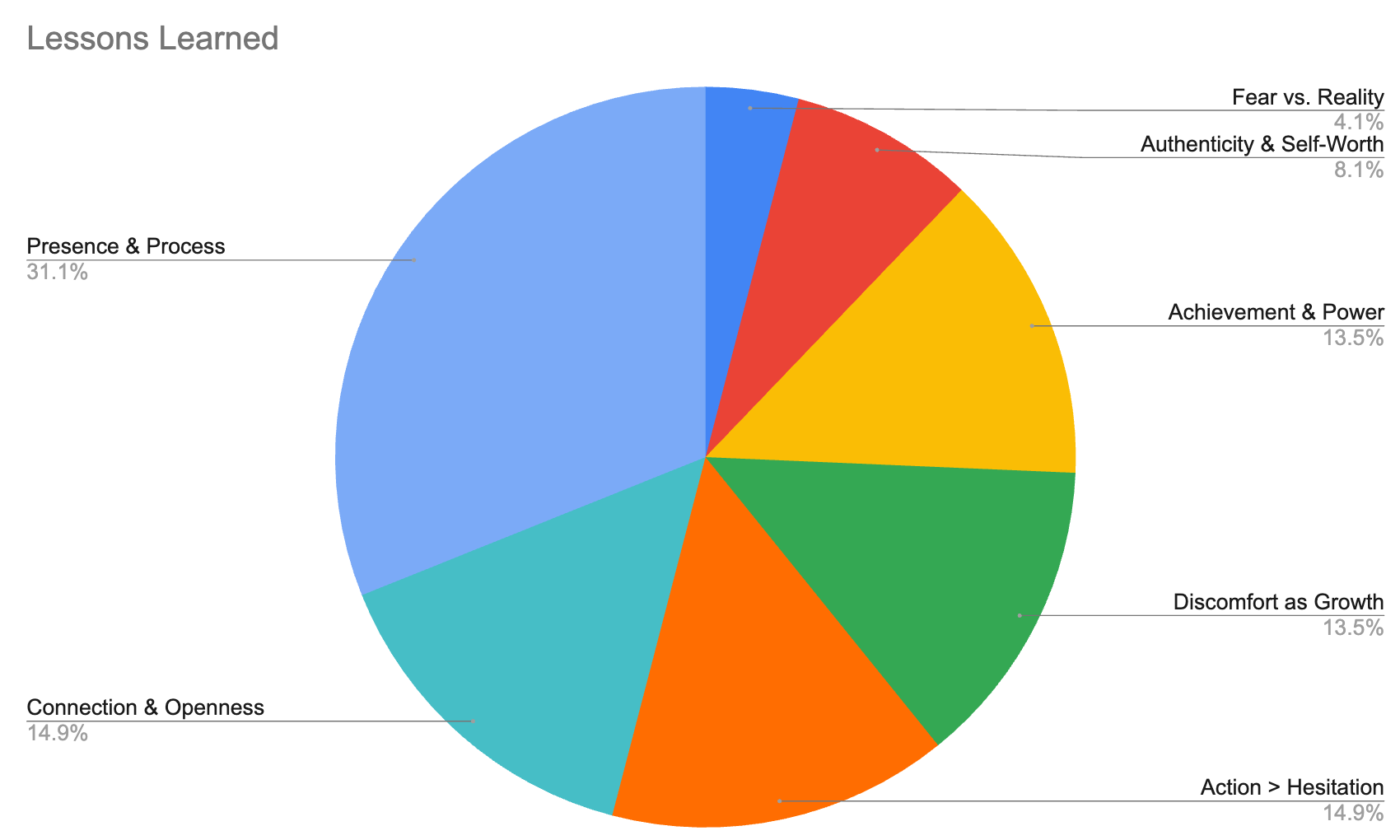
Lesson: boldness is not about outcomes. It’s about stacking proof, rep after rep, that you can act in spite of fear and come out stronger every time. Chin up, chest out, carry on.
This process will remind you that change is hard. It’s possible only if you meet all three criteria below:
Awareness: You notice something is off. You see fear running the show, or realize a part of your life feels smaller than it should.
Desire: You hit the “enough” point. It’s beyond just noticing, it’s hating it enough to want change.
Sustained Effort: This is the work. The daily bold reps. Not just wanting change, but putting in consistent action time and again to rewire your operating system.
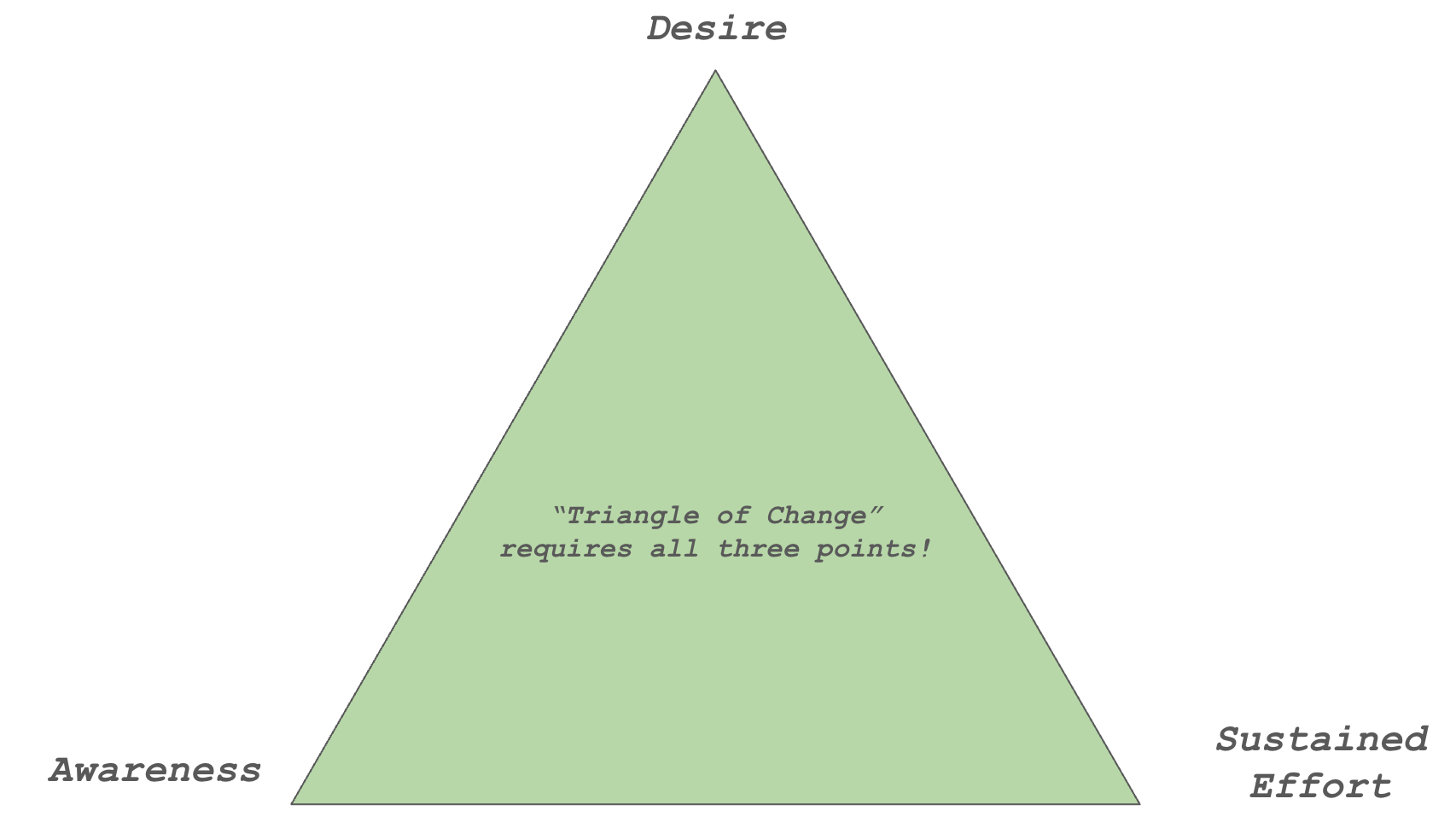
There are no shortcuts. Most people do not change because they stop at awareness or desire. Without all three (awareness AND desire AND sustained effort) nothing sticks.
Marcus Aurelius said, “The quality of your life is determined by the quality of your thoughts.” He was right, but thoughts don’t appear in a vacuum. They’re shaped by the beliefs and behaviors you’ve carried since childhood.
I’m sharing this framework because it works. Bold reps aren’t theory—they cut fear down, build confidence, and raise the quality of your life one action at a time. If you want to try it, here’s the exact Google Sheet tracker to get started.
Prioritize yourself. Treat growth with the same seriousness you give to work, fitness, or anything else that matters. Life is short, and who you become is more in your hands than you realize.
Don’t wait to think your way into change. That doesn’t work. Be bold. Do the thing. The reps will take care of the rest.
No posts
Comments
Nothing yet. Say the first thing.
Sign in to join the conversation.