
A Message from the Library
This month, we are continuing to write plant descriptions and to add pictures to the online catalogue. Our volunteers continue to be busy representing the Seed Library at events across the city. If you are interested in representing us at events and raising awareness on the benefits of native plants across Ottawa-Gatineau, please contact us at volunteer@wildflowerseedlibrary.ca
We are preparing for our first plant giveaway of the year on June 13. While we love the big plant giveaways, we also help facilitate small plant exchanges. In this document, you can post the plants that you are donating or would like to receive. This is a free process that the library helps facilitate. Please note that only straight, native species are accepted.
Upcoming Events
Plant Exchange/Giveaway
When: Saturday, June 13, 2026 1:00-3:00pm
Where: Springhurst Park
About: Join us at Springhurst Park for one of our annual plant exchange/giveaway events! Come and pick up some free native plants, no donations are required. If you have native plants to give away, please check out our webpage for more information and our other plant giveaways this summer.
Seasons in the Garden
Full Moon Date: June 29, 2026
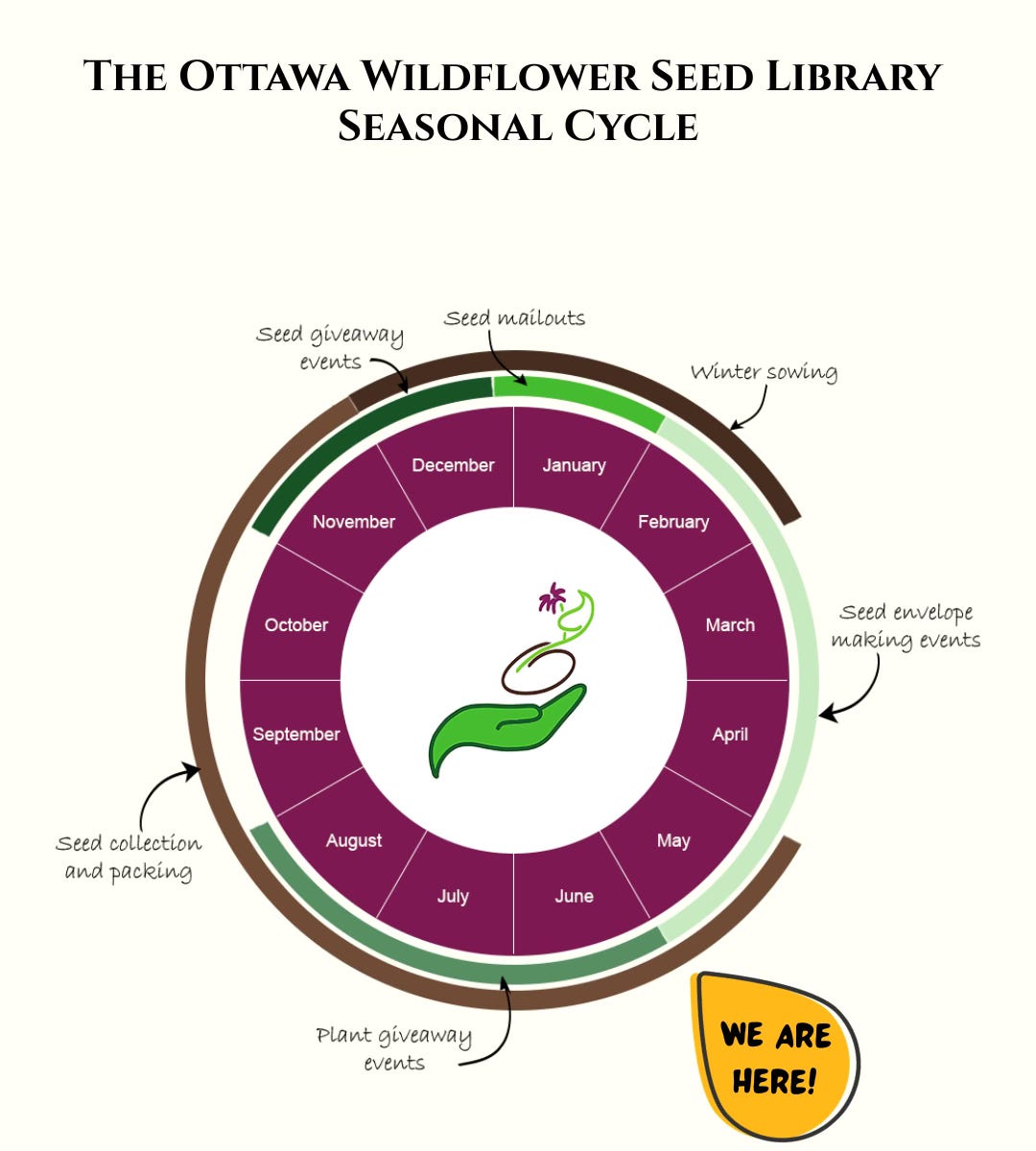
What to Harvest This Month
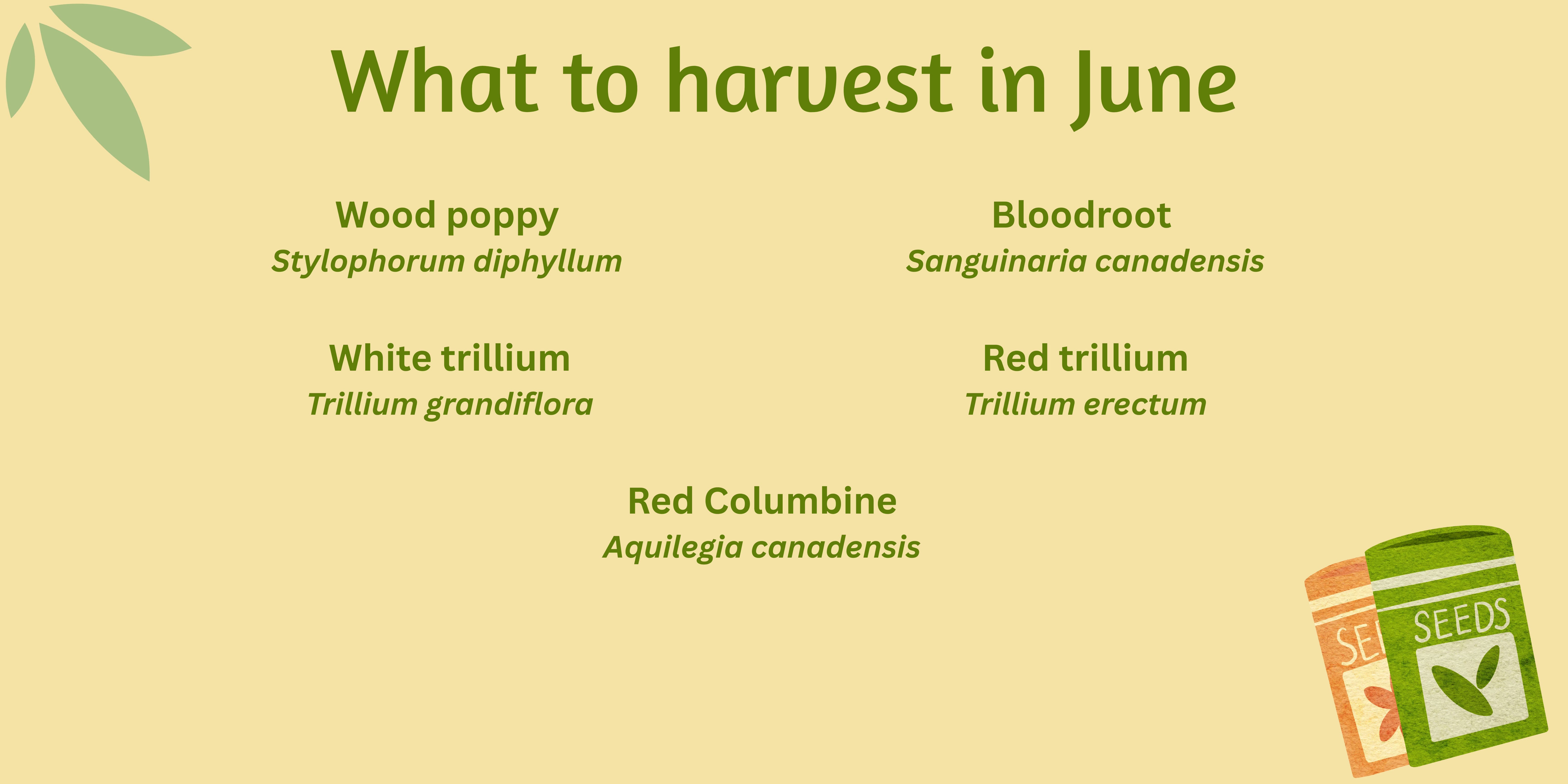
Contact us at info@wildflowerseedlibrary.ca to drop your seeds off at one of our locations in Alta Vista, Barrhaven, Kanata, Nepean, and Orléans.
Native Plant of the Month
Ivory Sedge (Carex eburnea)
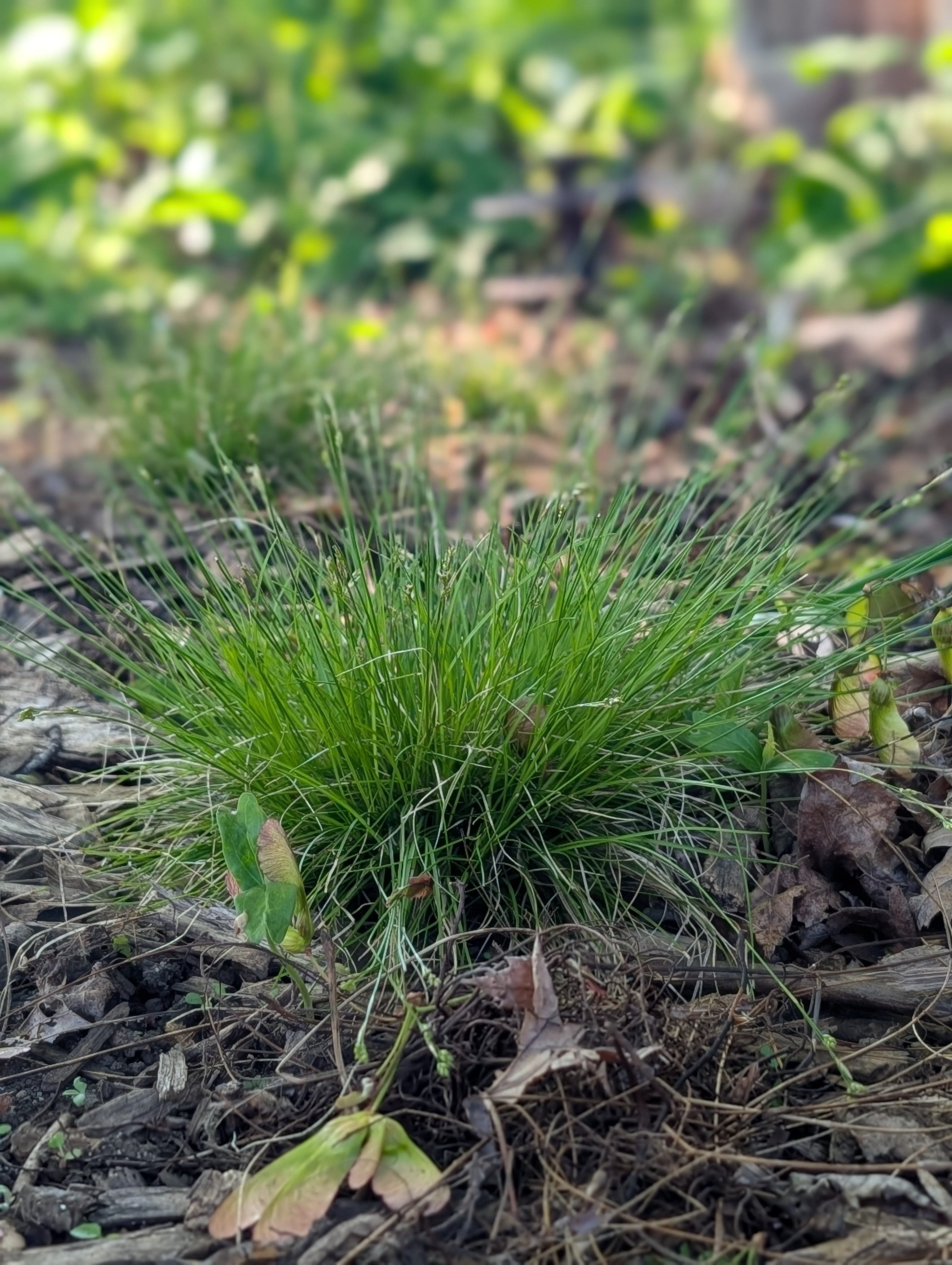
Ivory Sedge, also known as Bristle-leaved Sedge, is a short, clumping sedge with a green-gold hue. The foliage of the plant is delicate, hair-like and grows to a short stature. This sedge is a versatile addition to the garden, doing well in both sunny and shady sites. While it prefers a location with consistent moisture, it can handle sandy, rocky, shallow soil and is drought tolerant once established – making it an excellent addition to any rock garden!
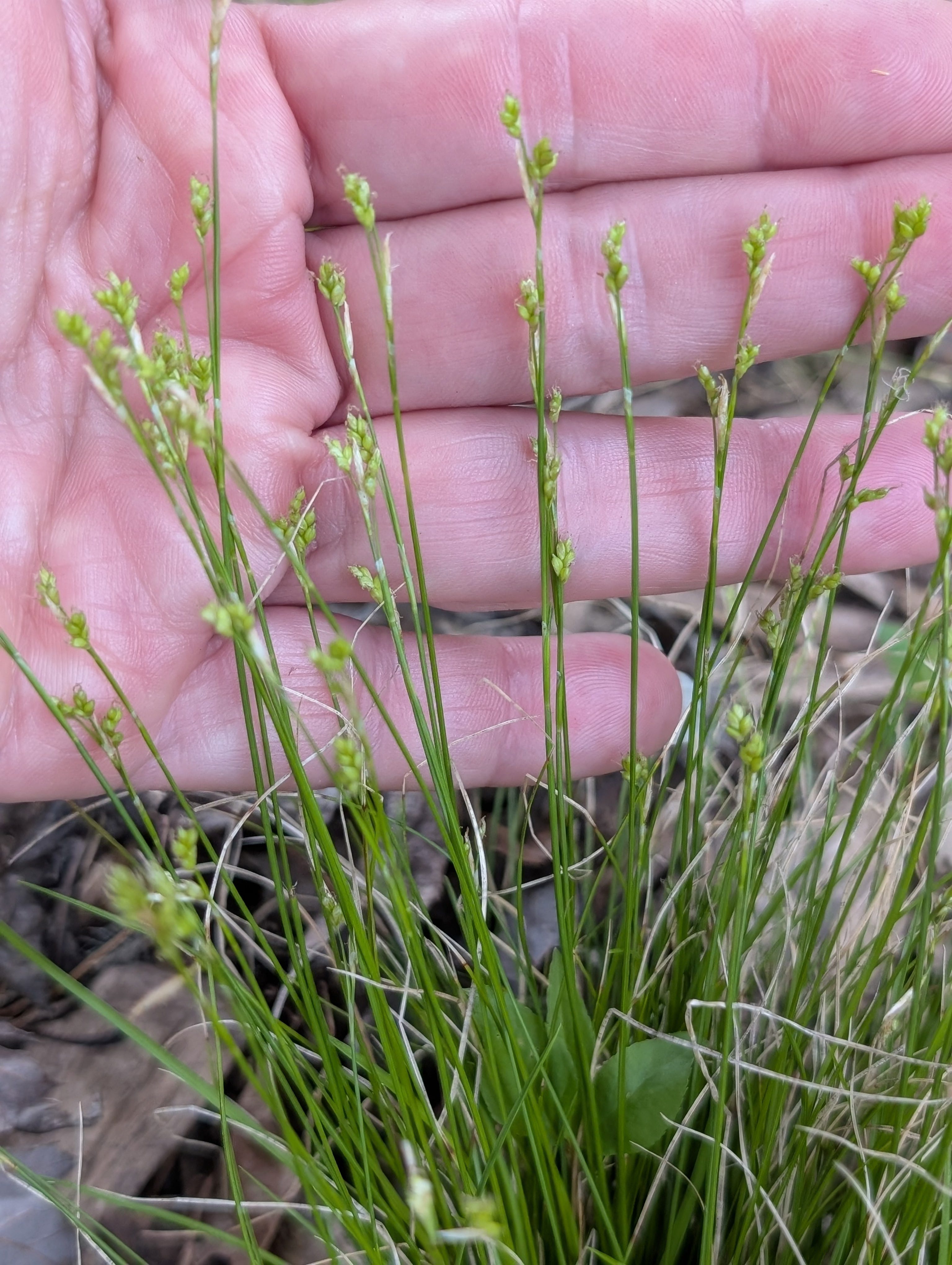
Like most native sedges, Ivory Sedge has a high wildlife value. Not only does it act as a host plant for many moth species, but the seeds it produces are a food source for birds. Its versatility also allows it to grow in a variety of areas and provide erosion control.
Garden Tidbits: What are sedges?
If you have been in the native gardening community for a little while, you may have heard of sedges and that they’re beneficial to the ecosystem – but what are they?
Sedges (genus Carex spp.) are one of the largest species of plants in the world. They have over 2000 species world-wide, and in Ontario there are roughly 248 native species of sedges. These plants look similar to grass, but are actually in a completely different family. Sedges belong to the Cyperaceae family, while grasses belong to the Poaceae family. But how does one tell the difference between a sedge and a grass?
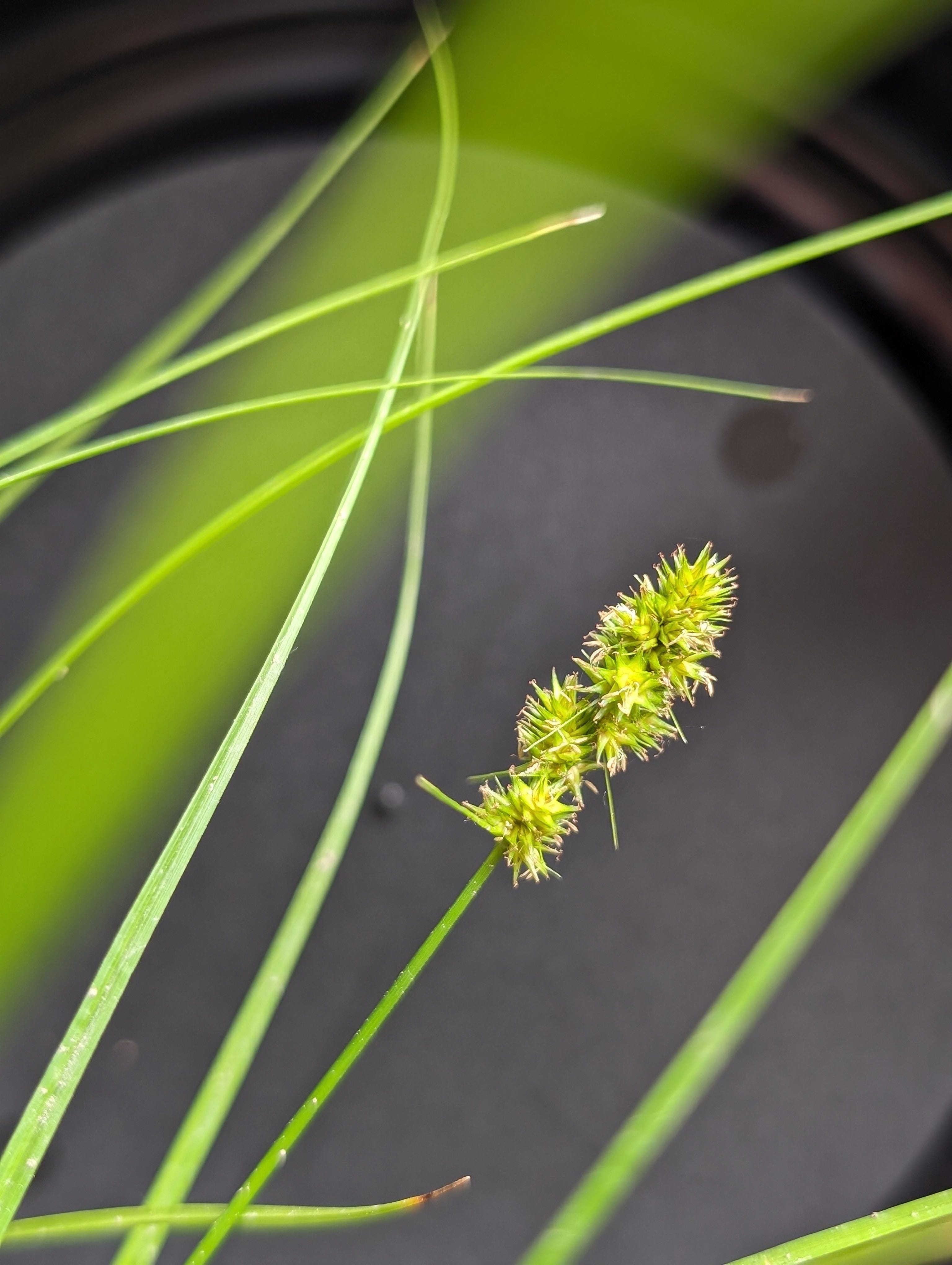
One of the best ways to differentiate a sedge from a grass is to look at the stem. In general, grass stems are hollow and are usually round or flat. The stems of a sedge are generally solid and triangular. A helpful mnemonic to remember this is “sedges have edges”.
As noted above, sedges are often discussed in the native plant community because they are highly beneficial to our ecosystem. They support biodiversity by acting as host plants for a variety of moths and butterflies – providing a source of food for the larval form of these insects. The seeds they produce are also an important food source for birds.
Additionally, sedges can help stabilize soil and aid in erosion control. Their fibrous root system can hold soil in place, which is a useful trait for hilly areas. Some sedges, such as Fox Sedge (Carex vulpinoidea), are particularly well-suited for wetlands. They not only help stabilize water banks, but also filter water and provide food for waterfowl.
Volunteer Spotlight & Community Stories
This month’s volunteer spotlight highlights the work of Sundaura Alford-Purvis:

Sundaura has been volunteering with OWSL since it first launched back in 2020, being one of the first donors of seeds to the library! She just happened to have harvested more seeds than needed that year and was looking for a place to donate. Since then she has been gathering and passing on seeds every year.
Sundaura is a life-long gardener and has worked in the field of horticulture for over two decades. Seeing the industry up close for that length of time left her frustrated with how unsustainable, and outright damaging, their “best” and “standard” practices can be to the ecosystem. From heavy reliance on plastics, fossil fuels, pesticides, extraction and non-native plants these practices were not creating a net positive for ecosystem health. In response to this frustration, she began working with, and learning from, native plants and has built up full-time work for herself, and part-time work for others, by caring for young native plants until they are ready to be planted outdoors. She has grown her business from the ground up, problem-solving each step, and now sends out thousands of plants every year, wrapped in compostable material, in order to help our ecosystem.
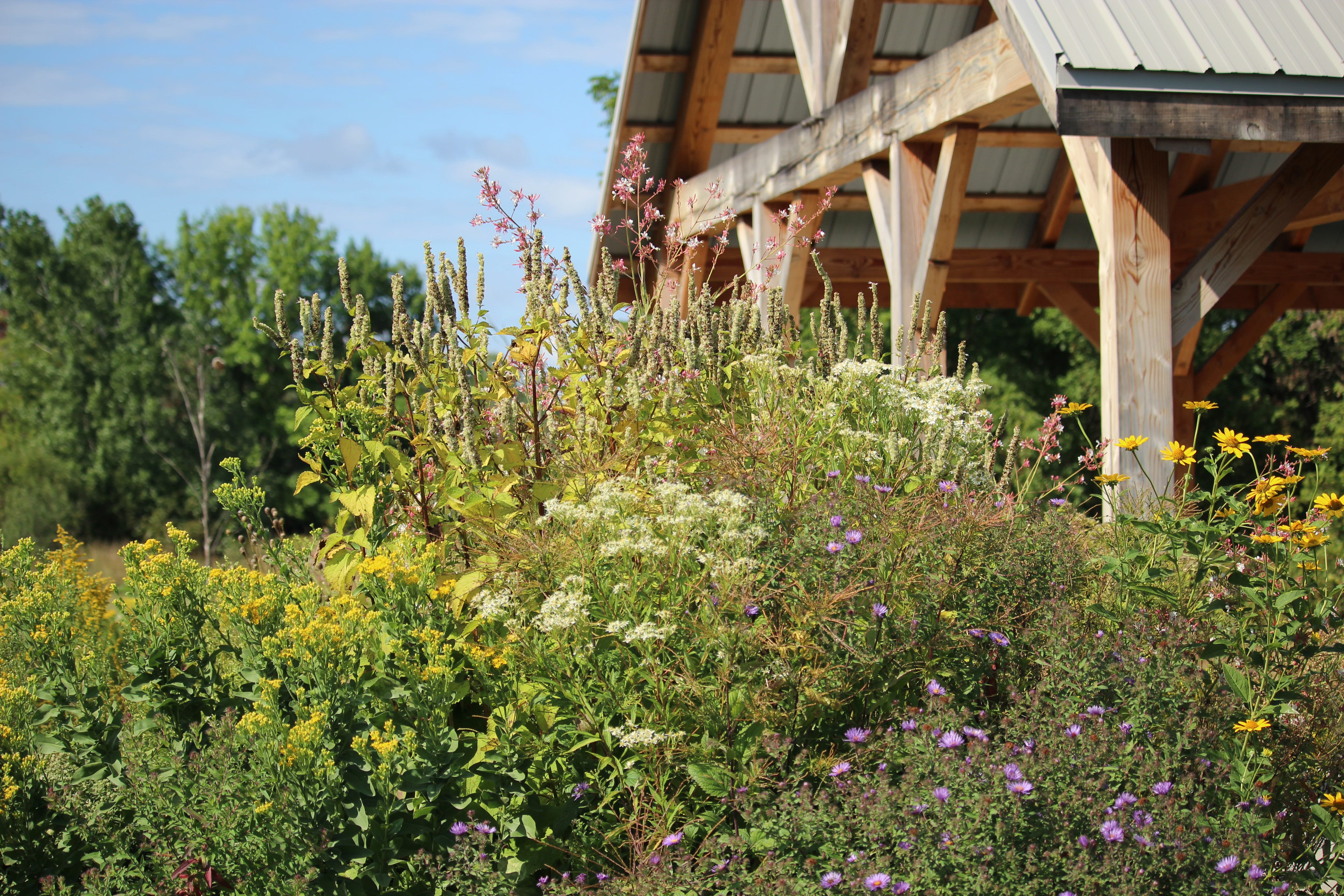
Through working with the library, she is happy to see so many people help native species return to the land that they have been removed and excluded from for decades, or even centuries. When asked what her favourite native plant was, Sundaura said, “The one that just germinated, or just sprouted for the season, or just bloomed, or just fed a partner species, or just taught me something new. They are one delight after another!”
Comments
Nothing yet. Say the first thing.
Sign in to join the conversation.