
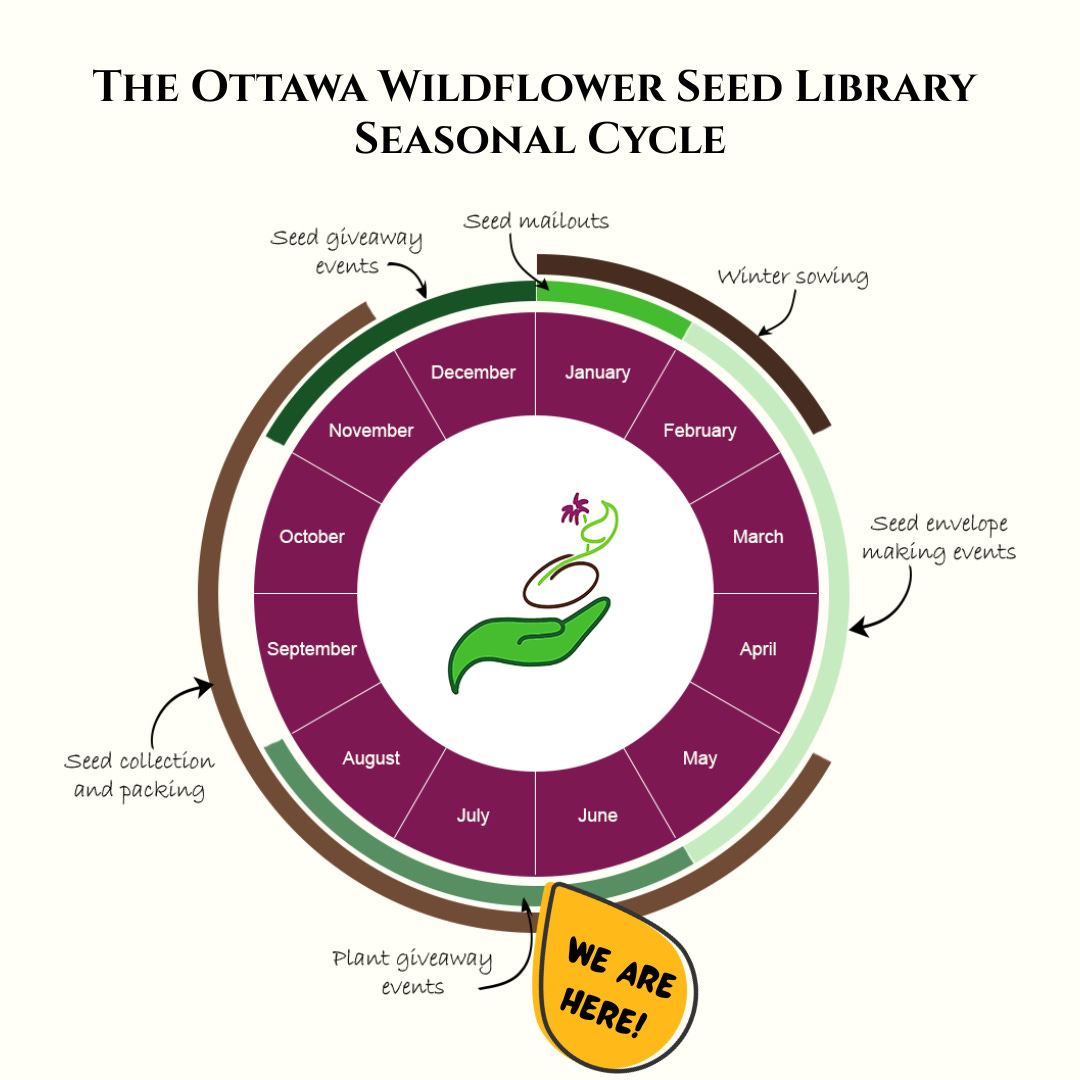
Welcome to the second edition of The Bloom and Buzz, the monthly newsletter of the Ottawa Wildflower Seed Library! With the summer months upon us, we’re excited to be kicking off our plant giveaway events! We hope to see many of you at our first event, happening this Saturday, June 28, at Springhurst Park. And please help us spread the word: tell a friend, bring a neighbour…every additional native plant in a garden is a benefit to our ecosystem!
While our plant giveaway events get underway, we’re also moving forward with some other exciting projects. One of these is a project called GRASP - Gathering Rare and Special Plants, where we are collecting and growing seeds from plants that are from this region and, with the disappearance of their ecosystem, are being threatened with extinction or are difficult to find in nurseries. If you have a large property and are interested in participating, especially properties with sandy, boggy, fen or other unique micro-zones, please email us at wildflowerseedlibrary@gmail.com for more information.
OWSL Plant Exchange and Giveaway
When: Saturday, June 28, 2025 from 1:00-3:00pm EST
Where: Springhurst Park (Corner of Brunswick St. & Springhurst Ave.)
About: The OWSL is organizing a FREE native plant exchange. For more information please visit our website https://wildflowerseedlibrary.ca/events-plant-exchanges-giveaways/
OWSL Plant Exchange and Giveaway
When: Saturday, July 19, 2025 from 1:00-3:00pm EST
Where: Springhurst Park (Corner of Brunswick St. & Springhurst Ave.)
About: The OWSL is organizing a FREE native plant exchange. For more information please visit our website https://wildflowerseedlibrary.ca/events-plant-exchanges-giveaways/
Full Moon Date: July 10, 2025
With July comes the hotter weather as we enter what is known as the “dog days of summer”. In the Northern Hemisphere, the dog days of summer are officially from July 3 to August 11 and is considered to be the hottest period of the year. But where does this phrase come from and what does it have to do with dogs?
The phrase comes from the ancient Greeks and Romans, who noted that this particularly hot time of year coincided with a specific star rising and falling alongside the sun. The star in question is Sirius, the brightest star in the night sky. It was believed that Sirius could influence the weather and could cause periods of extreme heat. Another name for the star is the “Dog Star”, as it appears in the constellation Canis Major, the greater dog constellation. As such, the phrase “the dog days of summer” came about to mark this seasonal period of hot weather.
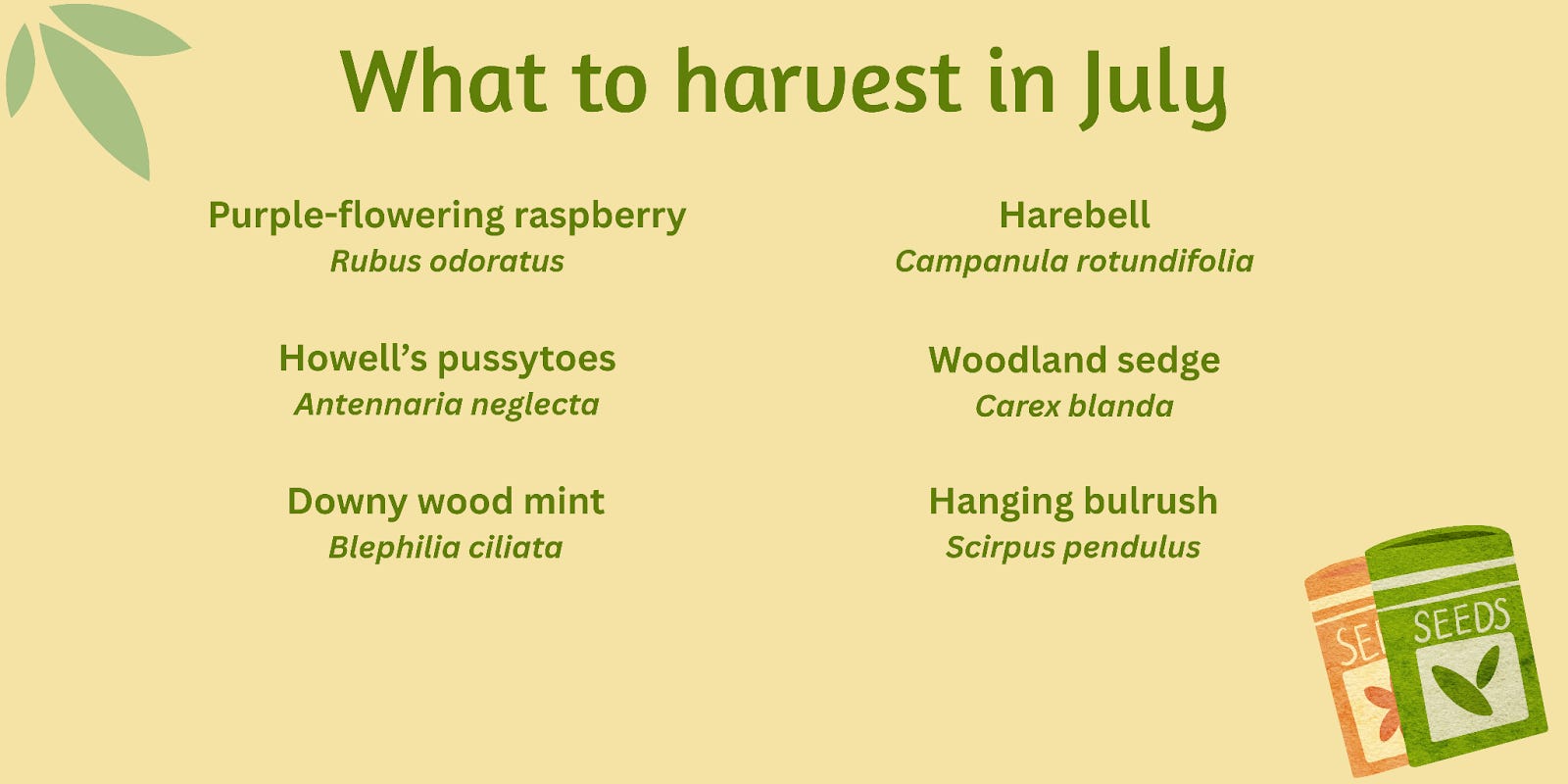
Seed saving tip: It is best to harvest seeds on a dry day to help prevent moisture damage.
Contact us at wildflowerseedlibrary@gmail.com to drop your seeds off at one of our locations in Alta Vista, Barrhaven, Nepean, and Orléans.
Hairy Beardtongue (penstemon hirsutus)
Hairy Beardtongue, also known as Dwarf Hairy Penstemon, Northeastern Beardtongue and Pride of the Mountain, is native to Eastern North America.
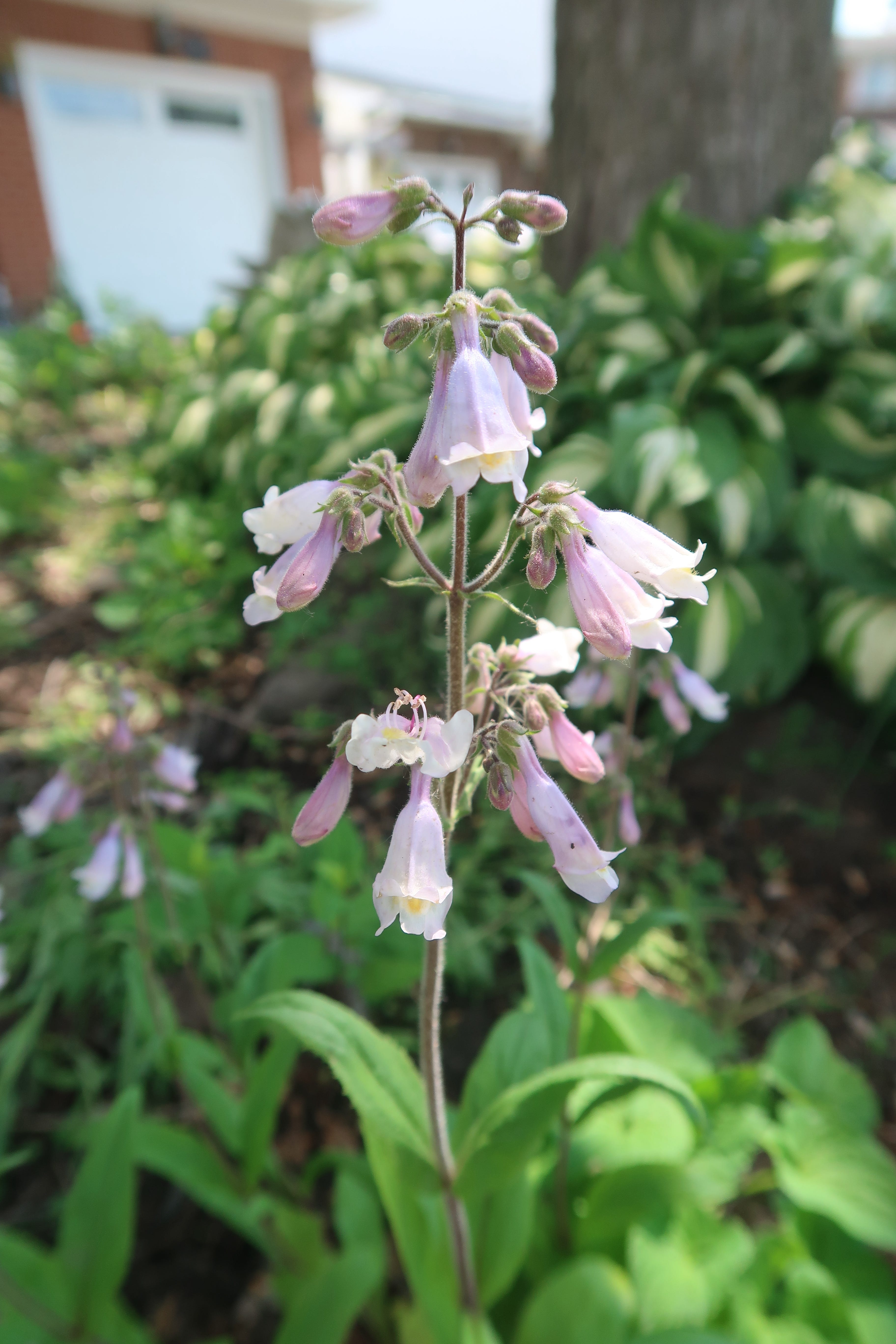
Often blooming between May and June, hairy beardtongue gets its unusual name from both its stem and the inside of its flower. Inside each trumpet-shaped flower are small, fragile hairs on the flower’s stamen, which gives it a hairy or beard-like appearance. There are several species of penstemon in North America, but what distinguishes hairy beardtongue from its relatives is that its stems are also covered in tiny hairs. The flowers range from soft pink to violet and attracts hummingbirds, butterflies, moths and native bees.
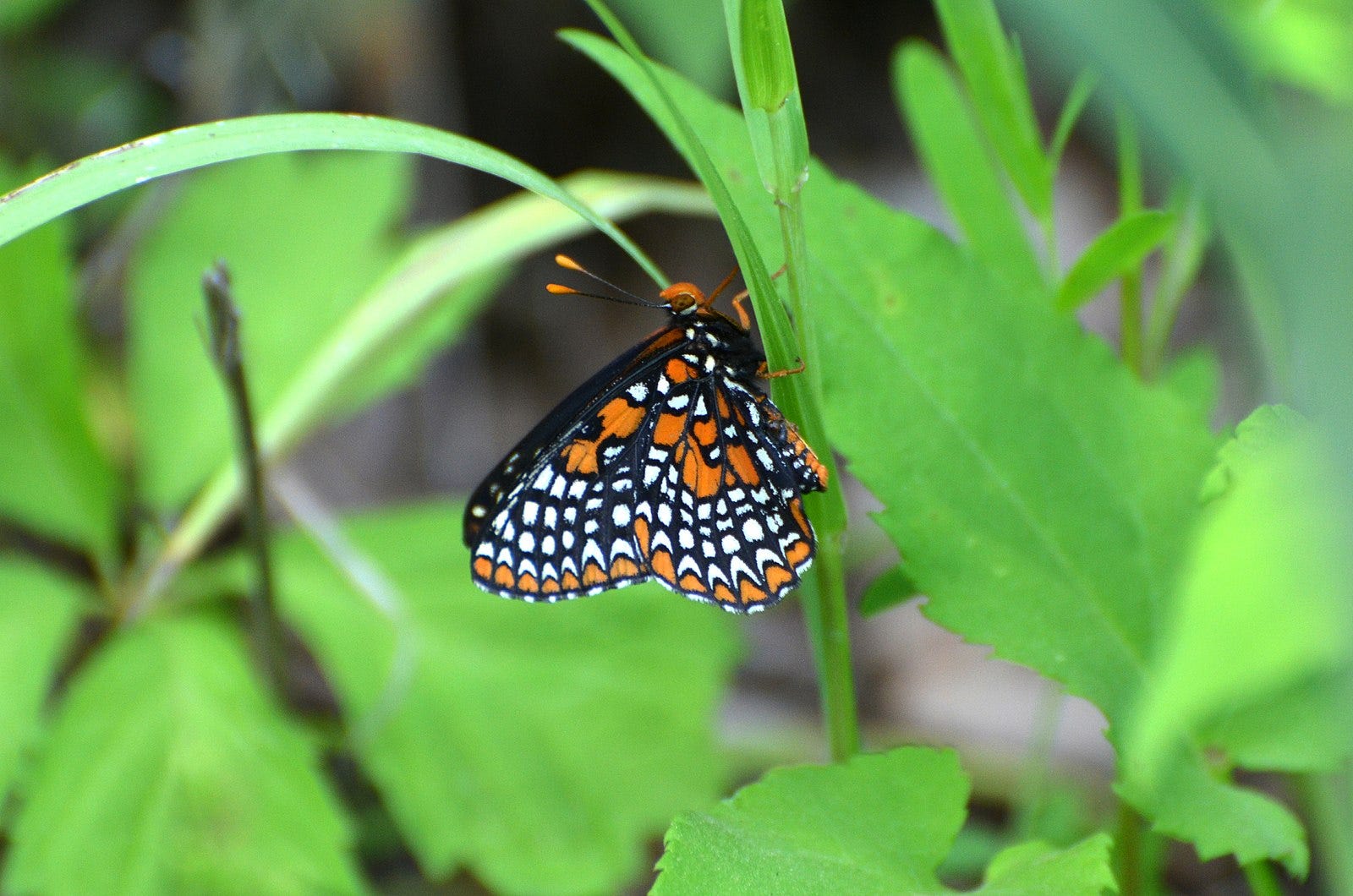
Hairy beardtongue is a host plant for butterflies (Baltimore checkerspot) and moths (chalcedony midget and verbena bud moth).
The drooping trumpet shape of its flower is reminiscent of foxgloves and, if you’re lucky, you may catch an adorable bee waggling around in the flower in search of nectar.
Ottawa, and large parts of Ontario and Québec, experienced their first seasonal bouts of extreme heat this past week. As we enter the hottest time of the year and as climate change results in more and more unpredictable weather, heatwaves are becoming a frequent occurrence in Canada. During periods of extreme heat, it’s good to know what does and does not work for the garden.
One tip is to use water effectively. It is best to water your garden during the coolest times of the day, such as the early morning or evening. Watering the garden during the afternoon when the sun is at its strongest may result in water evaporating before it can benefit your plants. Additionally, hot weather can cause some plants to go into heat stress. As such, it's best to avoid garden tasks such as transplanting seedlings which can cause additional stress on your plants. Waiting a few days for a heatwave to pass can give young seedlings a stronger start in your garden.
When considering extreme weather, it’s also important to think of which plants do well in your environment – this is where native plants shine! Native plants are more resilient to changing climates and are often more drought tolerant and heat resistant than non-native species. Not only do native plants generally fare better in extreme weather, but they can even help reduce the overall temperature of an area over time. A study conducted at the University of Waterloo found that planting native species of trees, shrubs, flowers and grasses can have a cooling effect on the area. The lead researcher on the study noted that “native species are adapted to the local environment and can cool their surroundings better”. This research helps to further illustrate the importance of native plants to our environment and communities.
This month’s volunteer spotlight highlights the work of Donna Bos:

Donna has been a volunteer with the OWSL for the past 2.5 years and began gardening with native plants in 2021. While she already enjoyed gardening, incorporating native plants into her gardening practice was a way to bring more purpose to her work.
Her favourite part of volunteering with the library is seeing the happy faces of the people she helps and knowing that the OWSL is enriching all lives (human and otherwise!).
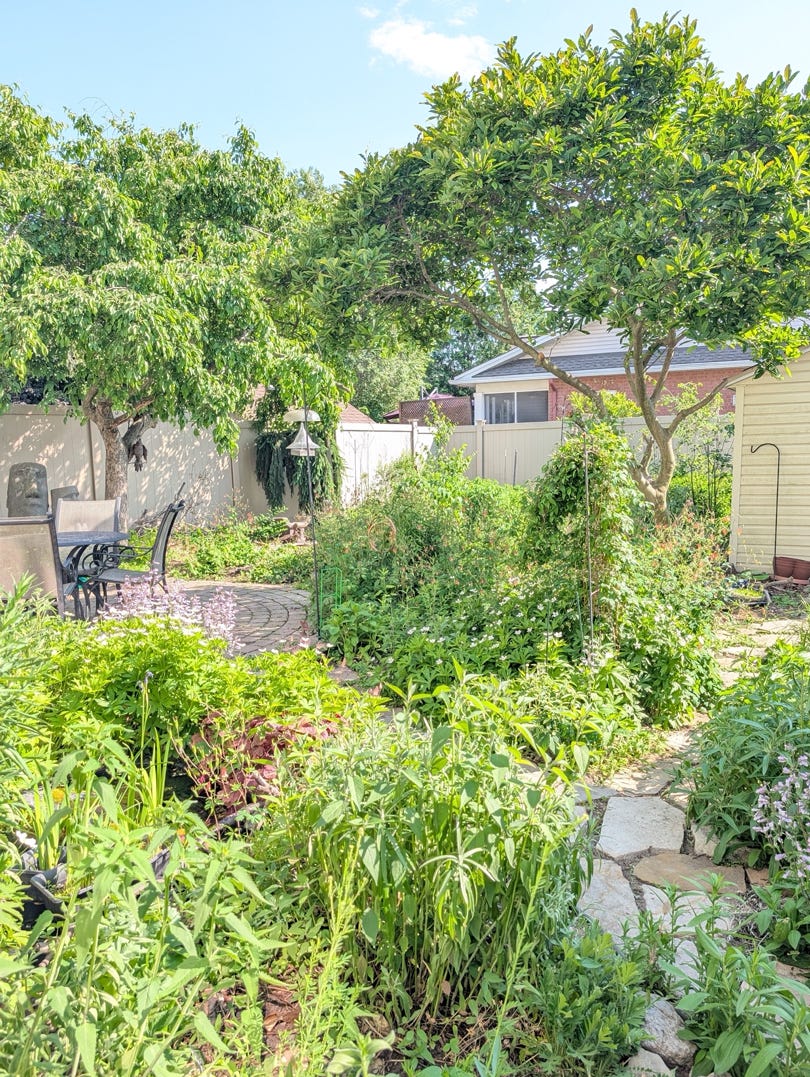
While Donna doesn’t have a singular favourite plant, she finds the plants in the aster species to be pretty spectacular!
Rick Gray and Shaun Booth, The Gardener’s Guide to Native Plants of the Southern Great Lakes Region (Ontario: Firefly Books, 2024)
The Plant Native, “Native Penstemons: A Beginner’s Guide”, 2025. https://theplantnative.com/plant/penstemon/#elementor-toc__heading-anchor-1
CBC News, “B.C. horticulturalist offers tips on how to protect plants during heat wave”, 2021. https://www.cbc.ca/news/canada/british-columbia/garden-heat-help-1.6083271
Waterloo News, “Planting native trees, greenery can cool off your backyard”, 2020. https://uwaterloo.ca/news/news/planting-native-trees-greenery-can-cool-your-backyard
L. Jonas Hamberg, Roydon A. Fraser, Derek T. Robinson, Andrew J. Trant, Stephen D. Murphy, “Surface temperature as an indicator of plant species diversity and restoration in oak woodland”, Ecological Indicators, Volume 113, 2020. https://www.sciencedirect.com/science/article/abs/pii/S1470160X20301862
No posts
Comments
Nothing yet. Say the first thing.
Sign in to join the conversation.